21 Bedroom Basket Storage Ideas
This site contains affiliate links. We may earn a small commission, at no extra cost to you. Article may contain some images for illustrative purposes only .
The wicker basket on top of my dresser is currently holding three unmatched socks, a phone charger I thought I lost in 2022, a hair tie graveyard, and one very confused hamster toy. My hamster died in 2019, FYI.
Storage, apparently, is not my strong suit. But after years of shoving things into pretty containers and hoping for the best, I’ve finally cracked the code on making baskets actually work in a bedroom, not just look photogenic on Pinterest before swallowing your belongings whole.
Ahead, 21 ways to use baskets that go beyond “toss stuff in and forget it,” from under-bed rolling bins that corral shoe collections to tiered nightstand towers, closet shelf dividers, and the surprisingly genius trick of hanging small baskets inside your wardrobe doors.
Scallop Edge Units With Wicker Inserts
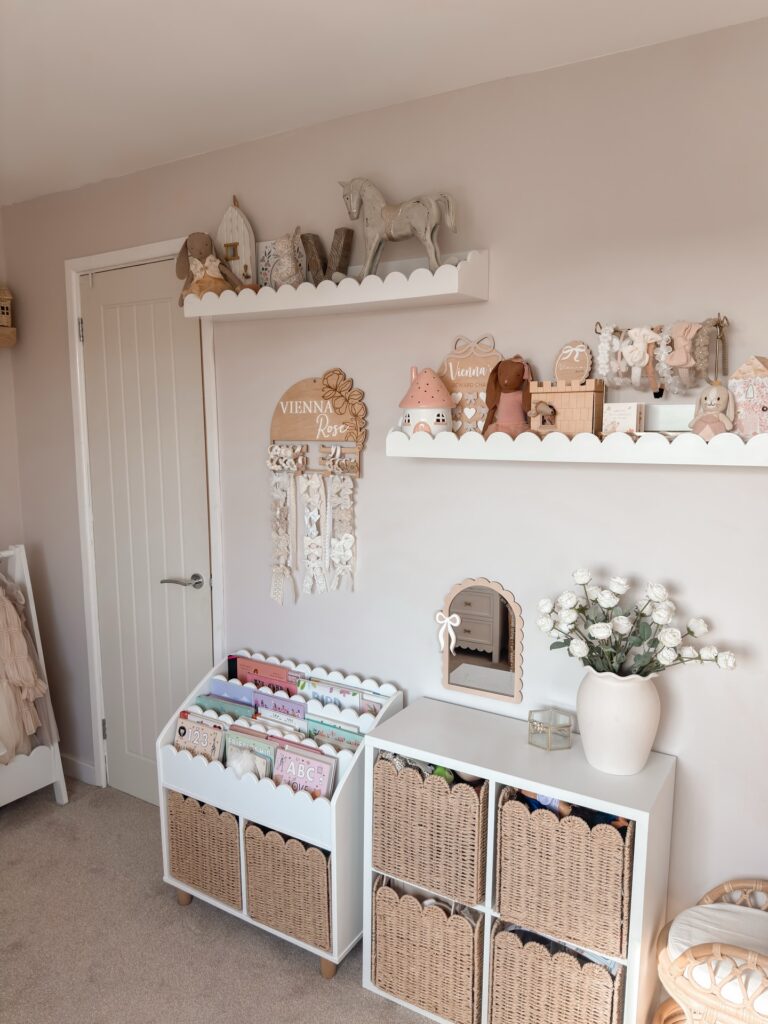
The scalloped edge is what makes this storage unit feel special. Without it, the white cube shelf could easily look like something you assembled on a Sunday afternoon while questioning every life decision. The wicker baskets soften it and make the whole thing feel much more bedroom-friendly.
Six matching baskets give you plenty of room to hide toys, clothes, blankets, or all the little things that usually end up on the floor. Natural seagrass works especially well because it adds warmth against the white shelving.
If you’re storing small toys, add a simple fabric liner or a smaller box inside. Otherwise, you’re technically organizing, but mostly just creating six very attractive black holes.


Under desk basket storage
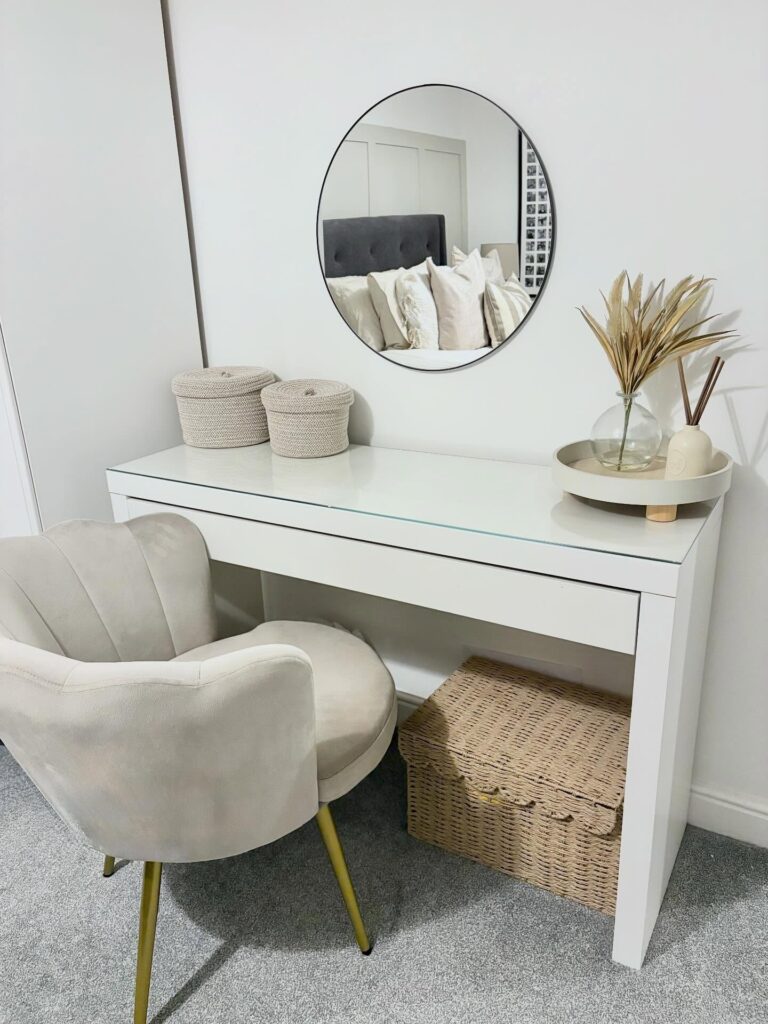
If your dressing table has that open gap underneath, slide in a lidded wicker basket instead of leaving the space empty. It works best for things you don’t need every morning, like spare bedding, hair tools, winter socks, or extra makeup bags. But make sure to keep it low.
A basket with handles is easier to pull out, especially when the chair is already in the way, and you’re trying not to knock your knees.
The two small baskets on top can hold cotton pads, clips, chargers, or anything that you constantly reach out for. I’d skip storing daily skincare in the lower basket, because bending down for it every day gets annoying real fast.

Circus Tent Basket Trio
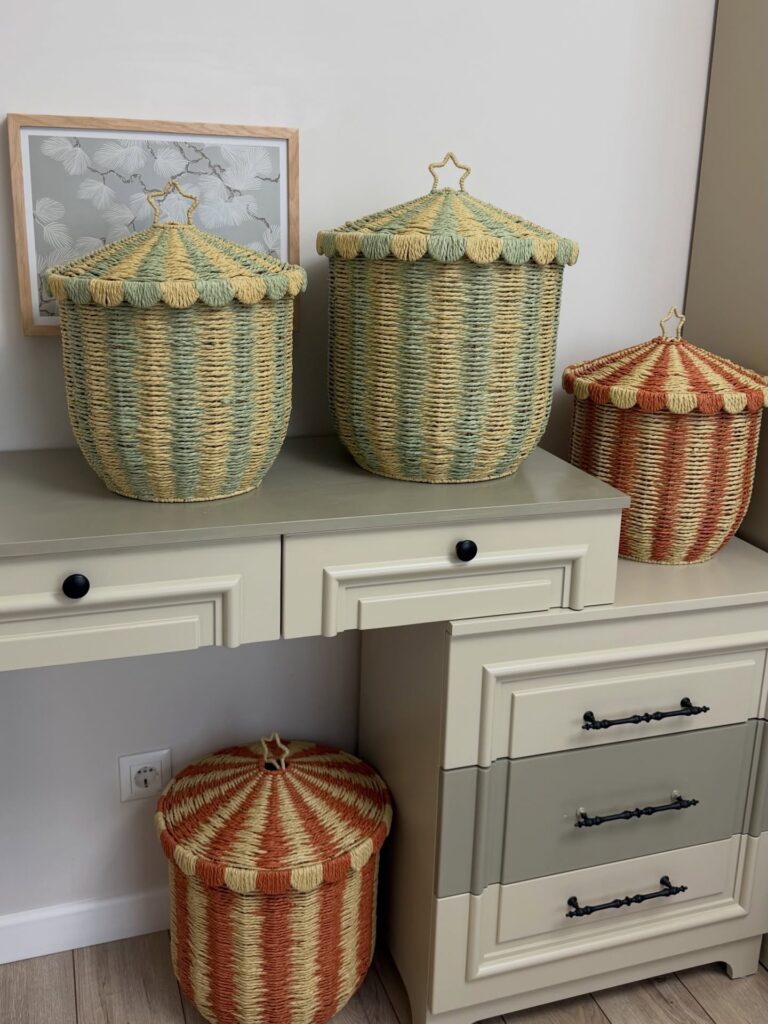
Striped baskets with scalloped lids and little star toppers. These are pitched at a kid’s room, obviously, but they solve the usual bedroom problem of hiding toys, socks, or laundry without adding another plastic bin to the pile.
Group them in odd numbers and vary the height. So, two on a dresser, one on the floor, like the setup here.
The green-yellow pair reads calmer, the terracotta ones bring the warmth. What I’d change is probably the paper rope baskets like these flatten under weight, so keep them for soft things. Stuffed animals, spare blankets, dress-up clothes. And if you have a cat, the star finials will not survive the week.

Blanket basket by bed
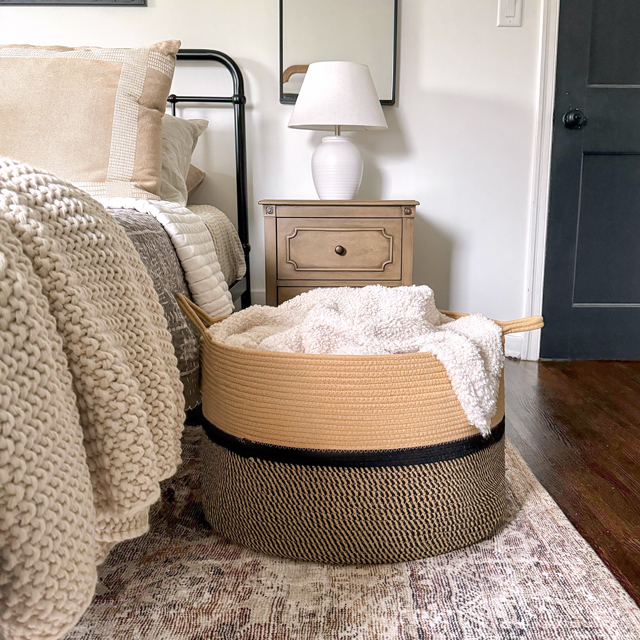
A big basket beside the bed is one of those things you don’t appreciate until you have one. Instead of leaving your throw crumpled across a chair or at the end of the bed, you can simply toss it inside when you’re done.
A wide rope basket with handles works particularly well because it gives chunky blankets plenty of room without making the corner feel crowded.
Go slightly bigger than you think you need. Knitted throws have a magical ability to become three times their original size the moment you put them away.
I’d also skip the lid. When the whole point is grab, use, and toss, adding another step just makes the basket less useful.

Stacking Lidded Baskets by the Bed
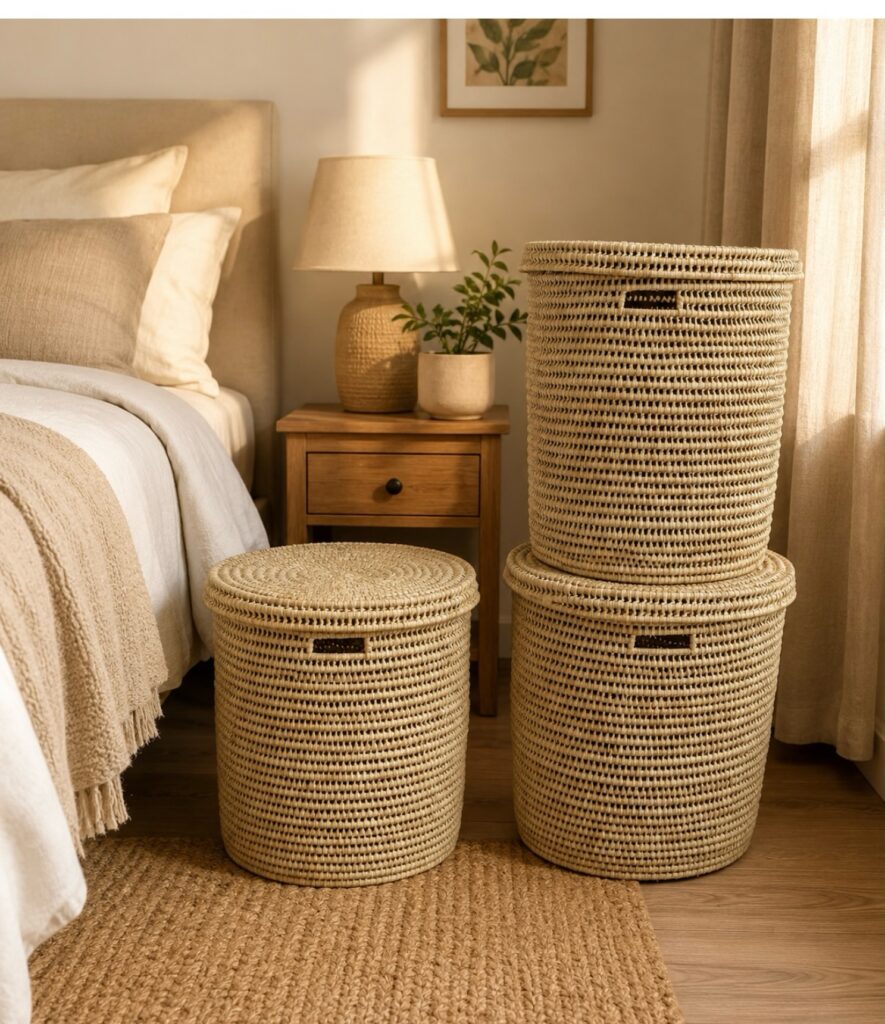
Stacked baskets are a clever little trick when your bedroom has more vertical space than floor space. Two larger rattan baskets can sit underneath a smaller one, giving you several places to store blankets, extra clothes, laundry, or things you don’t want sitting out. The lids are what make this setup feel calm because you don’t have to look at everything inside (yikes, we know how it gets).
Try to buy baskets from the same collection if you’re stacking them. Similar shapes and proportions make the arrangement look intentional instead of like three baskets that happened to meet in a bedroom.
Side handles are also worth looking for. Eventually, you will need the bottom basket, and that is when you’ll be very grateful you don’t have to dismantle the whole tower. If you’re working with a small bedroom, these Japanese Storage Ideas for Tiny Apartments have plenty of clever ways to make the most of awkward corners and limited floor space.
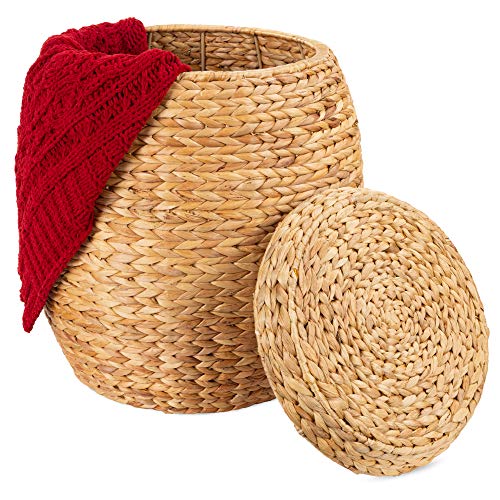
Baskets under a daybed
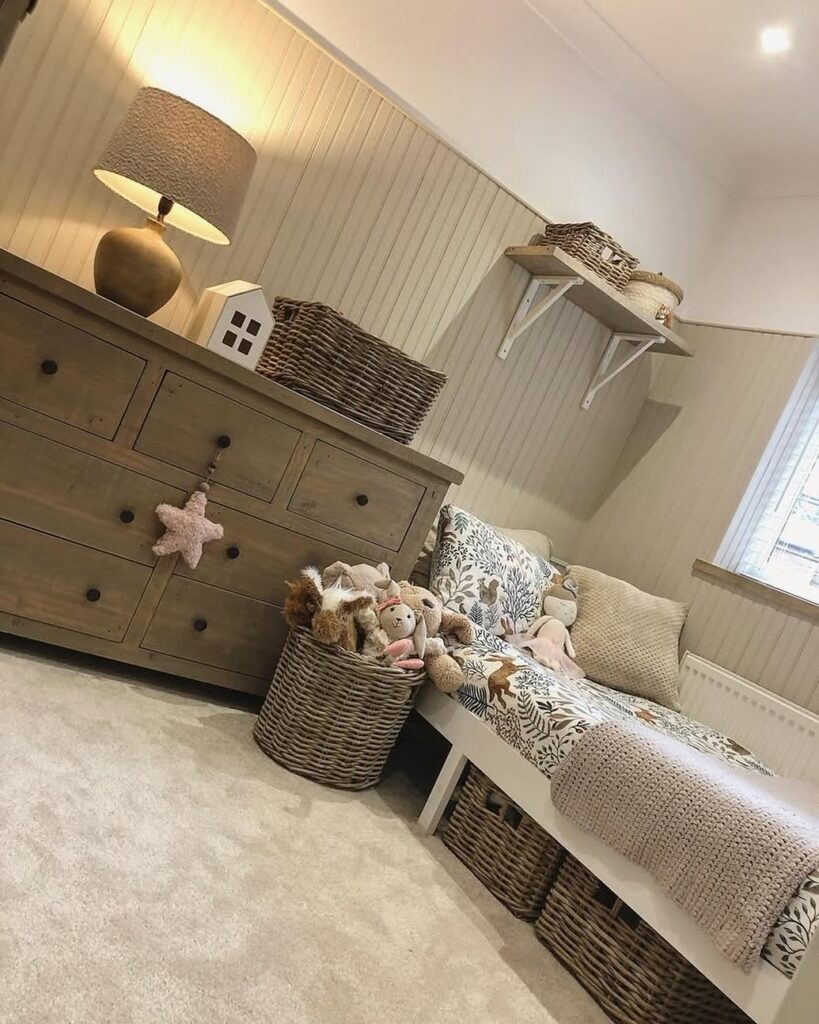
Under a daybed, those low wicker baskets make use of the strip that usually gathers odd socks, books, and dust. Choose baskets that are shorter than the bed frame height, so they slide out without catching on the rail every single time your child wants a toy or spare blanket. So I suggest you measure first.
A matching basket beside the bed can hold stuffed animals, while the ones underneath take pajamas, extra sheets, or soft toys that are not used daily. I would skip lids here, because children rarely put them back properly and then the whole thing starts looking more untidy than before. Handles help a lot, especially with deeper woven baskets (stating it from experience).

Rope Basket With Heart Detail
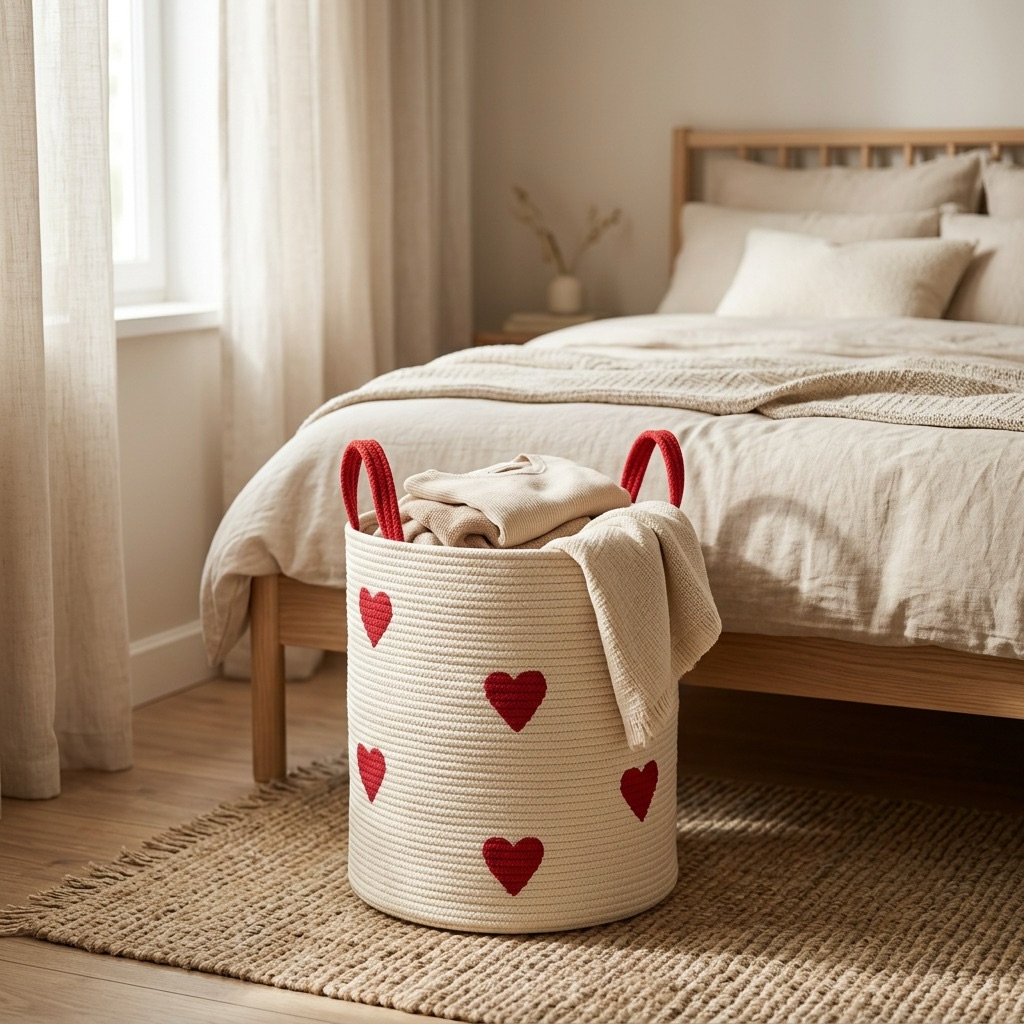
A rope basket at the foot of the bed is perfect for the things that don’t really deserve a drawer. Throw blankets, sweaters you’ve worn once, spare cushions, tomorrow’s pajamas. Basically, anything you’re not ready to put away properly but don’t want sitting on the floor.
The heart detail and red handles make this one especially sweet for a child’s bedroom, but you could easily choose a plain cream or natural rope basket for a more grown-up space. You don’t need a complete bedroom makeover to make the space feel more put together, and these How to Make Your Bedroom Feel Luxuorious on a Budget ideas prove that small changes can make a surprisingly big difference.

Blanket basket by the bed
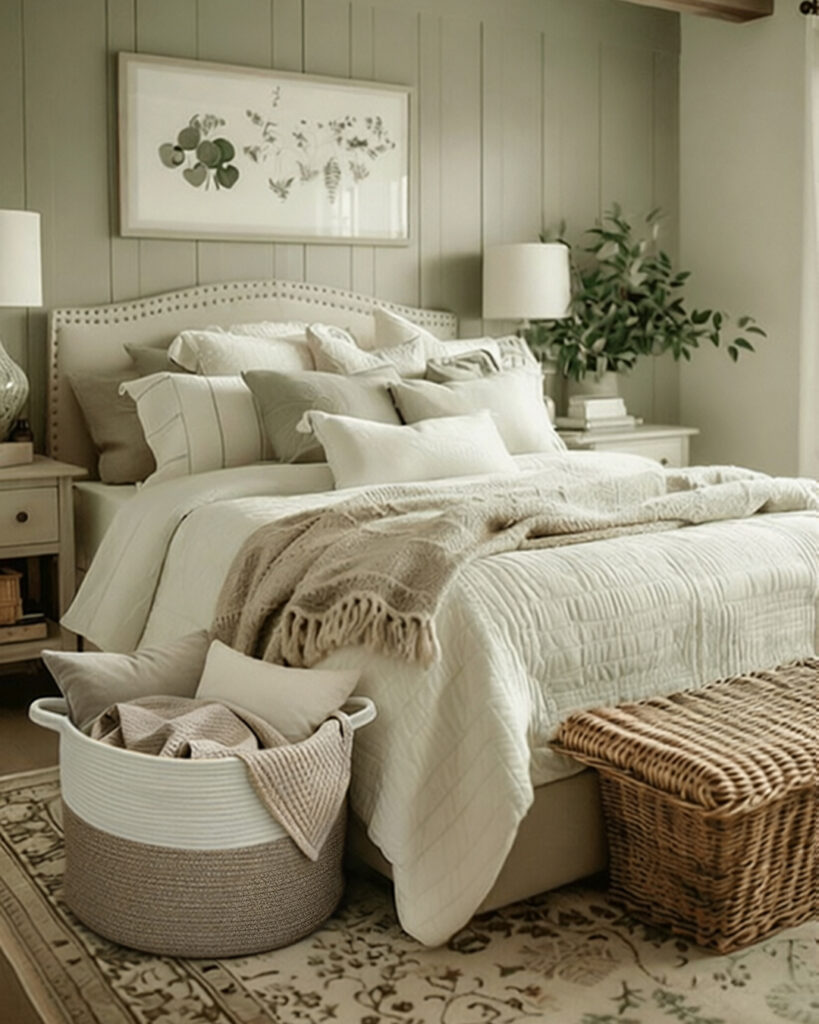
Right at the foot of the bed, a soft-sided basket works best for the things that usually end up in a heap by evening: the extra throw, a spare cushion, even tomorrow’s lounge set if you like laying clothes out ahead of time.
Keep it low enough that it doesn’t block the quilt or make the room feel crowded when you walk around the corner of the bed.
This one works because the basket is wider than it is tall, so blankets can be folded once and dropped in without fighting the sides, which matters more than people think when you’re using it every day. If you want the woven look from the bench basket, use that for less-used bedding instead and keep the grab-and-drop basket open.

Cube Shelf With Woven Baskets
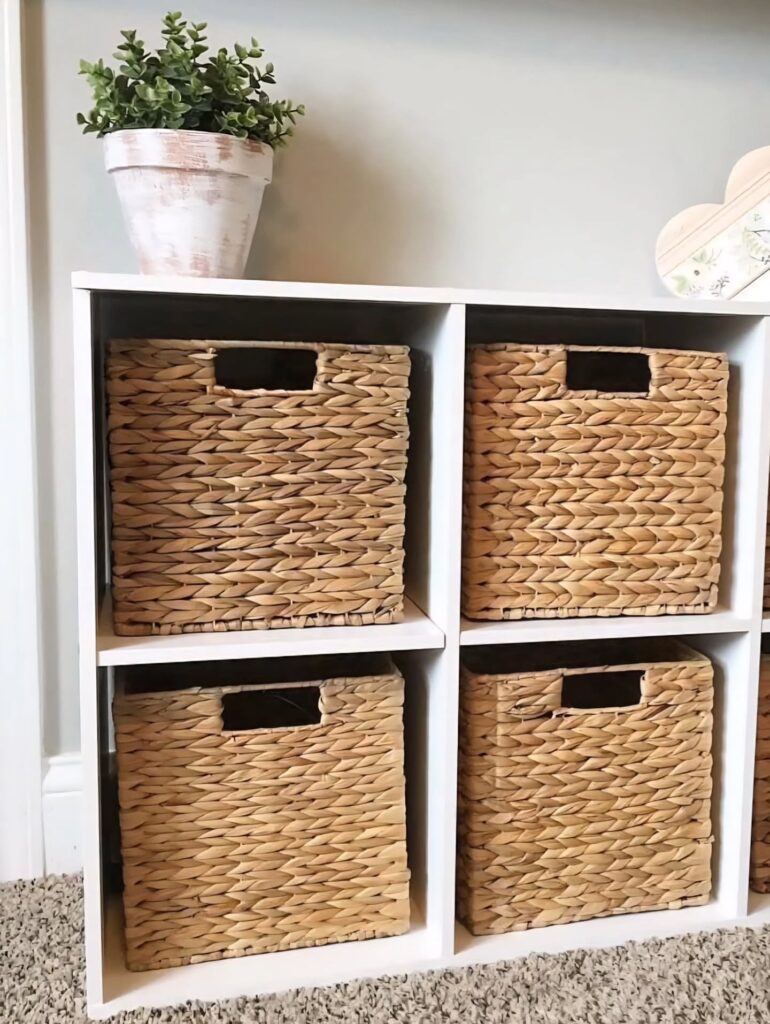
A cube shelf becomes much prettier once you fill it with matching woven baskets. Four baskets in the same material and size create a calm, repetitive look while hiding all the things you don’t necessarily want on display. Extra blankets, books, chargers, pajamas, and miscellaneous bedroom clutter can all disappear inside.
Water hyacinth and similar natural weaves work nicely because they add texture without overwhelming the room. If you’re using an IKEA Kallax or another cube shelf, measure the openings before buying baskets. A tiny gap around each basket can make the whole setup look unfinished.
And honestly, you don’t need much decoration on top. The baskets are already doing enough.

Baskets For Baby Clothes
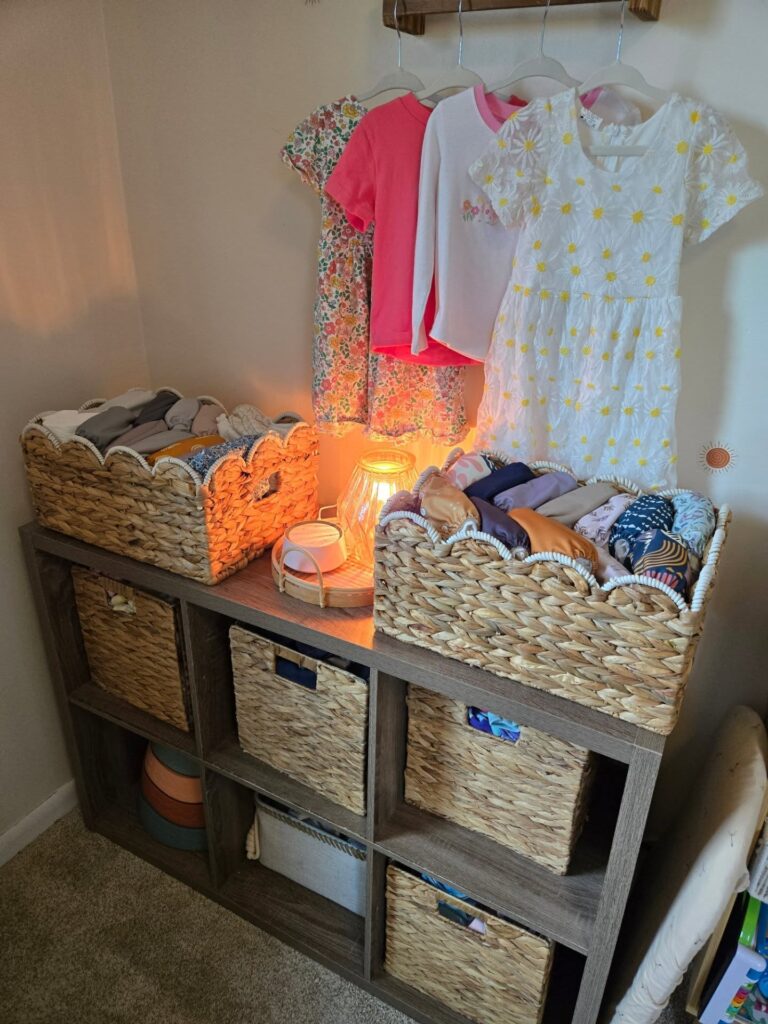
When the clothes are tiny, a cube shelf with deep woven baskets makes more sense than a full dresser. Roll the onesies, leggings, and socks so you can see the colors from the top, then keep the dressier pieces on small hangers above. Very easy to grab (which is more important than it sounds).
The lamp in the middle helps if this sits near a changing pad, because late-night outfit changes do happen and nobody wants to turn on the main light. I’d keep one basket only for items that still fit right now, and move the next-size-up clothes into a lower cube or a closed bin. Otherwise, everything gets mixed. Fast. Like real fast.
Stacked Lidded Baskets Beside Bed
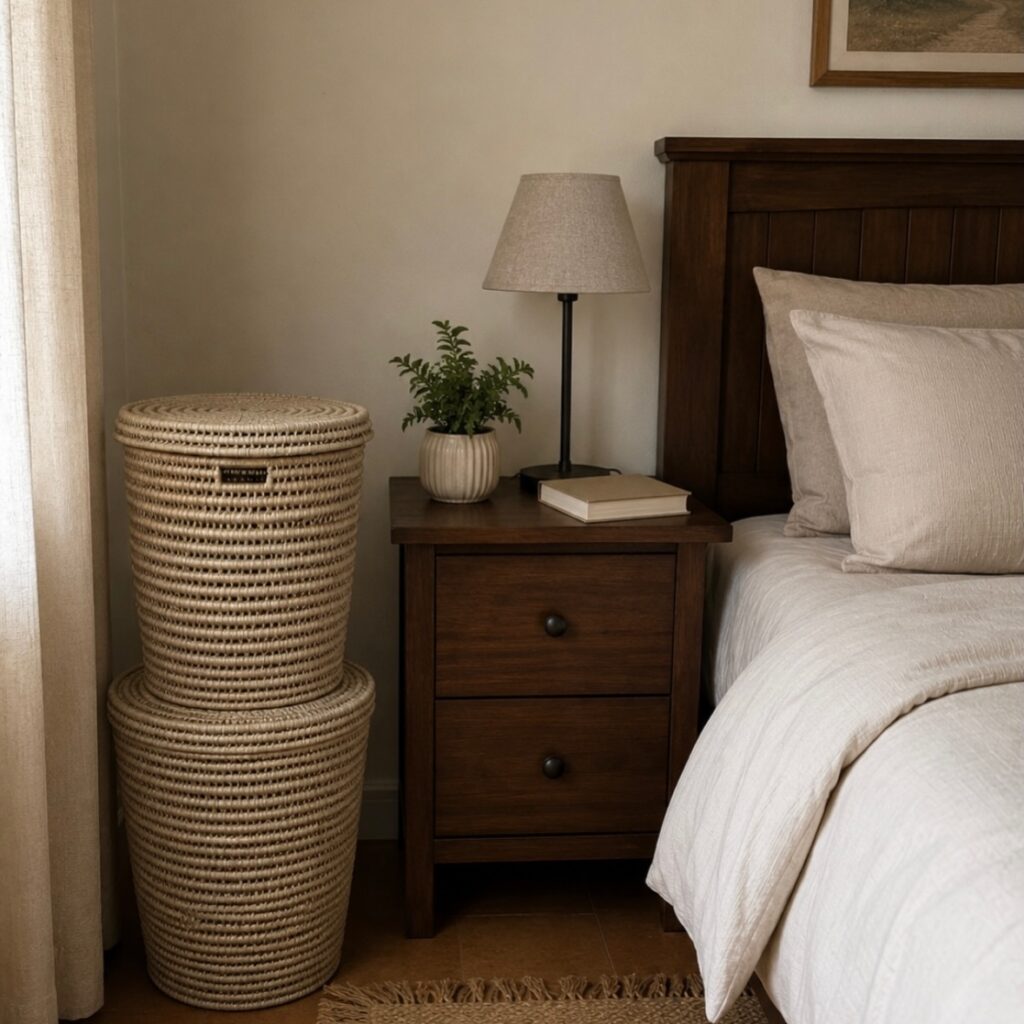
Two round rattan hampers, one stacked on the other, filling the narrow gap between the curtain and the nightstand. This is a good move if your bedroom runs short on floor space but long on vertical space. The bottom one can hold extra bedding or off-season sweaters. The top, with its lid flush and clean, works for laundry you don’t want on display.
You can even match the basket height to your nightstand so the stack looks great. Lids matter here. Open baskets would look like clutter next to a made bed.
One thing I’d change tho is the top basket doesn’t have handles cut into it, which makes lifting it off awkward when you actually need the one underneath. Look for a pair where both have side grips, it’s easier to move it around.

Lidded baskets on wheels
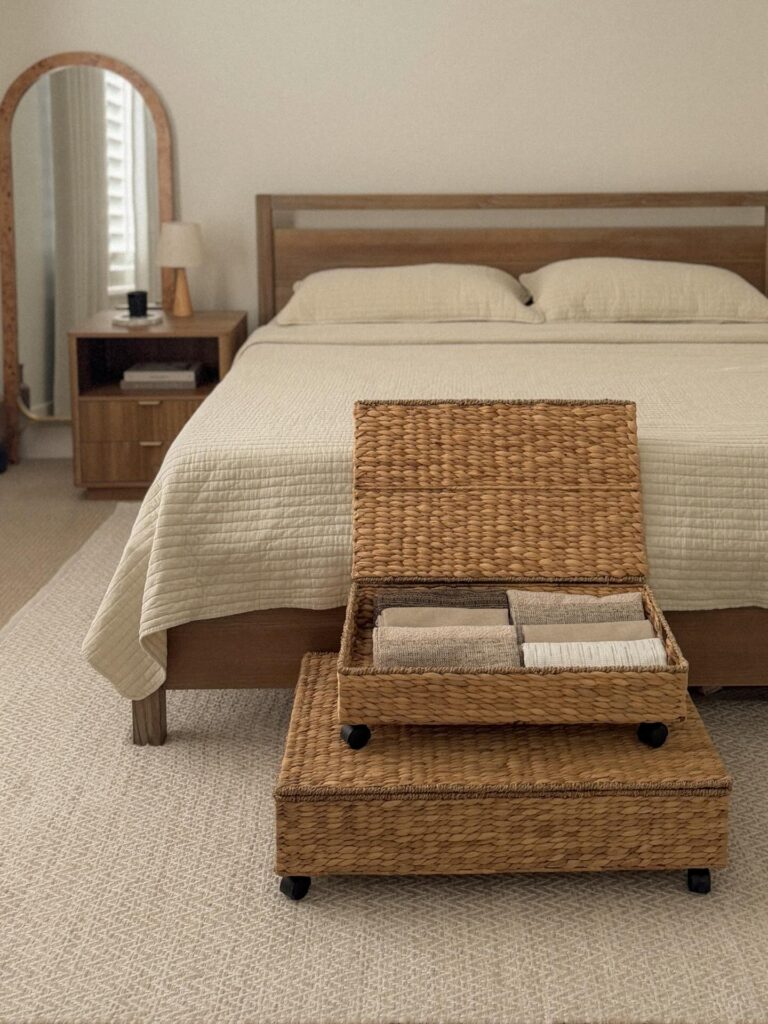
A basket on wheels might sound slightly excessive until you’ve tried moving a full basket of blankets across a bedroom. A low woven trunk at the foot of the bed gives you hidden storage for bulky bedding, winter throws, pillows, or anything else that takes up too much wardrobe space. The smaller basket on top can hold lighter items you want nearby.
The wheels are the clever part. You can pull the whole thing out when changing sheets instead of reaching awkwardly around the bed.
Keep the basket below mattress height so the bed still feels open. And if you have young children, I’d skip the stacked version. Beautiful in theory, constantly rearranged in practice.

Woven Tray on the Nightstand
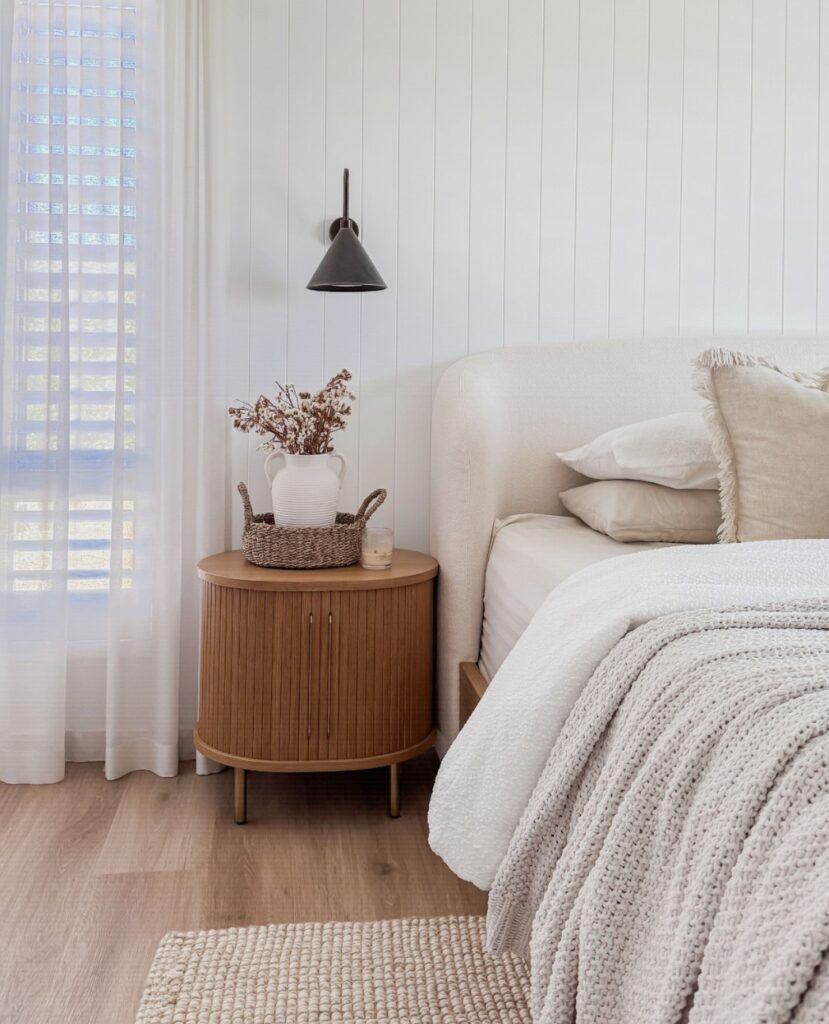
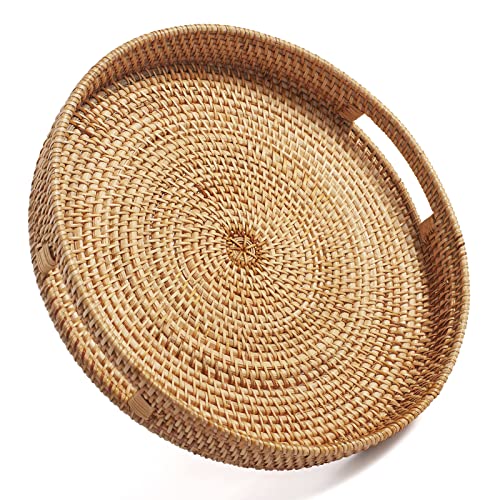
Dropping a basket directly onto a round bedside table like this one gives you a contained spot for the small things that otherwise just scatter like maybe a candle, a lighter, or reading glasses.
The woven tray here holds a white ceramic jug and a glass, and because everything sits inside it, the table doesn’t look cluttered even though there’s quite a bit on it. Round tables especially benefit from this, since there’s no corner to push things toward.
A rectangular tray works too, but it’ll overhang the edges on a table this size, which isn’t ideal. This suits anyone who keeps a lot of small items bedside but doesn’t want a drawer unit taking up floor space.
Wicker trunk corner
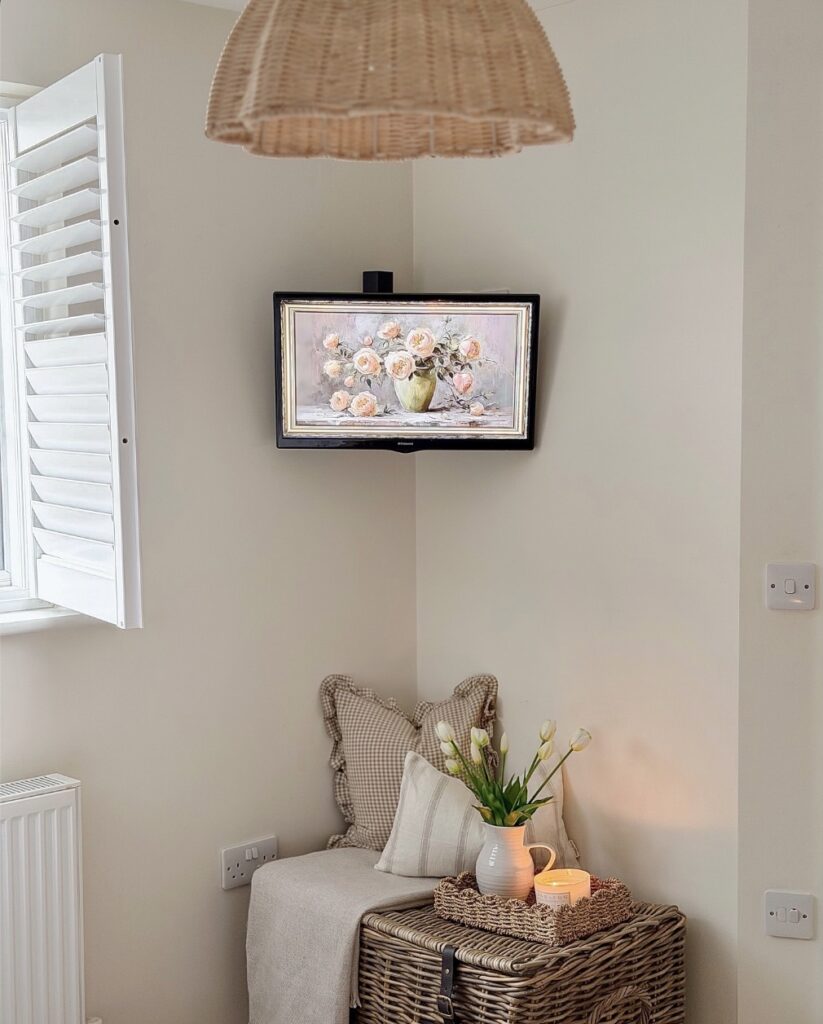
A wicker trunk tucked beneath a wall-mounted TV is a surprisingly useful storage opportunity. Because the trunk is large, it can handle bulkier things that don’t fit neatly anywhere else, like spare pillow covers, extra blankets, guest bedding, or seasonal accessories.
The flat top is useful too. Add a small tray, vase, candle, or a few books, and suddenly the trunk feels like furniture rather than a storage box.
I’d resist filling the top with too many decorative things, though. The whole appeal of this setup is that it keeps the room feeling simple.

The floor basket in the corner
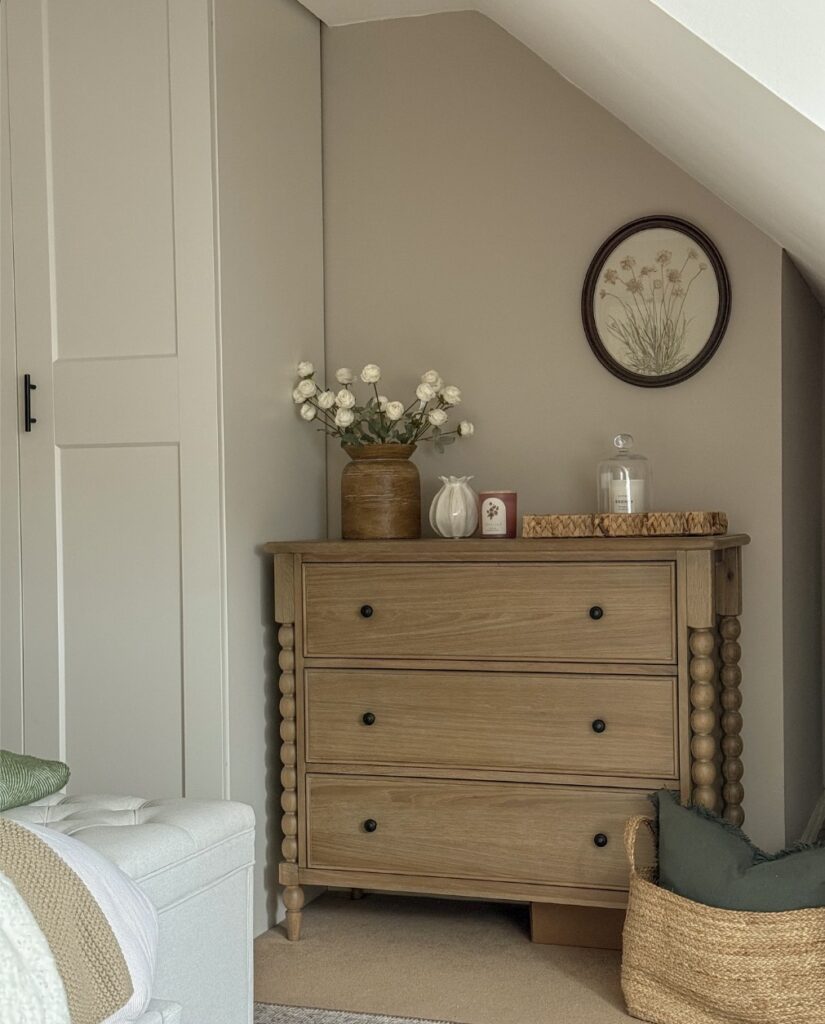
Tucking a tall seagrass basket next to the dresser is one of those moves that solves a problem you didn’t quite name. Extra pillows, a folded throw, the blanket you kick off at 2 am, all of it goes in there instead of on a chair. The one in the picture holds a green cushion, but you could just as easily use it for spare bedding.
Pick a basket that comes up to about knee height or just above. Any shorter and it looks like it’s missing something. Handles help when you’re dragging it across carpet.
Hanging baskets by the bed
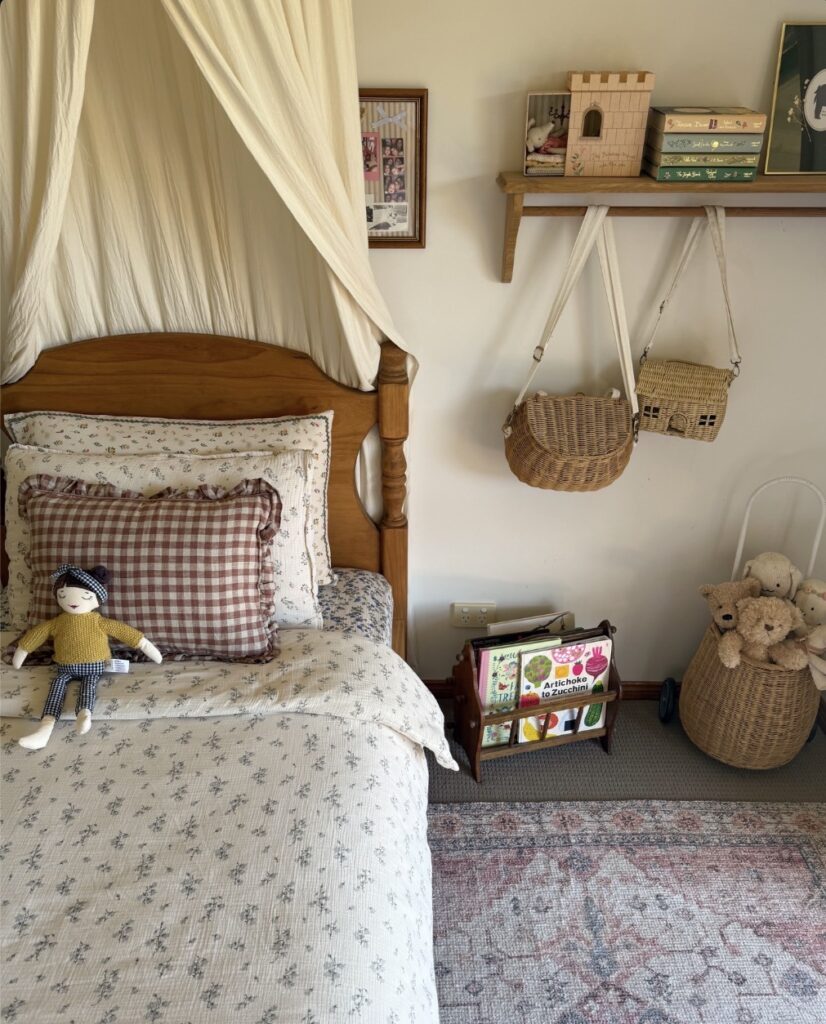
If floor space is tight, use the wall. A shallow shelf with two hooks underneath gives you a spot for hanging baskets that hold the stuff that usually drifts around a bedroom or something into the void of space (my lip balms and hair ties have been victims of that).
Keep the straps short enough that the baskets sit above bedside height, especially next to a single bed, or they’ll get knocked every time someone pulls up the covers.

The Floor Basket Next to the Bed
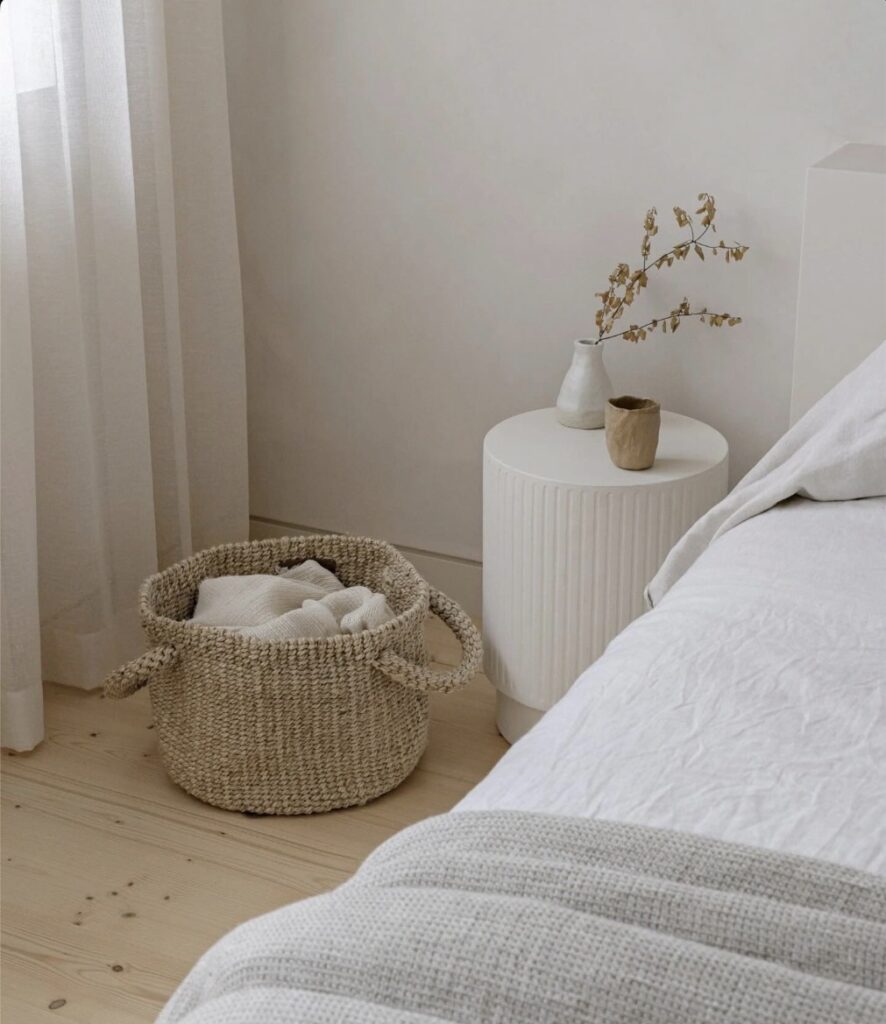
Woven baskets sitting on the floor beside the bed are doing more work than they look like they are. This one’s holding what appears to be a spare knit blanket or two, the kind of thing that doesn’t belong in a drawer but also shouldn’t just be draped over the bed frame every night. A round bedside table like the ribbed one here doesn’t have shelf space underneath, so the basket fills that gap without needing to be mounted or built-in.
Works best for throws, an extra pillow, or even books you’ve given up on but aren’t ready to shelve. Handles matter as they make the basket easier to drag out and reposition when you’re changing the bedding. I’d probably skip jute if you have pets; it sheds and they’ll pull at it.

Wicker Cubby Baskets
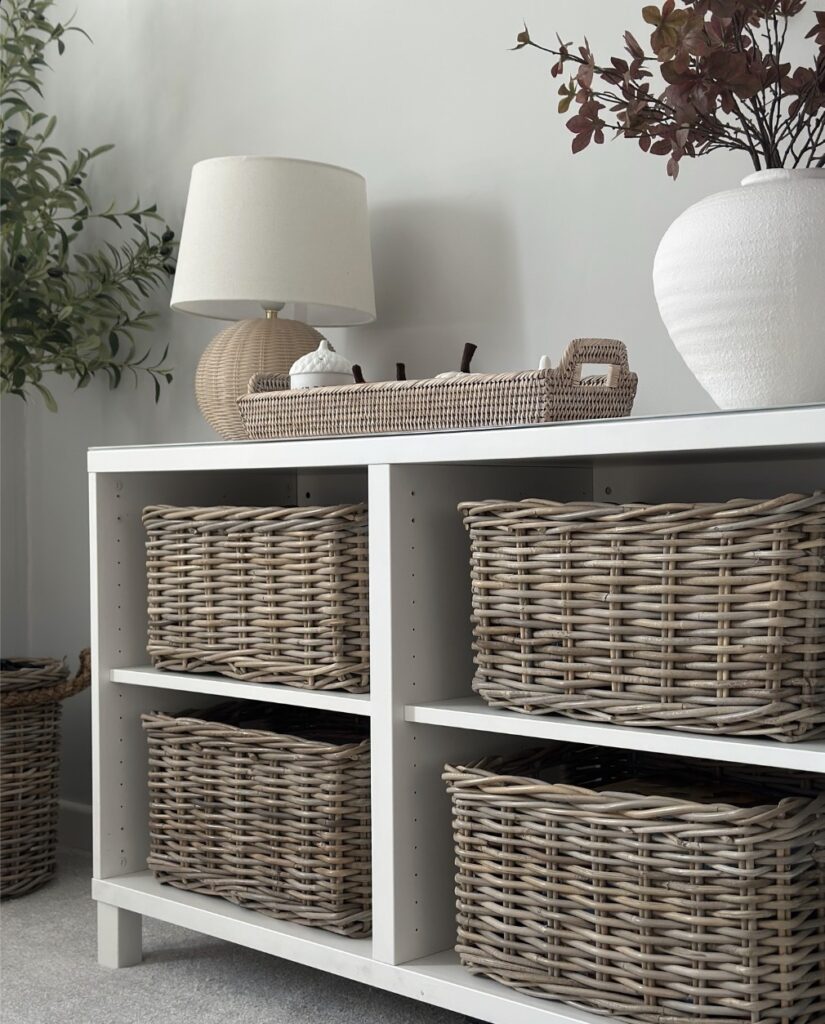
Instead of letting open cubes turn into little dumping spots, slide in wicker baskets that nearly fill each shelf. The white frame keeps the edges looking clean, while the baskets hide socks, scarves, sleepwear, chargers, or anything that never folds nicely. Keep the tops useful.
A flat tray like this one can hold daily bits without spreading across the whole surface, and a lamp beside it makes the unit feel more like bedroom furniture than storage.
Because the baskets are deep and low, they suit things you grab by category rather than items you need to see one by one. I’d skip tiny labels here unless the baskets are shared by two people.

Scalloped Baskets For Stuffed Animals
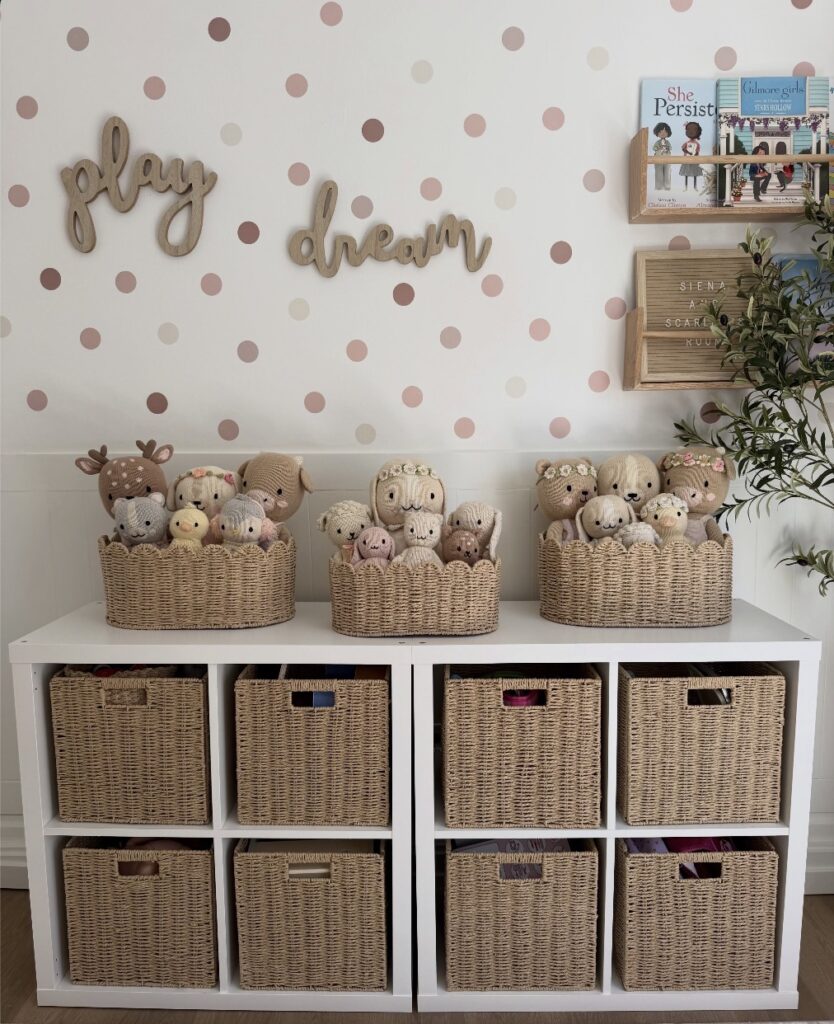
Stuffed animals deserve storage that lets them actually be seen. These scalloped baskets work because the low edge keeps the toys visible instead of burying them underneath one another. Kids can spot their favorite bunny or bear immediately, which means there is at least a chance they’ll put it back where it belongs.
Use the baskets for soft toys and let the cube storage underneath handle puzzles, books, art supplies, or anything less visually charming.
I also prefer open baskets for stuffed animals. Lids are lovely until a child has to open one every time they want their favorite toy.

Basket inside built-ins
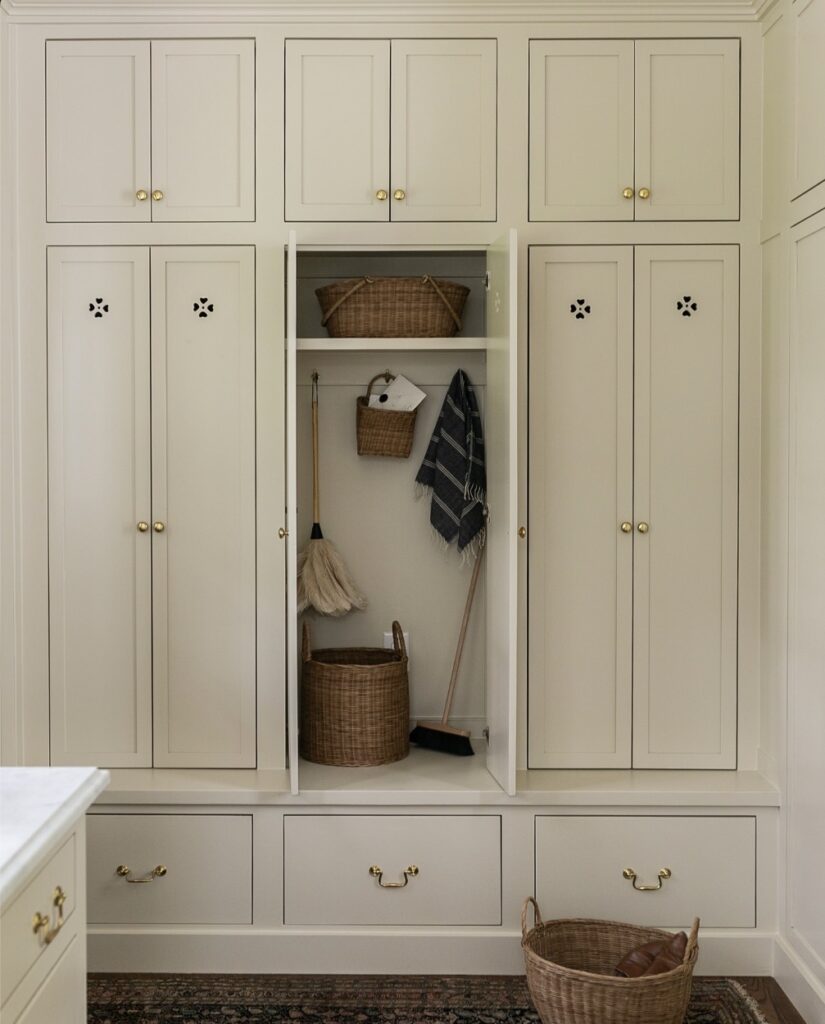
If your bedroom has fitted wardrobes, leave one full-height bay for basket storage instead of filling every inch with rails and shelves. This works well when you copy the mix here of one large floor basket for bulkier things, then a smaller hanging basket or shelf basket higher up for bits that usually drift around, like chargers, socks, tags, or spare pillowcases.
Keep the basket shapes fairly structured. Soft baskets slump, and once they sit inside a tall cabinet they start looking messy faster than they fill up.
That top shelf matters too. Use it for a lidded wicker basket so the least-used items stay out of sight but still easy enough to grab without reorganising the whole cupboard. I would skip anything too deep on the floor though, because if you have to dig down for one item, you will stop using it properly within a week.
If you’re into storage tricks that make a small space feel significantly less chaotic, these 21 Genius Home Organization Hacks from Japan That Will Blow Your Mind are worth bookmarking.

Tall Basket Beside the Bed
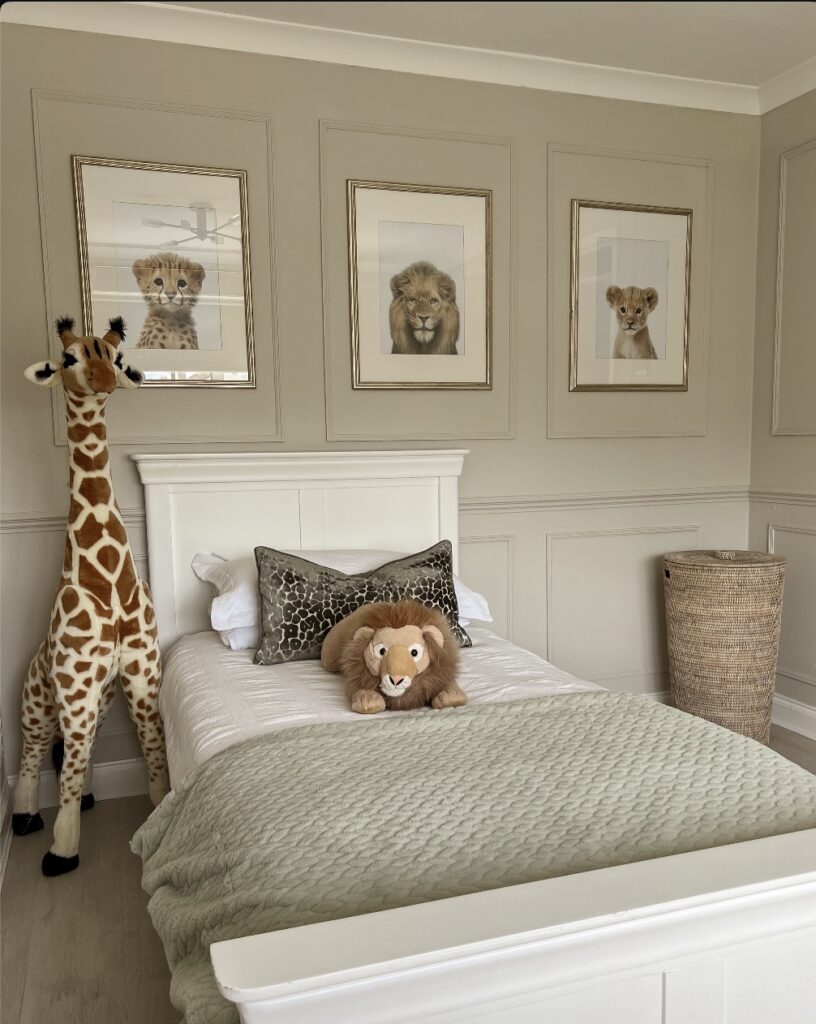
That woven cylinder on the right side of the bed is doing quiet work. It holds laundry, spare blankets, whatever needs to disappear in a jiffy. The cylindrical shape is worth choosing deliberately here, because it takes up less floor space than a square hamper and still holds a reasonable amount. Works especially well in a kid’s room where the floor already has competition.
If you want the basket to sit back against the wall without looking like an afterthought, pick a natural weave in a tone close to the wall color, the way this one nearly disappears into the greige paneling behind it. Taller than wide. That’s the golden key proportion for tight corners.

Wall Baskets For Toys
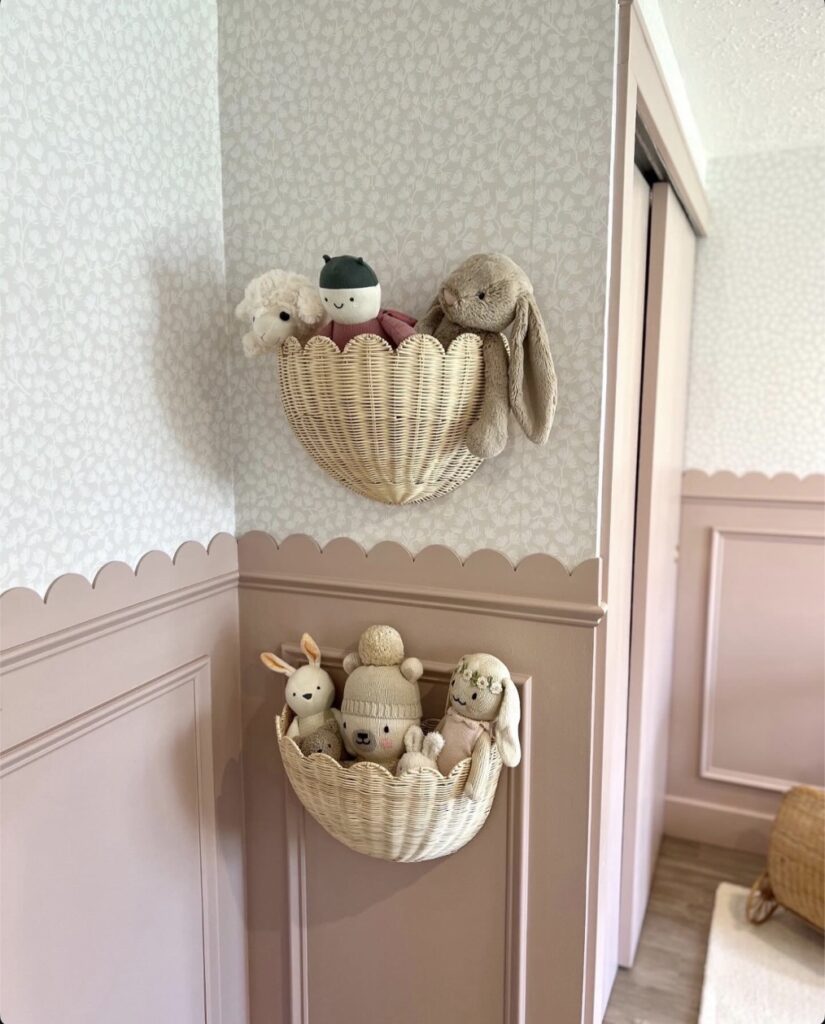
Wall-mounted baskets are a clever way to get toys off the floor without adding another piece of furniture. Shallow wicker baskets work especially well for stuffed animals because the toys can still peek over the edge. Kids can see what they have, grab what they want, and theoretically put it back when they’re finished. Theoretically.
Make sure the baskets are securely anchored into the wall, especially if they’re within a child’s reach. Keep the heavier toys lower and lighter soft toys higher up.
And don’t make the baskets too deep. The whole point is visibility. If the toys disappear into the bottom, you’ve basically reinvented the toy chest and lost half the benefit.

Of course, sometimes the best storage solution isn’t another basket at all, but getting rid of the things you no longer need, and these 60 Things to Throw Away Right Now to Declutter Your Home can help you figure out where to start.
A bedroom doesn’t need a dozen drawers and a perfectly labeled closet to feel organized. Sometimes, a few well-placed baskets are enough to keep the socks, blankets, toys, and mysterious “I’ll put this away later” pile from taking over.
Use open baskets for the things you reach for constantly, lidded ones for the clutter you’d rather not look at, and baskets on wheels or handles when you know you’ll be moving them around. The trick is choosing storage that actually fits how you use your room, not what looks good for five minutes in a Pinterest photo.
Because the goal isn’t a bedroom that looks untouched. It’s one where you can find your charger, grab a blanket, put away the laundry, and maybe even locate that one missing sock without turning the entire room upside down. And if a basket happens to make all of that look cute too? Even better.