23 Cottagecore Bedroom Decor Ideas
This site contains affiliate links. We may earn a small commission, at no extra cost to you. Article may contain some images for illustrative purposes only .
This list gathers 23 ideas for decorating a bedroom in the cottagecore style, and it is meant for anyone who likes a calm, countryside look at home. Cottagecore draws on rural life, old things and handmade touches, so the ideas here suit people who want that feel in the room where they sleep. Some readers will be starting with an empty room. Others will already have a bed and a dresser and want to change how the space looks without buying everything new. Both can use this. Each idea has its own photo and a short note, so you can scan the whole list in a few minutes or stop at the ones that catch your eye. Pick one to try this weekend, or save several for a larger plan. The point is to give you a clear picture of what the style looks like in a bedroom. Then you can decide what fits your own space.
Small Floral Wallpaper
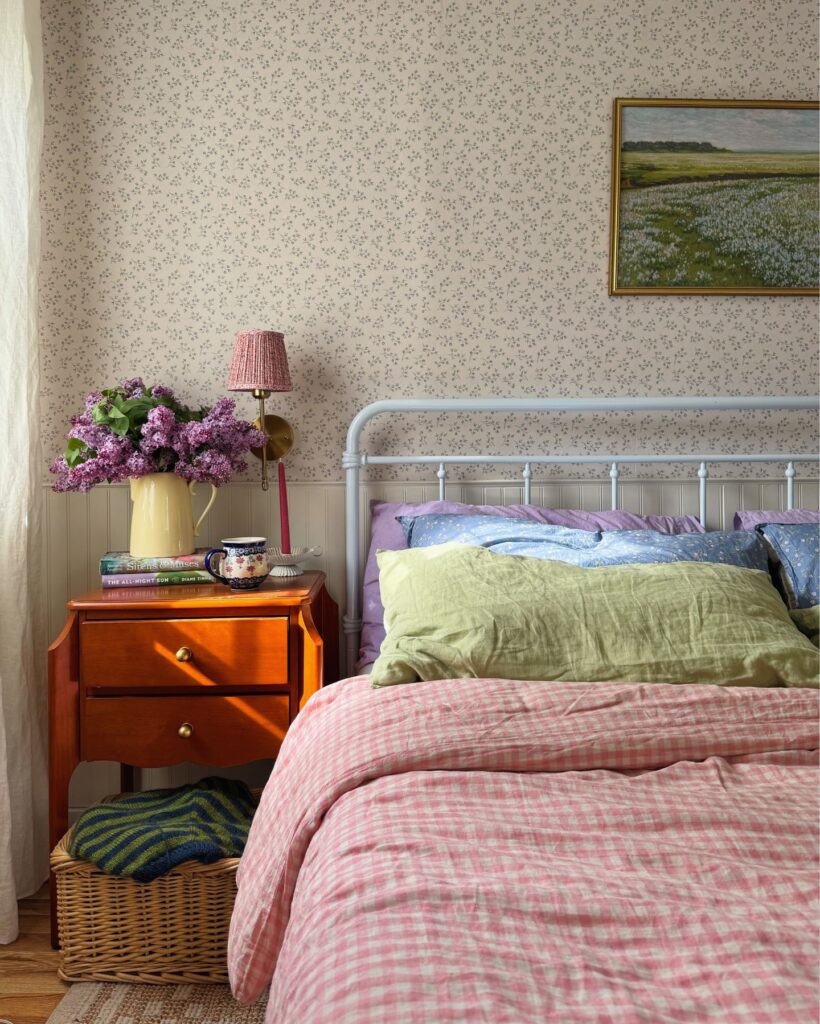
Across the upper wall, tiny floral sprigs repeat over a pale ground, with painted paneling below to break up the pattern. The small print leaves room for larger pictures and colorful bedding to share the space. Without it, the wall would be a broad blank field above the headboard, and the room’s other patterns would have less to connect them.
Paper the Bed Wall
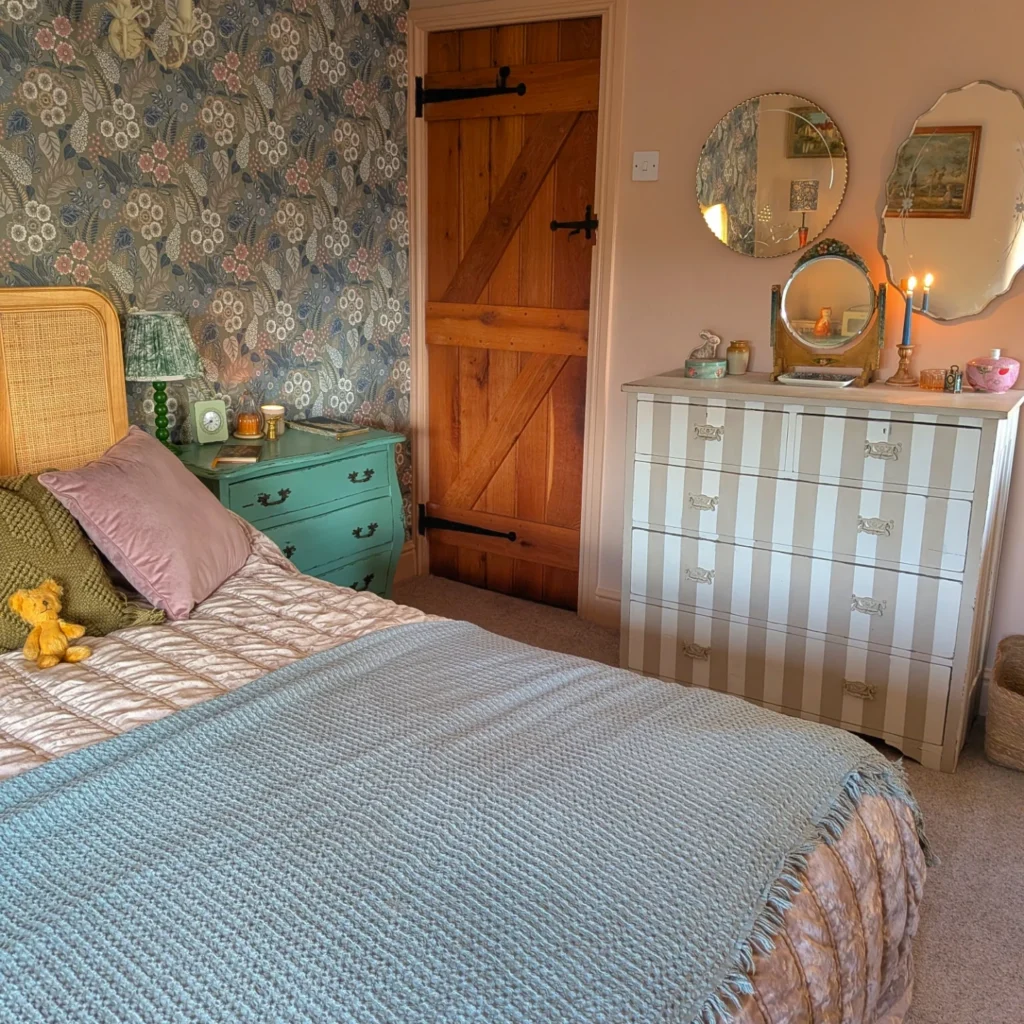
Behind the headboard, use floral wallpaper from the skirting board to the ceiling. Take it across the full wall rather than stopping at the edges of the bed, especially if a bedside chest sits alongside it. On the next wall, pink paint drawn from the flowers gives you a clear place to stop the pattern.
Fabric Bed Canopy Cone
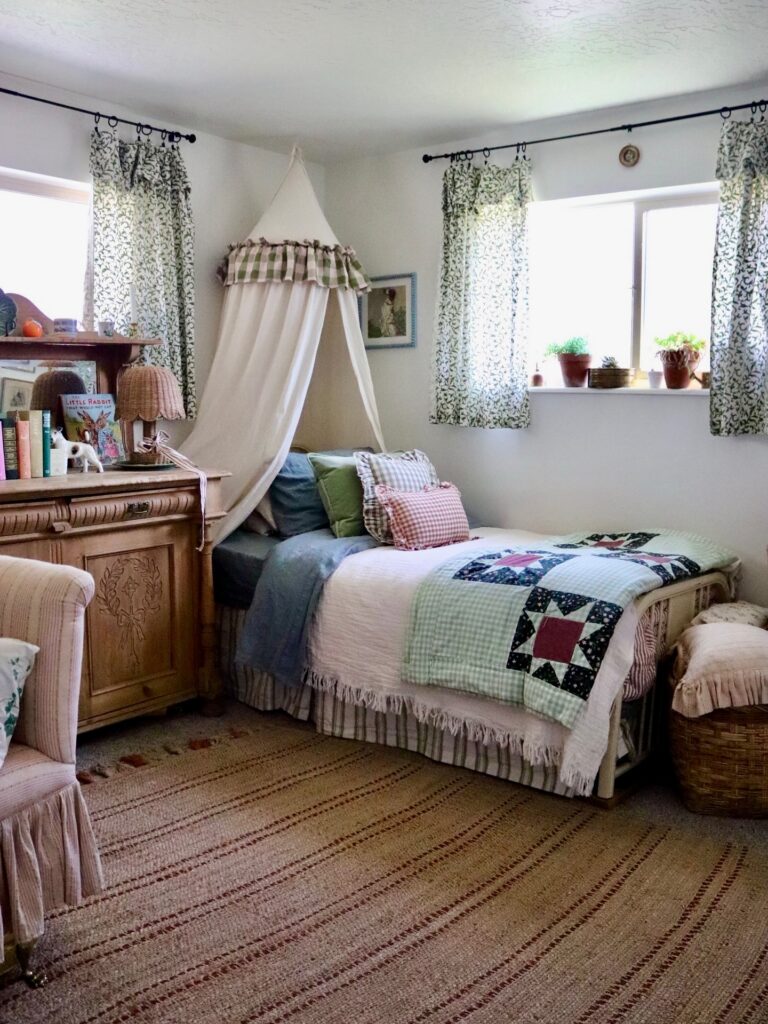
A cone canopy is a length of cream cotton gathered to a point and hung from a single hook in the ceiling, with a gingham ruffle sewn around the top. Muslin or a plain bedsheet works the same way. If you can’t drill into the ceiling, a hoop from a craft store and a cup hook will hold it.
Mix Checks and Florals
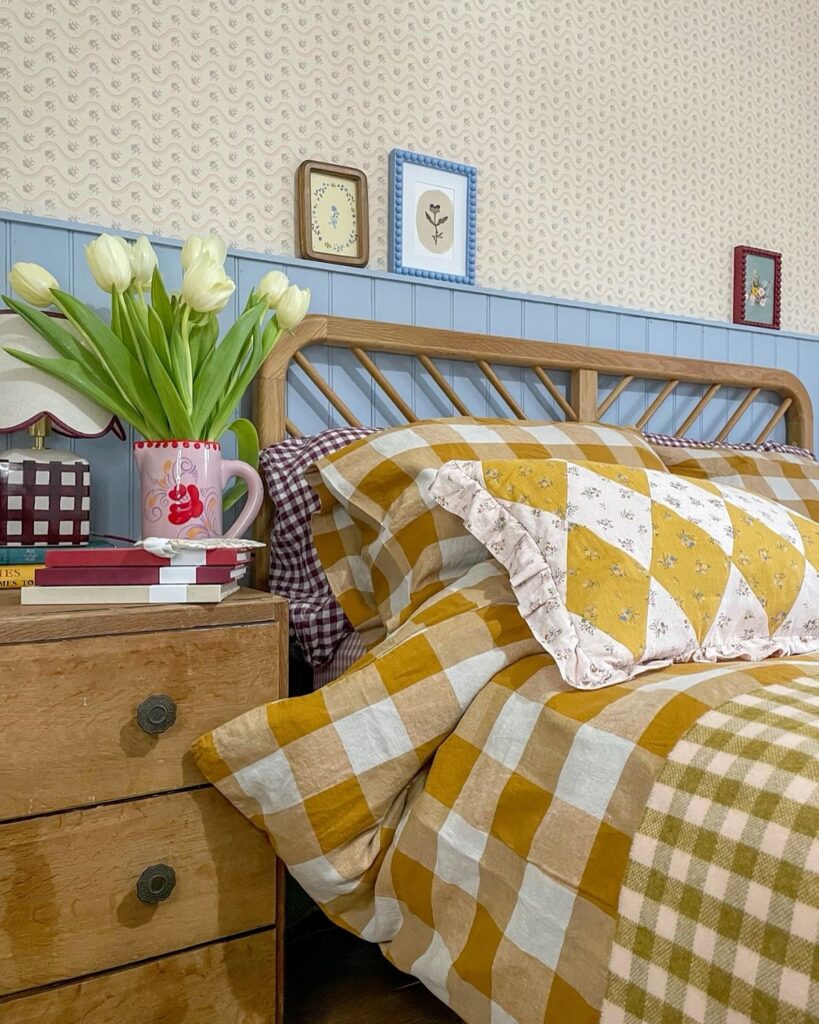
With mustard and cream repeated across the bedding, checks and small florals can sit together without competing. The common mistake is choosing patterns that are too close in scale or color, which makes the bed look busy. Give each print a clear role: use a large check for the duvet, a smaller check on one pillow, and tiny flowers in the quilt blocks.
Leave some plain fabric between them, such as a solid sheet or pillowcase, so the patterns have room to settle. Keep the palette to two or three colors, and repeat those shades across the prints. If every layer has a different pattern and color, remove one rather than adding another.
Mix Floral Bedding With Rugs
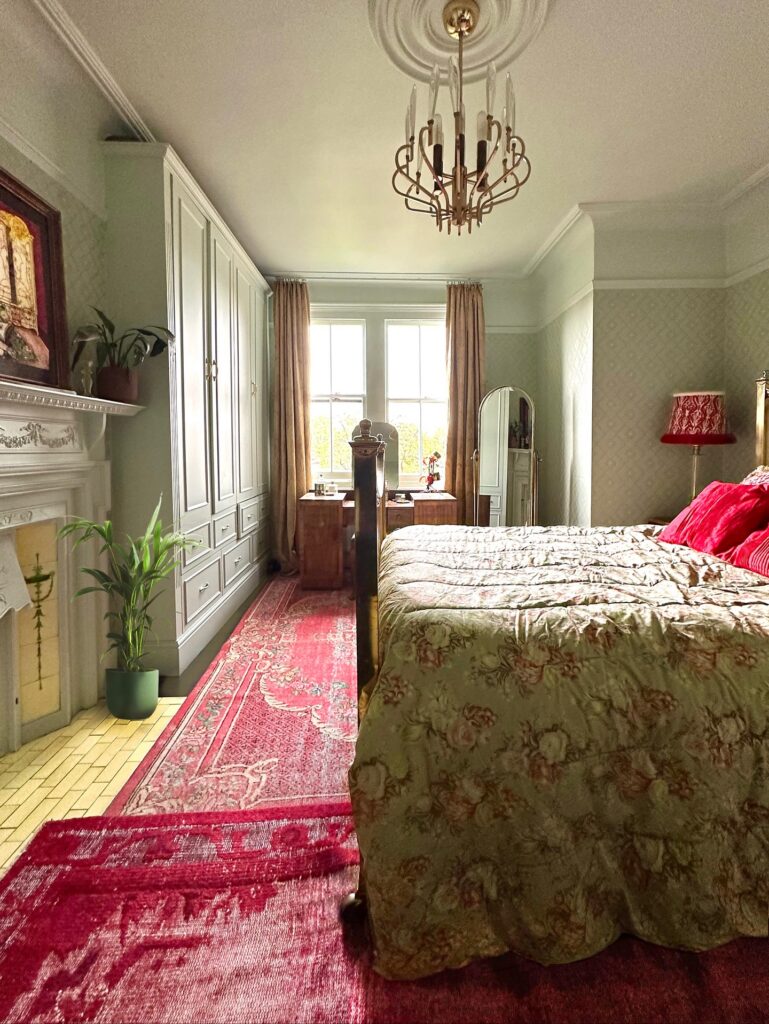
Pair a floral bedspread with red patterned rugs if you like a bedroom with plenty to look at. This is a good choice for anyone who enjoys mixing prints rather than matching sets. If you prefer bare floors or plain bedding, choose a less layered idea.
Mixing Patterns on the Bed
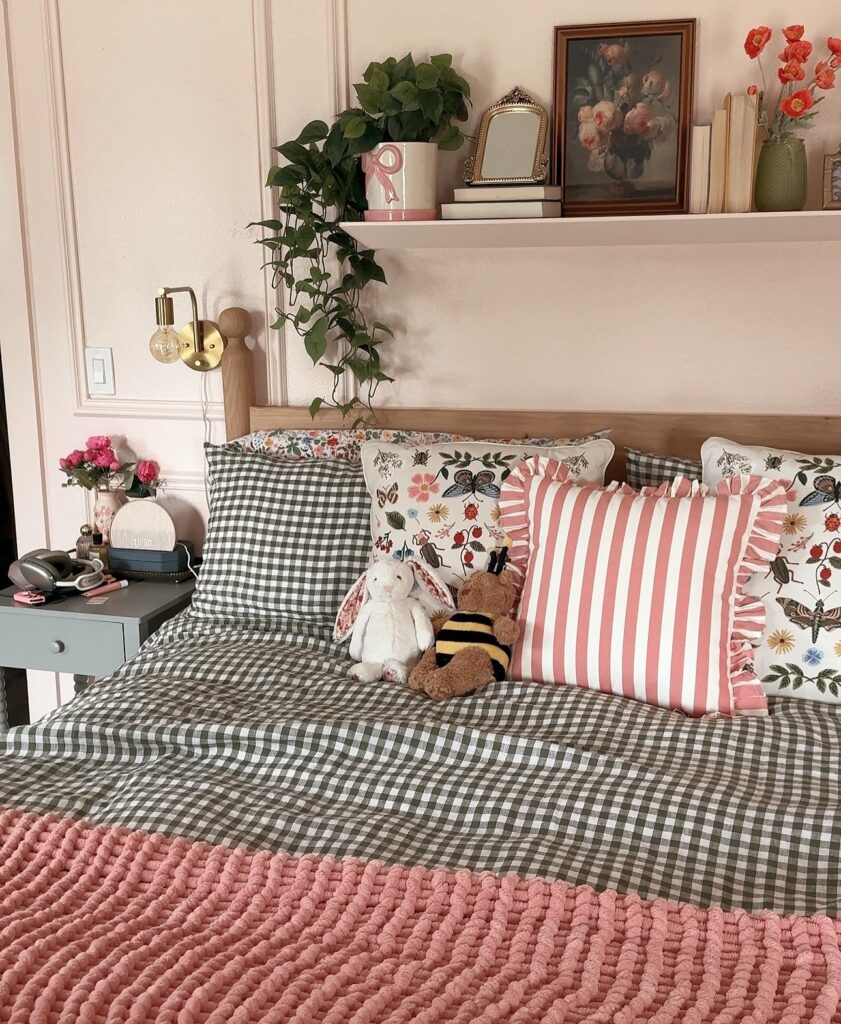
Gingham, stripes and small botanical prints can all sit on one bed as long as they share a few colors. Pick those colors before you buy anything. Here it’s a muted green and a rosy pink, with a little red pulled from the flowers on the embroidered pillows.
Start with the largest piece. A green gingham duvet cover sets the base, and everything else gets chosen to match it. Add pillows next, and make each pattern a different size: small checks on the bed, wide pink stripes on one pillow, a busy embroidered print on another. Two patterns at the same scale compete with each other.
Finish with a chunky pink knit blanket across the foot, which gives the eye a plain texture to rest on. I’d put the ruffled striped pillow at the front, since it’s the boldest one.
Small-Scale Floral Bedding
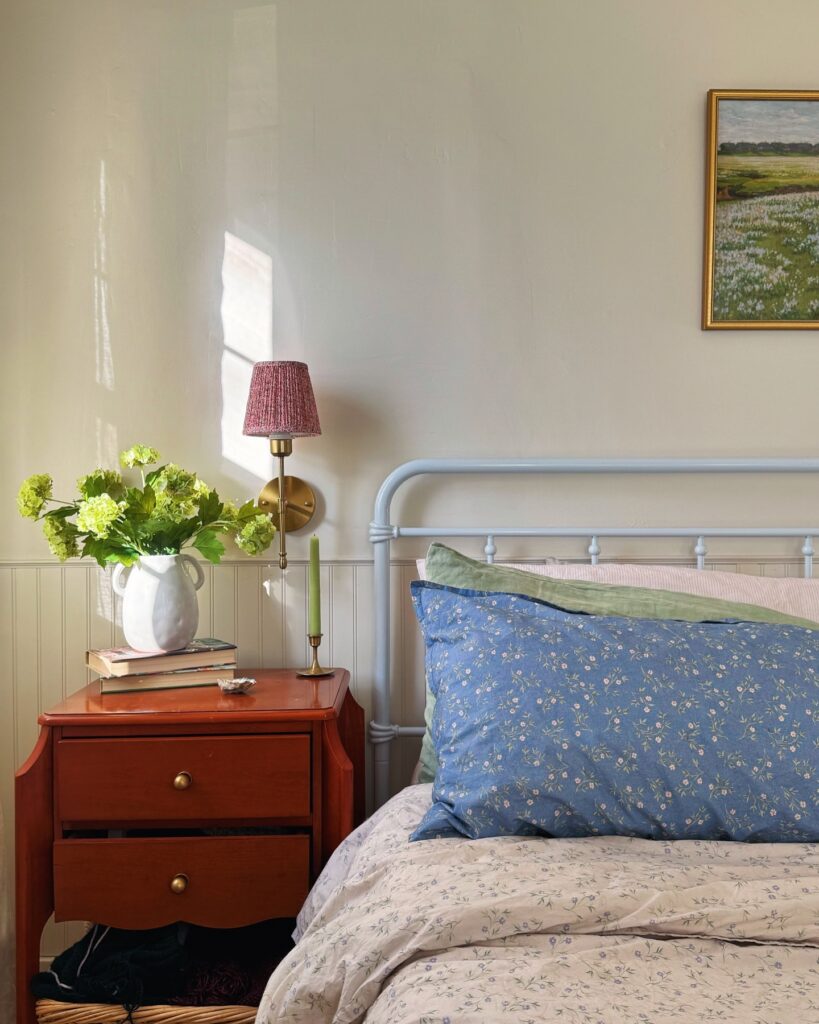
Tiny flower prints keep the bed from feeling busy when they cover both the duvet and pillowcases. A pale ground with blue or faded green stems leaves room for a larger flower motif on one cushion, while a dark ground makes the pattern feel denser and more graphic. A blue floral pillow against pale floral bedding separates the prints through their difference in scale and color. Plain sheets at the edges give the small blooms a little breathing room.
A Gingham Bed Canopy
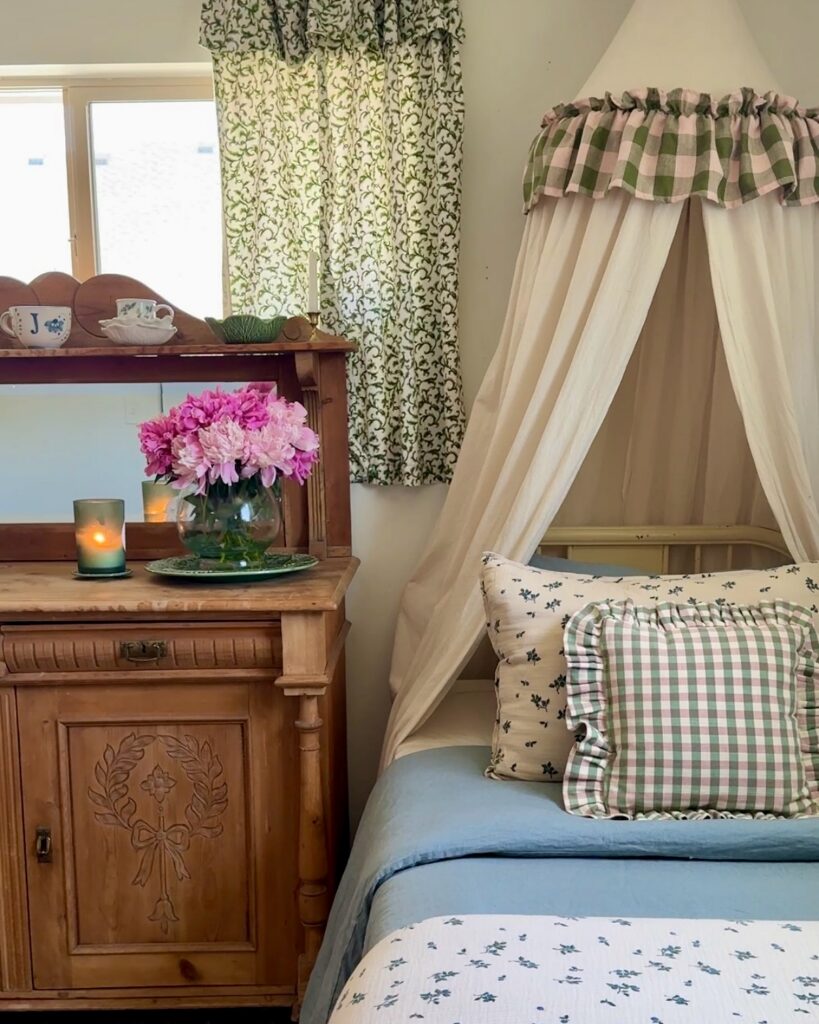
Hang a fabric canopy above the headboard when you want to frame the bed without covering the wall behind it. This works especially well with a narrow bed tucked against a wall, where the drapes can fall down either side rather than into a walkway. Leave the front open so the pillows remain in view and the fabric stays out of the way at bedtime.
For a room that already has patterned curtains, use plain cream fabric for most of the canopy and save the gingham for a gathered top. A cushion in the same check repeats the pattern at mattress level. Allow enough space beside the bed to pull the drapes back without bunching them against nearby furniture.
Matching Fabric to Wallpaper
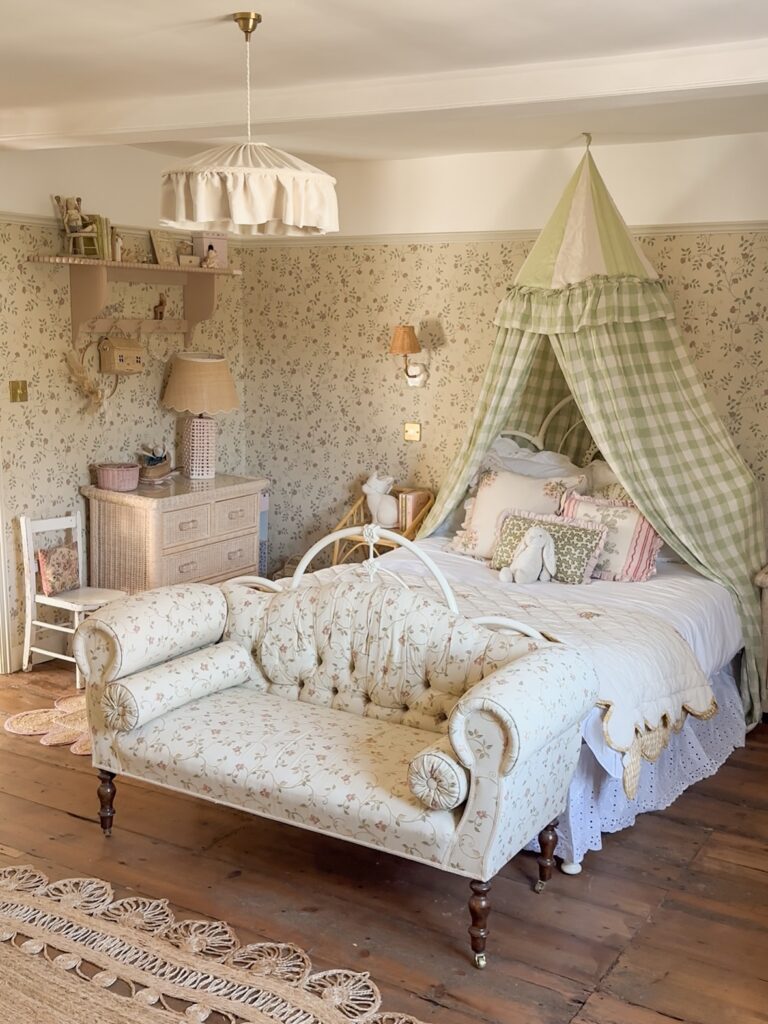
A small floral print on the walls and a small floral on the sofa can turn into a lot of pattern fast. The usual mistake is making every print the same scale and the same color strength, so nothing gets to rest. Here the wallpaper is faint and the sofa floral is only a little bolder, while the canopy is a plain green gingham, which gives the eye a larger, calmer check to land on.
I’d keep one fabric solid or nearly solid, like the white bedding, and vary the scale of everything else.
Leafy Wallpaper
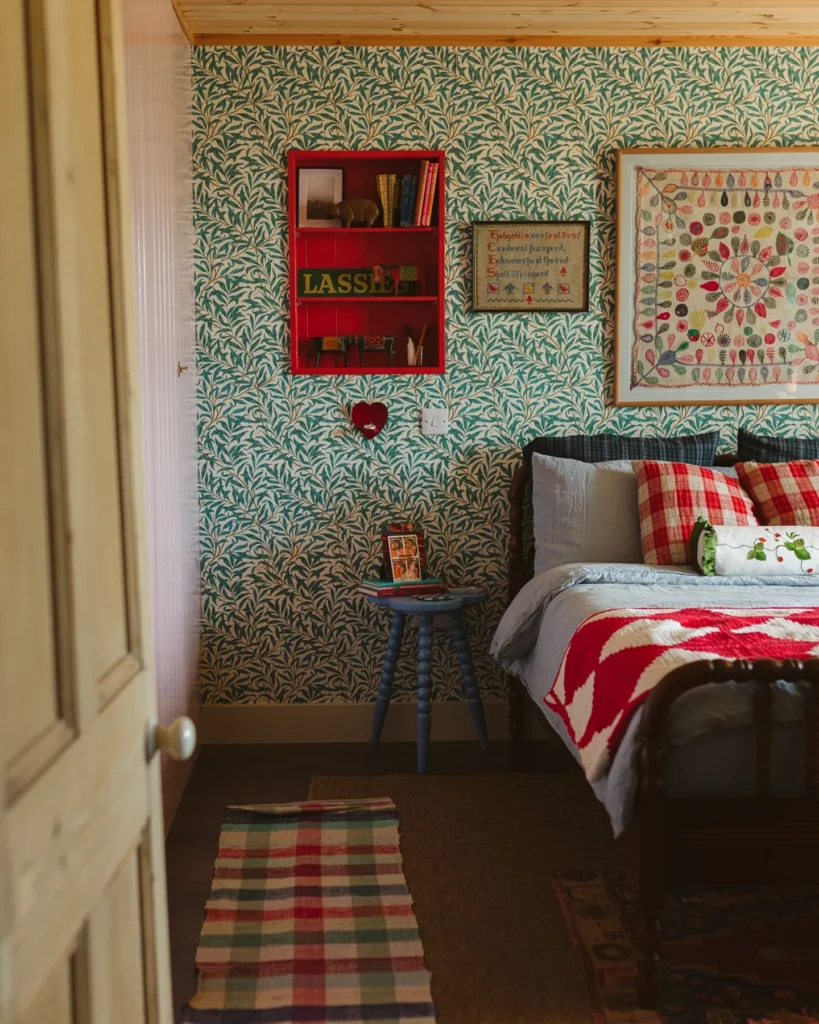
Run a leafy print behind the bed, and let the repeating stems cover one wall or continue around the room. A dense green pattern gives the room its main detail, so plain bedding in gray or white leaves the print easy to see. A wood ceiling also gives the leafy shapes a natural edge without adding another pattern.
Choose paper with a matte surface if you want the wall to feel less glossy. For a lower-cost approach, paint a similar leaf pattern with a stencil, or use a small brush to add simple stems over a solid base color. Keep the leaves close in size and spacing so the wall has a steady rhythm. If a full wall feels like too much, paper only the wall behind the bed and use paint on the others. A small red cabinet can add a clear block of color beside the green.
Paint Branches Across the Walls
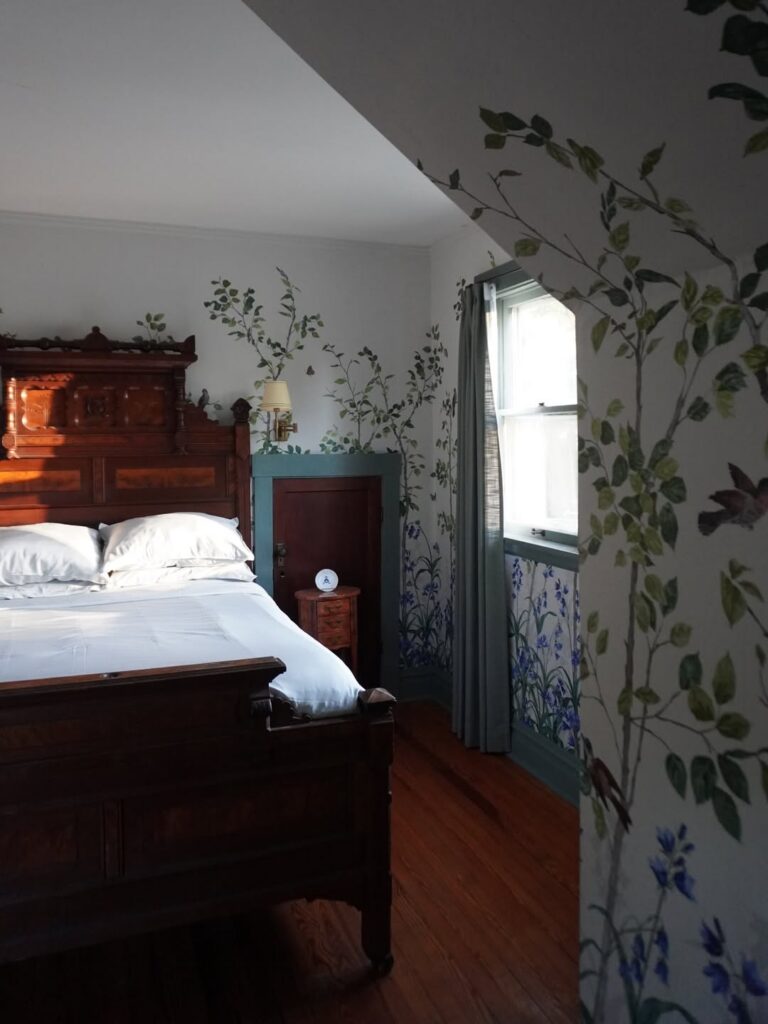
Let painted branches climb around corners and up beneath a sloped ceiling. The space between the leaves matters as much as the pattern, with plenty of pale wall showing through so the stems seem to grow rather than cover every inch. A dense floral repeat would lose that effect, so leave gaps between the branches and gather most of the blue flowers near the floor, where they form a loose border above the baseboard.
Mix Gingham With Floral Bedding
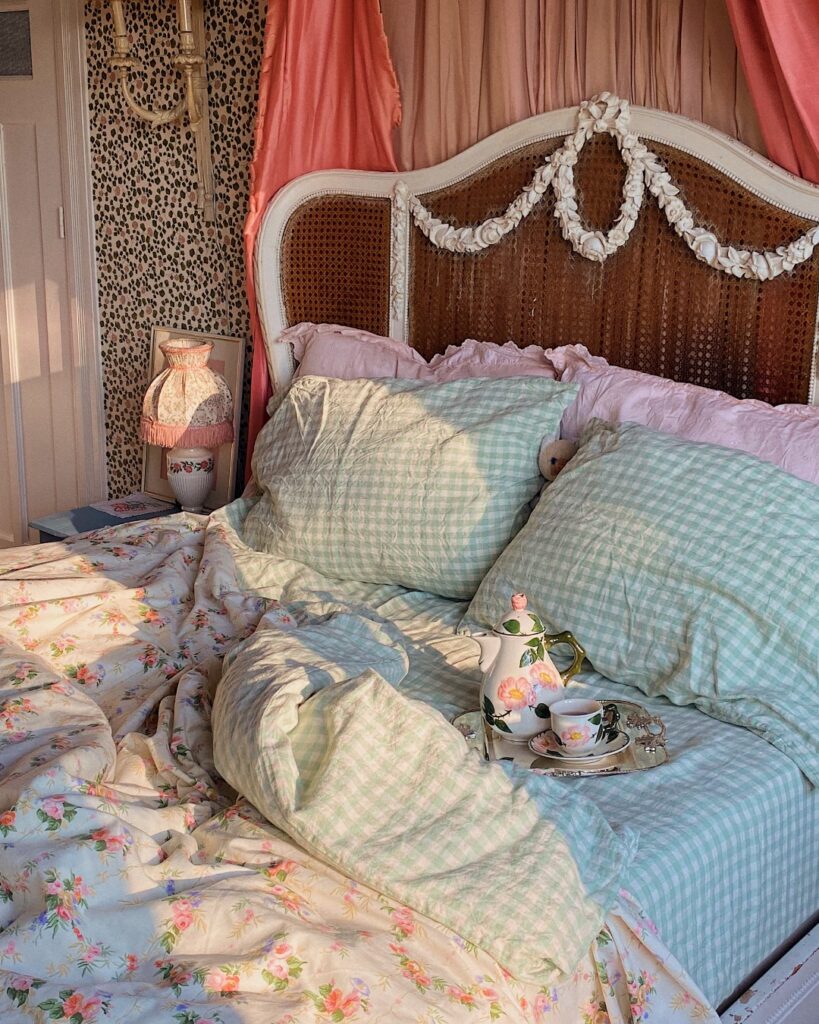
Gingham and floral bedding sit well together when they share a color, and the check can be any size you like. Here the gingham is a small mint green check on the pillowcases and fitted sheet, and the floral duvet has a cream ground with pink and coral roses, so the two patterns never compete.
The size of the check changes how the bed feels. A tiny check, like this one, looks almost like a solid from across the room and lets the roses lead. A check about the width of a thumb would get more attention and start to fight the flowers, so I’d use it on one pillowcase and leave the sheet plain.
Color matters too. Mint and pink are close to opposites on the wheel, which is why they stay distinct. A blue check would go dull next to the same roses, and I’d pick a green with a little yellow in it.
Floral Painted Wardrobe
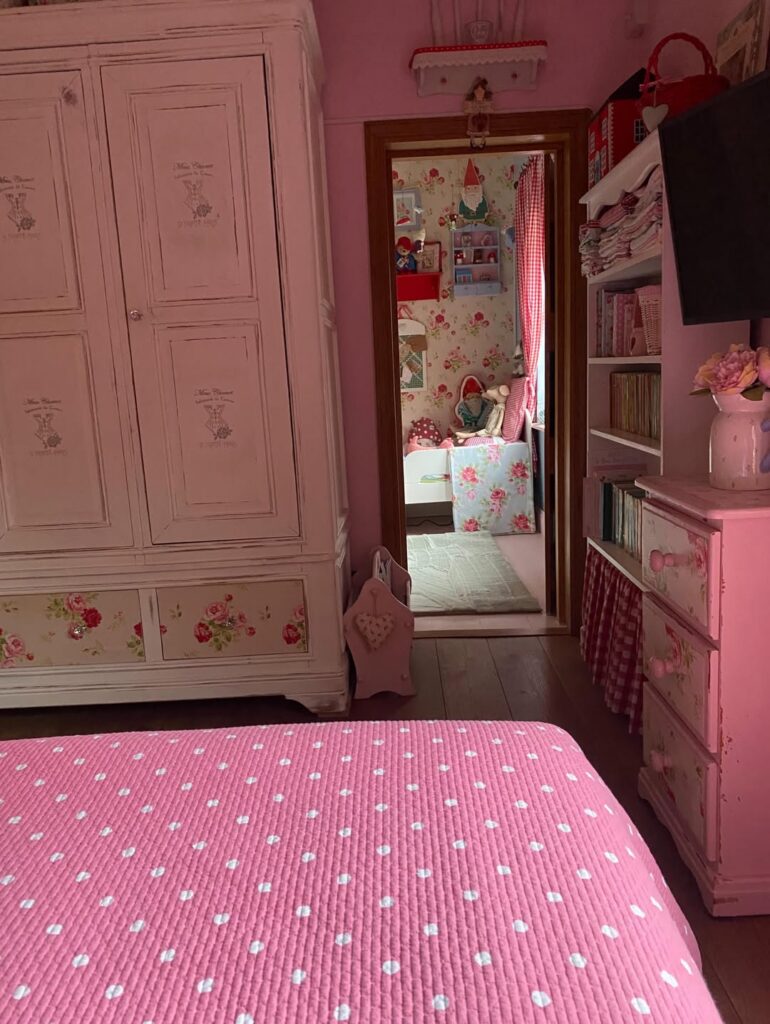
Across broad door panels, place small floral motifs inside the inset frames, leaving a clear border around each one. Start by cleaning the wood and removing the knobs; then sand any rough spots and apply primer if the existing finish is glossy or uneven. Paint the cabinet in a pale ground color, letting it dry fully before adding the flowers. A stencil gives repeated blooms a steady shape, while a few hand-painted leaves can soften the pattern.
The step that matters most is testing the scale on paper first. A motif that fills the panel can feel crowded, so make a few sizes and hold them against the doors before painting. Finish with a protective clear coat suited to the paint, and put the original hardware back or use plain knobs that do not compete with the florals.
Choose a Wooden Four-Poster
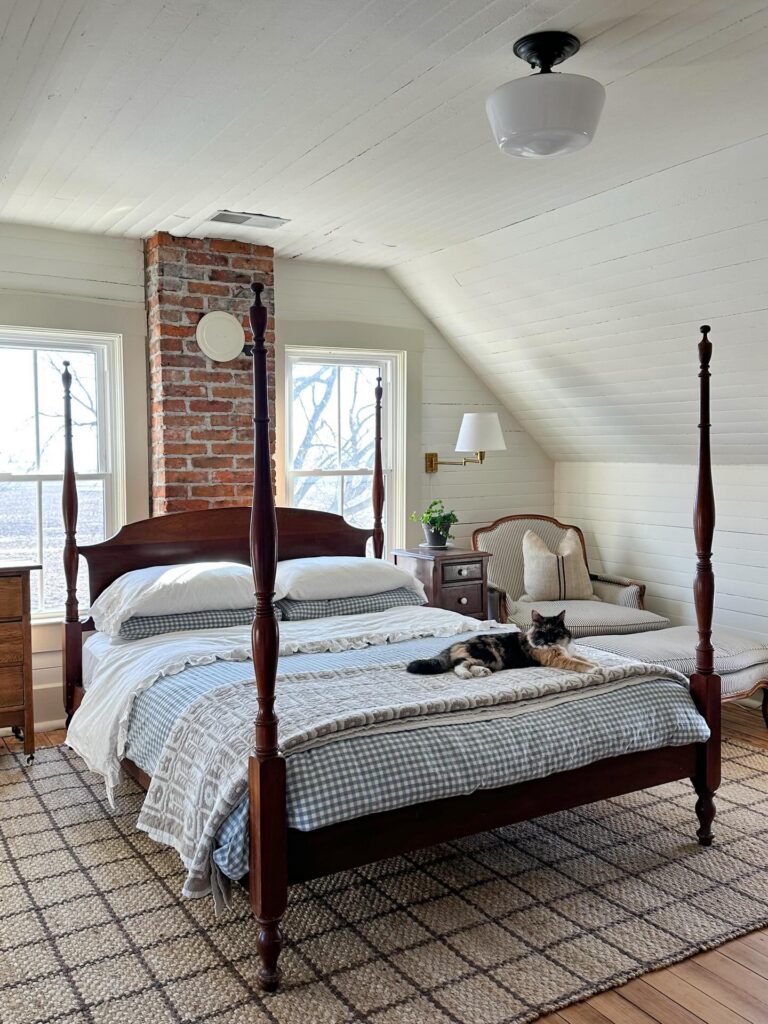
If you like a bed with some height, a wooden four-poster gives you that without needing a canopy. The narrow posts leave the bedding visible, so this is a good choice if you enjoy layering quilts but want the frame to stay in view. If your ceiling slopes directly over the bed, choose a lower frame rather than squeezing tall posts beneath it.
Mixing Three Fabric Patterns
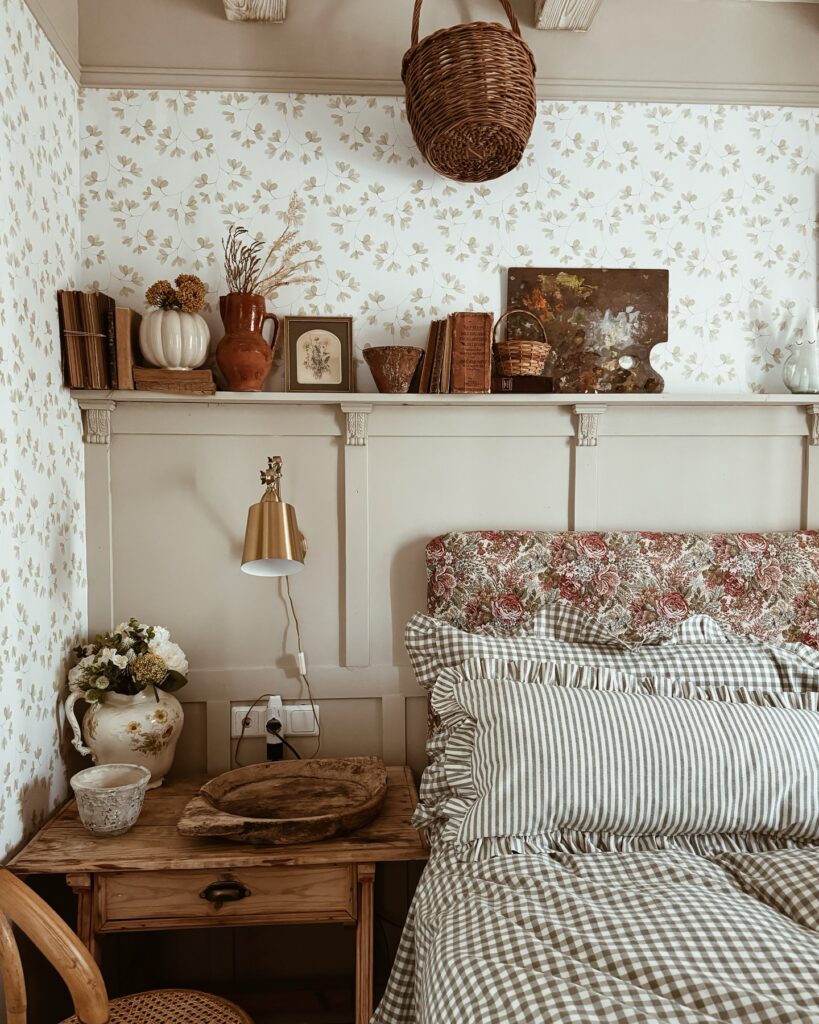
The headboard is covered in a large rose print, the pillowcases are striped with a ruffled edge, and the duvet is a gingham check. They hold together because the colors stay in one range: faded pink and green in the floral, and a muted grey-brown in the stripe and check. Cotton or linen works best for the ruffled pillowcases, since both keep a ruffle without going limp.
If you can’t find a floral headboard, a vintage tablecloth or a length of curtain fabric pinned behind the pillows does the same job.
Small-Scale Floral Bedding
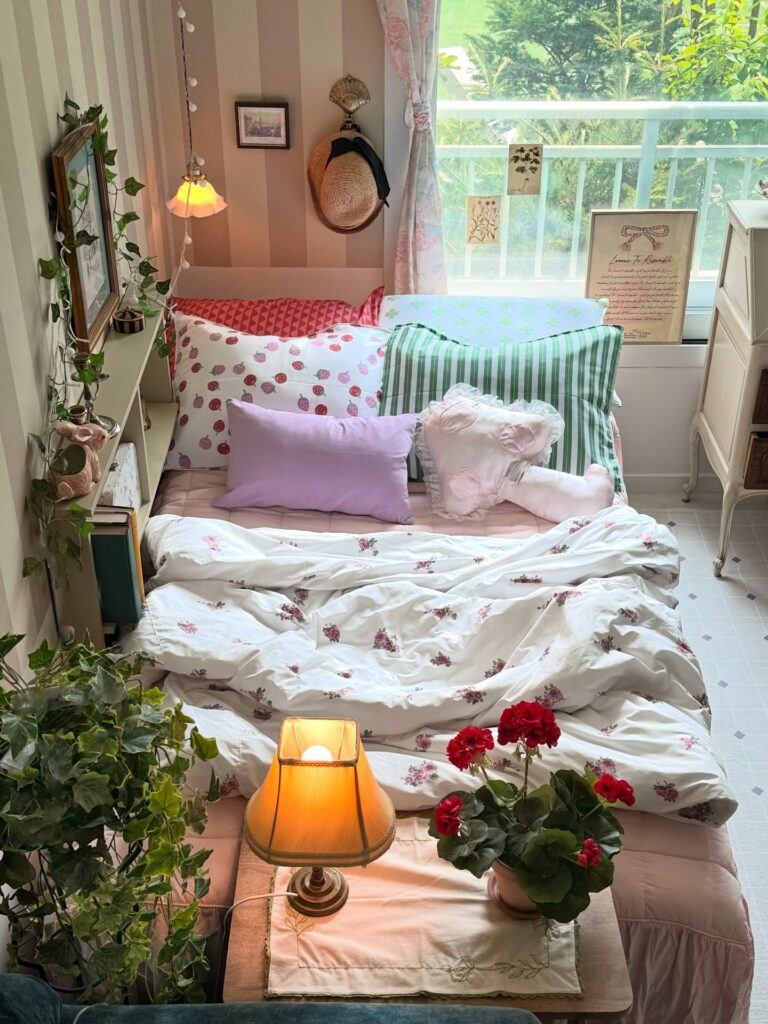
A small floral repeat gives the bed a patterned surface without making every part compete for attention. Choose a white ground with rose sprigs, then let a plain blush sheet show at the sides; the solid color gives the print room and carries its pink through the rest of the bed. For a quieter finish, choose flowers in one muted shade and leave the larger pillows plain. That change lowers the contrast, so the bed feels less busy even when the duvet is loosely folded.
The scale matters as much as the color. Tiny blooms look more scattered across a full-size cover, while larger flowers are easier to see from the doorway. Keep the print on the duvet and use solids elsewhere, so the pattern stays in view.
Tie Gingham Around a Bedpost
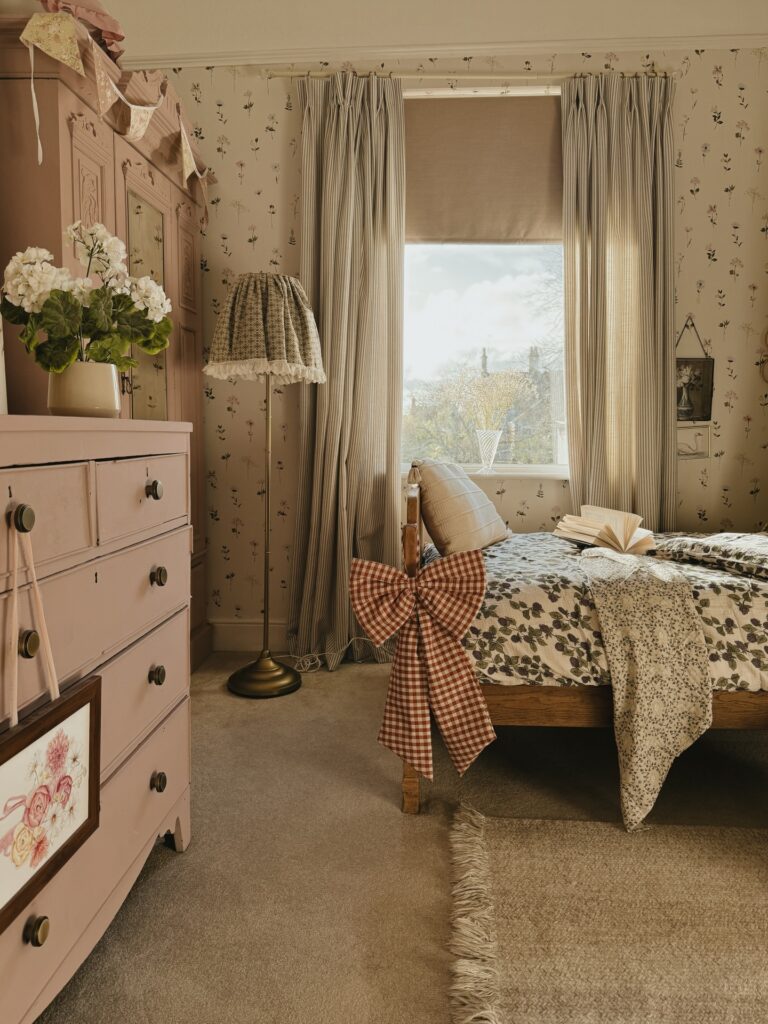
Tie a wide strip of gingham around a wooden bedpost, with loops large enough to extend beyond the post on both sides. The generous size is what makes this bow worth borrowing: a narrow ribbon would almost disappear against floral bedding. Use fabric rather than ribbon if you want broad loops that fold instead of holding a stiff shape.
Let the tails hang well below the knot, but stop them short of the floor so they stay clear of feet. The red checks give the bow a clear outline against the smaller flowers on the quilt. Without that change in pattern size, the fabrics could blur together, and the bow would be much harder to pick out from across the room.
Gingham Bedding in One Color
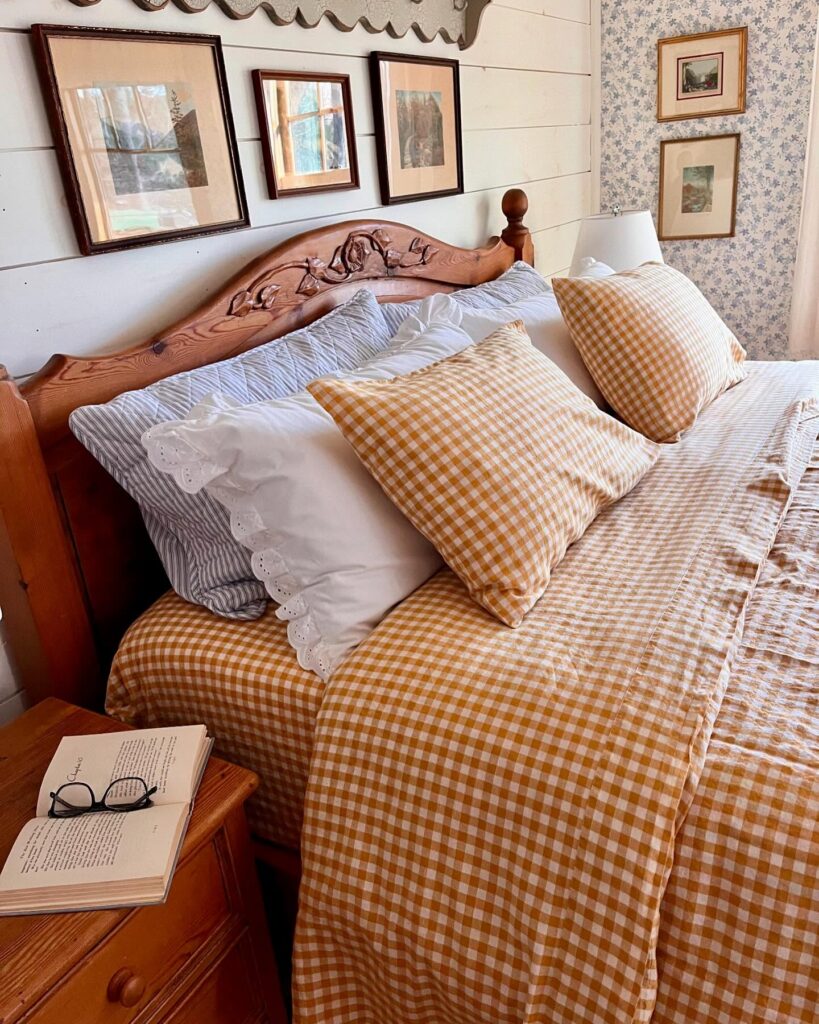
Pick one color for the gingham and use it on the fitted sheet, the flat sheet and the pillow shams, so the check becomes the base of the bed. Start with the sheets, since they cover the most area and set the shade. Then choose shams in the same mustard check, and put a white pillow with an eyelet edge and a blue ticking-striped one behind them.
The step that matters most is keeping the check small and the color the same across every piece. Mixed sizes of check look like a mistake, while a single size looks planned. I’d leave the quilt or blanket in a plain linen at the foot.
Floral Bedding
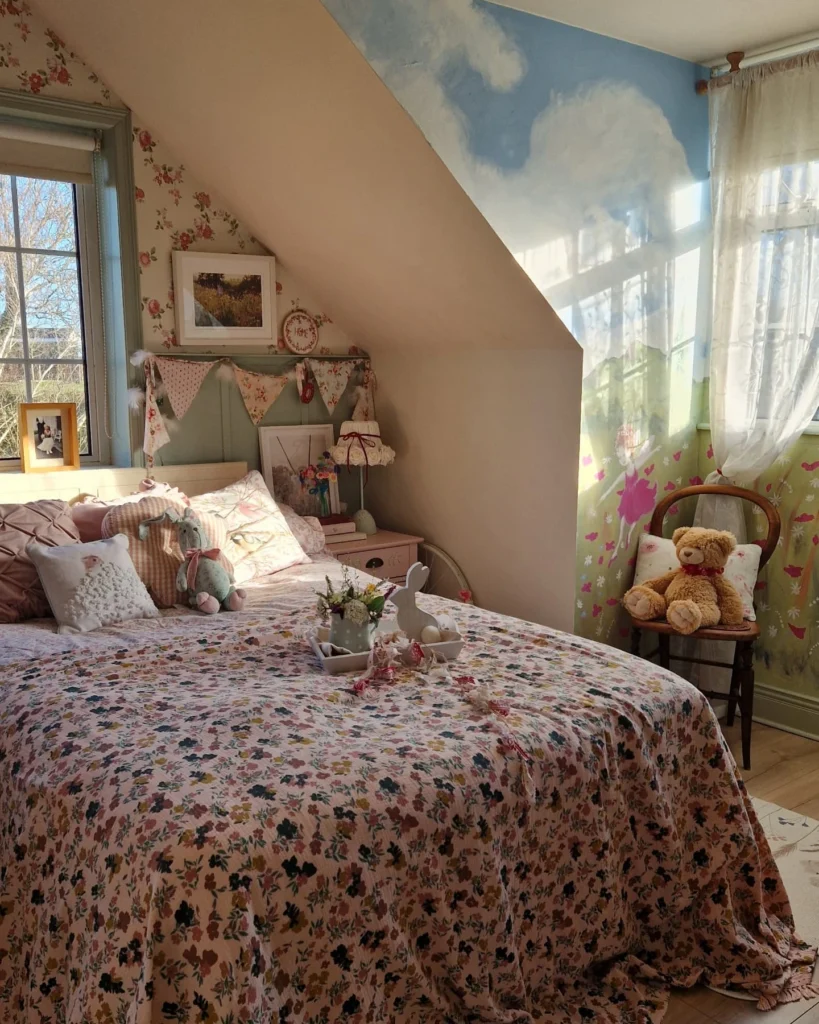
When the bed is covered in tiny florals, a second patterned surface can make the room feel crowded, especially if both prints use similar colors and scale. Let the bedding carry the dense pattern, then use a quieter wall finish or a larger, spaced-out motif nearby. The pink floral coverlet sits against a large blue sky mural, where the change in scale separates the prints.
Printed pillows, bunting, and curtains can crowd the bed and pull focus from the coverlet. Limit extra patterns to one small area, and repeat a color rather than adding another busy motif.
Butterfly Prints Above the Bed
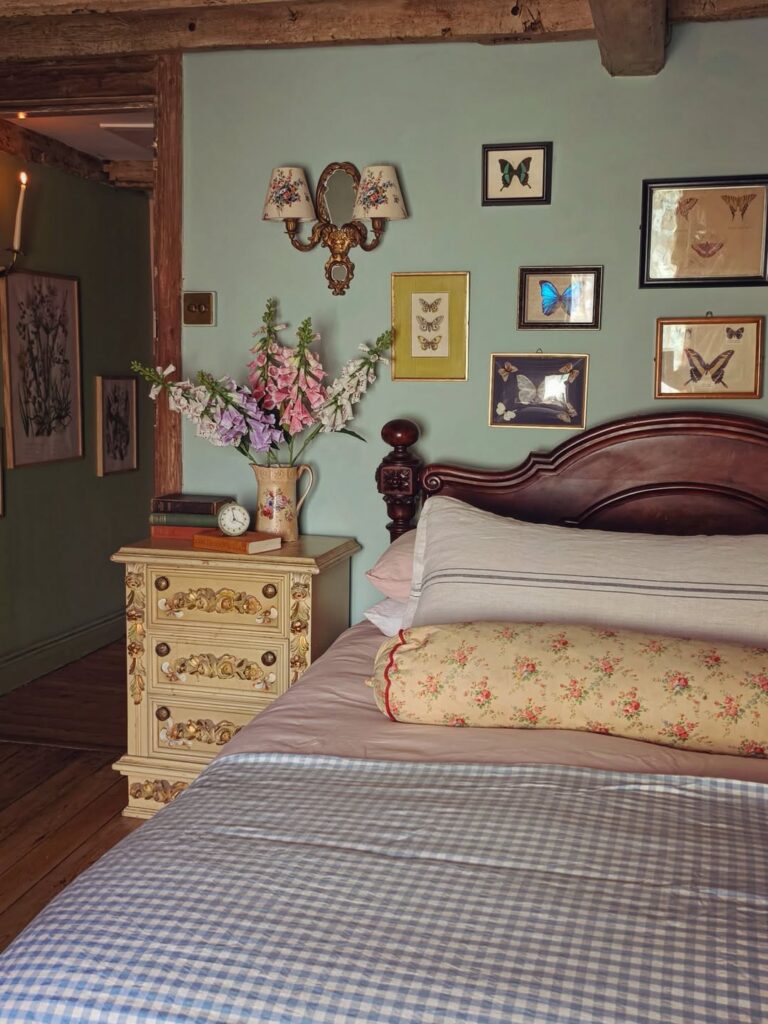
Hang a cluster of butterfly prints above one side of the headboard rather than centering a single large picture over the bed. This works well when a wall light already takes up part of the wall, leaving a narrow patch for smaller frames.
Start the lowest frame just above the headboard, then spread the others upward and toward the bedside table. Leave enough space around the light for its shape to stay distinct. A mix of dark wood and gold frames lets you build the group over time, while the repeated butterfly subject gives the pictures something in common without needing matching sizes or equal gaps.
Green Gingham Bedding
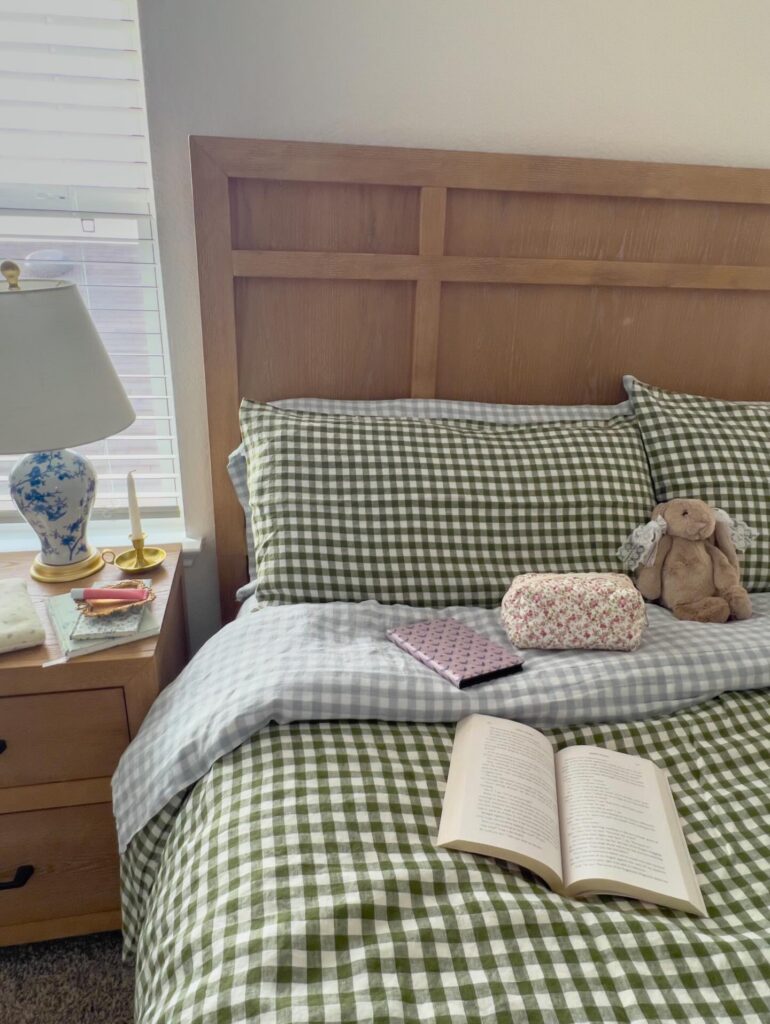
Green gingham bedding works best for someone who likes a bed that looks a little lived in. The check is small and the green is muted, so a duvet and pillow shams in the same pattern sit comfortably against a light oak headboard without competing with it. A paler blue-gray gingham underneath keeps the pattern from feeling like one big block.
It’s a good fit if your room already has wood furniture and soft neutral walls, and you want pattern without a lot of color. If you prefer a plain, tailored bed, or your walls and furniture already carry a lot of pattern, I’d pick one of the solid linen ideas from this list instead. Two checks and a floral pouch on the same bed is about my limit.
Green Gingham Layers
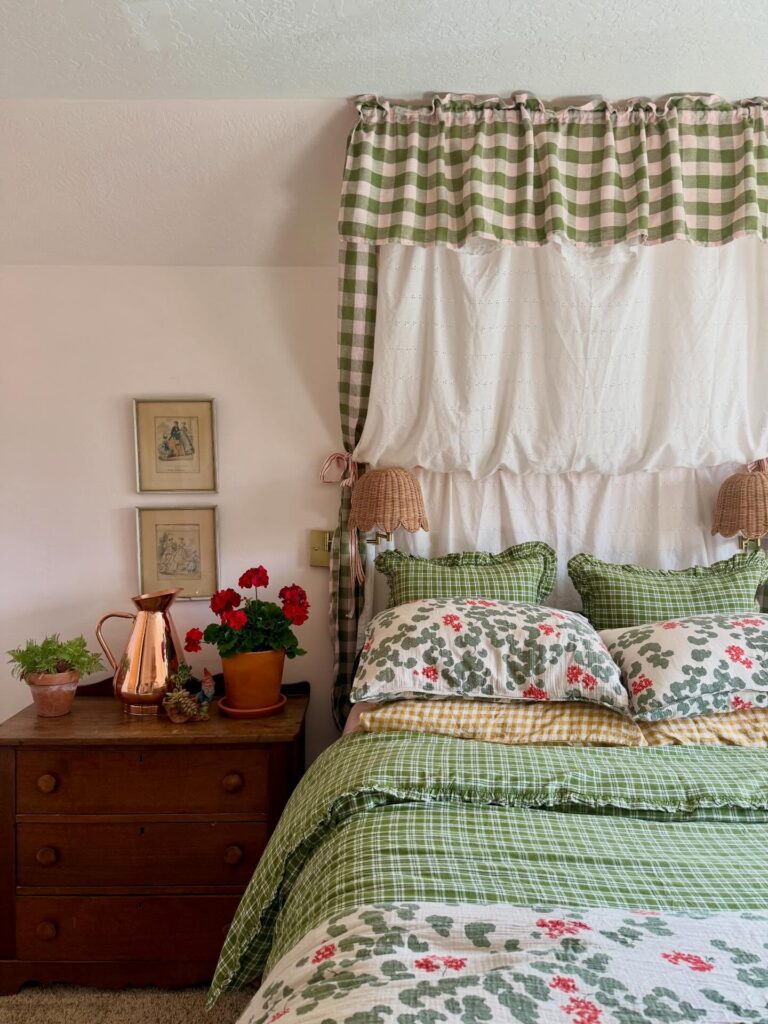
On a bed with a floral quilt, green gingham gives the pattern a clear place to land. Use it for the duvet or a folded blanket at the foot, then repeat the check in one other spot, such as a pair of pillowcases or a short curtain valance. The repeat links the window and bed without covering every surface in the same print.
This works well in a bedroom with white walls, where the checks can set the color scheme without competing with wall art or wood furniture. Keep larger checks on broad pieces, like the duvet and curtains, and use smaller checks for a narrow layer across the bed. A floral pillow or quilt can sit between them; the print mix stays legible when the gingham colors are limited to green and cream. If the bed is already patterned, use gingham only at the window or as a folded throw, rather than adding another full cover.
Foot of Bed Dresser
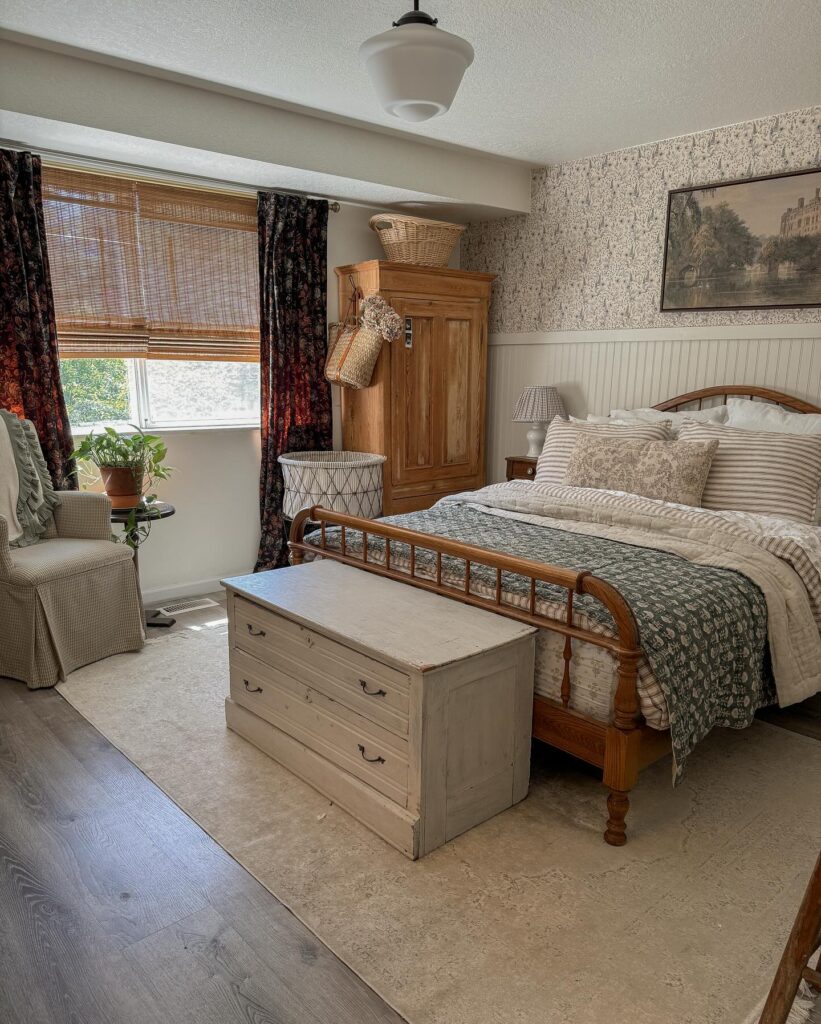
Place a low wooden dresser at the foot of the bed for folded quilts, spare sheets, and clothes that need drawer space. A cream finish with worn edges breaks up the wood tones without hiding the grain and shape of the bed frame. Look for solid wood, a flat top, and small metal pulls rather than a tall chest that blocks the footboard.
If you already have a dresser, paint the outside and leave the drawer interiors bare, making sure paint stays off the runners. An unfinished pine chest is another option; use a pale furniture paint and let wear develop through use rather than sanding every edge. A wooden blanket box gives you similar storage if drawers would be hard to open. Leave enough room between the piece and nearby furniture to pull each drawer out fully and stand in front of it.