17 Living Room Tv Wall Ideas
This site contains affiliate links. We may earn a small commission, at no extra cost to you. Article may contain some images for illustrative purposes only .
This list gives you 17 ideas for the living room wall that holds your TV. Expect a mix, so you can pick by your own space and habits instead of copying a look that does not fit. Some ideas suit small rooms where every foot counts, and others make more sense in a large room with space to fill. Some are light changes that a renter could handle, while others are bigger projects for people who own their home and want a lasting change. A few work for those who want the screen to stand out, and a few for those who want it to blend in. The TV is usually the largest thing on the wall, and often the first thing you see. That wall deserves thought. Read through all 17 and note the ones that match your room, your budget and your free weekends. Then start with the one that feels easiest.
Framed TV Wall
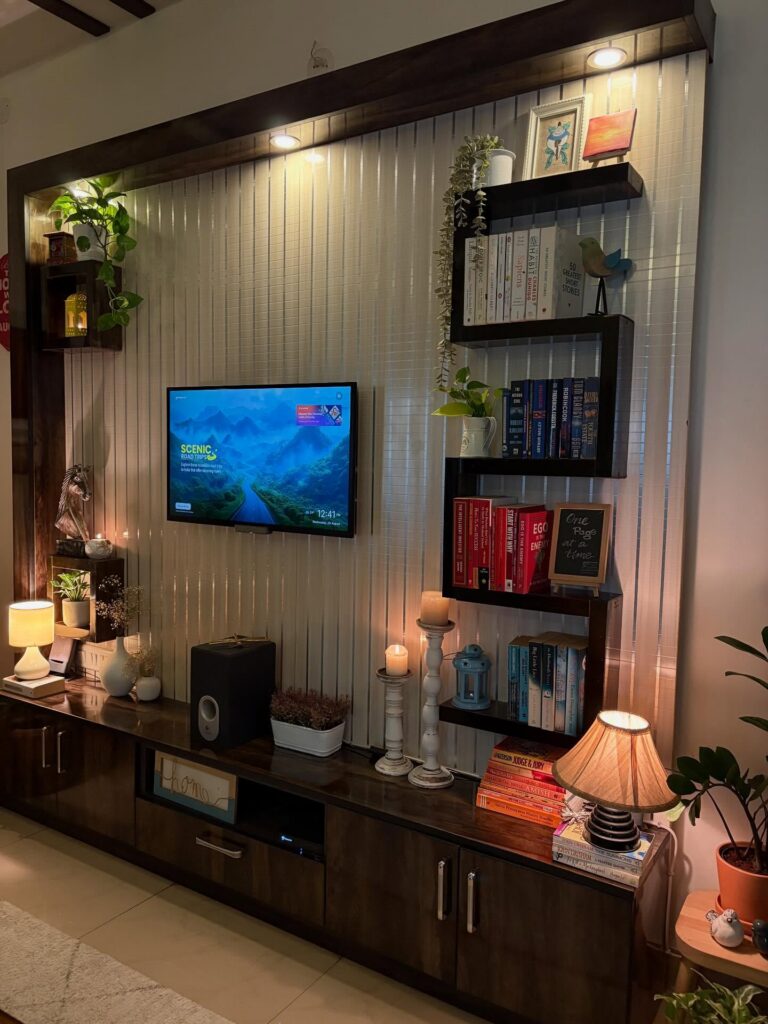
With the screen set into a wood-framed panel and open shelves running beside it, this approach works for readers who want books and small objects to share space with the TV. The built-in outline gives the wall a clear edge. Choose another idea if you prefer blank walls, have little room for dust-catching displays, or want the screen to stand alone.
Built-In TV Shelving
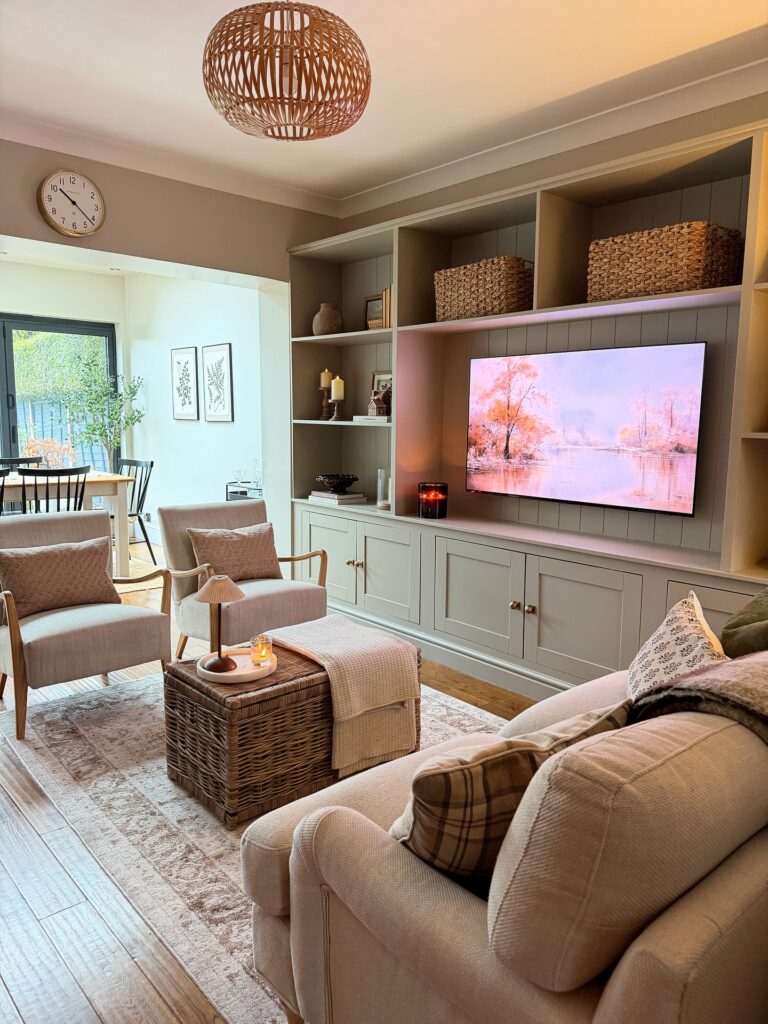
On a long living room wall, set the TV into full-height shelving with closed cupboards below. This works well when the wall also needs to hold books, baskets and the things you don’t want on display. Give the screen a wider bay than the shelves beside it, with enough clearance that it doesn’t look wedged in.
Run the lower cupboards beneath the whole arrangement rather than stopping at the TV. Painting the shelves, cupboard doors and backing the same shade ties the storage together without adding another finish around the screen.
Gallery Wall Beside the TV
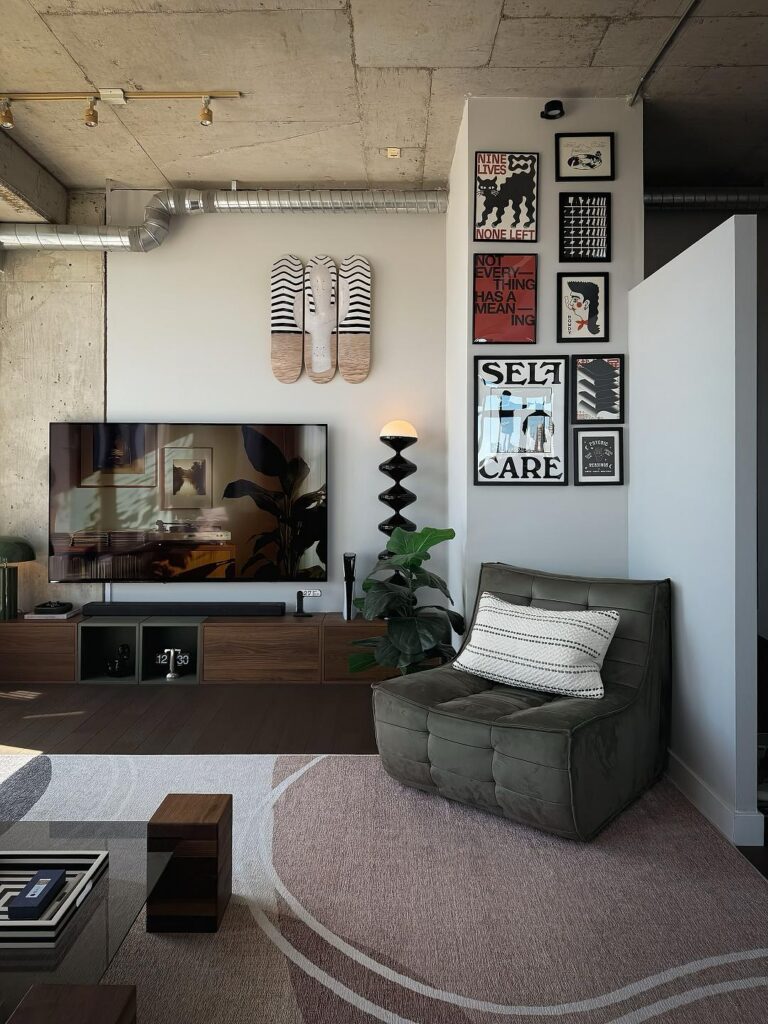
Putting the art on the wall next to the television, not above it, keeps the screen from being the only thing your eye lands on. Here the frames are stacked in a tall column on the narrow wall to the right, and the TV sits low on its own stretch of white wall with a skateboard-deck triptych above it.
What holds the column together is the frames. They are nearly all black, so posters in red, cream and black can differ a lot in style and still look like one group. With mismatched frames, the same prints would look like a pile of unrelated things. The gaps between them are also tight and even, which matters more than the order they hang in.
I’d keep the largest print near the bottom, as it is here, so the group has some weight above the chair. A tall lamp and a leafy plant on the floor beside the TV carry the same vertical line down to the ground.
Wood Shelves Around the TV
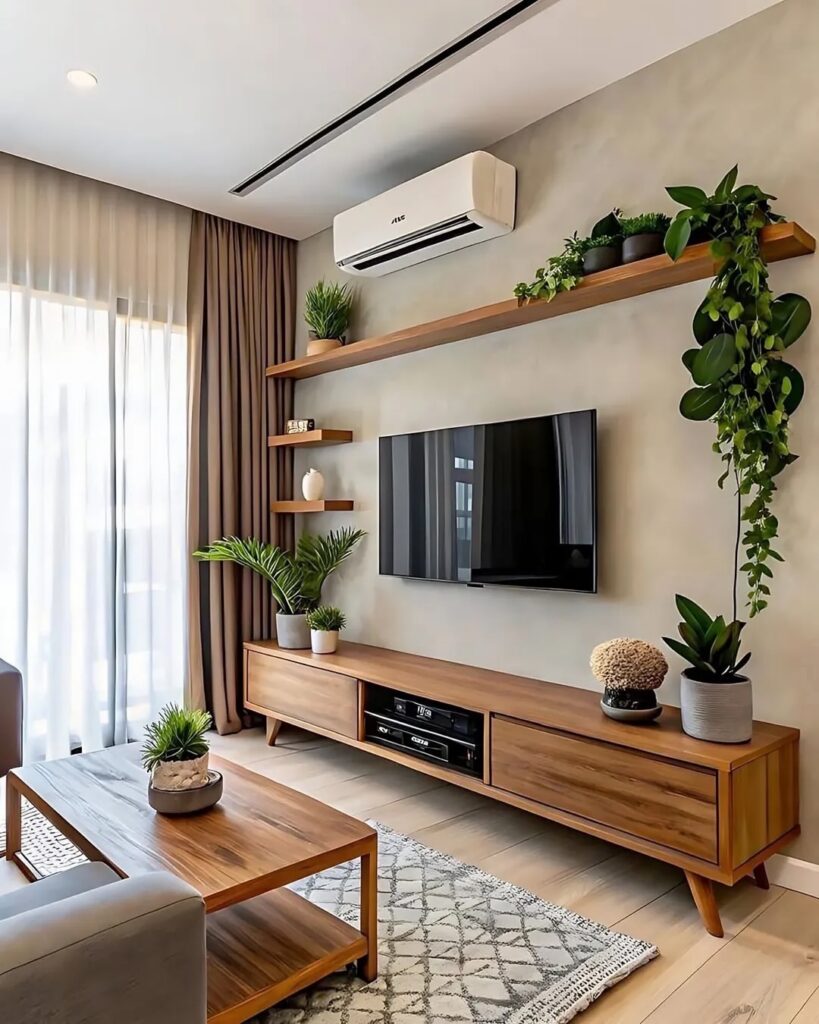
A long wood shelf above the television gives the wall a horizontal line, while shorter shelves beside it add room for small objects and plants. Pair the shelves with a low media console in a similar wood tone so the television sits between the two levels of storage.
Solid wood brings visible grain, but plywood with a wood veneer can give a similar look at a lower cost. For a lighter setup, use one long shelf above the screen and leave the sides open; a narrow console keeps equipment and cables contained without crowding the wall. Check the wall studs before mounting loaded shelves, especially if you plan to set pots or heavier decor on them. Hang the screen with enough space below for comfortable viewing.
Recess the TV Within Built-Ins
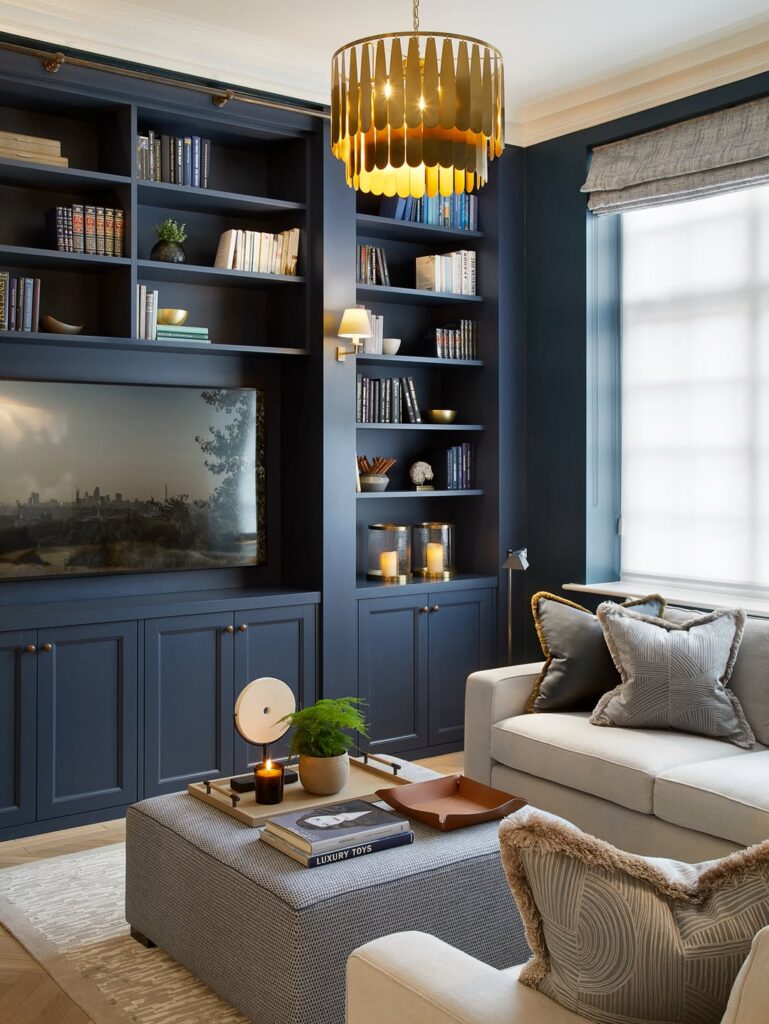
Before planning the shelves, mark out the TV opening and run the cables behind it. Build cupboards below and bookcases around the screen, leaving the clearance your TV needs for airflow and access. Paint the entire unit one dark blue, including the back of the recess, so the screen’s black edges draw less attention.
Built-In Cabinets Around the TV
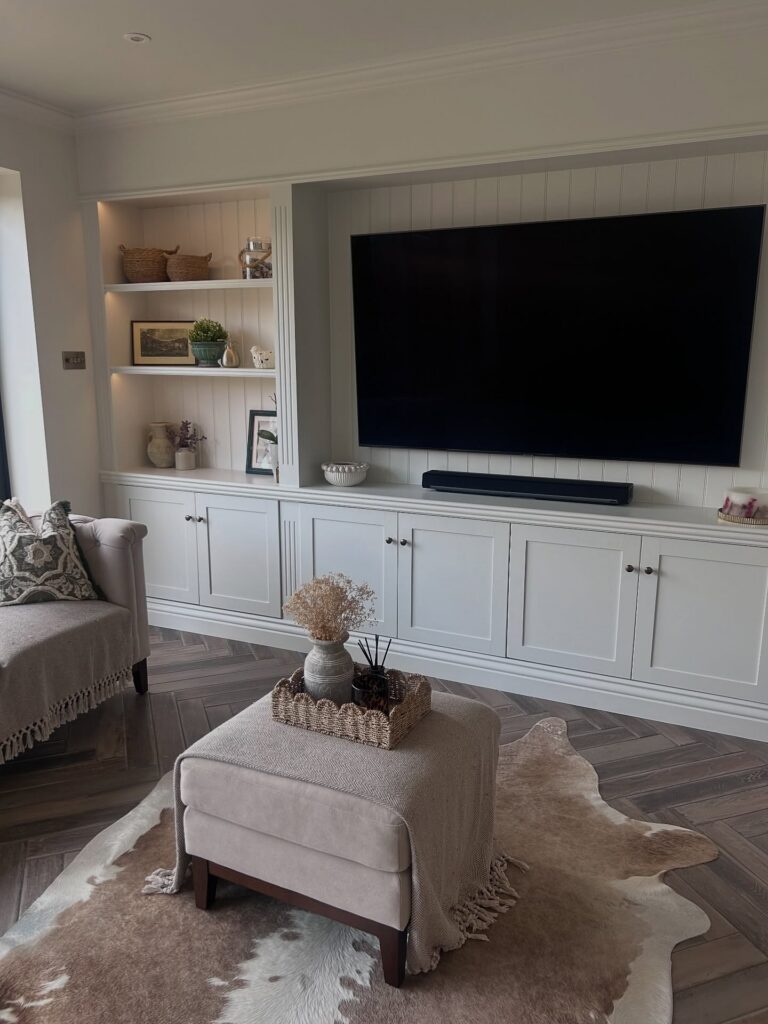
A television set into a recessed panel with cabinets below and shelves to one side only looks built in if the proportions are right. The usual mistake is making the shelves too deep or too crowded, which pulls attention off the screen and makes the unit feel heavy. Here the shelves are shallow, with a few baskets and small objects on them, and the cabinet doors are plain and flat.
I’d also run the lighting under the shelf edges, as these do, so the objects are lit and not the glare behind the screen.
Arched Wood Niches
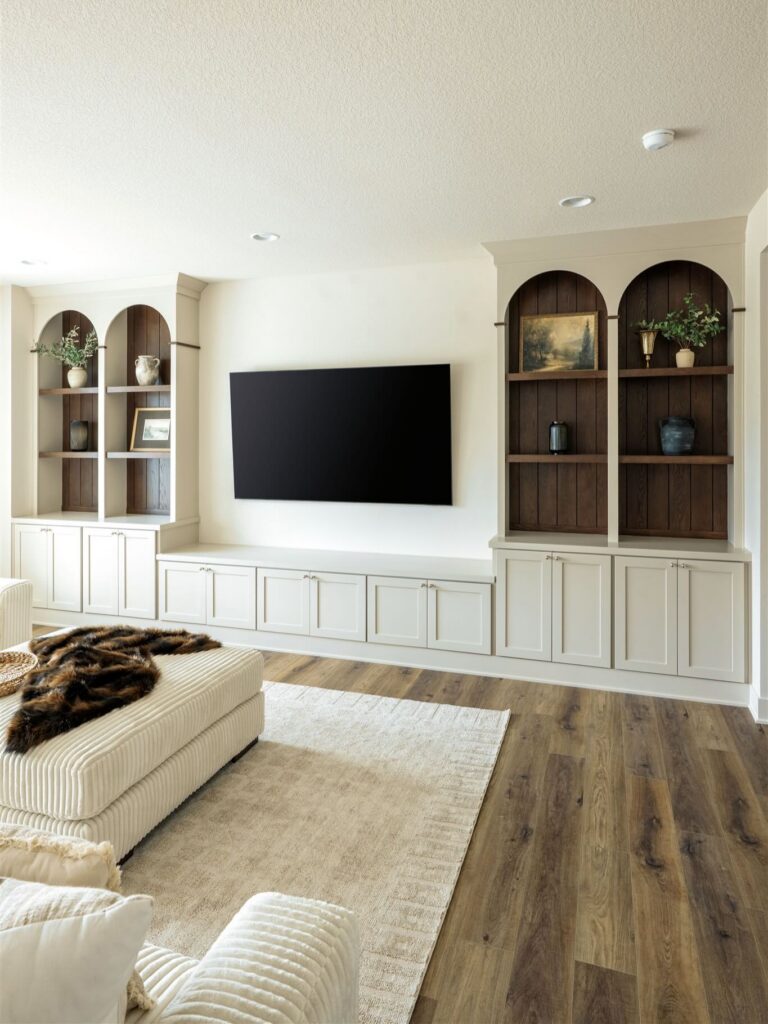
Dark wood backs inside arched shelves give a built-in TV wall more depth without adding color across the whole room. The TV stays on a plain pale section between the cabinets, so the screen has clear space around it; the wood appears at the sides instead. Keeping the lower cupboards and trim light makes the darker panels feel contained, while the vertical boards draw the eye upward. This approach works well when you want storage to frame the screen, rather than build a full dark feature wall behind it.
Frame the TV With Trailing Plants
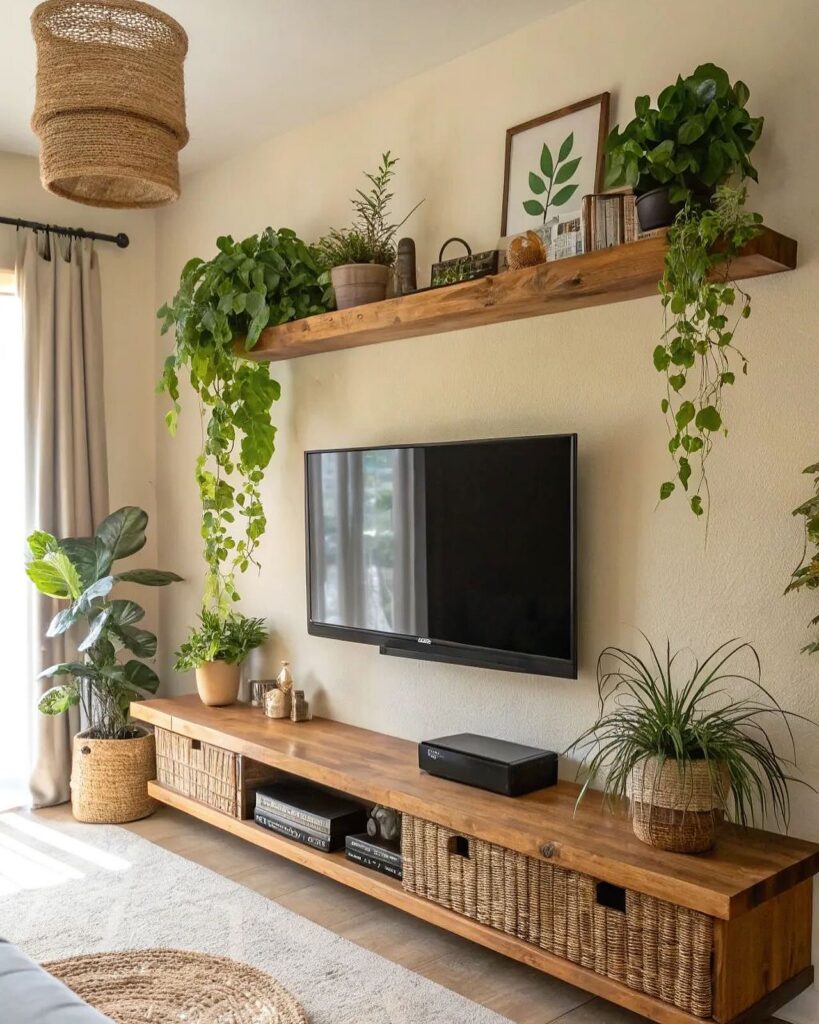
Let plants trail from both ends of a wood shelf above the TV. The stems reach down beside the screen, so the greenery frames it rather than sitting in a row overhead. Without those hanging lengths, the shelf and TV would feel like two separate bands on the wall.
Wood Slat Accent Panel
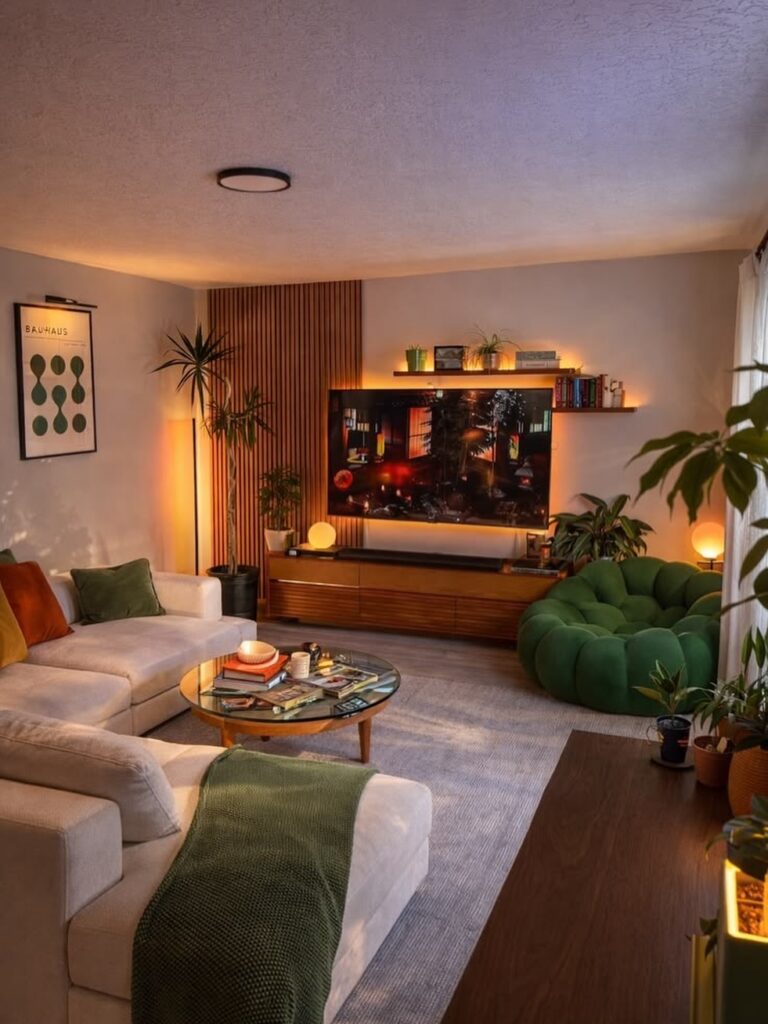
A narrow band of vertical wood slats behind the TV gives the wall some depth without covering all of it. Here the panel is only a little wider than the screen’s edge and sits off to the left, so the rest of the wall stays plain paint.
The variation I’d try is the slat color. This one is a medium orange-brown that matches the media console below it, which ties the two together. A darker walnut would make the screen blend in more when it’s off. A pale oak would lighten the corner and suit a room with less warm lighting. Whichever you choose, I’d match it to the furniture nearby.
TV Above the Fireplace
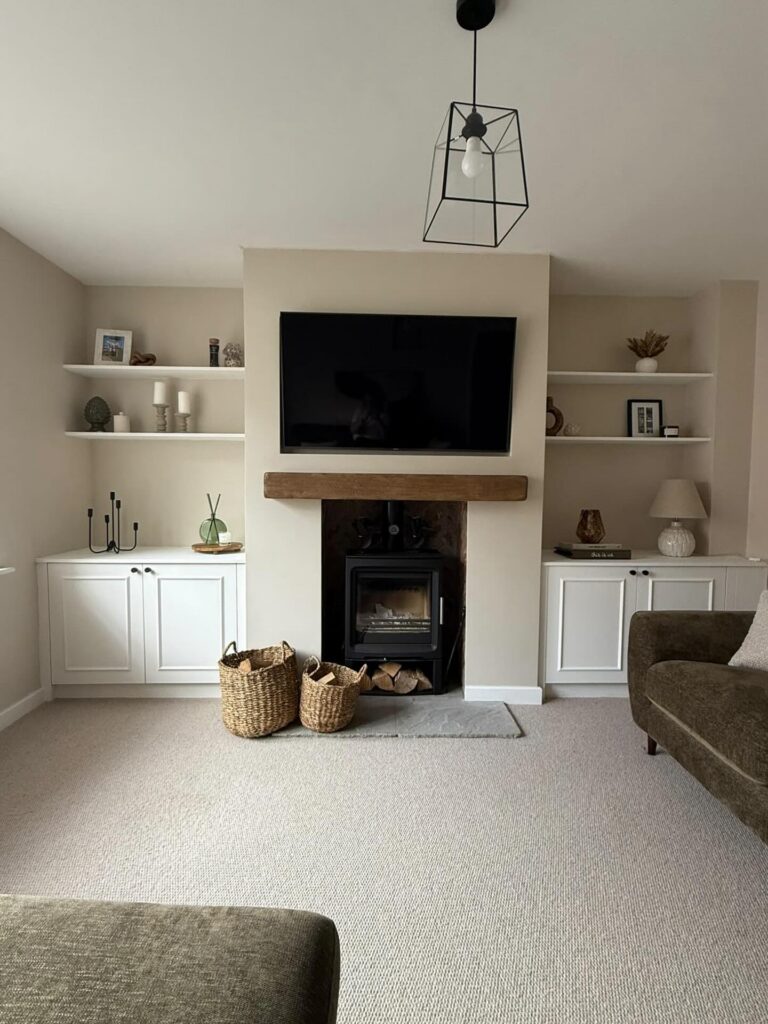
Start by lining up the fireplace, mantel, and TV on one vertical centerline. Set the firebox and mantel first, then mark the screen position only after checking the stove maker’s required clearances and how heat moves above it. That measurement matters most: a TV mounted too low can crowd the mantel, while one mounted too high is hard to watch.
Build shallow shelves and closed cabinets on both sides of the central chimney breast. A wood mantel gives the wall a break between TV and fire, and lower cabinets hide cords and equipment. Run power and signal cables inside the wall before closing the cabinetry, and leave access to outlets and connections you may need later. Keep shelf objects low and sparse near the screen.
Dark Green TV Gallery Wall
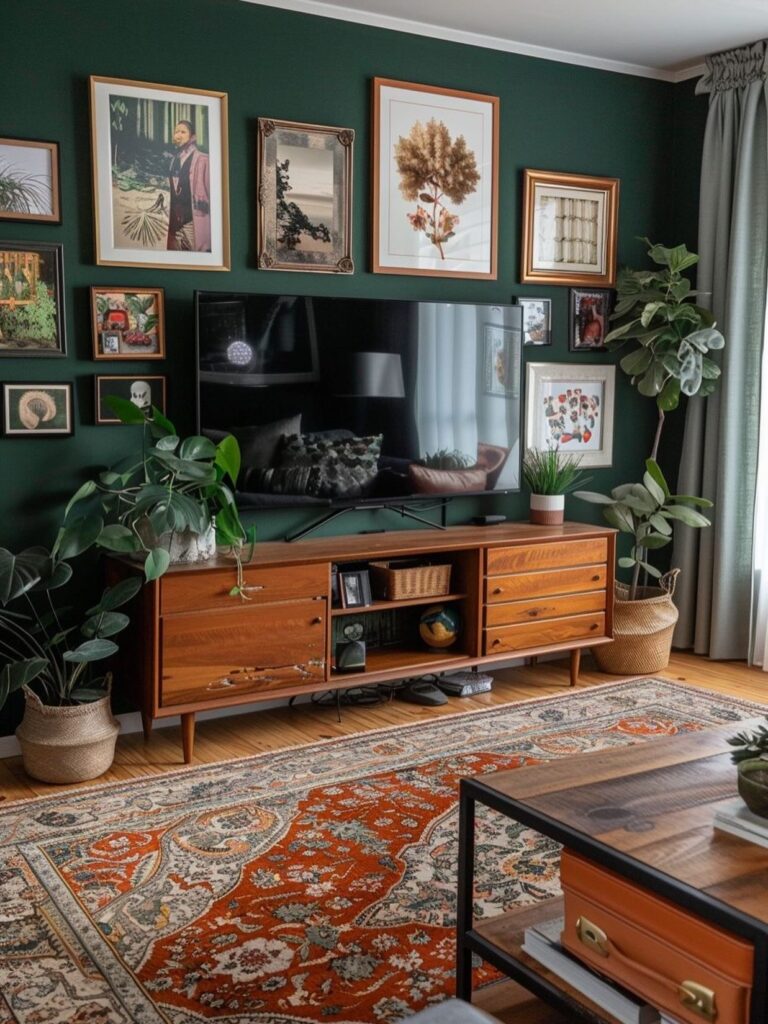
Build a loose gallery around the TV with wood frames, a few gold finishes, and prints in different sizes. Against a deep green wall, the black screen has less contrast than it would against white, while the frames give you something else to look at when it’s off.
Start with two or three larger pictures above the screen, then use smaller ones down either side. Leave some wall showing between the frames and the TV rather than packing every gap. Botanical prints, landscapes, and drawings can share the wall without matching, especially when several have cream mounts.
For the frames, use what you already have and repeat one finish in a few spots. If you’re short on art, frame postcards, book illustrations, or your own photos with ready-cut mounts. A low wood cabinet beneath the screen gives the arrangement a base and provides room for equipment that would otherwise sit out among the pictures.
Framed TV With Art Mode
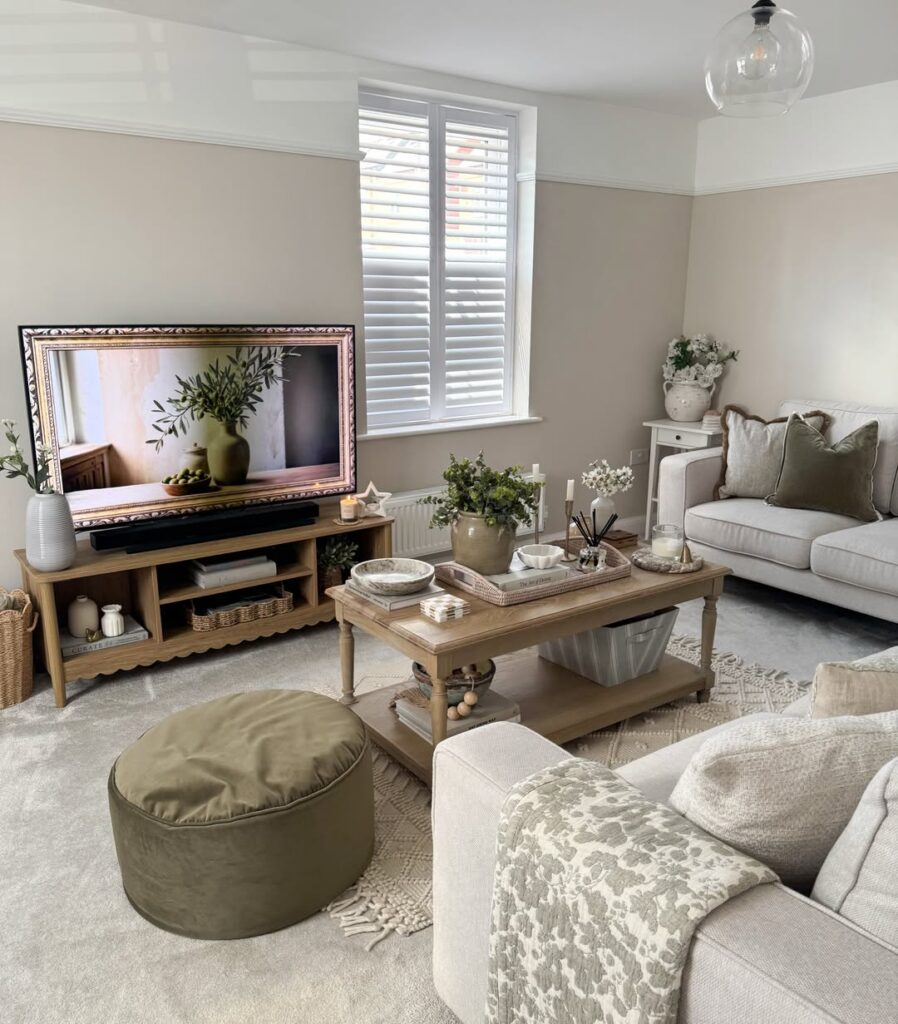
A television in a thick, ornate gold frame stops looking like a black screen on the wall and starts looking like a painting. When it’s switched on to a still image, in this case a vase of olive branches on a table, the frame and the picture do most of the work of hiding the screen.
This suits a living room where the TV has to sit on a wall you also see from the sofa, and where the walls are a soft neutral. The frame here is a decorative one with a carved edge, and it picks up the wood tones of the low shelving unit underneath. A soundbar sits on the unit just below, so the cables stay low and out of the picture.
I’d keep the artwork quiet, with muted greens and creams, so it matches the room rather than competing with it.
Backlit TV and Wood Console
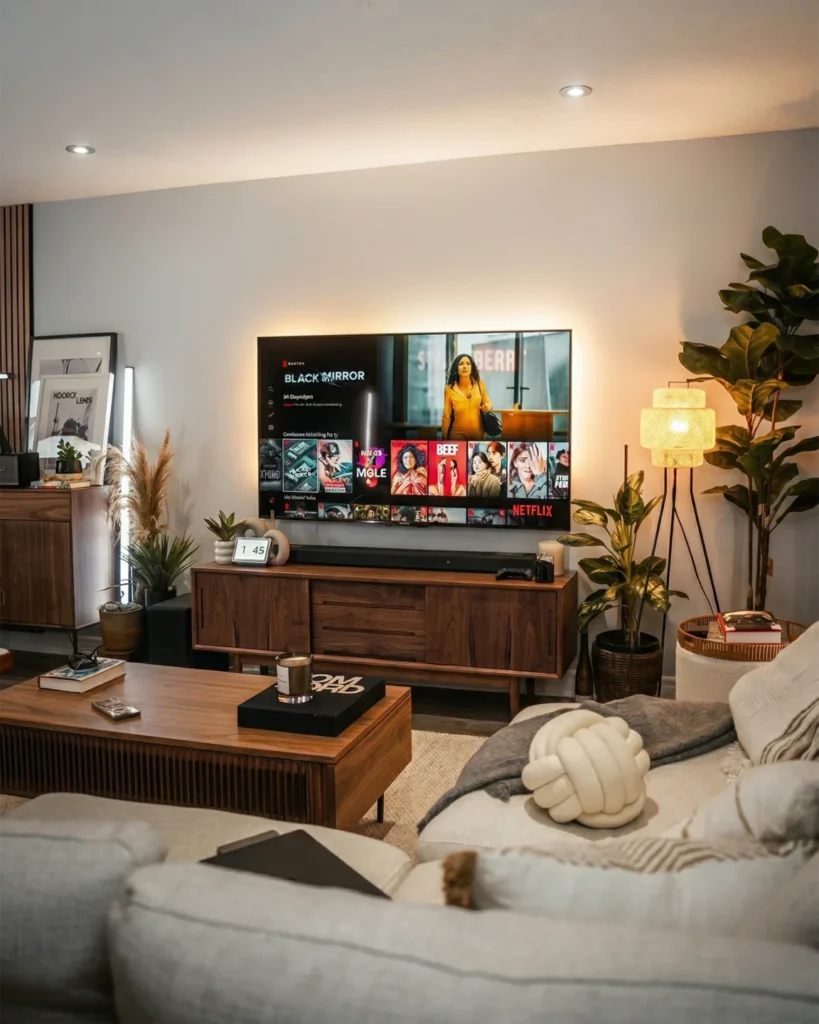
A soft halo behind the screen takes the edge off a large black rectangle, while a long wood media console gives it a grounded base. This setup is for rooms where the TV is the main focus and you want the wall to feel less stark after dark.
The low console also provides closed storage for devices and cables. If your room is narrow or you need tall shelving for books and equipment, a slimmer console would leave more floor space.
Marble Panels Within Fluted Cladding
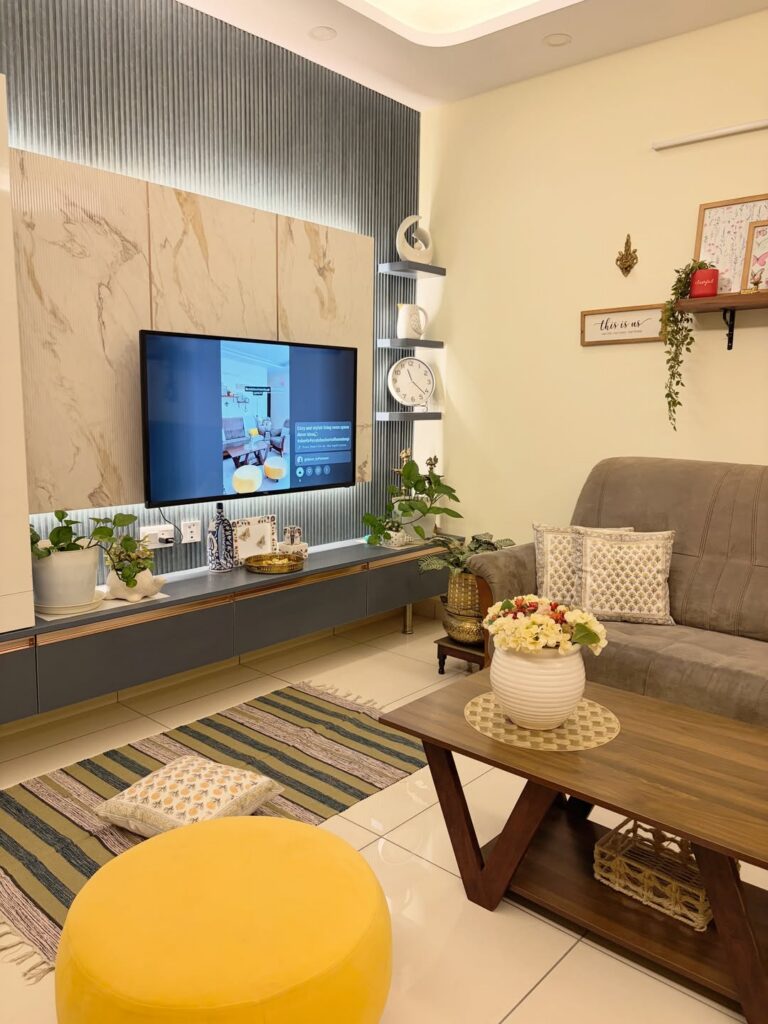
Frame a marble-look TV panel with grey fluted cladding, leaving enough of the grooves exposed for the two surfaces to stay distinct. The main risk is too much pattern around the screen. Choose veining with plenty of plain space, and avoid adding more finishes along the panel edges.
Plan the panel joints around the TV before anything is cut, since an awkward seam just above the screen will remain visible. Check the layout with the actual TV dimensions rather than centring the panel first and hoping the screen fits. Leave room behind the mount for sockets and cable access, or the finished wall may need cutting open later.
If you add concealed lighting around the panel, test it from the sofa before fixing the trim. A visible strip or bright reflection can pull your eye away from the screen whenever the TV is on.
Gallery Wall Around the TV
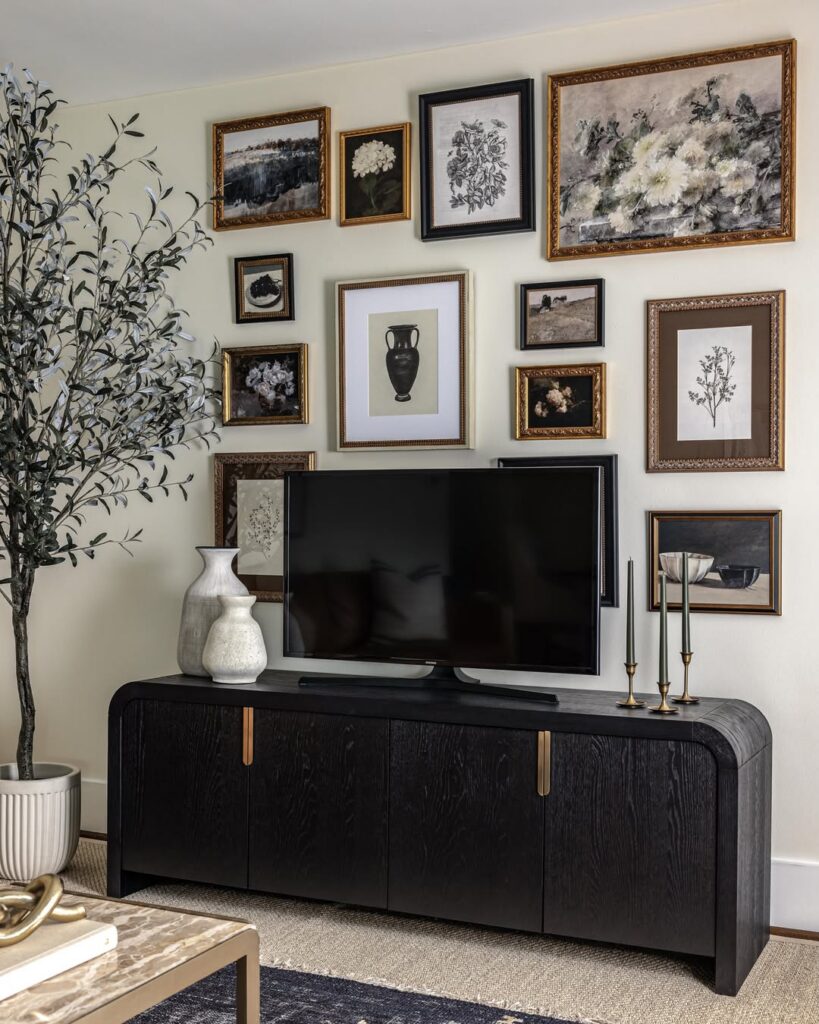
A gallery wall that runs right up to the edges of the TV and continues behind it makes the screen one more rectangle among many. This works best for people who already own a mix of small prints, botanical drawings, and old-looking paintings, and don’t mind hanging them in uneven rows. The frames here are gold and black, with a few cream mats, so the group holds together even though the sizes vary.
It’s a poor choice if you want a clean wall, or if you rent and can’t put in a lot of nail holes. It also takes patience, because the layout needs to be worked out on the floor first. If you’re after something fast, one large piece or a mounted shelf will take far less time.
Vertical Slat TV Backing
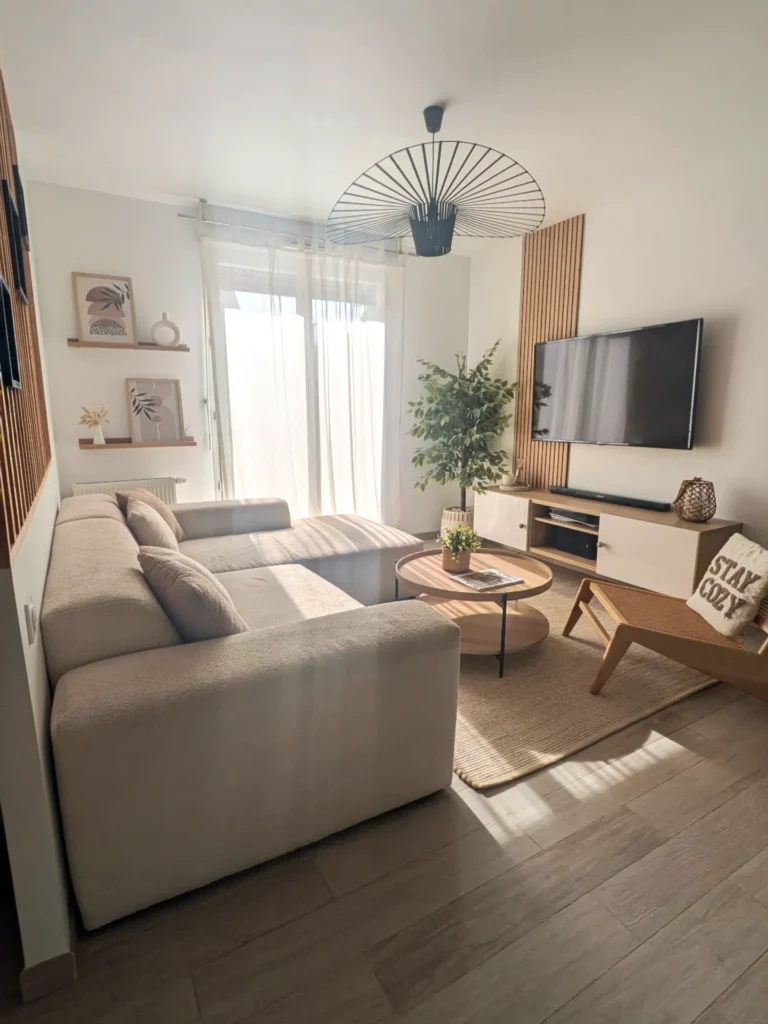
A narrow run of vertical wood slats behind the screen gives the TV wall a defined zone without cladding the full wall. It works well when the television shares a wall with a window or open living area, since the panel marks the media spot while leaving the rest of the room clear. Set it slightly wider than the screen and let it reach from the console to above the television. The strips frame the equipment without competing with it, and give a large blank wall some structure without adding shelves.
A low console below grounds the wall and gives the slats a clear stopping point. Choose a finish that relates to the floor or coffee table, then leave enough plain wall around the panel so the vertical lines stay distinct. This approach is useful in a compact room, where a full built-in could take up too much visual space, or for a refresh where the slats can be mounted as a separate panel.
Frame The TV With Shelves
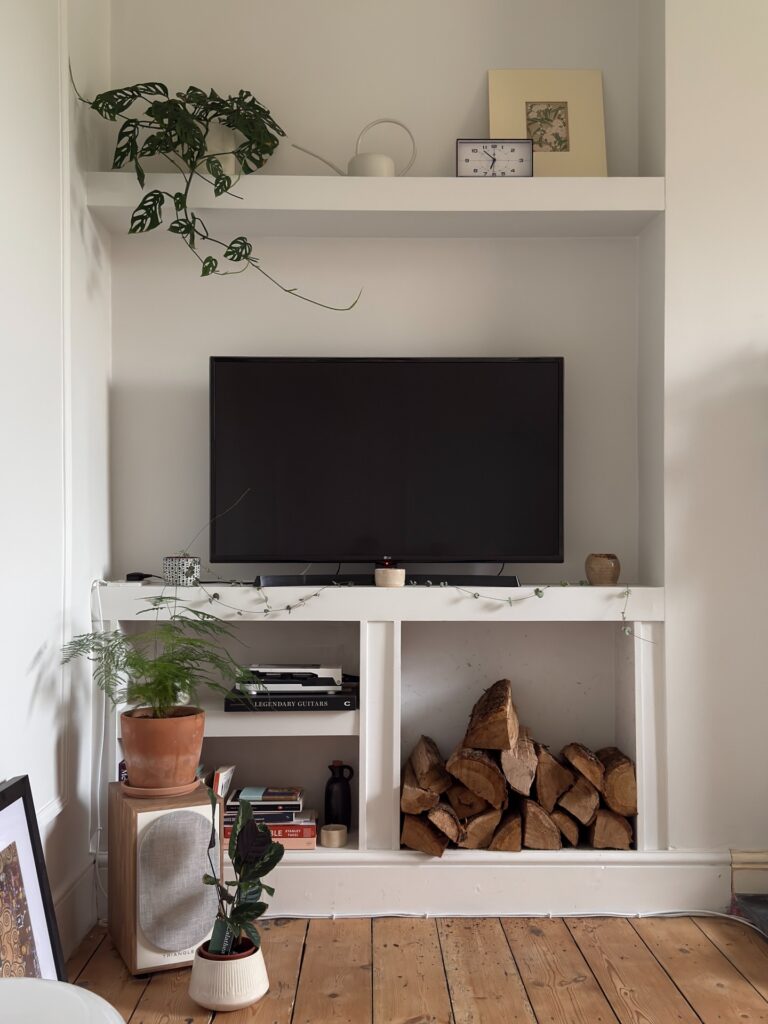
Fit shelves into an existing wall recess so the TV sits between an upper ledge and storage below. Start with the screen’s width, then mark its height from your usual seat before deciding where the shelves will go. Leave the clearances your TV needs for airflow rather than building tightly around its edges.
Before fixing anything, plan the route from the sockets to the screen, including access for changing cables later. This is the step that matters most, because a fitted recess leaves fewer ways to reach behind the TV once everything is in place. Paint the shelves and dividers to match the surrounding wall so the recess looks like part of the room. Below the screen, divide the storage into open bays; one can hold books, while a taller bay can take stacked logs without crowding the TV ledge.