17 Japanese Closet Organization Ideas You’ll Wish You Knew Sooner
This site contains affiliate links. We may earn a small commission, at no extra cost to you. Article may contain some images for illustrative purposes only .
If you have ever stood in front of a full closet at 7 am and genuinely felt like you owned nothing to wear, your closet is not a storage problem; it’s a philosophy problem, and more shelving is not going to fix it.
Western closets operate like archives where things go in and very rarely come out, and the result is a space so packed that getting dressed every morning feels like a small act of defeat before the day has even started.
Japanese closet organization doesn’t ask how to squeeze more in; it asks what actually deserves to be there in the first place, and that single shift in question changes absolutely everything about how the space feels to live with.
This guide blends traditional Japanese storage concepts, the KonMari method, and modern minimalist principles into a practical closet system
1. The Oshiire Principle: Turn Your Closet into a Room-Sized Transformer
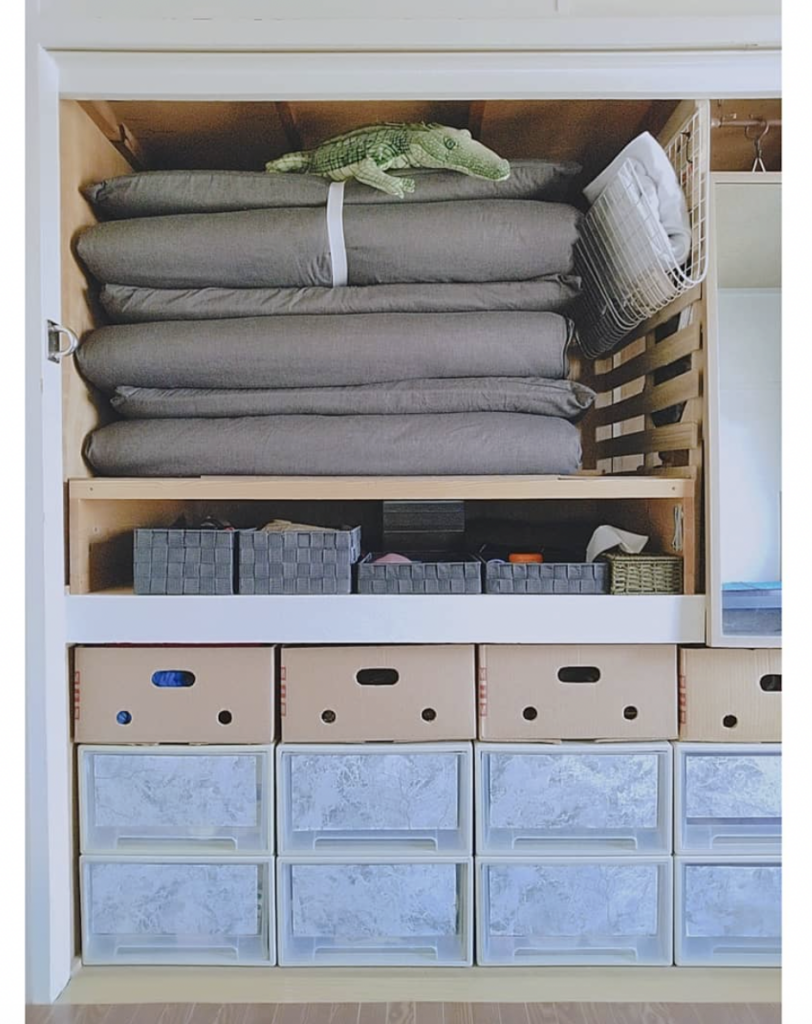
The oshiire is a deep, traditionally sliding-door closet found in Japanese homes whose entire purpose is to swallow the futon every morning so the sleeping room can immediately become a living room, a study, or a dining space.
It teaches you that a closet isn’t a static box where things go to be forgotten, but it’s a dynamic space that should actively support the room it lives in. In practice, this means dedicating a full-height closet to clothes, spare bedding, seasonal items, and even a small hidden dressing nook, so that when the doors close, the visual noise just disappears and the room gets its calm back.
Your closet should never be packed to the ceiling because a closet that can’t breathe is a closet that’s given up on you.
2. Koromogae: The Seasonal Rotation Ritual
Twice a year, around June 1st and October 1st, Japanese households perform koromogae, a full seasonal swap of clothing, bedding, and household textiles where out-of-season items are laundered, inspected, mended, and stored in breathable containers while the in-season wardrobe moves front and center.
This ritual is a complete game-changer for closet organization because every six months, every single garment gets touched, which means nothing is quietly hiding at the back of the rail for three years, accumulating dust and guilt simultaneously.
You naturally cull the things that no longer fit or feel right during the swap, and the active hanging space stays genuinely spacious because it only holds what you’re actually wearing right now.
Pick your two dates, commit to them like your nail appointments, and let the closet breathe with the rhythm of the year.
3. Kiri (Paulownia) Wood Boxes for Humidity Control
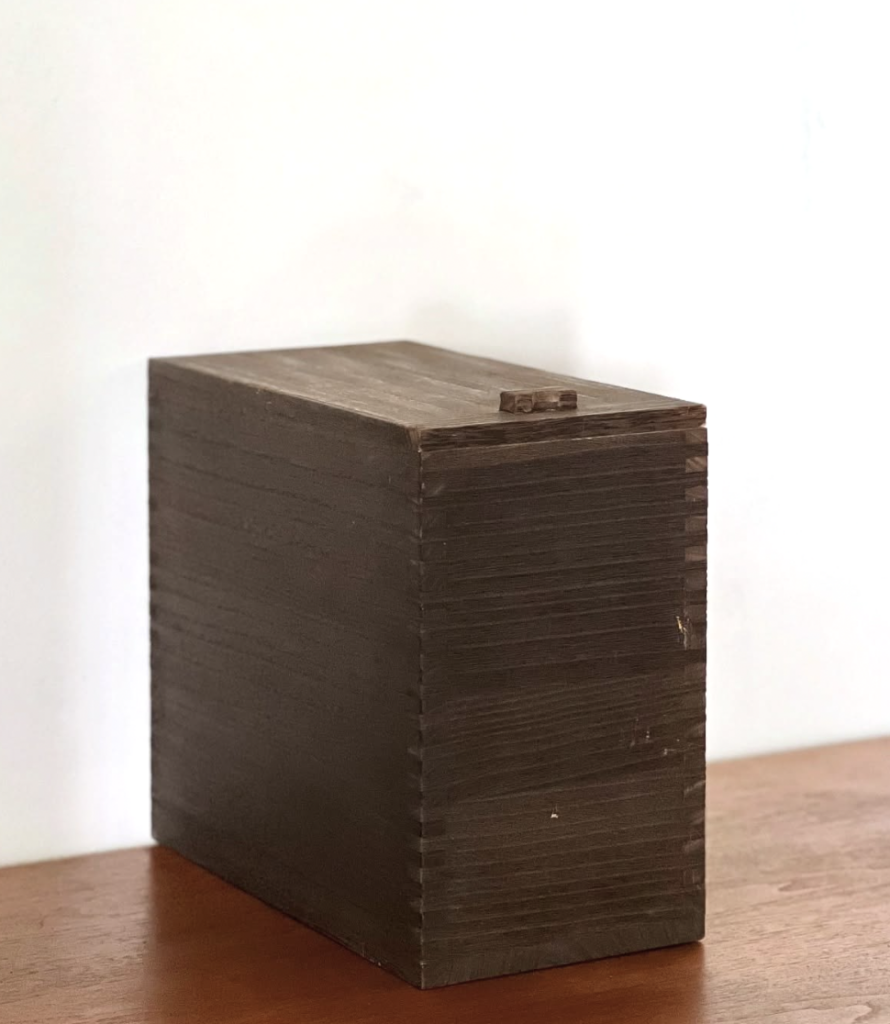
For centuries, precious kimono, scrolls, and garments have been stored in kiri wood boxes because paulownia wood is lightweight, remarkably breathable, and naturally resistant to humidity, mould, and insects in a way that no plastic bin has ever been or will ever be.
Swapping your plastic storage containers for kiri boxes is an upgrade that protects your clothing from that stale, musty smell that creeps into stored fabrics and makes you wonder if something died in your closet.
Stack them on high shelves, and they look so beautiful that you actually don’t need to hide them behind doors, which is a rare quality in anything you’d describe as storage. Use them for off-season pieces, delicate silks, or heirloom items you genuinely care about preserving.


4. Tansu Chests: Modular, Movable Wardrobe Architecture

Traditional tansu are wooden chests of drawers adorned with iron hardware and specifically designed to be portable during fires or relocations, which tells you everything you need to know about how seriously Japanese culture takes both good furniture and good planning.
Despite their mobility, they held an entire household’s clothing and valuables with impressive efficiency, and the varied drawer sizes naturally enforce the kind of curated categories that your current dresser is absolutely not enforcing.
Assign a shallow drawer for belts and accessories, a deeper one for heavy knitwear, and a narrow one for things you don’t want to think too hard about.
A tansu or a modern interpretation placed inside a walk-in closet adds the warmth of real craftsmanship and the discipline of clear boundaries, which is a combination most closets are desperately missing. The modular nature also means you can reconfigure it as your life and wardrobe evolve over time.

5. Kaidan Tansu (Step Chest) for High Shelves

A specific form of tansu is the kaidan tansu, a chest shaped like a staircase. Each step is a functional drawer or a compartment with a lifting lid. In traditional storehouses and homes, these served a dual purpose: storage and safe access to upper lofts.
In a modern closet with high shelving, a small step chest replaces the flimsy stool you’re currently using and are probably slightly afraid of every time you climb it. It gives you a beautiful, stable footing to reach upper shelves while storing shoes, folded jeans, or bags within its steps, so every vertical inch of your closet becomes usable rather than aspirational.

6. The KonMari Vertical Fold: Drawers as Filing Cabinets

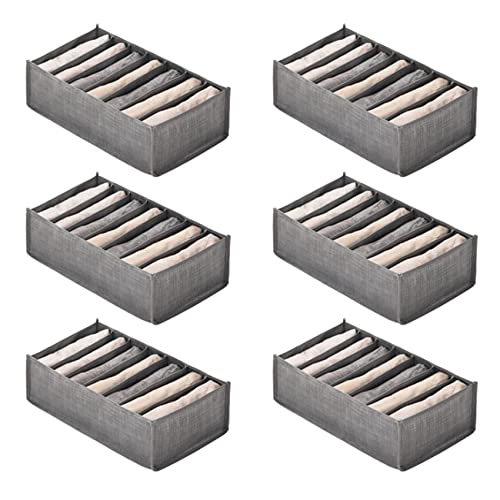
Marie Kondo’s world-famous folding method is a modern distillation of Japanese spatial awareness. Clothes are folded into compact, self-standing rectangles and placed upright in shallow drawers.
The effect is so immediate and so satisfying that people who try it describe it with the same energy as someone who just discovered a life hack that makes them angry they didn’t know sooner.Open a drawer, and you see every T-shirt, every pair of socks, every folded pair of trousers at a single glance.
No digging. No toppled stacks. The act of folding itself becomes a small, daily gesture of care. Convert deep shelves and dresser drawers to this vertical system. If you don’t have shallow drawers, use small boxes or dividers to create upright rows.
7. Danshari Closet Purge: Refuse, Dispose, Separate
Hideko Yamashita’s Danshari philosophy is a powerful, three-part reset for the closet.
- Dan (Refuse): Stop bringing unnecessary clothes into your life. Say no to the impulse sale, the “bargain” that doesn’t fit, the fast-fashion item you’ll wear once. Your closet is a guarded sanctuary.
- Sha (Dispose): Fill a bag with items that are stained, broken, or carry a weight of negative memory. Dispose of them respectfully.
- Ri (Separate): The hardest step. Separate from the emotional tether. The dress you wore once to a wedding, the expensive jacket that never felt right. Thank it aloud. Release it. After a thorough Danshari, your closet holds only what serves your present life.
8. “Spark Joy” as the Only Keeper’s Criteria
From the KonMari method, the tokimeki test is elegantly simple. Pick up each garment. Hold it close. Notice the body’s immediate, honest reaction. Does it give a subtle lift, maybe a tiny spark of happiness or confidence? Or does it come with a weighty sigh, a sense of obligation?
This emotional filter bypasses the exhausting logical loops about cost, size, or potential. If it does not spark joy, thank the item for its service and let it go. What remains in your closet aligns not with a past or an imagined future self, but with who you are now.
9. Seiton: Point-of-Use Flow Inside the Closet
Seiton, meaning “Set in Order,” is a pillar of Toyota’s 5S methodology. It dictates that every tool be placed exactly where the hand naturally reaches for it.
Map your actual morning dressing sequence honestly, as underwear and socks come first, so they go at the easiest reach, then daily tops, then trousers, then accessories, in the order your hands actually look for them, rather than the order that felt logical when you organized the closet six months ago.
Items you wear several times a week live at eye-to-waist height, and everything else, the formal wear, the rarely worn pieces, the off-season items, gets the high shelves and the corners.
When this is done correctly, your closet starts choreographing your morning for you, and you get those minutes of mental energy back for literally anything else.
10. The Ma of the Closet: Empty Space as a Feature
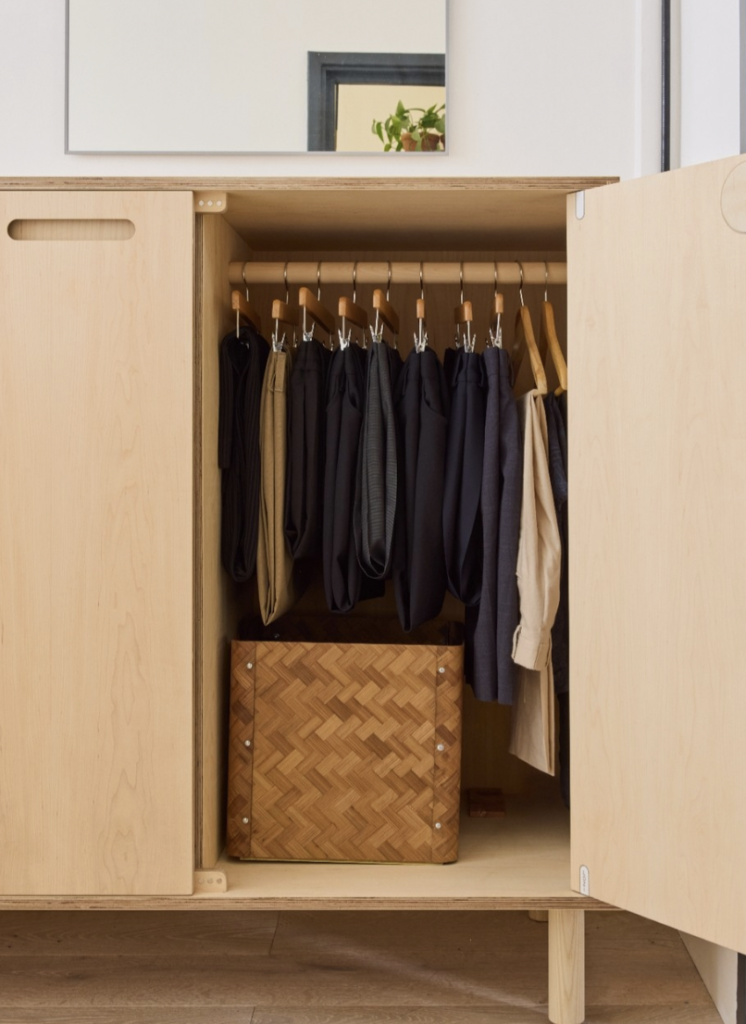
Ma is the meaningful negative space that makes the rest of the composition breathe. In a closet, Ma means deliberately leaving 20 to 30 percent of your hanging rail, shelf, and drawer space empty.
Clothes hang with a small gap between them, just enough for air to circulate and light to touch each fabric. An overstuffed closet has quiet tension; a roomy closet signals calm the moment you open the door. Start treating empty space not as a failure of storage, but as the highest design feature your closet can have.
11. Furoshiki Wrapping for Sweaters and Accessories

Furoshiki are squares of fabric traditionally used to carry and wrap gifts. In the closet, they become a beautiful, functional storage solution for out-of-season sweaters, scarves, and delicate accessories.
Fold the garment carefully, place it in the centre of the cloth, and tie the corners into a neat bundle. The fabric breathes, unlike plastic vacuum bags, and the bundles look intentional when stacked on a high shelf. Unwrapping them at the change of season feels like receiving a thoughtful gift from your past self.
![FUROSHIKI- Wrapping Cloth / Reversible [Cotton] (Sakura x Flax ornament:](https://m.media-amazon.com/images/I/61Wv2kz9r9L._SL500_.jpg)
12. Tatoushi Paper: The Kimono Storage Wisdom for Modern Delicates
Traditional kimonos are stored folded in tatoushi paper, an acid-free envelope that protects the silk from light, dust, and creasing. The garment rests flat, supported, and undisturbed inside a kiri drawer.
Adopt this wisdom for your most delicate items. Use acid-free tissue paper or garment storage envelopes for silk blouses, fine knitwear, or family heirlooms. Fold them gently and slip them into the envelope, then stack them in a drawer.
This method prevents the stretching and shoulder bumps that come from hangers, and it shields fragile fabrics from light and dust.

13. The Full-Length Mirror as a Wardrobe Shrine (Tokonoma Principle)
The tokonoma is a sacred alcove in a Japanese reception room, kept bare except for one scroll and one seasonal flower arrangement. It focuses the eye and elevates the ordinary.
Treat the spot where you dress and look at yourself in the mirror like a tokonoma. Keep it beautifully lit, completely uncluttered, with perhaps a single small object below the mirror, maybe a smooth stone, a ceramic vase, honestly, you do you, girl.
The ritual of dressing becomes mindful and ceremonial, and the mirror reflects both you and the order you’ve cultivated around you.

14. Wooden Hangers in a Single Tone for Visual Silence

Japanese interiors prioritize visual calm. Material unity and natural tones reduce cognitive noise. In a closet, replacing a chaotic mix of plastic, wire, and mismatched hangers with wooden ones of a single tone like cedar, light beech, or dark walnut, which creates an immediate sense of order.
Beyond aesthetics, wooden hangers absorb moisture, resist warping, and protect the shoulders of jackets and blouses. This is one of those changes that costs very little, requires no reorganization, and makes a disproportionate difference to how your closet feels.

15. The “One In, One Out” Rule for a Fixed Capacity Wardrobe
Rooted in Danshari and the container principle, this rule is absolute. Your closet is a vessel of fixed size. You set a hard number of hangers, perhaps thirty or forty. When a new garment enters, an old one must be thanked and released. The same logic applies to drawers. If the T-shirt drawer is full and you cannot close it easily, it’s time to curate.
This practice prevents expansion over time. Your wardrobe doesn’t grow; it improves. The burden of choice lifts in a way that genuinely surprises people who try it.
16. Daily Air Out (Kaze-ire) for Clothing and Closet
Kaze-ire means letting the wind in. Japanese homes are aired regularly to release dampness and stagnant air. For the closet, this means opening its doors for thirty minutes each morning, especially in humid seasons.
Garments that have been worn once but are not yet ready for the laundry are hung on a wooden rail outside the closet for a few hours before being returned. This simple habit extends the life of clothes, eliminates trapped odours, and keeps the closet fresh without synthetic fragrances or chemical sachets.
17. Osoji Deep Clean of the Closet Twice a Year
Osoji is the great year-end cleaning ritual performed to purify the home and welcome the New Year with a clean spirit, and applied to the closet, it becomes a full reset that goes much deeper than your average tidy-up on a Sunday afternoon.
Twice a year, during koromogae or at New Year, remove every single item. Wipe down the shelves, rails, and drawers with a damp cloth. Inspect each garment for loose threads, missing buttons, and signs of wear. Return only what is whole, loved, and seasonal.
Do this twice, and it becomes one of those rituals you look forward to rather than dread, which is a sentence that probably sounds unbelievable right now but will make complete sense after the first time.
A Closet That Breathes With You
A closet that breathes is not a luxury, and it’s not something that only works for people who own very little or live in design magazines. It’s what happens when you stop treating your closet like a place to hide things and start treating it like a space that deserves the same intention as the rest of your home.
You don’t have to implement all 17 ideas at once because that’s how you end up sitting on your bedroom floor surrounded by every item of clothing you own, having an existential moment at midnight.
Pick the ideas that felt immediately right, start there, and let the rest follow naturally as the space begins to shift.