How to Stop Hoarding Clothes and Declutter Your Wardrobe
This site contains affiliate links. We may earn a small commission, at no extra cost to you. Article may contain some images for illustrative purposes only .
Your closet holds more than just clothes, it contains memories, aspirations, and sometimes, unnecessary stress (understandable). When you open those doors each morning, do you feel inspired or overwhelmed? A cluttered wardrobe drains your energy and complicates daily decisions.
By strategically decluttering, you’ll not only rediscover forgotten favorites (like that one hat from a vacation years ago) but also create space for items that you really wanna keep. Let’s dive in! : )
The Psychology Behind Clothing Attachment
Okay, before we start the process, let’s see why you are here in the first place. We tend to hoard clothes not just because we are too lazy to properly go through them once (shh), but also because they hold sentimental, and sometimes financial, value. Even if you don’t realise it.
That sweater reminds you of college days. Those unworn shoes represent the money you spent. The dress from your first date carries sentimental weight that’s hard to measure.
Our wardrobes are museums of past selves, filled with artifacts of experiences, investments, and memories we aren’t ready to discard.
Recognize when you’re keeping items out of fear (wasting money), nostalgia (preserving memories), or identity protection (who you once were or hope to be). Additionally, it’s essential to acknowledge that old clothes can contribute to clutter and may be best recycled or donated to free up space and serve others in need.
Assessing Your Current Wardrobe Situation
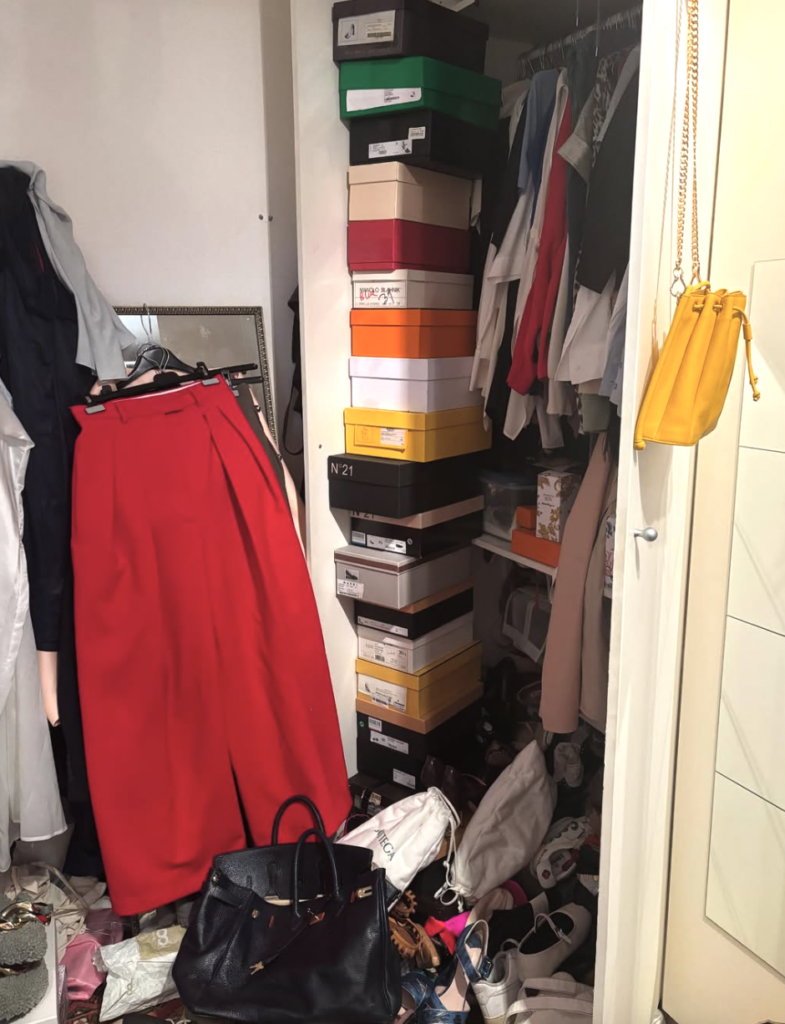
Start by emptying everything (yes, everything) onto your bed. This is perfect for seeing exactly how much you need to declutter and helps you count items by category: tops, bottoms, dresses, etc. Note duplicates and items you’ve forgotten.
Ask yourself these questions:
- What fits right now?
- What’ve you worn in the past year?
- Which pieces reflect your vibe?
Multifunctional and double-duty furniture can also help you optimize your space for the items you decide to keep. This assessment isn’t just counting; it’s needed for properly decluttering your wardrobe.
Setting Clear Decluttering Goals and Timelines
Three essential elements make any decluttering project successful: specific goals, realistic timelines, and measurable outcomes.
- Start by defining exactly what you want to accomplish. Whether it’s reducing your wardrobe by 50% or creating space for new seasons, you got to plan accordingly.
- Break your project into manageable chunks: sort through tops one day, bottoms the next.
- Set a deadline that pushes you without causing overwhelm, typically one to two weekends for a complete closet reset.
Track your progress visually by counting items removed or measuring newly created space, so you can go ‘wow I really just did that’. You can even use the Four-Box technique to systematically categorize your clothes into keep, donate, recycle, and trash piles for a more efficient decluttering process.
Decision-Making Strategies for Each Clothing Item
Here is a helpful list to make your decluttering process faster:
- Apply the one-year rule: if you haven’t worn it in 12 months, you probably aren’t gonna wear it agan anytime soon.
- Test the fit: items that don’t fit are GOING. No second-guessing, no ‘what if I grow into it?’. It’s stayed long enough.
- Use the 5-second rule (look it up) to make quick decisions about each piece.
- Consider versatility: how many outfits can you create with this item?
- Ask yourself: “If I saw this in a store today, would I buy it again?”
Handling Sentimental Pieces With Mindfulness
I know that removing sentimental pieces are hard. Whether it’s your signed shirt from school, or that one pair of shoes that your grandpa gave you, it holds emotional value.
Create a designated “memory box” to house truly meaningful pieces, limiting yourself to what fits inside. For items you’re struggling with, take photographs before donating them. This preserves the memory while releasing the physical object.
Ask yourself: “Does keeping this serve my present life?” Apply the 5-second rule to prevent overthinking.
Organizing Your Remaining Clothes by Category and Color
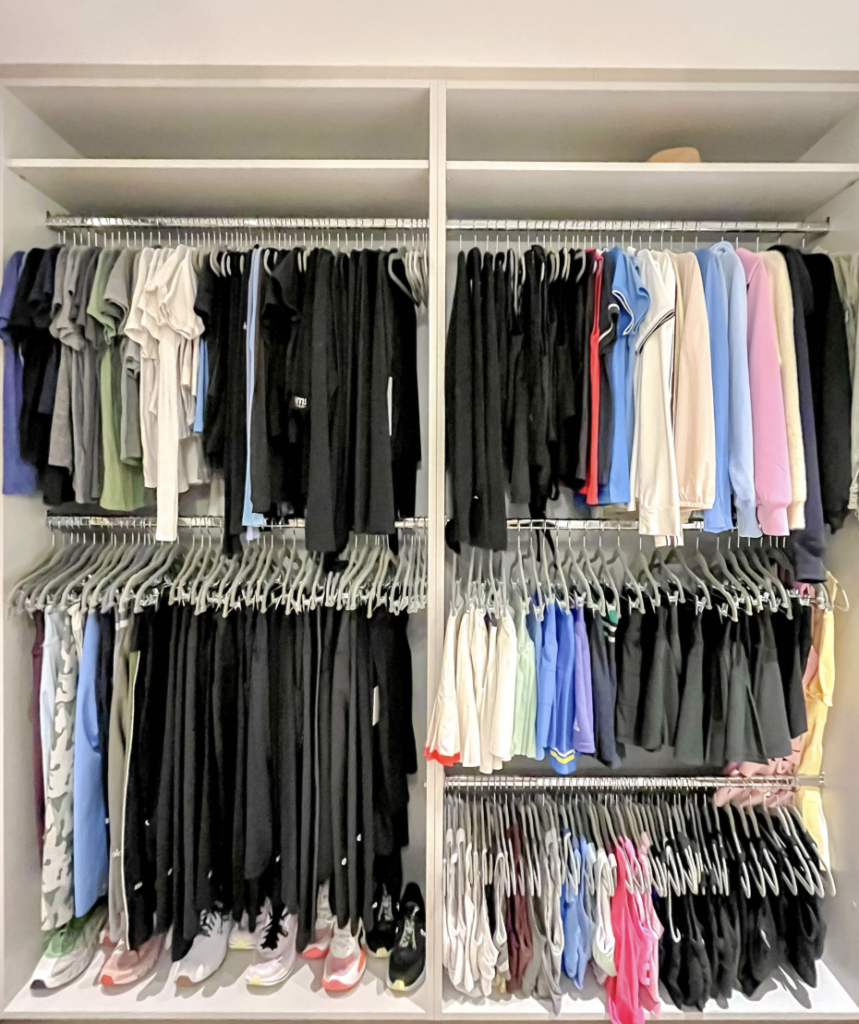
Once you’ve mindfully sorted through sentimental pieces, your newly streamlined wardrobe deserves proper organization to maximize its functionality.
Creating a system based on categories and color-coding converts chaos into order, making daily outfit selection effortless.
- Group similar items together. Divide mainly into tops, bottoms, dresses, outerwear, and accessories.
- Arrange each category by color, flowing from light to dark (or rainbow themed if you feel like it).
- Hang frequently worn pieces at the front (or top if kept in a drawer) for easy access. Check What to Hang Vs What to Fold in Your Closet
- Use uniform hangers to create an aesthetic appearance which looks sleek.
- Implement dividers between categories to maintain clear boundaries
- Consider adding vertical storage solutions such as shelving or hooks to further optimize closet space.
Maximizing Storage Solutions for an Efficient Closet
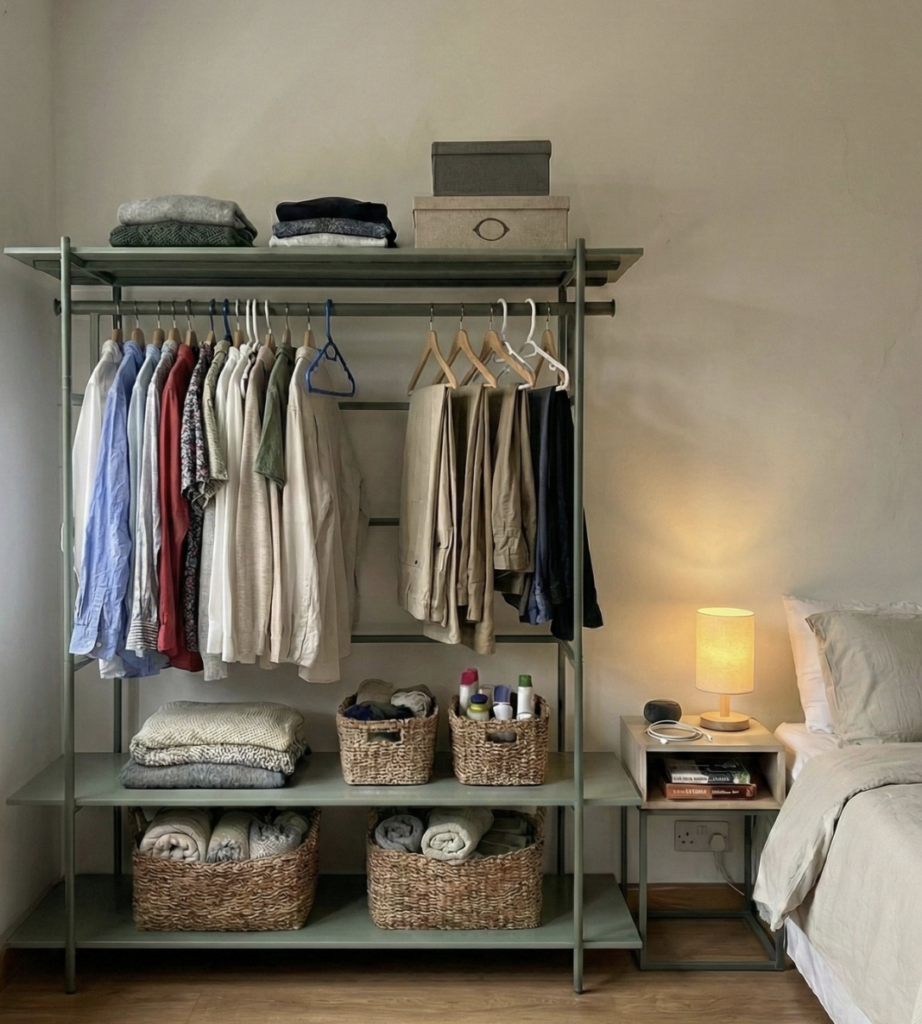
These choices REALLY elevate a small wardrobe to a chic and looks-way-bigger-than-it-actually-is wardrobe, and really optimize your storage space:
- Invest in slim velvet hangers that prevent slipping and save up to 50% more space than plastic alternatives.
- Utilize vertical space with hanging organizers for accessories, shoes, and folded items.
- Install hooks on doors for bags and belts.
- Consider drawer dividers for undergarments and shelf dividers to prevent stacks from toppling.
- Store seasonal items in vacuum-sealed bags under your bed or on high shelves.
- Label everything clearly (yes, it does matter).
- Incorporate multi-tier design options to maximize capacity in compact spaces.


Building Healthier Shopping Habits Moving Forward
After decluttering your wardrobe, you’ll need to prevent it from filling up again with unnecessary items (prevention is better than cure folks!). Developing mindful shopping habits is essential for maintaining your newly organized closet. Create boundaries that help you make purposeful purchases aligned with your actual needs.
- Set a clothing budget and track every purchase.
- Implement a 48-hour cooling-off period before buying anything.
- Unsubscribe from retail emails and delete shopping apps (out of sight, out of mind).
- Create a specific shopping list based on wardrobe gaps
- Practice the One-In-One-Out Rule (when something new arrives, something old leaves).
Maintaining Your Newly Organized Wardrobe Long-Term
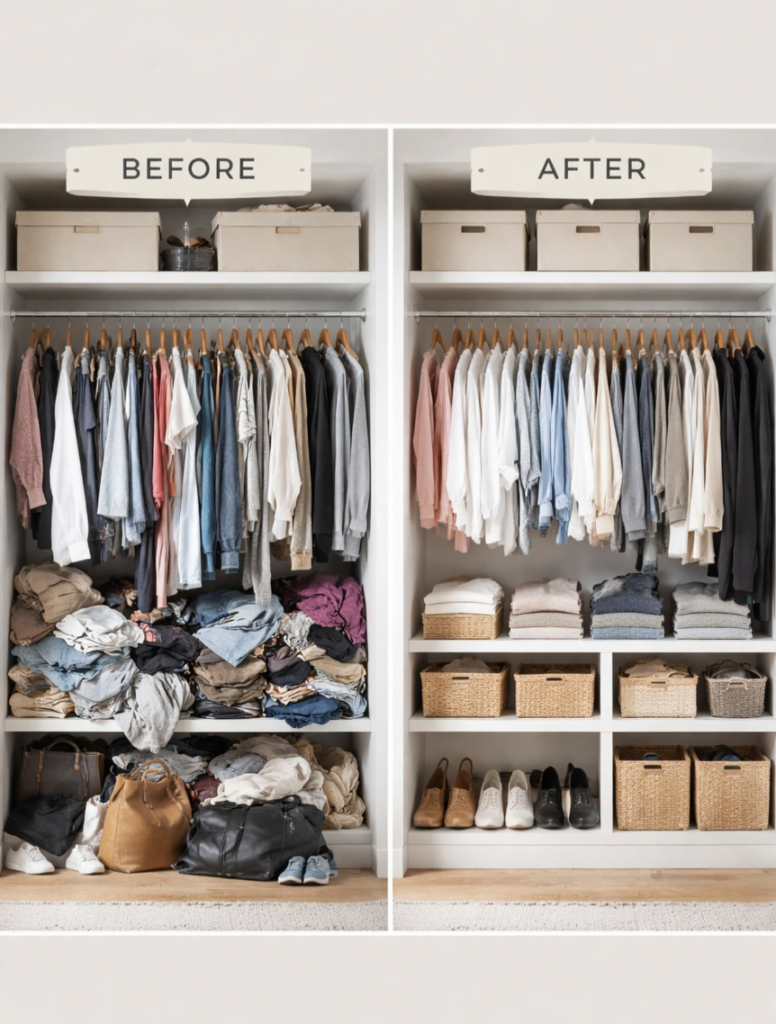
Maintaining your organized closet requires consistent habits that prevent the return of clutter. We are not letting all that hard work go to waste.
- Schedule seasonal wardrobe reviews (quarterly) to assess and adjust your collection.
- Practice the one-in-one-out rule religiously when purchasing new items.
- Return items to their designated spots immediately after use or washing.
- Keep a donation bag in your closet for items that no longer serve you.
- Limit new purchases to items that fill specific wardrobe gaps or replace worn essentials.
- Consider implementing seasonal wardrobe reviews to help you stay on top of your clothing organization.
YAYY! You’ve successfully decluttered your closet (see, it wasn’t that hard!). After all that, you need to celebrate (just not by buying more stuff). Take a before-and-after makeover photo to truly see the change. You can even treat yourself with your favourite snack or send the photo to your bestie who’s always ready to hype you up. Happy decluttering! <33