23 Peter Rabbit Nursery Ideas
This site contains affiliate links. We may earn a small commission, at no extra cost to you. Article may contain some images for illustrative purposes only .
This list has 23 ideas for a Peter Rabbit nursery, and they work for different kinds of parents. Some suit those who want the whole room built around the story. Others suit those who want only a small nod to it. Pick what fits your space and your budget. Each idea has its own photo and a short note below it. Start at the top. Whichever way you lean, there is something here to borrow. Take the ideas that match the room you have, and leave the rest. A nursery can hold a lot of the story or only a little, and both work. Save your favorites.
Repeated Storybook Prints
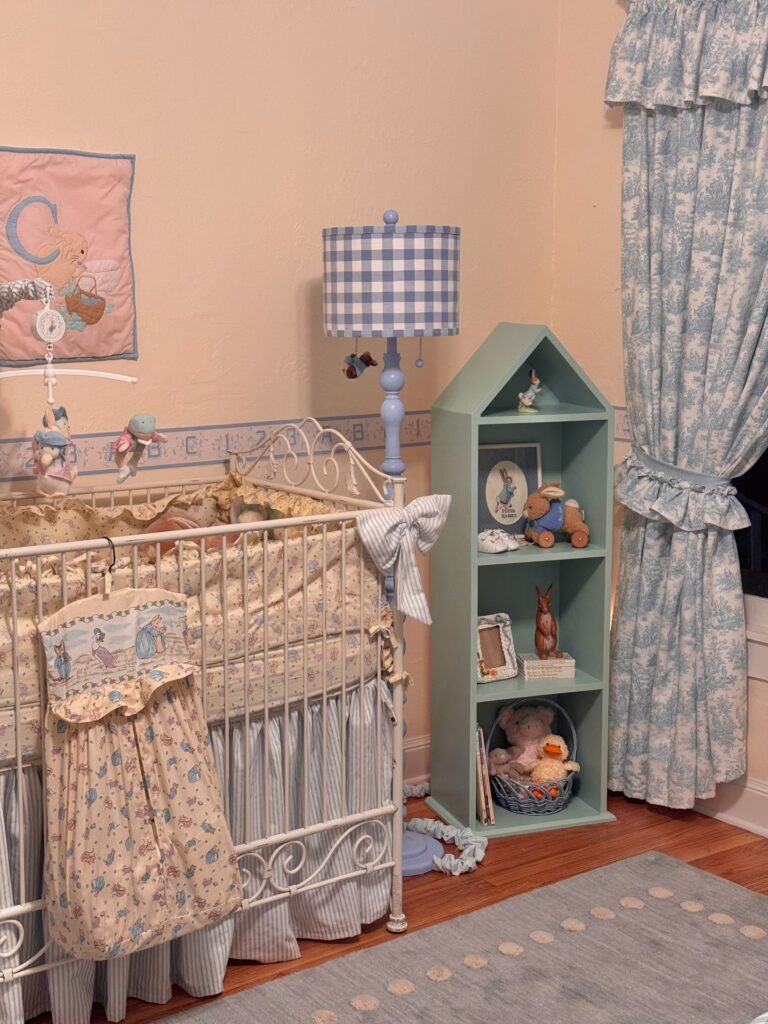
Repeating storybook prints across the crib bedding, skirt, and curtains gives the room an old-fashioned theme. This approach is for parents who enjoy carrying a pattern around the nursery instead of keeping the walls and fabrics plain; a gingham lampshade and blue shelf break up the illustrated designs. If you want a room that can change easily as a child grows, use one printed piece, such as the curtains, and choose solid bedding and crib linens.
Leaf Wallpaper Above Blue Panelling
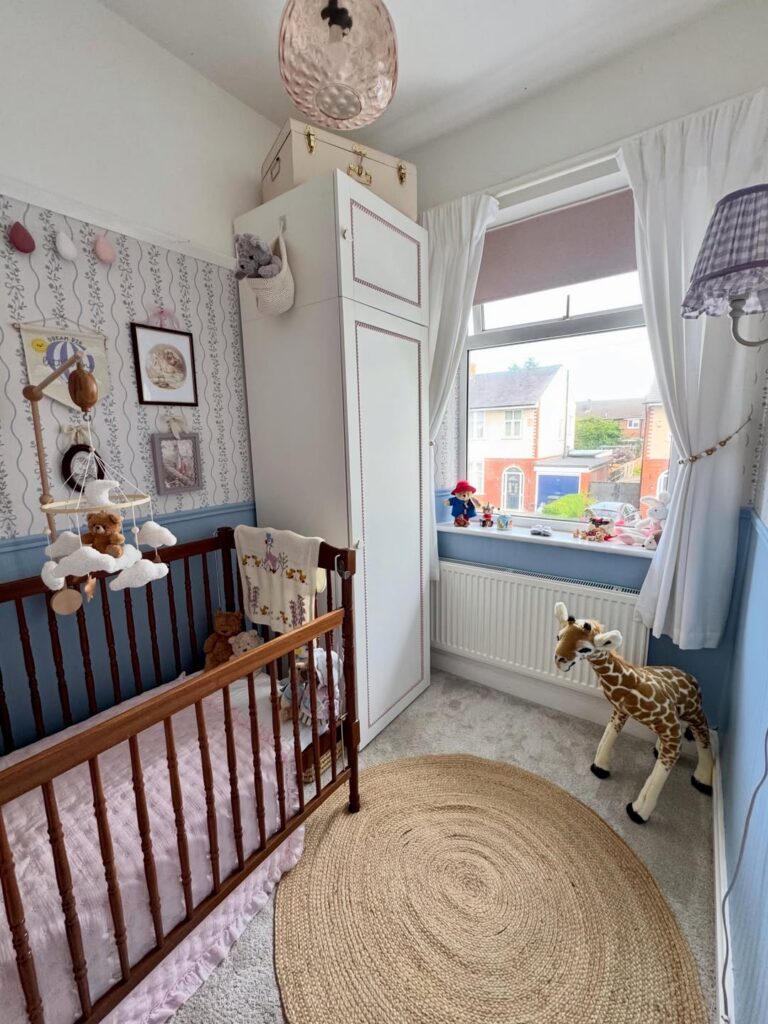
Pair a trailing-leaf wallpaper with blue panelling below a dado rail, leaving room above for a framed rabbit print. Look for a paper with narrow vertical stems and plenty of white between them, rather than a large leaf pattern that crowds the wall.
If wallpaper is out of reach, use a leaf stencil on white paint. A painted lower wall with a timber rail gives you the same colour split without fitting panels.
Two-Tone Pink Panelled Walls
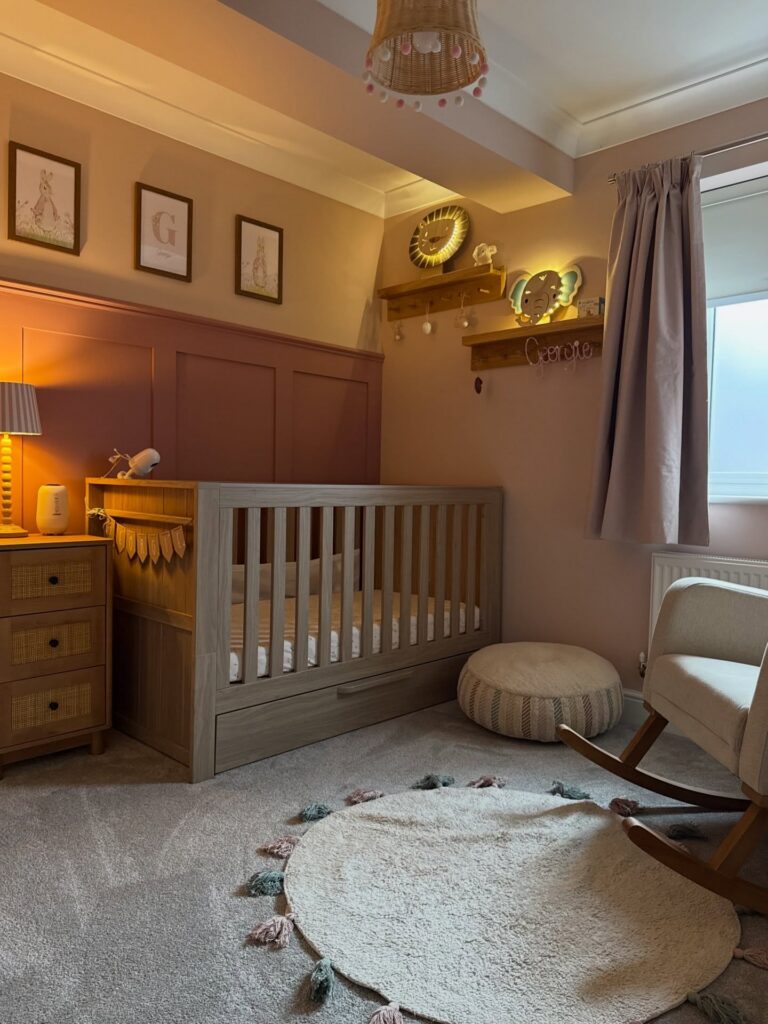
A deeper shade on the lower half of the wall changes how the whole room sits. The panelling is a dusty rose, a few steps darker than the pale pink above it, and the wooden cot stands against it without looking lost. If the same pink ran all the way up at one strength, the wall would go flat. The darker band gives the eye somewhere to stop.
The lighter upper half is where three small rabbit prints hang in thin dark frames, spaced evenly above the panel line. Because the wall behind them is pale, the soft colors in the drawings stay visible. On a darker wall they would sink into the background.
I’d stop the panelling a little above the cot rail, so the frames always have clear wall around them. For a look closer to the original books, a muted green on the panelling would work with the same pale wall above it, and the rabbits would sit against it the way they do in a vegetable garden.
Framed Peter Rabbit Prints
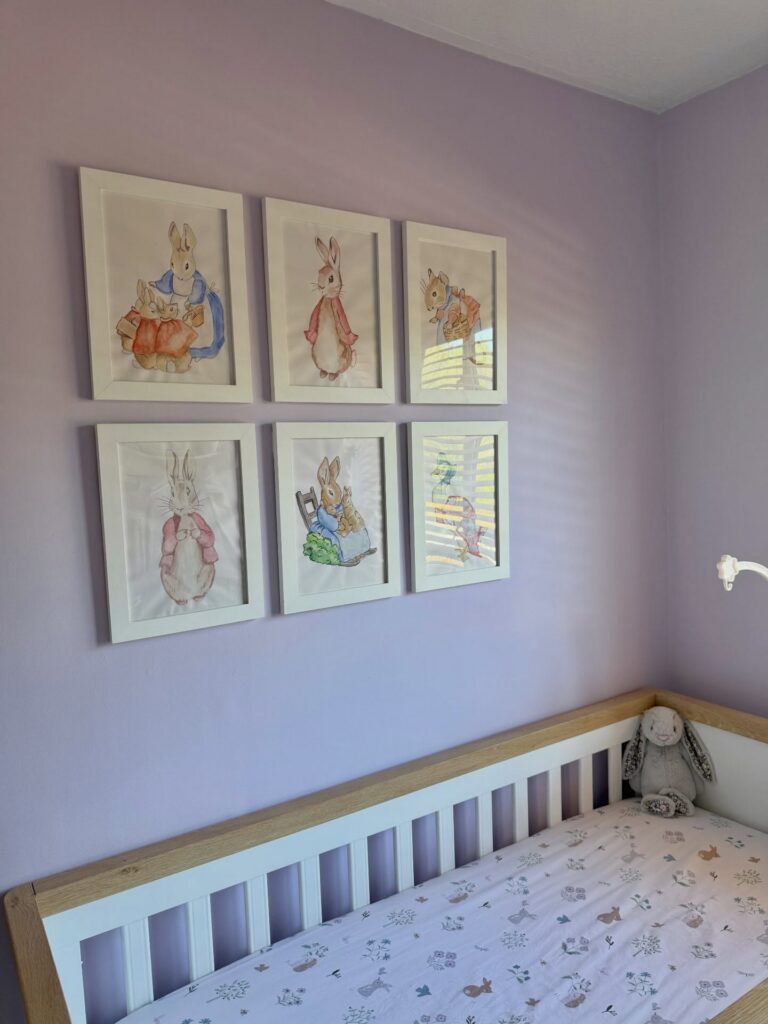
Above the crib, six Peter Rabbit illustrations make a small gallery wall, with matching pale frames arranged in two rows. The grouping gives the bed a clear backdrop without spreading art across every wall, and the lilac paint lets the watercolor scenes stand out.
This arrangement works well on the wall behind a crib or toddler bed, with the frames centered over the long rail rather than gathered at one end. Leave some blank wall between the bed and the lower frames, and check the view from the doorway as well as from the mattress. A collection can mix rabbit portraits with story scenes, while the repeated frame color ties the pictures together. Since the art hangs above a sleeping space, fasten each frame securely and place it well beyond a child’s reach once they can stand.
Dusty Pink With Rabbit Accents
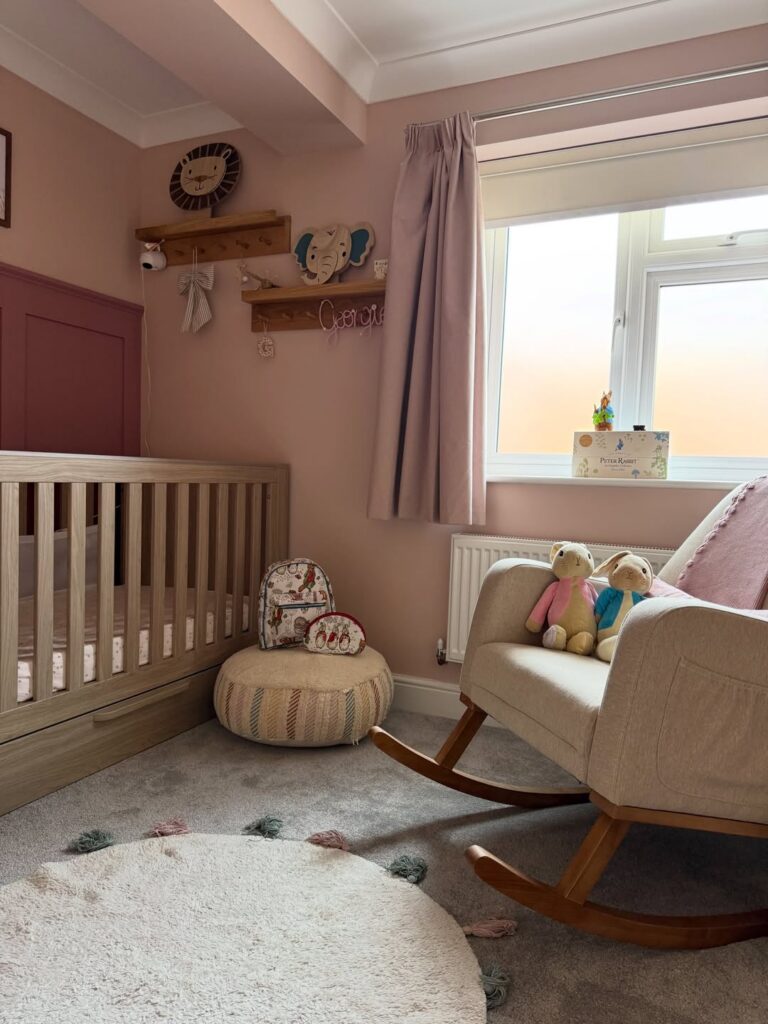
Choose a muted pink for the walls, then add Peter Rabbit through a few things you can move or change. The key step is choosing the paint before buying themed accessories. Test a large patch beside the cot and another near the window, since pink can look quite different in daylight and shade. Once you have the wall colour, use a deeper rose on any lower panelling to give the room some contrast.
Bring in wood furniture and cream fabric next, leaving the rabbit details until last. A pair of rabbit toys on the nursing chair gives the theme a clear place without repeating it across every surface. Add a book or two with the covers facing out, rather than buying matching bedding, curtains and wall art. Keep the cot textiles plain so the small illustrations and blue coat remain easy to notice.
Soft Blue Paneled Lower Walls
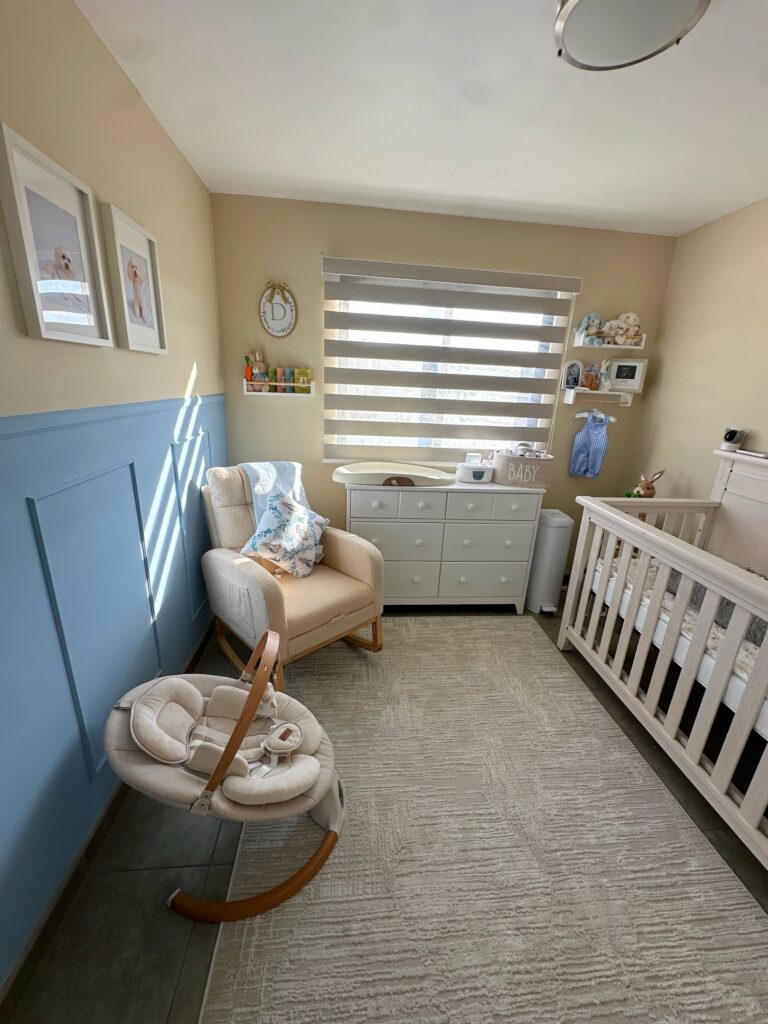
Peter’s jacket is a dusty blue with some gray in it, and that is the shade to match. Bright blue straight from a paint chip looks like a toy once it covers a whole wall, so test a sample and check it in morning and evening light. Direct sun across the wall will wash it paler than you expect.
Make each molded panel wide and shallow, and set the top rail around the height of a chair back. Small frames packed close together make the wall busy. I’d paint the upper wall a warm cream, because white next to blue can turn cold. Cream also sits well with a rabbit plush and a gingham romper.
Rabbit Wallpaper Backdrop
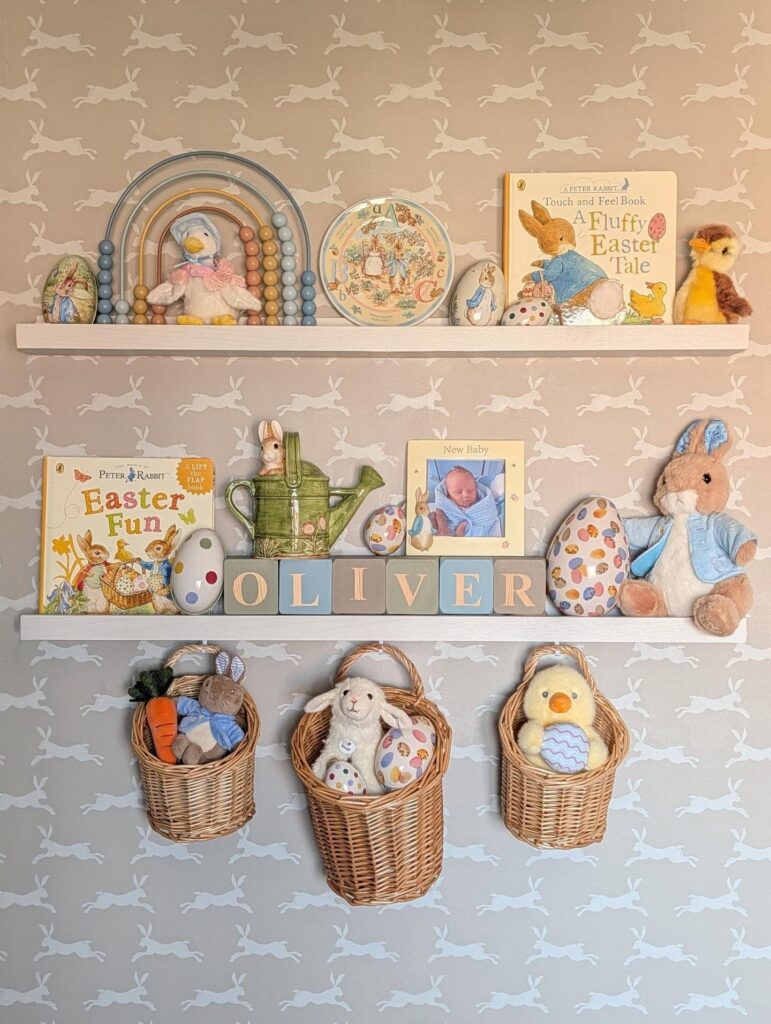
Running-rabbit wallpaper gives Peter Rabbit books and toys a clear setting without competing with them. The small, repeated figures sit behind two pale shelves, letting book covers, wooden name blocks, and plush rabbits keep their own shapes. Leave enough room between the shelves for taller books and toys to stand upright, then hang a few handled baskets below. Their woven texture breaks up the printed pattern and gives soft toys and small eggs a place to go.
Without the rabbit motif, the shelves could feel like a loose collection of nursery objects. The repeated figures carry the theme across the wall, while the open space between shelves keeps the display from becoming one crowded band.
Rabbit and Gingham Bunting
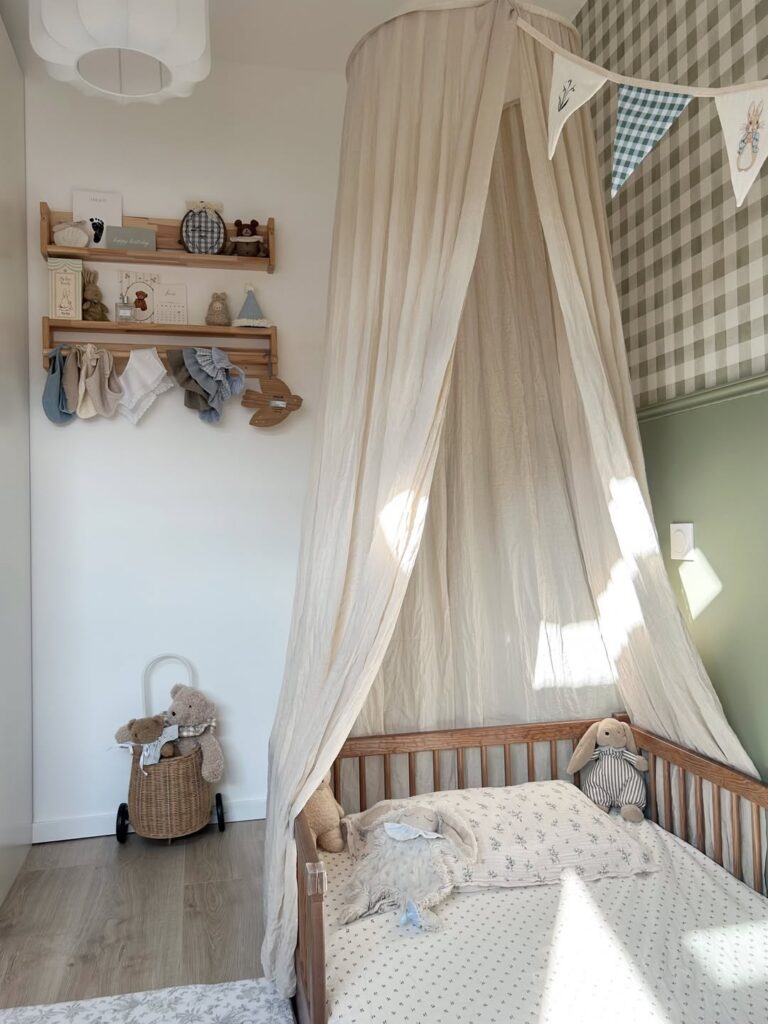
Alternate rabbit-print triangles with green gingham to make a fabric garland for the nursery wall. Use cotton offcuts for the flags, then fold cotton tape over their top edges and stitch them in place; if you cannot find rabbit fabric, use cream cotton with small rabbit patches sewn on instead. Hang the finished strand high on a wall, well away from the cot and out of reach.
Gingham Wallpaper Above a Painted Lower Wall
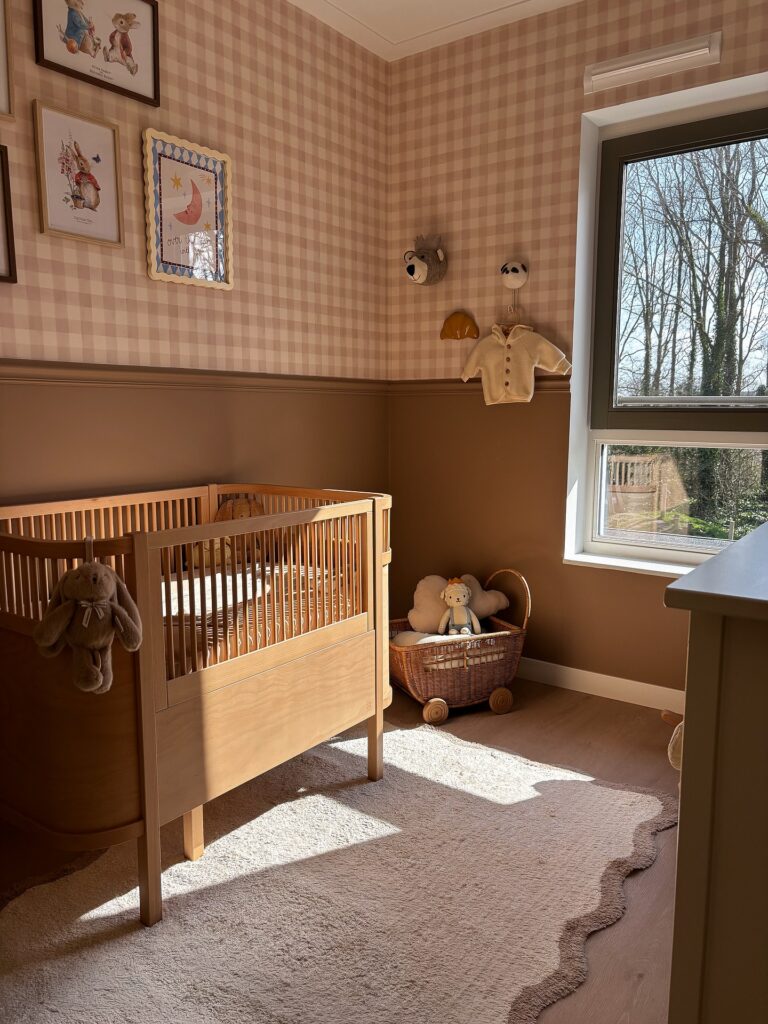
Start with the paint, because the lower wall sets the color the wallpaper has to match. Pick a muted brown or tan first, then choose a gingham whose darker squares sit close to it. Here the check is a soft dusty pink, and the brown below it picks up the same warmth.
Next, decide where the two meet. A rail at roughly a third of the wall height, with the paper above it, keeps the check from taking over the room. Paint the lower section and the rail before you hang any paper, so you aren’t cutting a clean line against fresh seams.
The step that matters most is lining up the check at the corners. If the squares drift off level, you’ll see it every time you look at the wall. I’d start from a plumb line, not from the ceiling.
Frame the Peter Rabbit prints last, and hang them on the paper.
Heirloom Nursery Furniture
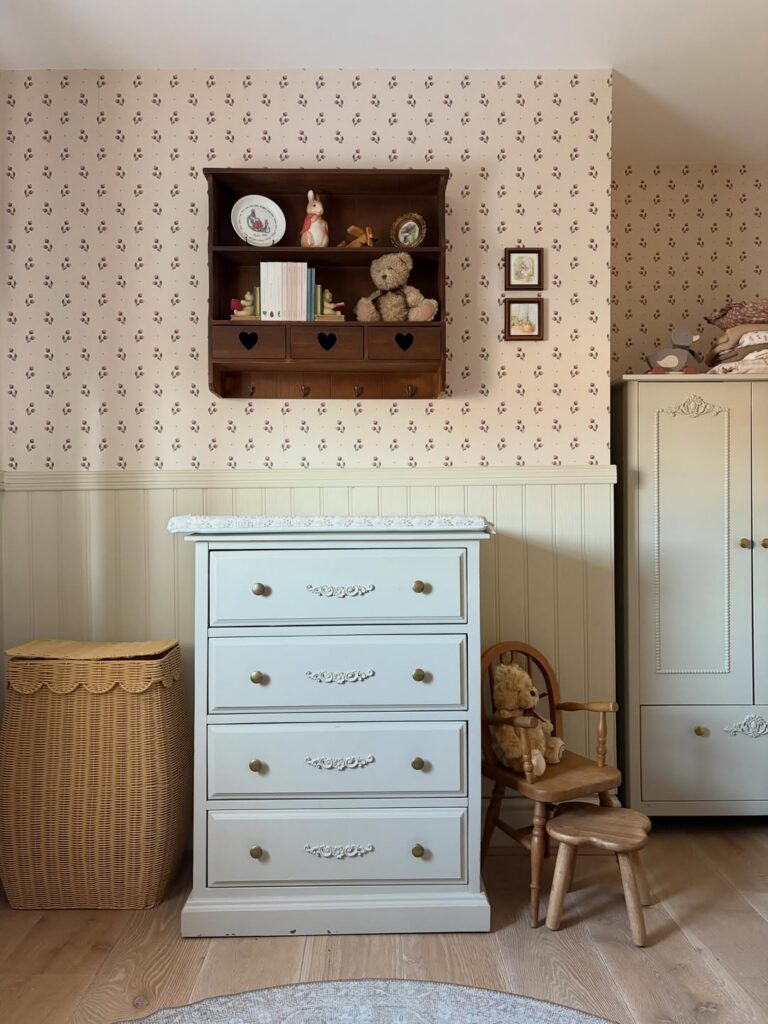
An heirloom-led nursery has room for pieces that look as though they have been gathered over time. A dark wooden wall shelf with heart-shaped cutouts can hold books, small plates, and a rabbit toy, while a painted dresser keeps daily clothes close at hand. This approach is right for families who like traditional details and visible keepsakes.
Those after clear surfaces, plain walls, or furniture that all matches may prefer another direction.
Pair Wallpaper With Sage Paint
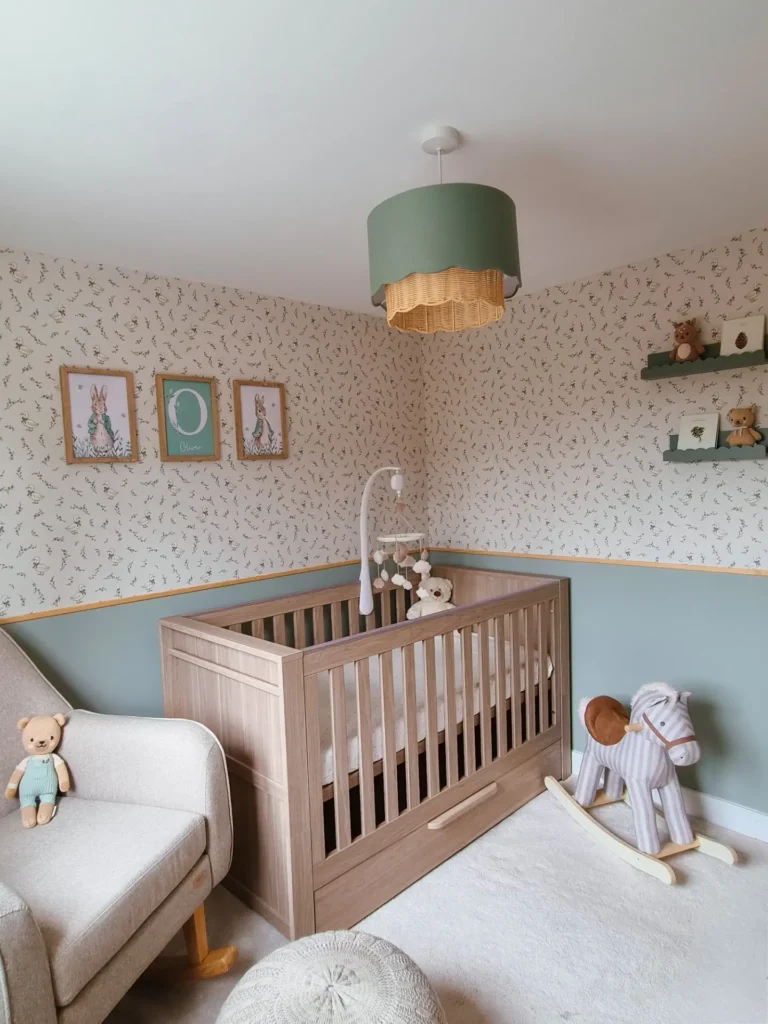
Above a sage-painted lower wall, use a small sprig wallpaper rather than covering the room from floor to ceiling. Run the divide around the room at the same height, including behind the cot, so the sleeping area and feeding corner share one backdrop. This is worth considering in a small nursery where the cot and armchair sit close together and there is little spare wall between them.
On the upper wall, leave enough space for Peter Rabbit prints to hang fully within the papered section rather than straddling the divide. The lower painted area is useful beside furniture, where much of a wallpaper pattern would be hidden anyway. If you plan to add a low bookcase later, carry the same paint behind it rather than changing the wall treatment for each piece of furniture.
Bunny Shelves and Easter Tree
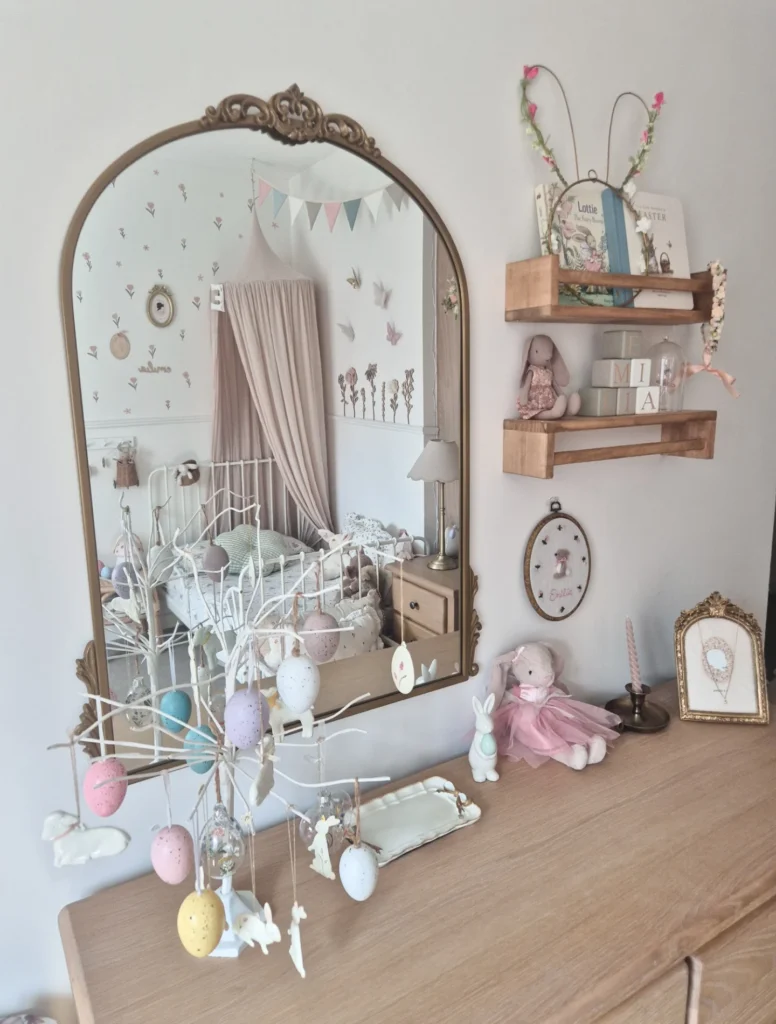
An arched mirror with a thin gold frame sits above a pale wood dresser, and the room behind it shows in the glass. I’d use gold in place of a white or black frame. Gold picks up the brass candlestick and the small gilt frame on the dresser, so the pastel eggs and the pink-skirted bunny don’t float alone.
White would fade into the wall, and black would feel heavy beside the soft pinks and blues.
Bedside Fabric Canopy
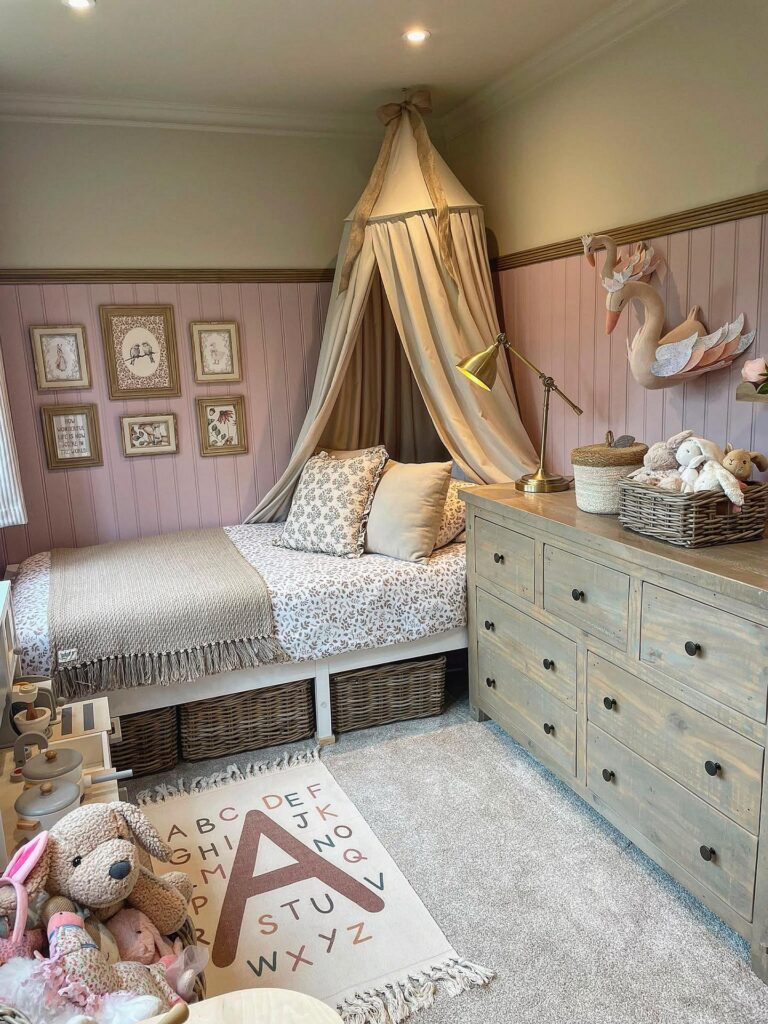
A fabric canopy gives the bed a clear focal point, but too much cloth can swallow a small room and collect around pillows. Anchor it securely above the bed, then pull the panels back so they do not trail across the mattress or brush a lamp. Pale fabric keeps floral bedding visible; choose a washable weave, since nursery canopies gather dust and need regular cleaning.
A Rabbit Display Shelf
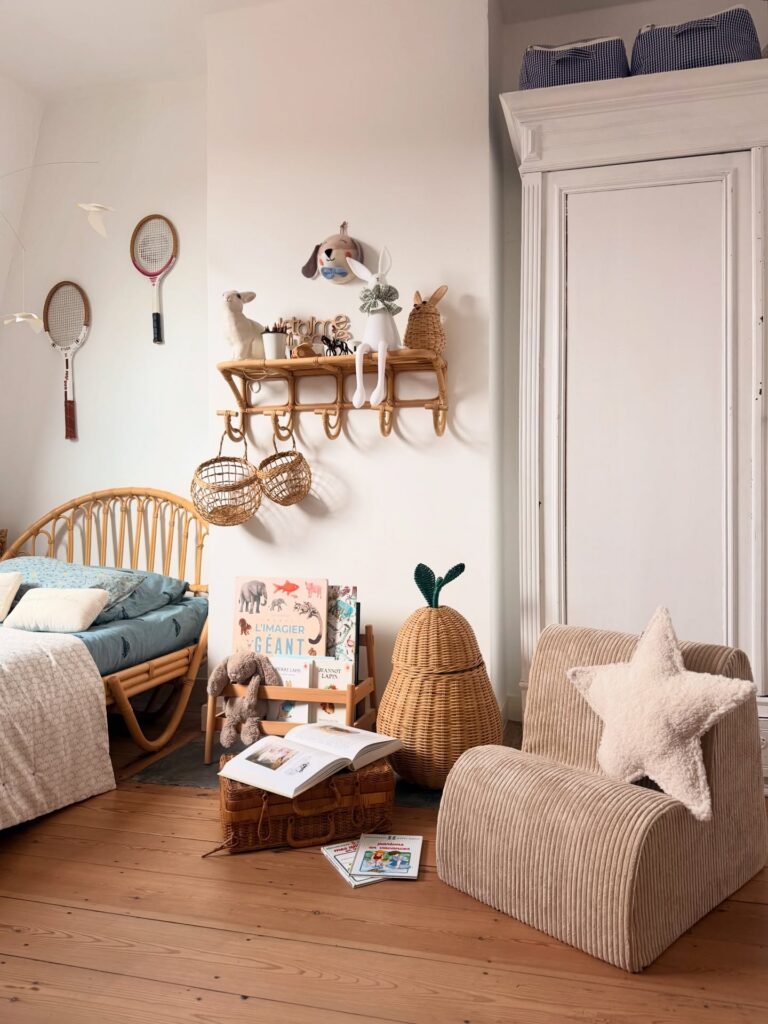
Let a cloth rabbit’s legs hang over the edge of a wall shelf rather than tucking every toy neatly behind the rim. That little break in the line gives the display its character. The rabbit becomes the focus because it reaches below the shelf, while the smaller things stay gathered on top. With all the toys sitting upright in a row, the same arrangement would feel more like storage.
A rattan shelf gives the rabbit a ledge to sit on without adding much visual weight to the wall. Leave room on either side of the toy so its ears and dangling feet have a clear outline. There is no need to fill every inch with more rabbits or themed ornaments. One cloth rabbit, placed this way, can carry the Peter Rabbit reference while leaving room for a few things you want to display as your child grows.
Gingham Walls With Blue Wainscoting
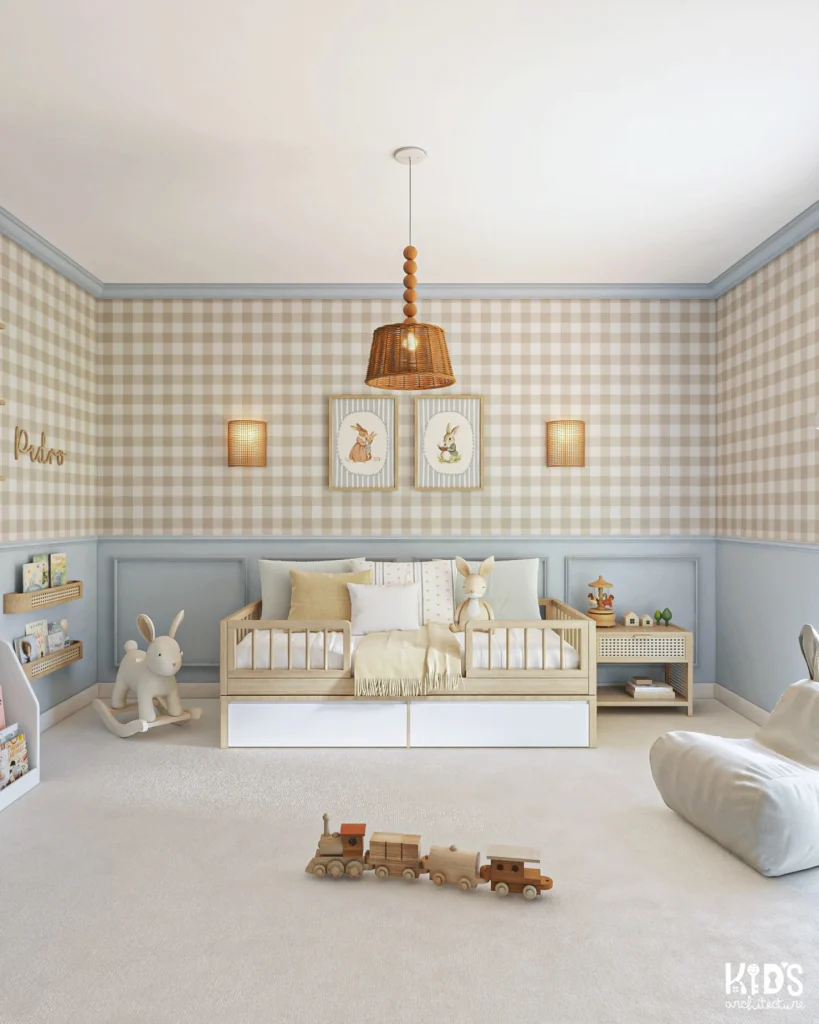
A tan and cream gingham wallpaper above a pale blue paneled lower wall gives a rabbit theme a background that isn’t another rabbit. The two small framed bunny prints do the storytelling, and the checks stay quiet behind them.
This is right for parents who want a nursery that can grow into a toddler room without a repaint. The low bed with rails, the rattan bedside table and the wooden train are all things a child keeps using for years. It also fits a room with a tall ceiling and enough wall to carry a repeating pattern.
I’d pick something else if the room is small or has a lot of windows and doors. Gingham on every wall closes in a tight space, and the paneling needs a straight run of wall to look right. Anyone who wants a bright, storybook garden feel should look at a floral or green option from this list instead.
Bunny Shelf Display
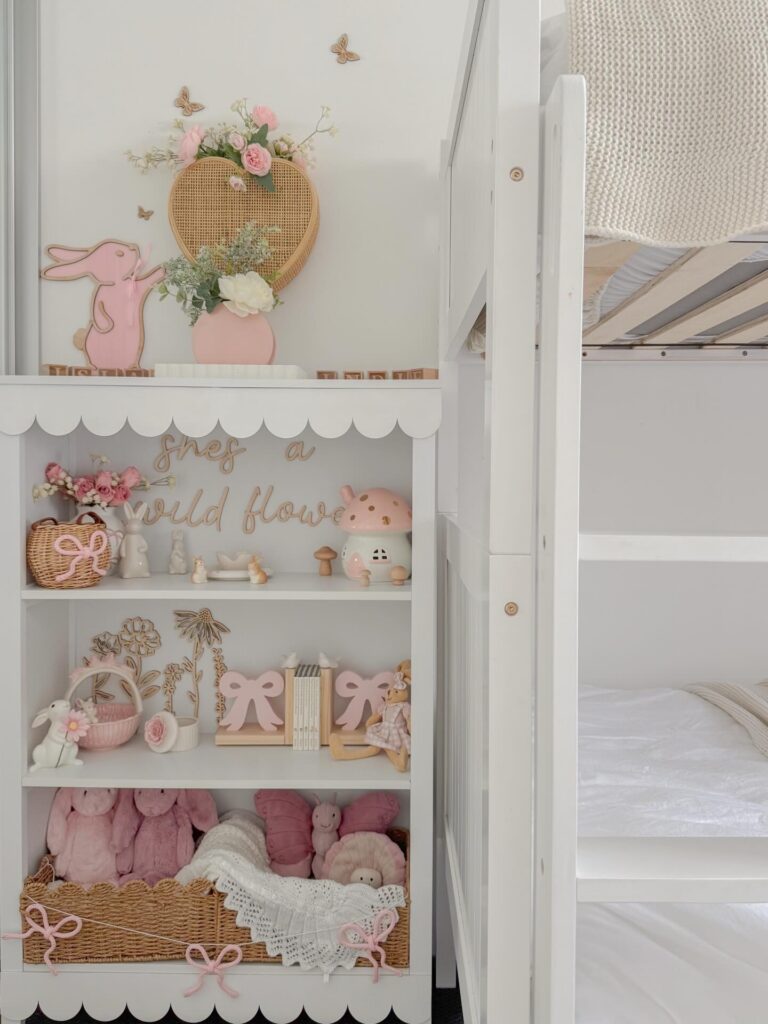
With little figures, books, flowers, and plush toys sharing the shelves, small rabbit details can get lost among the clutter. Group objects by use: books upright together, figures in a short row, and soft toys in a basket below. A scalloped edge already adds detail, so leave a patch of open shelf rather than filling every gap with another ornament.
The display tends to look untidy when every piece is a different size or when toys spill over the basket. Repeat a few materials, such as pale wood and woven cane, and limit the flowers to one spot. A small cluster of plush rabbits can sit together without hiding the books behind them. Put lightweight keepsakes higher up and leave sturdy, washable toys within a child’s reach. Attach the shelving unit securely to the wall, since a child may pull on its edge while reaching. That keeps the shelves useful for daily play.
Scalloped Book Ledges
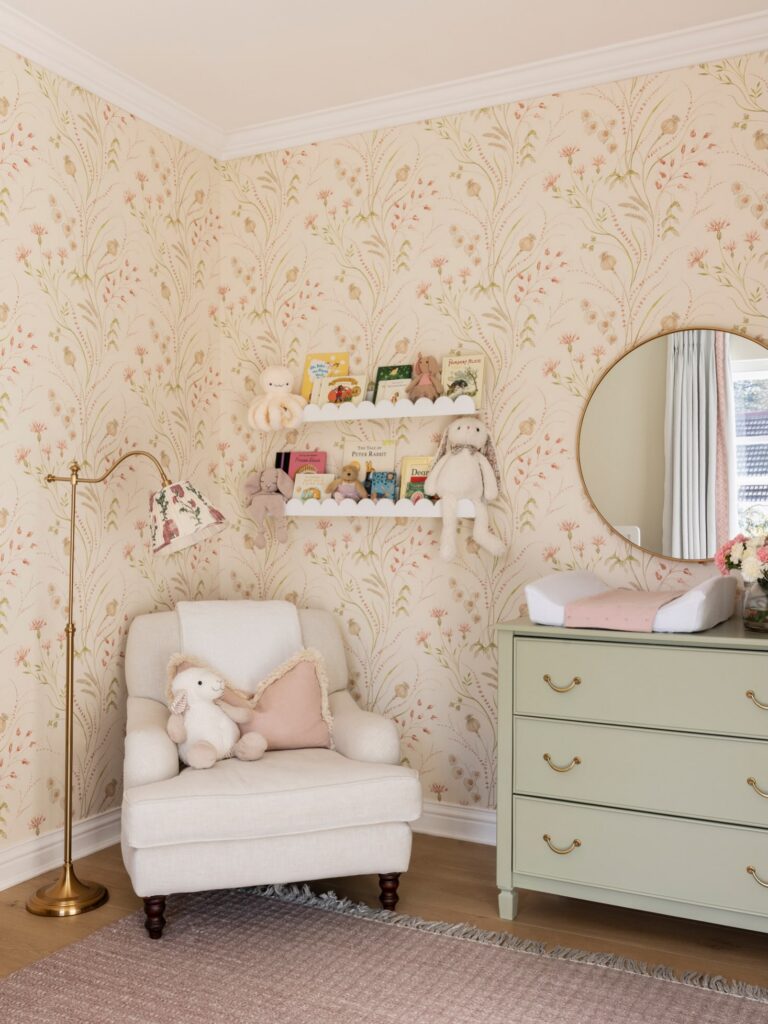
Above the reading chair, use scalloped book ledges to display Peter Rabbit covers face out. Measure your tallest book before fixing the upper ledge, leaving enough room to lift books off the lower shelf without catching the one above. Arrange a few books on each ledge, then add one small rabbit toy rather than filling every gap, so the covers stay easy to see.
Open Shelves for Storybooks
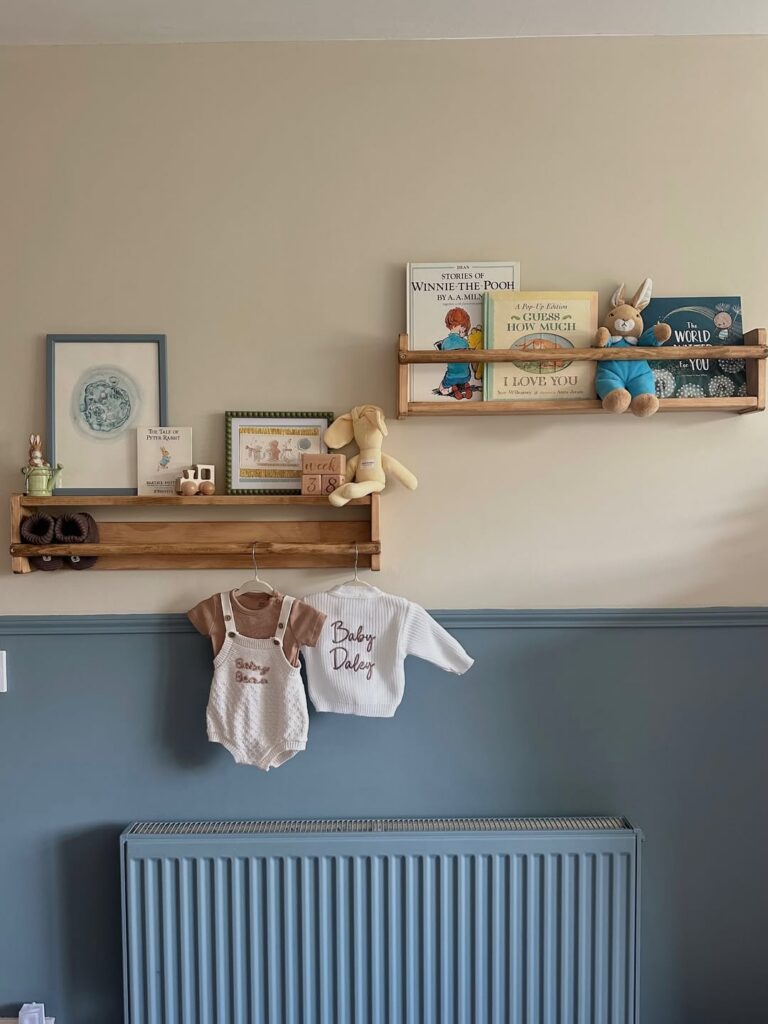
Two narrow wooden shelves with a front rail hold the books face out, so the covers do the decorating. Winnie-the-Pooh, Guess How Much I Love You and a Peter Rabbit title sit upright against the rail, with a plush rabbit in a blue outfit leaning beside them.
The front rail is the detail that matters. It’s a plain strip of the same wood, set a couple of inches above the shelf, and it stops the books from sliding forward or toppling when a small hand pulls one out. Without it you’d have a flat ledge where books lie on their sides, spines showing, and the illustrations would disappear.
The lower shelf takes the same approach with framed prints, a tiny train and a pair of knitted booties. I’d hang the shelves low enough for a toddler to reach the books, and keep the breakable frames on the lower shelf where you can steady them.
A Shelf with a Clothes Rail
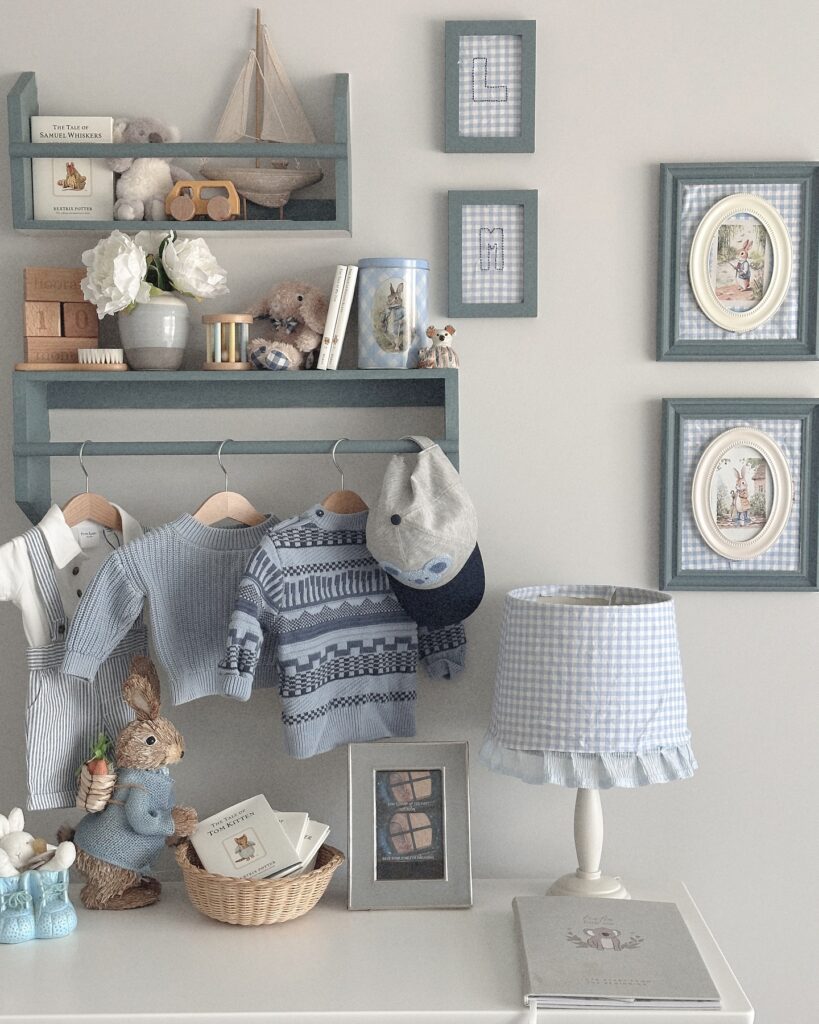
Under a shallow, blue-gray shelf, a wooden dowel gives tiny cardigans and striped shirts a place to hang where they can still be seen. Build the shelf and side supports from pine or another light wood, then paint them. A curtain rod fixed beneath a ready-made shelf can do the same job if you do not want to cut timber.
Wooden hangers keep the rail neat, while Peter Rabbit books and small framed prints carry the theme nearby.
Pale Sage Wall Panelling
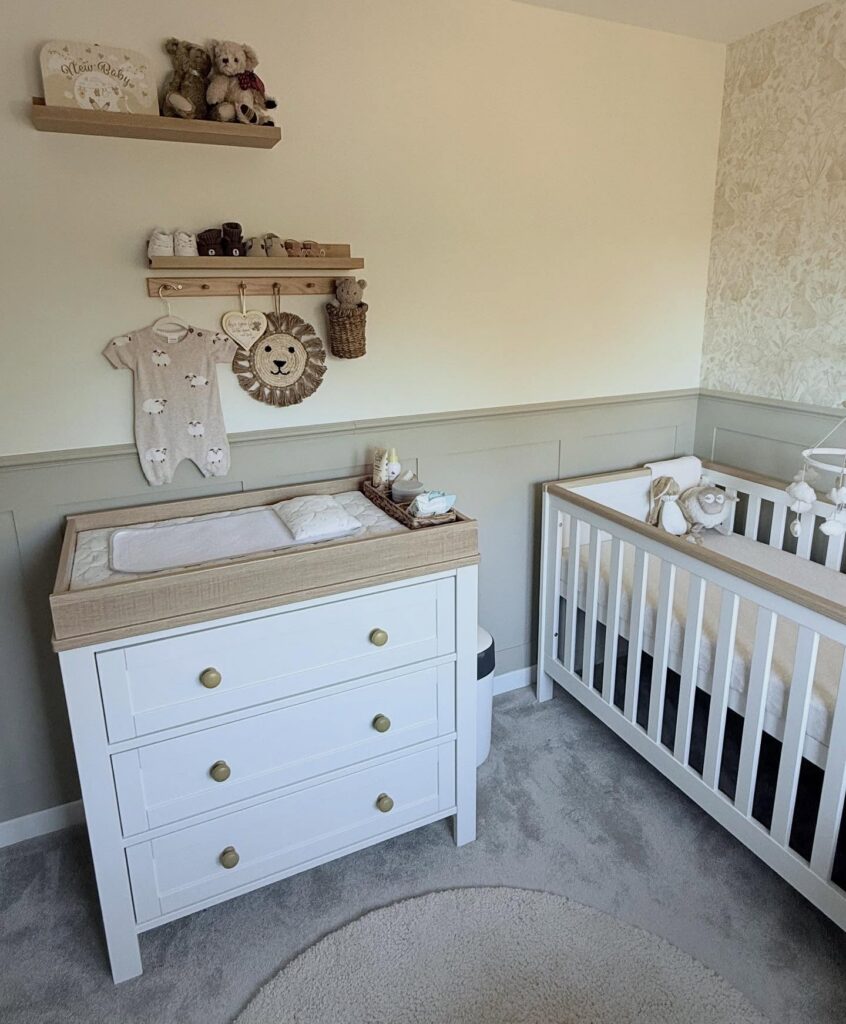
Paint the lower wall panelling pale sage rather than a darker garden green. The lighter shade makes less of a contrast with cream walls, while a deeper green would make the white cot stand out more.
Carry the pale green behind the changing table so the colour runs around the room, with wood along the furniture tops to break up the painted surfaces.
Botanical Wallpaper Above Pink Panelling
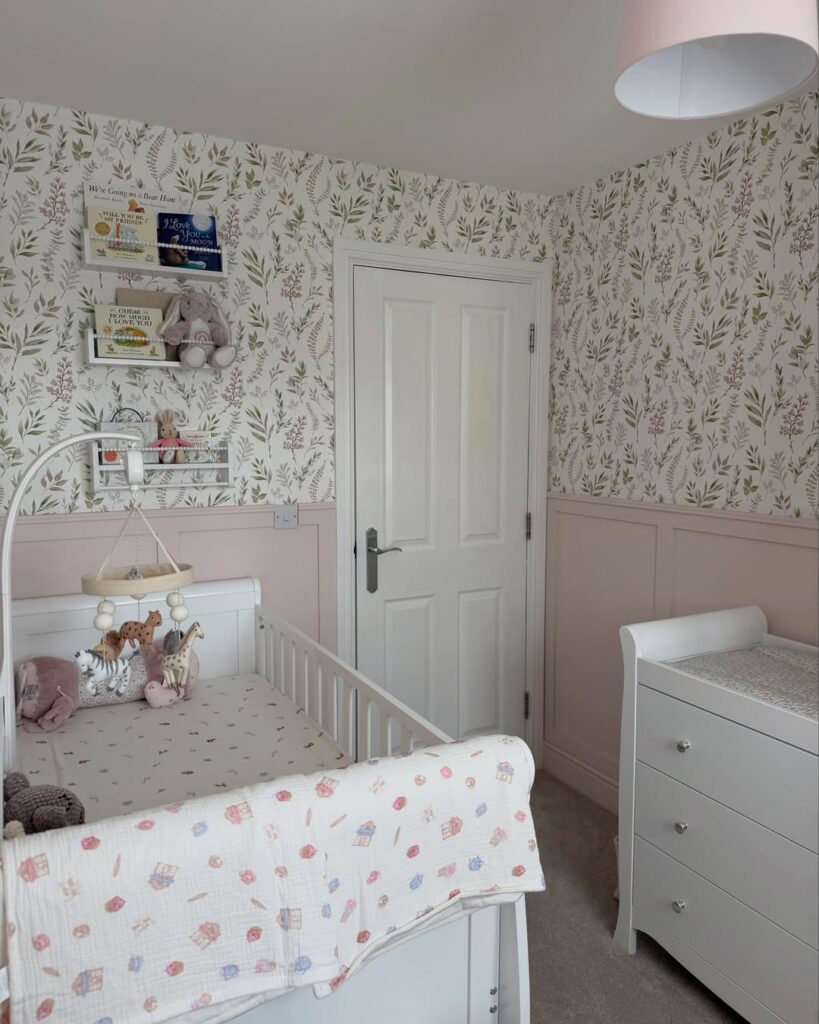
A leafy print on the upper wall and a dusty pink panel below it gives a small nursery a garden feel without a single rabbit on show. The panelling runs to about the height of the cot rail, so the pink sits behind the furniture and the print fills the space above. This works best in a box room or any narrow bedroom where you want pattern but need the lower half to stay quiet.
Book ledges on the leaf print hold the Peter Rabbit storybooks and a soft toy at easy reach. I’d keep the ceiling plain.
Blush Paneling and Mural
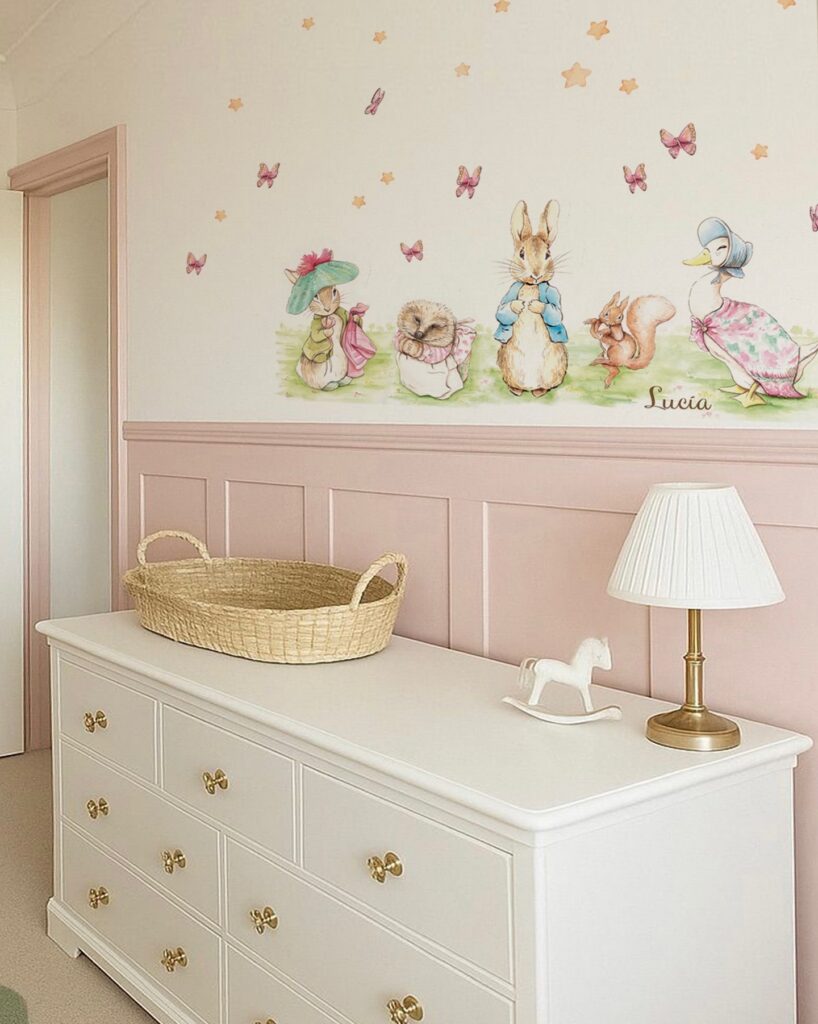
Blush paneling gives a Peter Rabbit nursery a different base from the usual leafy green, while cream above keeps the room light. A storybook border can run along the wall just above the trim, with animals and butterflies spaced across the open field. Matching the dresser to the pale wall color keeps the furniture from competing with the mural; brass knobs add a small contrast.
Scalloped Shelves Above the Dresser
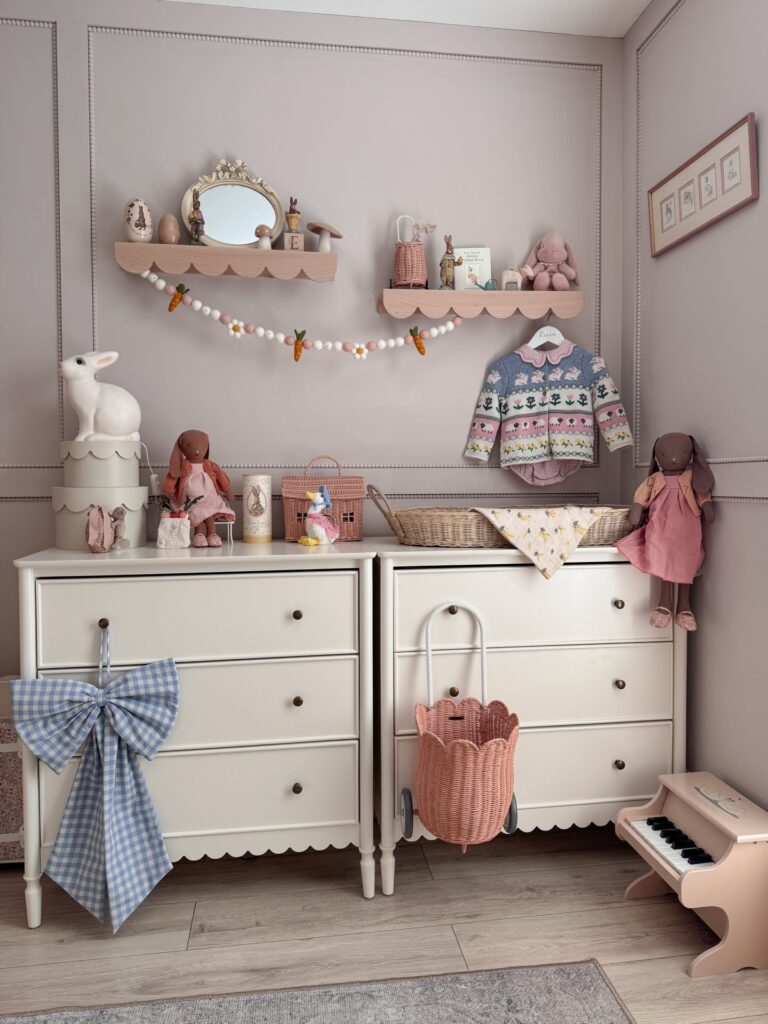
Hang scalloped wood shelves above the nursery dresser to give rabbit toys and books a spot away from the changing surface. This works well on a wall that needs storage but has no floor space left for a bookcase. Set the shelves at different heights, leaving enough room below for anything you use on the dresser each day.
Over two dressers placed side by side, spread the shelves across the width rather than crowding them into the middle. Give a Peter Rabbit book room to stand facing out, then leave gaps around a few small rabbit figures so each one is easy to see. Use the upper shelf for keepsakes you rarely handle and the lower one for display books you want to rotate as your child grows, with everyday reading books stored within reach elsewhere. Both shelves should sit beyond your child’s reach.