23 Winnie the Pooh Nursery ideas
This site contains affiliate links. We may earn a small commission, at no extra cost to you. Article may contain some images for illustrative purposes only .
Most nurseries get planned with a tight budget, a small room, and a due date that does not move. That is a lot to juggle before you pick a theme. Pooh helps with one part. The characters are familiar, the mood is gentle, and the theme works for a boy, a girl, or a baby whose sex you are keeping to yourself. This list gathers 23 Winnie the Pooh nursery ideas to help you decide what to do with your space. Pick one idea and stop there, or combine several. Scroll through, save the ones that fit your room and your time, and skip the rest. Nothing here asks you to do it all. A nursery does not have to be finished in a weekend, and it does not have to cost much to feel like yours.
Hundred Acre Wood Map Mural
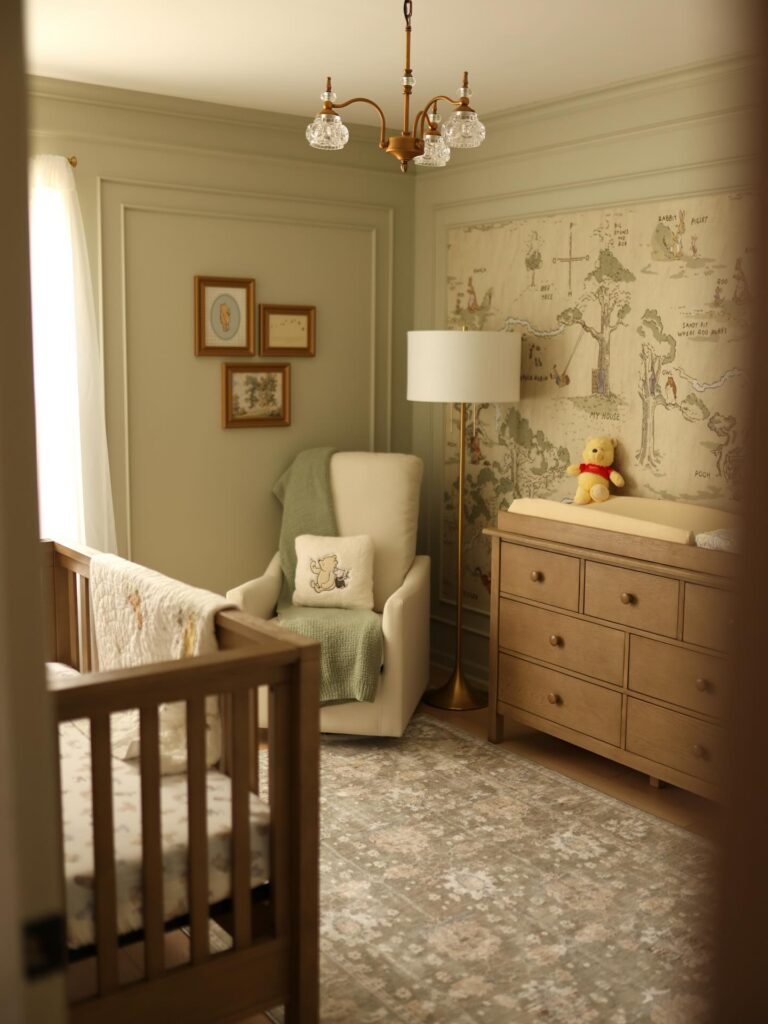
SUBHEADING: Hundred Acre Wood Map Mural
A Hundred Acre Wood map mural can cover one wall, but too much detail may make the room feel busy. Choose a design with a pale background and muted lines, then leave the other walls plain. Tiny labels and paths can blur together from across the room, so check that the main shapes still read clearly at a distance before committing to the full wall.
Furniture can hide parts of the map, which may leave key details cut off behind a dresser or chair. Plan the mural around the furniture rather than placing the whole map at eye level. In this room, the map sits behind the dresser, with the crib and chair away from its busiest area. Keep the Pooh accents small, too. A single plush toy or a framed print can link the map to the story without competing with its lines.
A Pooh Woodland Mural
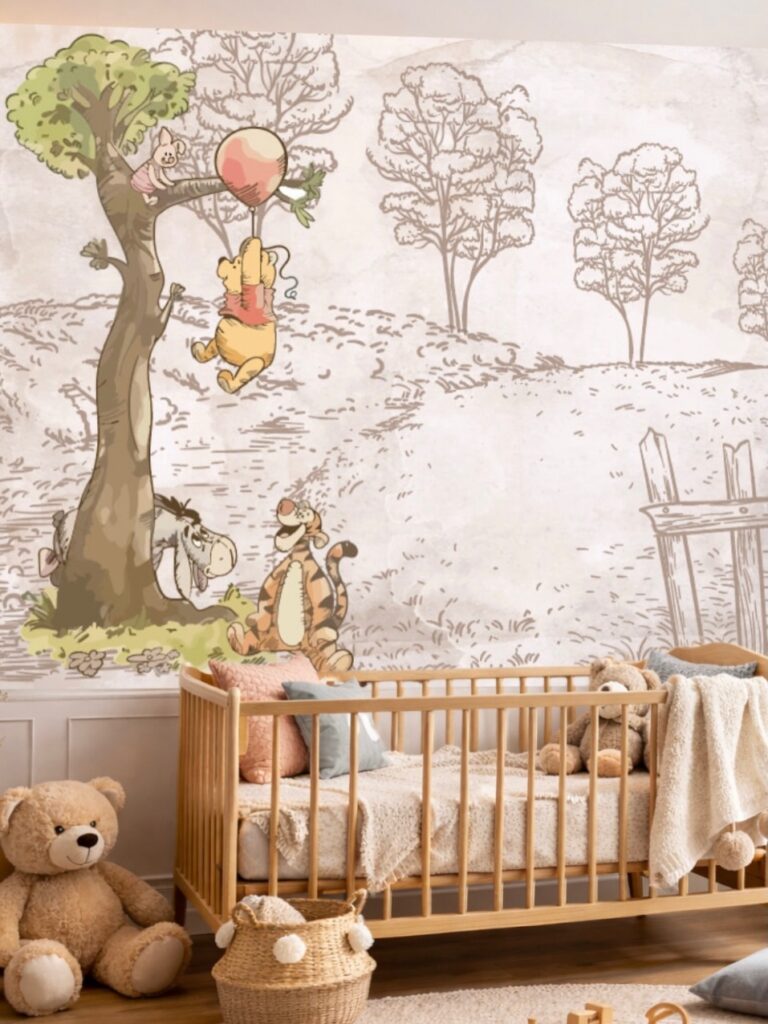
Choose a Pooh woodland mural before picking paint or bedding, then use its background shade to guide the lower wall color. Measure the wall and mark the crib’s height before ordering; the key step is checking that Pooh and his friends won’t disappear behind the furniture.
Place the main tree to one side of the crib, leaving the lighter woodland scene to stretch across the wall.
Vintage Baby Dresses on the Wall
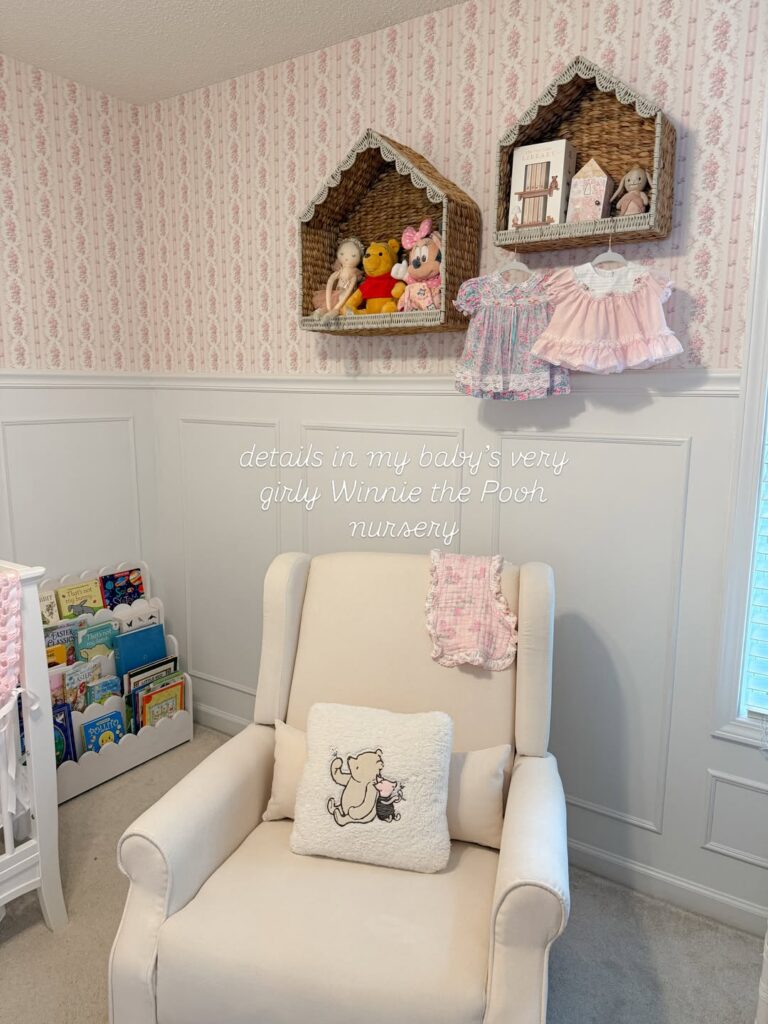
Two small smocked dresses hang on hangers right from the shelves’ edge, and they bring in more pink than any paint could. The floral one has a blue and pink print, and the plain pink one has a white yoke and a ruffled hem. I’d keep the dresses in the same pale range as the wallpaper so they blend into it rather than compete.
A darker or brighter dress would pull the eye away from the plush toys on the shelves. Hang them from a hook or a small peg beside the basket, and take them down when they need washing.
Storybook Wall Mural
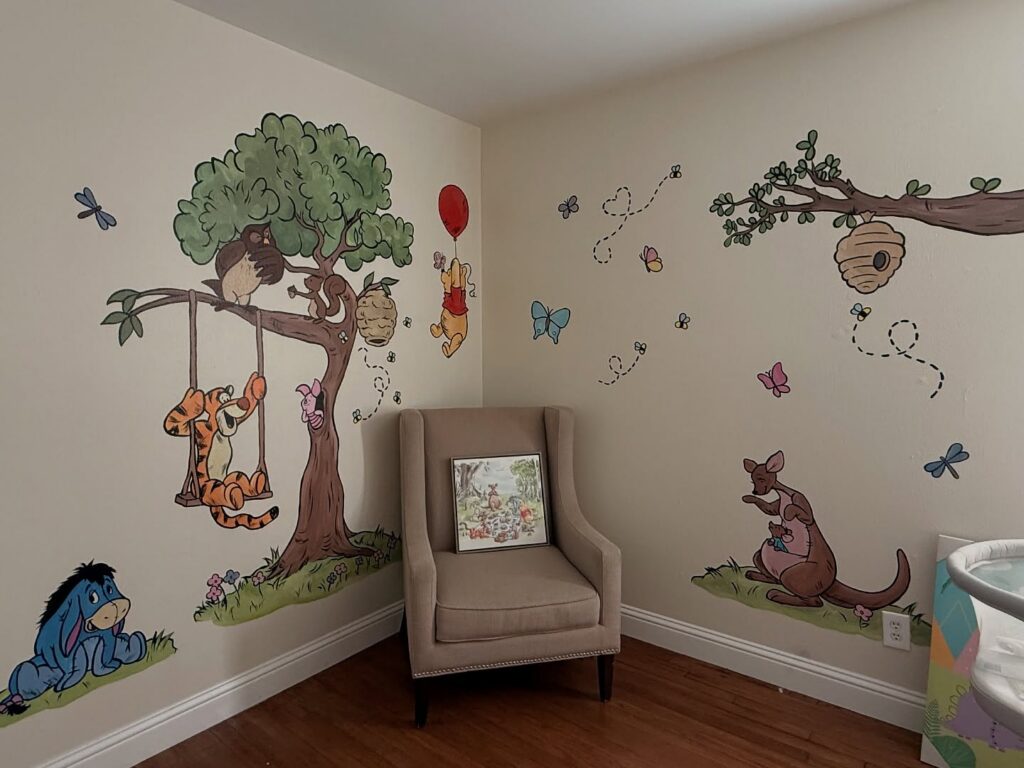
Let the woodland mural continue around the corner, with the tree and hanging characters on one wall linked to the branch, hive, and butterflies on the next. That turn makes the two walls feel like one scene rather than separate panels. Without the connecting details, the large tree could look like a lone picture, and the corner would feel unfinished.
Pooh Gallery Wall
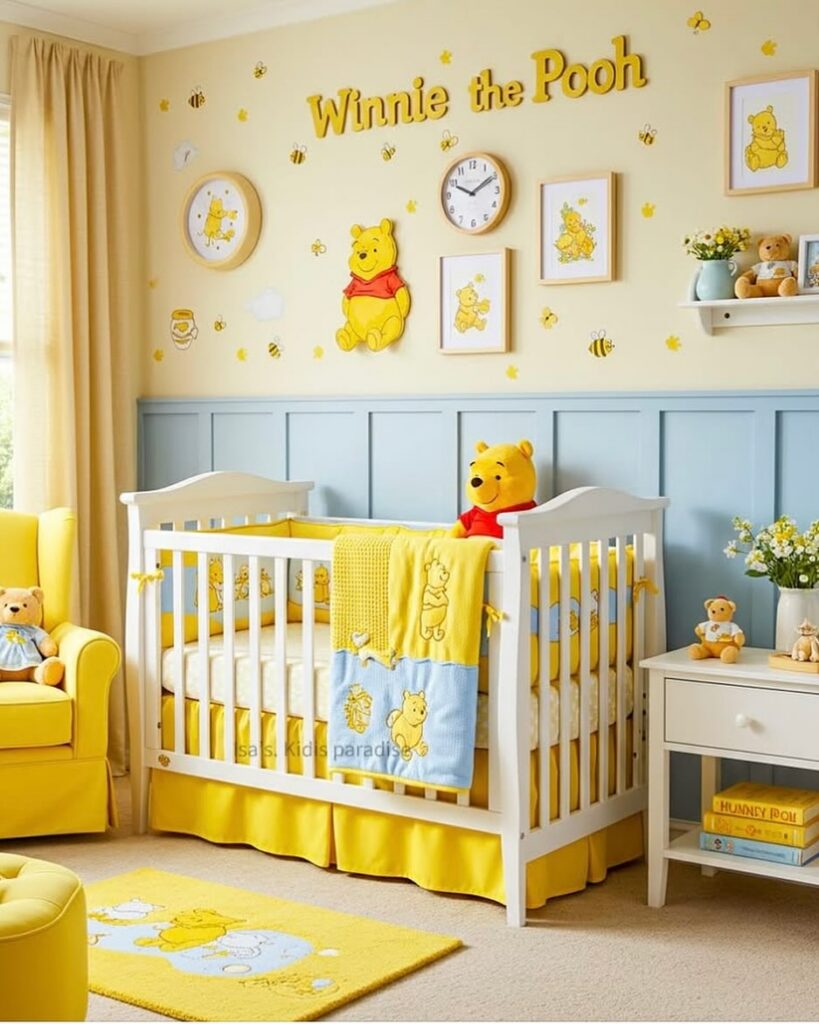
Build a Pooh gallery wall with yellow wooden letters, framed prints, and bee decals above pale blue paneling. Use plain wood frames to tie the pictures together. If wooden letters are hard to find, cut them from thick card and paint them yellow before mounting them.
Hand-Painted Pooh Wardrobe
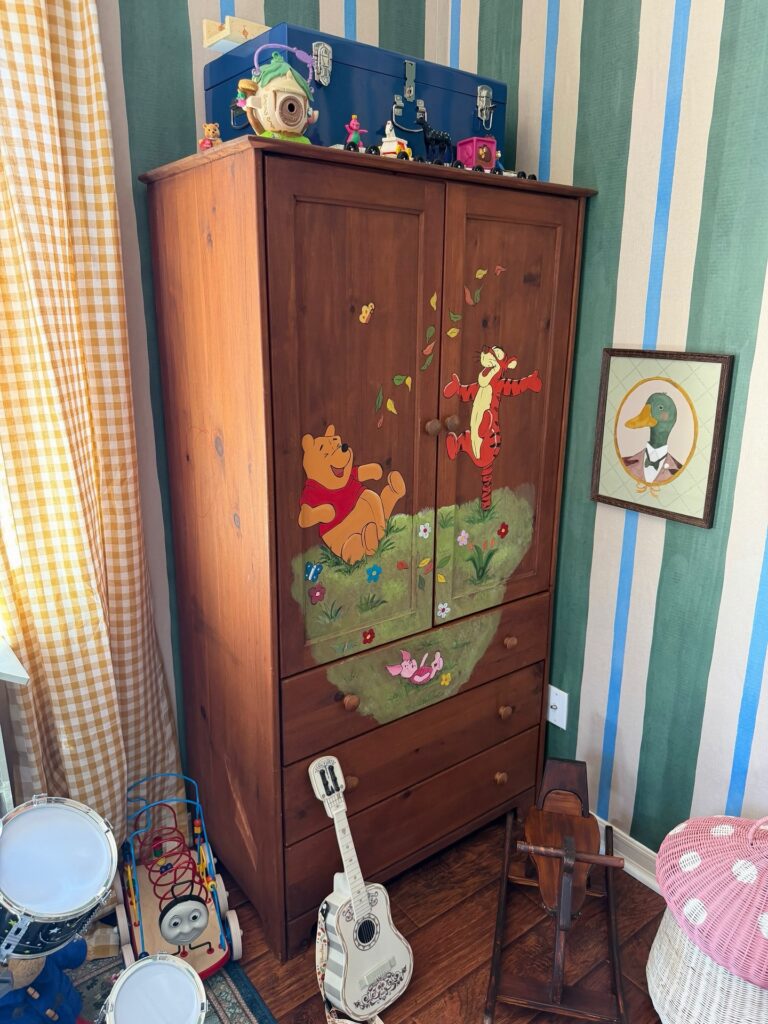
Painting characters straight onto a wooden wardrobe is a job for a parent who is comfortable with a brush, or who has a friend that is. Here, Pooh sits on a patch of grass on the doors, Tigger bounces above him, and Piglet turns up on the top drawer. The pine stays bare around them, so only the figures need covering.
Anyone renting, or anyone who wants to resell the furniture later, should pick a different idea from the list, because paint on stained wood is hard to undo. The same goes for people who haven’t painted figures before, since faces are where small mistakes show most.
Mural Above Pink Paneling
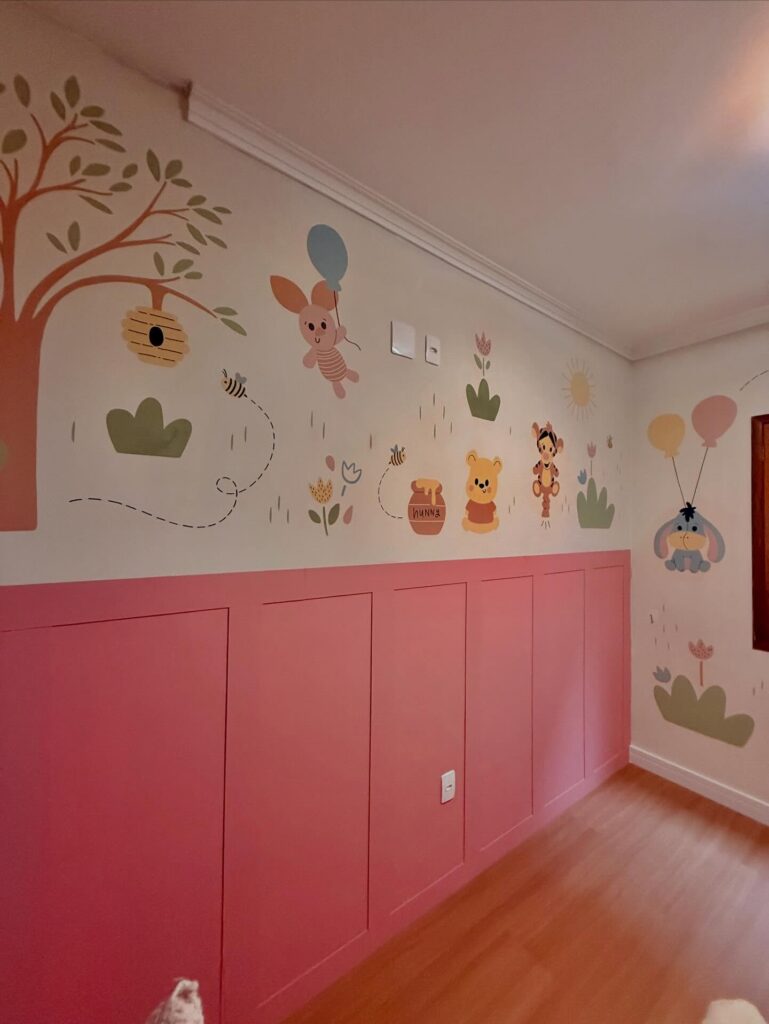
Above a run of pink paneling, a storybook mural can carry the Winnie the Pooh theme without covering every wall. Keep the scene in the band between the panel top and ceiling, where a tree, bees, flowers, and a honey pot can stretch along the room rather than bunching in one spot. The lower panels give the artwork a clear edge, and the solid color helps the small figures stand out.
This layout works well on a long wall beside the crib or changing area, where there is room to follow the scene from one end to the other. Leave space around switches and outlets, and let the mural continue a short way onto the next wall if the room turns a corner. Painting before furniture arrives makes it easier to reach the details.
Hundred Acre Wood Wallpaper
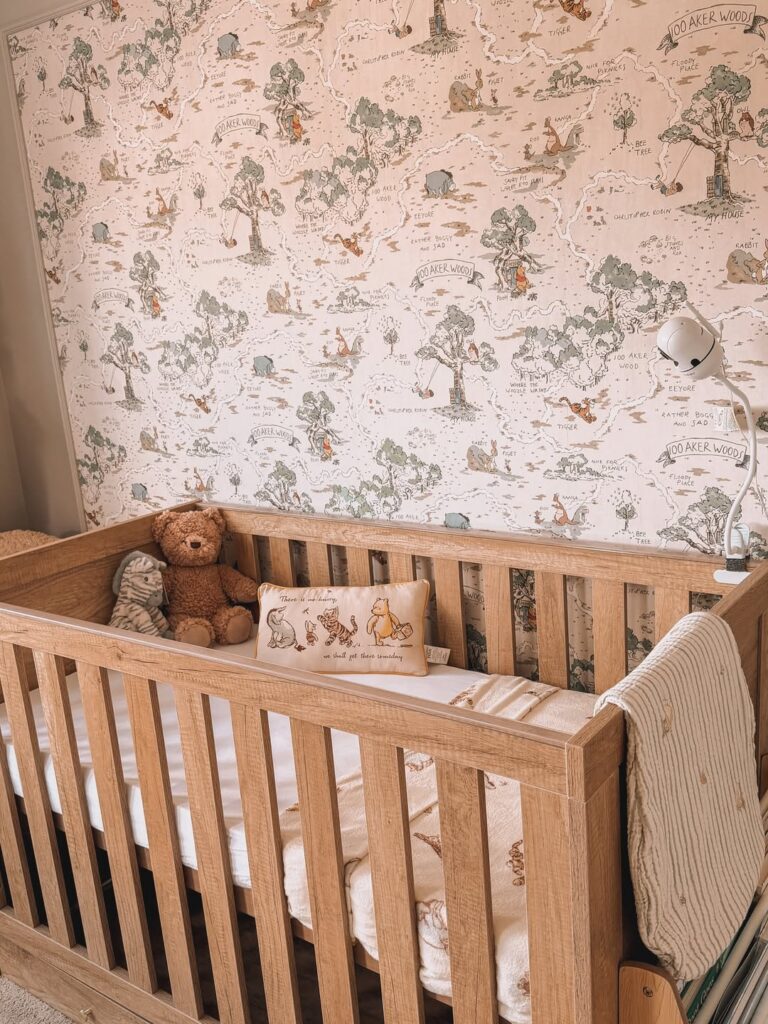
Use a Hundred Acre Wood map wallpaper behind the cot rather than carrying the print around every wall. Small drawings can turn into a blur from the doorway, so check a sample at full size before ordering. Match the pattern carefully at each seam, and let plain cream bedding and a wood cot frame sit against it without adding more prints.
Wallpaper Panels Inside Painted Walls
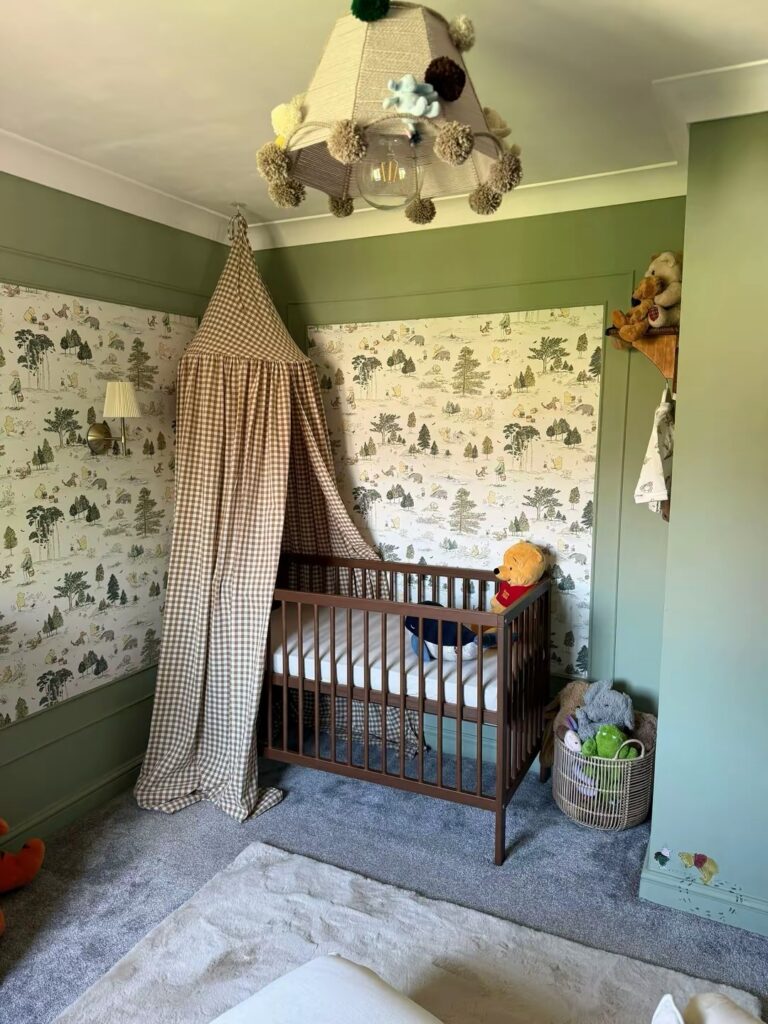
Wallpaper in a nursery doesn’t have to cover all four walls. Here it sits inside raised molding frames, with a sage green painted around each panel and on the lower wall. That setup works well in a corner where the cot goes, because the print sits right behind the baby’s bed and the rest of the room stays calm.
I’d use it in a room with a lot of wall space or a chimney breast, where the frames can break up a large flat surface. It also helps if you rent or expect to redecorate, since a panel takes far less paper than a full room and is easier to replace.
The hand-drawn woodland scene is a soft cream with green and tan trees, so the paint can pick its green straight from the print. A gingham canopy in tan hangs in front of the paper without clashing.
Hundred Acre Wood Map
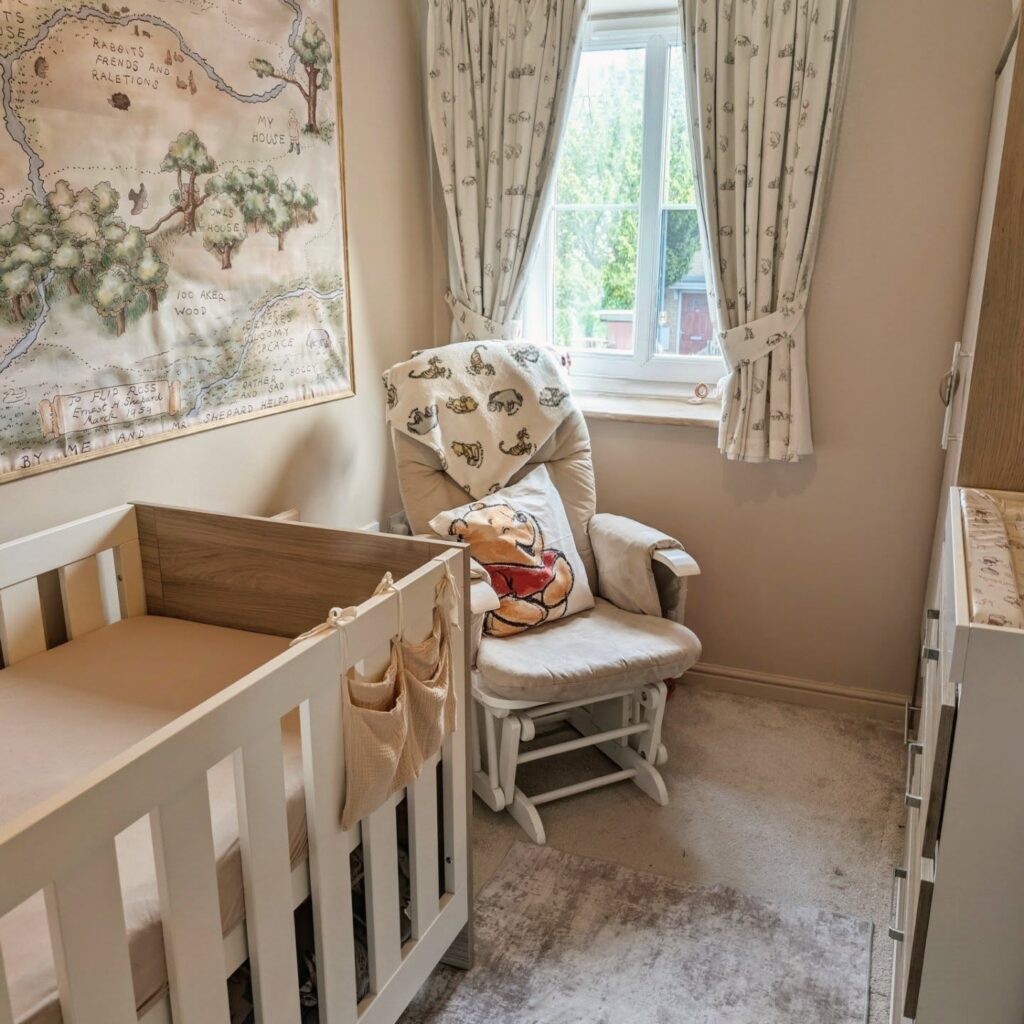
A hand-drawn Hundred Acre Wood map turns the wall into part of the story, with paths, trees and small labels marking places like Rabbit’s house and Owl’s house. The aged-paper look can come from a muted cream background, soft brown lines and watercolor washes in green and dusty pink. Small character sketches can sit along the route, while the trees and winding paths remain the main features.
A large framed print keeps the artwork easy to remove later, while a wallpaper panel or painted section can cover more of the wall. If you cannot find a map that fits the room, draw a loose trail map on kraft paper or watercolor paper and add a few familiar landmarks. Keep the lettering sparse and readable from across the room; tiny notes can disappear once the art is hung above furniture. A plain wood frame gives the map a clear edge. In a smaller nursery, use one narrow print above the crib and leave space around it so the paths and labels do not feel crowded.
Woodland Wallpaper and Green Ceiling
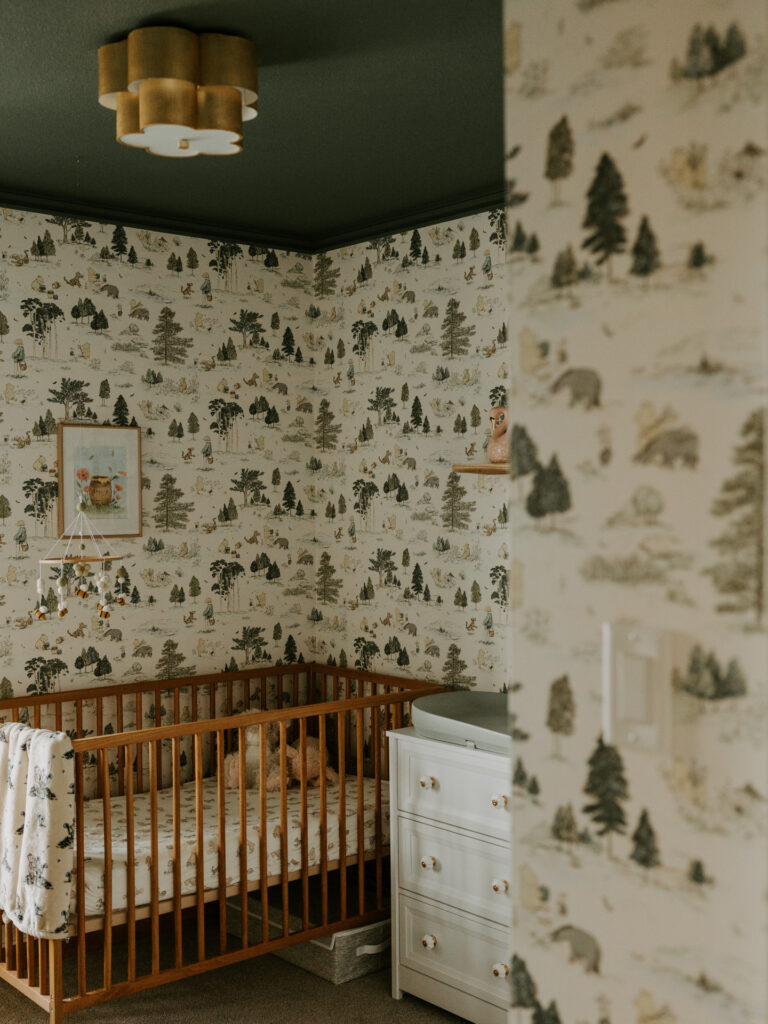
Pull a deep green from the woodland wallpaper and carry it across the ceiling, including the crown molding. With trees and small storybook figures covering the walls, that solid band of color gives the pattern a clear stopping point.
Choose the paper first, then order a sample before buying paint. Look for a cream ground with enough space between the scenes that you can follow the little drawings. For the ceiling, match one of the darker greens in the trees rather than introducing another shade. The most important step is testing that paint overhead. Put two coats on a sample board and hold it flat against the ceiling in daylight and with the room’s light on. A green that looks right on a wall can look much darker above you.
Hang the wallpaper after the ceiling and trim are painted. A wood crib picks up the brown tones in the print, while plain bedding leaves the woodland scenes visible. Add a small Pooh detail elsewhere rather than another large patterned surface.
Landscape Art Above the Crib
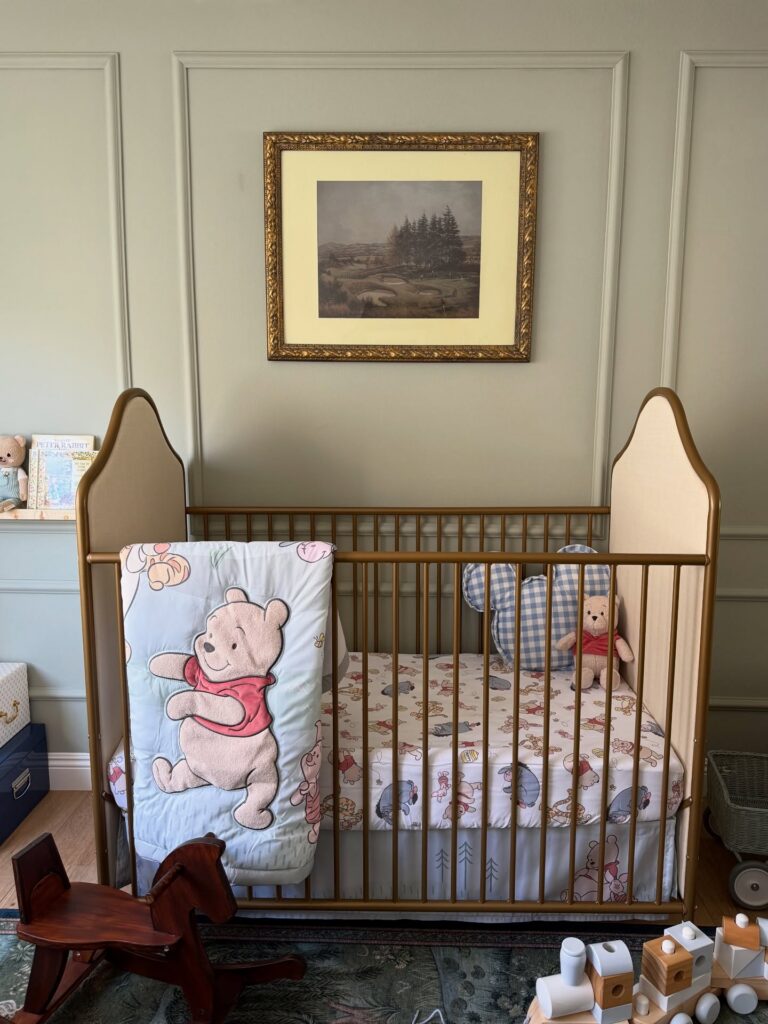
Hang an old-looking landscape above the crib and let the bedding carry all the Pooh. The painting here shows a stand of tall pines on a rolling hill, set in a heavy gold frame with a wide cream mat. It never mentions a bear, but pines and open country come close to the Hundred Acre Wood, so the link is there for anyone who goes looking.
Without it, the wall above the crib would be bare paneling, and the only things to look at would be the quilt, the fitted sheet and the stuffed bear on the mattress. That’s a lot of cartoon at one height. The frame pulls the eye up and gives the room something an adult chose for themselves.
I’d keep the painting’s colors muted and close to the sage of the wall, so the red of Pooh’s shirt stays the strongest color in view.
Hundred Acre Wood Mural
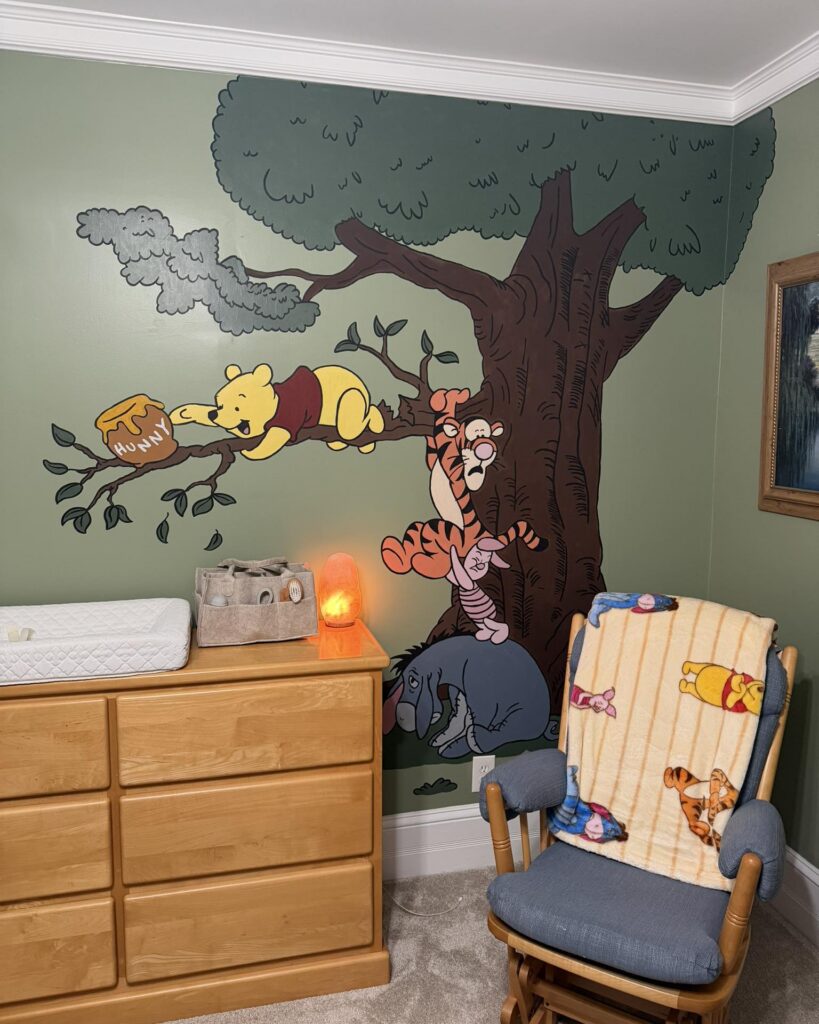
A full-wall Pooh mural gives the nursery a clear storybook focus, with a tree and characters wrapping around the corner. It works for families who want the walls to carry most of the room’s decoration and have space for a large scene. Parents who prefer plain walls or expect to change the room’s theme may prefer smaller Pooh prints.
Mustard Canopy Over the Chair
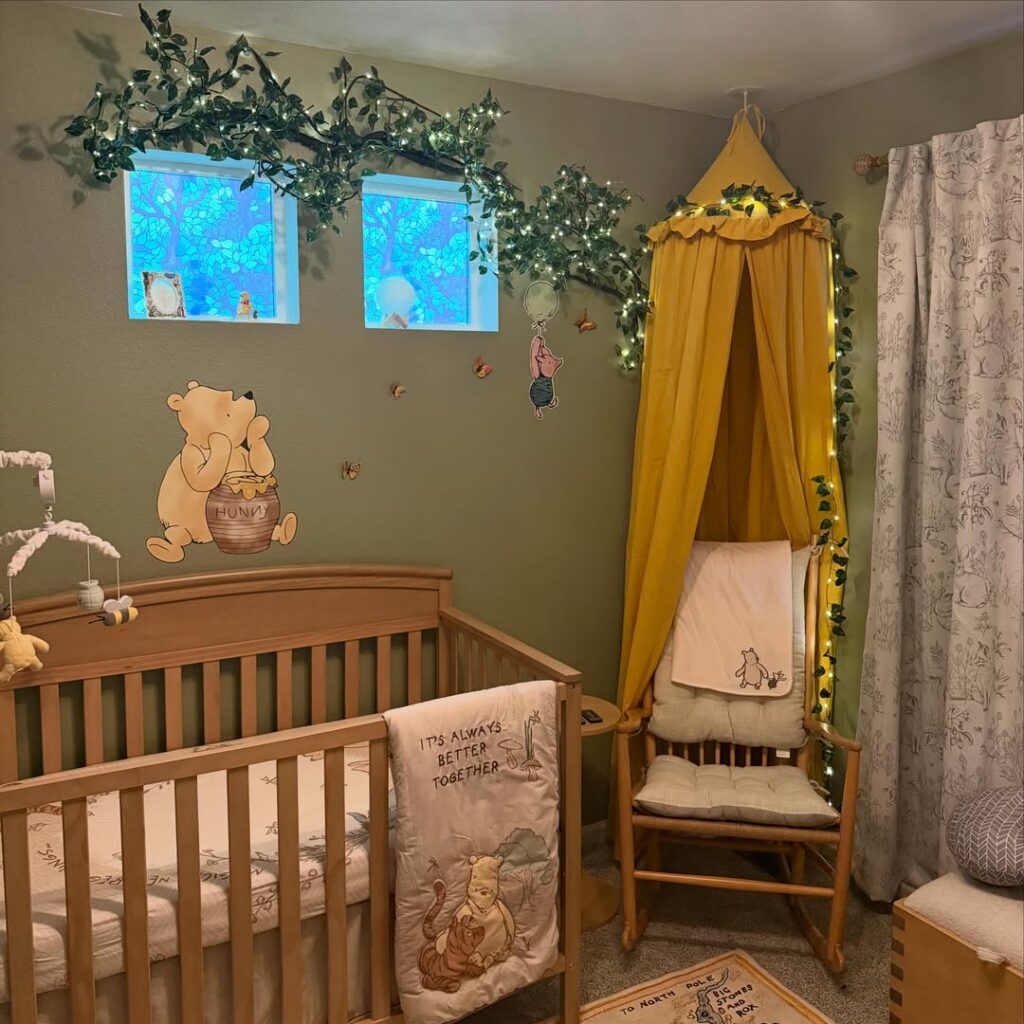
Over the nursery chair, choose a mustard canopy rather than a bright yellow one to echo Pooh’s fur without making the fabric the loudest thing in the room. This deeper shade stands apart from olive walls but shares the brown undertones of a wood crib, so the two large pieces feel connected.
Use fabric with enough weight to fall in folds; a sheer version will let more light through but won’t give you that solid block of yellow.
Hand-Painted Pooh Tree Mural
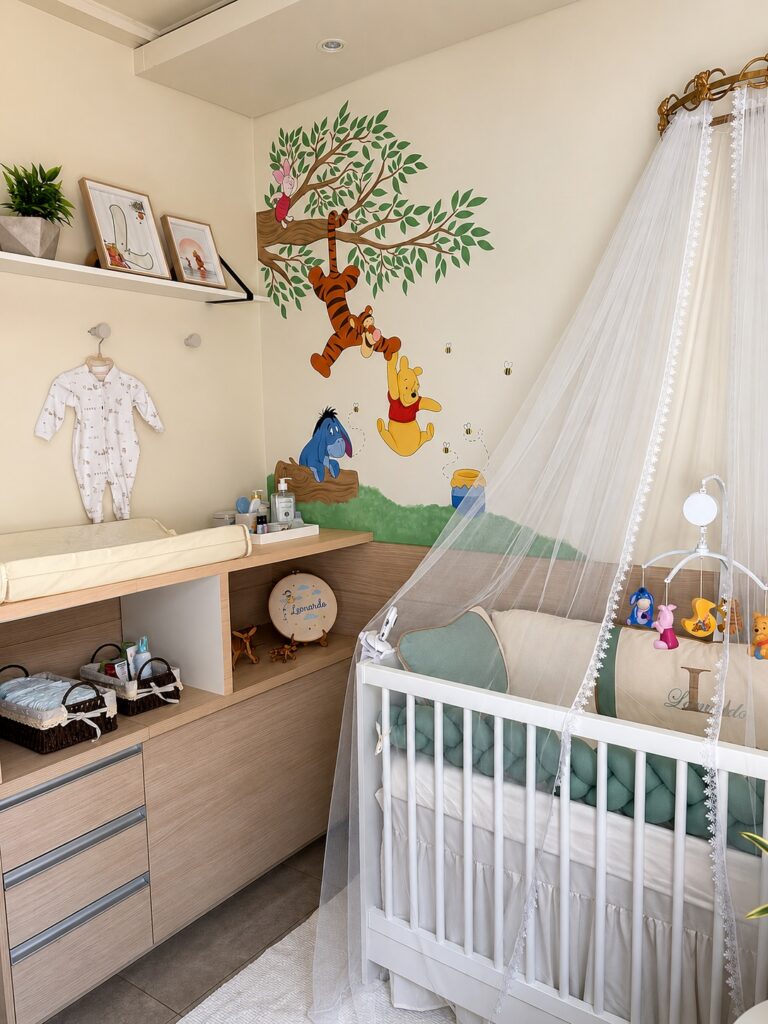
A single painted tree on one wall carries the whole theme here. Piglet sits on a branch, Tigger hangs from it by his tail, and Pooh stands below with a honey pot while Eeyore rests on a log at the bottom. Small bees drift between them, and a strip of green hill ties the figures to the floor line.
The detail that makes it work is the scale. The tree reaches nearly to the ceiling and the characters are drawn at a size you can read from across the room. Without that height, the same figures would look like stickers stuck on a flat wall, and the scene would have no pull upward.
The walls stay a pale cream, so the leaves and the orange of Tigger are the only strong color nearby. The crib’s sage green bumper picks up the leaf green, which keeps the painted wall and the furniture from feeling like two separate decisions. I’d paint the mural on the wall behind the changing area or the crib, and leave the other walls plain.
Painted Pooh Wall Mural
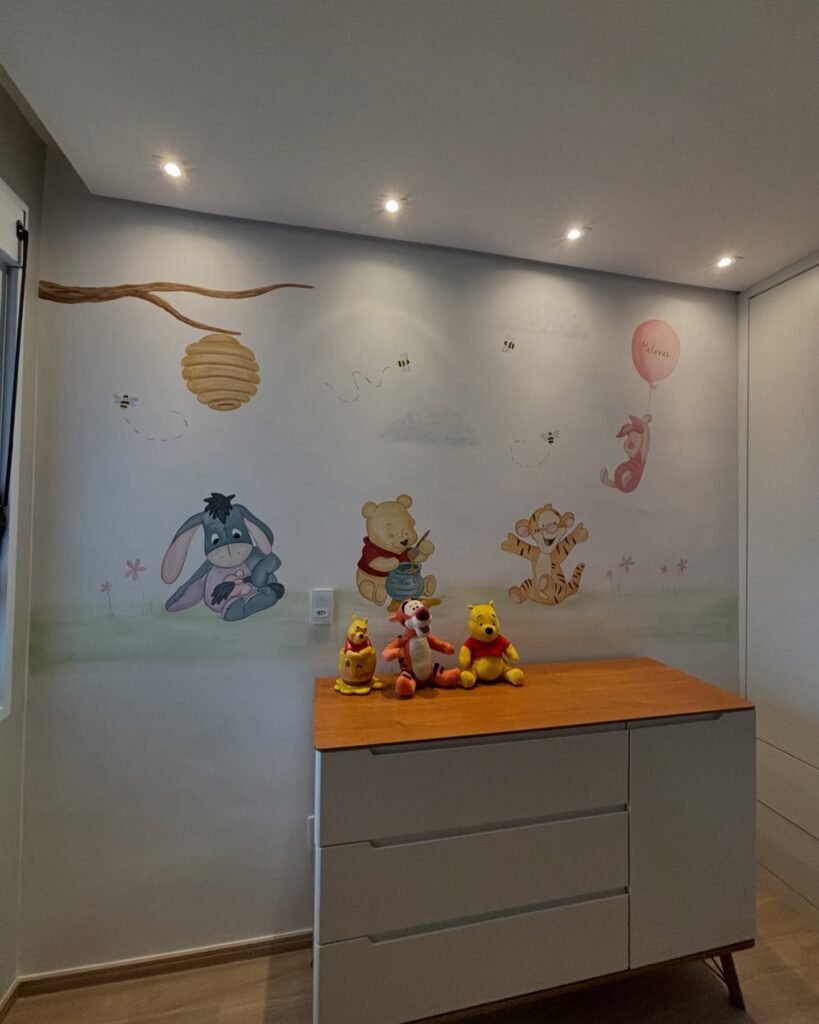
Before the first character goes up, map the full scene on the wall with light pencil marks. Place Pooh, Piglet, Tigger, and Eeyore along the lower half, leaving open space above for small details such as bees, a branch, or a honey pot. The spacing matters most: spread the figures across the wall so each one has room, and keep their faces low enough for a child to see from the floor.
Once the layout feels balanced, paint the largest shapes first, then add clothing, facial features, and the smaller marks around them. A soft green band along the bottom can give the characters a shared ground without filling the whole wall with color. Use a limited palette and repeat colors from one figure in another detail, such as the pink balloon and flowers. Seal the finished wall only if the paint calls for it.
Yellow Stripes Behind the Bed
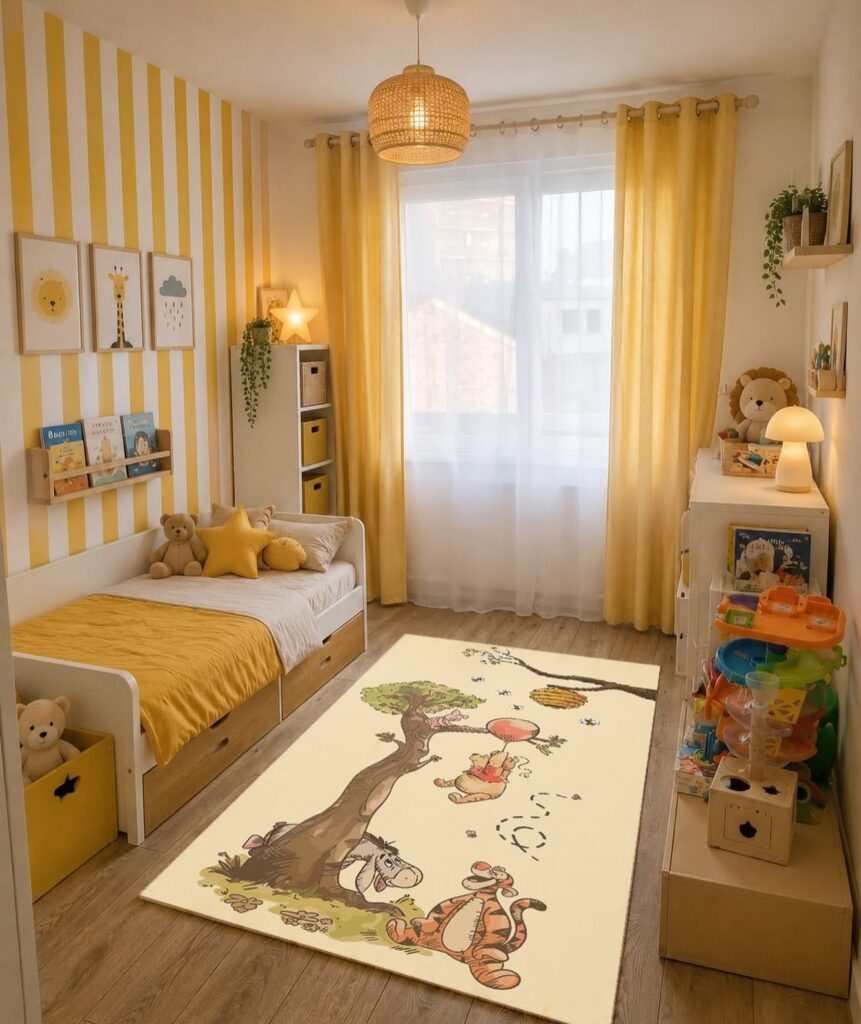
Paint yellow stripes behind the bed, but try a pale butter shade rather than a strong golden yellow. Against white, the lighter color makes a full wall of stripes less bold, leaving the Pooh rug as the main picture in the room. That matters with a large rug like this one, where the tree, balloon and characters need some plain space around them.
For this softer version, choose a yellow that stays distinct from white in daylight without looking brown in the corners. Test a broad stripe before marking out the wall, since a small paint chip will not show how the color repeats across it. Keep the bands wide enough that the wall feels like a backdrop rather than a fine pattern. I would carry that same pale yellow onto the bedding instead of adding another shade for the eye to sort through.
Framed Pooh Prints Gallery
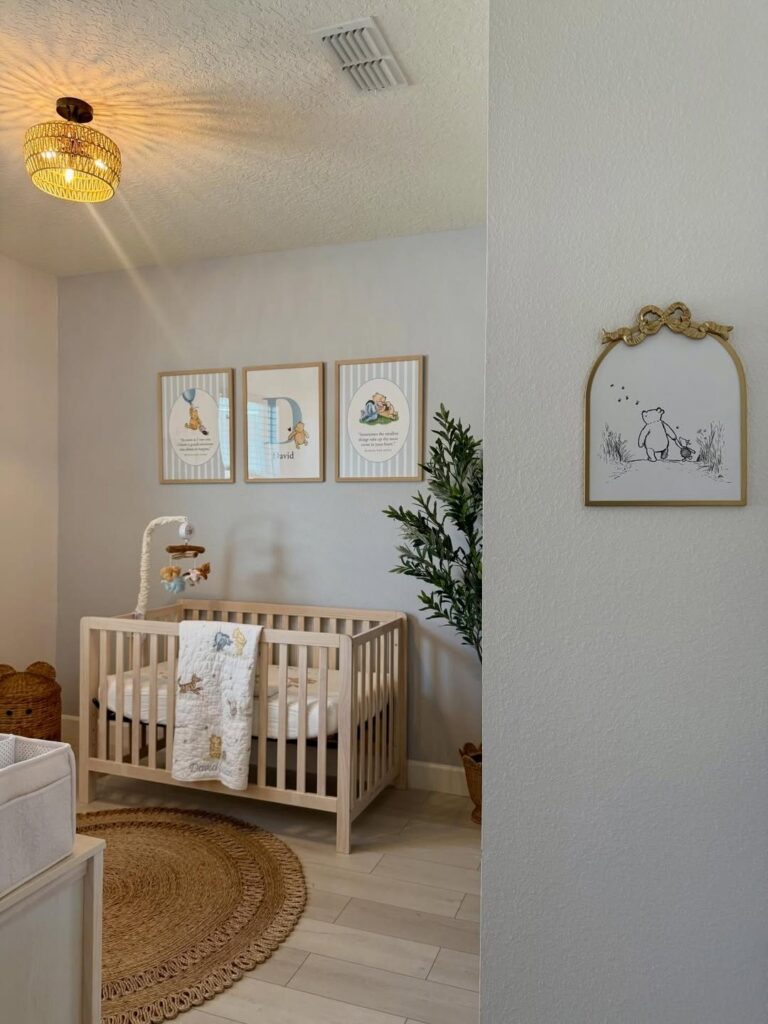
Three framed prints in thin wood frames, hung in a row over the crib, with a personalized letter print in the middle. A fourth, an arched gold frame with a black-and-white sketch, sits on a separate wall. This works best for parents who want the Pooh theme in a form they can easily change. Prints cost little to replace as the child grows.
If you rent or dislike patching holes, pick a different idea from the list.
Pooh Changing Station
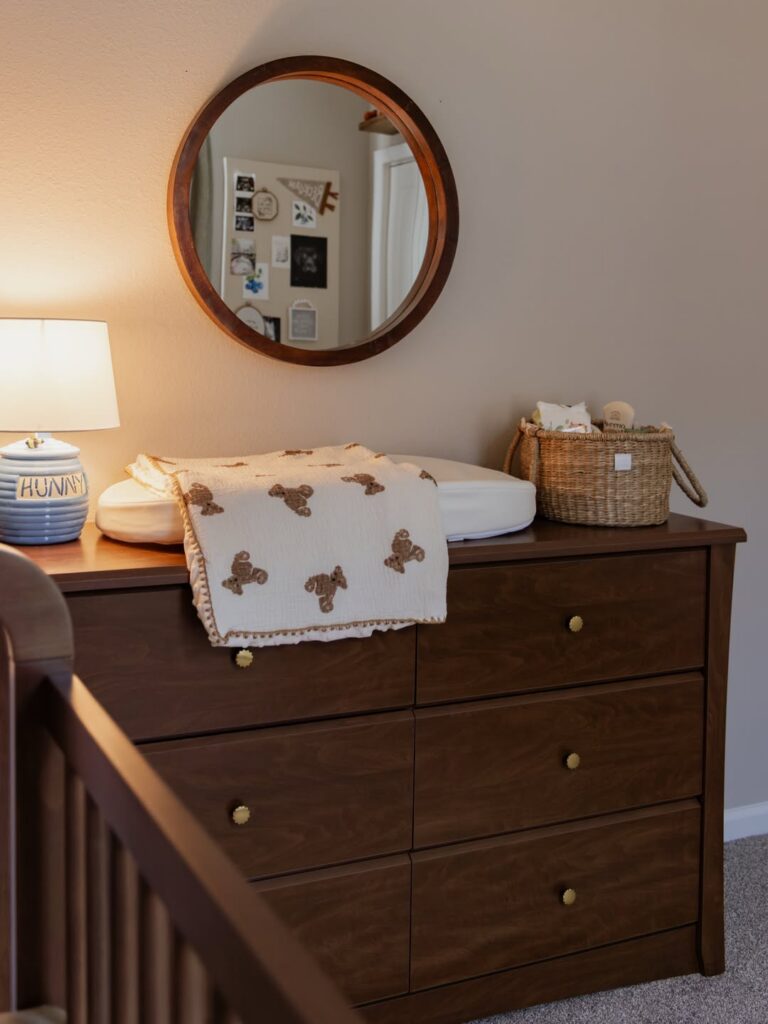
Above the changing pad, a round wood-framed mirror brings the wall into the station without using up dresser space. Set the pad near one end of a sturdy dresser, with a lamp at the other end and diapers, wipes, and spare clothes in a basket within an adult’s reach.
A cream blanket with small brown bears adds a Pooh reference, while the lamp marked “HUNNY” brings in another familiar detail. Anchor the mirror firmly to the wall and out of a child’s reach as they grow. This setup fits a nursery corner where a full changing table would crowd the room; after diaper changes end, the dresser can hold books or keepsakes instead.
Honey Yellow Walls
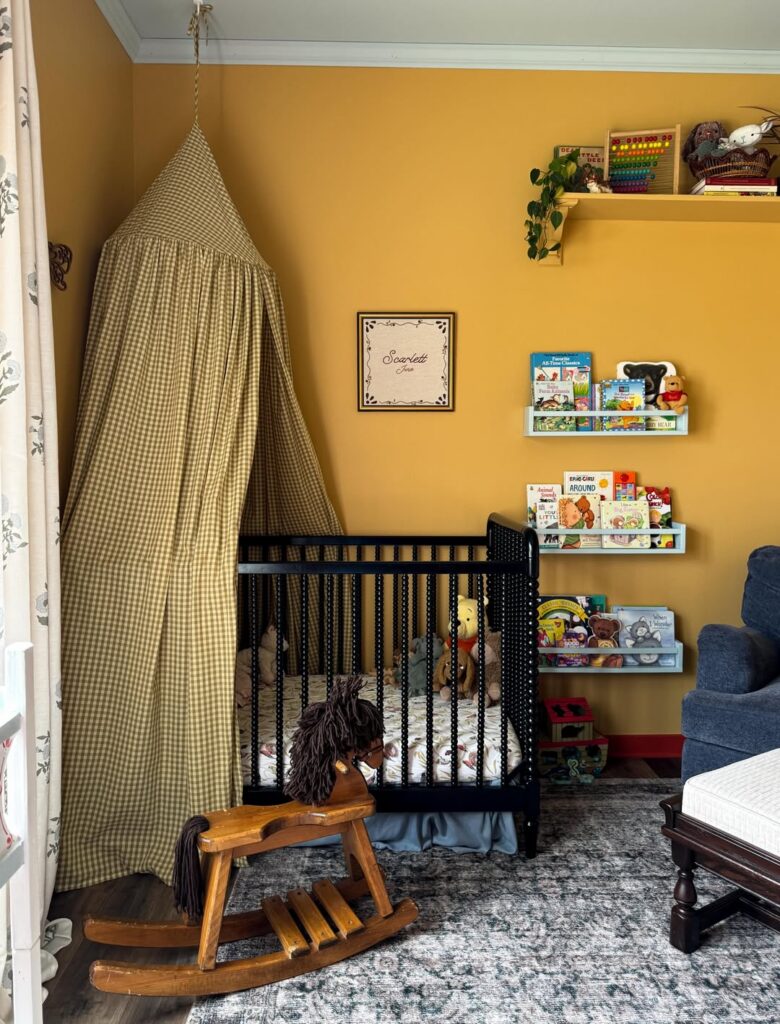
Try a honey yellow on the walls, but test it across a full day before painting the room. Yellow can look much stronger once it covers four walls, and a shade that seems soft on a sample card may turn sharp beside the cot. Paint large sample boards and move them between the window and the darkest corner before you choose.
Look for a shade with a little brown in it rather than a clear lemon yellow. That gives you the honey colour without pushing the room toward the brightness of a playroom. A black cot adds contrast, though I’d avoid repeating that dark finish on every large piece of furniture.
Let the wall colour carry most of the Pooh reference, with books or a small bear providing the rest. Too many yellow accessories can flatten the room, so leave room for cream bedding and natural wood.
Pooh Character Wallpaper Nursery
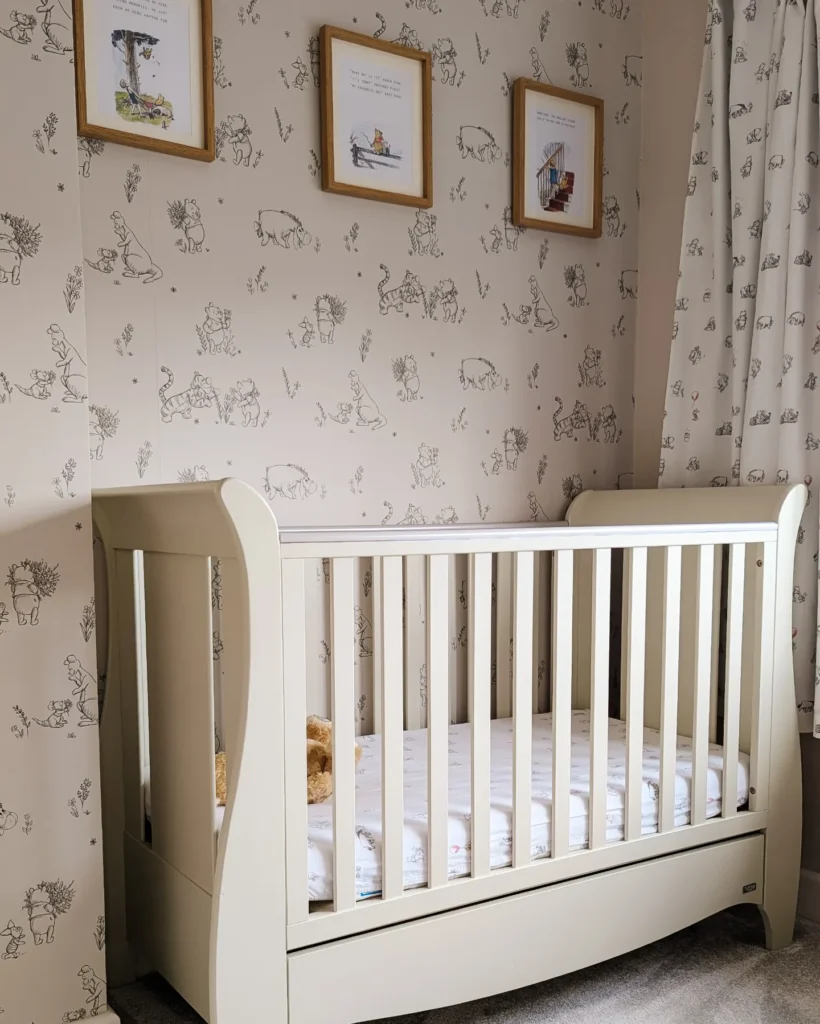
A small-scale line drawing pattern on a pale, creamy pink background does most of the decorating in this room. The characters are printed in thin gray-brown ink, with sprigs of heather and tiny stars between them, so the wall has plenty going on without any bright color. The curtains use a matching print, and the crib, in a soft cream, sits close to the same shade as the paper.
If wallpaper is more than you want to take on, a roll of removable paper on one wall gives you the same look and comes off when the child outgrows it. Fabric works too. A curtain panel or a cushion in a similar sketch print carries the theme without any wall prep.
The three small oak frames above the crib hold storybook illustrations. I’d keep the frames in one wood tone like this, since the wallpaper already supplies the detail.
Storybook Woodland Wallpaper
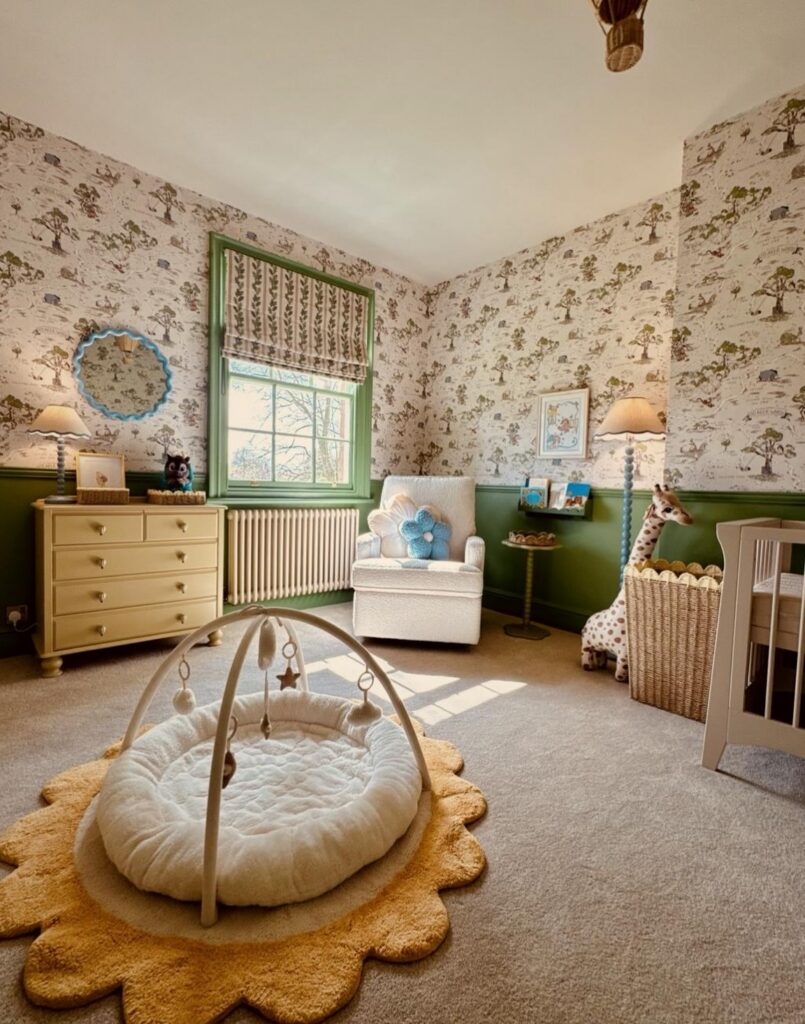
Scenic storybook wallpaper gives the nursery its woodland setting, with small animals and trees repeating across the walls. The deep green paneling keeps that busy print from taking over: it forms a solid band beneath the illustrations and carries through to the window trim. Without that break, the pattern could feel crowded from floor to ceiling.
A narrow border or painted lower wall would give the same pause while leaving the paper as the main feature.
Woodland Wallpaper Above Green Wainscoting
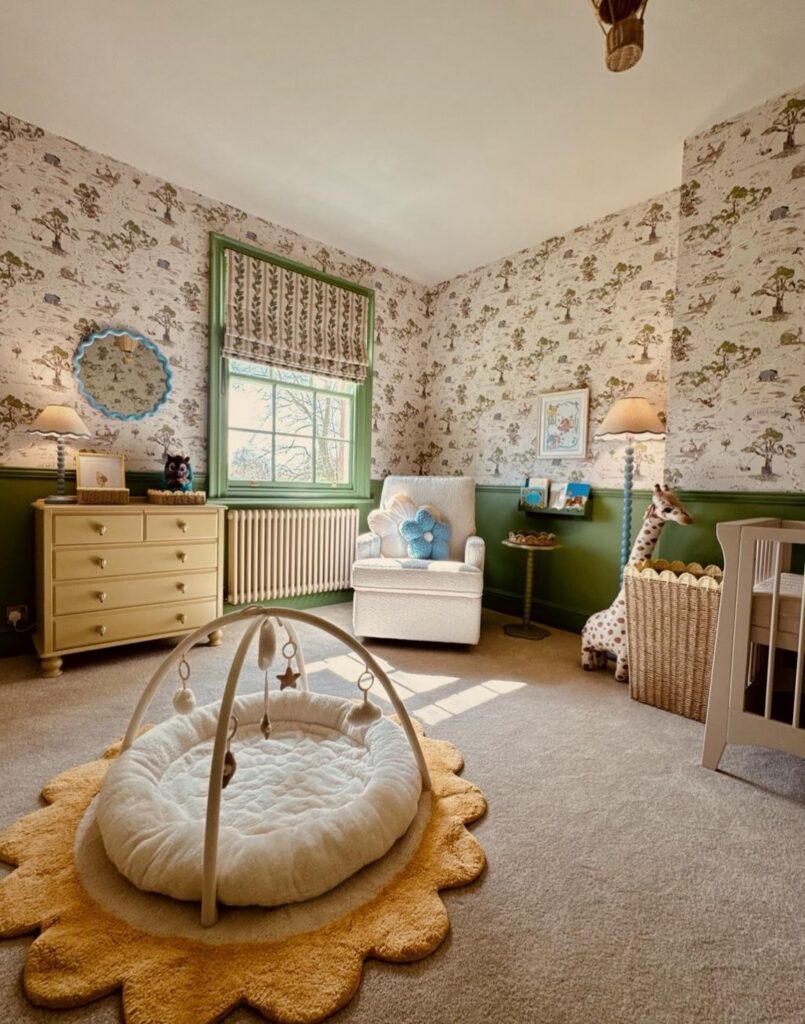
Above a green lower wall, run woodland wallpaper up to the ceiling for a Hundred Acre Wood backdrop. Choose a cream paper with small trees and scattered scenes, so the pattern leaves room for framed pictures without crowding them. A matte finish will reduce glare near the window.
The lower section can be made with MDF panels, a wooden cap rail, and paint. For a similar result with less joinery, paint the wall below the rail green and leave the surface flat. Carry that green onto the window trim, as it ties the patterned walls to the painted section below.
If wallpaper is beyond the budget, use a tree stencil over cream paint, leaving plenty of open wall between each tree. Another option is to paper just one wall and paint the others to match its background. Take a sample of the paper with you when choosing paint; the green should come from its leaves, while the cream should match the ground rather than the brighter trim.