27 Nursery Organization Ideas
This site contains affiliate links. We may earn a small commission, at no extra cost to you. Article may contain some images for illustrative purposes only .
Your nursery might be a small room, a corner of your bedroom, or a space you only have a few weeks to set up. Baby things pile up fast, no matter how much room you have. Order helps. This list gives you 27 nursery organization ideas to choose from, so you can find the ones that fit your space, your schedule, and the way you use the room each day. You don’t need to use all of them. Pick the few that solve the problems in front of you and leave the rest for later. Start with whichever idea catches your eye.
Cubbies and Woven Baskets
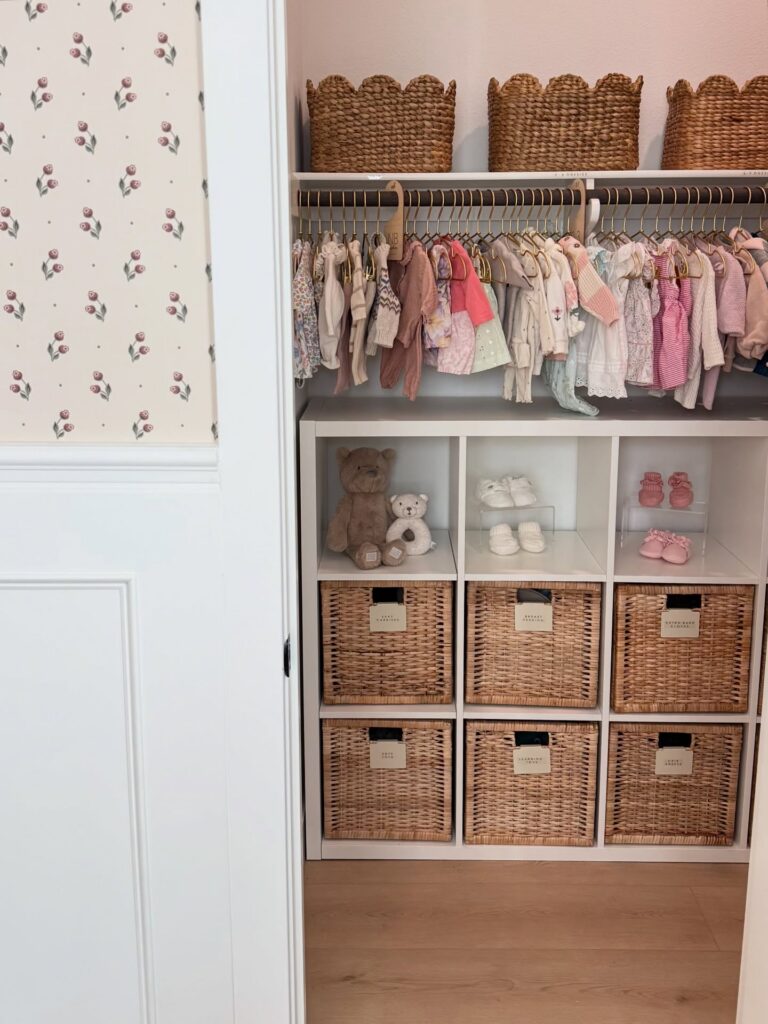
A row of cubbies beneath the clothes rail gives shoes, toys, and folded clothes separate places without adding another dresser. Woven baskets make sense for families who want to group small items and tuck them out of sight, while leaving a few cubbies open for things a child can see or reach. Baskets on the top shelf can hold items that are used less often. This setup needs a dedicated closet with room for both a hanging rail and shelving.
If the nursery has a narrow wardrobe or you prefer every item hidden behind doors, a drawer unit or closed cabinet from another idea may be a better fit.
Combine Shelves With Closed Cupboards
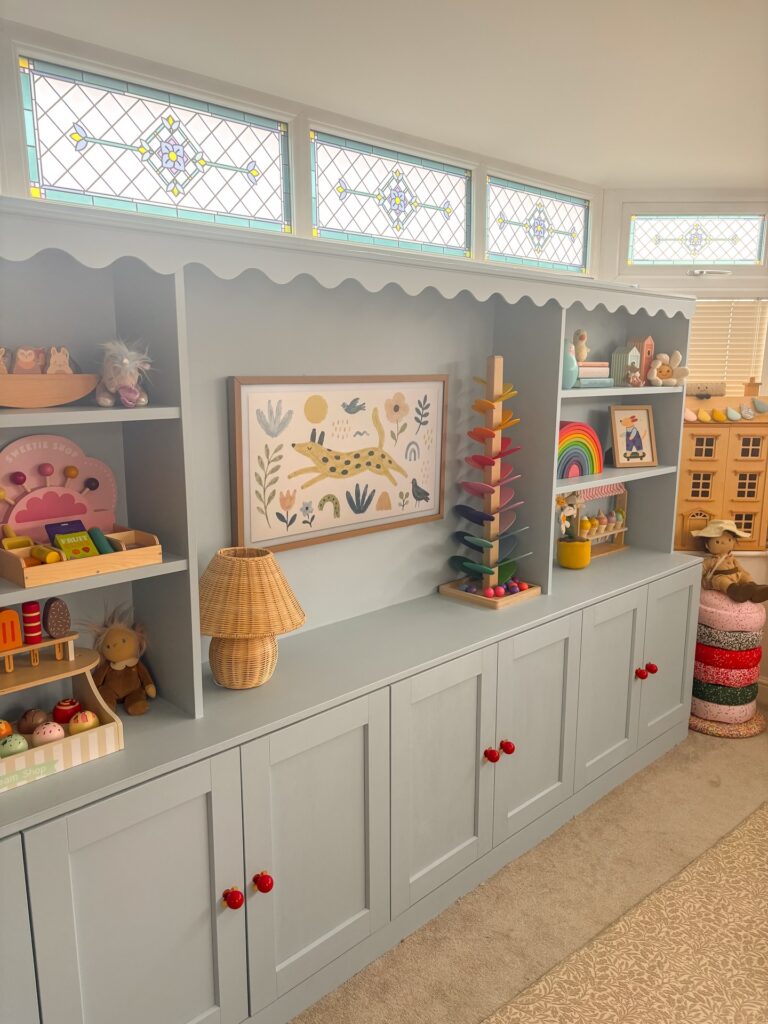
Run low cupboards along a nursery wall, then add open shelves above for books and toys. This layout makes good use of the space beneath high windows, where a tall wardrobe would block the light. Leave enough floor space in front for the doors to open fully, especially if a cot or chair sits opposite.
Behind the doors, group spare bedding, nappies and outgrown clothes so they stay out of the play area. Use the open sections for things you reach for each day, with shallow trays on the lower shelves to gather small toys in one place.
Matching Baskets in Open Cubes
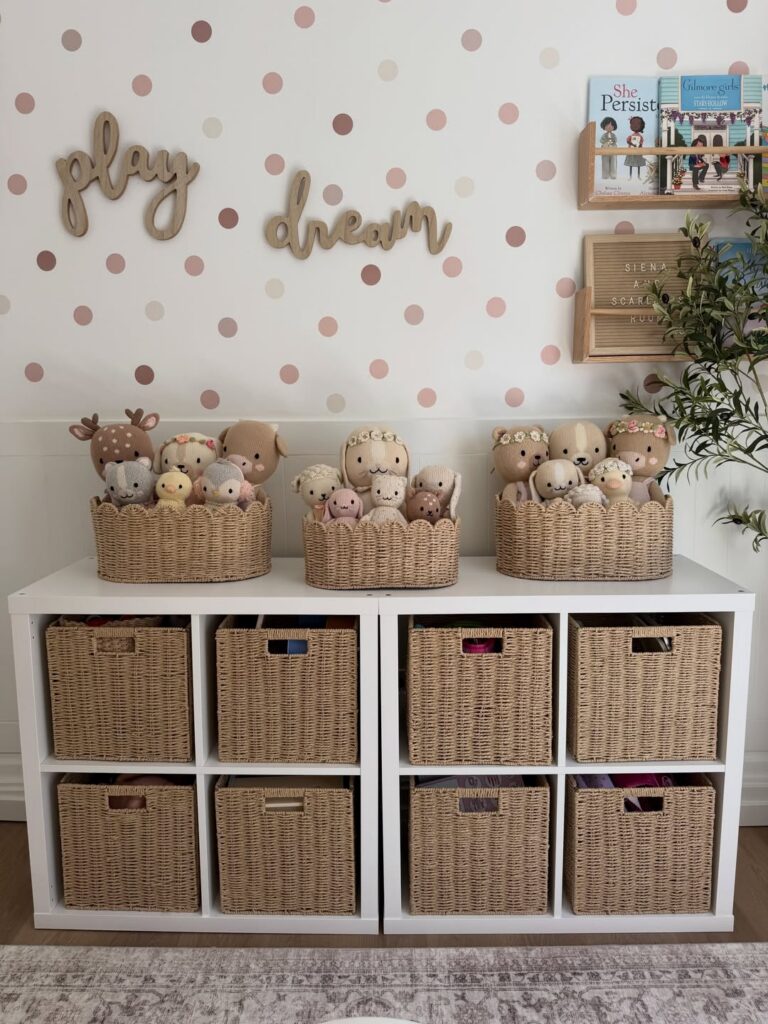
A white cube shelf with a woven basket in every opening keeps toys out of sight and still easy to pull out. The baskets here are made of twisted paper rope, which is light enough for a child to drag and sturdy enough to hold its shape. Each one has a cut-out handle on the front, so a small hand can grip it.
If you can’t find paper rope, look for seagrass, rattan or wicker. Fabric bins with a stiff lining work too, and they’re softer on little fingers. Pick one size that fits the cube snugly so they all line up.
The wider scalloped baskets on top hold the plush toys. I’d use them for whatever gets played with daily and keep the cube baskets for the rest.
Bedside Storage Locker
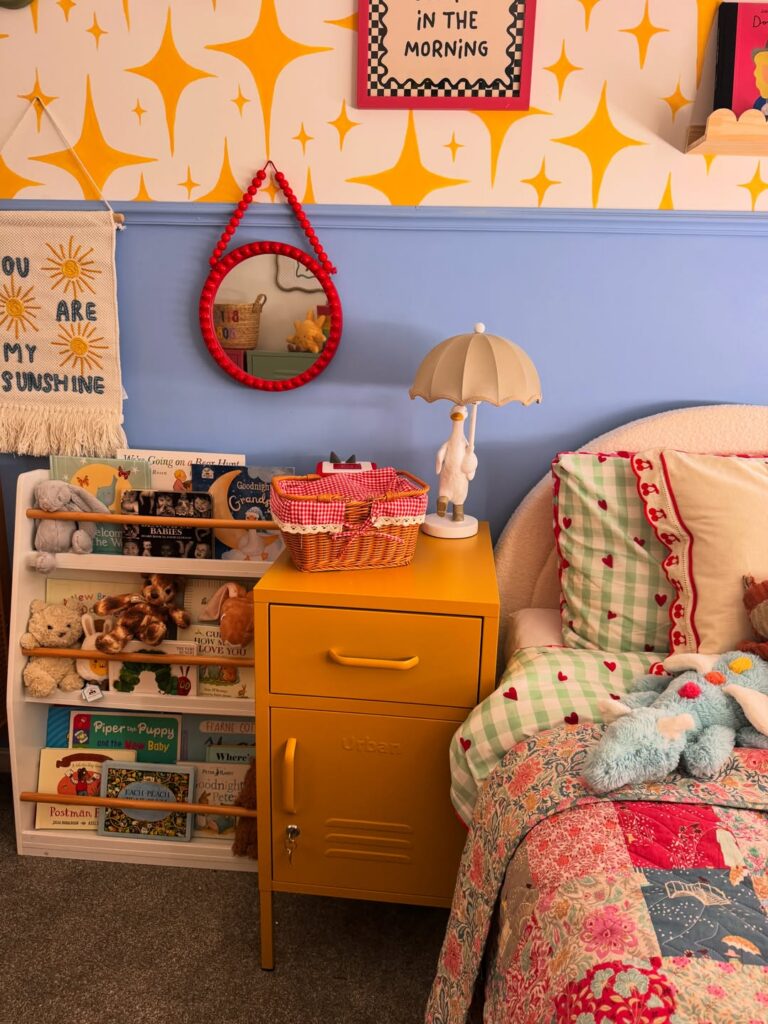
Place a compact bedside cabinet beside the bed and give each part a job. Keep the top clear enough for a small basket of items you reach for during care; use the drawers for smaller supplies, and the lower cupboard for bulkier things or backups. Before filling it, sort everything by how often you use it.
Daily items belong at the top, while extras can sit behind a door, so you are not digging through stock to find what you need. A woven basket can corral loose cloths or toys without taking over the surface, and it lifts off when you need to wipe the cabinet.
Choose a cabinet with a flat top and drawers that open without hitting the bed. Leave the book display separate, so bedtime reading stays easy to reach.
Mix Closet Bin Sizes
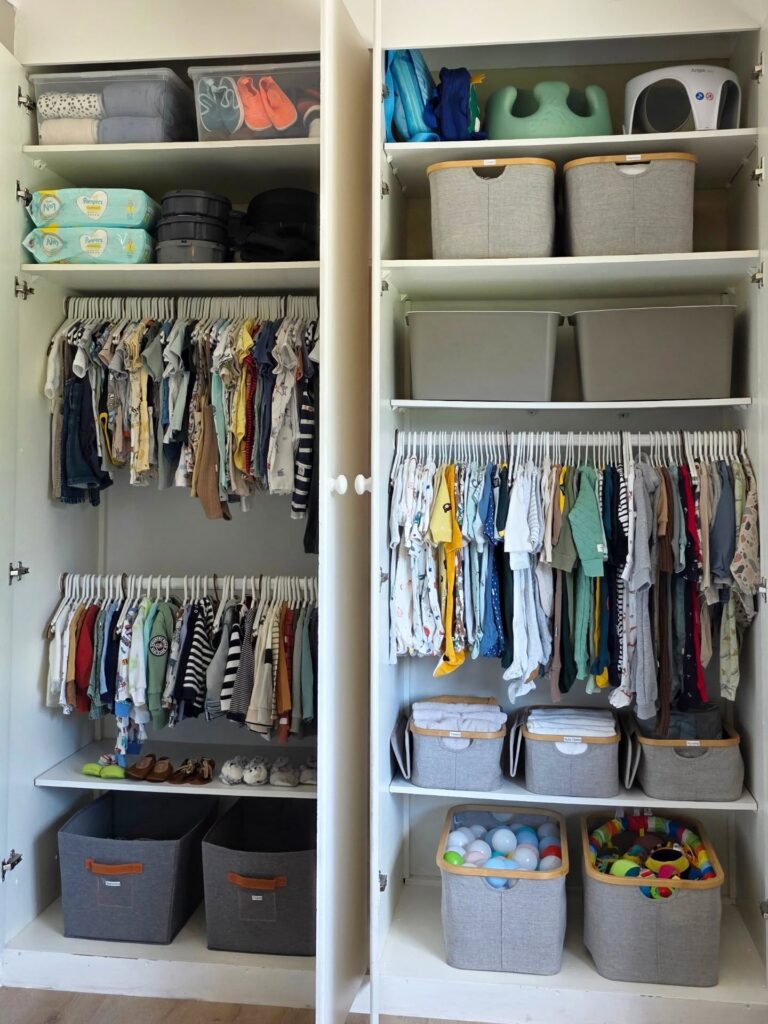
Fit nursery closet shelves with bins sized for what they hold, rather than buying one size for every shelf. Shallow fabric baskets beneath the hanging clothes let you lift out folded linens without digging through a deep stack, and leave room above for a few extras.
Use deeper bins on the bottom shelf for loose toys and balls, where the taller sides contain bulky items and the open tops let you see what’s inside.
Use a Low Dresser for Storage
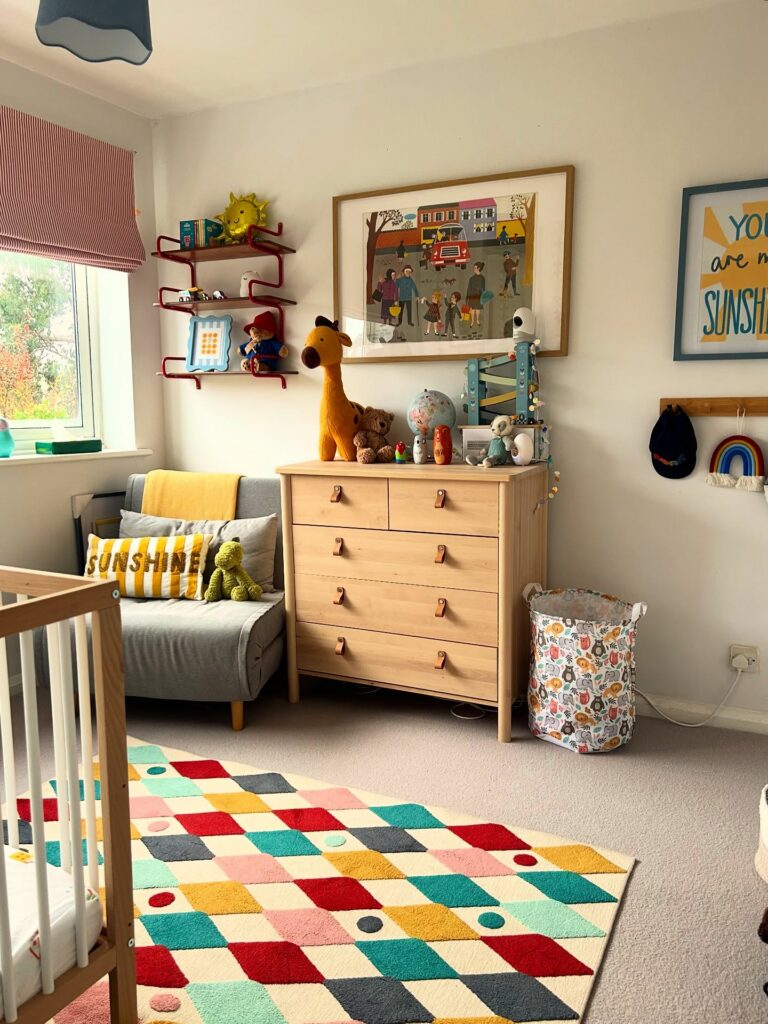
A chest of drawers in a nursery needs to be anchored to the wall, and that is the step people skip most often. A full dresser can tip when a toddler pulls a drawer open and climbs, so use the strap that usually comes in the box, or buy one if it doesn’t.
Drawer weight matters too. Keep heavy items like folded blankets or sleep sacks in the bottom drawers, and put light things higher up. The top surface collects clutter fast, so I’d limit it to a few soft toys and nothing breakable. The globe and wooden toys on this one are within easy reach of a child, and I’d move them up or onto a shelf.
Leave a clear gap between the dresser and the crib, too.
Face-Out Book Shelves
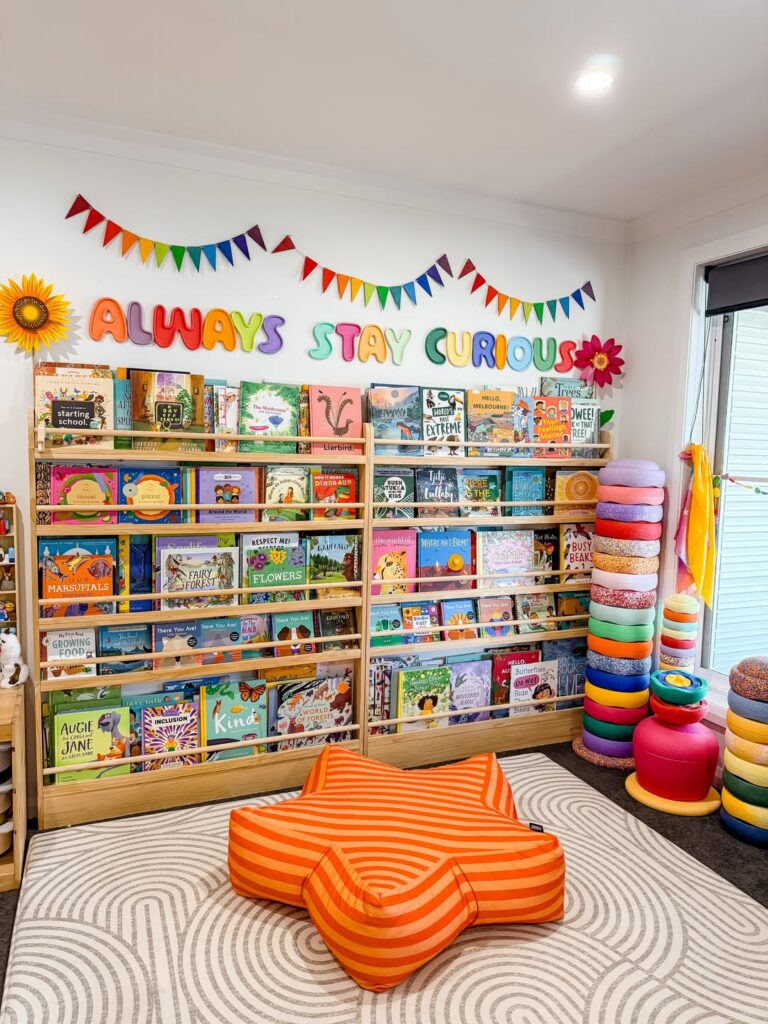
With the covers facing the room, children can pick a book by its picture instead of searching through a row of spines. Shallow wooden ledges let the books sit upright in several rows, and the low shelves make it easy to reach them and put them back. Without those front-facing ledges, the same collection would take up less wall space, but many covers would disappear behind one another, leaving children to pull books out just to see what they are. Keep the rows low enough for small hands.
Closet Door Storage Racks
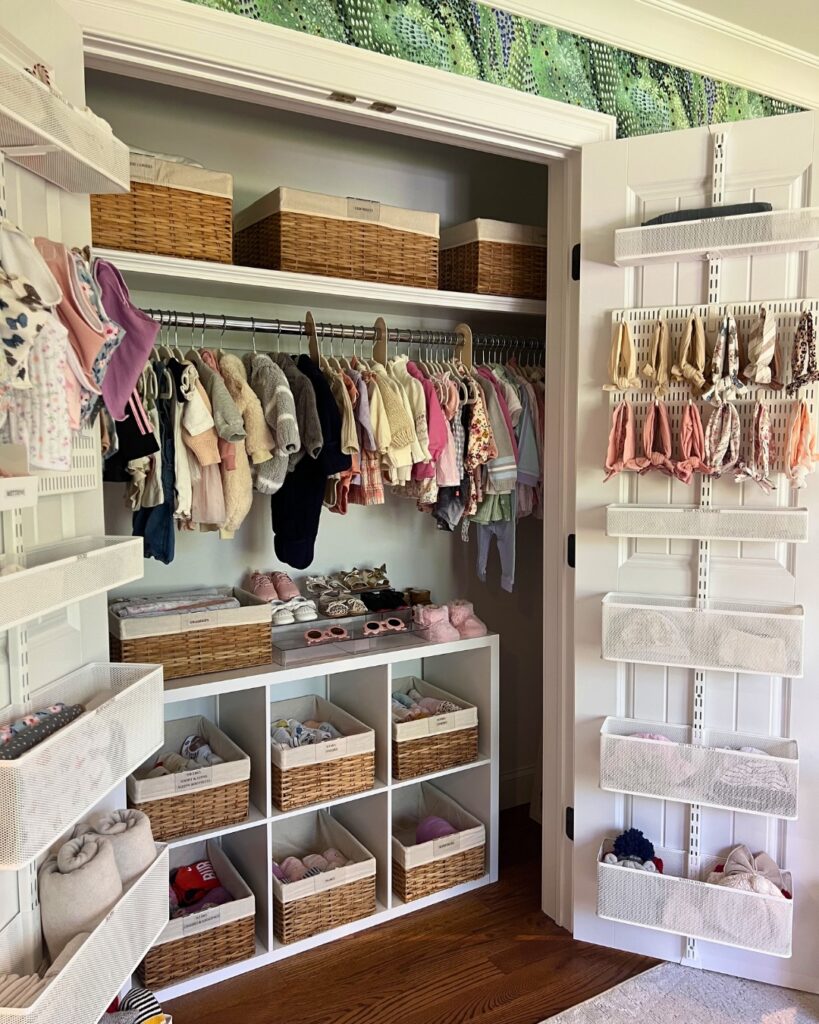
Use shallow metal mesh baskets on the inside of closet doors to hold the small things that get buried in drawers. Baskets clipped onto vertical rails let you change the spacing as supplies change. White mesh keeps socks, hats, and rolled blankets visible without letting them fall through.
For fabric bows and headbands, add a slotted panel with hooks between the baskets. If you don’t have a rail system, an over-the-door organizer with clear pockets can hold the same small items without needing separate hooks or bins.
Hanging Rail Above Dresser
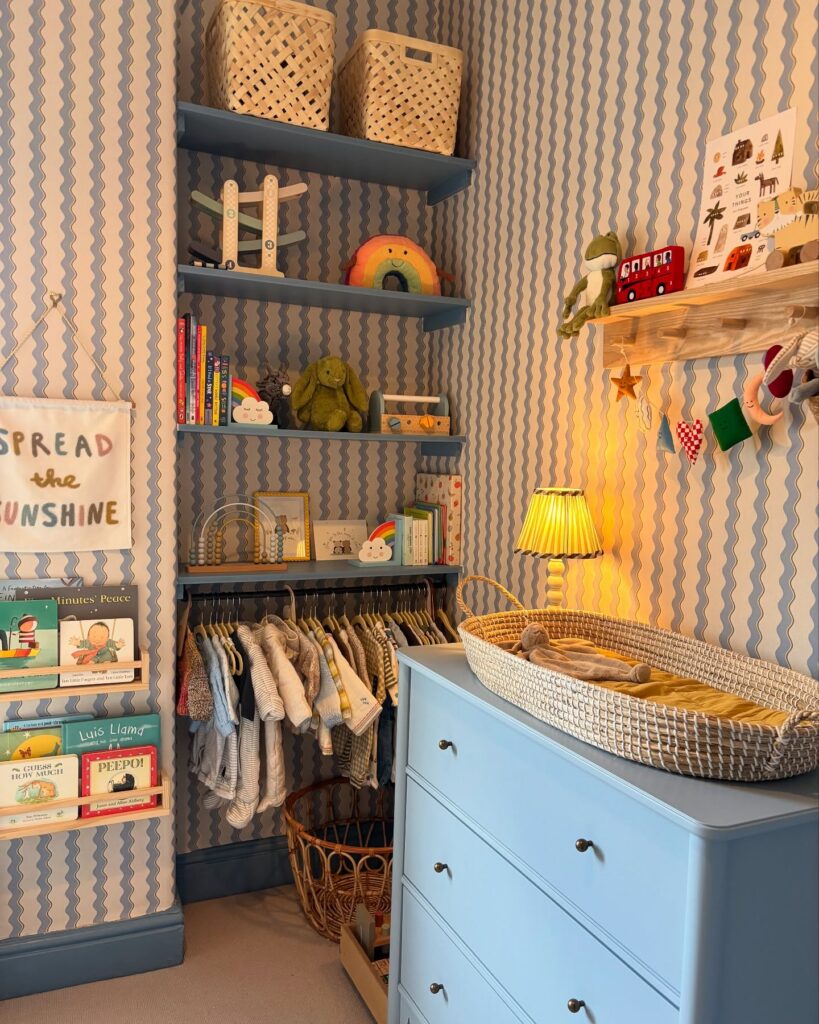
A clothes rail built into an alcove, with shelves above it, works best for parents who have a recess or a bare stretch of wall and want everyday outfits within arm’s reach. Babies grow through sizes quickly, so hanging a few at a time makes sense. If your room has no alcove, or you have a lot of clothes to store, a closed wardrobe or deep drawers will hold more and keep dust off.
Dresser-Top Toy Station
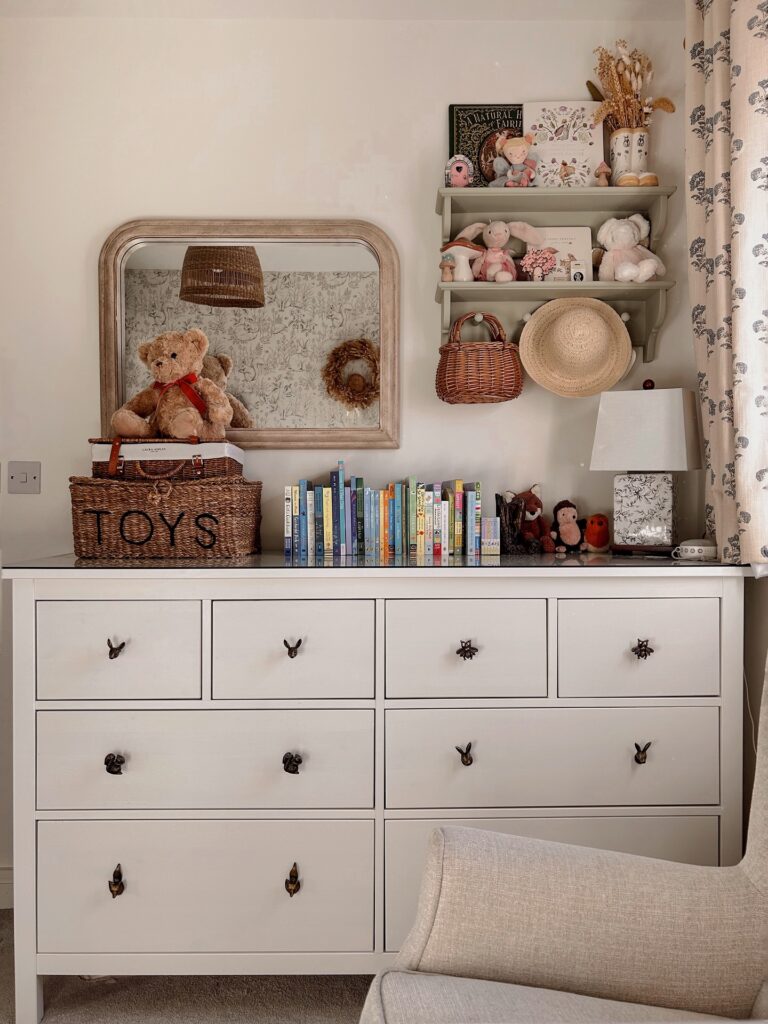
A low dresser can hold daily books and toys, while its drawers keep clothes and supplies out of sight. The surface gets messy when every small toy lands there, so set a clear limit: one basket for larger toys and a short row of books. A wicker basket marked “TOYS” makes the category easy to maintain, and upright books are easier to see and return than a stack.
Leave some open space on the dresser for items used each day. If the surface fills up, it becomes harder to find a book or put a toy away, and the basket stops being useful. Keep heavy objects low, secure the dresser to the wall, and avoid placing anything where it could fall into a crib or onto a child. Rotate toys that no longer fit instead of adding another overflowing basket.
Organize a Cupboard by Shelf
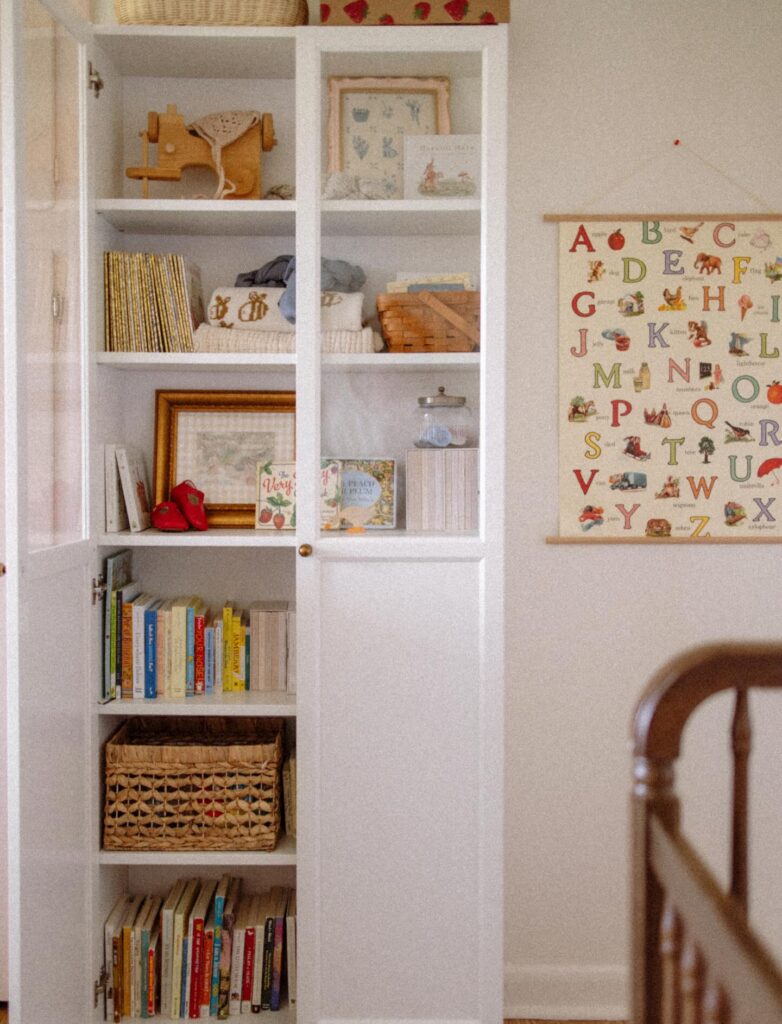
Divide a tall cupboard into zones for books, folded blankets, and loose items, securing it to the wall before filling it. Put books on the lower shelves where little hands can reach them, then gather smaller things in a woven basket. Leave the upper shelves for items you handle yourself, and give each category its own spot so tidying means less sorting.
Hang Clothes From a Shelf Rail
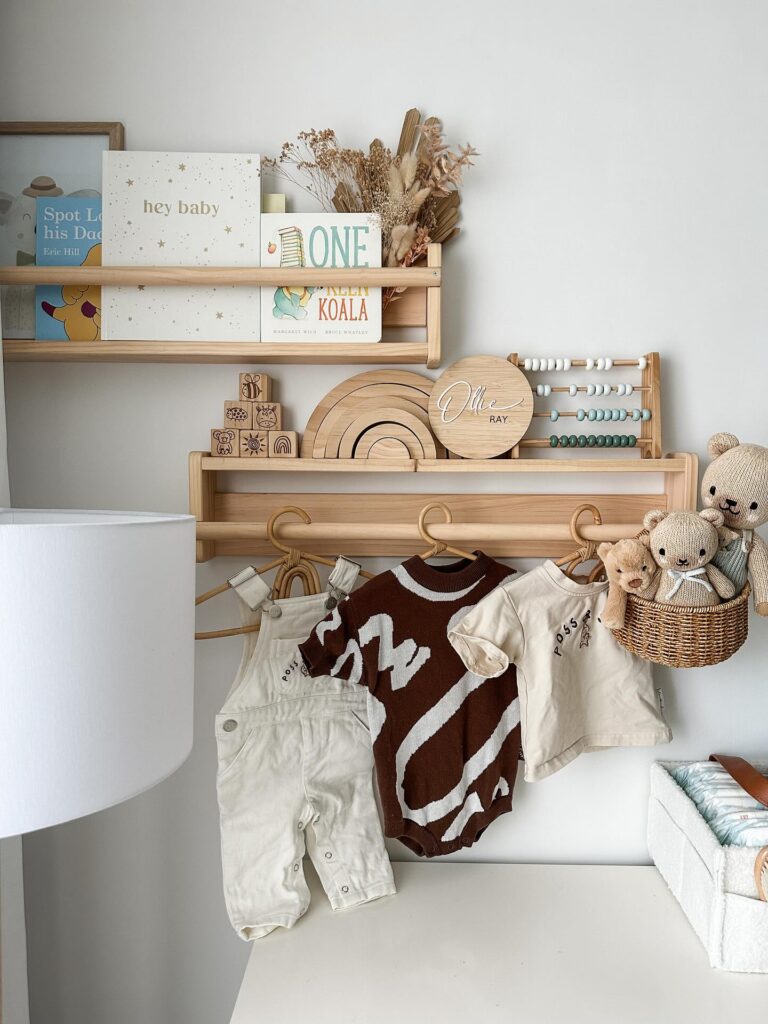
A book shelf with a wooden rail along the front can hold the outfits for the next day or two, so you aren’t opening drawers during a change. Small rattan hangers slide onto the rail, and a basket on a hook at the end takes the soft toys that would otherwise end up on the floor.
The material of the rail matters more than the shelf itself. Natural wood, left unpainted, matches the hangers and the wooden blocks and abacus on the ledge above, so nothing competes with the clothes. A white or black rail would stand out against a white wall and make the whole row look busier. I’d keep the hangers to three or four, because baby clothes are short and a crowded rail makes them bunch and wrinkle.
Baskets Inside Drawers
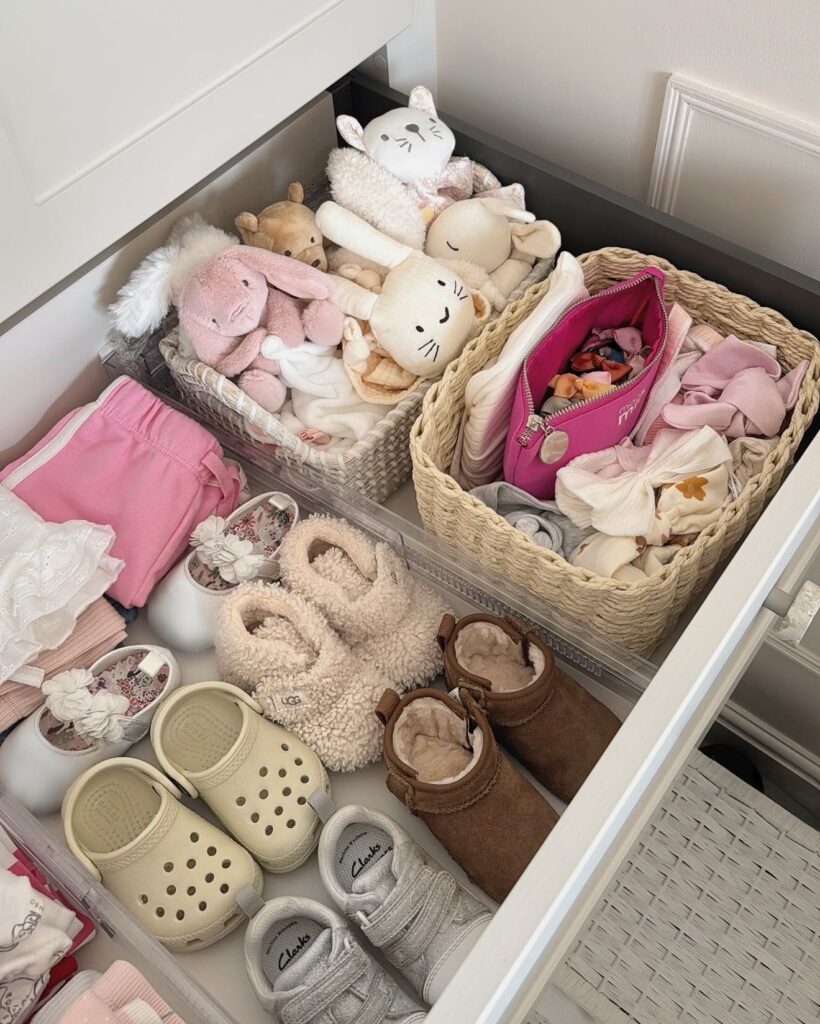
Set woven baskets side by side inside a deep drawer, giving plush toys and folded clothes separate places. Leave some open drawer space for shoes or items that need to lie flat. The low sides are the useful detail: they hold loose things together without hiding them, and each basket can be lifted out when you need to reach what is underneath.
Without those dividers, soft toys and clothes slide into one another, and the drawer quickly becomes a single crowded pile. Choose baskets that fit side by side without pressing against the drawer walls, so you can pull them out easily. Shallow baskets keep the contents visible from above, which matters when the drawer is full. If one group grows, give it another basket rather than packing everything above the rim. The categories stay clear, and there is still room to get to the things stored below.
Clear Bins Inside Cabinets
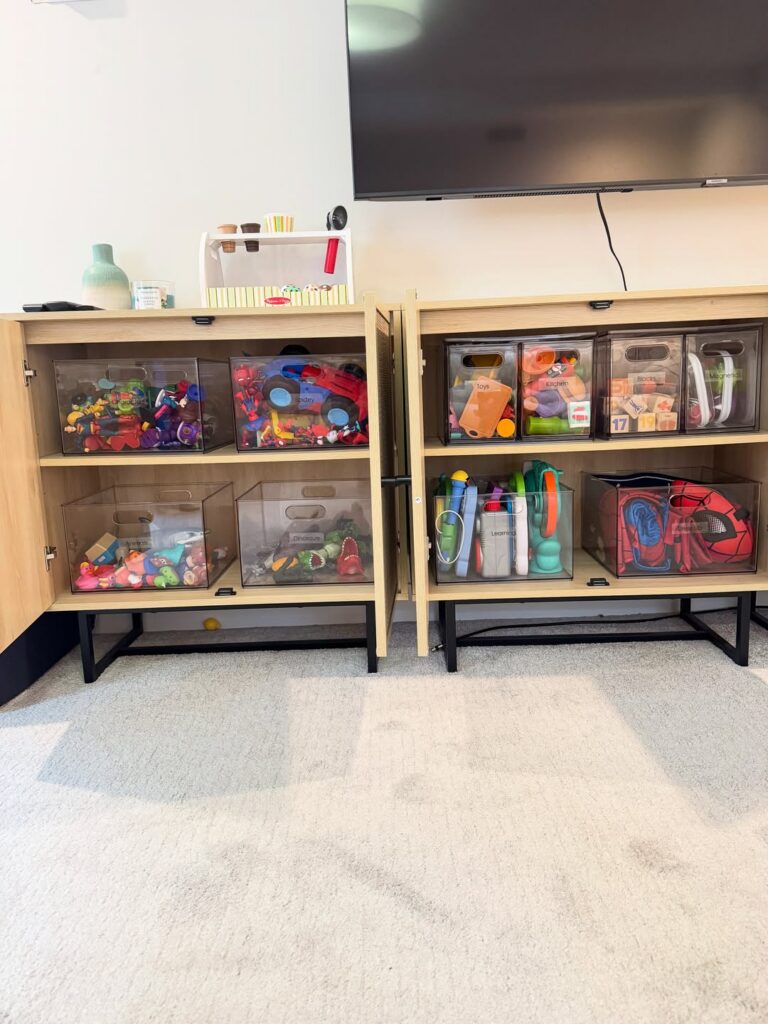
Inside a low cabinet near the play mat, give each group of toys its own clear bin. Use one for blocks, another for toy cars, and a wider bin for bulky toys. The cabinet doors hide the contents between playtimes, while the clear fronts let you find a toy without pulling every bin off the shelf.
Along a wall beside the floor play area, this setup puts toys close to where you use them. Leave enough room in front for the doors to open fully and for a bin to sit on the floor. Two rows of bins make use of the shelf space without creating a stack you have to take apart.
For a baby who still needs help reaching toys, pull out one bin at a time and return it before bringing out the next. As your child grows, keep everyday choices on the bottom shelf and less-used toys above.
A Long Desk Over Bins
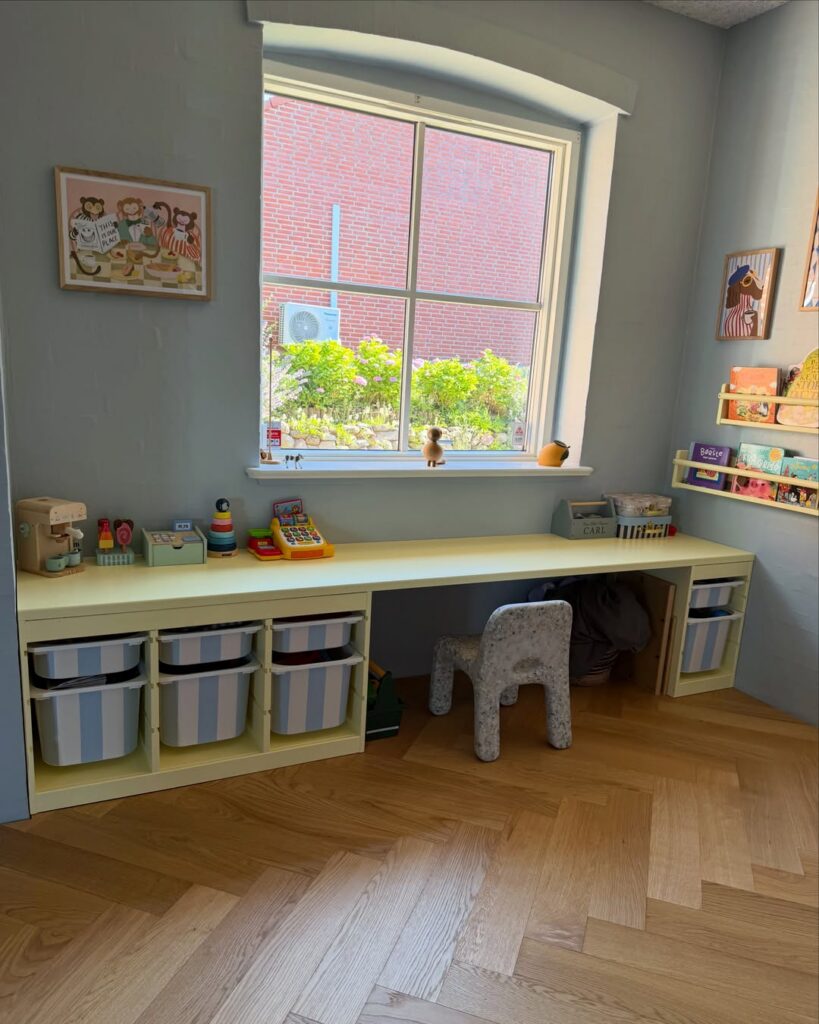
Start with the length of wall under the window and measure it before you buy anything. A shelf unit at each end can hold up a single long top, so the middle stays open for a chair and legs. Fill the low cubes with lidded bins before you set anything on the desktop.
Match the bin color so the front looks calm. Label by type, not by child, so toys can move as they grow.
Face Books Out
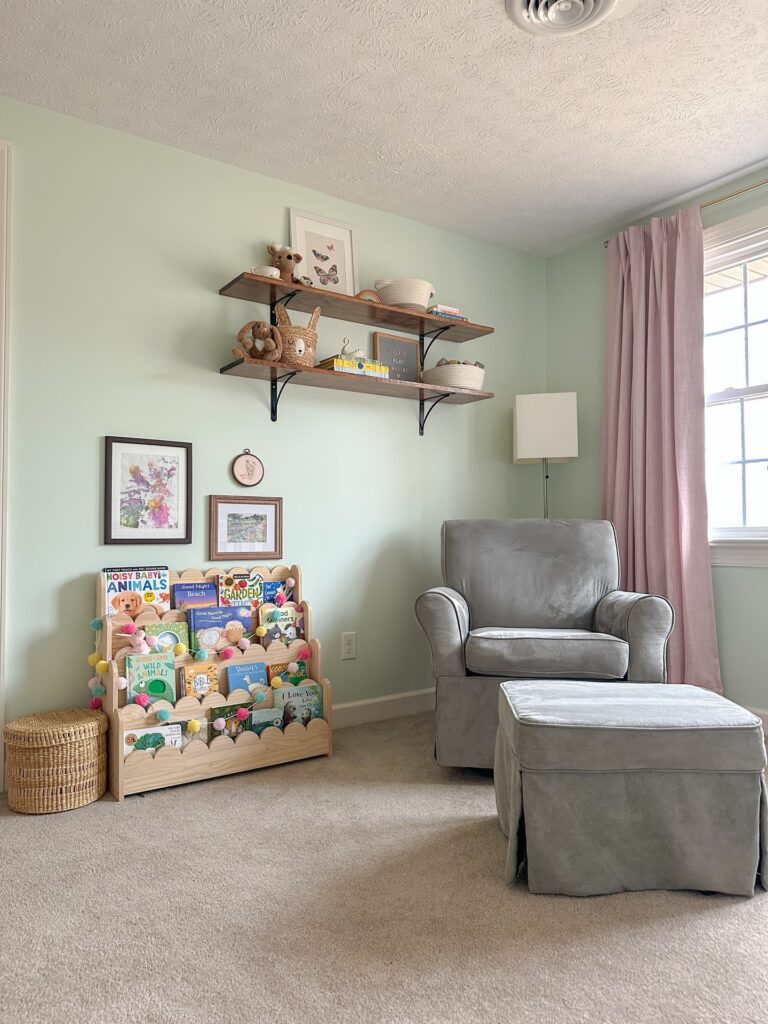
With the covers facing forward, a child can spot a favorite without pulling every book from a shelf. A low wooden rack puts the books within reach, and its shallow rows keep the covers visible while holding each book upright. That front-facing arrangement is the key detail: stack the same books spine-out, and younger children may have to rely on an adult to find the one they want.
Leave a little room between books so small hands can return them without knocking over the row. A rack this size can hold a useful selection, but it does not need to display the whole library. Keep a few books in rotation and store the rest elsewhere; too many covers crowded together make browsing harder. The shelves above can hold baskets or small keepsakes, but the book display works best when nothing blocks the covers. A low basket beside the rack can catch books that are waiting to be put back, instead of letting them spread across the floor.
Drawer Dividers for Changing Supplies
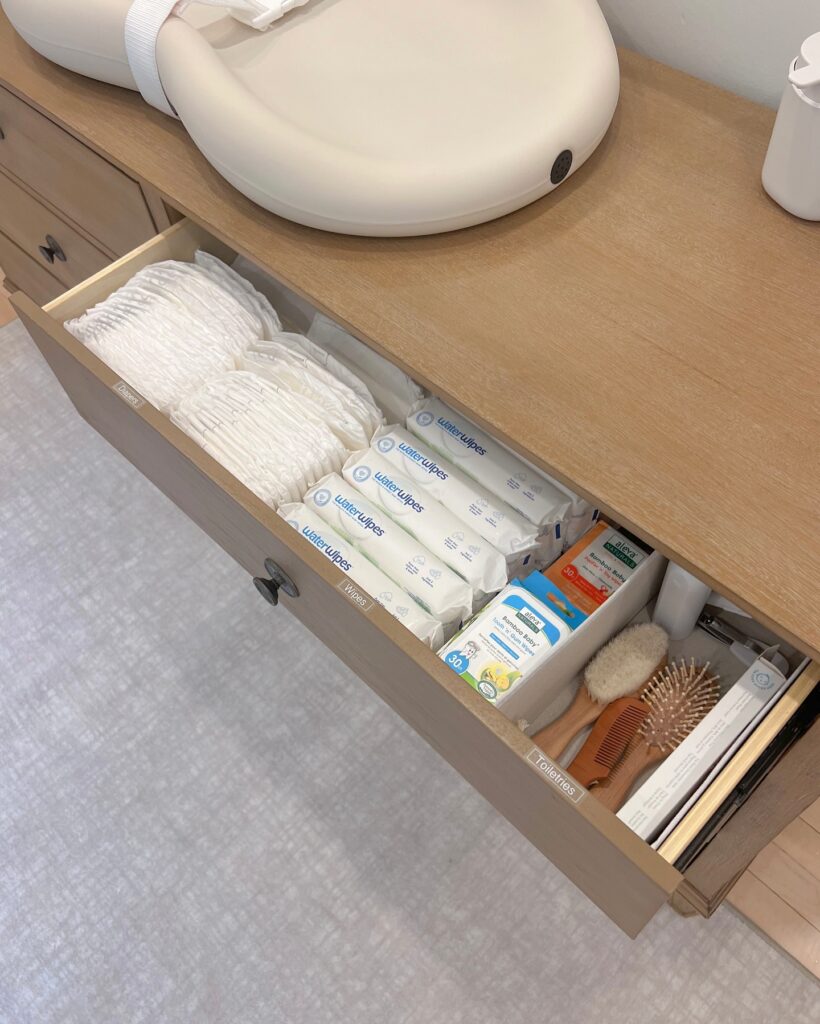
Divide the drawer beneath your changing pad into separate spots for diapers, wipes, and small care items. Open fabric bins give each group its own space without adding much weight to the drawer. Stand diapers on edge and line up wipe packs so you can pull one out without shifting the rest.
Use shallow boxes or small baskets if you don’t have drawer organizers, checking that their sides clear the drawer above. A narrow tray can hold brushes and a comb beside the larger bins. Add labels along the drawer’s top edge with a label maker or strips of masking tape.
Changing Table Supplies Within Reach
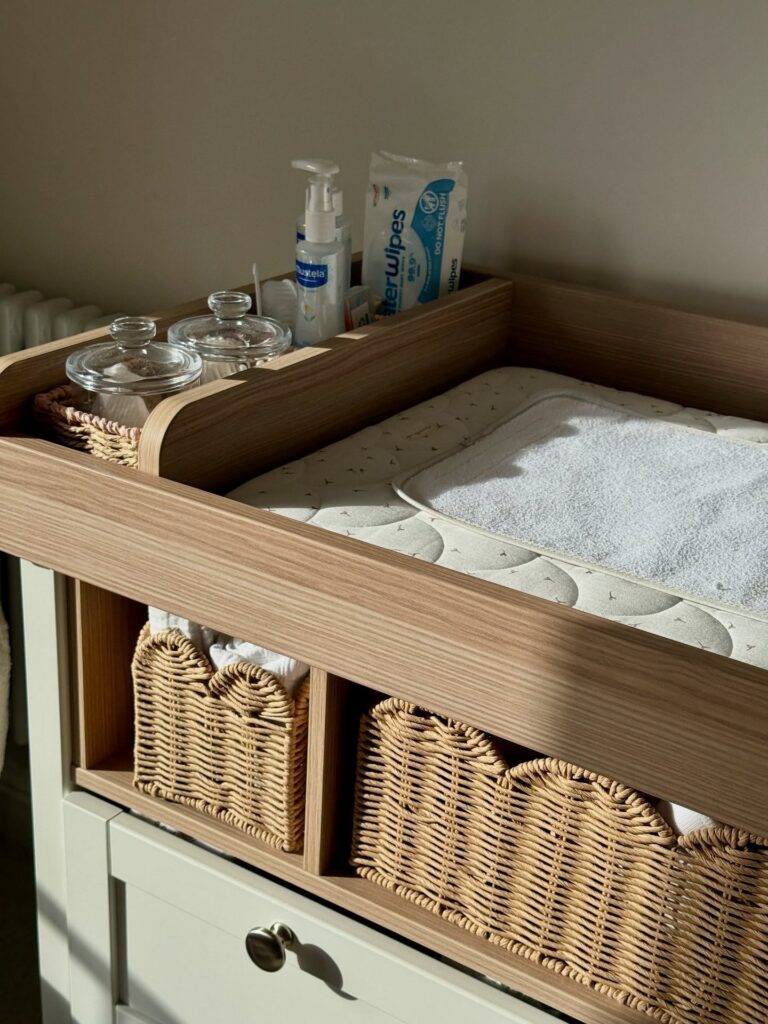
Everything you use during a diaper change should sit within one arm’s length of the pad, and the raised tray along the back of this changing table does that. The wipes, a pump bottle of lotion and two lidded glass jars all stand in one row, so nothing needs a second hand or a step away from the baby.
The usual mistake is overfilling that tray. Once it holds a dozen things, you start knocking bottles over while reaching for the one you want. I’d keep it to what you touch at every change and move the rest to the baskets underneath.
Those open baskets are better for spare cloths and extra layers, since you can pull them out without opening a drawer. Look for ones with a firm weave so they hold their shape when half empty.
Shallow Wall Ledges
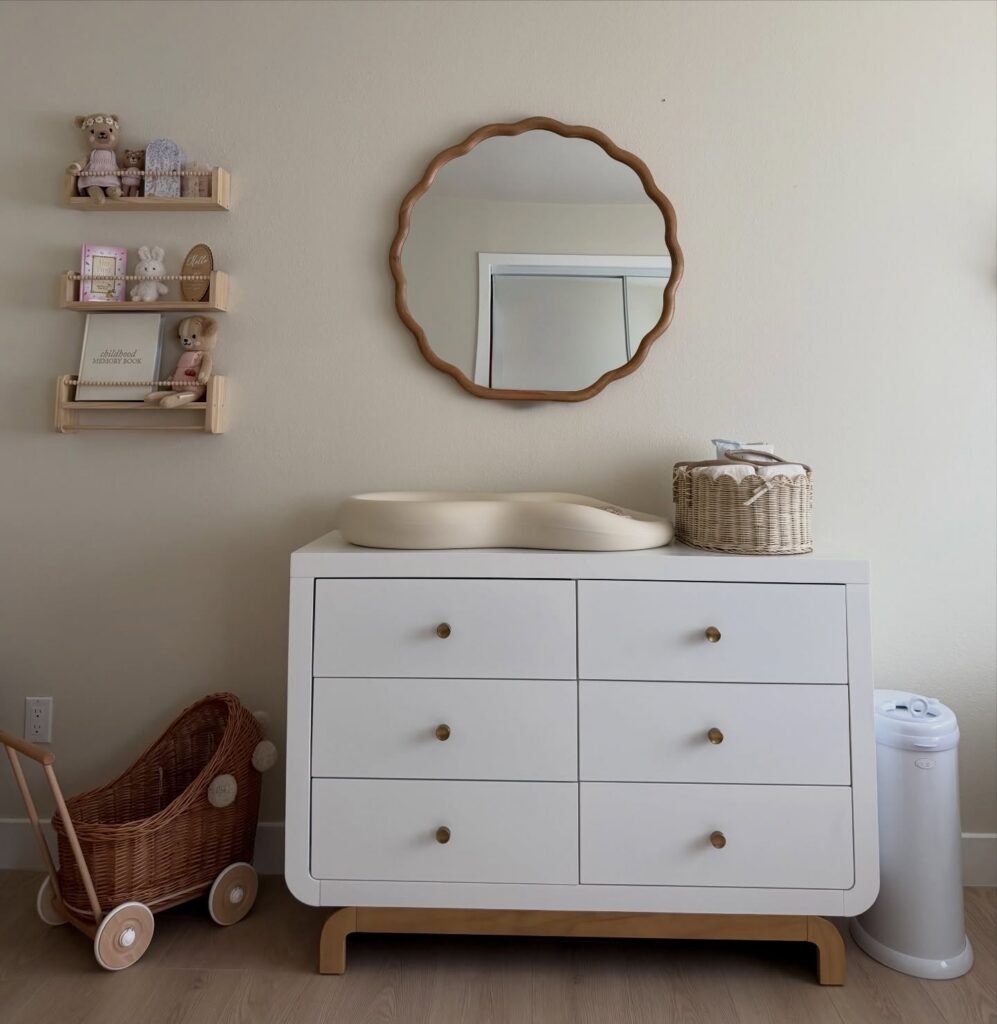
A pair of shallow wall ledges keeps small books and toys within reach of the changing dresser without using its top. The front rail helps hold items upright, while the open shelves make it easy to see what is there. Pale wood gives the ledges a light outline against the wall and picks up the dresser’s wooden feet.
A darker finish would make them stand out more and draw the eye toward the displayed items. Painting the ledges to match the wall would quiet that contrast, leaving the books and toys to supply most of the color.
Pair Shelves With a Book Rack
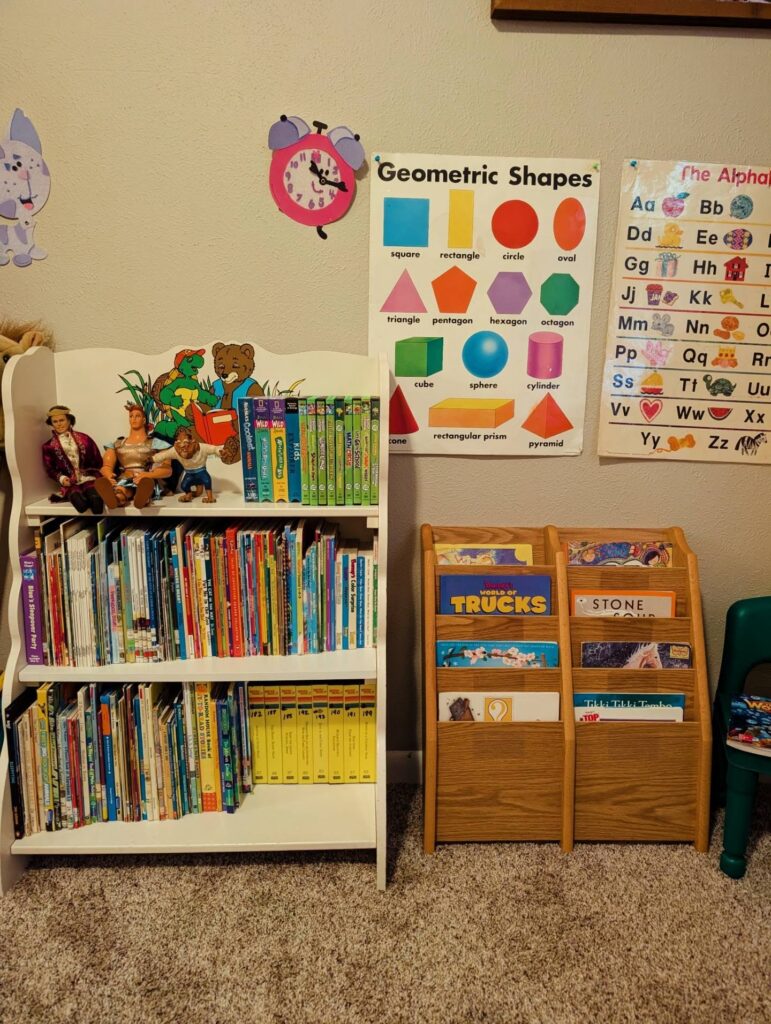
Divide books between a low bookcase and a front-facing rack, with most titles stored spine-out and a few covers on view. The rack gives a child who cannot read yet a way to choose a book by its picture. The shelves beside it hold the larger collection without needing a wall full of racks.
For families with books of different heights and thicknesses, this gives each kind a place. Put current favorites in the rack and use the bookcase for the rest, moving titles across as your child’s interests change.
In a nursery with room for only one unit, a low bookcase will usually hold more books for the floor space. A rack alone makes more sense for a small collection you rotate often. Anchor both units to the wall before a child can pull up on them.
Hang Outfits Above the Changing Table
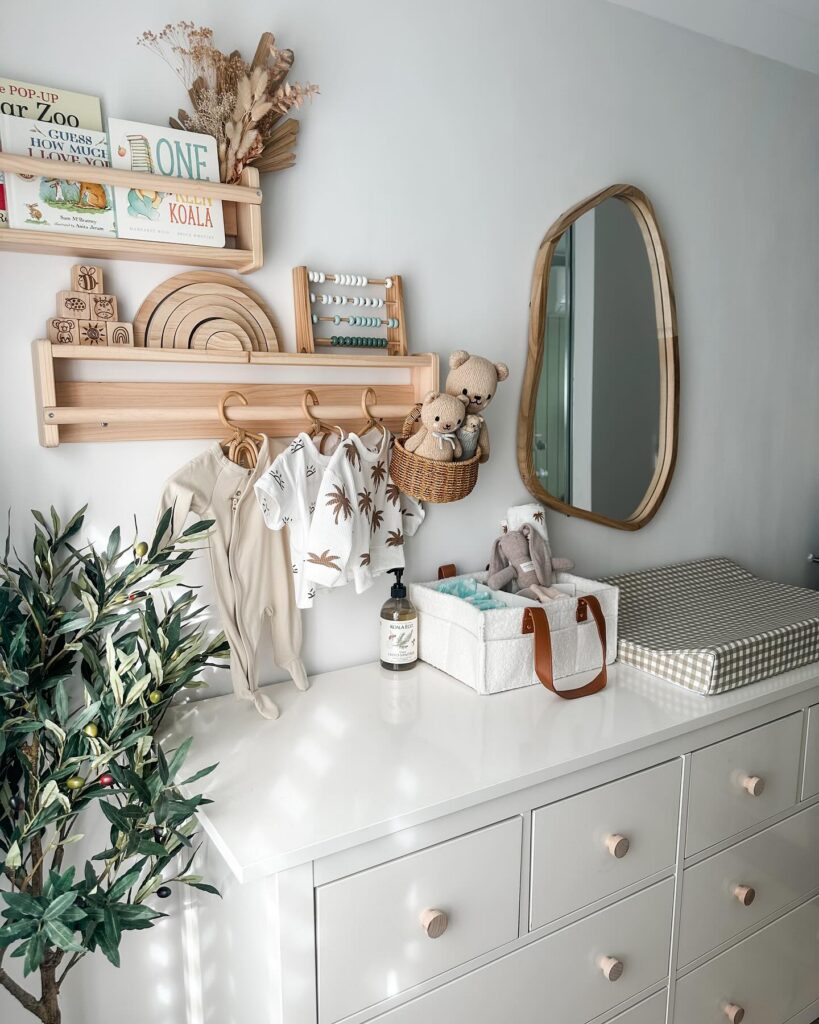
Put a rail with hooks on the wall right over the dresser you change the baby on. A small row of hangers holds the next day’s outfits where you can reach them with one hand, so you aren’t digging through drawers while the baby is on the pad. Three or four hangers is plenty.
I’d keep the rail low enough to reach without stretching. The ledge above it can hold a few wooden blocks and a stacking toy, which gives you something to hand over mid-change.
Organize Changing Dresser Drawers
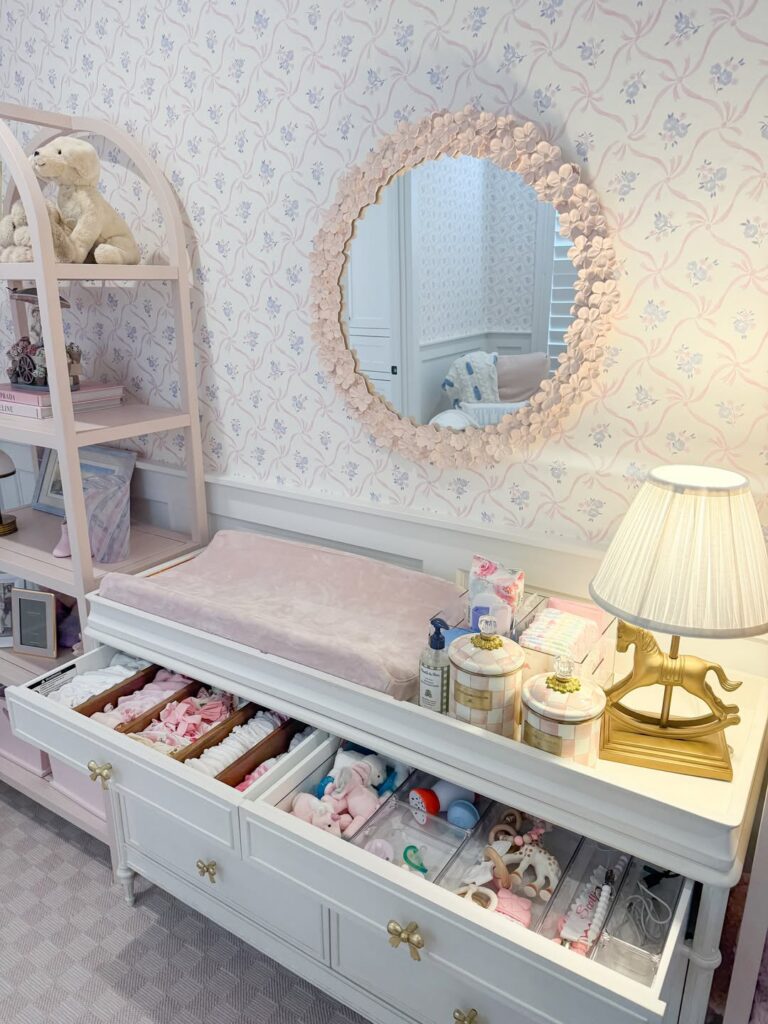
The drawers beneath a changing pad can hold more than spare clothes when each section has a job. Use low wooden dividers for folded outfits and small clear bins for pacifiers, toys, and care supplies, so loose items stay visible. If fitted inserts are hard to find, short cardboard boxes or washable plastic trays can separate the same categories without taking up much room.
Narrow Changing Supply Cart
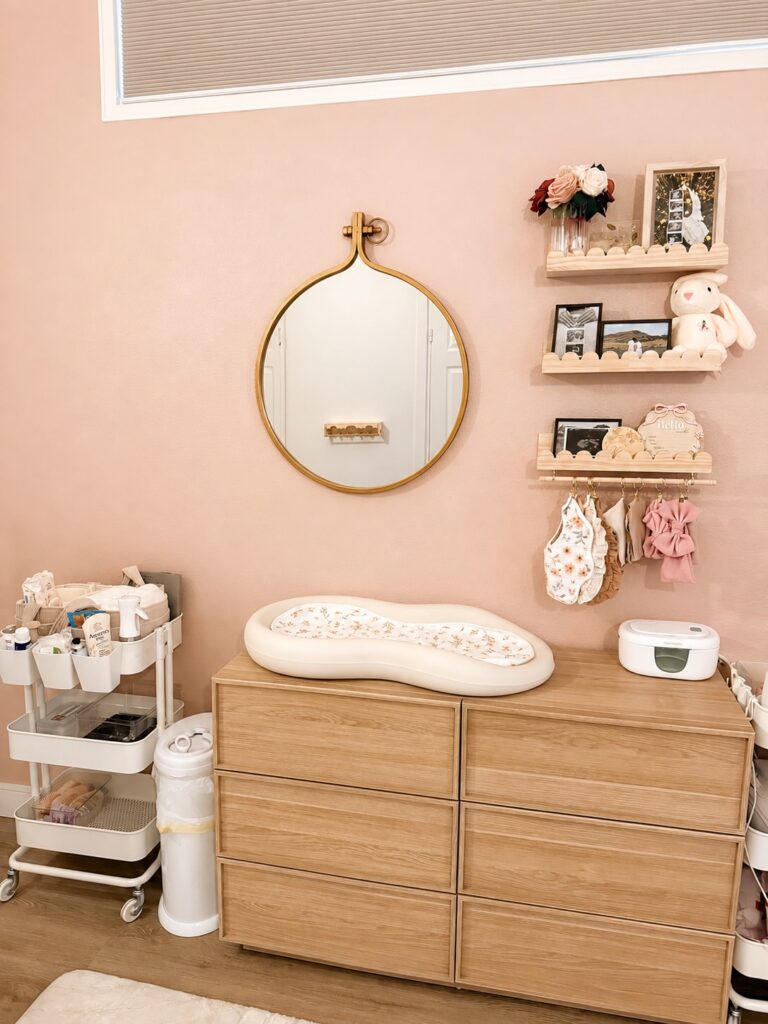
Park a narrow rolling cart beside the changing dresser so bottles, creams, and spare supplies have their own storage spot. A three-tier cart lets you sort them by how often you reach for them, rather than crowding the surface around the changing pad.
For a tight gap, choose a slimmer cart rather than a wide trolley with room for several bins across each shelf. The smaller footprint leaves more floor clear, though you will need to limit the top tier to daily supplies. Check the shelf dimensions before buying containers; thick bin walls and large handles can eat up much of a narrow tray.
Stand bottles upright on the top shelf, then use the lower tiers for refills and folded cloths. Small open cups can separate tubes without hiding their labels. I’d choose a cart with raised tray edges, like this white metal one, to help stop loose items from sliding off when it moves.
Divide Drawers With Small Bins
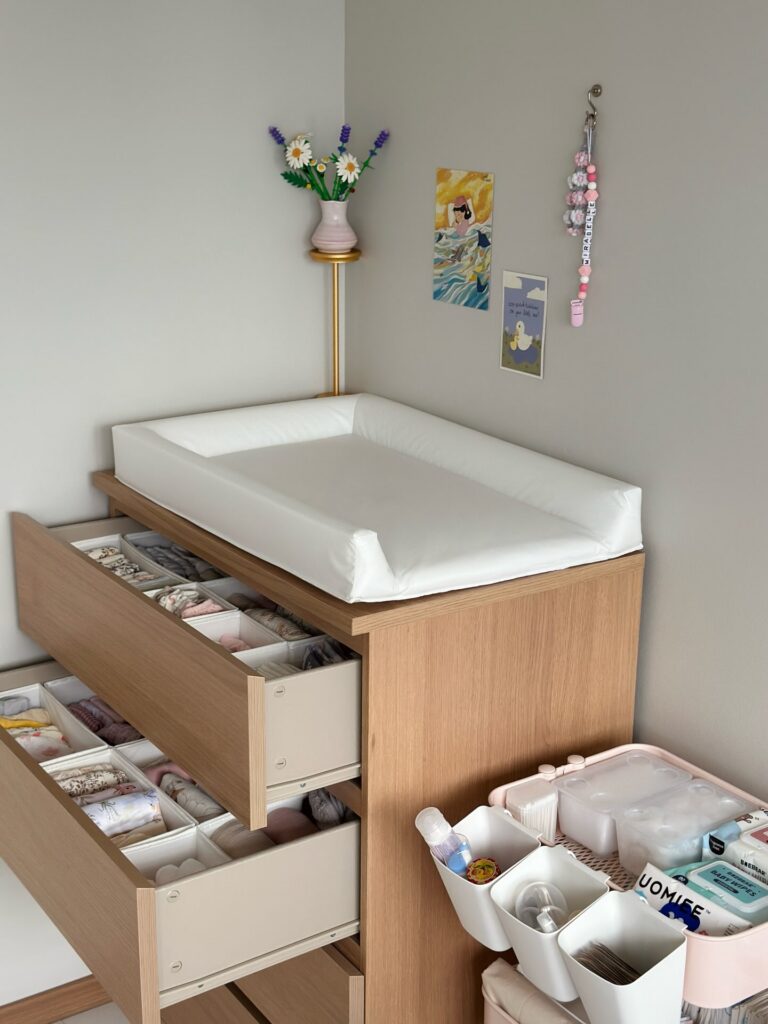
Empty the drawer first and sort clothes by size, then by type. Measure the drawer before buying bins so they fill it edge to edge and can’t slide around. Fold each item so it stands upright, which lets you see everything at once. Do the sorting before any shopping.
Divided Shoe Drawer
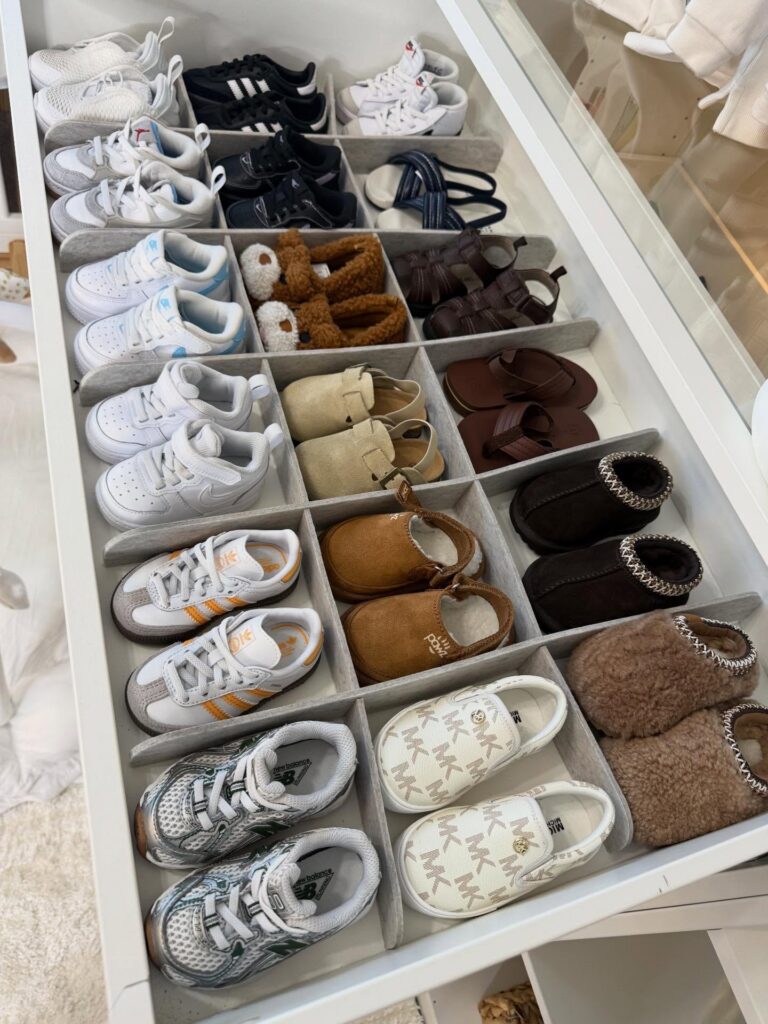
Small shoes tend to disappear into a deep drawer, especially when pairs get mixed with socks or clothes. Dividers give each pair a set place, but the sections need to match the shoes you actually use. Leave room for boots and slippers as well as sneakers, and put the current size toward the front. If compartments are too tight, heels catch on the dividers and shoes get tossed across neighboring sections.
The common problem is keeping every size and season in the drawer. Outgrown pairs quickly fill the open spaces, making daily footwear harder to find. Move the next size up to a separate bin, and check the drawer as your child grows. Arrange pairs toe to heel, with enough space to lift them out without disturbing the row. Fabric-covered dividers can be lifted out when the shoe mix changes.
Drawer Dividers for Baby Clothes
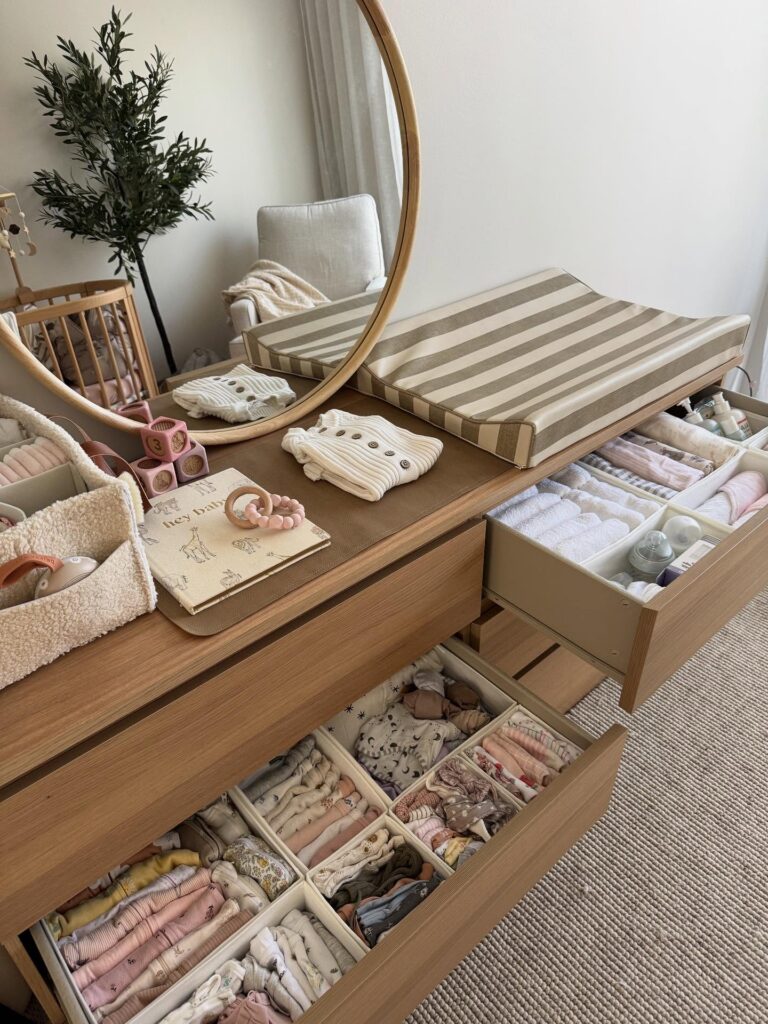
Divide dresser drawers into small compartments, then file baby clothes upright so each piece stays visible. The fabric bins give different types of clothes their own slots, with edges that stop one row from spilling into the next when you reach in. Without those boundaries, small clothes tend to spread across a deep drawer, and pulling out one item can drag half the pile with it.
Wall Shelves for Books and Clothes
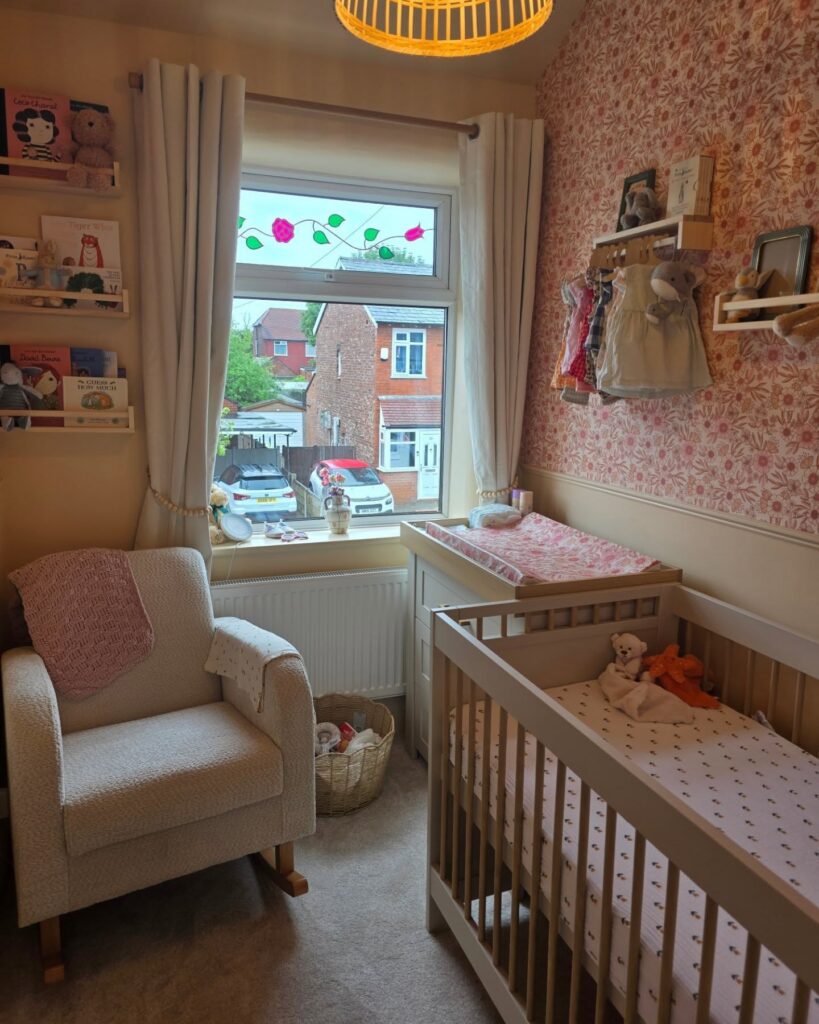
Narrow picture-ledge shelves for books and a small peg rail for hanging outfits keep a lot off the floor, which matters in a room this size. The ledges hold only a few books each, with the covers facing out, so a child can reach them later.
This is right for small rooms where a dresser won’t fit beside the cot. It’s not for anyone with a baby who is already pulling at everything. Choose closed storage instead.