17 Nautical Nursery Decor Ideas
This site contains affiliate links. We may earn a small commission, at no extra cost to you. Article may contain some images for illustrative purposes only .
The best time to pick a nursery theme is early, well before the crib arrives and the paint cans come out. Once you have a direction, every choice after that gets easier. A nautical theme is a good one to start with, because it suits any baby and any size of room. This list gathers 17 nautical nursery decor ideas, from the big choices you will make first to the small touches you can add last. Some take a weekend. Others can wait until the final weeks. Nothing here has to be done all at once, and none of it has to match. Read through in order or jump around, then save the ones that fit your space.
Repeat Sailboat Motifs
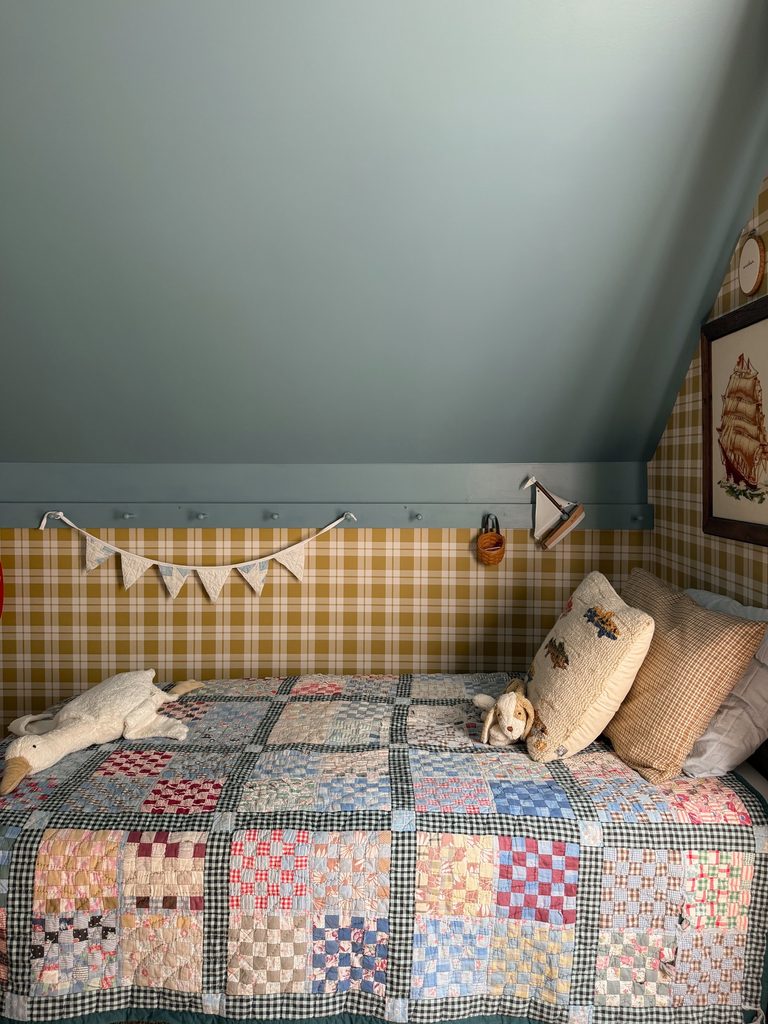
A sailboat lamp near the bed and a framed ship print above it repeat one clear nautical shape. That small repetition gives the room a sea theme without relying on anchors, rope, or blue stripes across every surface.
The lamp brings the motif down to bed level, while the print gives it a larger place on the wall. The checks on the wallpaper and patchwork quilt can remain the main patterns, with the boats adding detail. Without those repeated boat forms, the checks and quilt would steer the room toward a general country look.
A small pennant garland can join in, but it should stay secondary to the sailboats.
Stacked Sailboat Prints
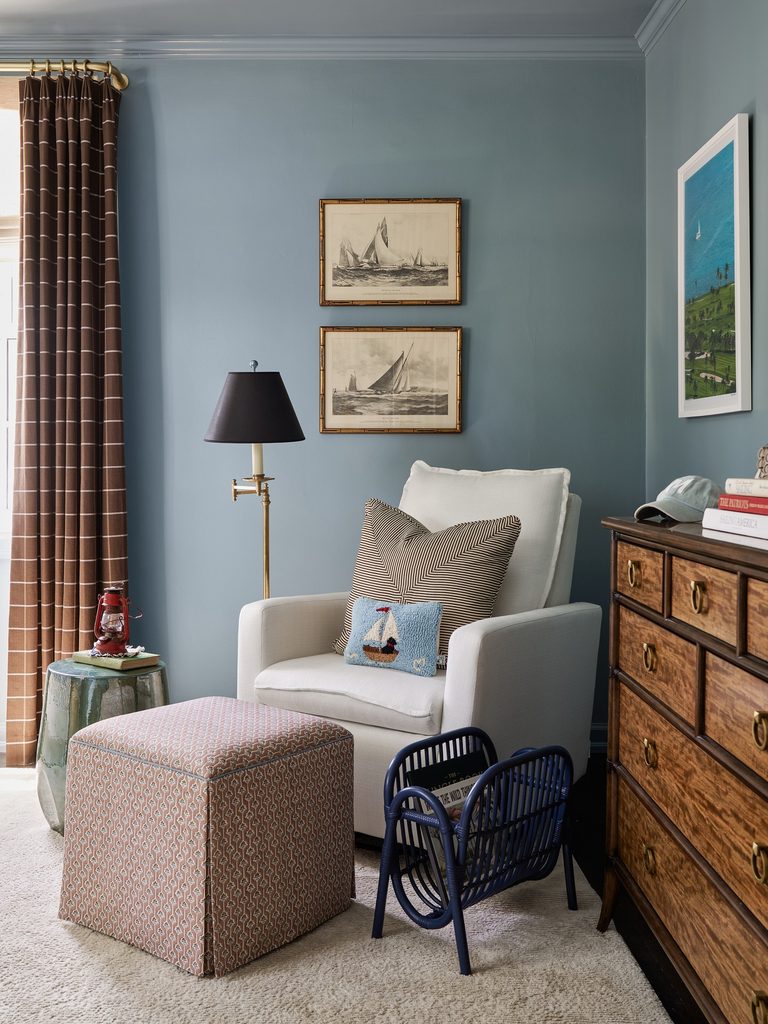
Above a nursing chair, two framed sailboat prints give you a nautical focal point without covering the room in boats. If you like traditional furniture and want art that can stay as your child grows, this is a good direction. The narrow gold frames add definition against blue walls, so the prints don’t need to be large to hold that patch of wall.
For parents who would rather spend on a few lasting decorations than build a theme around baby accessories, framed boats leave plenty of room to change the bedding later. You can carry the subject into an older child’s room without replacing every piece. If you want bold color or pictures your baby can easily pick out from across the room, choose another idea; these pale sailing scenes offer detail rather than strong contrast.
Model Sailboat on a Nightstand
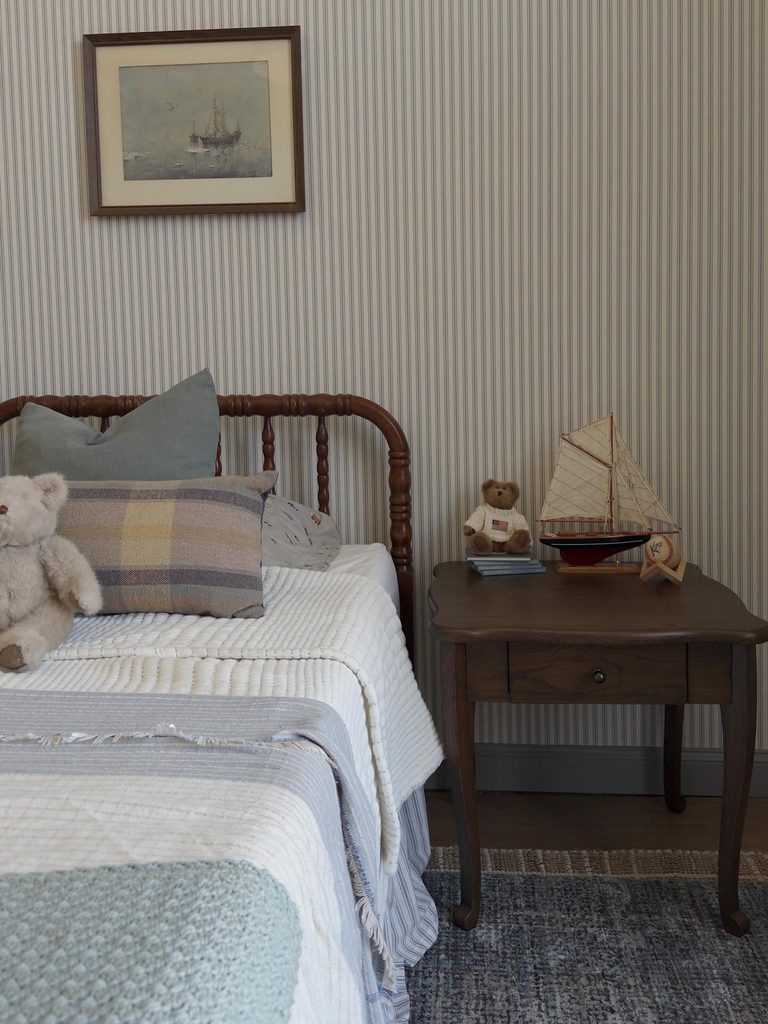
A small wooden sailboat model on the bedside table gives a nursery its nautical note without any anchors or rope. The one here has a dark painted hull, cream fabric sails and thin rigging lines, and it sits on a little stand so it won’t tip. It’s about the size of a shoebox, which keeps it in proportion with the table.
Models like this are usually made of wood with cotton or canvas sails, and they’re fragile. Since the sails and rigging snap easily, I’d keep it well back from the edge and out of a toddler’s reach, which makes it better for a nursery that’s still a few years from walking.
If you can’t find a model you like, a vintage toy boat from a secondhand shop works the same way. A framed print of a ship on the wall above does the job too, and it carries no risk of breaking. Put a few small books under a stuffed bear beside it and the table looks finished.
Sea-Life Wall Decals
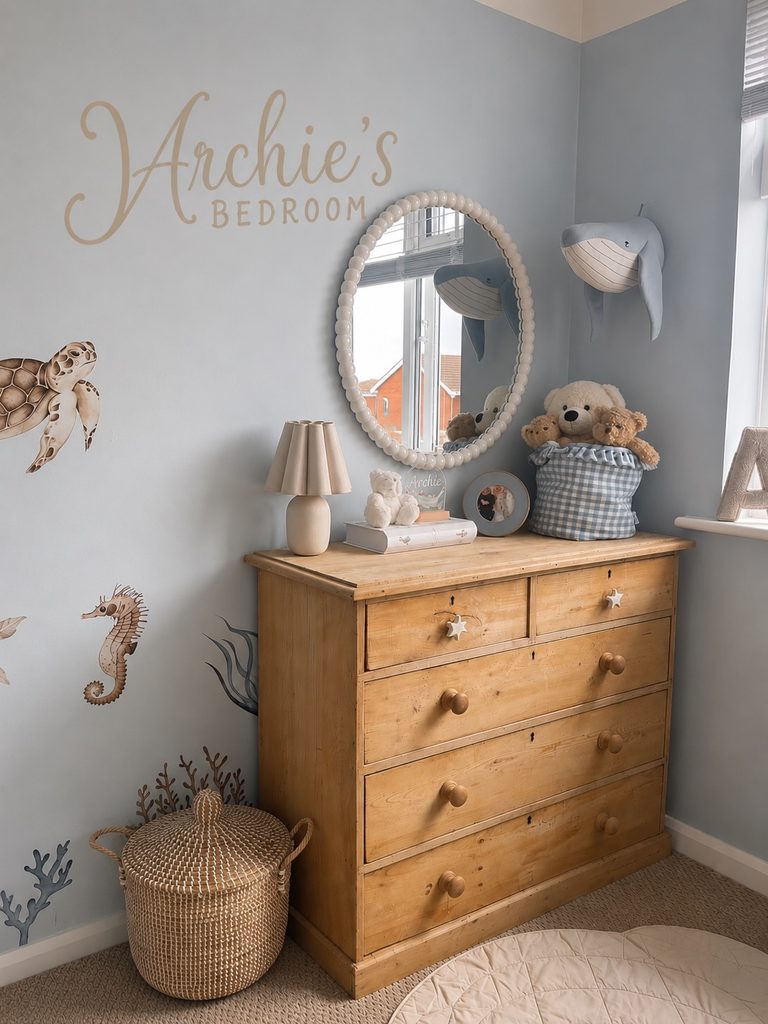
Build an underwater wall with a few sea-life decals, placing them around the furniture rather than covering every open patch. Start with the largest figures, such as a turtle or whale, then add smaller pieces like coral and a seahorse near the lower wall. Keep the colors close to the room’s pale blue paint so the drawings remain easy to look at without crowding the name sign.
Before applying the decals, map out the arrangement with paper templates or low-tack tape. This step matters most: check the spacing from the dresser and make sure no creature will be cut off by furniture or a corner. Once the layout is set, wipe the wall clean and dry it fully. Work from the center outward, smoothing each decal as you press it into place.
Wave Edge Painted Walls
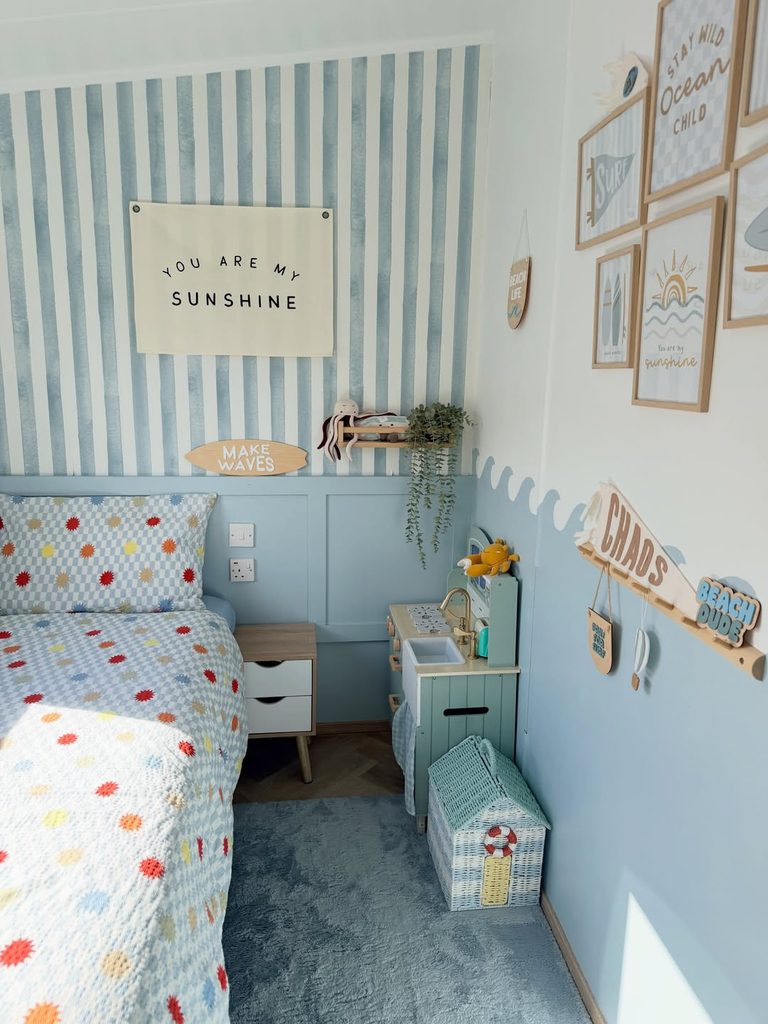
Paint the lower wall pale blue, then carry its top edge into a row of waves. Leave white above so the outline stays clear without needing a darker border.
Small, tightly packed waves can look more like a frill than water. Make a card template with a broad curve, and trace a few repeats in pencil before committing to the full wall. Check the spacing from the doorway, where awkward gaps are easier to spot.
Plan where the pattern will meet corners and door frames before painting. Ending halfway through a crest can leave an odd hook at the edge. Use a small brush for the curves rather than trying to bend straight masking tape around them, and fill the lower section with a roller.
Nautical Wallpaper Above Paneling
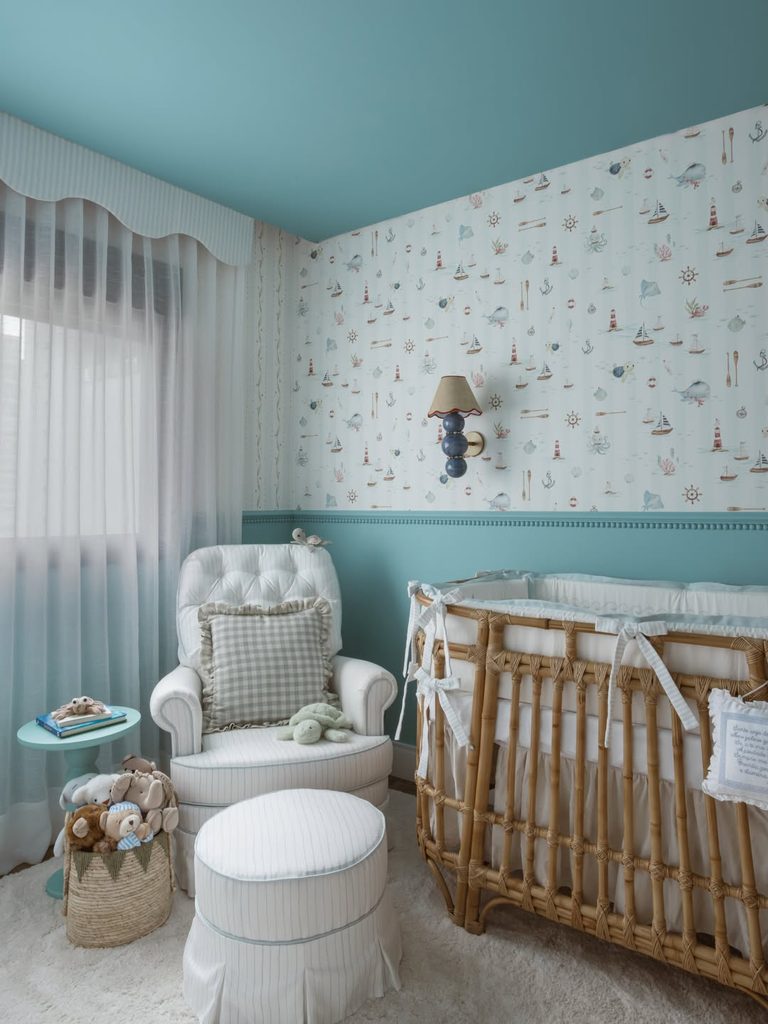
A small-scale print of sailboats, lighthouses, oars and whales sits above a painted lower wall, and the color choice is what holds it together. The teal on the lower half and ceiling is pulled from the blues in the paper, so the busy pattern has a solid shade to rest against. Pick a deeper blue and the room gets heavier and more formal. Go lighter and the print takes over.
I’d keep the paint one step darker than the palest blue in the paper.
Navy and White Stripes
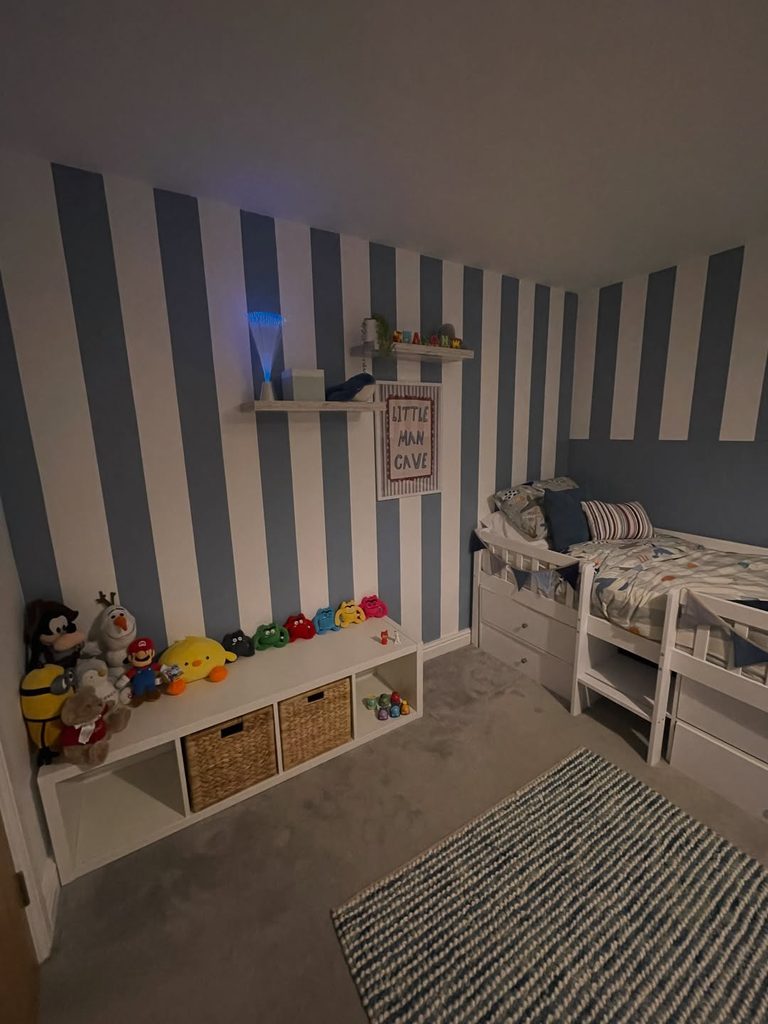
Vertical navy and white stripes can set a nautical palette across a nursery without adding more boat or anchor motifs. Run them behind the crib or toddler bed, where the pattern gives the sleep area a clear backdrop. Broad bands are easier to take in across a full wall than very narrow stripes, especially in a small room. Cover one wall and leave the others plain so bedding, toys, and storage have room to stand out.
Carry the colors into a few nearby pieces rather than repeating the stripes everywhere. A navy pillow or a striped cushion can tie the bed to the wall, while white furniture keeps the lower half from feeling too dark. A low shelf beneath the wall works for books and soft toys, but leave some open space around it so the pattern remains visible. The wall can stay as the room changes, even when the bedding and toys are replaced.
Striped Wallpaper Above Paneling
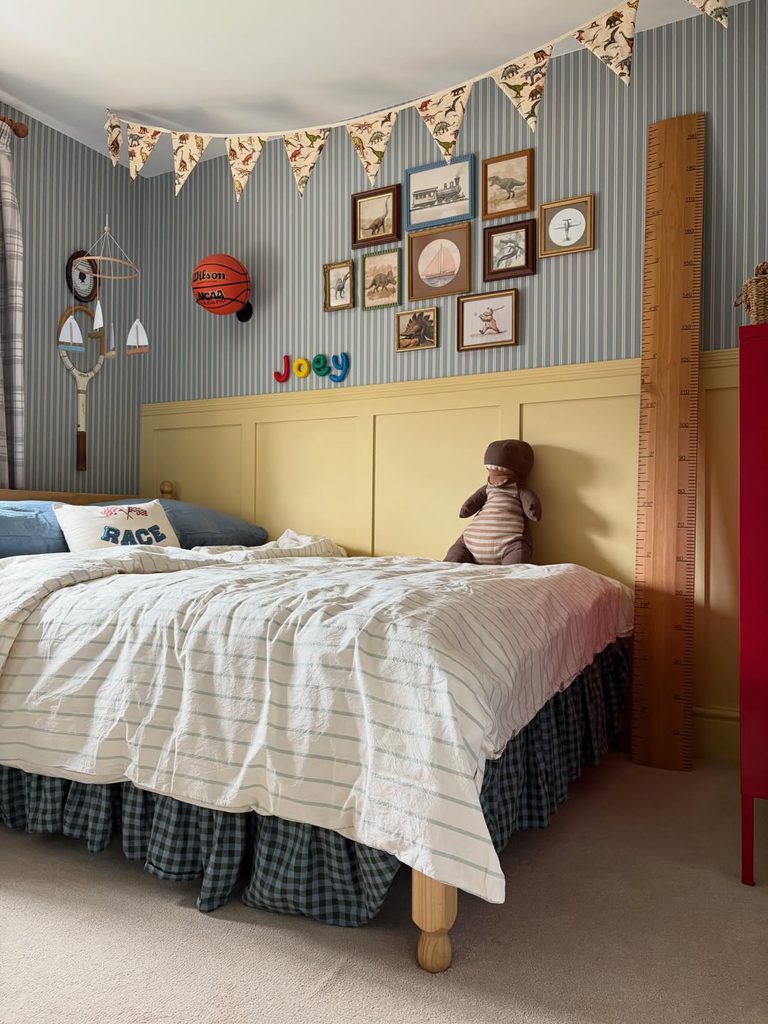
Hang narrow striped wallpaper above painted paneling rather than taking it all the way to the floor. The blue stripes give the wall a clear pattern, while the yellow panels leave a broad area of plain color below.
With thin stripes, contrast matters as much as width. Bright white against dark blue can feel busy across several walls, so choose colors that sit closer together. Check a large sample beside the paint before committing. Crooked stripes are also hard to overlook, especially at corners and door frames. Start from a plumb line rather than trusting the corner itself, and plan where the final seam will fall before cutting the first strip.
Painted Dresser as Changing Table
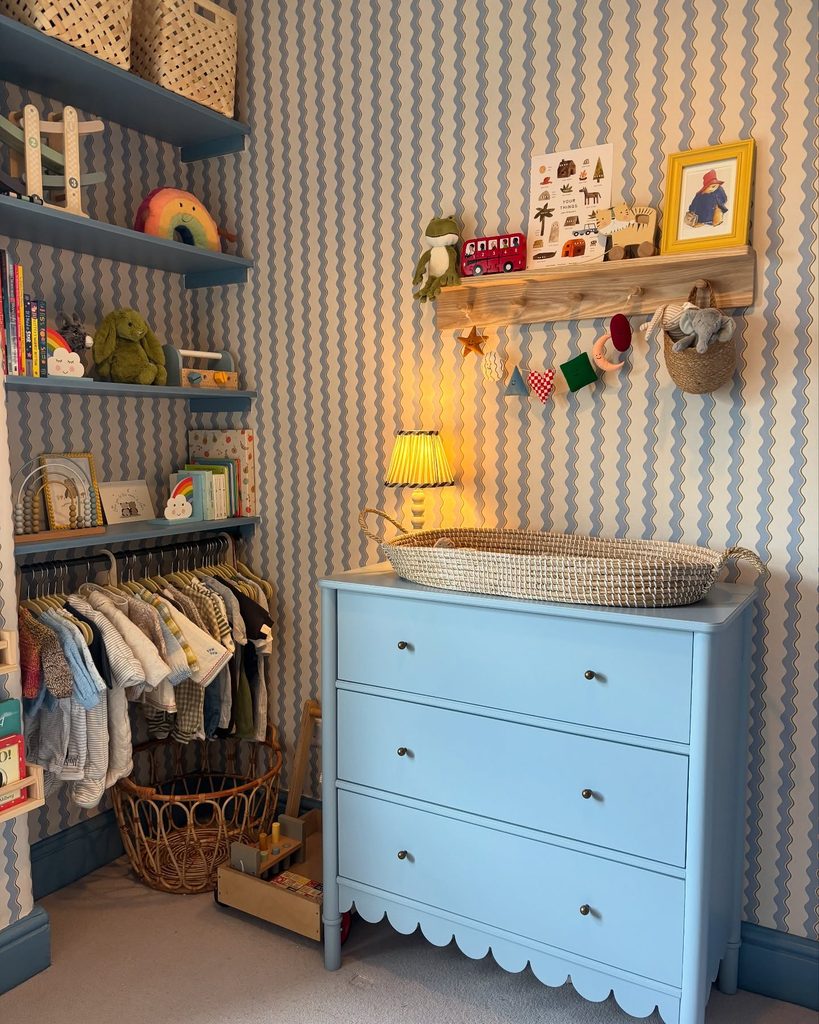
Start with the wallpaper, since it decides the paint color. Pick the blue from the narrower stripe and have it matched, so the dresser sits close to the wall without disappearing into it.
Paint the dresser before it goes anywhere near the room, and sand the drawer fronts first, because that is the step that decides whether the finish lasts. A woven changing basket on top keeps the baby contained, and the scalloped base gives a plain three-drawer chest a nautical edge.
Fabric Pennant Garland
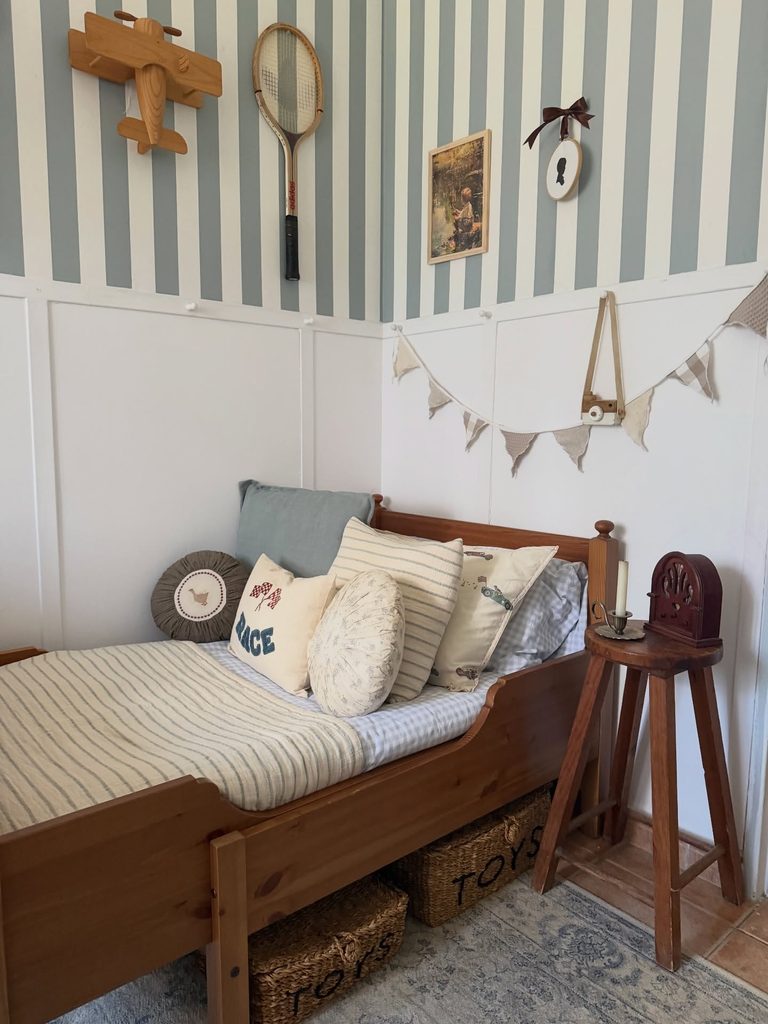
Across the wall above a bed, a string of cloth pennants adds a sailor-style detail. Cut triangles from cotton or linen scraps, using a mix of cream, faded blue, narrow stripes, and small checks. A few different prints keep the row from looking too uniform; plain fabric works just as well if you want the wall to stay quiet. Fold each top edge around cotton tape or ribbon and stitch it down, or use fabric glue for a no-sew version.
Leave enough space between flags for the string to dip rather than pulling it tight. For a nautical link, choose navy and cream, or add an anchor or sailboat motif among the plain pieces. If fabric scraps are hard to find, use felt or sturdy paper and attach the flags to twine. Hang the garland with removable hooks, clear of the child’s reach.
Group Travel Prints in a Grid
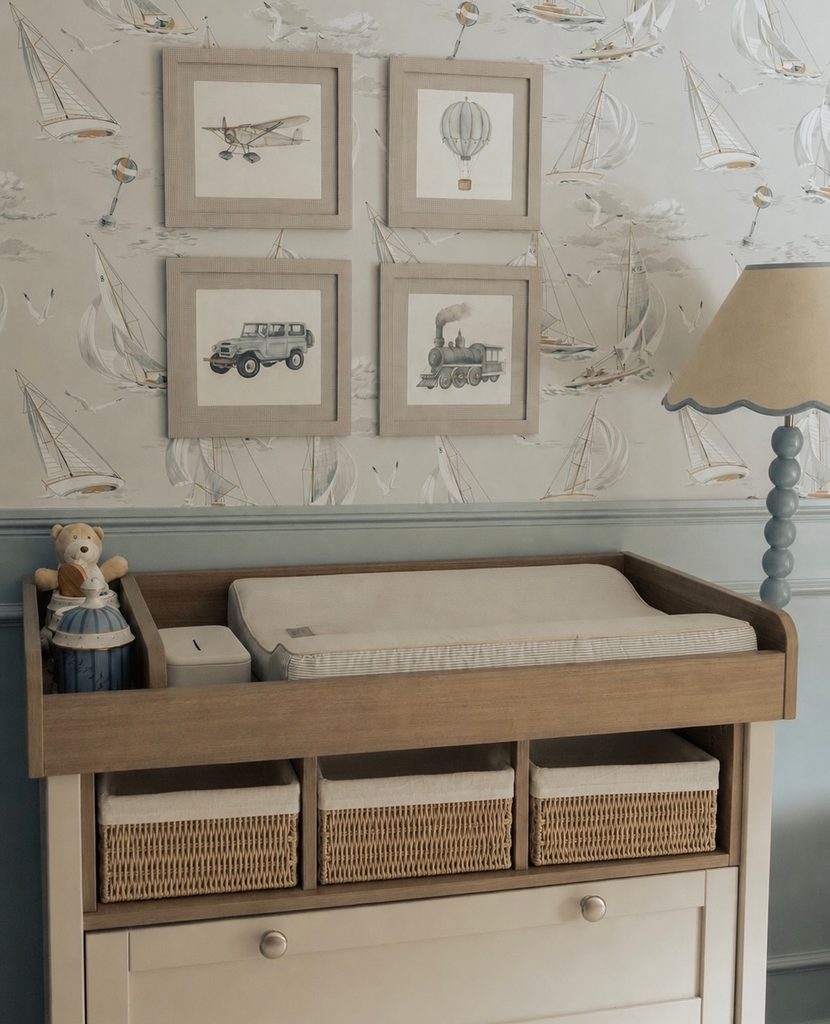
Hang four travel prints in a close grid above the changing table, using matching wood frames to set them apart from the sailboat wallpaper. The wide cream borders matter more than the subjects: they leave blank space between each small drawing and the busy wall. Without those borders, the prints would get lost among the sails, and the grouping would be harder to pick out.
Sailboat Mobile Over the Bed
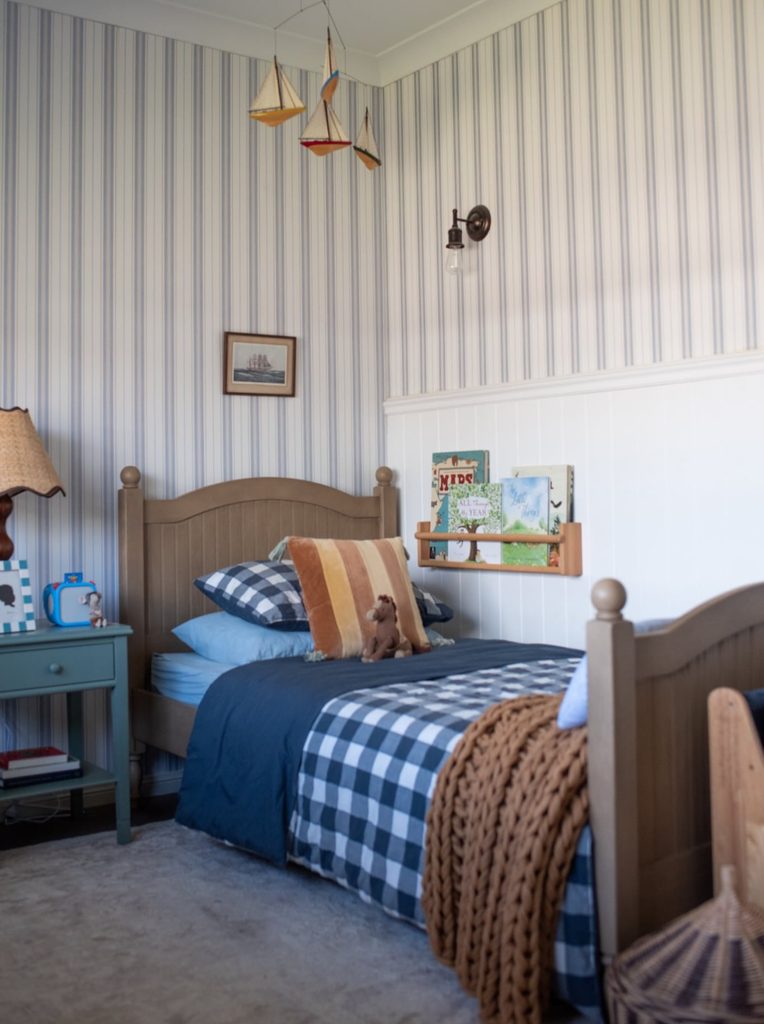
A mobile of small wooden sailboats works best in a bedroom for an older baby or toddler, hung over the bed where it’s seen from the pillow. In this room it hangs near the corner against striped wallpaper, so it has space to turn without touching the wall. I’d keep it well out of reach of a child who can stand on the mattress.
Navy Beadboard Backdrop
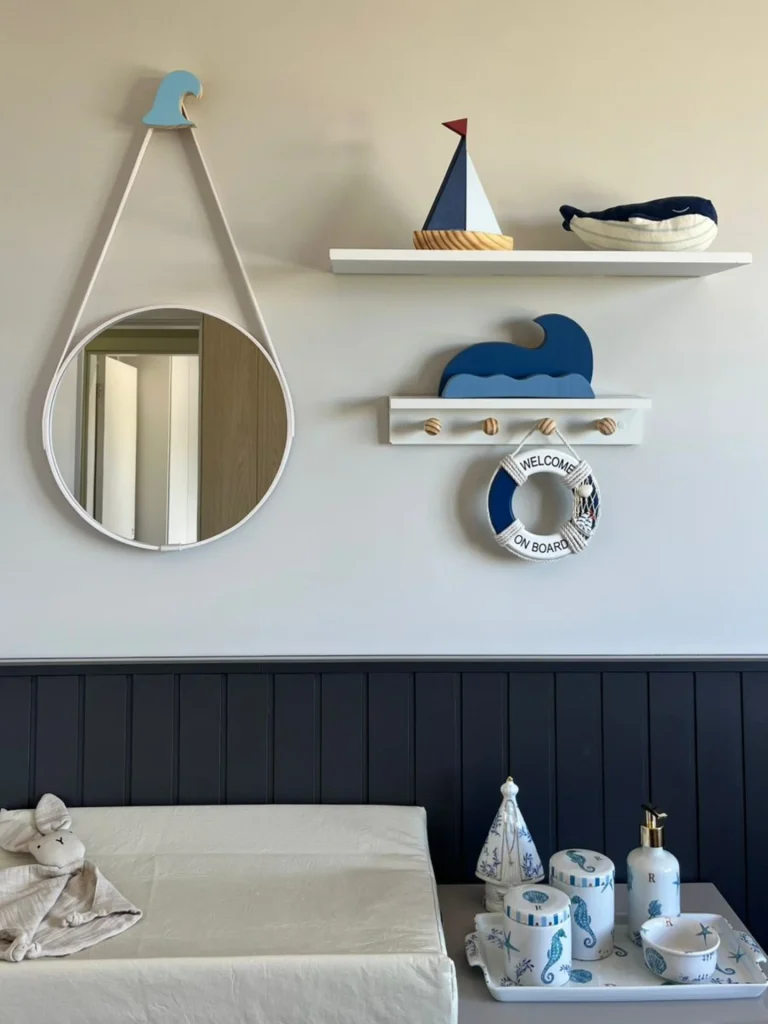
Against a pale wall, deep navy beadboard gives a nautical display a firm base. Carry the color across the lower third of the room, then leave the upper wall light so small pieces have space around them. A white shelf and a blue wave cutout stand out against the darker paneling, keeping the wall decor easy to see from across the room.
The shade changes the balance. Near-black navy makes the paneling feel heavier and draws the eye down toward the bed; a clearer blue keeps the room lighter and brings out the sea shapes. I’d use the deeper color when the furniture and bedding are mostly white, then repeat it in only a few wall details. Wood, rope, or white ceramic pieces can supply the smaller nautical references. Leave open wall between shelves and trim so the display does not turn into a packed row of ornaments.
Ship’s Wheel Mirror
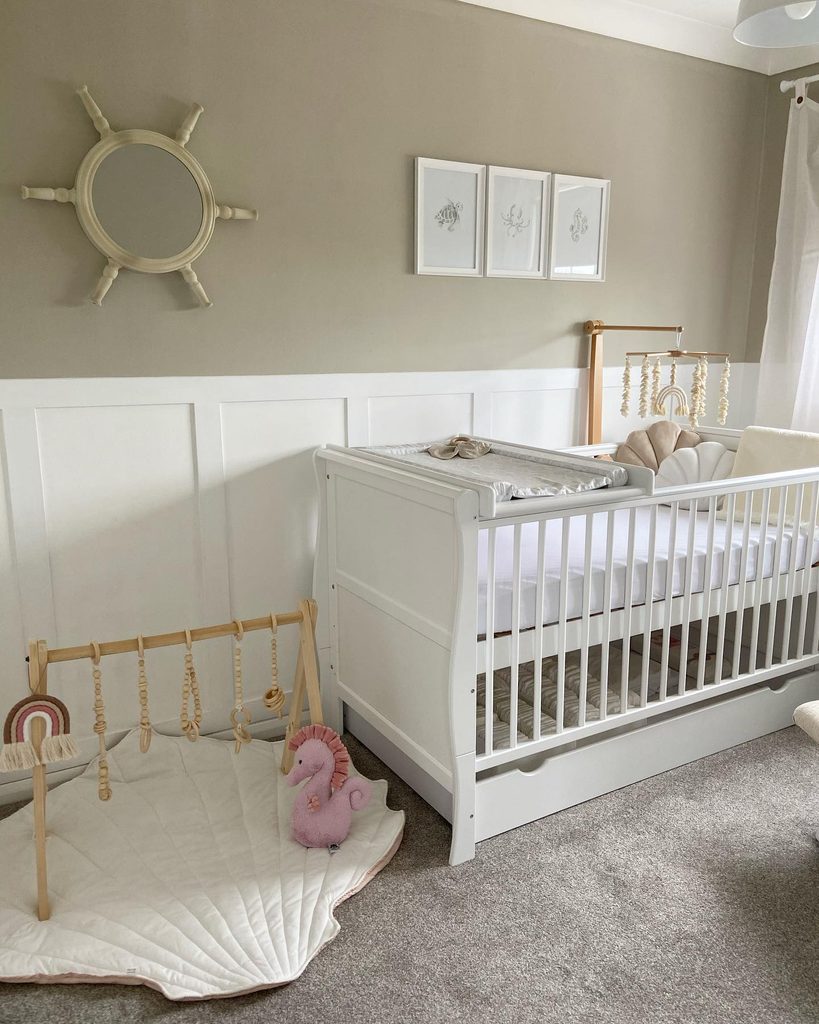
Hang a ship’s wheel mirror if you want one clear nautical detail without filling the nursery with boats and anchors. A pale frame against a beige wall keeps the contrast low, making this a good choice if you prefer neutral walls and white furniture. The handles give it more width than a plain round mirror, so allow some bare wall around it.
If you want bright color or a seafaring theme that carries across the room, choose another idea from the list. This approach is for someone happy to let a single wall piece carry the theme, with room to change the bedding and toys as their child grows.
Framed Felt Sea Creatures
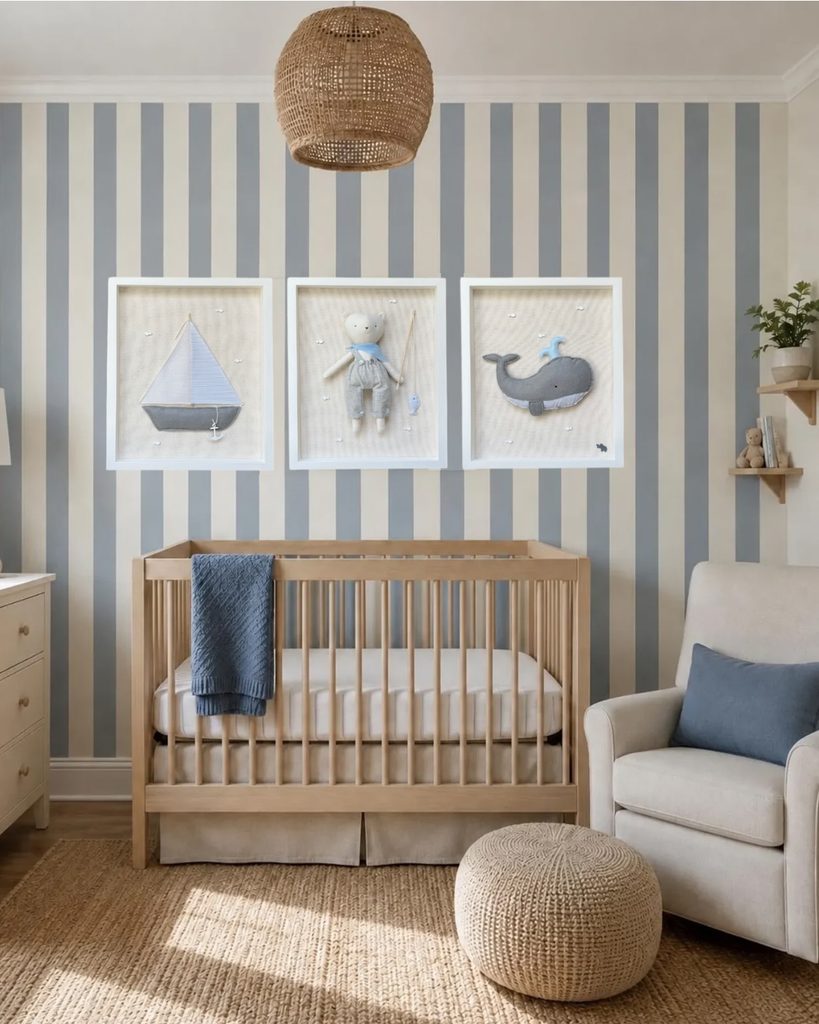
Three small felt figures, a sailboat, a bear with a fishing rod and a whale, sit in white box frames above the crib instead of printed art. The felt gives each piece some depth, and the cream backing keeps the figures from fighting with the blue and cream striped wall behind them.
The variation worth thinking about is the color of the felt. Here the figures are in dusty blue and gray, which sit close to the stripes and make the row look quiet. If you used a deeper navy for the boat hull and the whale, each frame would stand out from the wall more, and the row would be the first thing you see in the room. I’d go that way on a wall with plain paint, and stay with the soft blues when the wall already has stripes.
Paint an Underwater Mural
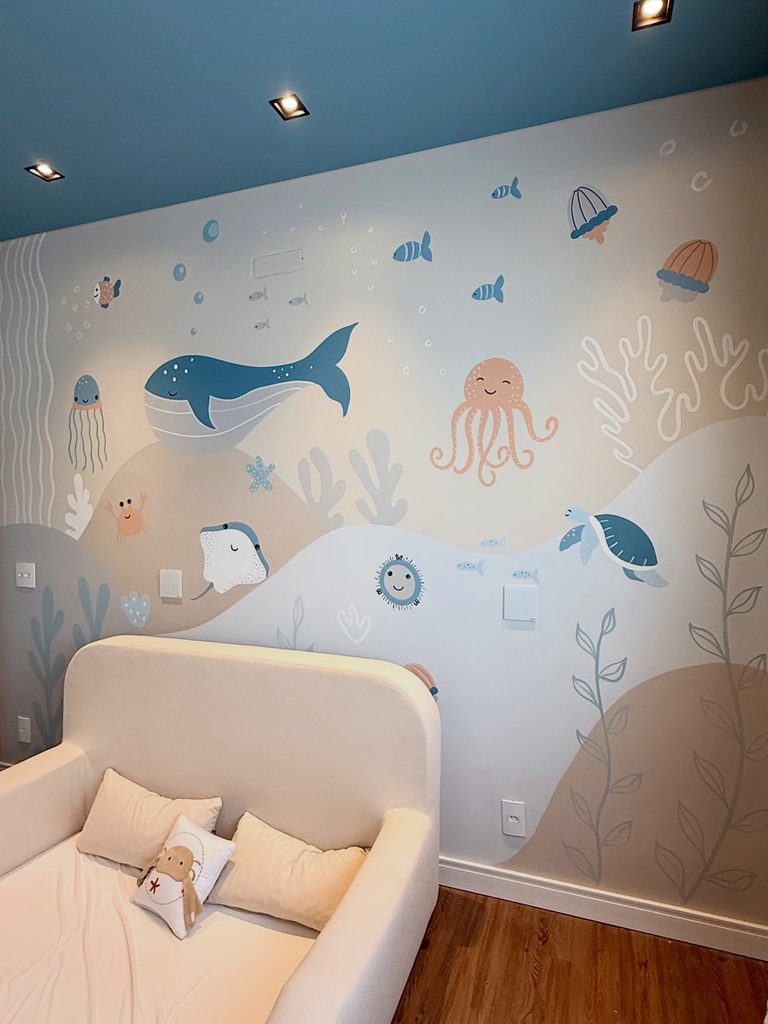
Above the crib or toddler bed, carry an underwater mural across the wall that gets the most attention from the doorway. A wide scene gives the bed a clear place in the room without needing smaller pictures around it. Keep larger animals, such as a whale or turtle, near the center, with fish, coral, and bubbles spread toward the edges.
Let the painted waves run behind the headboard and continue around a corner if the room has a second open wall. Leave outlets and switches uncovered, and place the most detailed parts where they can be seen from the bed or a nursing chair. A blue ceiling can extend the water theme overhead, while a light background keeps the wall from feeling crowded.
Fine Shell Print Wallpaper
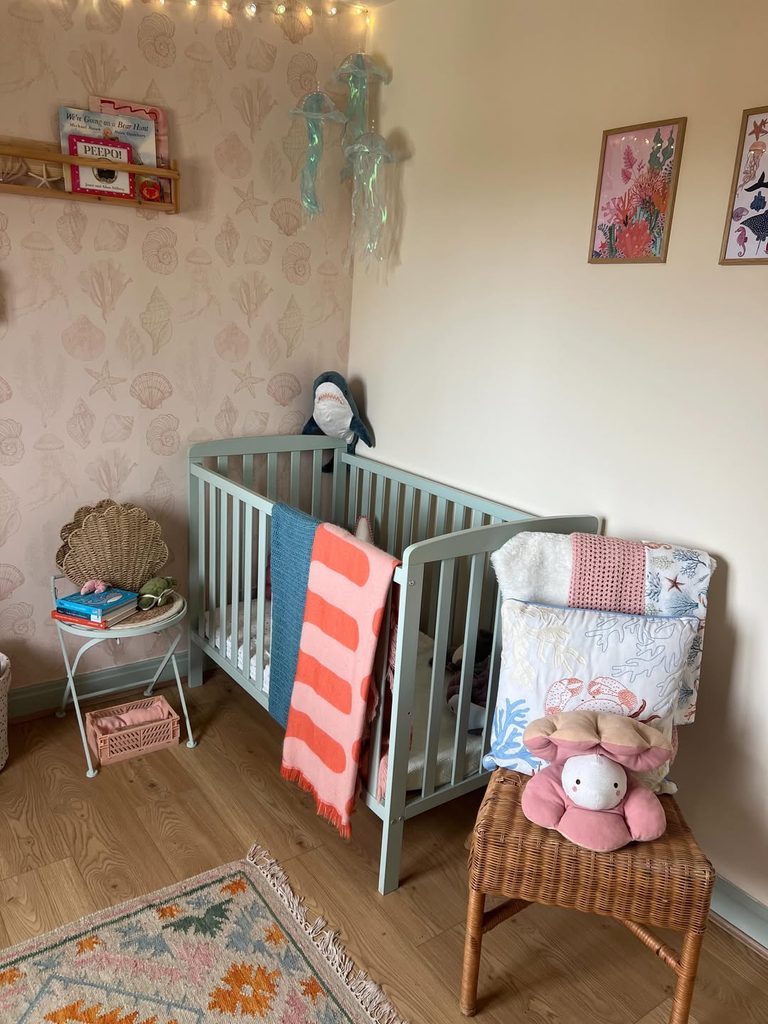
Choose shell wallpaper with thin outlines on a pale background, so the pattern sits quietly behind the cot. The small shells and starfish give you plenty to look at up close, while leaving room for other sea details without competing with them. A darker background or larger print would draw much more attention to the wall; these faint lines let it stay in the background.