27 Japanese Living Room Organization Ideas
This site contains affiliate links. We may earn a small commission, at no extra cost to you. Article may contain some images for illustrative purposes only .
The tatami mat in my living room had disappeared under a landslide of remote controls, half-read manga, and a tangled charging cable that no longer belonged to any device I owned. Something had to give. I’d been staring at photos of serene Kyoto apartments for weeks, wondering how anyone actually lives inside that kind of quiet. Turns out, the answer isn’t minimalism for its own sake—it’s a handful of small, deeply practical habits: low furniture that breathes, hidden storage tucked behind shoji screens, baskets woven from kumiko wood, and the almost sacred rule of clearing the floor before bed. What follows are 27 ideas borrowed from Japanese homes, from the obvious to the strangely clever, that can turn a chaotic living room into a room you actually want to sit in.
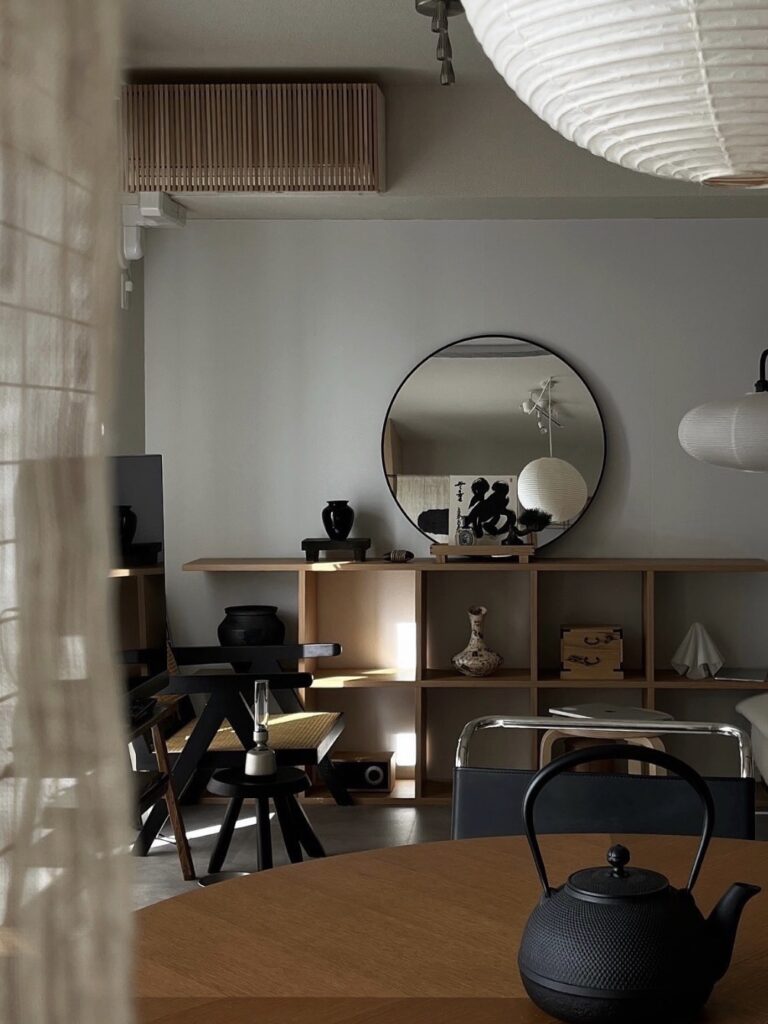
Low Shelf Units Instead of Cabinets
SUBHEADING: Low Shelf Units Instead of Cabinets
Shelving that sits below eye level keeps the wall above it completely clear, which is most of what gives Japanese living rooms that uncluttered look people are always chasing. The open cubbies here hold a mix of black ceramic vessels, a small painted vase, and a few lacquered boxes — nothing is crammed in. Each object has a gap around it. That’s the actual work: editing down to fewer pieces than feels comfortable, then spreading them out. If you’re used to filling shelves, this will feel underdone at first. Give it a week. I’d probably skip anything too decorative or busy-patterned in the ceramics — matte black or plain white reads the cleanest against natural wood like this.
Low Grid Storage
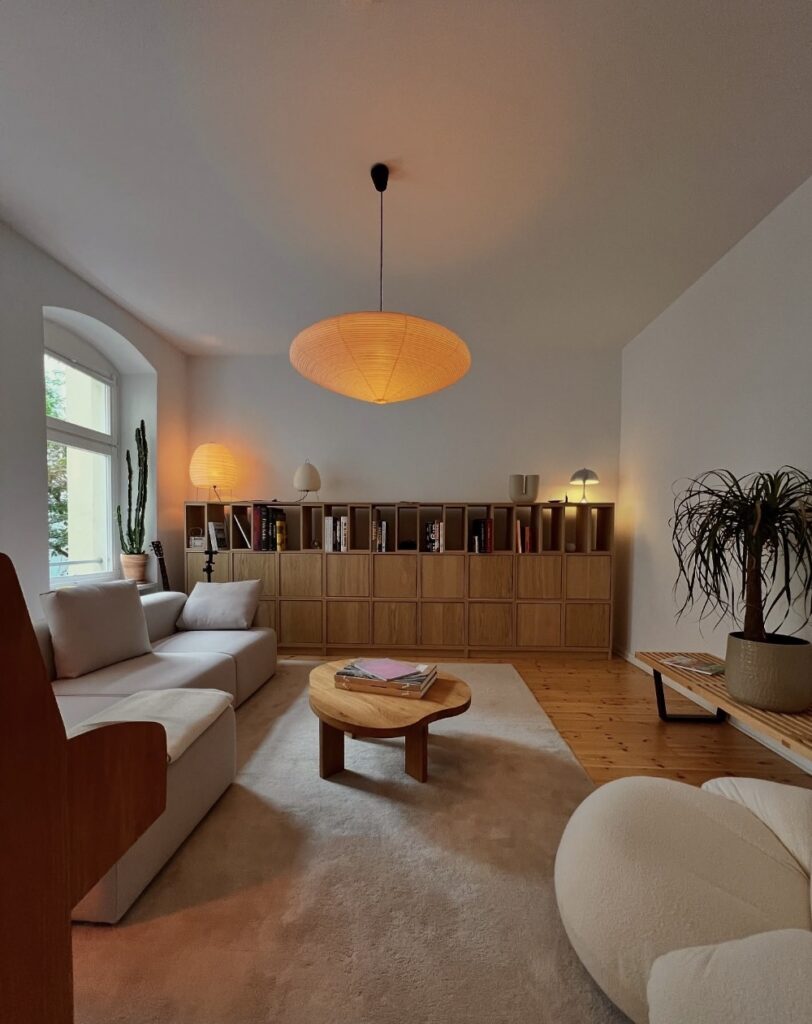
Start with one long cabinet against the main wall, preferably with closed sections along the bottom. Keep the lower boxes for chargers, spare blankets, remotes, board games, and all the things that make a room look busy. The open cubes above can hold books, a small lamp, or one plant pot, but do not fill every square just because it is there.
Leave a few empty. That gap matters, especially in a Japanese-style room where the eye needs places to rest. I would skip too many little decor pieces on top, since dusting them becomes more effort than they are worth.
Low Wooden Platform Sofa
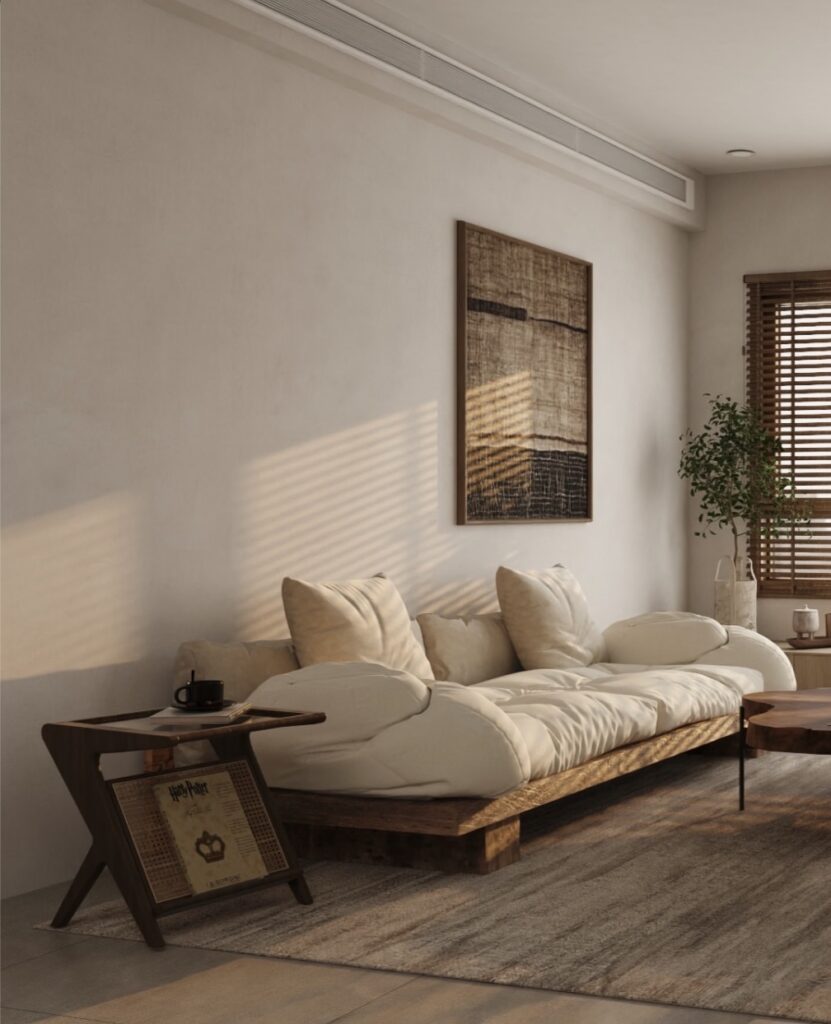
The sofa here sits on a thick wooden base that runs flush to the floor, which is the whole trick. Nothing tucks under it. That means no lost remotes, no dust bunnies you’ll pretend not to see, no baskets shoved out of sight that eventually become the reason you can’t find anything.
If you’re going this route, pair it with one small piece nearby that actually holds things — the side table with the magazine rack slot underneath is doing real work in this room. Books, a couple of magazines, done.
One caveat: platform sofas are heavy and awkward to move for cleaning. I’d want felt pads or small hidden glides on the base if your floor is tile or wood, otherwise the first rearrange will leave marks.
Low dresser station
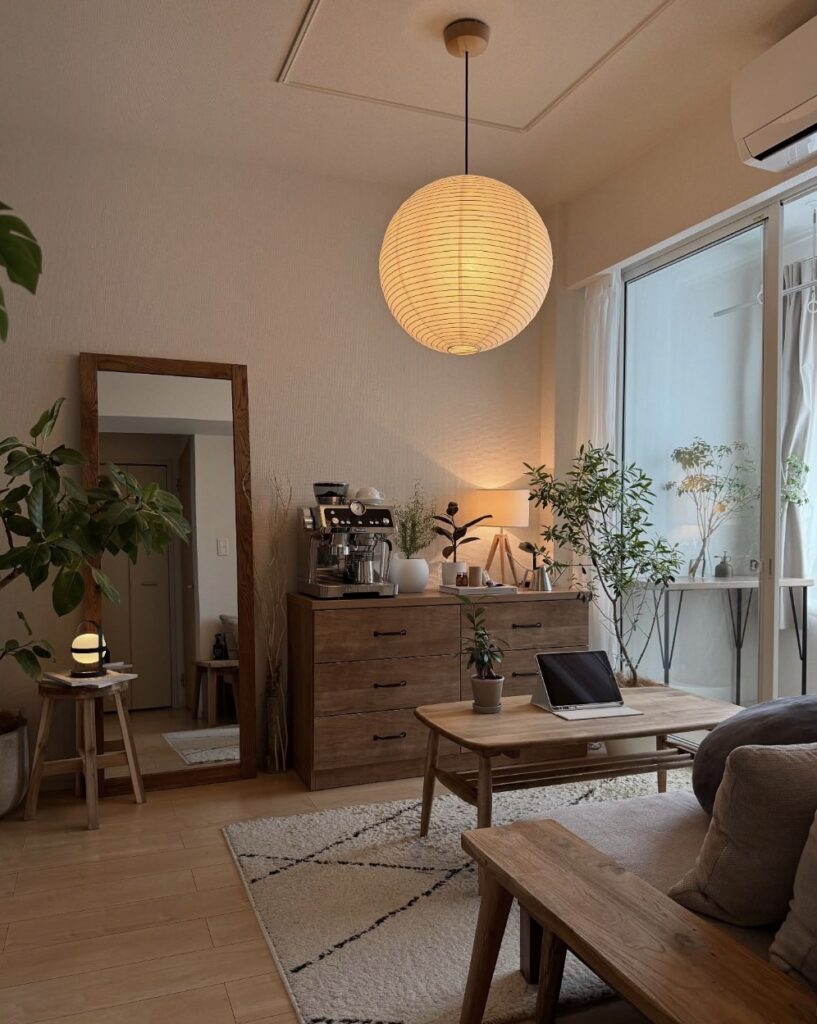
Try using one low dresser as the room’s working wall instead of scattering storage across shelves, baskets, and tiny side units that fill up faster than you expect. The top can hold the things you actually reach for every day — a coffee machine, tray, lamp, and one or two plants — while the drawers take care of cables, papers, remotes, and all the bits that usually end up on the table.
That part matters.
With the mirror leaning right beside it, the whole setup feels lighter and the dresser does not read as a heavy block sitting against the wall. Keep the table center fairly clear, like here, so the storage wall does the hard work and the middle of the room stays usable. I would skip overdecorating the dresser top; once small objects spread out, this idea stops working fast.
Mix Drawers With Open Cubbies
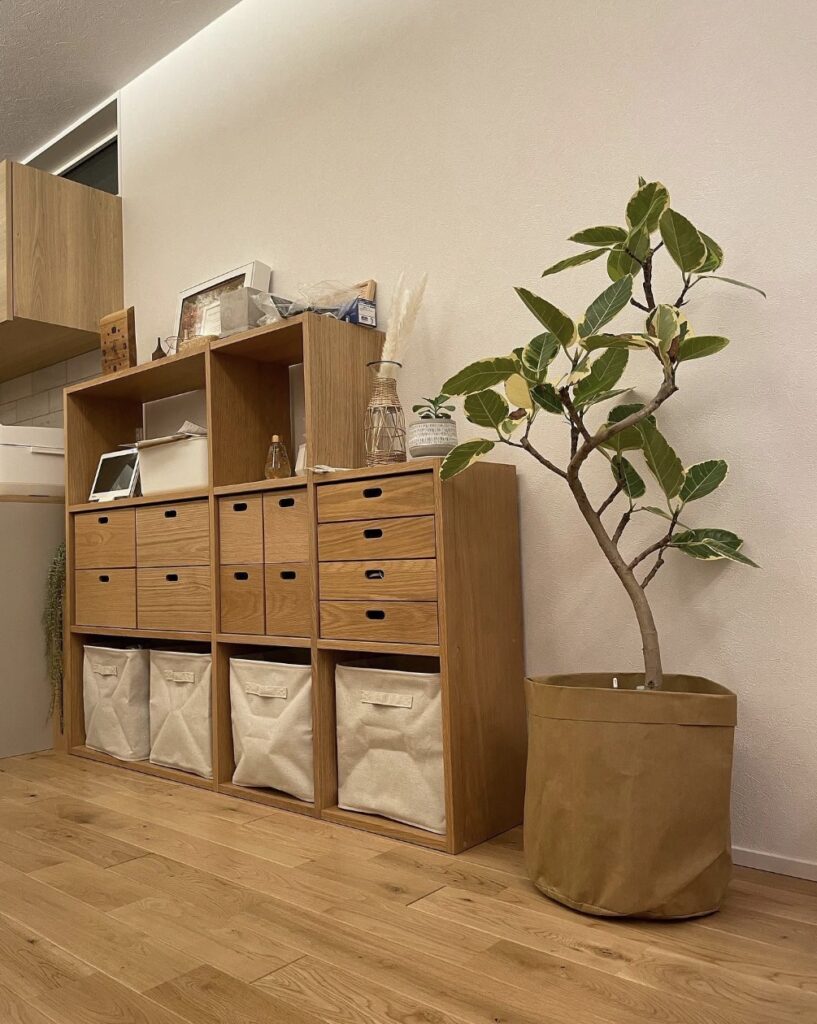
The bottom row of open cubbies doing the heavy lifting here — that’s where the fabric bins slide in, the kind with handles that let you pull the whole thing out without digging. Above that, small wooden drawer inserts stack inside the cube openings, which keeps smaller items out of sight without needing a separate piece of furniture. The whole unit reads tidy because nothing is fully exposed.
If your living room is also handling paperwork or a tablet, the top surface can absorb that without it looking like a desk spilled over. One thing worth knowing: the drawer inserts are usually sold separately from the cube shelf itself, so budget for both.
Use Open Shelving
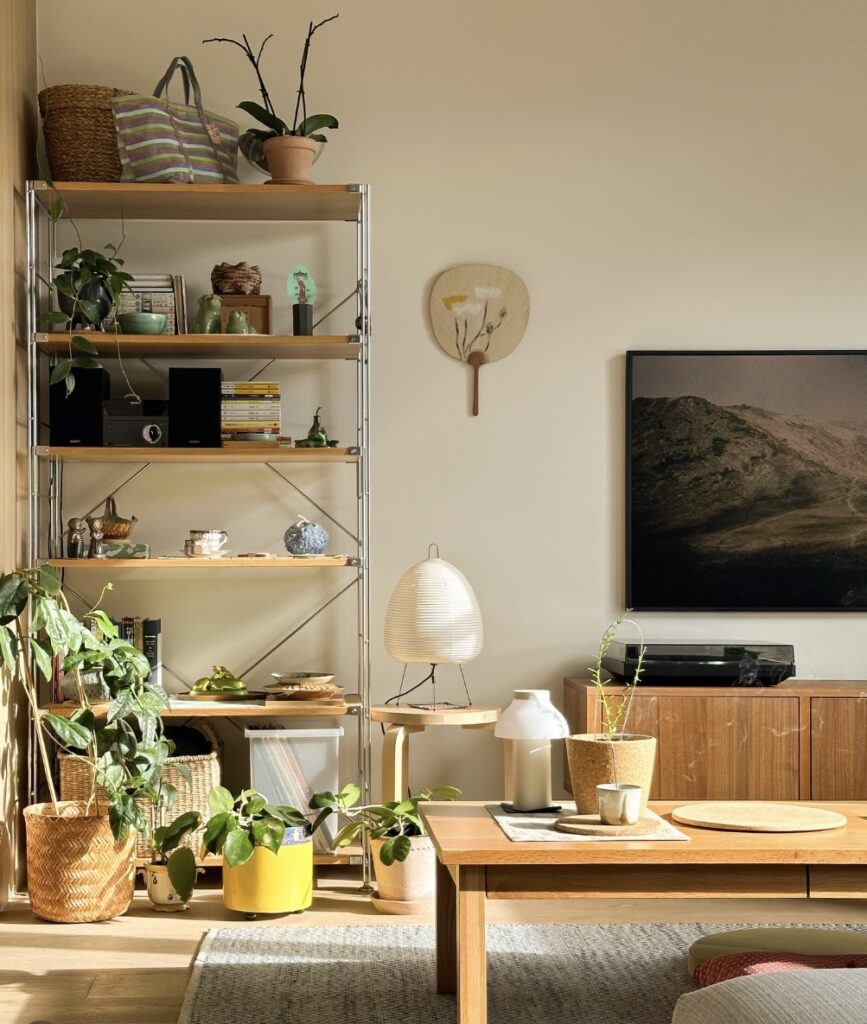
On a tall metal rack with wooden shelves, keep only the things that can sit in public without making you nervous. Put the loose items in woven baskets or a striped tote on the top shelf, then give books, speakers, and small bowls their own line instead of pushing everything together. Empty space counts.
This works well in a Japanese-style living room because the storage is visible, so you start choosing fewer things by habit. A plant can soften the rack, but keep trailing leaves away from records, lamps, or anything you reach for daily. I would skip plastic bins here; they show every cable and wrapper, which makes the whole shelf look busier than it is.
Open Cube Shelving With Mixed Doors
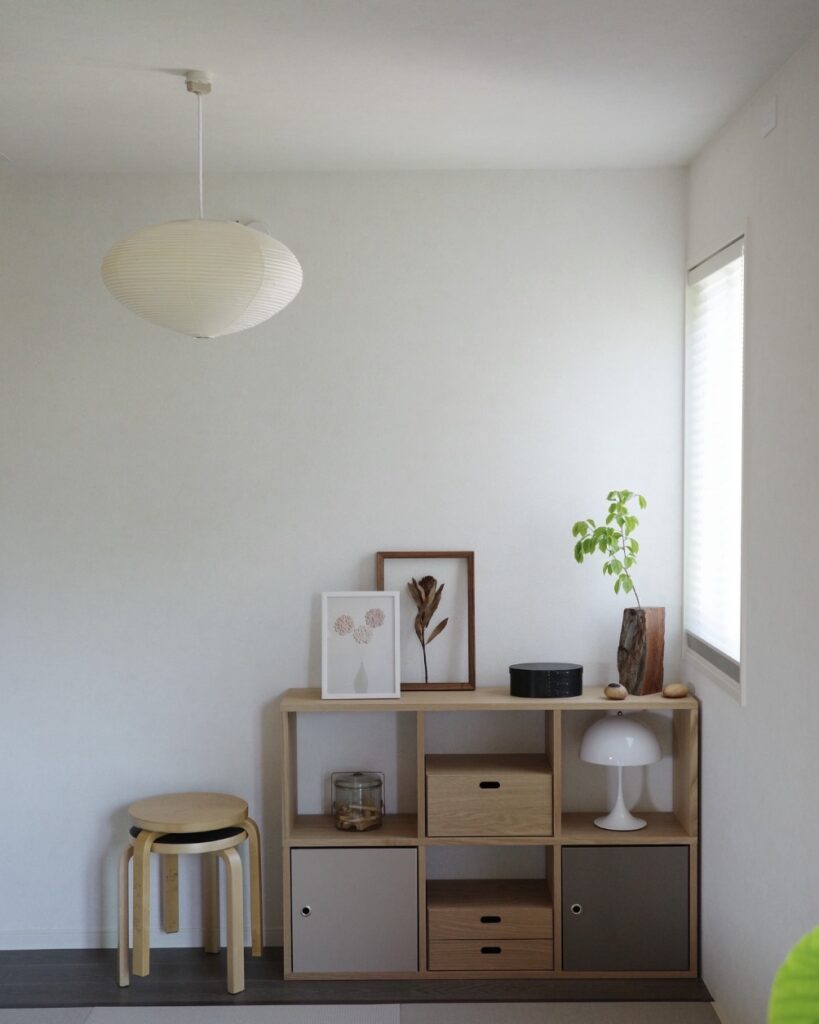
The unit against the wall does the heavy lifting here. Six cubes, some with doors, some with drawers, some left open. That mix is the whole trick. Open cubes hold the things you want to see — a glass jar, framed prints leaned against the back, a sprig of green in a wood vase. Closed cubes swallow the cables, remotes, chargers, the stuff that ruins a room the second you look at it.
Pick a low unit, not tall. Sight lines stay clean and the top becomes a second surface for a lamp or a small object grouping. I’d skip matching every door in the same finish though. The grey and pale wood mix here is what keeps it from looking flat-packed.
Keep one low line
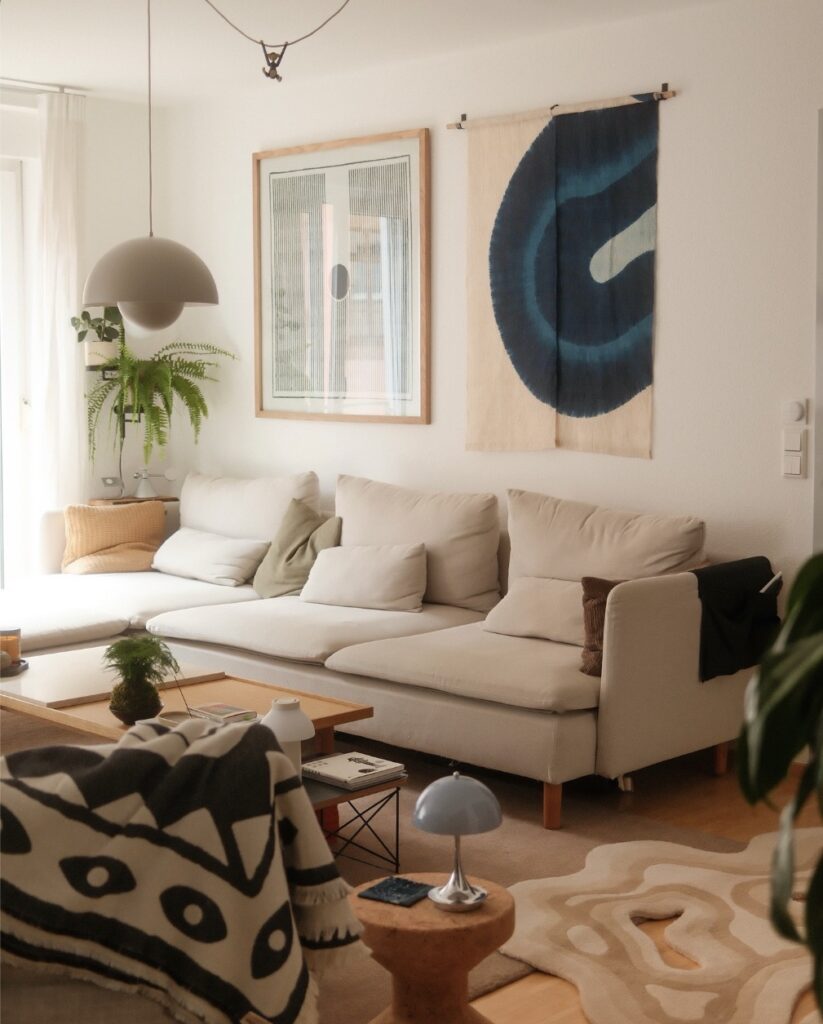
Start with the sofa. A long, low piece like this keeps the wall readable, which matters if you want a Japanese living room to feel ordered without filling it with storage furniture. Leave the top of the back cushions mostly clear, use only a few pillows, and keep them close in color so the whole thing reads as one block instead of five separate spots to fix.
Then let the wall do the work: one framed print and one textile hanging, both with breathing room between them, are enough to anchor the seating area while keeping visual clutter down, especially when the floor already has a rug pattern and the coffee table is holding books and small objects.
I’d skip any extra side tables here. The small stump table and one low coffee table already cover the basics.
Cabinet Doors Hide the Chaos
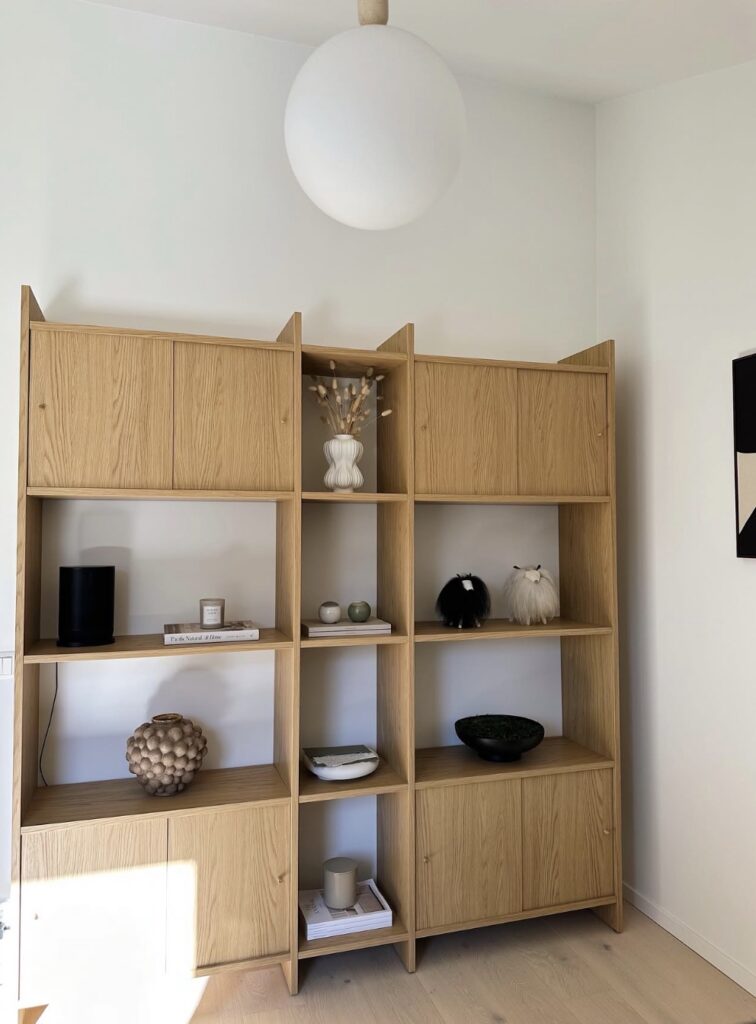
About half the compartments here are closed-door cabinets, and that’s doing a lot of work. The open shelves hold maybe eight or nine objects total — a ribbed vase, a speaker, two small figurines, a bowl. Sparse enough that nothing looks crowded.
The closed sections below and above are where you’d realistically put everything else: remotes, chargers, the stuff that doesn’t have a good answer. If you’re working with a modular shelving system, prioritize getting at least one or two door units rather than going all-open. All-open shelving sounds good until you’re looking at a stack of books and a router.
The mix is what makes this feel considered rather than accidental.
Storage Below Display Above
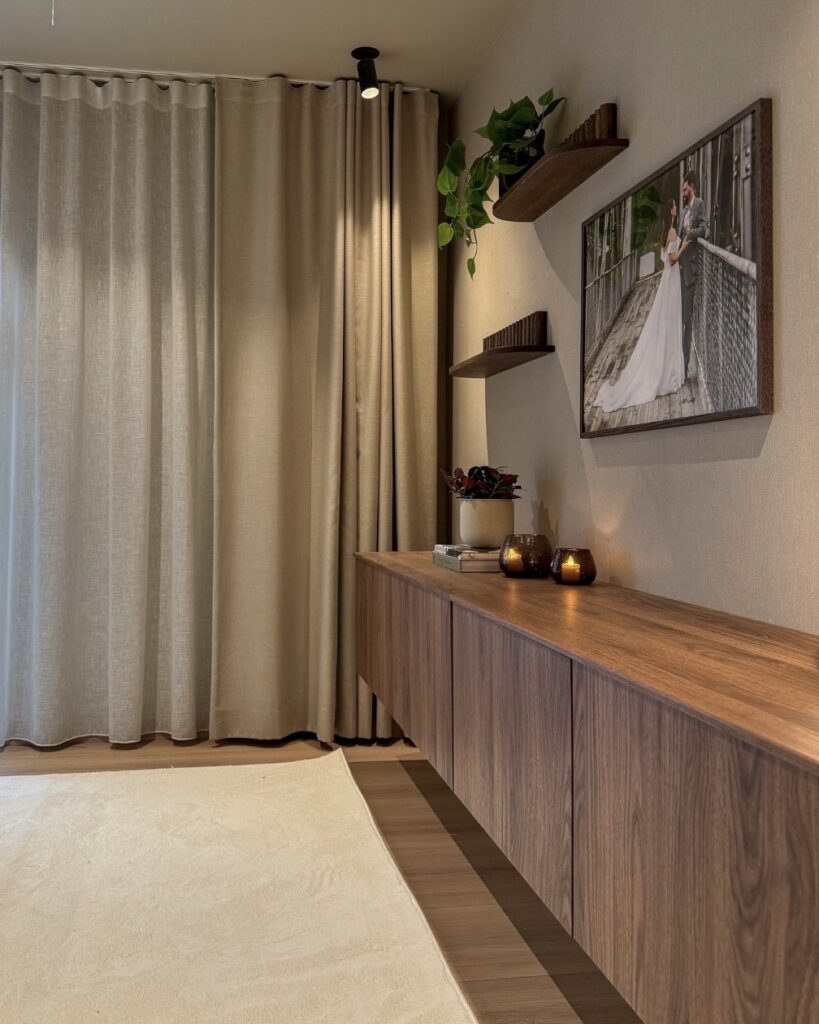
Instead of letting books, remotes, chargers, and small decor spread across the room, push most of it into one long closed cabinet like this. The top can stay almost empty, with only a plant, a framed photo, or two candle holders placed in a line so the eye has somewhere to rest. Leave gaps.
The two slim wall shelves work because they hold very little; treat them as display ledges, not backup storage for random souvenirs. If you have open shelves already, use small boxes inside the cabinet for cables and papers, then rotate only a few pieces out each month. I would skip real candles on bare wood unless there is a tray under them.
Cane Sideboard as Anchor
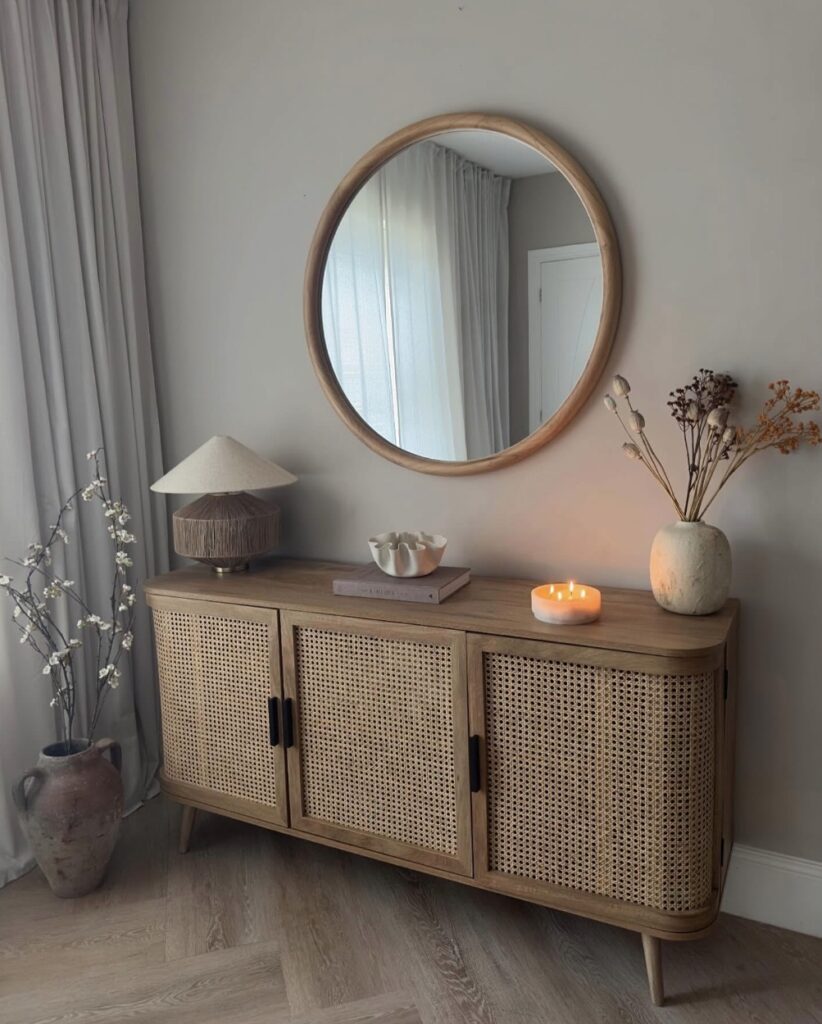
A cane-fronted sideboard like this one does most of the organizing work for you. The three closed compartments hide everything you don’t want on display — chargers, remotes, coasters, that stack of takeaway menus you keep meaning to sort. What sits on top is the edited version of your life. A lamp, one book, a bowl, a candle, a stoneware vase with dried stems. That’s it.
The rule I follow: five objects on the surface, maximum. Anything more and it starts looking like a shelf at a homeware shop.
Cane doors do breathe, which matters if you’re storing linens or anything that shouldn’t sit sealed. One thing I’d flag — pale wood scratches easily, so don’t drag a heavy tray across it.
Keep the top nearly clear
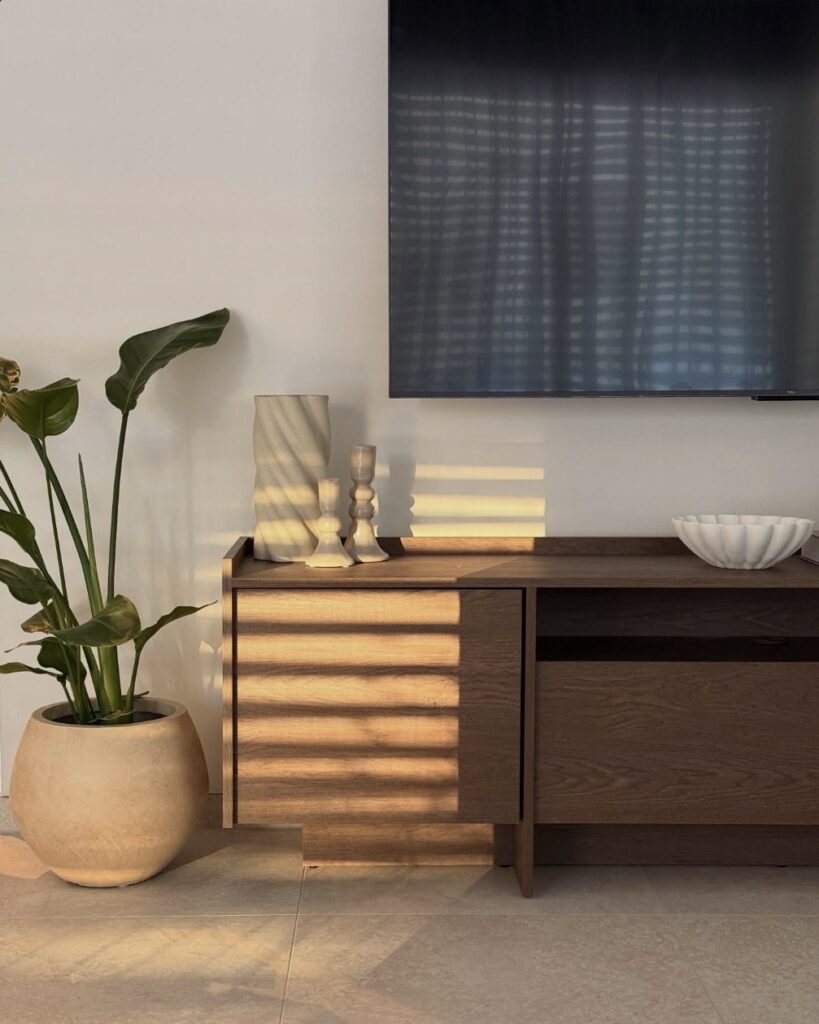
Start with a low media console that can hide the usual mess. A cabinet-and-open-shelf mix like this works well because you can tuck away remotes, chargers and extra cords behind the doors, then leave one shallow bay for the things you actually reach for. Keep the top sparse. Really sparse.
Two or three objects are enough.
The tall vase and small candlesticks show the trick: vary the height, but keep the pieces in the same quiet range so the console doesn’t turn into a display shelf, which usually starts neat and then collects receipts, keys and whatever was in your hand. The plant beside it helps soften the hard edge of the TV without taking up surface space. I’d skip a deep bowl unless you know it won’t become a catch-all by day three.
Mix Baskets Across Every Shelf Level
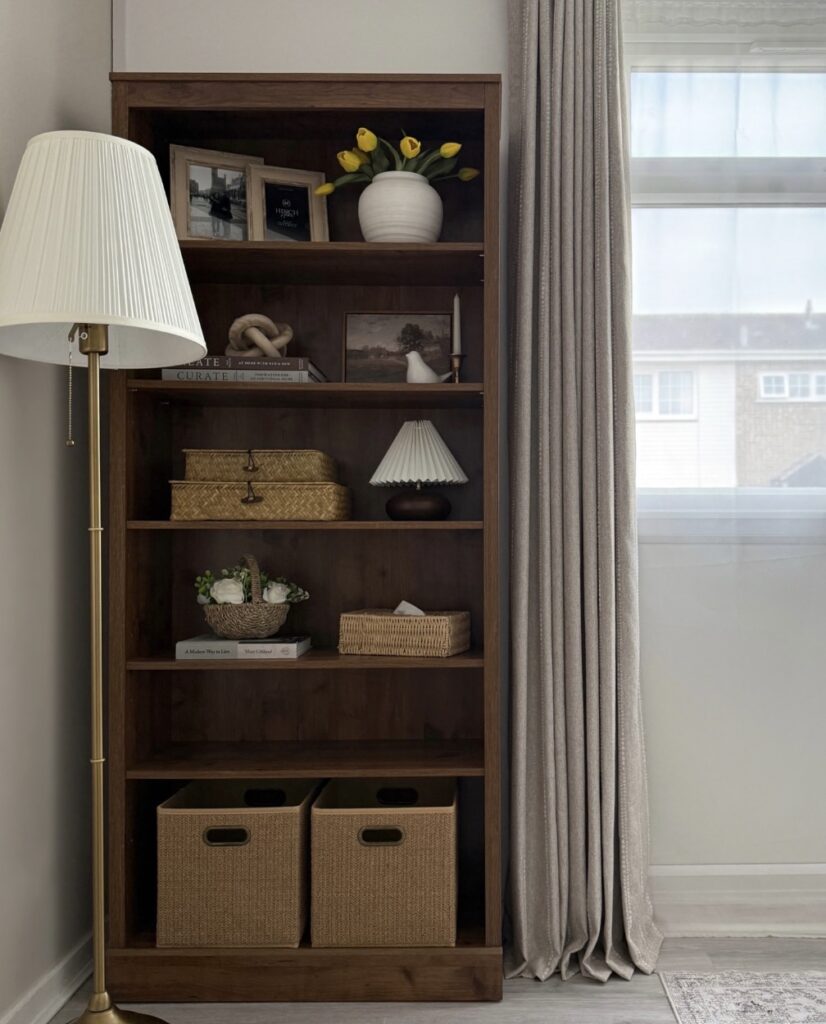
Woven storage shows up three different ways here — flat lidded baskets on a mid shelf, a smaller open one holding flowers, and two cube bins sitting on the floor of the unit. That range of sizes and shapes is what keeps it from looking like a storage aisle at a home goods store. For a Japanese-influenced room, natural fiber baskets work well because they don’t demand attention.
Stack a book or two under the open basket if the shelf feels too sparse. The floor-level cubes are doing real work hiding whatever doesn’t need to be seen. I’d probably skip the lidded basket if I already had the cubes — two closed storage options on the same unit starts to feel repetitive.
One open, one closed is enough.
Keep Storage Low
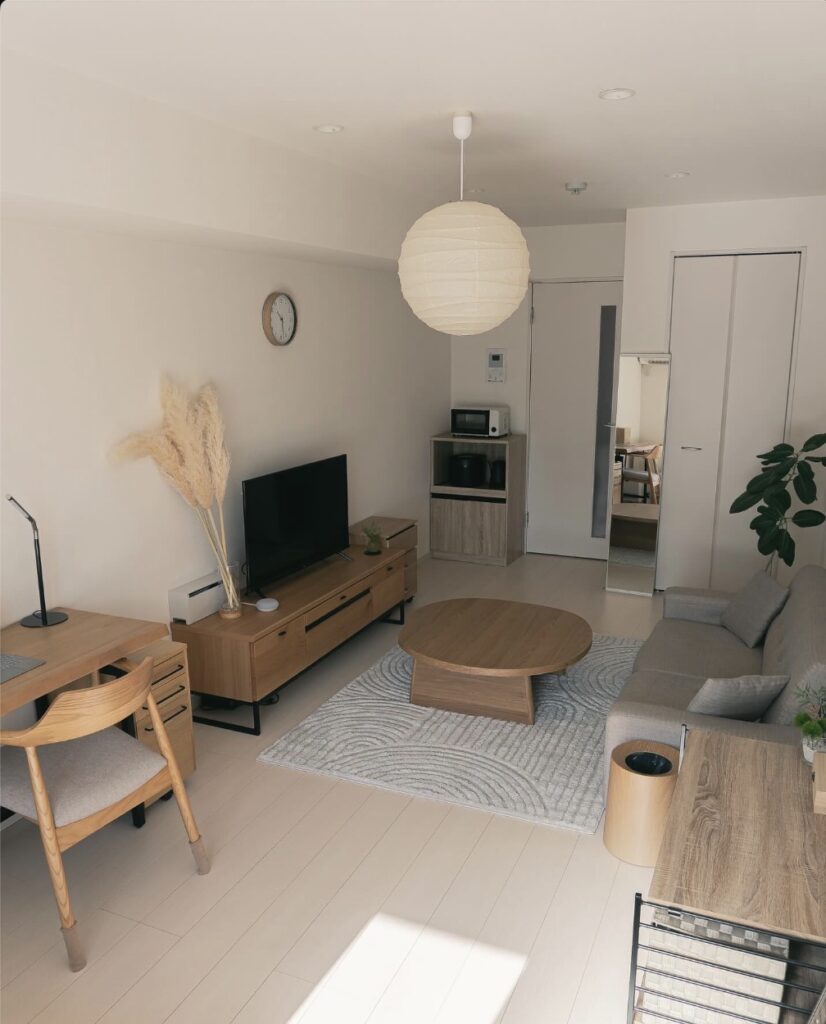
Keep the storage sitting low. A TV bench with drawers is better than open shelves if you have remotes, cables, chargers, and random papers lying around. When the TV console, coffee table, and desk all stay around the same wood tone, the room looks less chopped up even if you have work, dining, and lounging squeezed into one area.
Hide the microwave or printer in a narrow cabinet if your living room also has to borrow kitchen duties. One tray is enough. Leave the top of the console mostly clear, except for one small plant or dish, or it starts looking like a drop zone again.
Curtain the Whole Wall
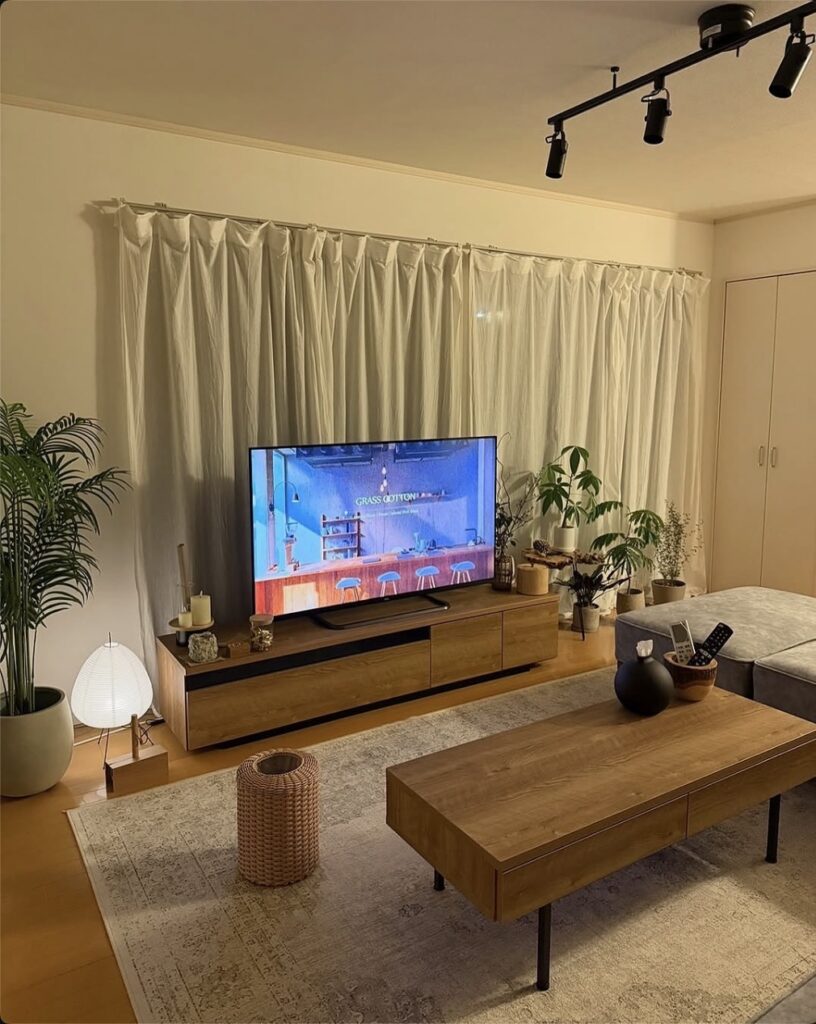
Running a sheer curtain across the entire back wall behind the TV console is a trick worth stealing, even if you only have one window in that stretch. It hides the wall, the cables, the awkward gap where the curtain rod would normally end. Everything reads as one soft surface instead of a patchwork.
Use a ceiling-mounted track rather than a wall bracket so the fabric falls from the top. Linen or cotton gauze works. Skip blackout here — you want light to pass through.
One thing I’d change: the track stops short on the right side, which breaks the illusion a bit. Take it wall to wall if you can. Costs maybe an extra meter of fabric and it’s the difference between looking intentional and looking like a fix.
Keep the center loose
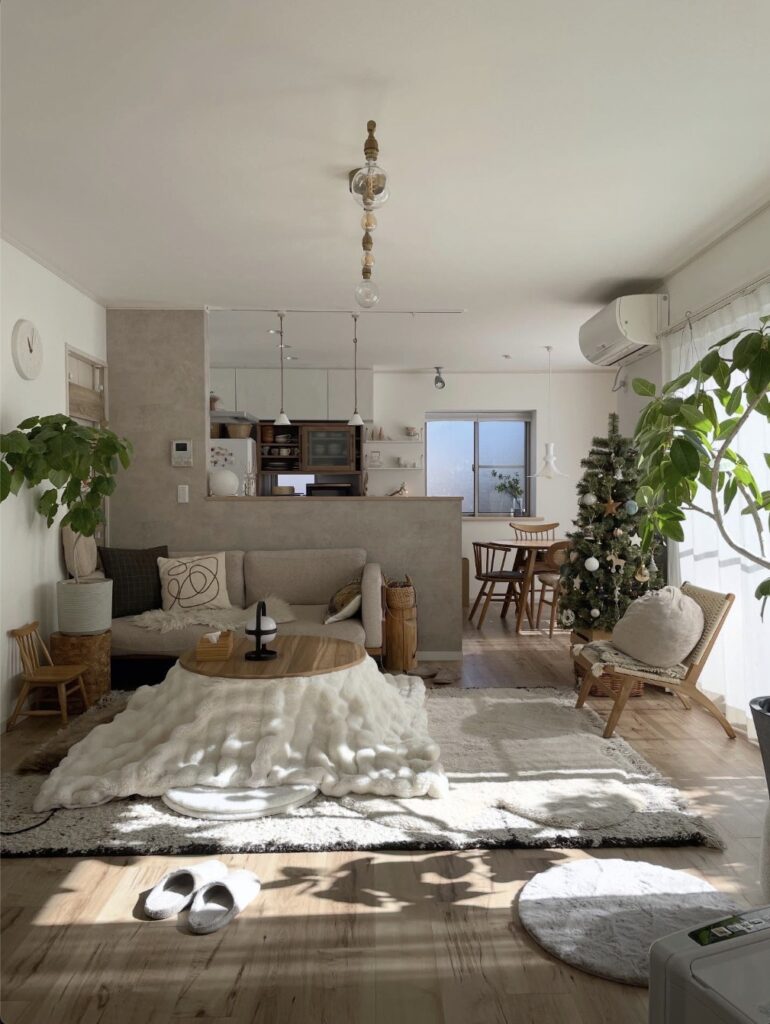
Start with the floor, not the shelves. In a room like this, the low table, rug, and sofa already take up most of the visual weight, so keeping the middle area mostly open stops the living room from feeling blocked when it shares space with the dining area behind it.
Use one large rug to mark the sitting zone, then keep storage pushed to the edges: a basket by the sofa for throws, a small side stool for overflow, and nothing bulky between the coffee table and windows. That part matters.
The plants help too, because they fill the corners without adding shut storage that can make a compact room feel boxed in. I’d skip extra side tables here. They usually become drop spots for random things, and the room loses that clear walking path from sofa to dining table pretty fast.
One Dark Piece Does the Work
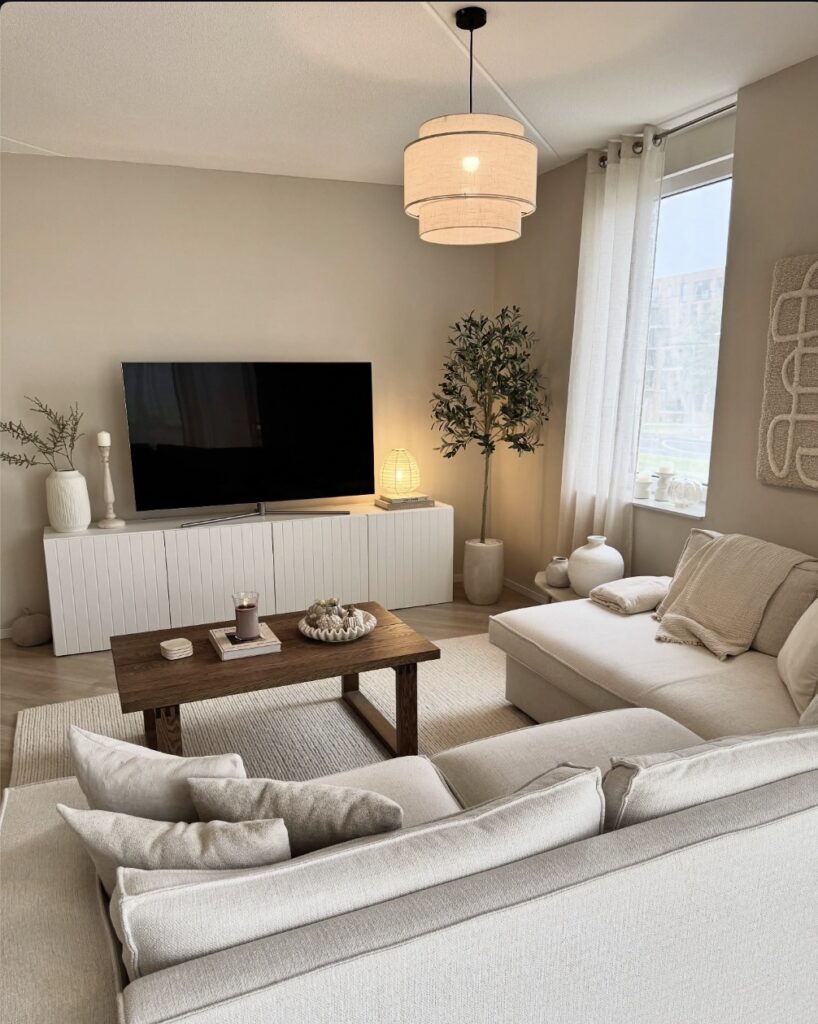
That coffee table is pulling a lot of weight here. Everything else in the room — the sofa, the rug, the media unit — sits in the same narrow range of off-white and sand, so the dark walnut table gives the eye somewhere to land. In Japanese interiors, this is fairly deliberate: one grounded material, everything else held back.
If you’re working with a mostly neutral room, you don’t need to redecorate — just swap your existing coffee table for something in a deeper wood tone. The trestle base on this one keeps it from feeling too heavy for the space. A solid block leg would probably do the same job, though I’d avoid anything with a glass top, which tends to disappear and loses the whole point.
Low Table Storage
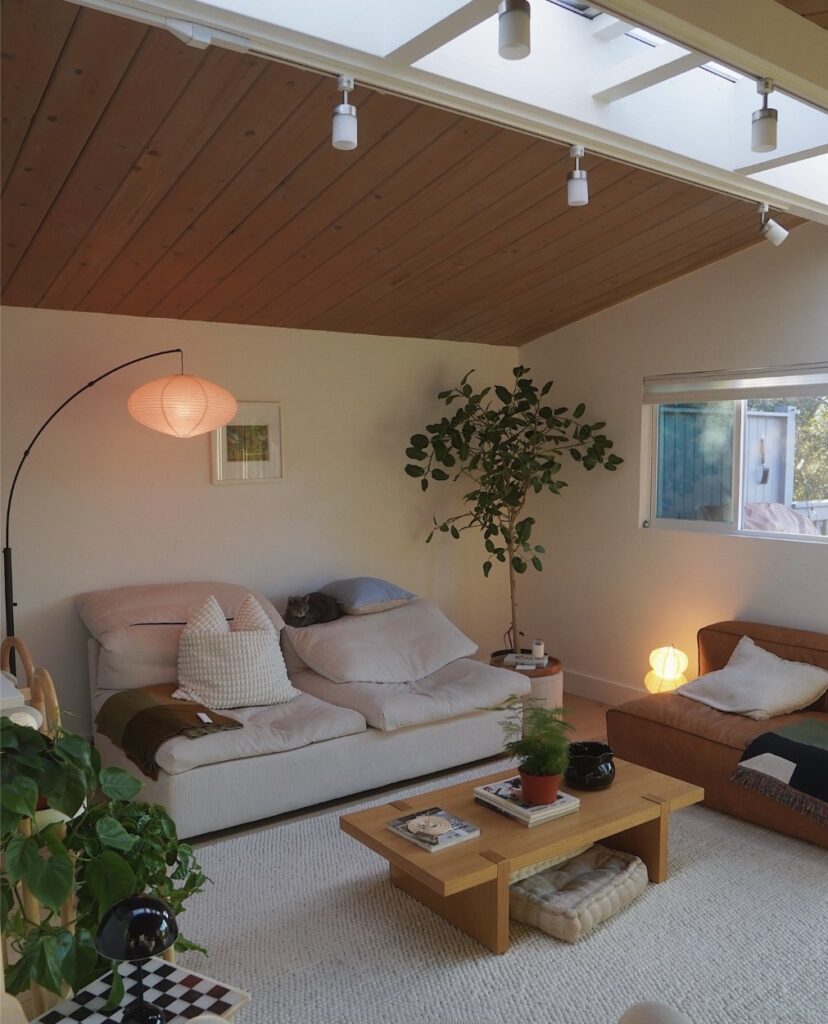
Under the coffee table, that flat lower shelf is doing more work than it first shows. Use it for one floor cushion, a tray, or the books you are actually reading, not the whole stack from last year. Keep it low.
A Japanese-style living room feels easier to manage when the table stays close to the floor and the mess has one fixed landing spot. The plant on top also helps, because it stops the table from becoming a dumping ground for keys, cables, and receipts. I would skip tall baskets here, since they break the line of the table and make the room feel more crowded than it needs to.
Built-in Shelving as Display Storage
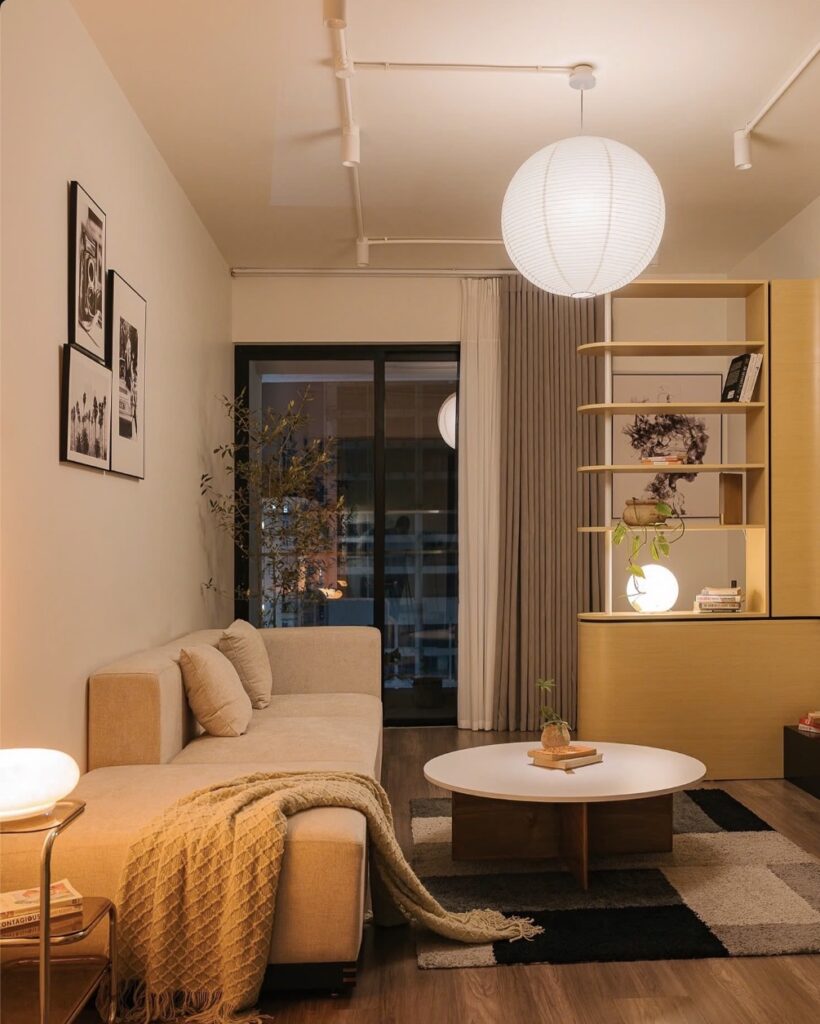
The mustard-toned unit against the back wall is doing two jobs at once. Storage on the bottom, open shelves up top for a framed print, a trailing plant, a stack of books, a globe lamp. That’s the move worth copying — a closed base to hide the clutter you don’t want on show, open shelves above for the three or four things you actually want to look at.
Keep the shelves half empty. Japanese-style display leans on negative space, so if you fill every gap it stops working. I’d skip the internal shelf lighting though. It photographs beautifully but in daily use it’s another switch, another bulb, and the paper pendant above already handles the warm glow.
Keep storage floating
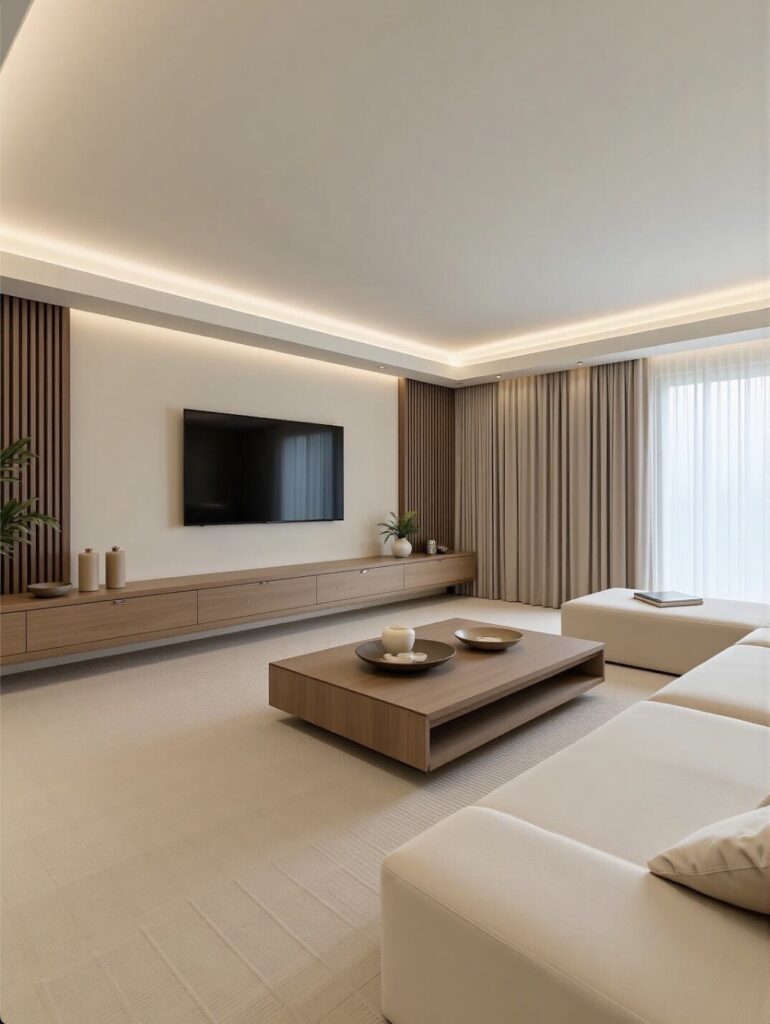
Start with the long floating cabinet. It keeps everything off the floor, which matters more than people think when you want a Japanese living room to stay easy to reset at the end of the day. Dust has fewer places to catch, wires can be routed straight behind the wall-mounted TV, and the room reads calmer because the eye isn’t stopping at table legs, baskets, and side units every few feet.
Go low. Use wide drawers instead of mixed cubbies, and be strict about what earns a spot there: remotes, chargers, manuals, maybe one tray for small daily things. The low coffee table should stay almost clear, because that empty top is doing part of the organizing job.
I’d skip extra decor on the media unit. Two or three pieces are enough.
Run the cord along the ceiling
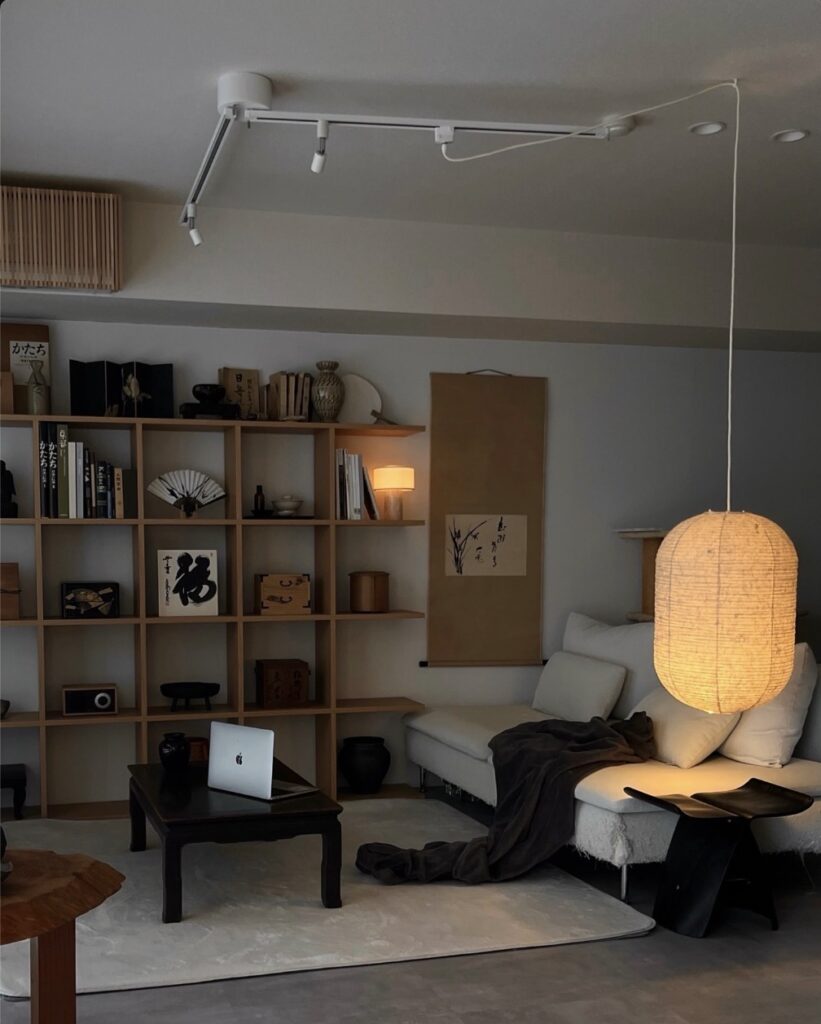
That paper lantern is hanging from a track light rail rather than a dedicated ceiling rose, which means no electrician, no drilling, just a cord draped and clipped. The cord runs along the white rail and drops straight down near the sofa — it actually looks intentional because the rail is already a visible feature. If your ceiling has a track system, this is worth trying before you go the hardwired route.
Get a lantern shade with a pendant kit, hook it onto the track adapter, and position it wherever the seating is. The black low table and the sofa make the zone obvious — light goes where people are. Paper shades like this one diffuse the bulb completely, so the whole thing glows rather than blinds.
Go for a warm bulb, nothing over 2700K.
Keep Storage Low
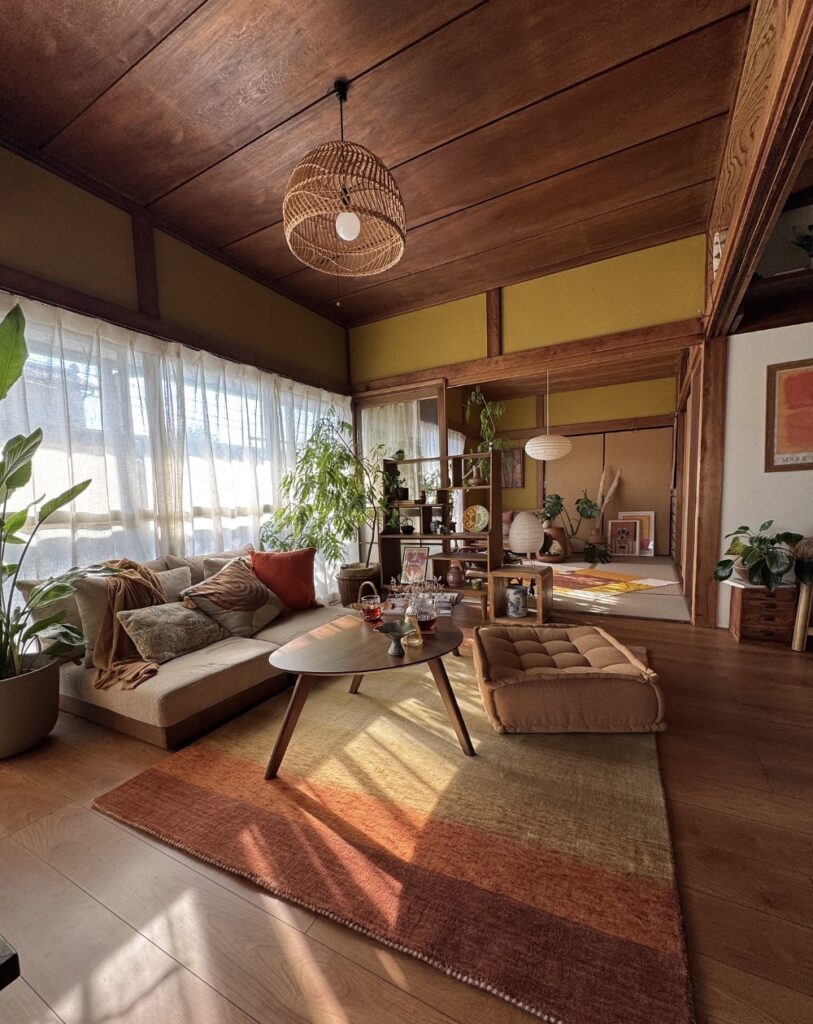
With a floor sofa and low coffee table, tall storage would start shouting from the walls, so keep the main pieces close to the floor. Use one open shelf like the divider here for books, small bowls, plants, and one or two framed pieces, but leave some squares empty so it does not become a dumping area. Empty space matters.
The table can hold tea things during the day, then everything should go back to a tray or shelf before night, otherwise the room starts feeling like a waiting room for chores. I’d skip too many loose cushions unless you actually sit on the floor often. They look good, but they migrate everywhere.
Built-In Shelving Beside The TV
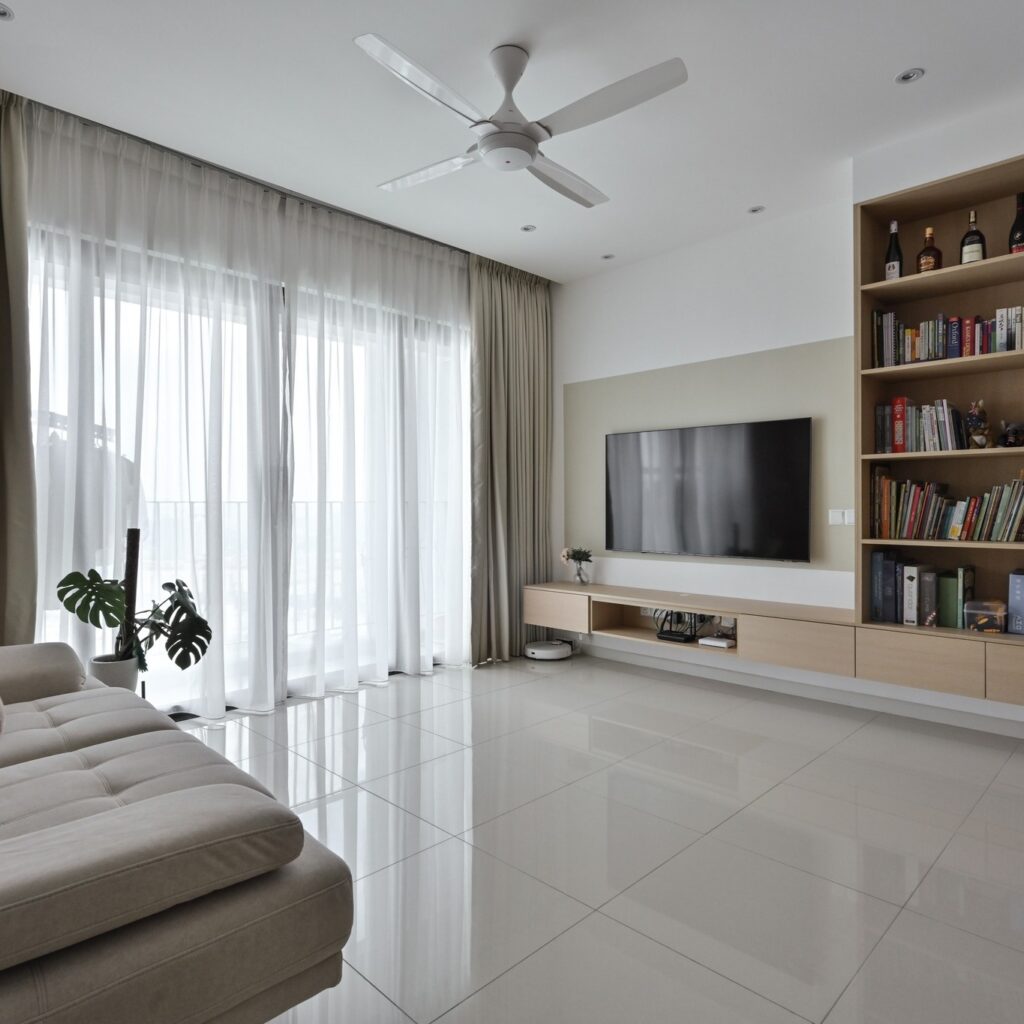
The tall bookshelf tucked against the TV wall is doing real work here. Instead of a separate bookcase eating floor space, the shelving runs floor to ceiling in the same pale wood as the media console, so books, bottles, and small objects live in one continuous zone. This is the move if your living room is also your library.
Keep the lower shelves for the heavy stuff you actually reach for, and let the top shelf hold things you rarely touch. One thing I’d change. The open shelves show every spine and cluttered box, so if you’re not the type to edit regularly, add two cabinet doors at the bottom to hide the mess.
Stair wall storage
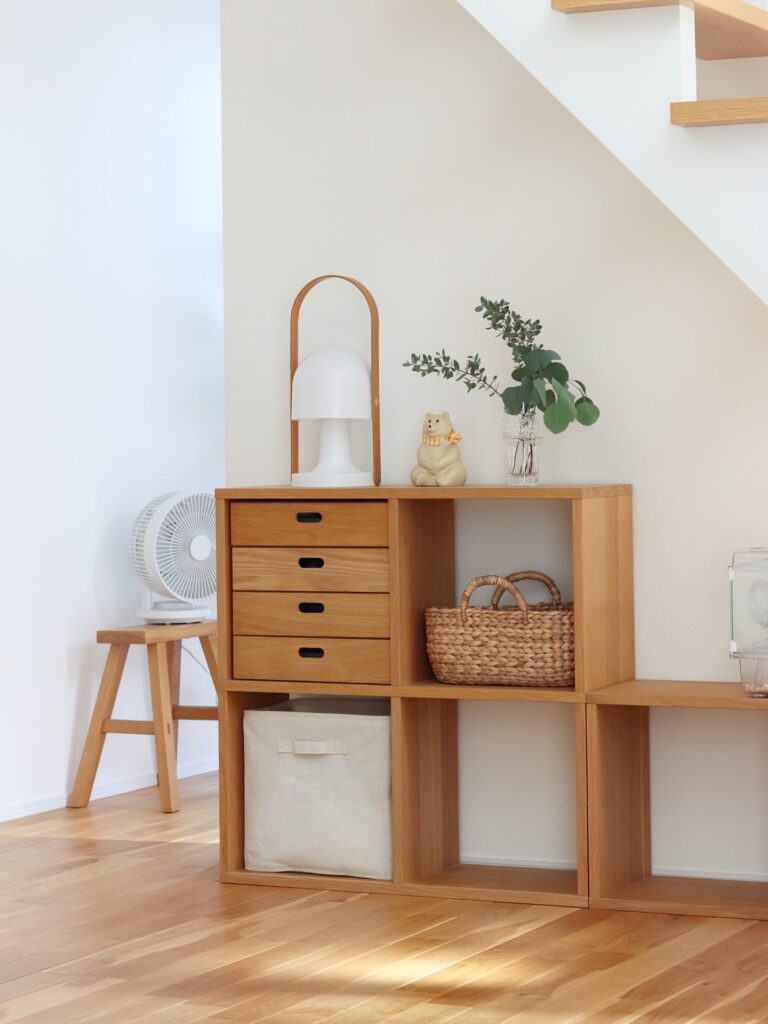
Under the stairs works well for a low storage unit because the sloped wall already tells the furniture where to stop, so the whole thing looks placed instead of squeezed in later. Use a cube shelf with one side of drawers and one side left open, then split what goes where: remotes, chargers and papers in the drawers, bulkier things like baskets or folded throws in the cubbies.
That part matters.
The mix of closed and open storage keeps the room from looking too busy, especially if your living room also catches a lot of floor-level light that makes every loose item stand out. A fabric bin in the bottom cube is useful if you want fast cleanup without staring at whatever got tossed in there. I’d skip very deep shelves here, though, because things disappear at the back and then it turns into dead space.
Warm Accents on a Neutral Base
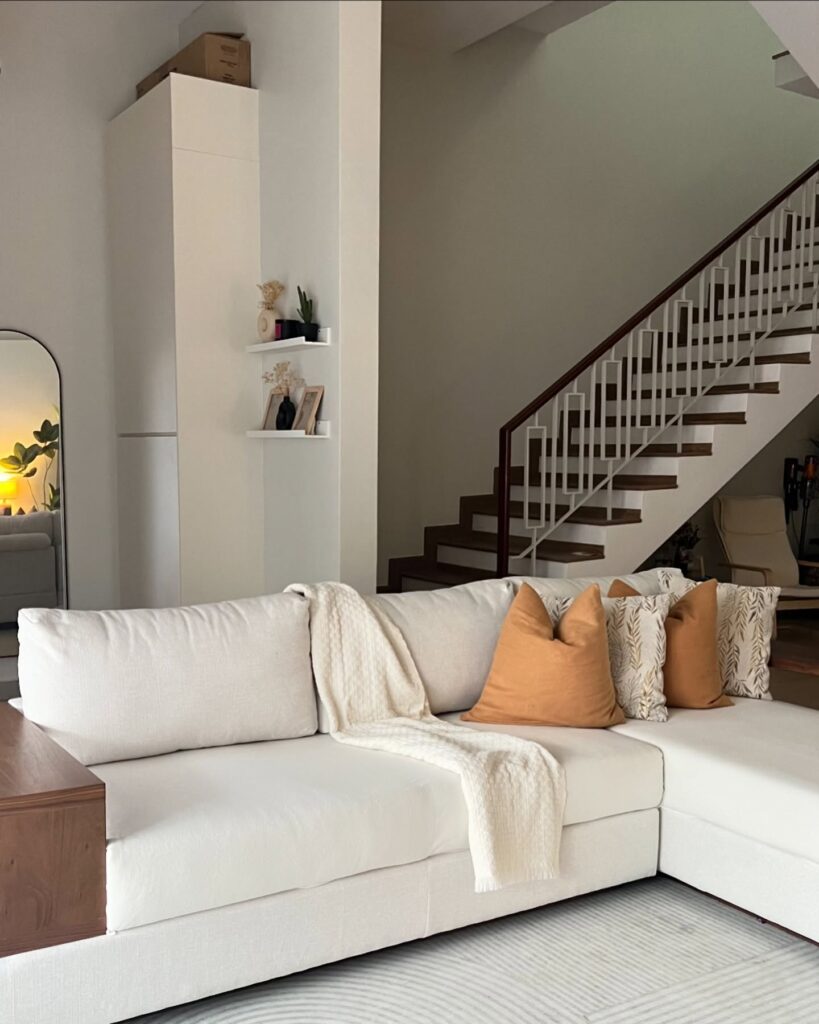
Three amber-orange pillows against a white sectional — that’s really all the color this room is doing, and it lands well. Japanese interiors tend to work this way, where one warm tone gets repeated across a few objects rather than scattered everywhere in different shades. The throw draped over the armrest is cream, not a contrasting color, so nothing competes.
If you’re starting from a white or off-white sofa, pick one earthy tone — terracotta, ochre, warm sand — and put it in two or three spots maximum. Pillow covers are the cheapest way to test this before committing. I’d probably skip the patterned pillow here and go all solid, but the botanical print is subtle enough that it mostly disappears into the group.
Use One Storage Wall
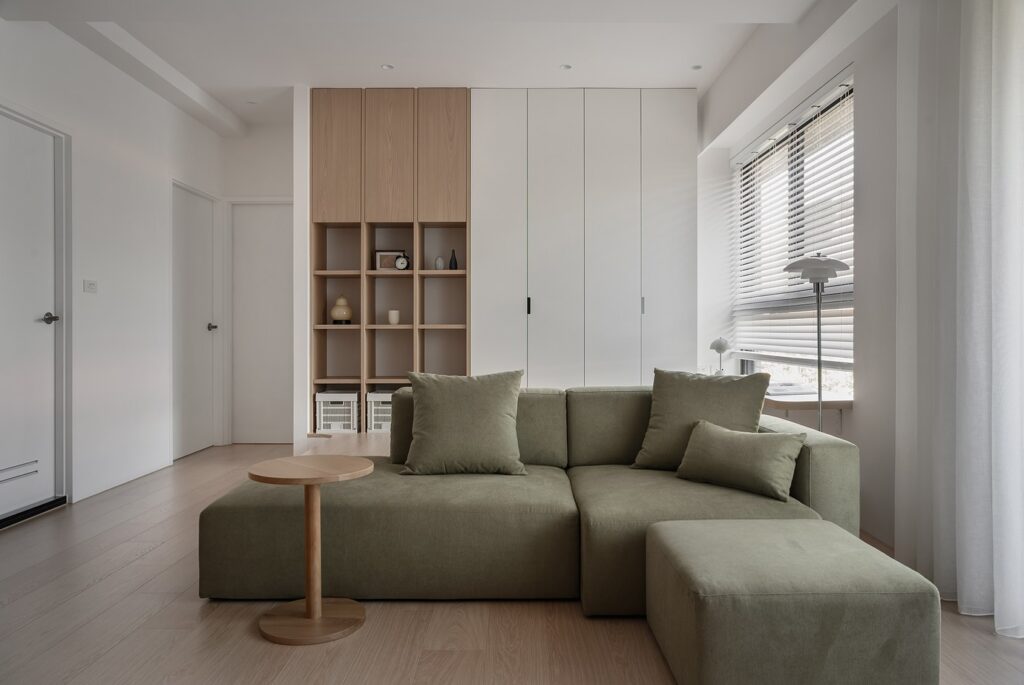
Behind the sofa is where the storage should do the heavy work, especially if your living room also has to hide chargers, papers, extra bedding, or children’s things. Use full-height flat cabinets for the mess and leave only two or three open shelf squares for objects you actually want to look at. Keep it limited.
The wood section in the middle helps break up the tall white doors, but the trick is the empty space around each piece, not filling every cubby because it exists. I’d skip tiny decor here if you dust rarely; one box, one vase, one clock is enough.
Let Sunlight Do the Work
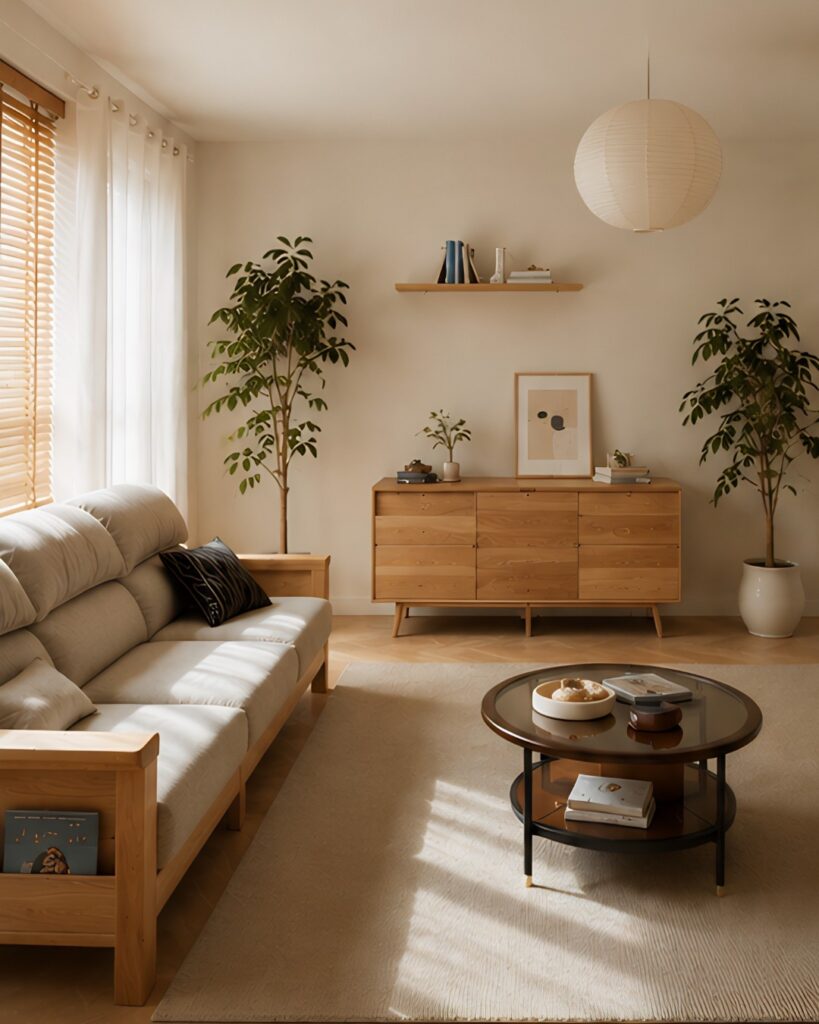
The blinds here are doing something quiet but important. They break the light into stripes across the sofa and rug, which means the room never needs a second lamp during the day. If you’re organizing a Japanese-style living room, think about what you’re letting the sun reach.
A low sideboard with a small framed print, a bowl on the coffee table, two tall plants flanking the wall. That’s it. Everything sits below eye level except the paper lantern and the plants, so light travels across the room uninterrupted.
Skip heavy curtains. Wooden slat blinds with a sheer behind them give you privacy without killing the warmth. One thing I’d change: the glass coffee table shows every crumb.
A wooden one would hide more.