
27 Japanese Bedroom Organization Ideas
This site contains affiliate links. We may earn a small commission, at no extra cost to you. Article may contain some images for illustrative purposes only .
My hairbrush lived on the nightstand for three years. Beside it: a water glass, two hair ties, a paperback I stopped reading in March, and a small archaeological layer of receipts. Then I saw a photo of a Kyoto bedroom where the entire surface held one ceramic dish and a single stem of pampas grass. Something clicked. Japanese bedroom design isn’t about owning less for the sake of it—it’s about giving every object a reason to be there, and a place to return to when it isn’t. Below, 27 ideas borrowed from tatami rooms, ryokan inns, and tiny Tokyo apartments, covering everything from floor-level beds and shoji-inspired light to hidden storage tricks that make a 90-square-foot room feel like it can breathe.
The Flat Rice Paper Pendant
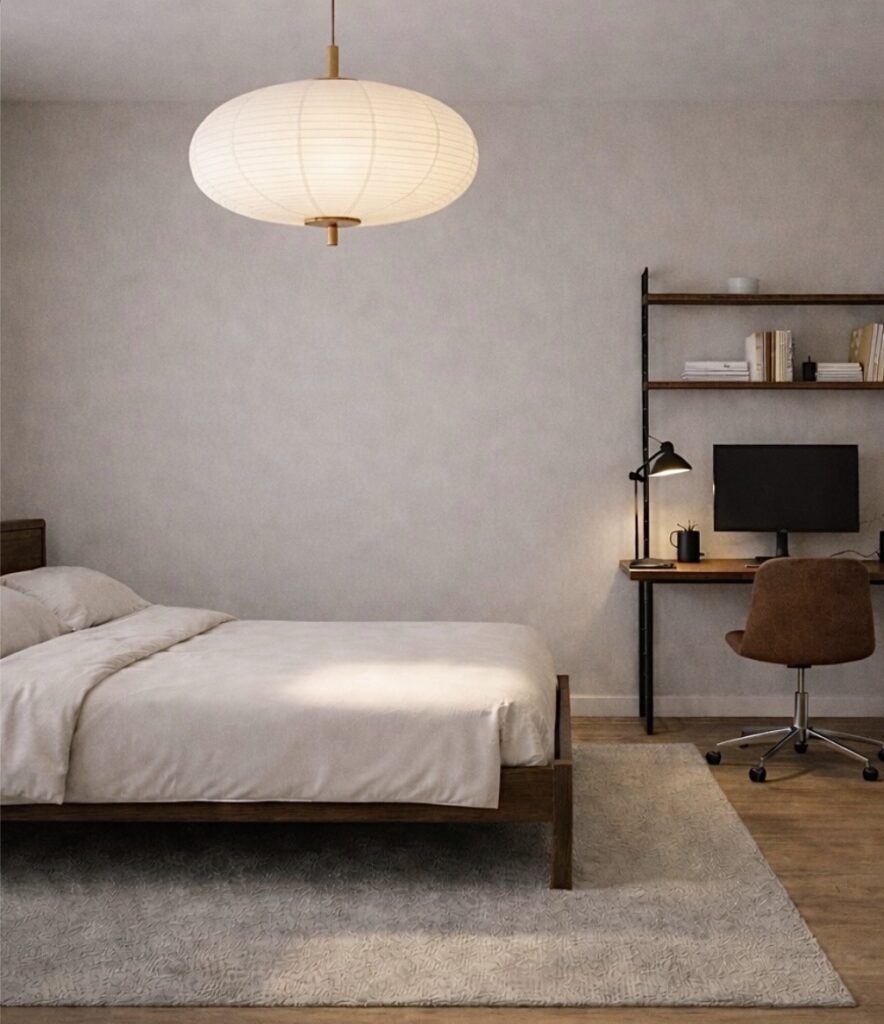
That wide, oblate lantern shade does more organizational work than it looks like it does. Because it throws light downward across a wide spread, you don’t need a bedside lamp cluttering up your nightstand — one less thing to find a home for. The shade itself is ribbed rice paper over a wire frame, which you can find flat-packed at most home stores for under thirty dollars.
Worth knowing: the brass cap detail at the bottom is what separates the nicer versions from the ones that look cheap after a month. If your ceiling is low, skip the long cord drop and wire it closer up. Suits people sharing a room with a desk setup, since one pendant can cover both zones without adding surface clutter on either side.
Use a narrow display shelf
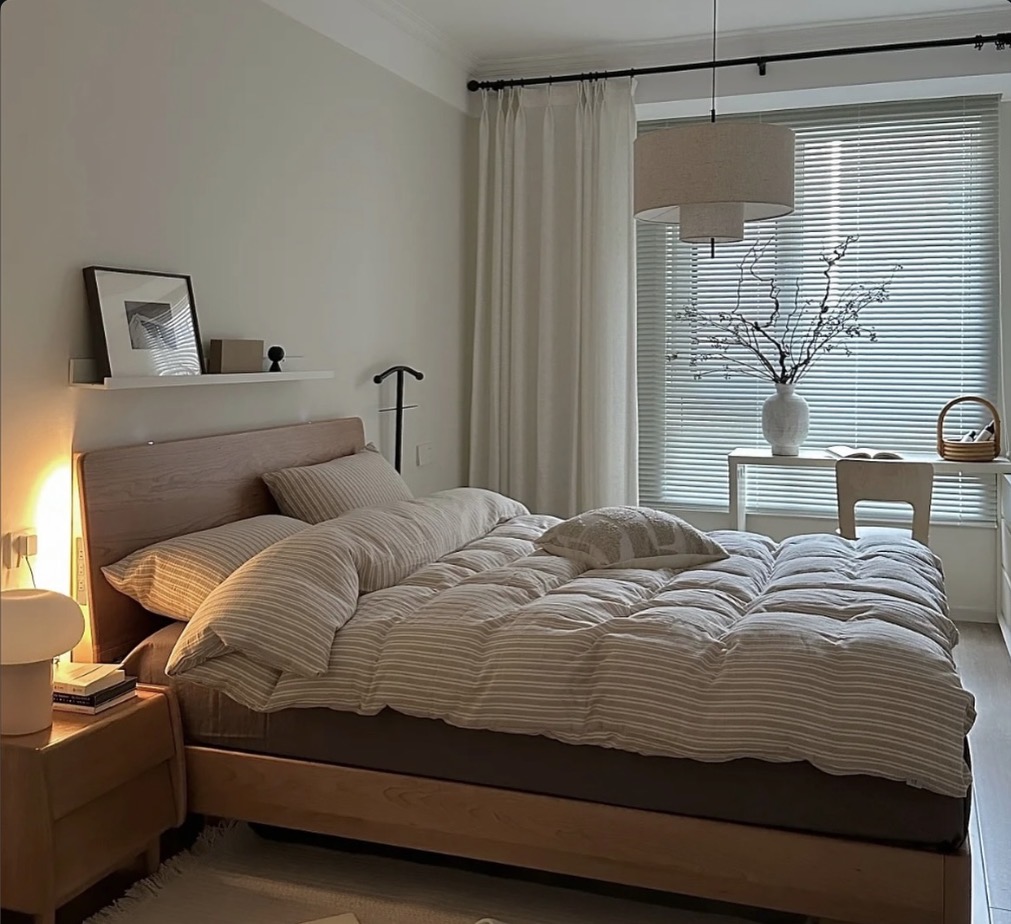
Above the headboard, a slim white shelf holds only a framed print, a small box, and one little object. That is the part to copy. Keep the ledge shallow.
If you like the Japanese habit of leaving breathing room around things, use this shelf for two or three pieces instead of turning it into a storage strip for lotions, chargers, and half-read books. The bed already has soft bulk from the quilt, so the wall can stay light without looking empty. I would skip heavy frames over the pillow area, especially if the shelf is not drilled into studs; use a light print or lean it slightly against the wall.
Ladder Shelving Along One Wall
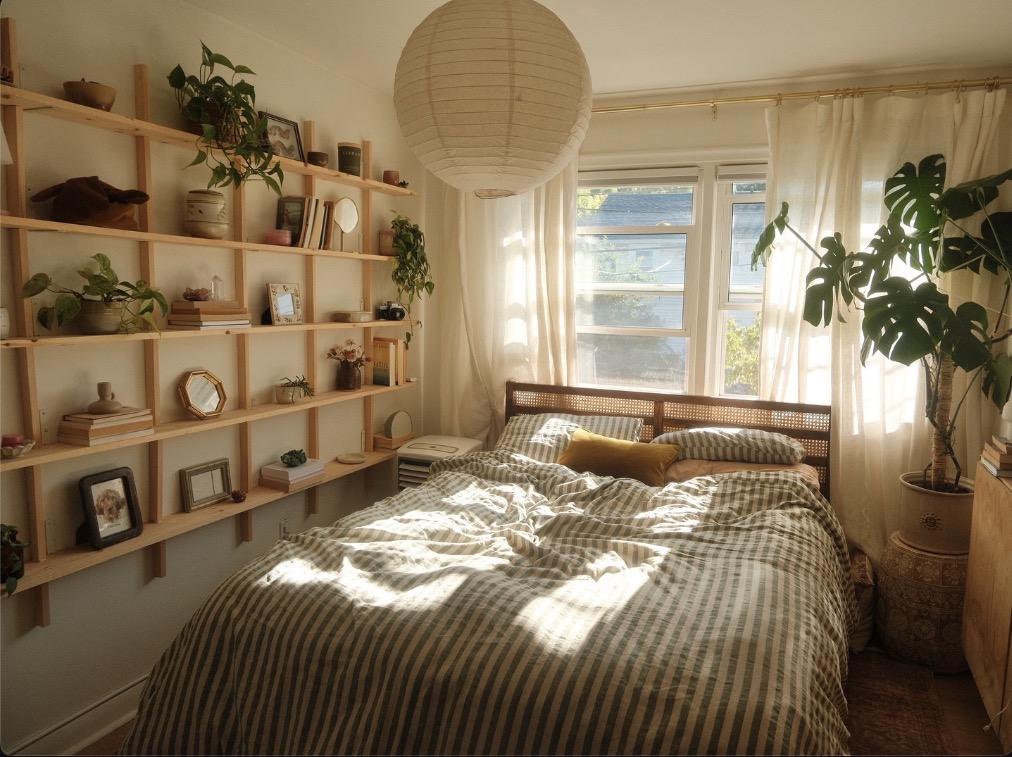
The pine ladder shelves here run almost the full length of the bed, and that’s the whole trick. Narrow depth. If you tried this with a standard 12-inch shelf, the room would feel half its size, but these look maybe 6 inches deep, just enough for books stood upright, small framed photos, a mirror, a few pothos trailing down.
Keep the loads light and varied in height so the eye moves across instead of stopping. One thing I’d change: the lowest shelf sits close to floor level, which means dust and anything you drop behind the bed. I’d start the bottom rung higher, around mattress height, and leave the floor clear. Works best in a room where you don’t have wall space for a dresser and need vertical storage that still breathes.
Use the closet height
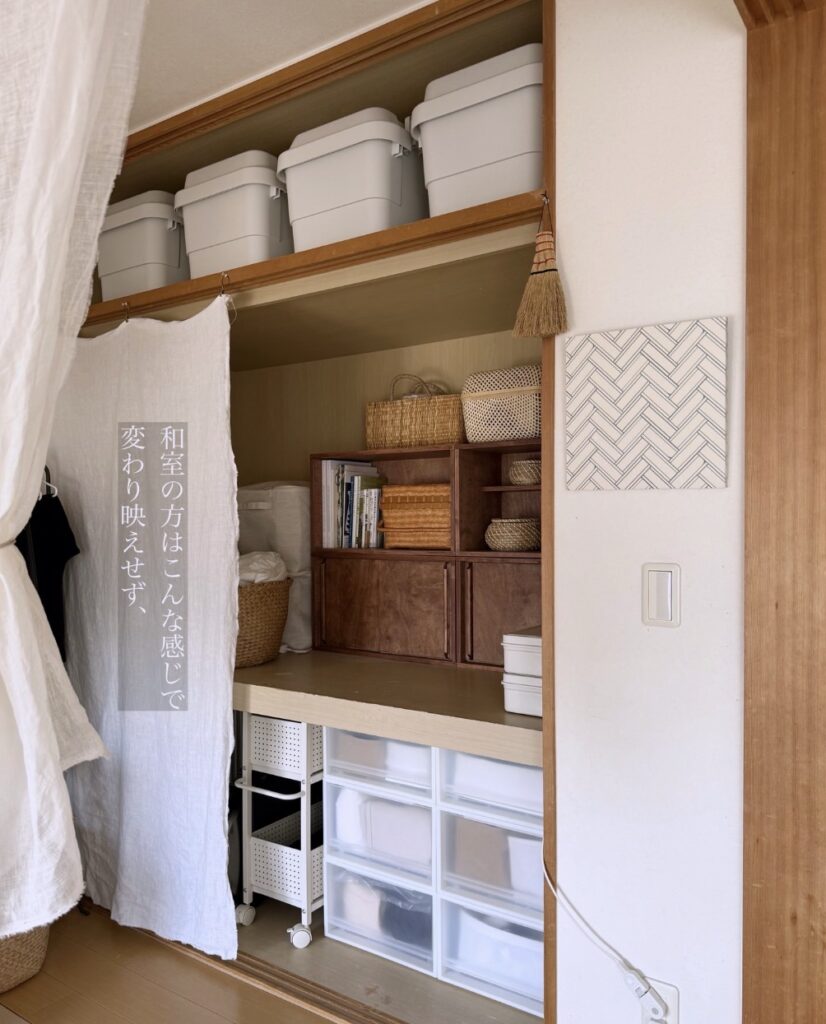
Start with the top shelf. Put matching lidded bins up there for things you only reach for now and then—guest bedding, off-season clothes, spare paper goods—because that high row stays neat when every container is the same width and opens the same way.
Then break the middle in two. A small wood cubby or tabletop cabinet works well for books, baskets, and those awkward little items that usually drift around a bedroom shelf and make it look messy fast.
Down below, go with clear drawers. You can sort socks, innerwear, sleepwear, chargers, whatever belongs in the room, and still see what’s running low without opening six boxes.
The curtain is useful too. It hides visual clutter better than closet doors that need full swing space, especially in a small room.
I’d skip flimsy bins here. Once the upper shelf is loaded, cheap ones sag.
Use a Low Bed Frame
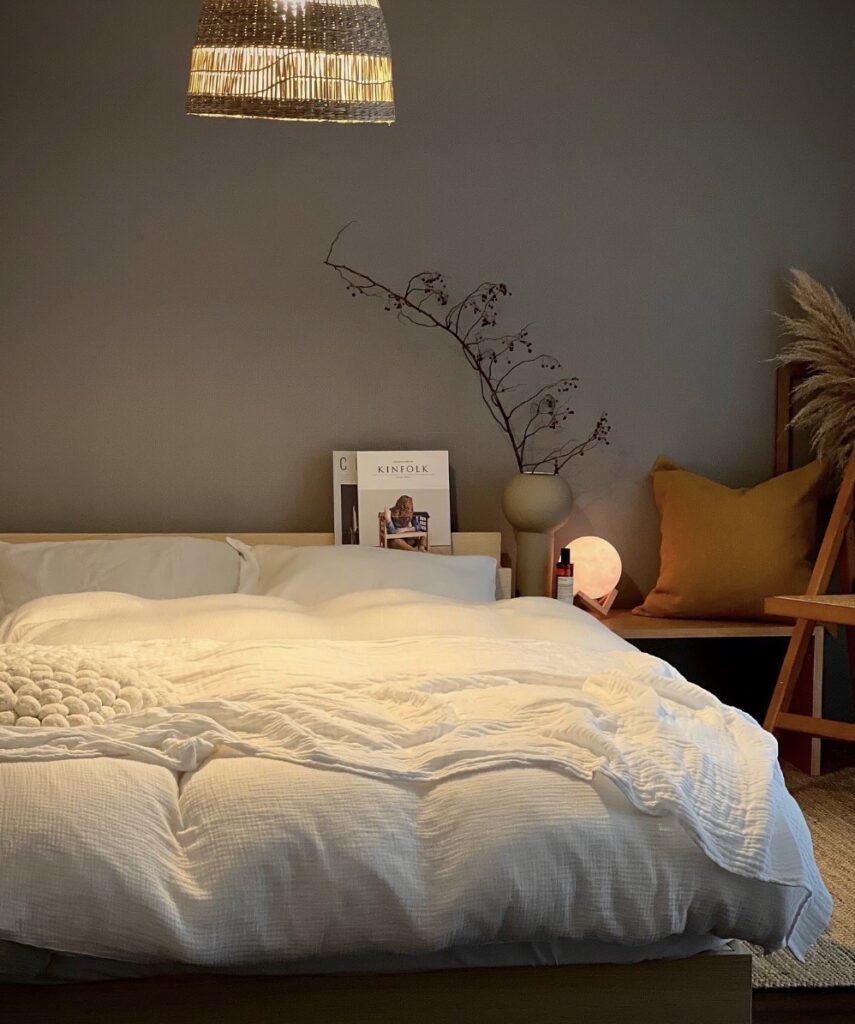
Dropping the bed closer to the floor is one of the more straightforward ways to get that Japanese-influenced look without buying anything specific to the aesthetic. A low platform frame — even a basic one like what’s here — keeps the eye level lower, which makes the ceiling feel taller by comparison. The wrinkled white duvet sitting directly on top without much layering is doing a lot of work too.
No bedskirt, no extra throw folded at the foot. Just the one textile. If your current frame is too tall to swap out, you can sometimes get away with removing the legs entirely and resting the box spring on the floor, though not every frame is built for that — worth checking before you try it.
Low Bedside Lines
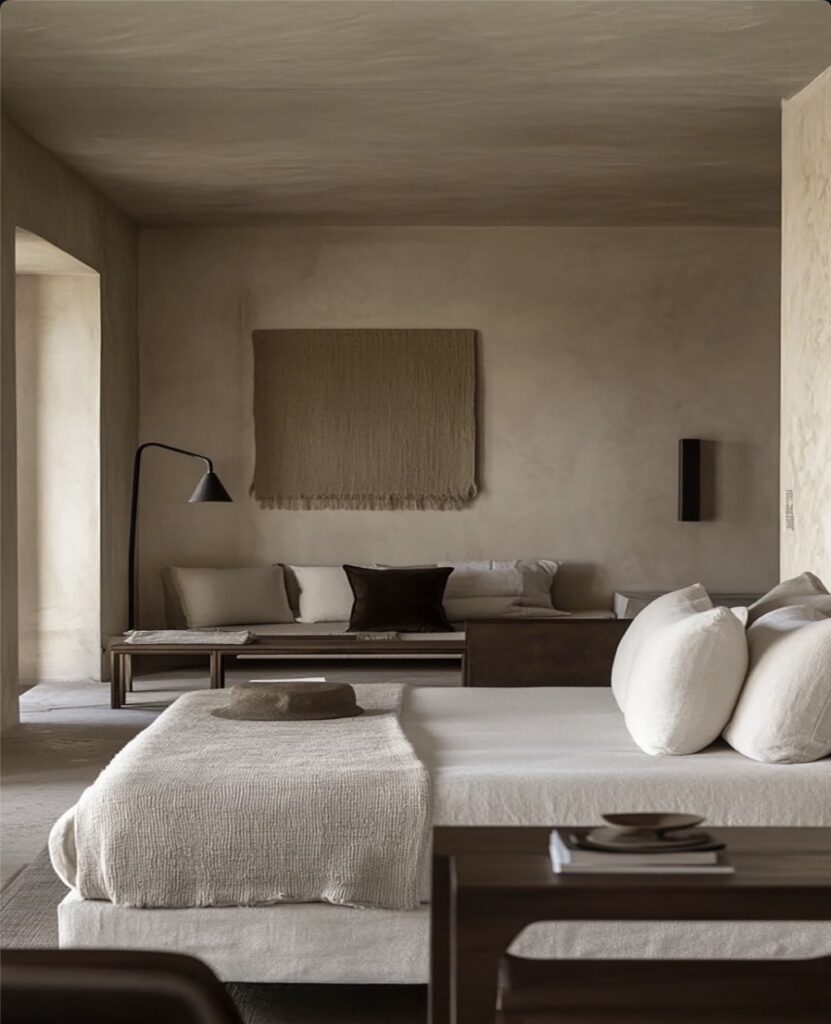
Start with the bed height. Once the mattress sits close to the floor, use a slim bench at the foot instead of a tall chest, because the room will look less chopped up and you still get a place for books, a tray, or folded bedding. Keep it partly empty.
The throw, round tray, and stacked books stay in one band here, so nothing climbs up the wall except the fabric hanging. I would skip deep drawers if you already have a closet. They invite extra clothes to live beside the bed.
Slatted Room Divider as Storage
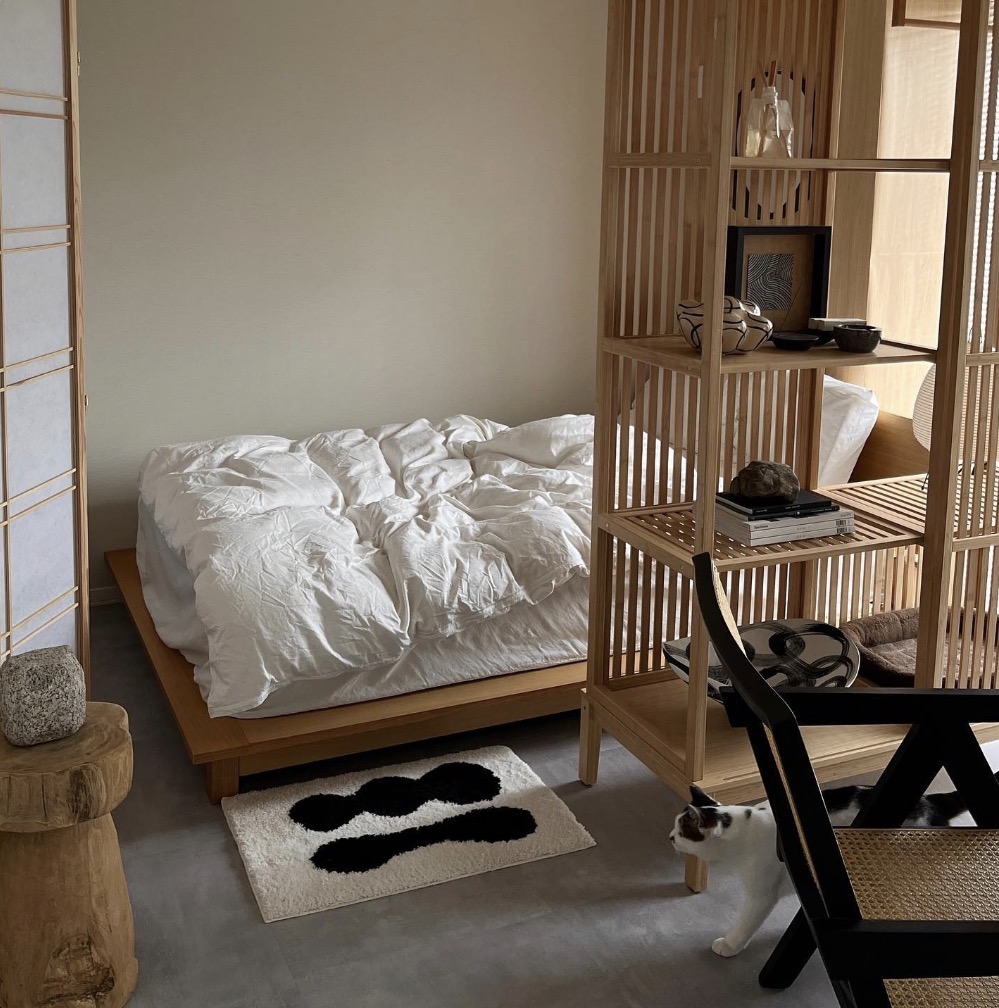
The wooden divider here does two jobs at once. It splits the sleeping area from whatever’s on the other side, and every shelf holds something — books stacked flat, a small framed print, a couple of ceramic bowls. Slats instead of solid backing means light still moves through. That matters in a small room.
If you’re renting and can’t build one in, look for a freestanding slatted shelf tall enough to read as a wall. Style the shelves facing the bed with softer objects, and keep the busier stuff on the other side. One thing I’d change: the middle shelf looks a little crowded to me. Leave one shelf almost empty so the eye has somewhere to rest.
Open wardrobe zoning
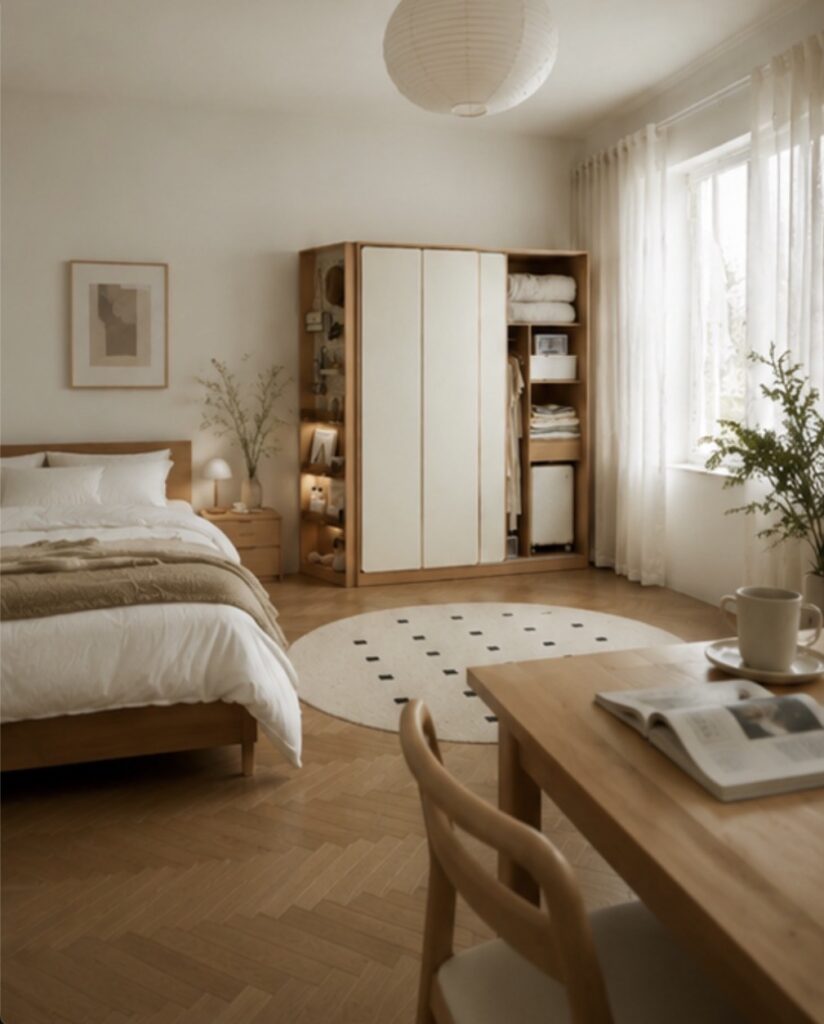
If you want a Japanese-style bedroom to stay tidy, copy the wardrobe layout here rather than stuffing everything behind full doors. Keep one section closed for the messy basics, then leave one side open with shelves for folded towels, a few baskets, and the clothes you actually reach for during the week, because seeing the categories makes it much easier to put things back where they belong.
The side cubbies help too.
Use the lower shelf for bulkier items or a laundry bin, middle shelves for daily stacks, and the top for spare bedding so the room works harder without adding another cabinet. I’d skip filling the open shelves with decor, though, since dust on display pieces is more effort than it’s worth in a bedroom.
Low Furniture Keeps the Floor Visual
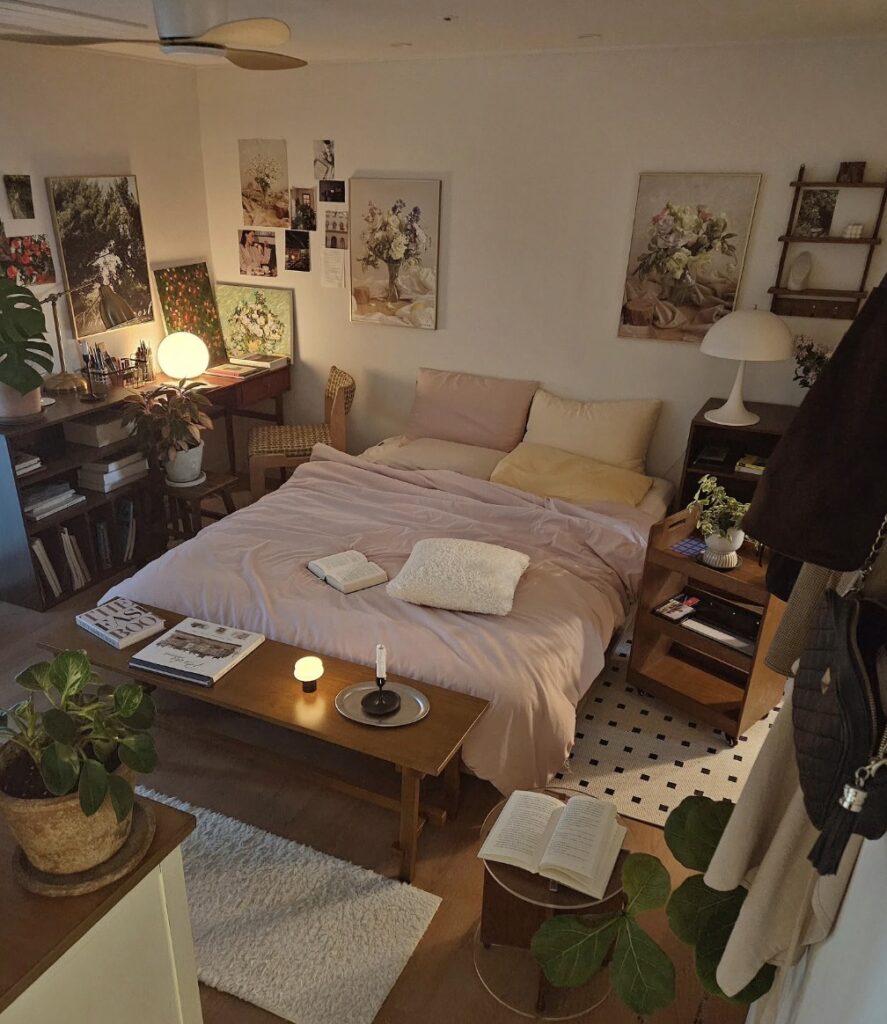
Beds sitting close to the ground are a consistent feature in Japanese bedroom design, and this room shows why it works — the ceiling fan and wall art both read clearly because nothing tall is competing for attention. A low platform bed or even just a mattress on a low frame does most of the heavy lifting here. The wooden coffee table pulled up beside the bed is doing double duty as a nightstand and a surface for books and candles, which cuts down on the number of pieces you actually need.
Worth noting: if your room gets limited natural light, going this low can make the space feel a bit dim toward evening, so you’d want a lamp with a good warm bulb rather than relying on overhead lighting alone.
Basket And Door Hooks
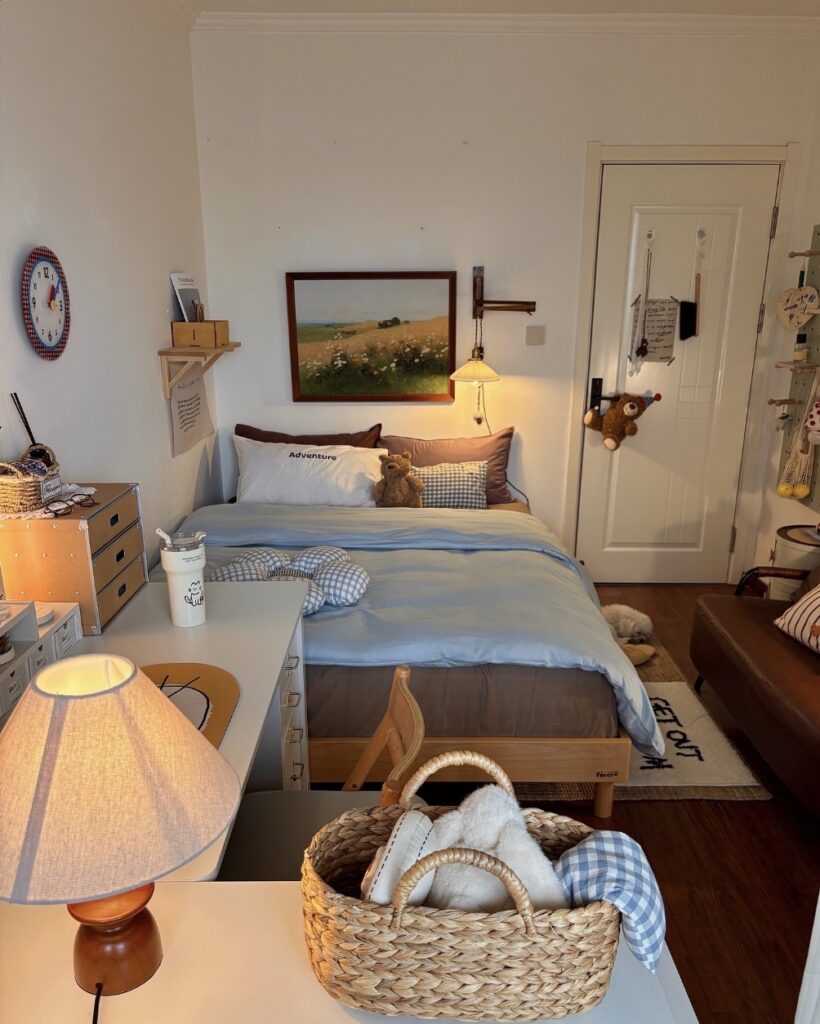
That woven basket on the desk is the kind of storage that works because you can use it without thinking. Drop in the blanket, sleep socks, or soft toys before bed. One basket only.
In a Japanese-style room, the point is usually to keep the floor readable, so a raised basket or a low shelf does more than another box under the bed. The door hooks can take the odd hanging item, but keep them to light things like a tote, headphones, or tomorrow’s cardigan. I would skip heavy bags there, because the door starts looking like storage instead of a door.
Keep the nightstand narrow
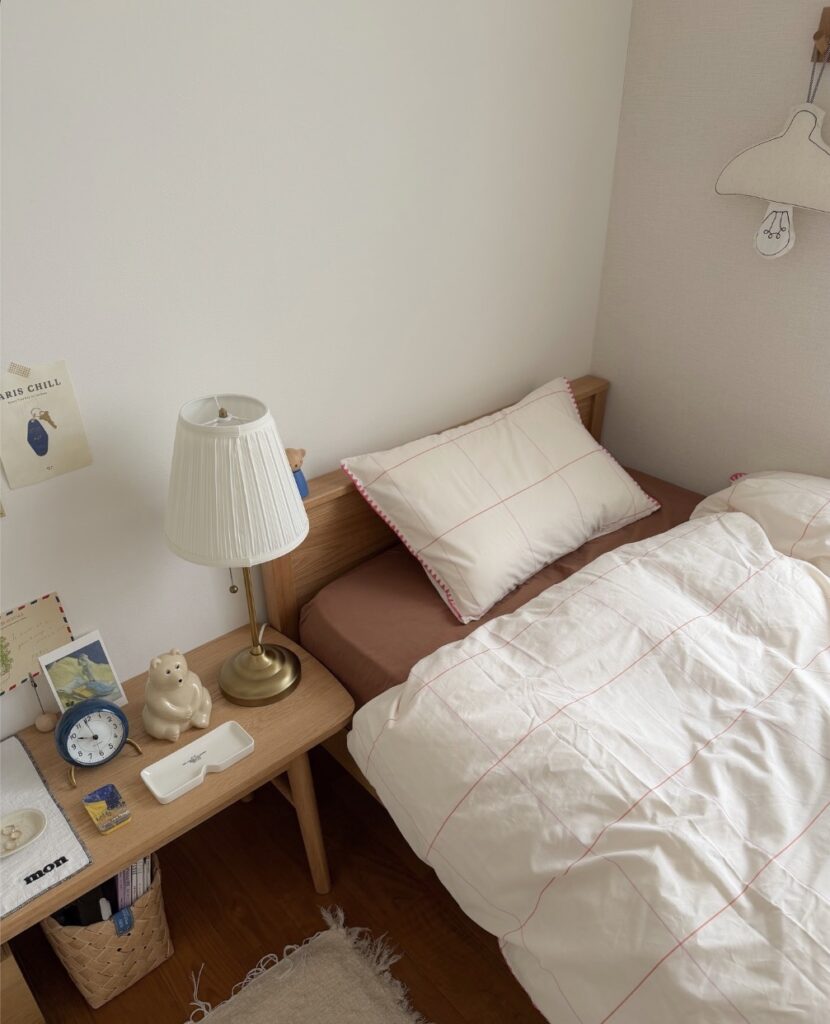
A bedside table this slim is the whole trick. It’s barely wider than the lamp base, which forces you to only keep what you actually reach for at night — a clock, a small tray for earrings, one photo. Everything else has to go somewhere else.
Underneath, there’s a woven basket doing the heavy lifting for books and bits you don’t want on display. That vertical stacking is what makes it work in a small Japanese bedroom where the bed already eats most of the floor. If I were copying this, I’d skip the ceramic bear.
Cute, but it’s using up prime lamp-adjacent space you’ll want for a glass of water.
Window desk wall
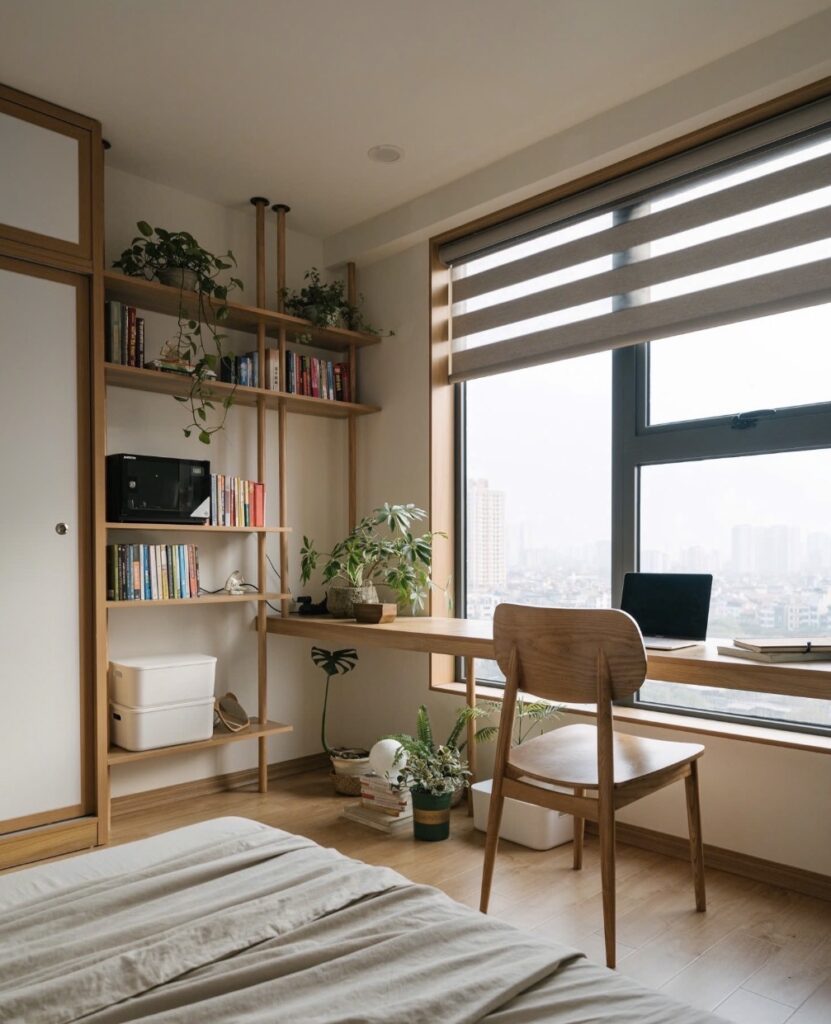
Run your desk straight under the window and let one shelving unit do the rest. That layout keeps the middle of the bedroom open. You get a work spot, book storage, a plant ledge, and a place for the small things that usually drift onto the floor.
Keep the desktop mostly clear. A laptop, one notebook, maybe a tray. If the surface turns into general storage, the whole idea falls apart fast, especially in a bedroom where clothes, chargers, and half-read books already compete for space.
The open shelves work best when you split them by use, with books together, one box for spare items, and the top shelf for trailing plants or things you do not reach for daily. Very practical. I would skip putting too many loose objects under the desk, though, because that leg space disappears quicker than you think.
Use a Live Edge as Your Media Console
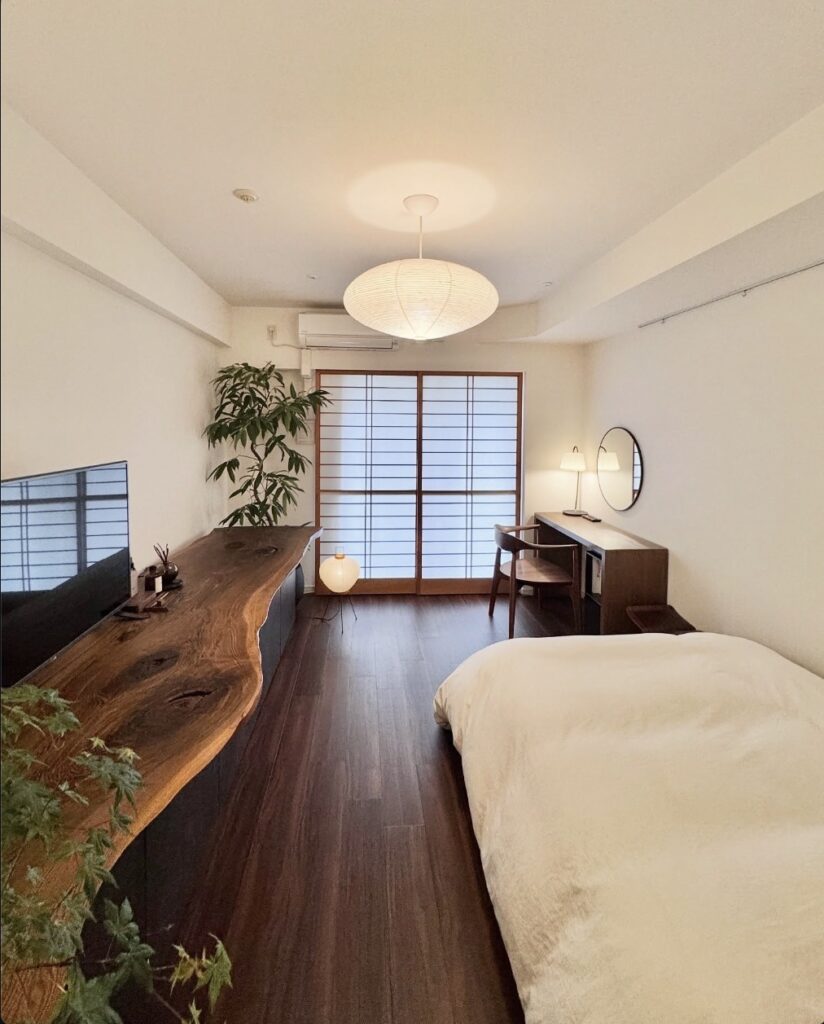
That slab doing the work of a TV unit is a live edge board — the kind where one side still follows the shape of the original tree. Mounted low on a dark base, it keeps the TV at floor-level height, which reads much more Japanese than a standard entertainment unit would. Finding one isn’t as hard as it used to be; timber yards and markets often sell offcuts that are long enough for this.
You’d need it sealed well, especially if your room gets humid. The small globe lamp sitting on the floor in front of the shoji doors is worth copying too — floor-level light sources do a lot in a room like this without needing a second overhead fixture. Skip the tall TV stand entirely if you can.
Low Bed With Side Storage
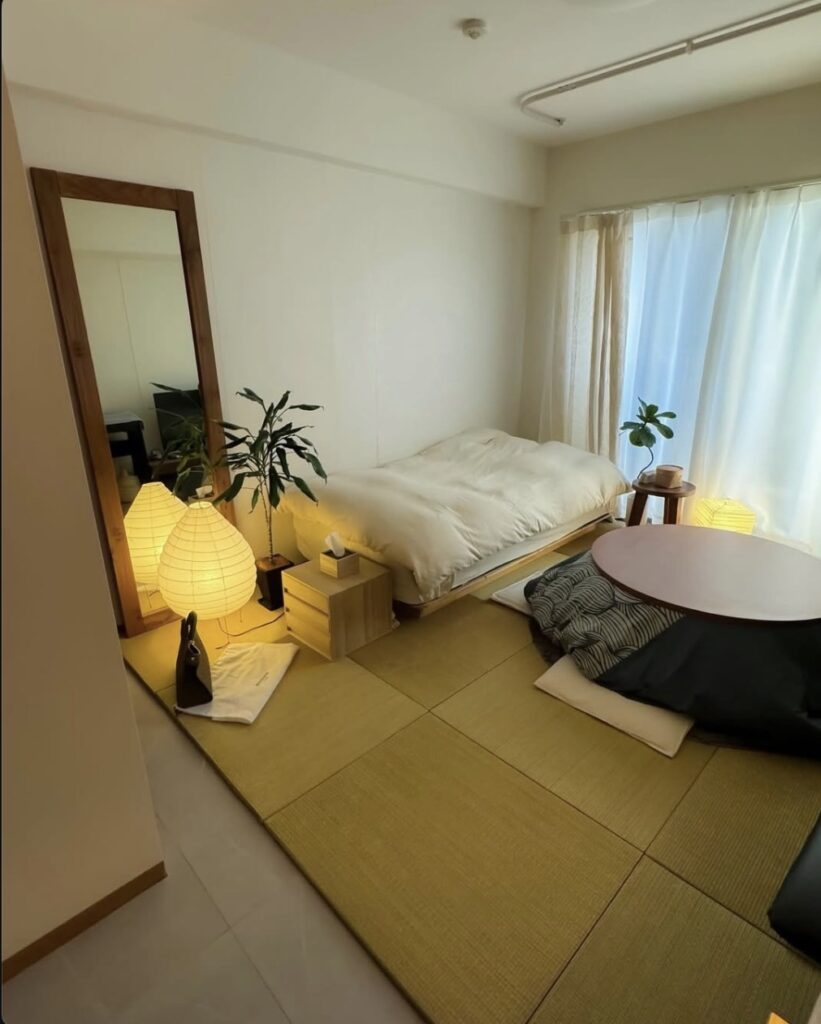
With the mattress kept close to the tatami, the room can hold a bed, table, mirror, plants, and still not feel packed. Use a low platform or futon base, then keep only one small drawer unit beside it for tissues, chargers, balm, and sleep things. Leave breathing room.
When the bed sits against the wall, that little cabinet becomes enough because you are not trying to fit a full nightstand on both sides. A floor lamp near the mirror works well too, but tuck the cord behind the frame or along the wall. I would skip open baskets here unless you are very disciplined, because they start looking messy by the third day.
Floating Platform With Ledge Storage
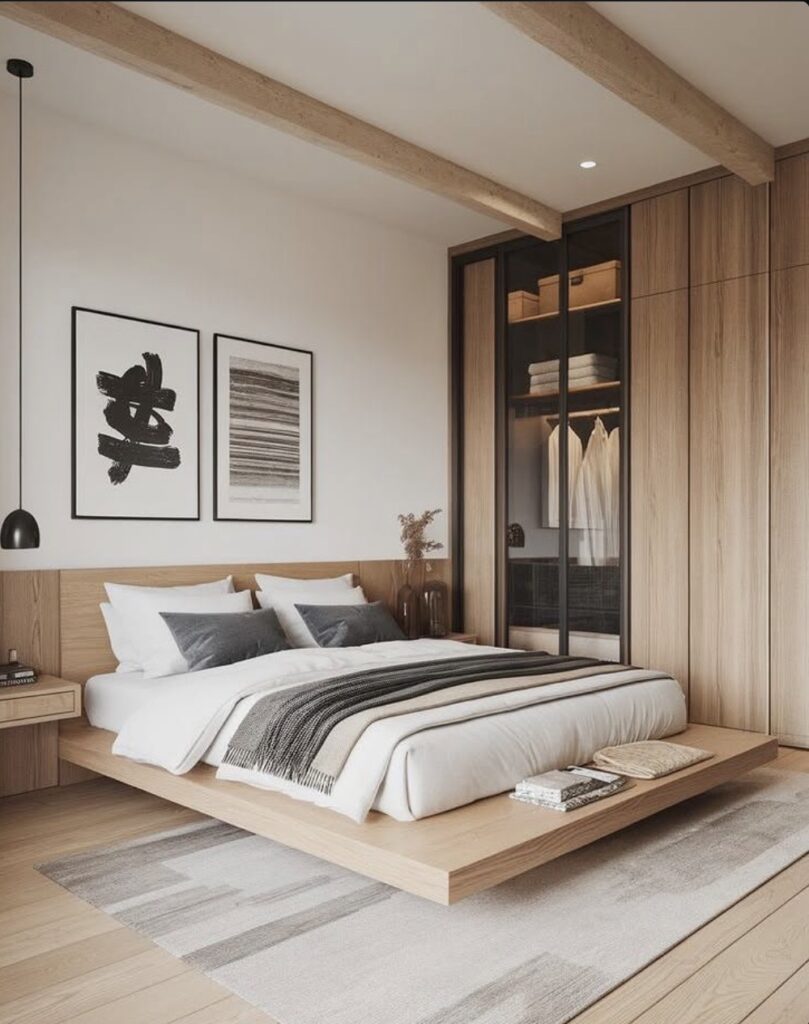
The platform bed here extends past the mattress on all sides, and that extra lip is doing real work. Books, a folded throw, a small tray — everything lives on the wood instead of the floor. No nightstand clutter fight.
If you’re building or buying one, aim for at least 8 inches of platform beyond the mattress edge. That’s enough to hold a stack of paperbacks and a cup without things toppling when you sit down. Anything less and it just looks like a mistake.
One caveat: the platform collects dust along that ledge faster than you’d think, and you can’t shove things underneath the way you would with a regular frame. So if under-bed bins are part of your storage plan, this isn’t the setup for you. Pick one or the other.
Keep the floor open
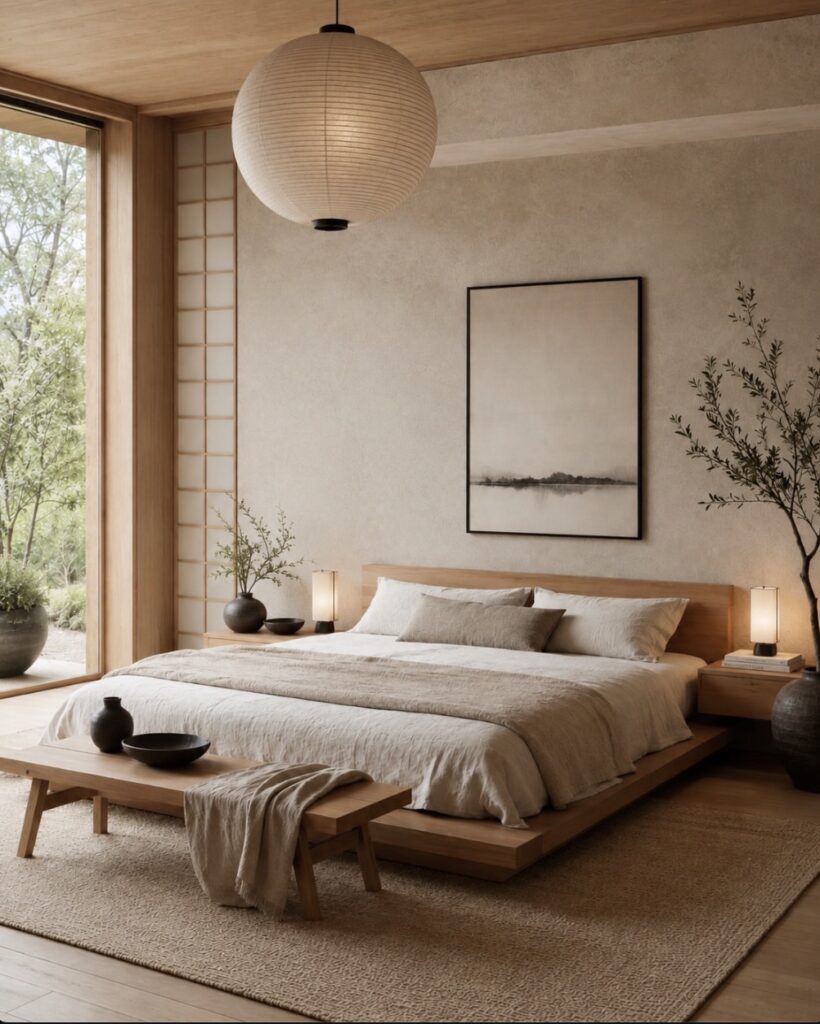
Start with the bed. A low platform with plain side tables keeps most of the visual weight close to the floor, which makes the rest of the room easier to organize because nothing is competing above eye level except one main piece on the wall and the pendant overhead.
That part matters.
If you want this look to stay calm in real life, be strict about what lands on the bench and bedside tables: one lamp, one vessel, maybe a small stack of books, then stop. The wide rug helps zone the sleeping area without needing extra storage pieces around it, which is useful in smaller rooms where a dresser can quickly make things feel crowded. I’d skip under-bed bins here unless they disappear fully, because this setup works best when the floor line reads clean.
The Case for a Platform Bed
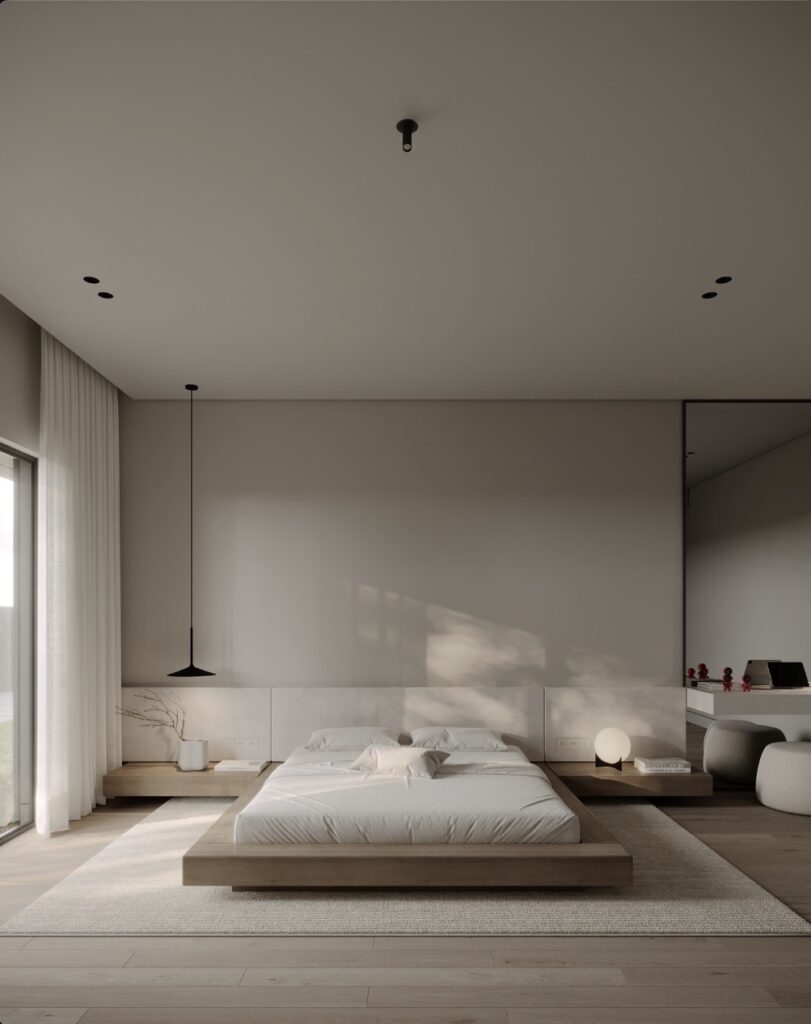
That wooden platform sits maybe four inches off the floor, and that gap is basically doing the organizational work of a whole dresser. The visual weight of the room drops when your bed is that low — nothing is fighting for attention above mattress height, so the rest of the space reads cleaner without you having to actually own less stuff. What you do need is storage that lives elsewhere: under-bed drawers built into the platform itself, or a separate low unit tucked nearby like the bedside slabs here.
I’d skip a platform with zero clearance underneath, because then you lose the under-bed option entirely and that’s a real trade-off. Best suited to people who already have a wardrobe system sorted. Otherwise the floor just collects things.
Floating Bedside Storage
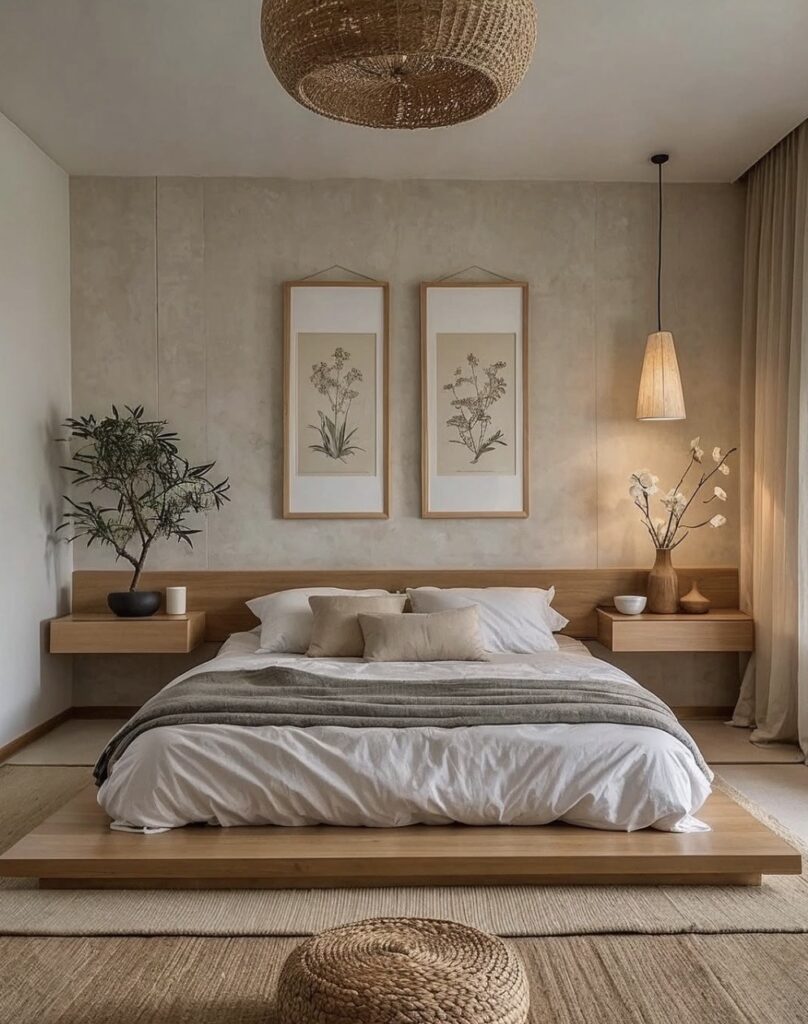
Instead of keeping a full table beside the bed, mount a shallow floating drawer at mattress height and let it hold only the few things you actually touch at night. Keep it low. The wood line behind the pillows helps the two drawers feel connected, so the wall does not look broken into random bits.
This works well if your bedroom is small or if you hate cleaning around table legs. A small bowl, one cup, a book, maybe your phone charger, that is enough for the top. I would skip open shelves here, because they collect loose things too fast and the whole setup starts looking busy by the end of the week.
Build The Sofa Into Storage
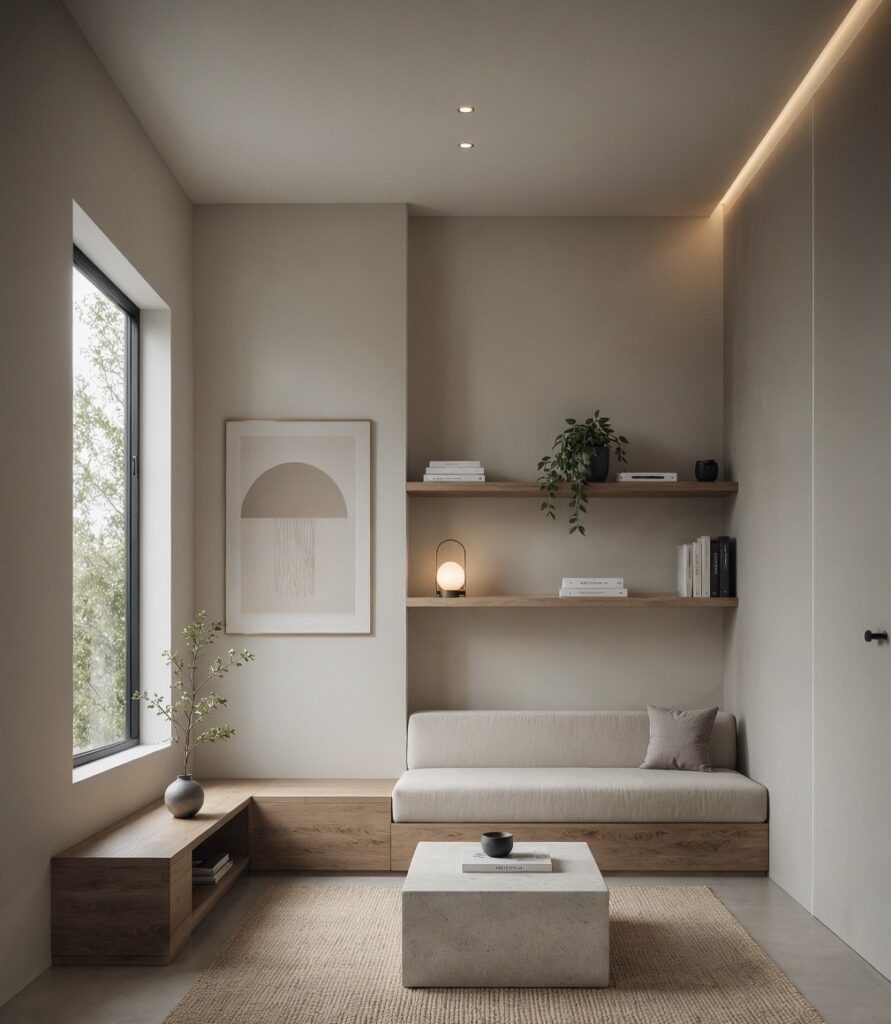
That daybed sits on a wooden platform with drawer fronts running underneath. Every inch counts. Instead of buying a bed frame and then hunting for storage bins to shove beneath it, get the platform built with pull-out drawers as part of the base — bedding in one, off-season clothes in another, books and cables in the last.
The bench extends past the sofa toward the window, giving you a landing spot for a vase or a lamp without adding another piece of furniture. One caveat: fitted drawers cost more than baskets under a standard bed, so this makes sense if you’re staying put for a few years. For renters, low profile storage boxes on casters do most of the same job.
Use a ledge headboard
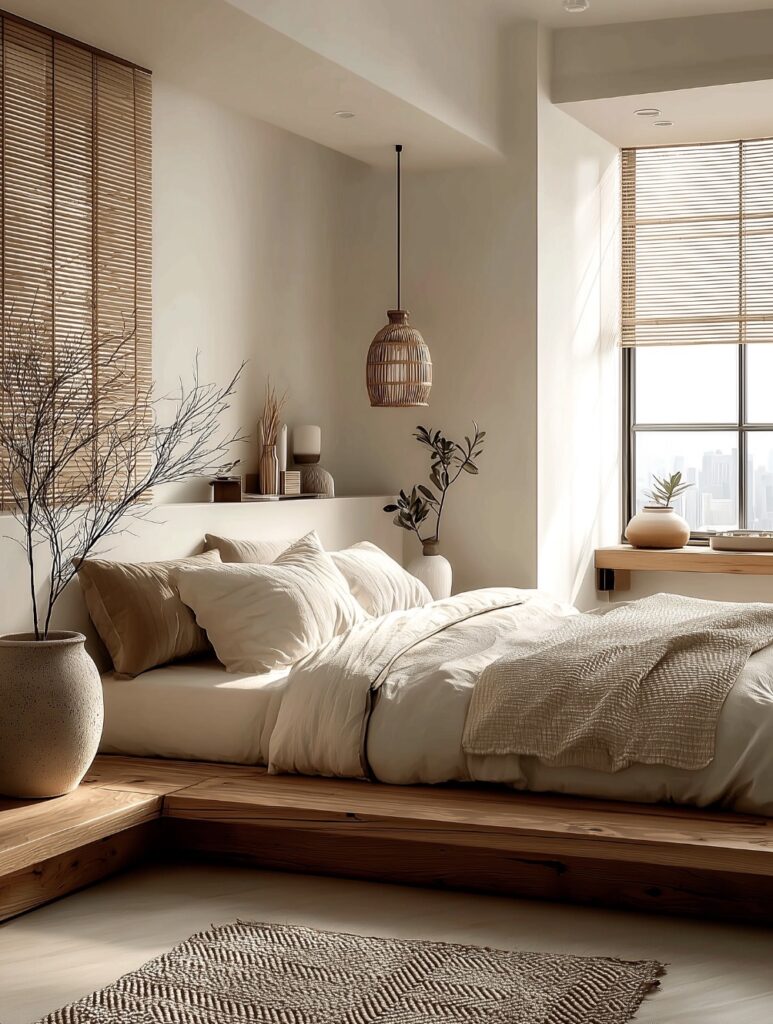
Build storage into the bed first. A shallow ledge behind the mattress, like the one here, holds the few things that usually end up on a nightstand anyway: a small lamp, one vase, maybe a book or a tray. That matters in a Japanese-style bedroom because the room stays open around the bed instead of getting pinched by extra tables on both sides.
Keep it spare. Three to five objects is plenty, and taller pieces should sit to one side so the bed still feels easy to use.
The raised wood platform helps too, especially if your room is small, because it defines the sleeping area and gives you a clear line for where clutter stops. I’d skip deep shelves above the pillows, though, since they collect dust and start looking busy faster than you think.
Use a Clothing Rack Instead of a Wardrobe
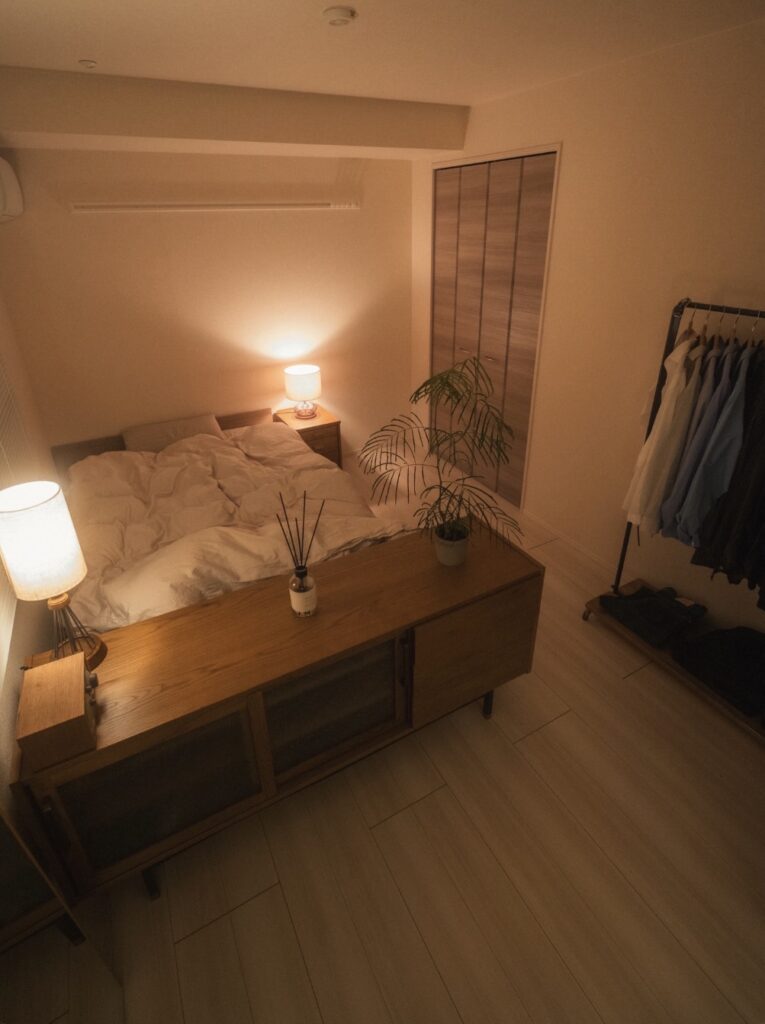
The rack on the right side of this room holds maybe a dozen shirts, grouped by color, hanging on a simple black metal frame with wheels. That’s it. No wardrobe taking up a wall, no sliding doors eating into floor space.
It works in smaller Japanese apartments where a built-in closet either doesn’t exist or isn’t big enough. The trick is keeping what’s on it edited — this only functions if you’re hanging clothes you actually wear regularly. Everything else needs to go somewhere else, boxed or stored flat.
Wheeled base matters more than people expect, since you can push it out of the way when the room needs to breathe. I’d probably add a small shelf underneath for shoes, but even without it, this is a low-cost swap with a real payoff.
Window Desk Zone
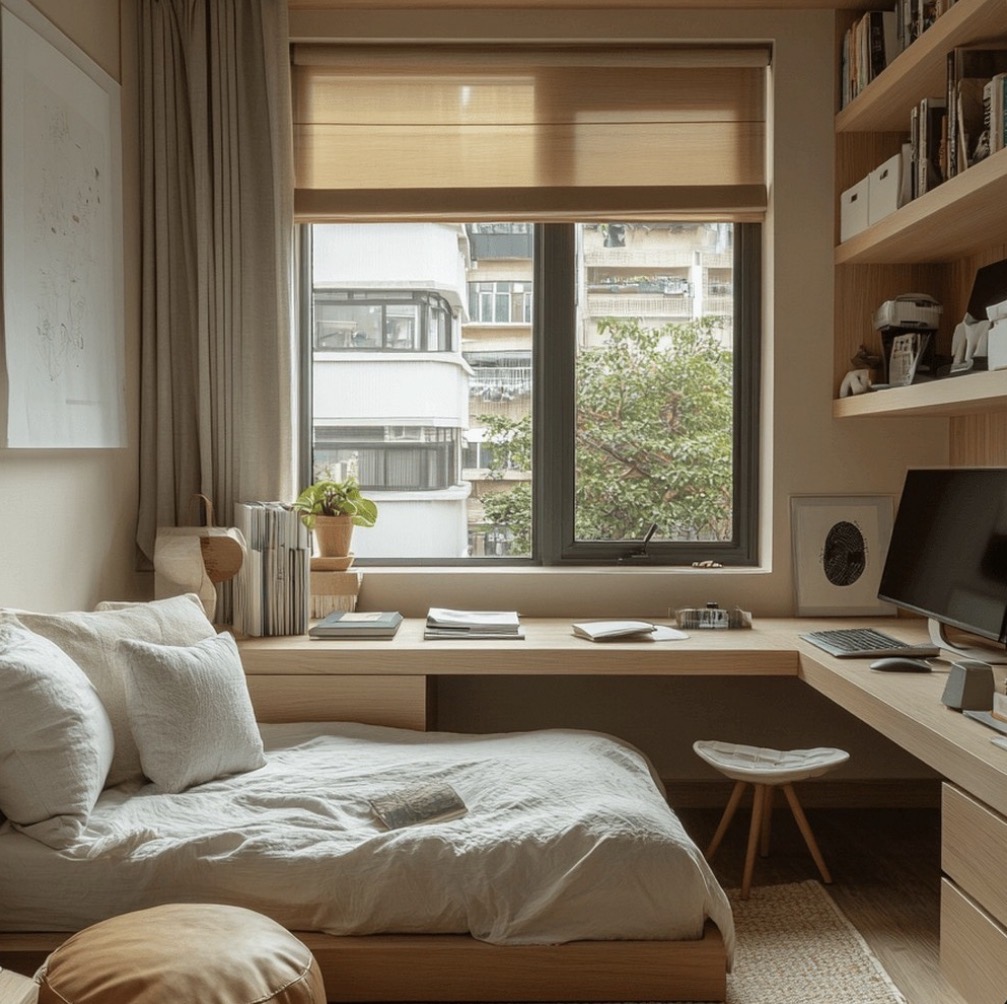
Let the desk run straight under the window if your room has even a shallow sill to work with. Keep the top almost bare: one plant, one stack of papers, a tray for clips or keys, and your laptop pushed to the side when you sleep. This matters.
In a small bedroom, the desk can turn into a dumping line very fast, so give every object a narrow home along the back edge. Use the side shelves for books and a few white boxes. I’d skip open display for daily-use bits; bins are easier to manage.
Two Long Shelves Above Bed
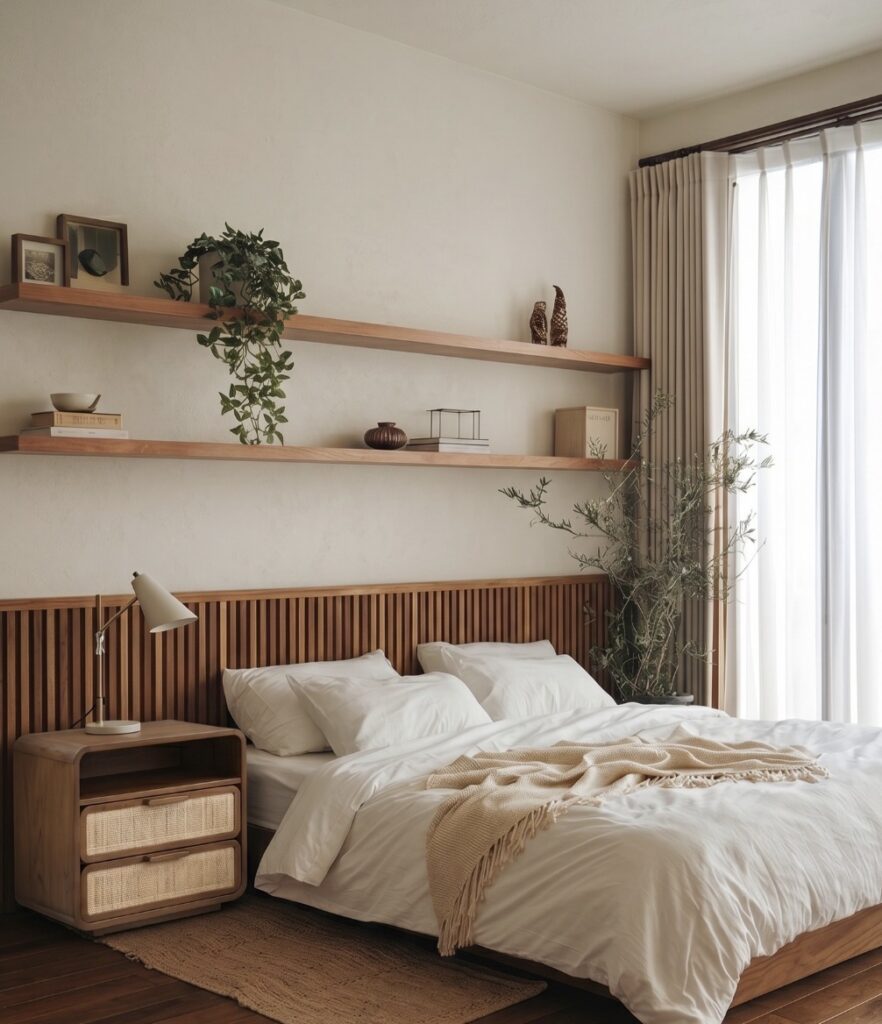
Two floating shelves running the full width of the bed. That’s the whole move. It gives you the storage of a tall bookcase without the visual weight, and it frees up the floor for a nightstand or a plant like the olive branch tucked in the corner here.
Keep the shelves shallow — 8 to 10 inches deep is plenty for framed photos, a trailing pothos, a few books stacked on their side. Anything deeper starts to feel like it’s looming over your head when you sleep.
One thing I’d change: the lower shelf sits pretty close to the headboard slats. I’d give it more breathing room, maybe 10 inches higher, so you can actually sit up in bed without ducking.
Space the two shelves evenly. Uneven gaps look like a mistake.
Use the shelf corner
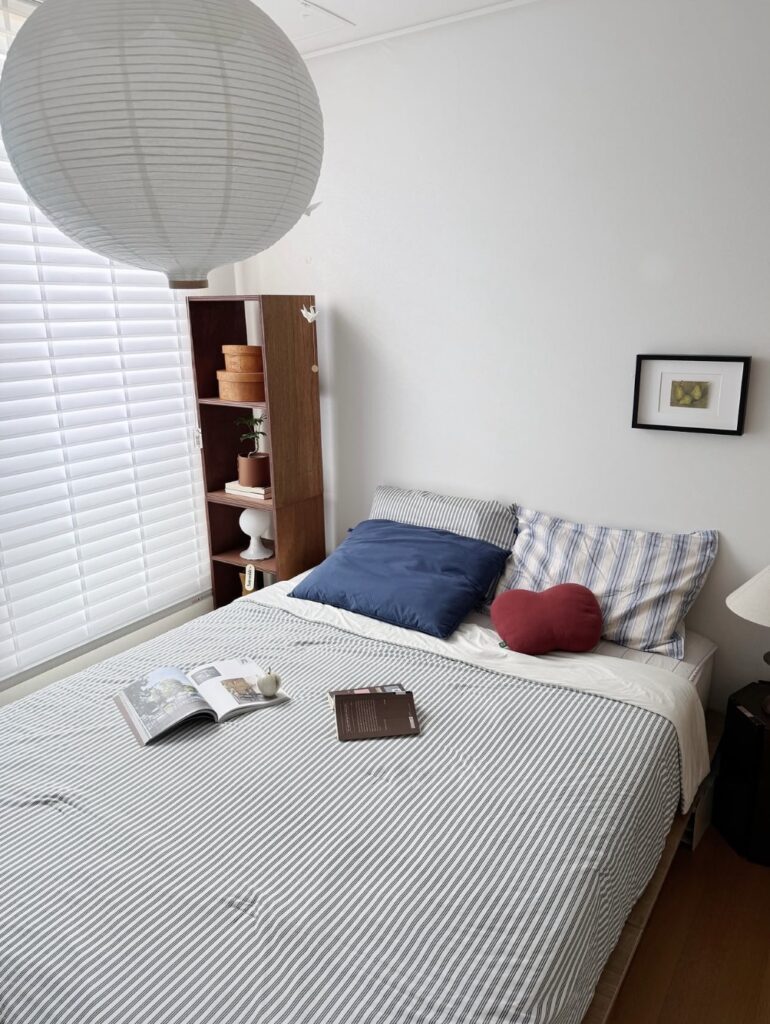
Tucking a slim open shelf right into the corner beside the bed does a lot of work without asking for floor space. Keep the top half for things you reach for less often, like storage boxes, and use the middle shelves for a small plant, a book stack, or the lamp you’d otherwise cram onto a tiny nightstand. That part matters.
Because the bed is pushed close to the wall, the vertical storage keeps the room from spreading sideways, which is useful in narrower Japanese bedrooms where every walking strip counts. Open shelving also forces a limit, since clutter shows immediately.
I’d keep the bed linen restrained too, like the narrow stripe here, because mixed prints plus visible shelf storage can get messy fast. If you want softer storage, swap the boxes for lidded baskets.
Use a Wall Panel Instead of a Headboard
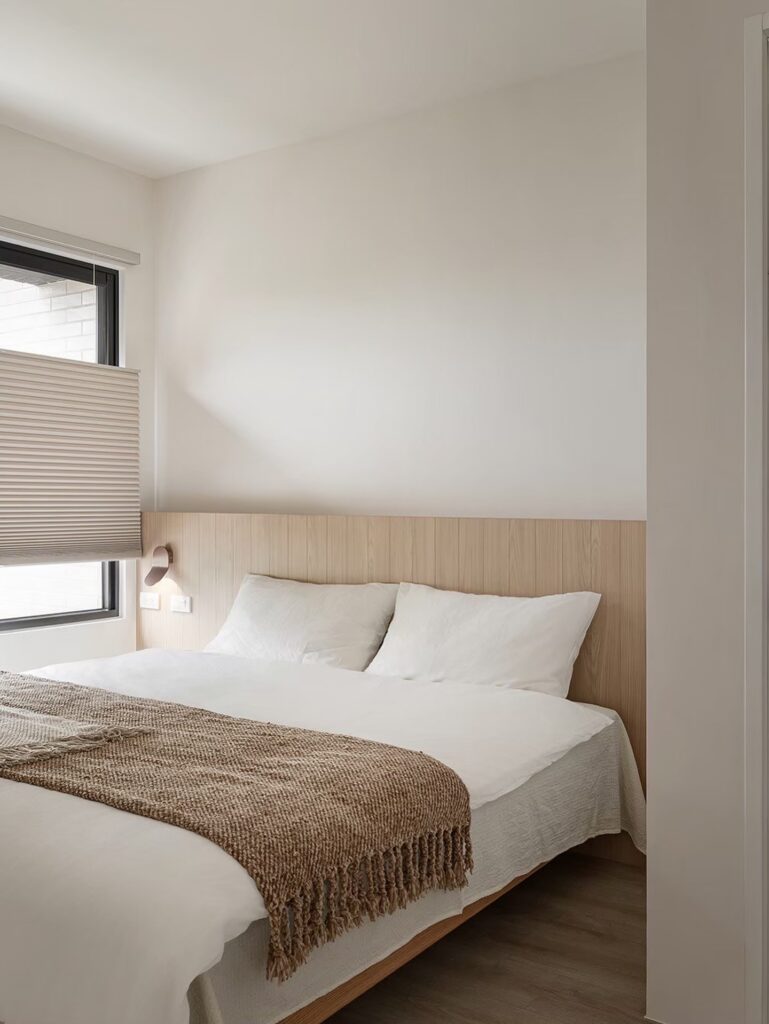
That vertical timber paneling behind the bed is doing a lot of work without taking up any floor space. No headboard to buy, no bulky frame pushing the bed away from the wall. If you’re working with a small bedroom, this approach makes a real difference — the panel sits flush, the sconce mounts directly to it, and suddenly you’ve handled lighting and the bed surround in one move.
Tongue-and-groove timber is the easiest version to DIY, and light-washed or unfinished pine will get you closest to what’s shown here. The woven throw folded across the foot of the bed is worth copying too — it breaks up all the white without adding visual clutter to the walls or floor. Keep the panel low.
Floor-to-ceiling would be a different room entirely.
Desk As Nightstand
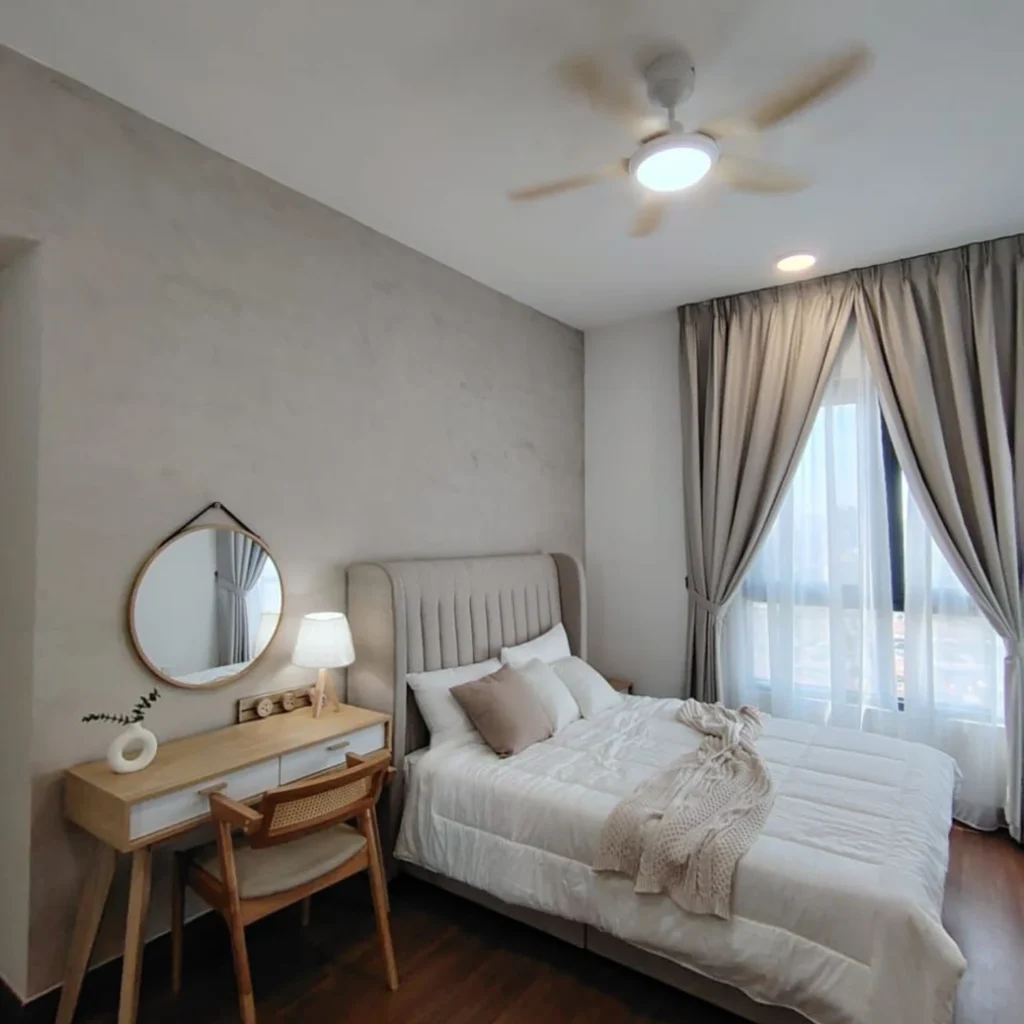
Instead of adding a separate nightstand, let a slim desk sit beside the bed and do two jobs. Keep it narrow. The drawers can hold chargers, lip balm, sleep masks and other small things that usually spread across the mattress edge by night.
A round mirror keeps the setup useful in the morning. Place the lamp close to the bed side, not the chair side, so you can switch it off without getting up. One flat surface, not three.
I would skip extra decor here, because once books and a water glass arrive, the desk will look full fast.
Keep The Dresser Small
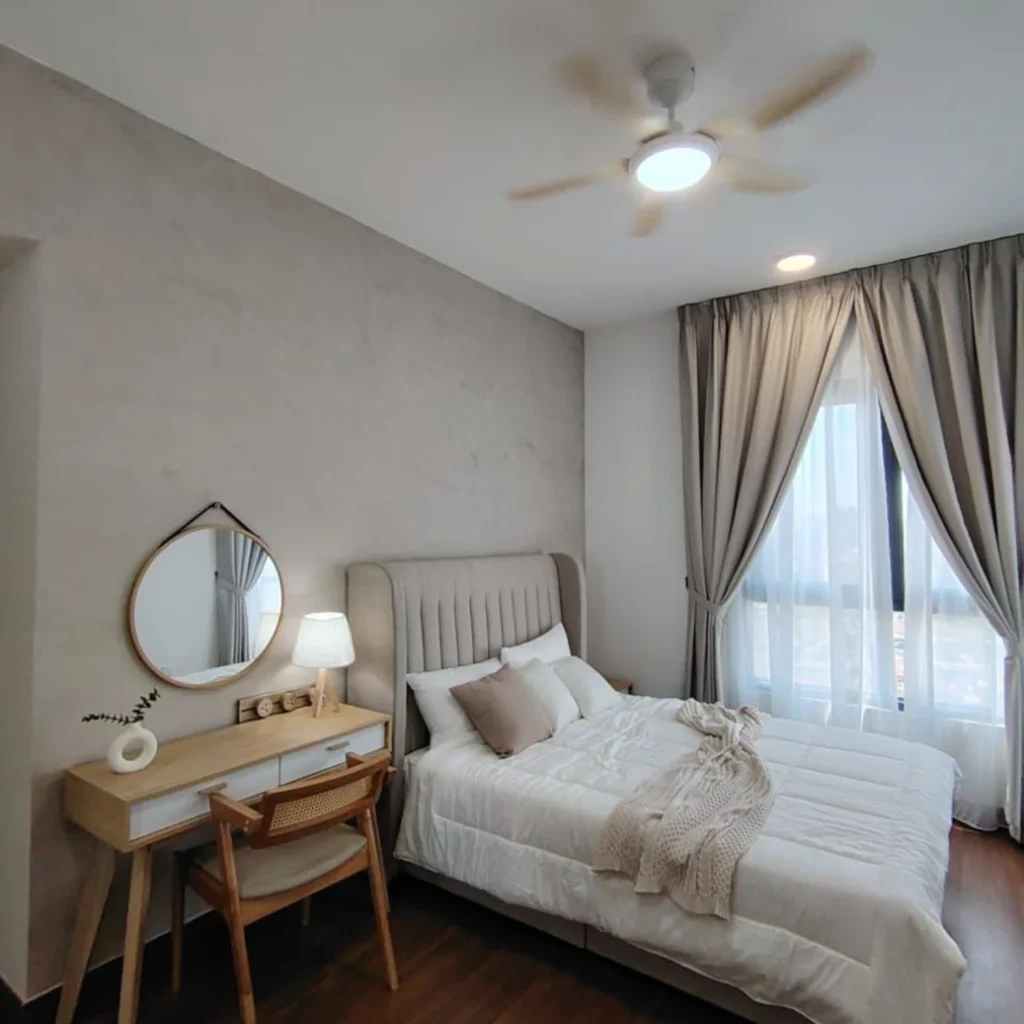
A full dressing table eats floor space you don’t have. The one here is maybe 80cm wide, two drawers, thin tapered legs, and it still fits a lamp, a mirror, and a little vase with a sprig of eucalyptus. That’s the whole point.
If you’re working with a small room, pick a console-style desk over anything with a hutch or a triple mirror. Round wall mirror above, so nothing sits on the surface competing for space. The rattan chair tucks fully underneath when you’re not using it.
One thing I’d change — that table lamp is pretty but takes up a third of the top. A wall-mounted sconce would free the surface for actual daily things.
