25 Japanese Minimalist Bedroom Ideas That Actually Help You Sleep Better
This site contains affiliate links. We may earn a small commission, at no extra cost to you. Article may contain some images for illustrative purposes only .
My first night sleeping in a traditional ryokan in Kyoto rewired something in my brain. The room had almost nothing in it — a low futon, a small wooden tray, a paper screen filtering the morning light — and yet I slept harder than I had in years back home, surrounded by my piles of “stuff.”
That’s the strange magic of Japanese minimalism: it’s not about owning less for the sake of looking cool on Instagram, it’s about creating a space where your nervous system actually gets to switch off. I’ve spent the last few years slowly stripping my own bedroom down using these principles, and the difference in my sleep has been honestly ridiculous.
Below are 25 ideas I’ve either tested myself or pulled from homes I’ve stayed in across Japan — small shifts, big payoffs, and zero need to gut-renovate your place.
The Raised Platform Bed That Changes Everything
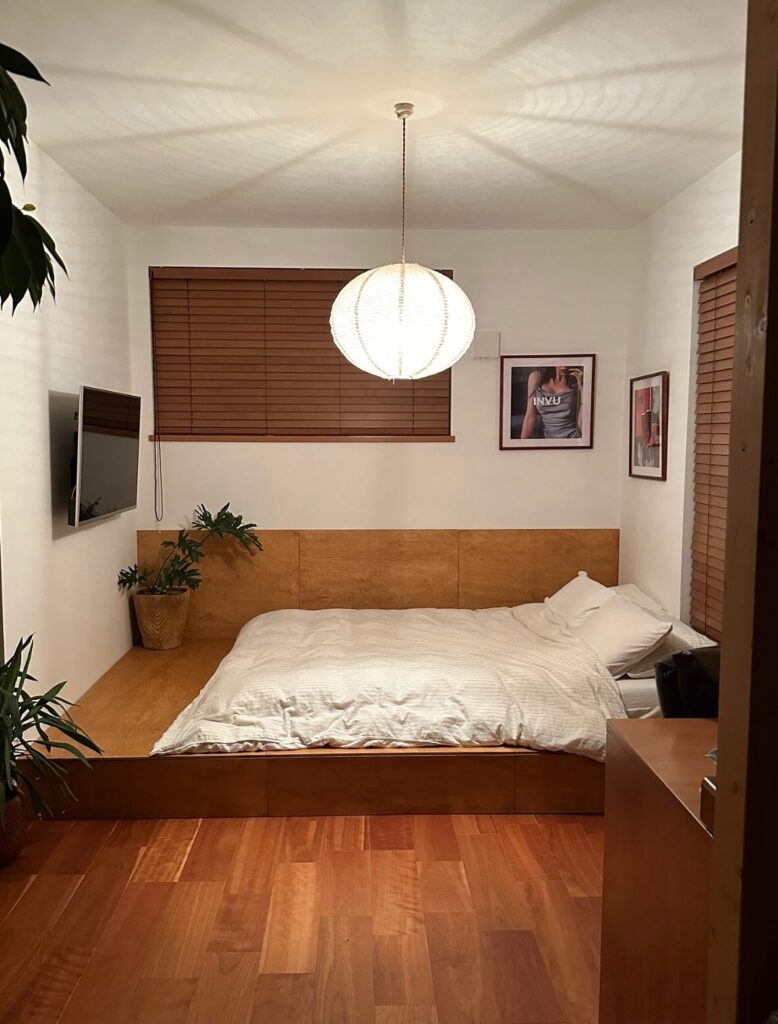
There’s something about sleeping on a platform that just feels intentional, like the bed is the whole point of the room and everything else exists around it. This setup uses a low wooden platform with a wide, flat headboard that doubles as a little shelf for a potted plant. The warm honey-toned wood against white walls keeps things grounded without feeling sterile.
That paper globe pendant light throws the softest patterns across the ceiling at night. The floor stays mostly clear, which sounds simple but genuinely makes the room feel twice as big and three times as calm.
Soft Glow Floor Lamp
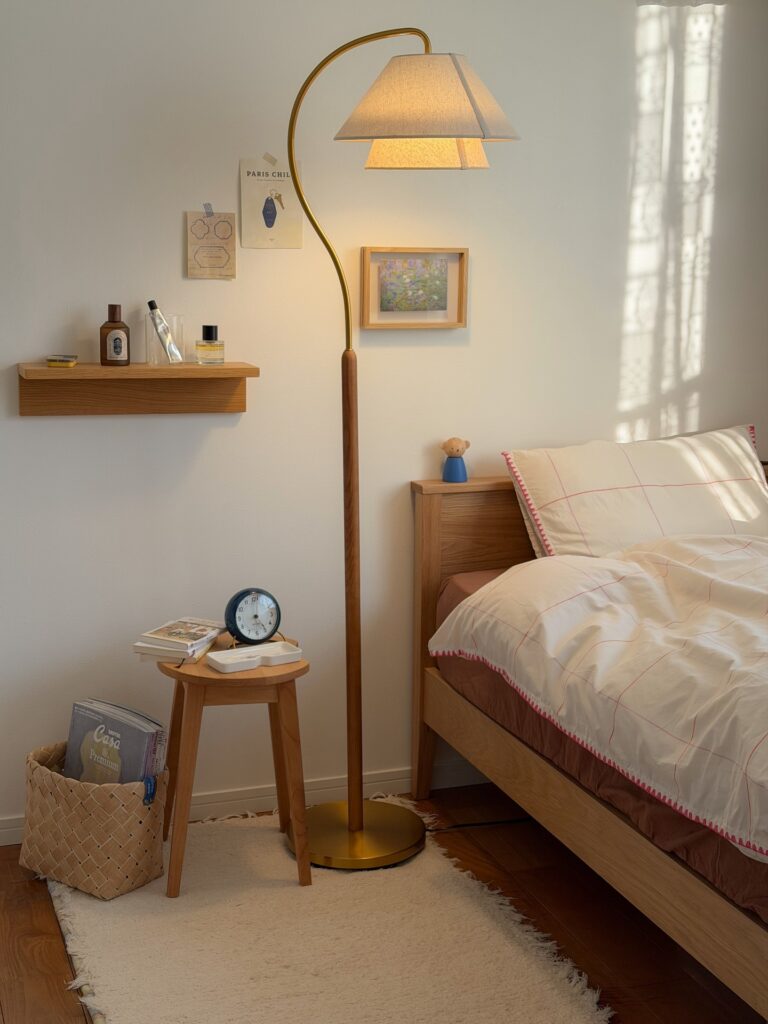
I sleep better when the light in my bedroom comes from one warm, low-key source instead of a harsh ceiling fixture, and this setup gets that balance exactly right. The curved floor lamp acts almost like a gentle bedside lantern, casting a soft pool of light over the bed and wall without making the room feel bright or busy. Paired with pale bedding, light wood, and just a couple of small objects on the shelf, it keeps the whole space calm and visually quiet.
I also love how the lamp adds height without adding clutter. It feels clean, cozy, and a little tucked away, which is exactly the mood I want before bed.
Shoji Screens Behind the Bed
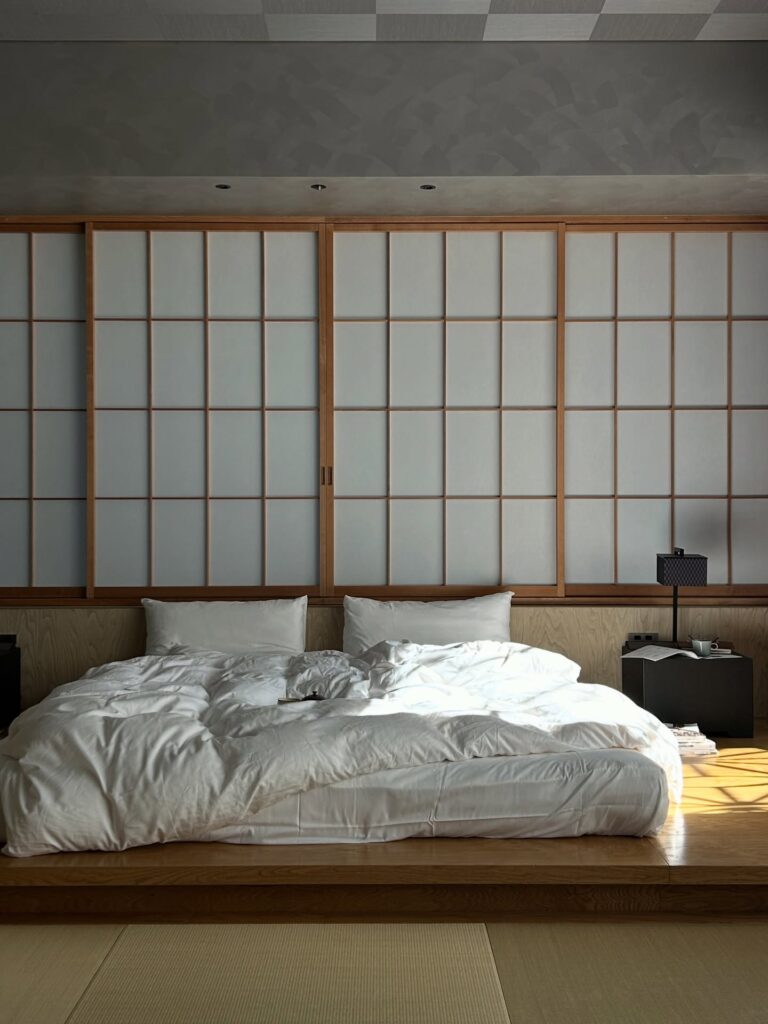
Shoji-style panels make the whole room feel softer before you even get under the covers. I love how the milky glass diffuses the light instead of letting harsh sun hit the bed, so mornings feel calm rather than jarring. The thin wooden grid adds just enough structure without crowding the wall with art or shelves.
Paired with a low platform bed, white rumpled bedding, and warm wood trim, the room feels quiet in a very practical way. There’s less for your eyes to chase at night, which makes it easier to settle down, breathe slower, and actually let the day end.
Wall-Mounted Shelves with Breathing Room
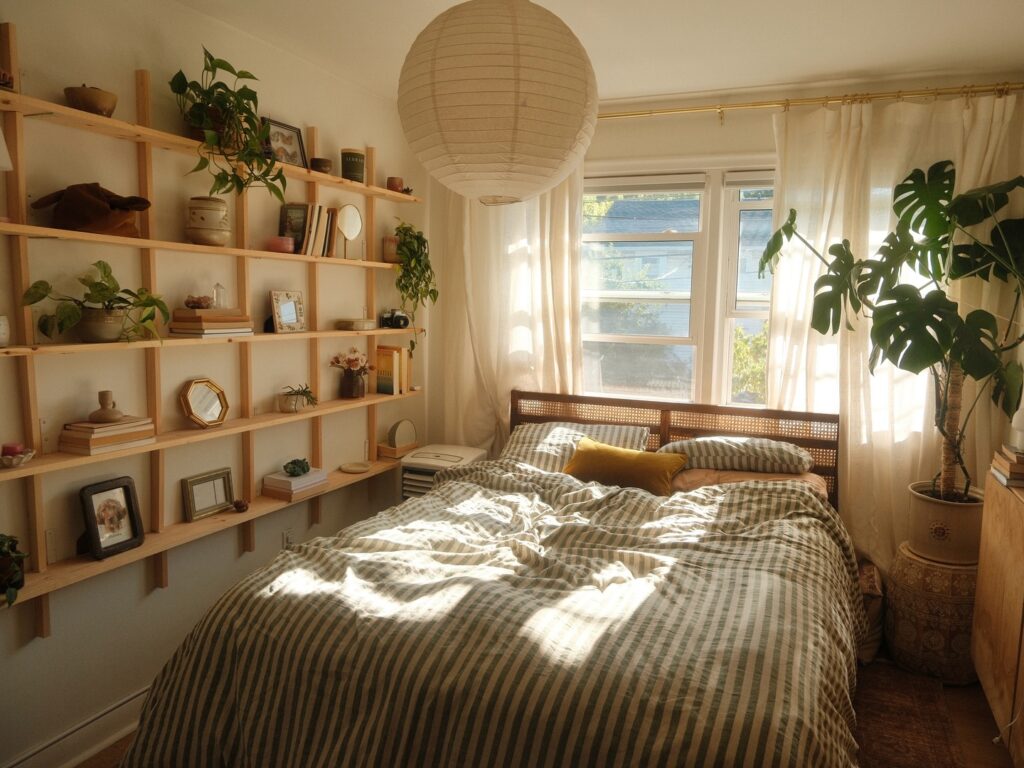
My friend swapped her clunky dresser for a wall of slim wooden shelves like these, and her tiny bedroom finally felt like it could exhale. The trick is leaving gaps. Not every shelf needs to be packed.
A trailing pothos here, a small framed photo there, a stack of two books instead of ten. The pale pine keeps things warm without feeling heavy, and because everything floats off the floor, the room reads bigger than it is. Sunlight actually reaches the corners.
At night, with just the paper lantern glowing, the shelves fade into shadow and your brain stops cataloguing clutter long enough to drift off.
Layer Warm Light, Not Overhead Light

Notice how this room has zero harsh overhead lighting doing the heavy lifting. Instead, there’s a round globe lamp on the desk, a wide-shade floor lamp by the bed, and two tiny candles flickering on the coffee table. That combination creates pools of soft, warm light that tell your brain it’s time to wind down.
The blush bedding, the open books scattered around, the monstera leaves catching the glow — everything feels intentional without being staged. Swap your ceiling light for two or three low-placed lamps at different heights, and your whole room shifts from functional to genuinely restful.
Floor Bed in Soft Sunlight

A low floor bed instantly makes the room feel quieter. I love how this setup keeps everything close to the ground, with a simple striped duvet, a small rug underfoot, and just enough open floor around the mattress to breathe. The warm wood tones and filtered light through the blinds give it that sleepy late-afternoon calm that makes you want to put your phone away early.
Even the decor stays light and easy, with a few postcards, one plant, and a compact stool instead of bulky furniture. It feels unfussy in the best way, and that visual calm is exactly what helps a bedroom settle your brain before sleep.
Warm Corners, Soft Light

I love how this room keeps the lighting low and close to the bed, which feels very Japanese in its quiet restraint. The brass table lamp, tiny wall bulb, and pale cream walls give the whole corner a sleepy amber glow instead of harsh overhead light. The wooden bed frame and simple side table keep the space grounded, while the rumpled fleece blanket makes it feel lived-in, not staged.
A small plaid rug adds just enough color without making the room busy. For better sleep, I’d copy this exact mood: warm bulbs, natural wood, one cozy textile, and only the bedside things I actually use.
Soft Blue Stripes and Lazy Mornings

My bedroom went through a phase where everything was beige and “calming,” but it just felt flat. Swapping in pale blue striped bedding changed the whole mood. The cotton softens with every wash, and the thin stripes add just enough pattern to keep things from feeling sterile.
I keep a small wooden tray on the bed for morning coffee and a book, which sounds fussy but actually makes me want to linger instead of scrolling my phone. The paper lantern overhead casts this diffused glow that’s nothing like a harsh ceiling light. Pair it with a low wooden bed frame and a couple of round side stools, and the whole space breathes.
Let Natural Light Do the Heavy Lifting

A skylight above your bed is genuinely one of the best sleeping investments you can make. Waking up to soft, overcast sky light instead of a blaring alarm feels completely different on your nervous system. The low pine platform bed keeps everything grounded and unfussy, while the crumpled white duvet adds that lived-in softness without feeling messy.
A warm bedside lamp handles evenings, and the small book shelf tucked beside the bed means your nighttime reading is within reach without cluttering the space. The black cat sprawled across the middle is honestly optional, but highly recommended.
Soft Light and Linen Layers

Late-afternoon light does a lot of the work here. Sheer checked curtains filter the sun instead of blocking it, so the room stays gentle and hazy rather than bright and alert. I love how the low wooden bed, crumpled linen bedding, and muted earth tones keep everything relaxed and unfussy.
The mustard duvet adds warmth without feeling busy, especially against the pale pink sheets and simple wood frame. A paper lantern overhead softens the whole ceiling line, which makes the room feel calmer at night too. Even the plants feel intentional, adding life around the edges while leaving the sleep space open, quiet, and easy to settle into.
Soft Paper Lantern Glow

A round paper lantern over the bed gives the whole room that calm, moonlit feeling Japanese bedrooms do so well. I love how it softens the rough plaster wall, the low wooden bed, and the olive bedding without making the space feel decorated to death. The light is diffused instead of sharp, so your eyes naturally start to relax at night.
Striped pillows, a woven rug, and a few trailing plants keep it earthy, but still quiet. I’d keep the palette close to this: warm white, pale wood, mossy green, and beige. It feels lived-in, not staged, which makes it easier to actually sleep here.
Soften the Room With Sheer Bed Canopies

I never thought a piece of gauzy fabric could change how I felt about my bedroom until I draped one over my futon. The sheer canopy filters the morning light into something dreamy instead of harsh, and it adds this quiet sense of enclosure without blocking airflow. Mine hangs from a slim bamboo pole, very lightweight, very unfussy.
Pair it with navy floral bedding and a few small framed prints on the wall, and the whole corner starts to feel like a little reading nook you never want to leave. It also tricks my brain into “bed mode” the moment I step under it, which has genuinely helped me wind down faster at night.
Let Plants Do the Heavy Lifting

A big monstera on the dresser, a trailing pothos on a wall shelf, a few stems by the windowsill — that’s honestly all you need to make a bedroom feel alive without cluttering it. The deep olive green duvet here pulls the whole thing together, making the plants feel intentional rather than random. In Japanese minimalist design, greenery isn’t decor for the sake of decor.
It’s there to connect you to something natural and grounding. Pair it with warm, low light like these globe pendants and candles, and your room starts to feel less like a space you sleep in and more like a space you actually exhale in.
Low Platform Futon Setup

Sleeping close to the floor changes the whole mood of a room. In a Japanese-style bedroom like this, a simple low wooden platform with two futons keeps everything grounded, quiet, and visually light. The rumpled gray bedding, tatami mats, paper-shaded lamp, and shoji screens all soften the space without adding clutter.
I love how the natural wood ceiling warms up the white walls, so the room feels calm instead of stark. There’s barely any furniture, just built-in shelving and a tucked-away closet, which helps your eyes settle the minute you walk in. It feels less like a styled bedroom and more like a place your body instantly understands is for rest.
Low Bed, Soft Corners

A low platform bed instantly makes the room feel quieter, like everything has settled closer to the floor. I love how the rumpled white bedding here doesn’t feel messy, just lived-in and soft, with one blue check pillow adding a small bit of color without waking the whole room up. The round paper lantern overhead gives that gentle washi-like glow you see in Japanese interiors, much easier on the eyes than harsh ceiling lights.
Even the chair is rounded and plush, so there are no sharp visual edges before sleep. Keep the palette creamy, add warm wood, and let the bed look inviting rather than perfectly staged.
Cloud-Like Bedding in Cream Tones

My futon-style mattress sits low on the floor, piled with a puffy cream duvet that looks like whipped meringue. There’s something about that buttery off-white shade, softer than stark white, warmer than beige, that makes me want to climb in at 8pm. I skip the heavy headboard and let the bedding itself become the focal point.
A wishbone chair in pale wood sits nearby with a small side table holding my morning coffee and a book. Slippers wait on the floor. The capiz shell chandelier overhead catches the light without screaming for attention.
It feels less like a bedroom and more like a quiet pause in the day.
Use a Shelf Divider Instead of a Bedroom Wall

A open-back wooden grid shelf does something a solid wall never could: it separates your sleeping area from your workspace without making the room feel chopped up or smaller. The setup here is a great example. The bed sits on one side, cozy with that rust-brown linen duvet and striped pillows, while the desk and shelves live just behind it.
You still get visual separation, but light and air move through freely. A monstera plant on the top shelf softens the whole thing, and the warm glow from that paper lamp on the floor ties both zones together without trying too hard.
Warm Lamps, Low Light

I sleep better in bedrooms that glow instead of shine, and this setup gets that balance exactly right. A pair of small table lamps casts a soft amber light across the bed, so the whole room feels quiet before you even climb in. The palette stays simple with pale walls, light wood, white bedding, and one leafy plant to soften the edges.
I also love the low storage piece at the foot of the bed. It subtly zones the sleeping area without making the room feel crowded. If your bedroom feels too bright or overstimulating at night, swapping harsh ceiling lights for warm bedside lamps can make it feel instantly calmer.
Slatted Wood Storage

A slatted wooden shelf beside the bed gives the room that quiet ryokan feeling without making it look staged. I like how it works as storage and a soft divider, hiding little bedside clutter while still letting light pass through. The pale wood, white crinkled bedding, and warm blinds all sit in the same gentle color family, so the whole room feels easy on the eyes before sleep.
A few ceramics, a small branch, and a simple wall clock are enough decoration here. No loud colors, no busy art, no overfilled nightstand. Just breathable space, soft morning light, and a bed that feels genuinely restful.
Layer In Soft, Lived-In Personality

Pure minimalism can feel a bit cold to me, which is why I love this take. The bones are still simple, low bed, neutral walls, uncluttered floor, but there’s a photo wall, trailing ivy, a Hello Kitty plush, and a cat who clearly owns the place. The pale blue gingham duvet and sage pillow keep things calm enough to actually wind down at night.
If you struggle to sleep in a room that feels too sterile, try adding a few personal scraps above the headboard and one small lamp with a warm bulb. It softens the space without crowding your head before bed.
Sleep Low, Sleep Better on Tatami

There’s something about sleeping directly on tatami that just resets your whole nervous system. This room nails it, a futon laid flat on the woven grass mat, paired with a slouchy olive Togo-style chair that practically pulls you into a nap. The yellow mushroom lamp on the floor and that warm wall sconce keep the lighting low and horizontal, which signals your brain to wind down way faster than overhead lighting ever could.
The built-in sliding closet keeps everything out of sight, and with almost nothing on the floor except a fuzzy little stool and a small table lamp, the room stays visually quiet even when it’s being lived in.
Keep the Palette Soft

Cream walls, light wood, and a simple striped duvet make this bedroom feel calm before you even get in bed. I like how the room sticks to a few quiet tones instead of layering on color. It keeps your eyes from bouncing around and makes the whole space feel less busy.
The low bed and built-in headboard add to that grounded, unfussy Japanese look, while the single warm bulb gives off a gentle glow that feels better at night than harsh overhead lighting. Even the small details, like one plant and a cleared windowsill, help the room breathe. It is minimal, but still soft enough to feel lived in.
Let the Room Breathe

I love how this bedroom keeps the bed low and relaxed, almost tucked into the corner like a little nest. The rumpled olive bedding feels soft rather than styled, which makes the room easier to settle into at night. Sheer white curtains filter the sunlight instead of blocking it harshly, and the plants add that calm, lived-in feeling without crowding the space.
A woven rug, wooden shelf, and pale yellow fan bring warmth, but the palette stays gentle and earthy. For better sleep, I’d copy the loose linen layers, low furniture, and soft natural light. It feels quiet, slightly nostalgic, and deeply breathable.
Let Your Desk and Bed Share the Sunlight

My favorite small-apartment trick is pushing the bed and the work desk right up to the balcony doors so they both catch that soft afternoon light. The wooden desk sits low, the bed linens stay in muted stripes, and the chair tucks in without crowding the walkway. I keep a potted palm between the two zones so my brain still registers a small boundary between “work” and “rest.” When evening hits and I close the laptop, the same warm glow that helped me focus all day starts lulling me toward the pillow.
No harsh overhead lights, no clutter underfoot, just one shared pool of daylight doing double duty.
Let One Bold Pattern Do All the Talking

The blue and white throw blanket here is doing serious heavy lifting, and honestly, I respect it. Everything else in this room is pretty neutral, white linen, light wood bed frame, simple round nightstand, and then that chunky abstract pattern just lands on the bed like a statement. The checkerboard rug on the floor picks up the same blue without competing.
That’s the whole trick. Japanese minimalism isn’t about stripping out personality, it’s about choosing one thing to be the focal point and letting everything else breathe around it. The paper lantern overhead keeps the light soft, which ties the whole look together without adding visual noise.