23 Cottage Core Laundry Room decor ideas
This site contains affiliate links. We may earn a small commission, at no extra cost to you. Article may contain some images for illustrative purposes only .
The wicker basket by my back door is overflowing again—linen napkins, a muddy garden apron, three mismatched pillowcases my grandmother embroidered in 1962. I don’t mind. There’s something about hauling that basket into a laundry room lined with dried lavender and floral wallpaper that turns the most tedious chore into something closer to ritual. Cottage core understood this before the internet gave it a name: laundry rooms can be soft places, full of copper, chipped enamel, and slow afternoon light. Below, you’ll find 23 ideas for coaxing that same quiet magic out of your own washer nook—whether you’ve got a full farmhouse mudroom or a stacked unit crammed behind a curtain. Expect ruffled skirts on utility sinks, herb-drying racks overhead, thrifted crocks holding wooden clothespins, and a few small tricks for making even the ugliest rental appliances feel like they belong in a hand-painted storybook.
Wallpaper That Actually Does Work
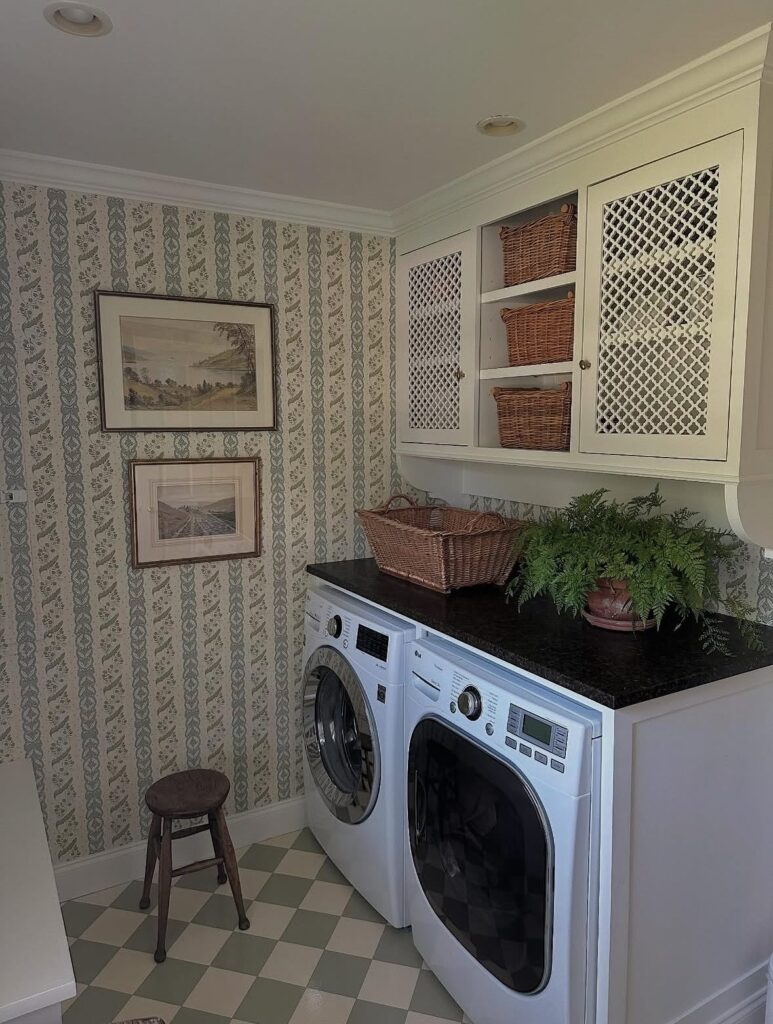
Vertical stripe wallpaper in a muted sage and cream pattern — like the one running floor to ceiling here — holds up surprisingly well in a laundry room because the pattern breaks up what’s usually just a blank wall behind the machines. The key is keeping the rest of the room pale and fairly plain so the wallpaper isn’t competing with anything. White cabinetry helps.
So does a dark countertop, which grounds it. If you’re renting or not ready to commit, peel-and-stick versions of traditional stripe prints have gotten decent enough that you won’t regret trying one. The framed prints on the wall are worth copying too — small landscape prints in wood frames cost almost nothing at estate sales and make the room feel less like a utility space without much effort at all.
Use Wicker Storage
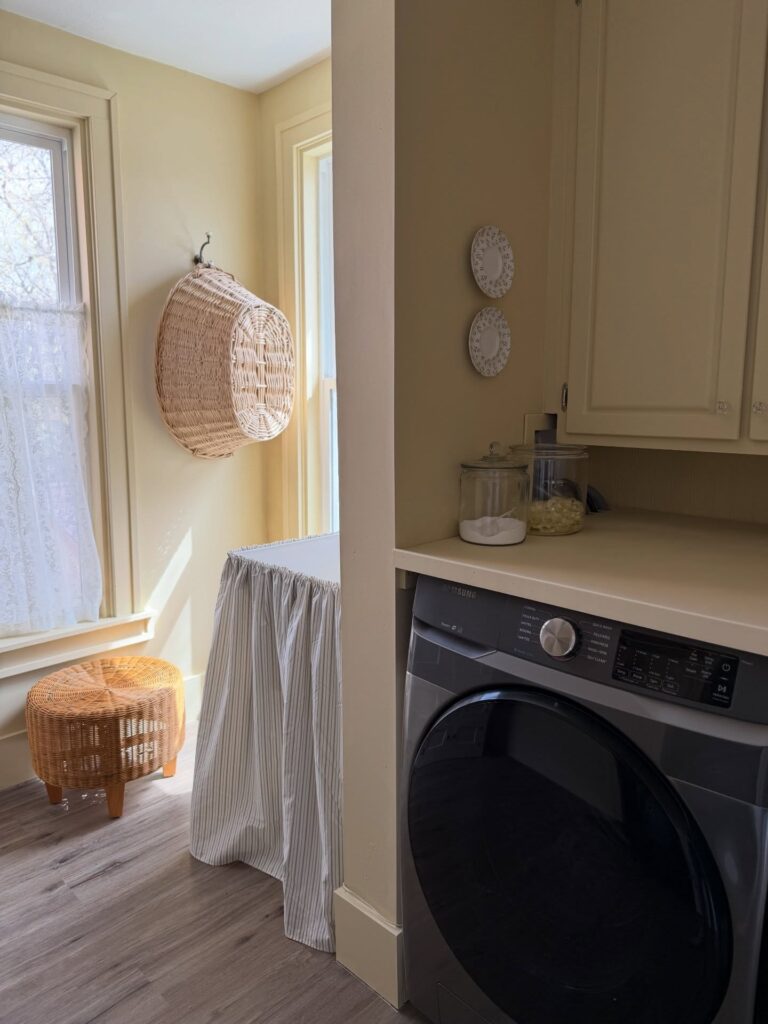
Over by the window, a hanging wicker basket can take the place of another plastic tub or shelf. Use one for clothespins, dryer balls, small cleaning rags, or all the odd bits that usually end up on the counter. Keep it near natural light if you have it, because the weave throws a nice little shadow without needing extra decoration.
Small thing. A lidded wicker stool or basket below can hold extra towels, pet blankets, or lost socks until you deal with them later. I’d skip storing anything damp inside wicker, though, since it can trap smell faster than a plastic bin with holes.
Hang Everything From The Ceiling
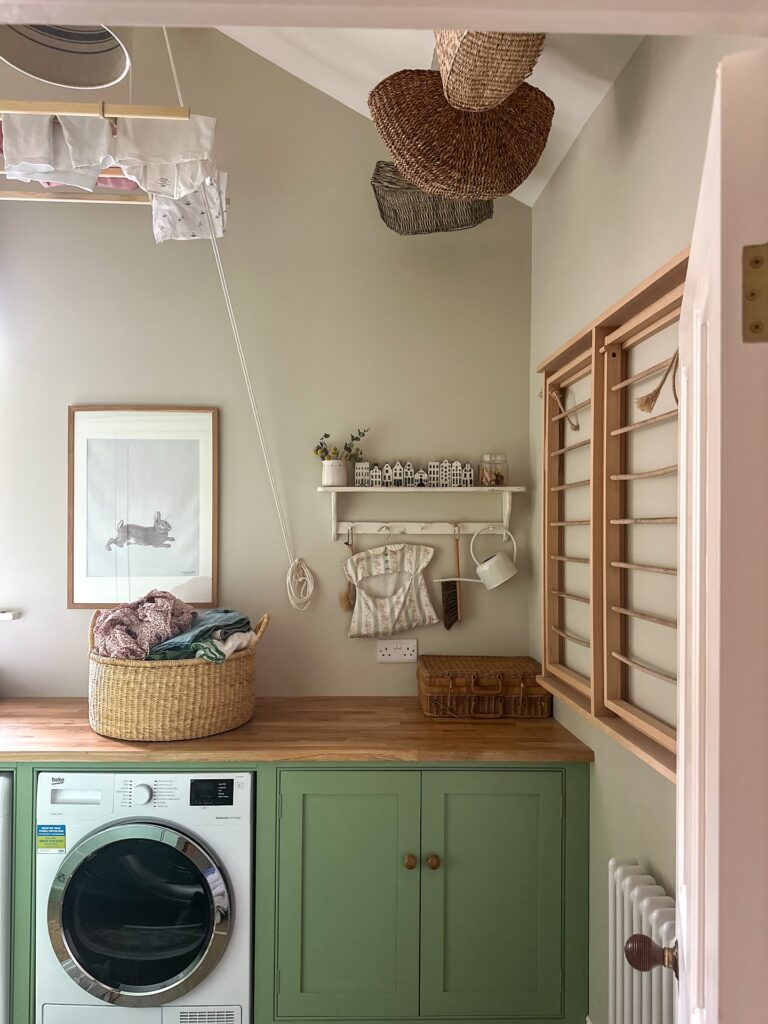
The pulley airer above the washing machine is doing real work here. Wet sheets go up, out of the way, and dry slowly in the warmth that collects near the ceiling. If you have the height for it, a Sheila Maid or similar wooden airer costs less than a tumble dryer cycle over a year and takes up zero floor space.
The wall-mounted wooden drying racks on the right are the other clever bit. They fold flat when you don’t need them.
One thing I’d change. Storing wicker baskets on top of a rafter looks lovely but they collect dust you can’t reach without a ladder. Fine for a photo. Annoying in practice. I’d keep the airer and the fold-down racks, skip the basket display.
Add a wood counter
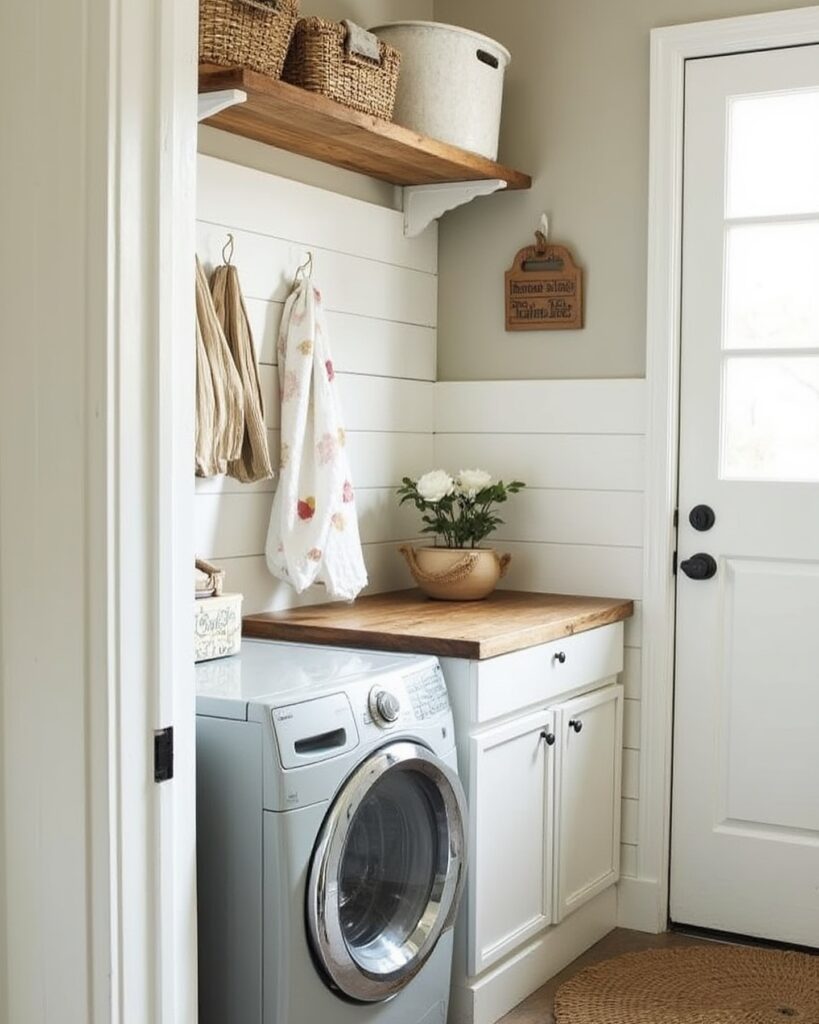
A wood counter over the washer does a lot here. You get a spot to fold shirts, set down a basket, or keep a small bowl of flowers so the room doesn’t feel all machine.
Then carry that same practical look upward with one thick shelf and a row of hooks on shiplap, because open storage works best in a laundry room when the things left out are the things you grab every single wash day. Keep baskets on the top shelf for extra soap, cloths, or odd socks, and hang only two or three linens below so it stays useful instead of turning into a little display wall.
The white cabinet base helps. It keeps the wood from feeling heavy.
I’d skip anything too polished here. Slightly worn baskets and a counter with visible grain suit this look better.
Put Something Pointless on the Washer
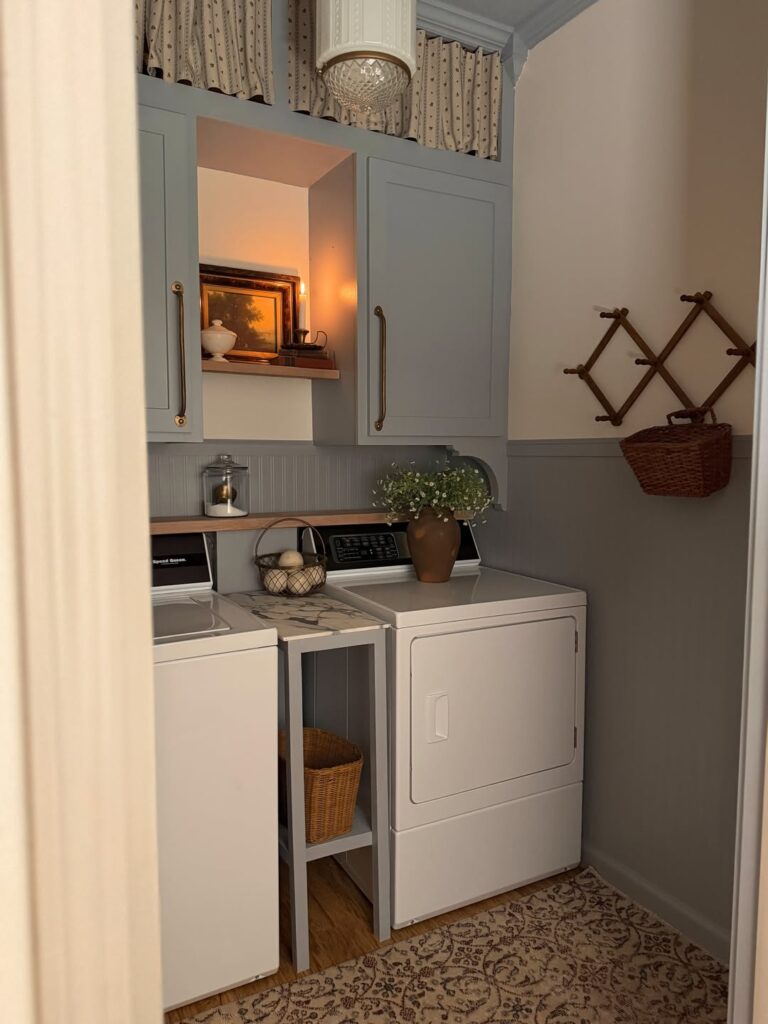
The terracotta pot with small white flowers sitting on top of the dryer is doing nothing practical, and that’s exactly the point. Laundry rooms feel utilitarian because every single thing in them has a job — so one object that just sits there changes that. A small vase, a ceramic jar, anything with a little height.
The open shelf between the two machines holds a wicker basket, which keeps the look grounded rather than precious. If you don’t have that gap between machines, a tray on top works the same way — gives the decorative stuff a defined spot so it doesn’t just look forgotten up there. I’d probably skip real flowers here since the humidity will get them fast.
Dried stems or a sturdy potted plant holds up better.
Shelf With Peg Hooks
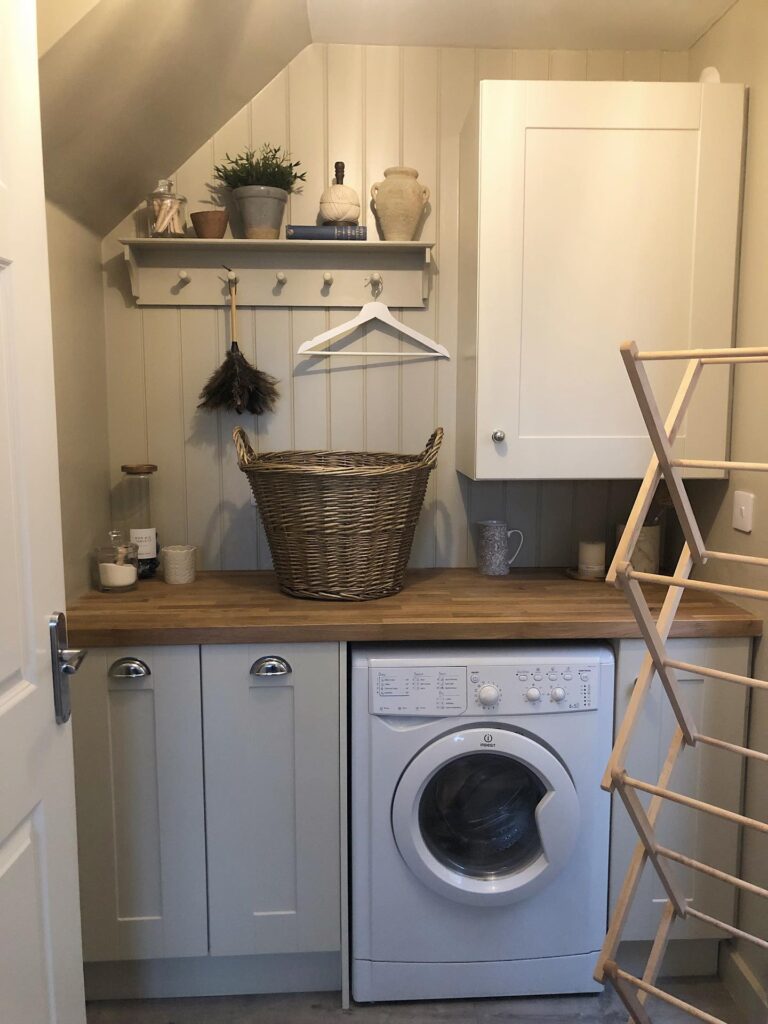
Once the washer is tucked under a timber counter, the wall above can do more than hold a print. Keep it useful. A slim shelf with peg hooks gives you a place for a small plant, jars, a brush, and that one hanger you always need when something cannot go in the dryer.
The wicker basket on the counter also helps, because it hides laundry bits without needing another cupboard. I’d use the top shelf for lighter things only, especially if the hooks are holding brushes or damp cloths below it. A little unevenness is fine here.
That is what keeps it from looking like a showroom laundry.
Green Trellis Wallpaper With Blue Cabinets
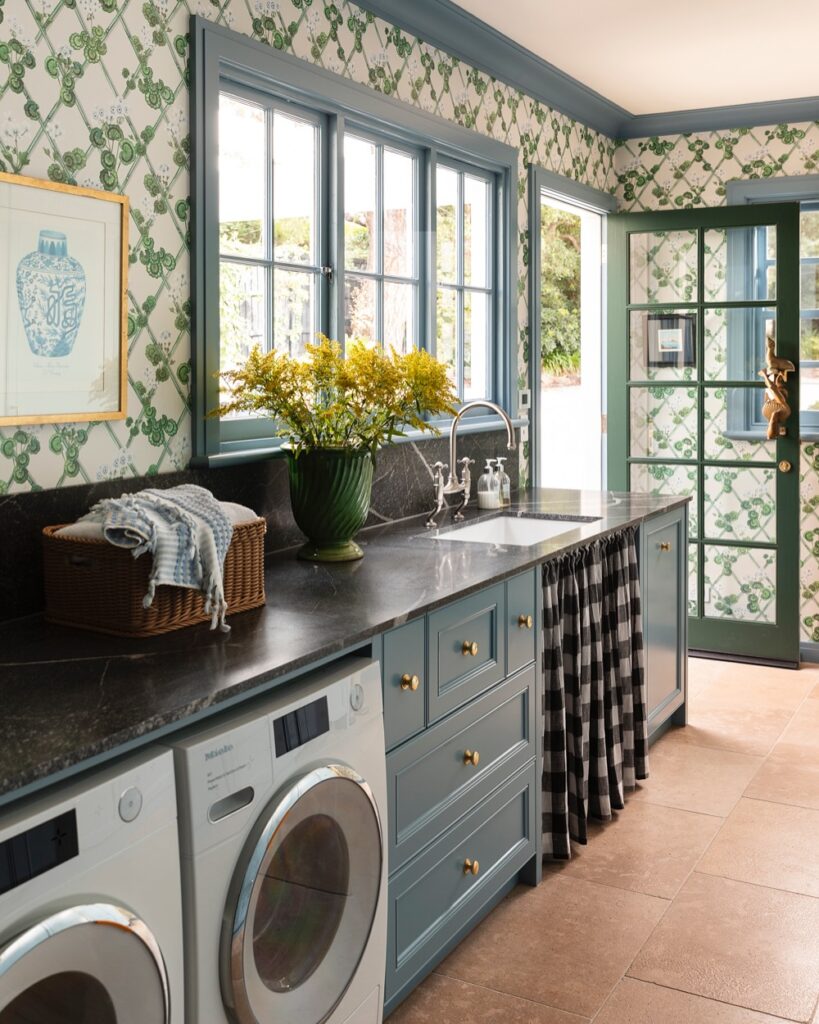
The wallpaper does most of the heavy lifting here. It’s a green trellis pattern climbing every wall, even wrapping around the door, and it makes the room feel like a garden folly rather than a place where dirty socks live. Pairing it with soft blue-green cabinets and near-black soapstone counters keeps it from tipping into cutesy.
If you want to try this, commit fully. Half a wall of pattern looks nervous. The gingham skirt under the sink is the detail I’d actually copy first, since it hides plumbing and softens all that stone.
One caveat. Busy wallpaper in a laundry room means you’ll see every scuff near the machines, so budget for a wipeable version or a vinyl finish rather than uncoated paper.
Striped fabric under the counter
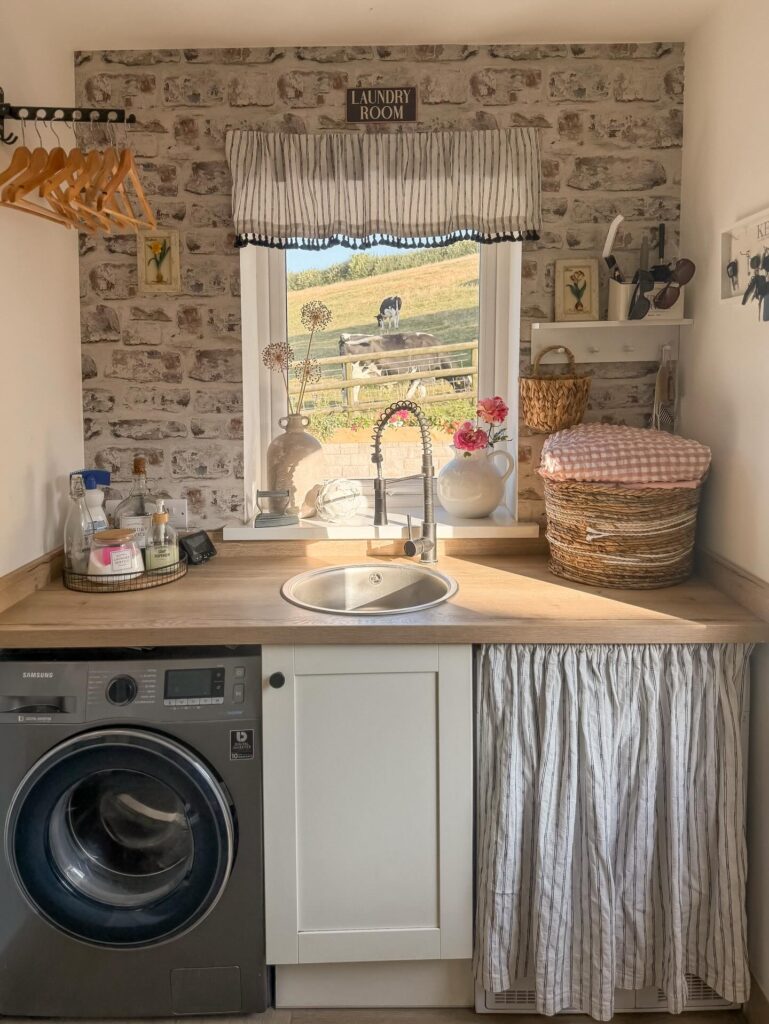
Skip upper cabinets here. The striped curtain under the worktop does most of the visual work, and it’s a lot kinder to a narrow laundry room than another block of doors. Use a ticking stripe or thin farmhouse stripe, then hang it from a simple tension rod so you can pull it off and wash it with the rest of the load.
The little window valance matters too. Repeating the same stripe up top ties the sink wall together, especially when you’ve got open shelves, baskets and bottles that can start looking busy fast.
This suits people who store awkward things. Mop bucket, detergent bulk buys, drying rack.
I would only be careful with very floppy fabric, because it can slump into whatever vent or appliance opening you’ve got underneath.
Build a Counter Over Your Machines
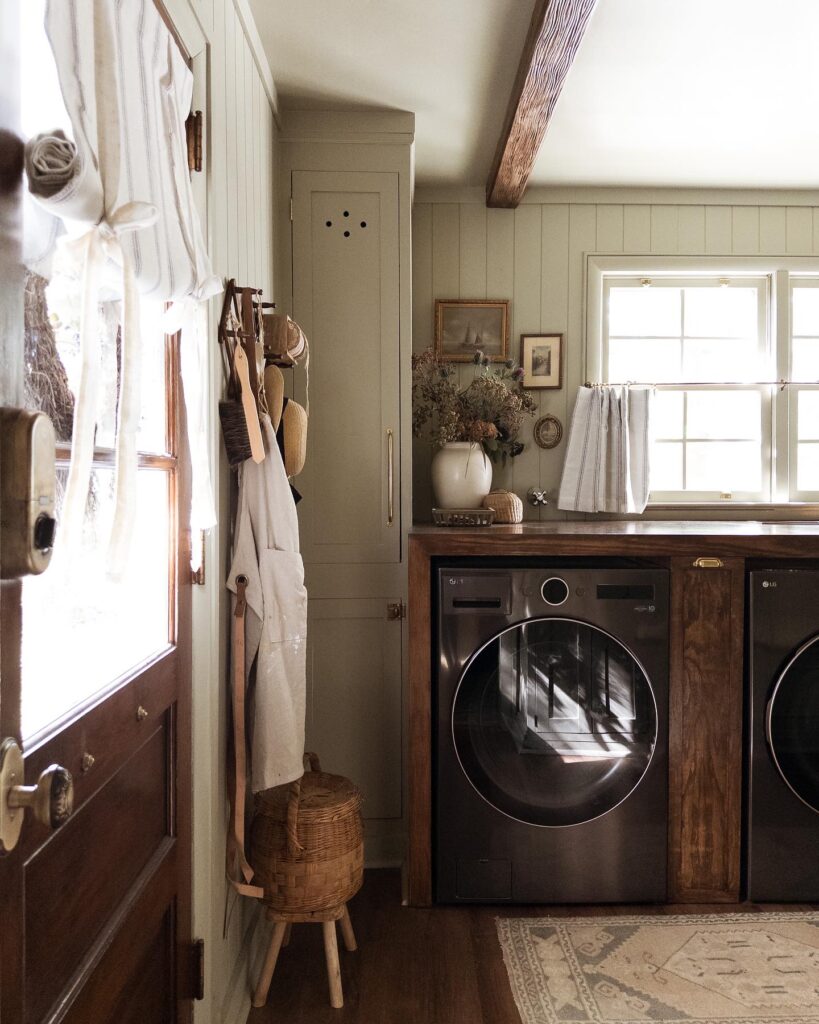
That dark wood countertop sitting across the washer and dryer does more work than people give it credit for. It turns dead air space into somewhere to actually set things — a vase, a small tray, whatever needs a surface. The wood here is thick and fairly dark, which is what stops it from reading like a basic shelf.
If you’re building one, don’t go thin. Around 1.5 inches minimum, and pick a wood with some grain to it. The tall sage cabinet beside it pulls the eye upward and hides whatever you don’t want out.
That combination — counter plus floor-to-ceiling storage — is really the whole idea. I’d skip the dried florals personally, dust magnets, but the white ceramic vase itself works well against that muted wall color.
Woven Shades With Baskets
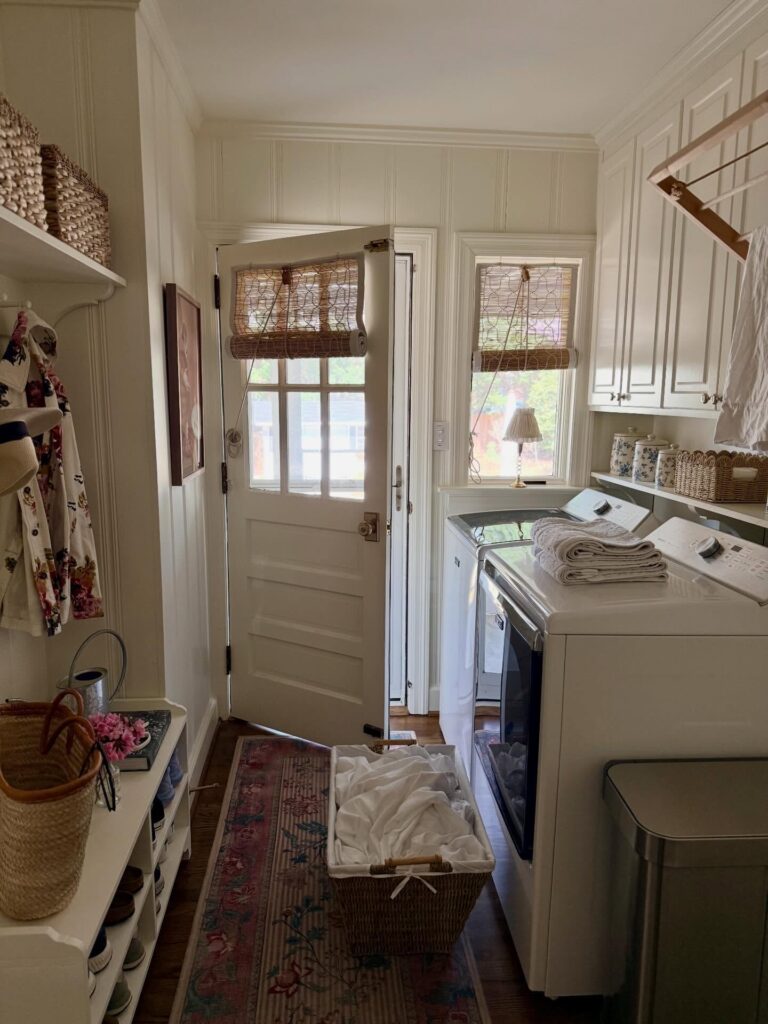
Those woven shades are doing more here than a plain blind would, mainly because they bring in texture without taking up any counter space. Use the same idea on a door window or side window, then repeat the material with a hamper, shelf baskets, or a narrow laundry basket on the floor. Keep it practical.
If the room is tight, choose baskets with straight sides so they sit against the wall and don’t steal walking space. The folded towels on the washer also help, because cottage laundry rooms look better when the useful things are the decor. I’d skip loose baskets up high unless you actually use them.
Skirt The Sink Base
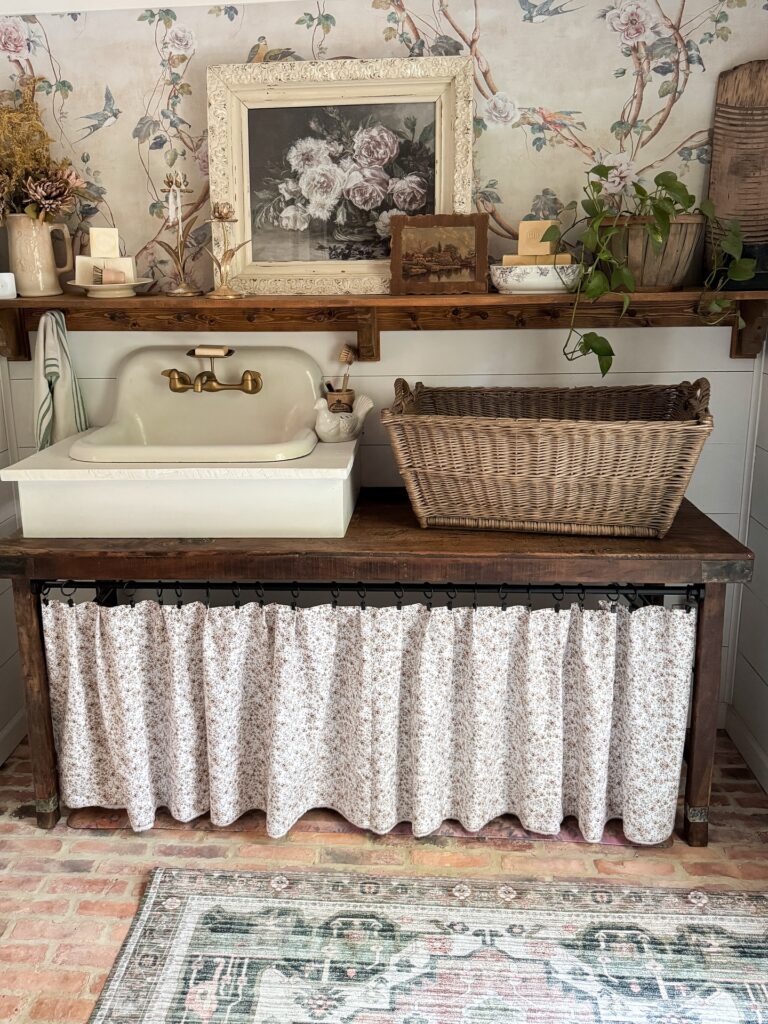
The floral curtain hung on a rod under this worktable does the same job a cabinet door would, but softer, and cheaper. Anyone with an open-base vanity or a utility sink on legs can copy it in an afternoon. You need a tension rod or two cup hooks, a hemmed panel, and clip rings.
Pick a small print. Big botanicals fight with wallpaper like the birds-and-roses behind this sink, so if your walls are already busy, keep the skirt quiet.
One thing I’d change. The clip rings here show above the fabric, which I find fussy to look at — a rod pocket hides everything and costs nothing extra to sew. Wash it when it gets splashed. That’s the whole appeal over a wood door.
Floral wall focus
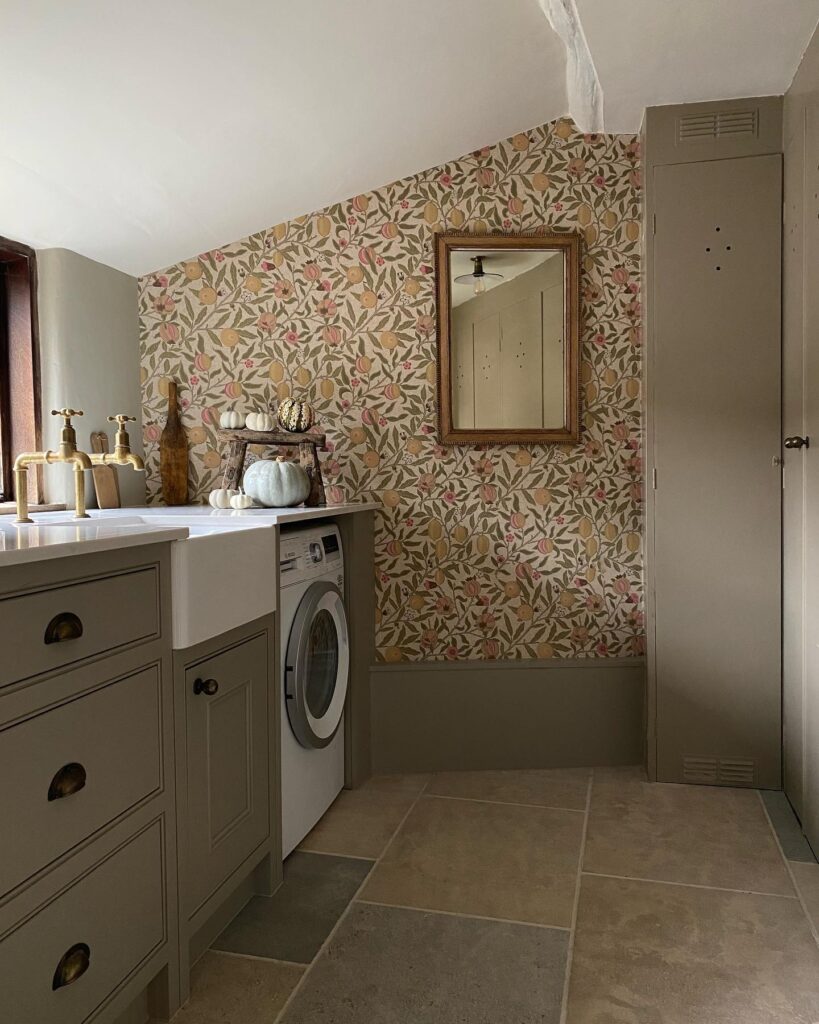
Start with one wall. A fruit-and-vine wallpaper like this gives a cottage core room some shape without making the whole laundry area feel busy, especially when the cabinets are painted in that muddy taupe-grey instead of bright white.
Keep the rest plain. The shaker fronts, cup pulls, and a simple framed mirror stop the pattern from turning sweet in a fussy way, and that matters in a working room where you already have baskets, detergents, and drying bits adding visual clutter.
The sink helps too. A deep Belfast style sink and aged brass taps bring in that old-house note people want, but they still make sense beside a washing machine.
I’d skip adding more prints. Use a painted plinth, stone-look floor tile, and maybe one wooden board or stool, then leave it there.
Build a Counter Over the Machines
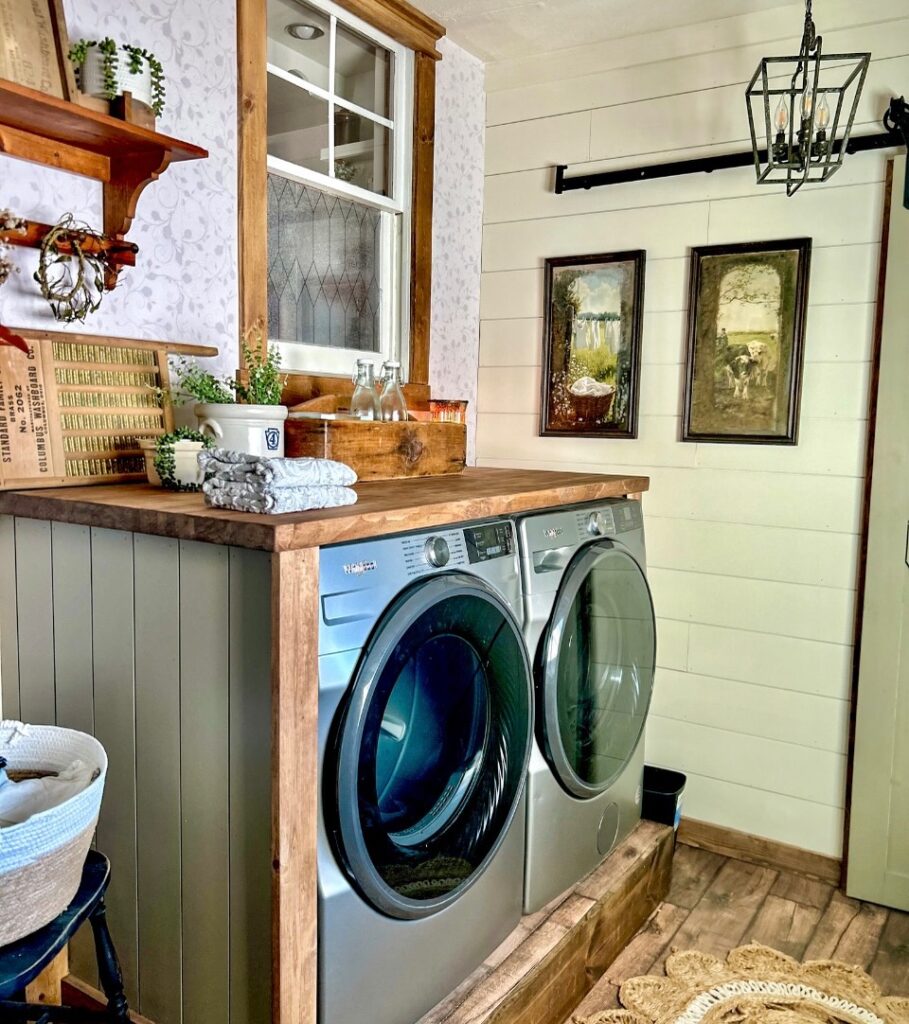
That butcher block sitting on top of the cabinet enclosure is doing a lot of work — folding surface, staging area, and the main reason the machines don’t look like appliances dumped in a room. The trick is building a simple frame around your washer and dryer with painted shiplap or beadboard panels, then laying a thick wood top across it. Gray-green paint on the lower panels keeps the machines from reading as the focal point.
On top: a wooden crate, a couple of small plants, folded towels. Nothing precious. The framed pastoral prints on the shiplap wall pull the whole thing further from “utility room,” and that’s where most people stop short — they fix the machines but leave the walls bare.
Floral Wallpaper Above Tile
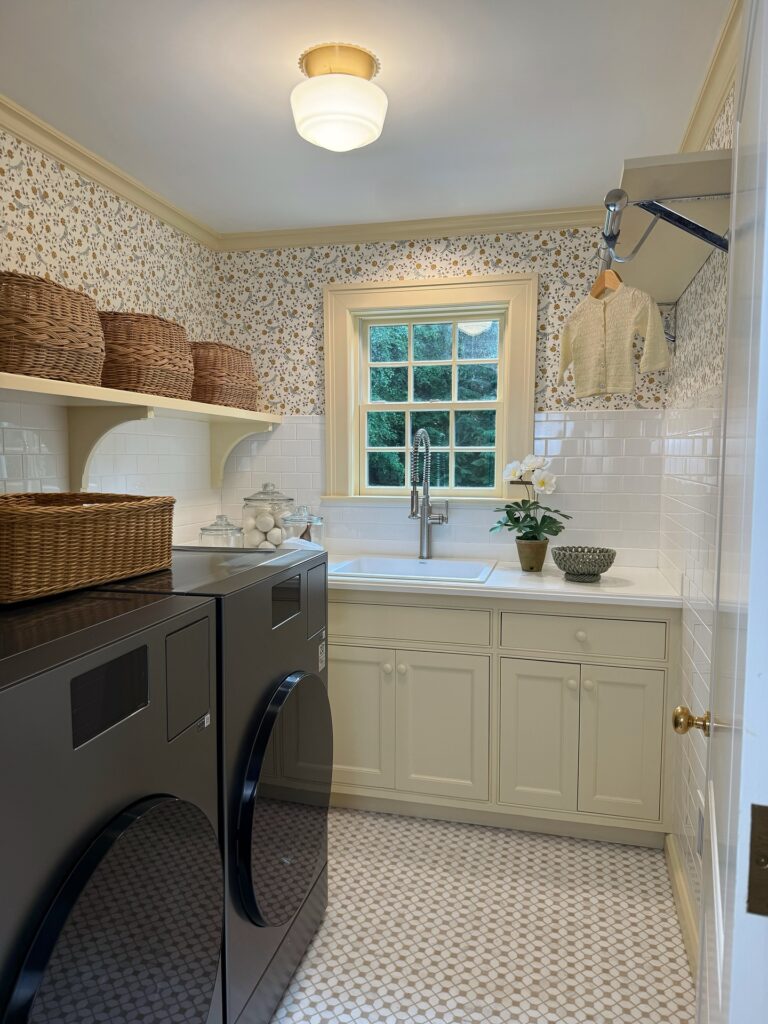
Above the tile line is where floral wallpaper makes the most sense in a laundry room, since splashes stay on the subway tile and the pattern still gets seen. Keep it washable. A small print like this works better than a large one because it does not fight with baskets, cabinet fronts, and all the little cleaning things that end up here.
Run the tile to about counter height, then let the wallpaper sit above it with a cream trim between the two, so the wall has a proper stopping point. Wicker baskets on an open shelf help the look feel less like a utility corner. I’d skip loose fabric bins here; they hold lint and never sit straight for long.
Layer In A Small Lamp
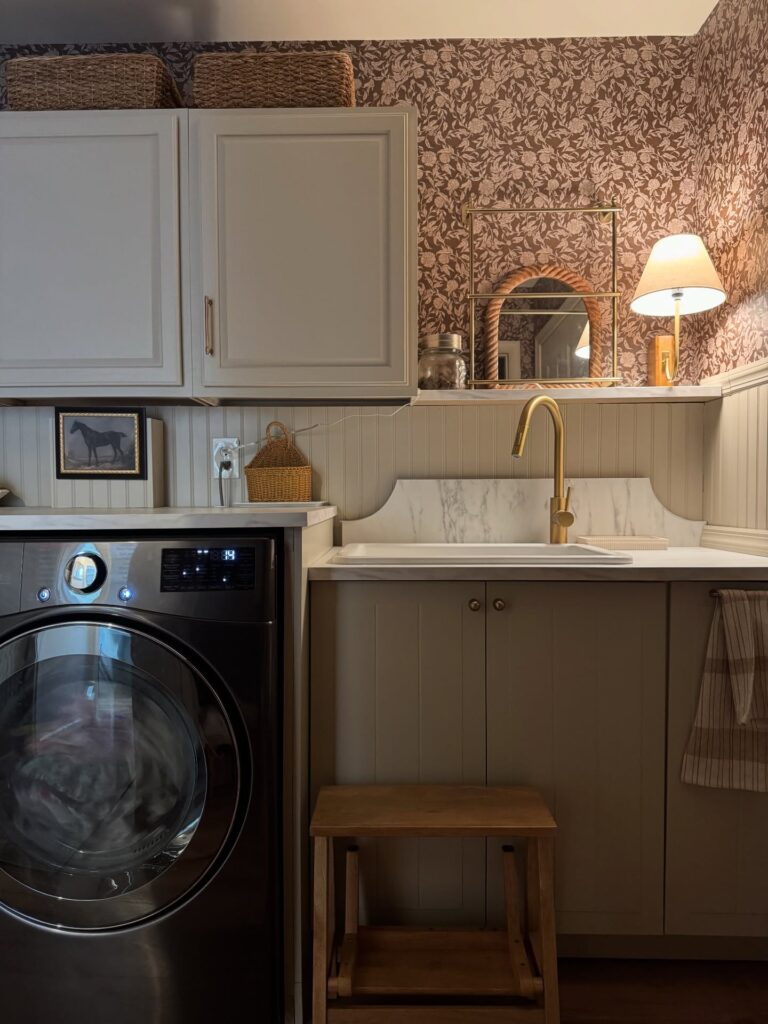
A lamp on the counter changes everything about doing laundry at night. The one here sits next to the sink, small pleated shade, warm bulb, and it does more for the room than the overhead light ever could. Most laundry rooms get one harsh ceiling fixture and that’s it.
Add a lamp. You want something short enough to tuck under a shelf or upper cabinet, and a shade that softens the light rather than throwing it around. A brass base plays well against the busy floral wallpaper behind it.
If you’re worried about outlets, a small rechargeable cordless lamp works too, though I’d pick a plug-in for how much you’ll actually use it. Pair it with a framed picture and a basket, like the horse print and wicker basket here, and the counter stops looking like a work surface.
Shelf and rail combo
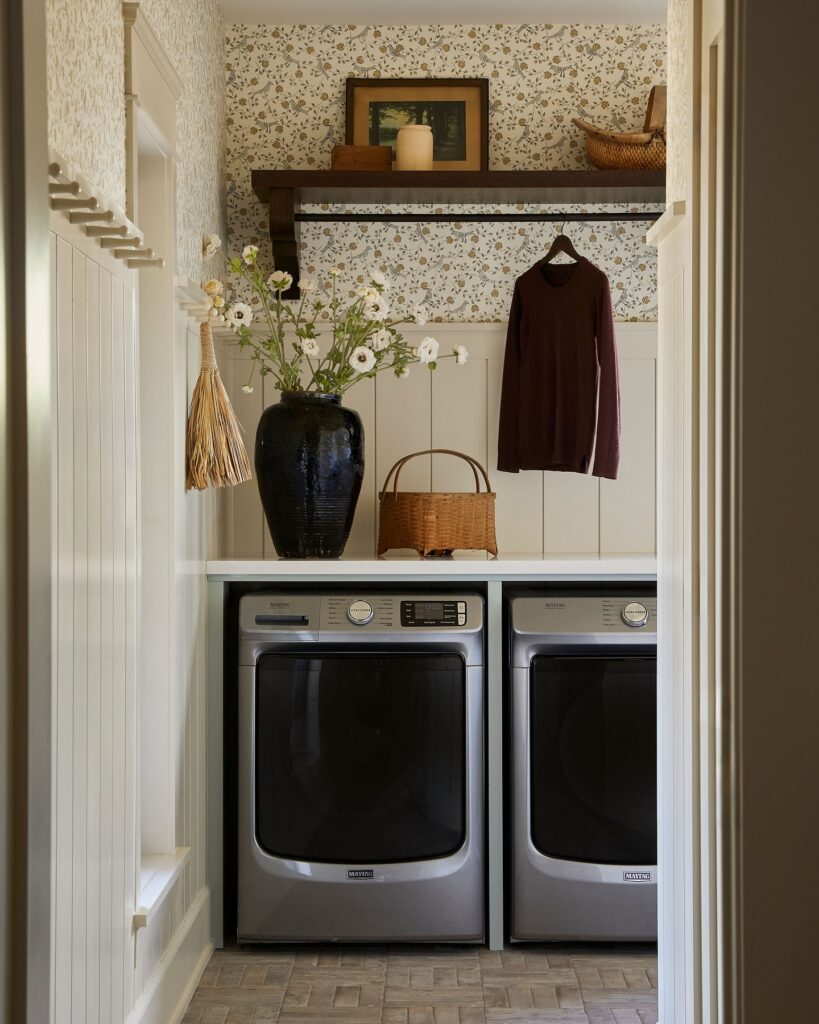
Start with the back wall. A simple rail under one dark wood shelf gives you the two things a laundry room usually needs most: somewhere to hang one or two air-dry pieces, and a ledge for the bits that would otherwise drift onto the machines.
The reason this works is the mix. Floral wallpaper above paneling can get busy fast, but the straight white boards, black vase, and solid shelf hold it in place so it doesn’t feel fussy.
Keep the hanging area sparse. One knit, maybe a shirt.
If you want this look without wallpapering the whole room, just paper the upper half behind the machines and run paneling or beadboard below it, which also stands up better to bumps from baskets and detergent bottles.
Wallpaper That Does the Heavy Lifting
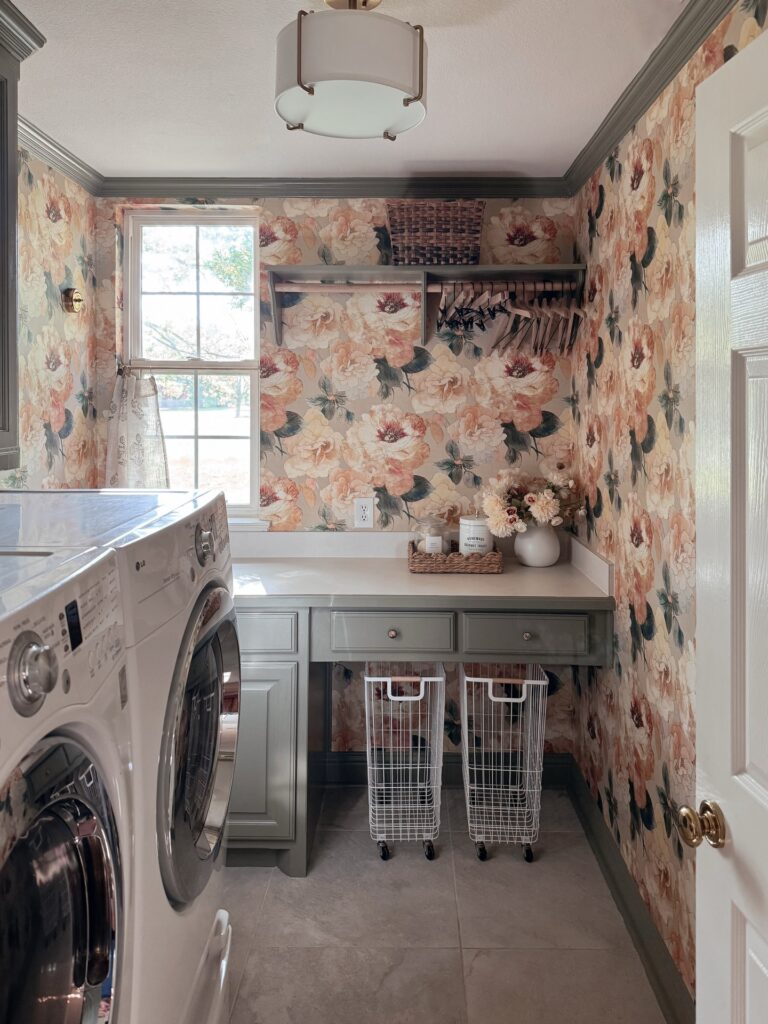
Most laundry rooms get painted one flat color and left at that. But the large-scale floral wallpaper here — peach, cream, dusty green — is doing more work than any accessory could. The sage cabinetry picks up the green in the leaves, so nothing looks random.
That’s the part people miss when they try this: the wallpaper has to share at least one color with a fixed element, otherwise the room just looks busy. Peel-and-stick versions of oversized floral prints are widely available now, which makes this less of a commitment than it looks. Wire rolling hampers tucked under the counter keep the floor mostly clear, which matters more when the walls are this loud.
Skip the wallpaper if your laundry room has low ceilings — big prints need some height to breathe.
Sage Trim With Baskets
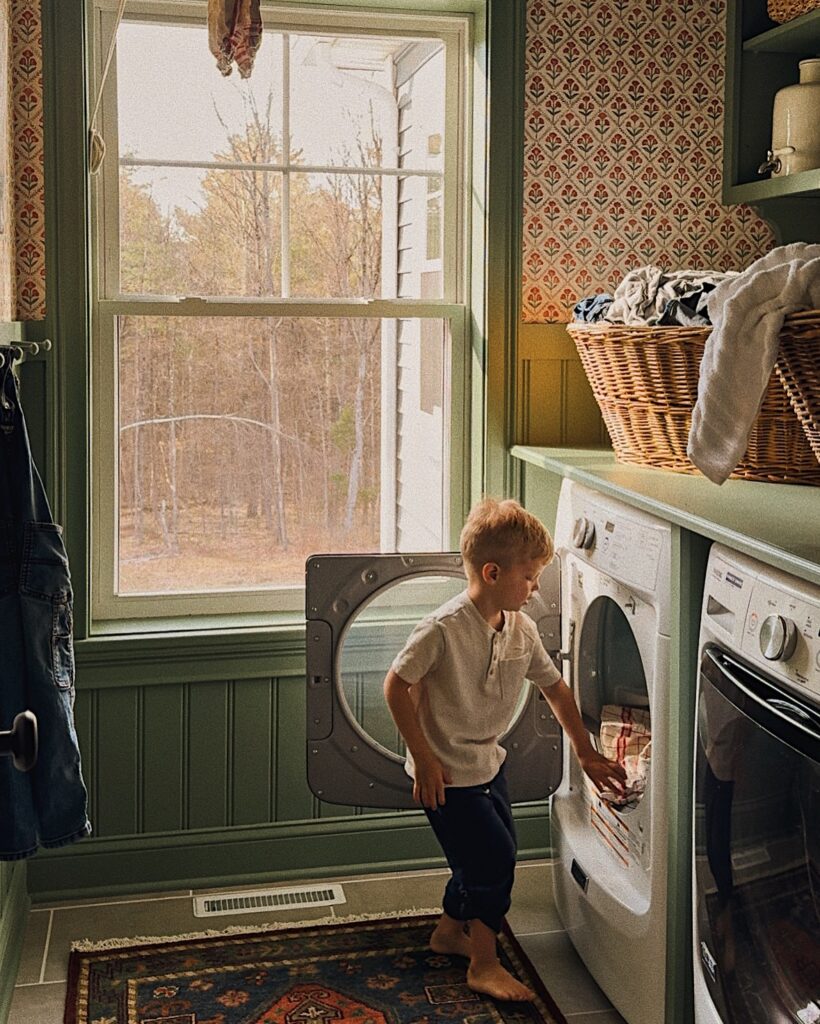
Around the machines, the sage paint does a lot of the work because it makes the washer and dryer feel less like appliances dropped into a room. Keep the color on the trim, beadboard, or a narrow shelf above the machines, then let the walls carry a small floral wallpaper if you want that cottage look without filling every corner. Very doable.
The wicker baskets are useful too, but I’d line them with cotton so socks and washcloths don’t catch on the weave. If your laundry room has a window, leave the frame painted instead of covering it with a heavy curtain, since that strip of green against daylight is the best part here.
Antique Hutch Above The Machines
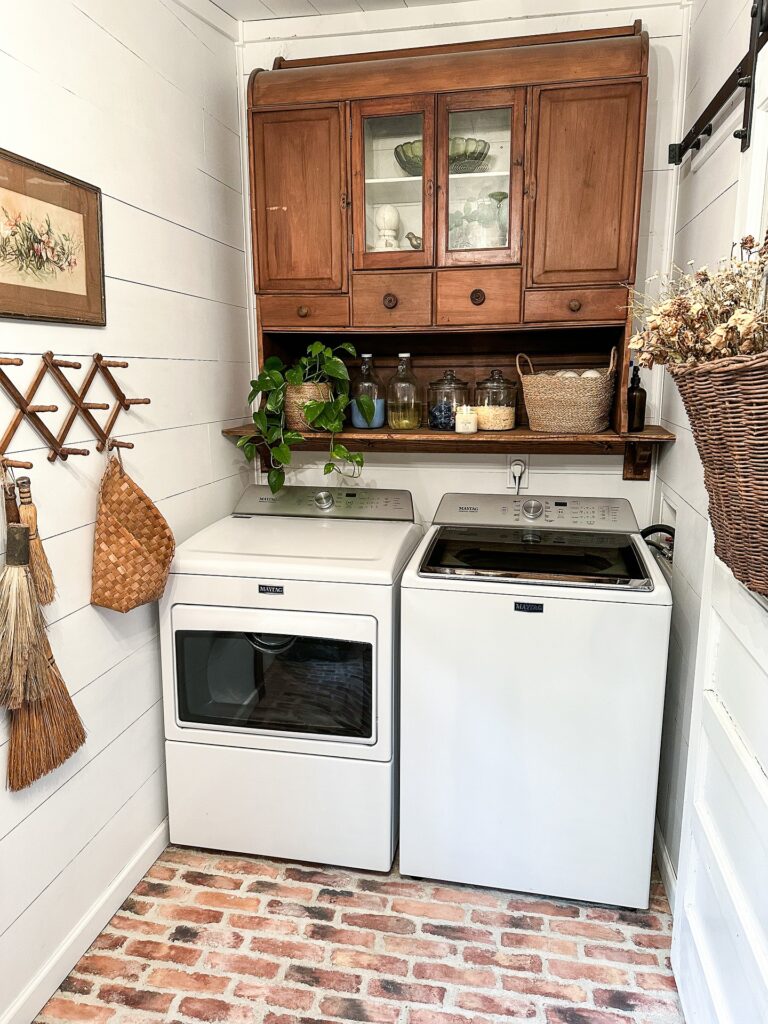
Mounting an old hutch top over the washer and dryer is the move here. It gives you glass-front storage for the pretty things and closed cupboards for the boring ones, all in the dead space above the appliances that usually just collects lint.
You’ll want the shelf below it for daily stuff. Detergent in amber bottles, a trailing pothos, a basket for wool balls or clothespins.
One thing. A salvaged piece like this is heavy, so it needs proper anchoring into studs, not drywall plugs. Skip that and you’ll regret it the first time the dryer shakes.
If you can’t find a hutch top, an old wall cabinet from a farmhouse kitchen works too. Look at estate sales before Facebook Marketplace. Prices are usually better.
Wall Shelf and Baskets
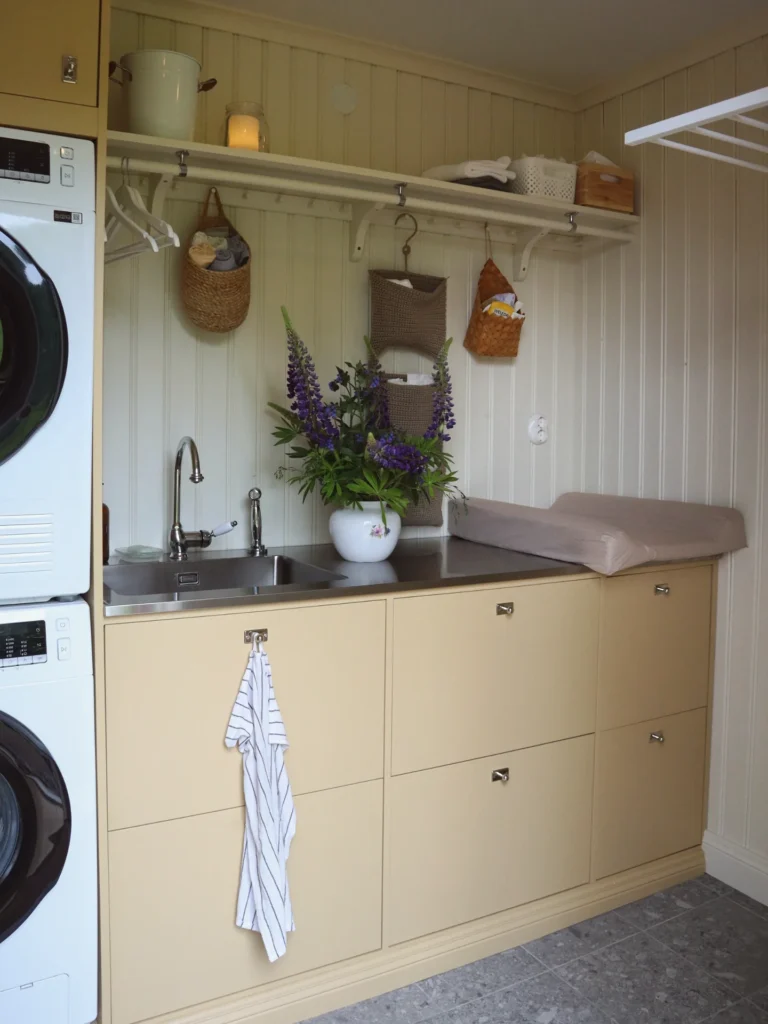
Start with the shelf. A single painted shelf with brackets does a lot in a small laundry room because it gives you a line for storage up top, a rail underneath for hangers, and space below for a few hanging baskets without filling the floor.
That mix matters.
Use woven baskets for the bits that usually drift around, like clothespins, stain pens, dryer sheets, stray socks, or small sewing things, and keep the ones you reach for most at arm level instead of stacked in a cabinet. The beadboard wall helps too, since the straight vertical lines stop the shelf area from looking busy even when you add hooks, baskets, and a few useful extras. I’d skip piling too much on the top shelf, though, because cottagecore can turn into dust-catching storage pretty fast in a laundry room.
Curtain Instead of Cabinet Doors
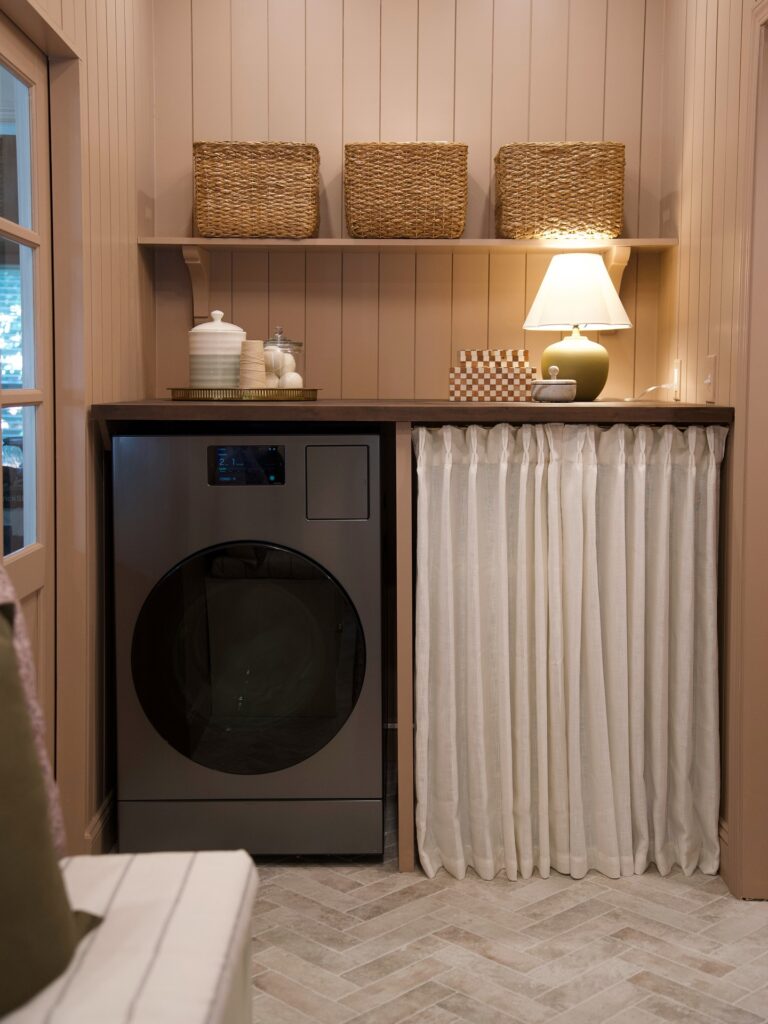
That cream linen curtain hiding whatever’s under the counter — laundry supplies, a second basket, cleaning bottles — costs a fraction of what cabinet doors run. A tension rod works if the counter above has enough clearance to anchor it, though a fixed rod screwed into the side panels holds better over time. The wicker baskets on the shelf above do a lot of the heavy lifting here, keeping the top shelf from looking cluttered while actually storing things.
Match the curtain fabric to the wall tone if you want everything to read as one unit, or go slightly off if you want the curtain to register as a deliberate choice. This setup suits rental spaces especially, since none of it requires permanent changes.
Gingham Counter Skirt
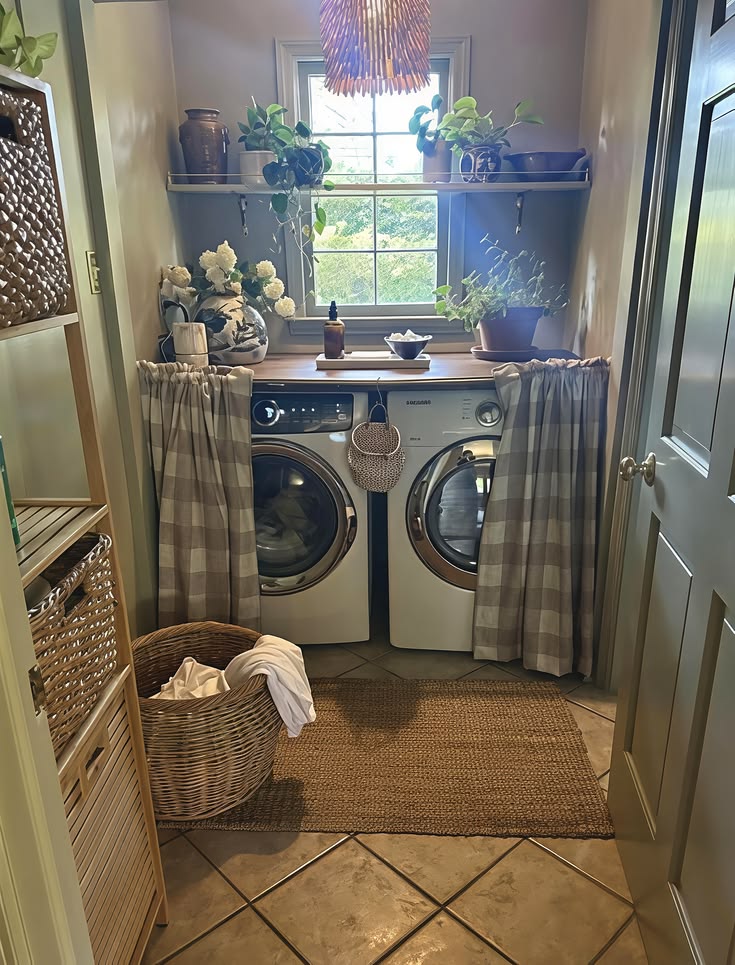
Instead of building cabinets around the machines, hang gathered gingham panels from a slim rod just below the counter. They soften the washer fronts without making the room feel too done. Keep them washable.
If your laundry area has that little dead space beside each machine, the curtain hides hoses, detergent refills, and the odd basket without needing proper carpentry. That counter matters. Use plain wood on top so you have one steady place for folding, sorting socks, or setting a plant pot near the window.
Skip heavy fabric here; it will drag, collect lint, and get annoying every time you reach for the filter. Thin cotton is enough.
Antique Hutch Over The Machines
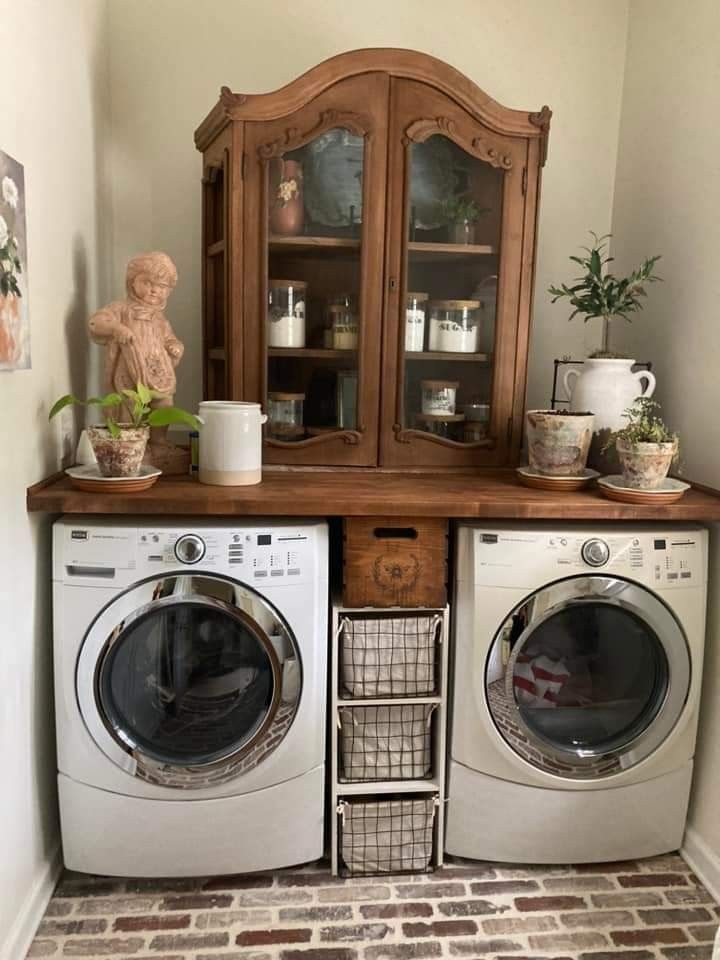
The wooden hutch sitting on top of the counter is doing all the heavy lifting here. Glass doors, canisters labeled sugar and flour, a little terracotta figurine tucked to the side. It turns the laundry zone into something that looks more like a pantry corner.
If you want to try this, hunt for an old china cabinet top at an estate sale. Just the top half. Set it directly on a butcher block counter that runs across your washer and dryer.
One thing I’d change. Those wire baskets in the middle column look charming but wire snags on delicates and small socks fall through. Solid wooden drawers or lined baskets would save you the annoyance.
The brick floor pulls it all together.
Gingham under the sink
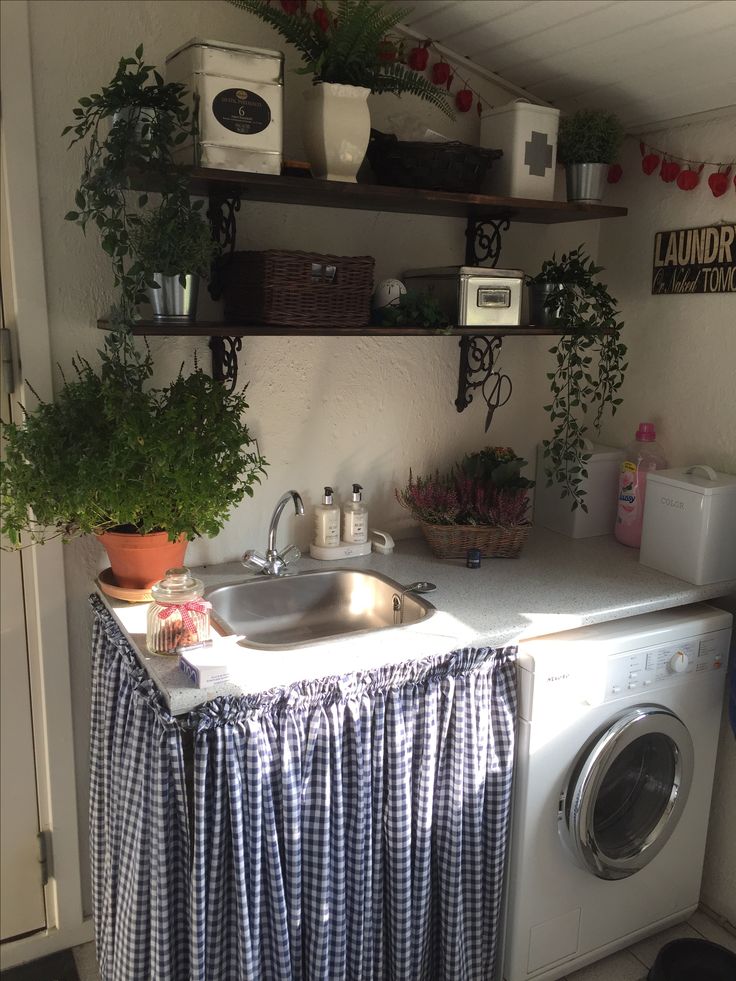
Start with the curtain. A gathered blue gingham skirt under the counter hides plumbing, softens the washer front, and costs less than replacing cabinet fronts in a small laundry nook. Keep the fabric short enough that it clears the floor by an inch or two, or it will catch lint and mop water fast. Then bring in one dark wood shelf, maybe two if your wall can take it, and use black iron brackets so the room doesn’t drift into looking too sweet. That contrast matters.
Use baskets and old-style tins up top for pods, clothespins, stain sticks, and odd bits you don’t want left out near the sink. Real or faux trailing plants help too, especially if your laundry area has no window view and needs something breaking up the hard appliances. I’d skip too many signs though. One is plenty.