
15 Stair Christmas Decor Ideas to Light Up the Staircase
This site contains affiliate links. We may earn a small commission, at no extra cost to you. Article may contain some images for illustrative purposes only .
Lit Garland and Wrapped Posts
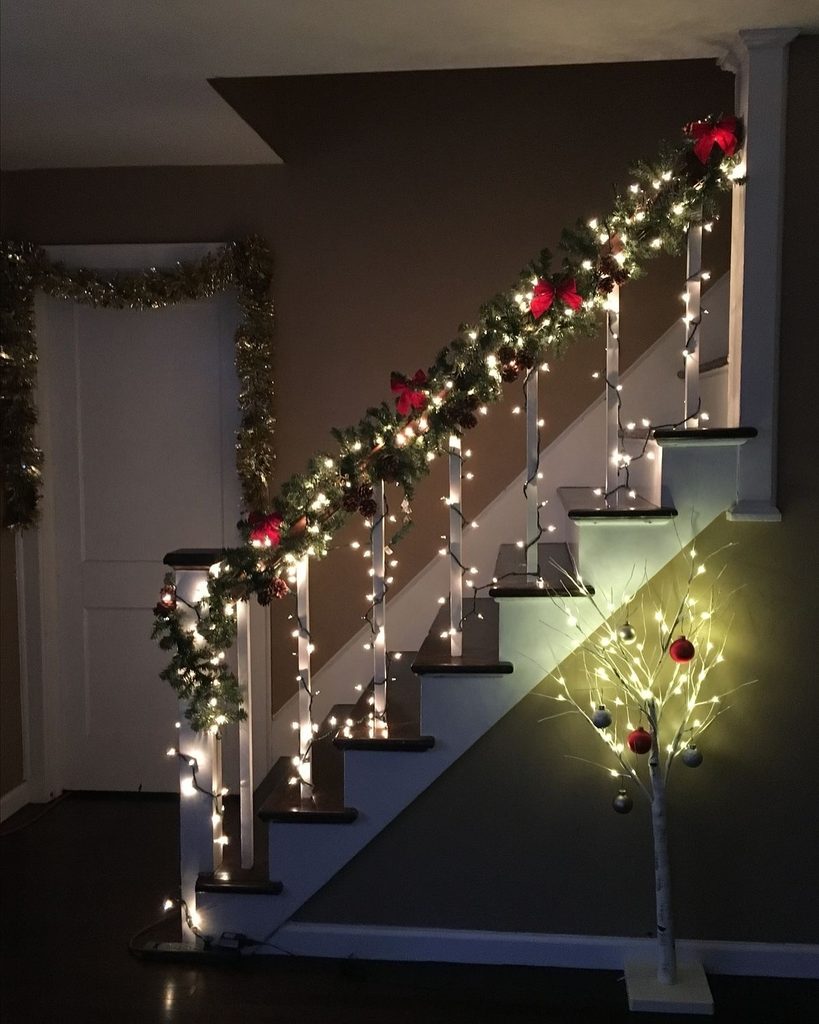
Most people stop at the handrail, but here the lights also wind down each white post, and that is what lights the staircase from top to bottom. The garland holds small white bulbs, with red bows spaced along it and pinecones tucked between them. A second strand spirals around every baluster. Light spills onto the dark treads and the wall behind, so the whole run reads as one glowing line in a dark hall.
Space the bows about an arm’s length apart. Match the bulb color on the garland and the posts, or the two layers look like they came from different boxes.
Wrapping every post takes patience. Start at the top and use your longest strands, so you only plug in once at the bottom.
Lit garland on spindles
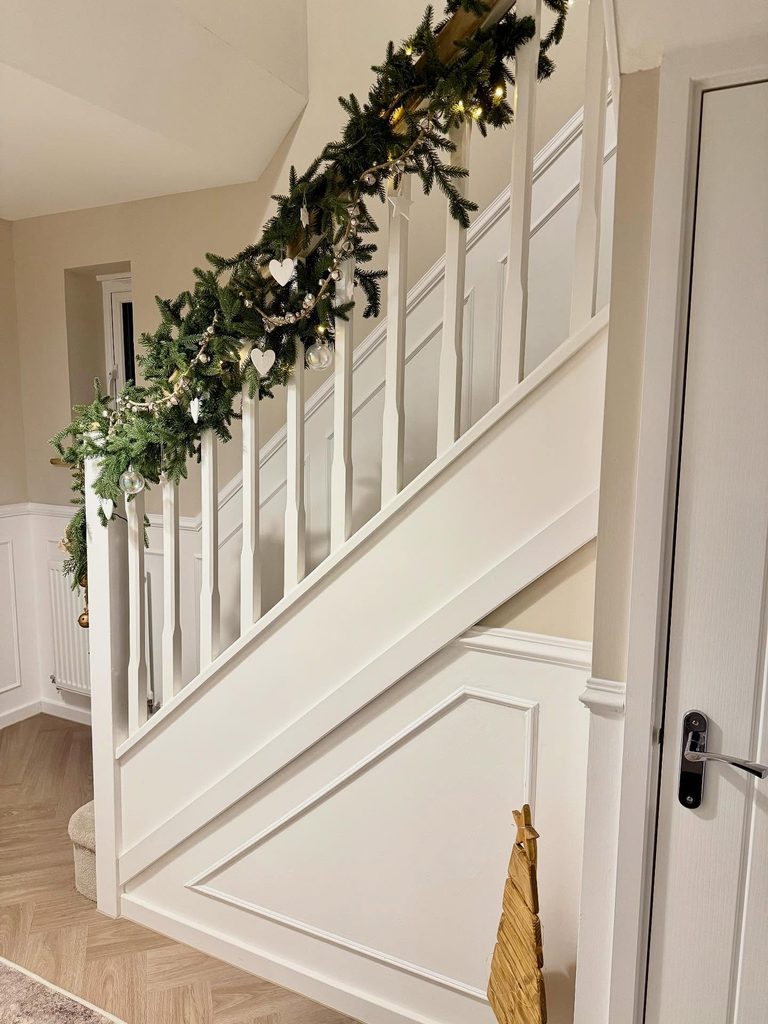
Wind a full green garland along the stair spindles and tuck in a string of small warm lights. It does the job fast. The lights break up the long run of white railing, so the whole staircase reads as part of the Christmas decor instead of a blank strip at the side of the hall.
Keep the garland close to the handrail and let it dip a little between posts. That shape looks fuller. A few hanging pieces, like white hearts or small baubles, are enough.
This suits a clean hall because the greenery adds weight without blocking the trim. If you want less fuss, skip the extra ornaments and keep just the lights and branches.
Paper Chains Over Garland
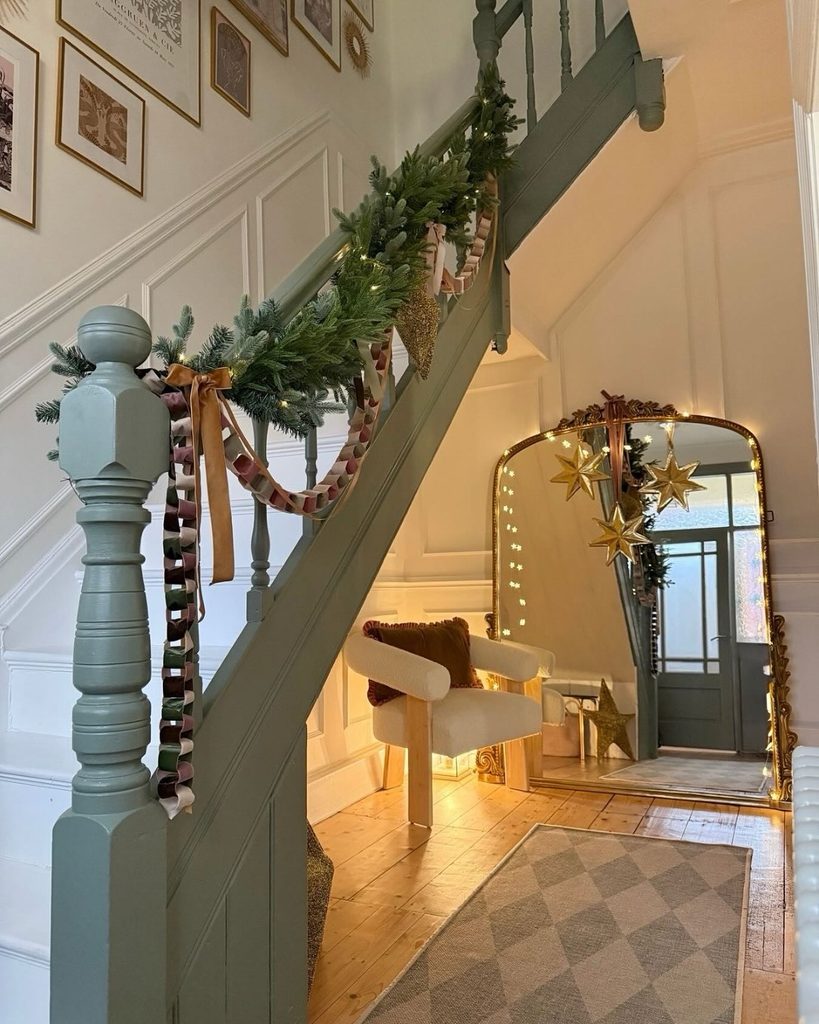
Looped under a fir garland, a paper chain gives the banister a second layer of color without adding more lights. Here the links are cut in dusty pink, sage, cream and deep red, which sit close to the green-gray paint on the rail instead of fighting it. Let one long length drop straight down the newel post.
It reads from the hallway. A wide ribbon bow at the top hides the spot where the chain is tied on. Use thick paper or card.
Thin paper curls and sags within days, especially near string lights.
Garland With Ribbon Bows
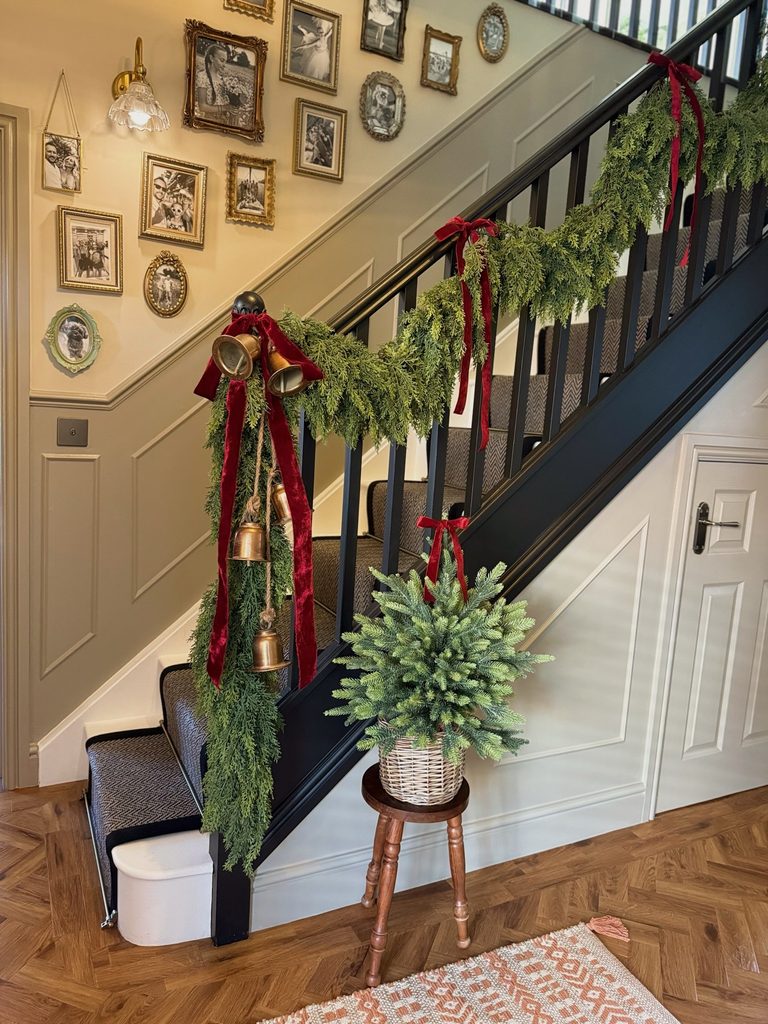
Drape a full evergreen garland along the banister and tie it at a few points with deep red ribbon. Let the greens hang lower at the newel post, where the eye lands first, and keep the rest tucked close to the rail so hands can still use it. Add bells there.
A small cluster of metal bells gives the bottom of the stairs weight without filling the steps. On a dark rail, this mix reads clearly from across the hall. If velvet feels too fussy, swap in cotton ribbon or plain twine, but keep the ties spaced evenly.
Paper Star Lanterns
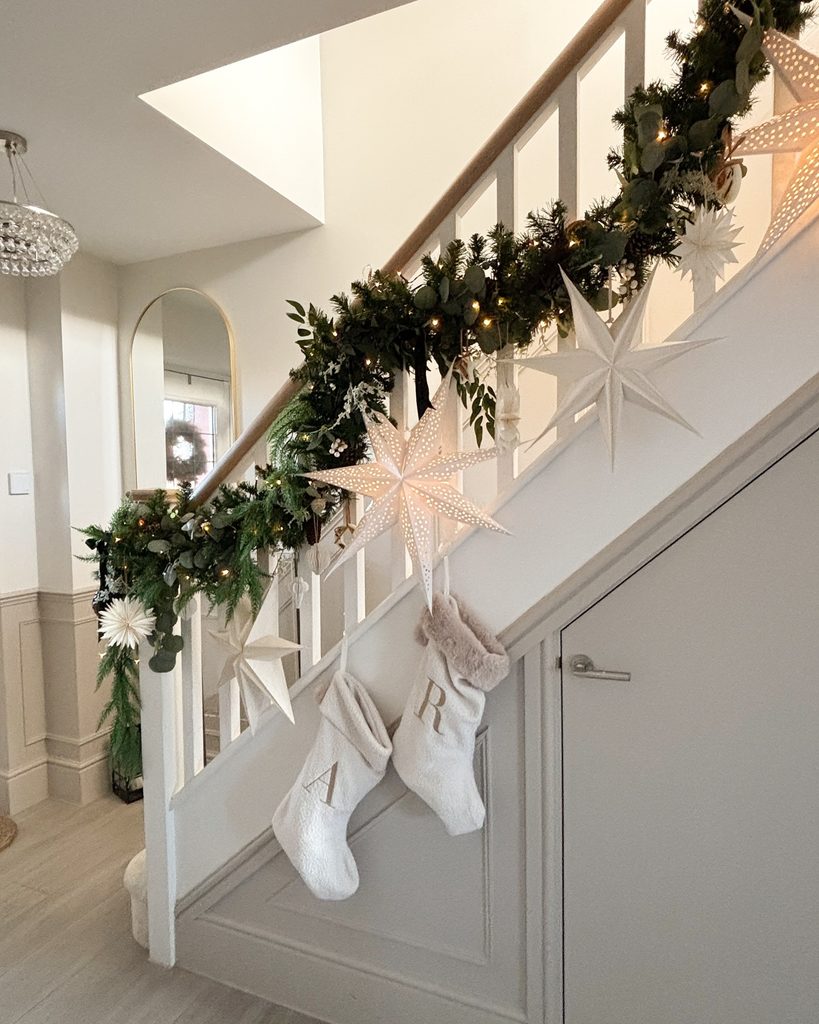
Paper star lanterns do a lighting job that a plain garland can’t. The ones here are white, with small holes punched through each point, so the light comes out as tiny dots instead of one flat patch. Hung from the banister rail, they sit in front of the greenery and light it from the side.
Vary the sizes. One big star near the middle, a smaller one lower down, and a flat paper starburst near the newel post keep the line from looking like a row. Space them unevenly. Even gaps read as a fence.
The garland matters too. Eucalyptus mixed into the pine gives the white paper a leafy background, and a string of small warm bulbs ties the two together.
Check the cords before you commit. Plug-in stars need an outlet, and a wire running down the stairs is a trip hazard. Battery ones are easier to place.
Garland with Oversized Ornaments
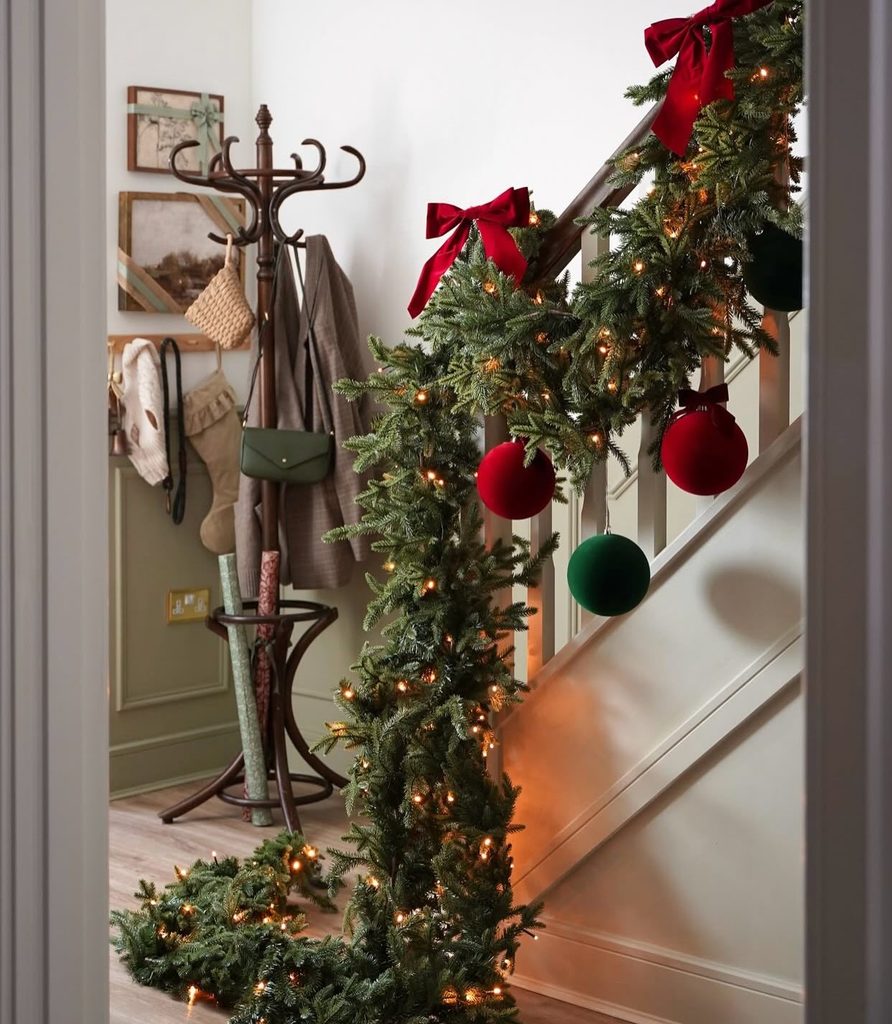
Wrap the banister in a full green garland, then hang a few oversized ornaments from the rail instead of packing it with small decor. This works for a staircase because the shape reads from far away, and the lights do the rest after dark. Keep it simple.
A red bow at the top and another near the middle break up the line, while warm string lights tucked deep into the branches keep the glow soft. The large red and green balls add color without making the railing look busy. This idea suits a front hall where the stairs are seen right away, and it also leaves the steps clear.
Two Small Trees at the Base
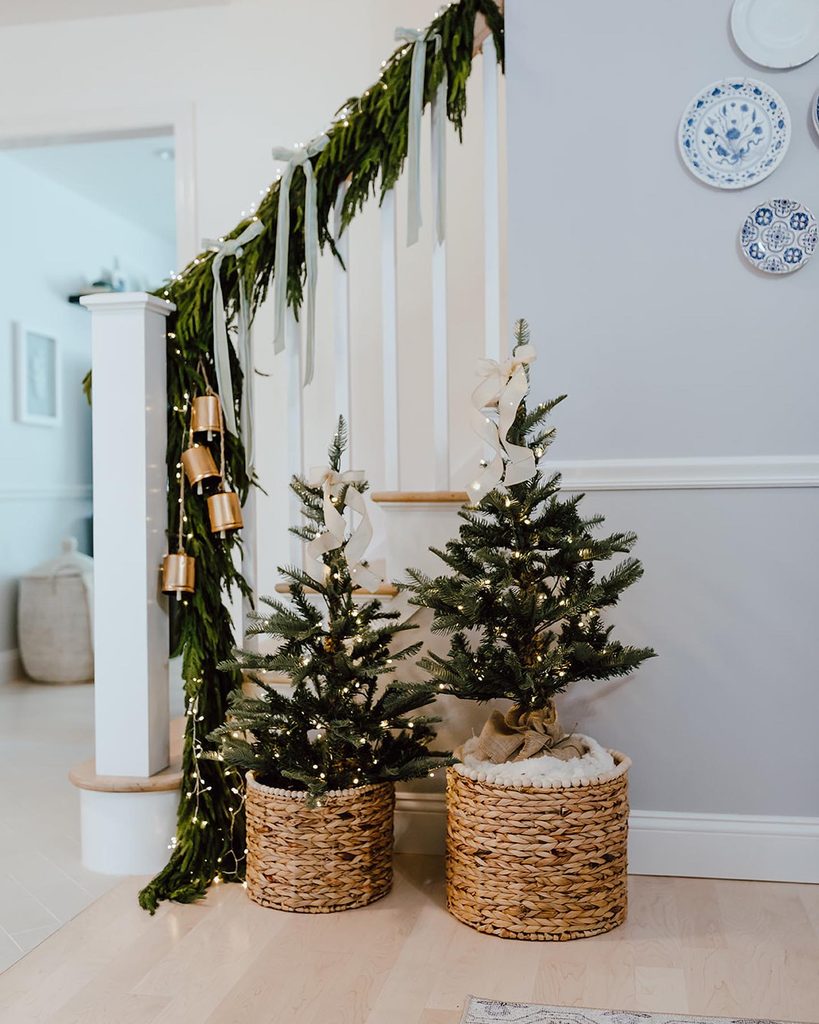
A pair of tabletop-size trees can stand on the floor beside the newel post, which puts light low on the staircase instead of only along the rail. Woven baskets work well. Here, one basket sits slightly taller than the other, and that small height difference keeps the pair from looking stamped out.
Wind warm fairy lights through the branches before you drop each pot in. Burlap or white fabric hides the pot. A cream ribbon tied near the top takes the place of a star, and it matches whatever ribbon you use on the garland above.
Mind the walking line, though. Stairs see a lot of traffic, and a basket in front of the first step is easy to kick.
Lighted Garland With Red Bows
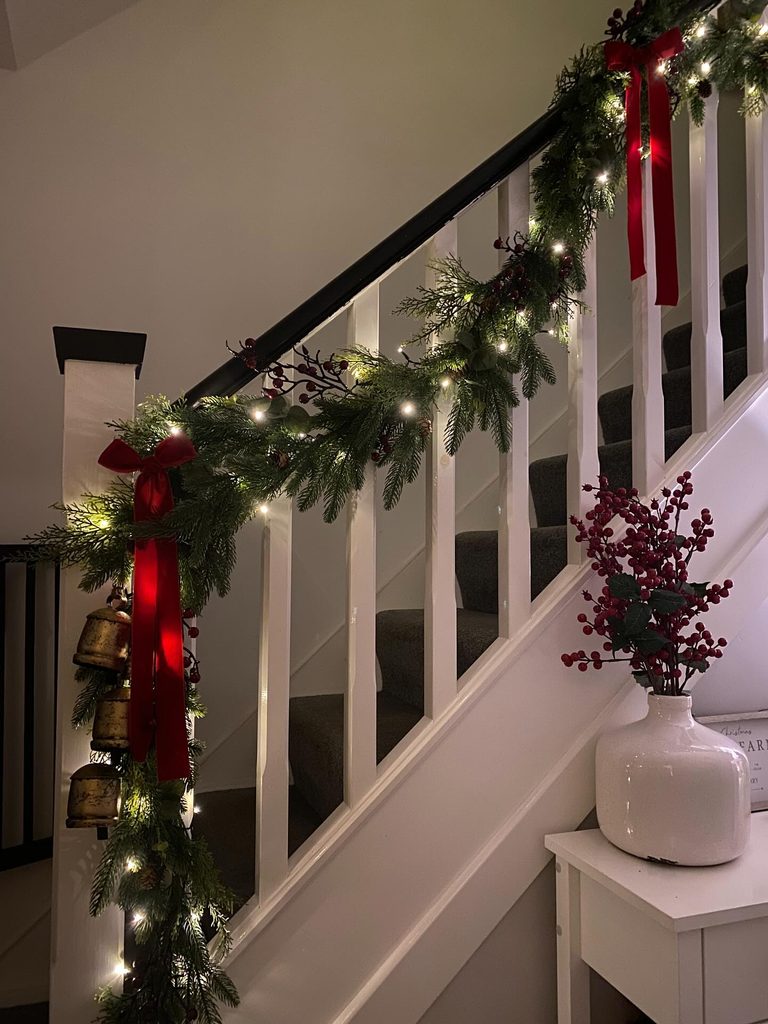
Run a lighted evergreen garland along the handrail and let it follow the slope of the stairs. Let the lights lead. The small white bulbs do most of the work after dark, so the railing reads clearly without extra pieces on every step.
Red velvet bows give the greenery a clear Christmas look, especially when one sits at the newel post and another is tied near the top. Keep the ties hidden behind the branches. Add a few berry stems if the garland looks thin.
Skip heavy ornaments on a busy stair, since they can knock against the balusters.
Garland With Hanging Bells
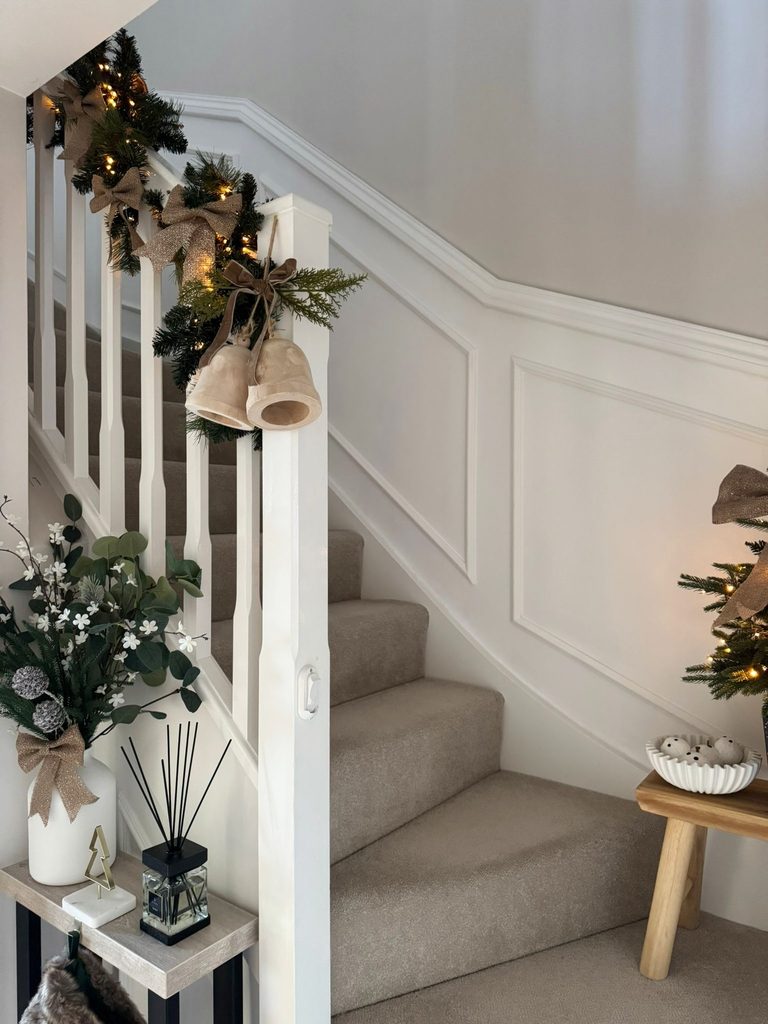
A garland with a pair of oversized bells hanging off it gives the banister one clear focal point, which is easier than decorating every spindle. Here the bells are matte and the color of pale wood, so they read as soft against the white newel post instead of loud. They hang from a ribbon tied in a bow at the top, with a few sprigs of greenery tucked in around the knot.
The string lights are what make it work for a staircase. Small warm bulbs run through the greenery and light the treads below at night.
Bells this size are fairly light, but hang them from the garland wire and not just the ribbon. Otherwise they sag by the second week. Space the burlap bows a stair or two apart so the run looks even. Put the bells on the section nearest the bottom, where people see them first from the hall.
Skip glossy gold bells here. They fight with the muted palette.
Garland with red ribbon
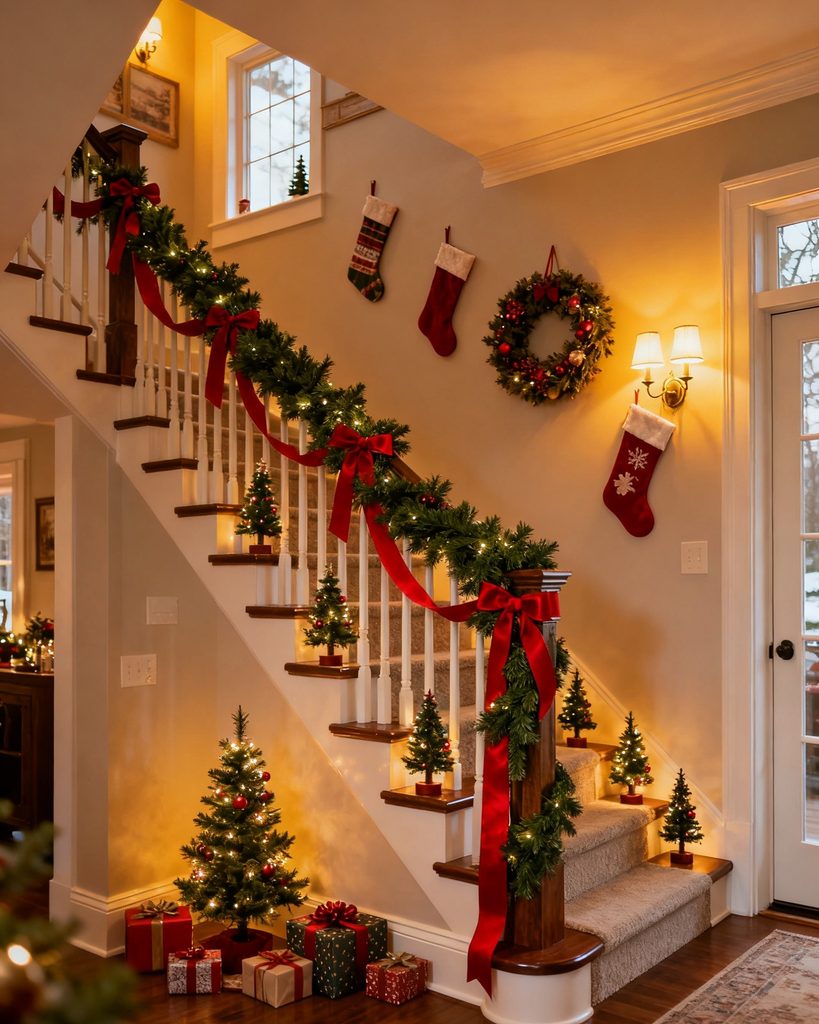
Wrap the banister in a full green garland and thread a wide red ribbon through it for a stair display that reads clearly from the front door. The lights matter here. Small warm bulbs tucked into the greenery keep the line of the railing visible after dark without making the whole stair too bright.
Keep the shape loose. Let the ribbon dip between posts, then tie larger bows at the newel and at a few points along the run so the color does not bunch up in one spot. This works best on a staircase with white spindles or a light wall behind it, since the dark green stands out more.
Add a few small lit trees on the steps or at the base if you want the staircase to feel fuller. Use just a handful. Too many extras start to crowd the treads and make the railing work less noticeable. For a quieter version, keep the same garland and lights and swap the red ribbon for a narrower velvet band or plain fabric ties.
Orange Slice Garland With Pails
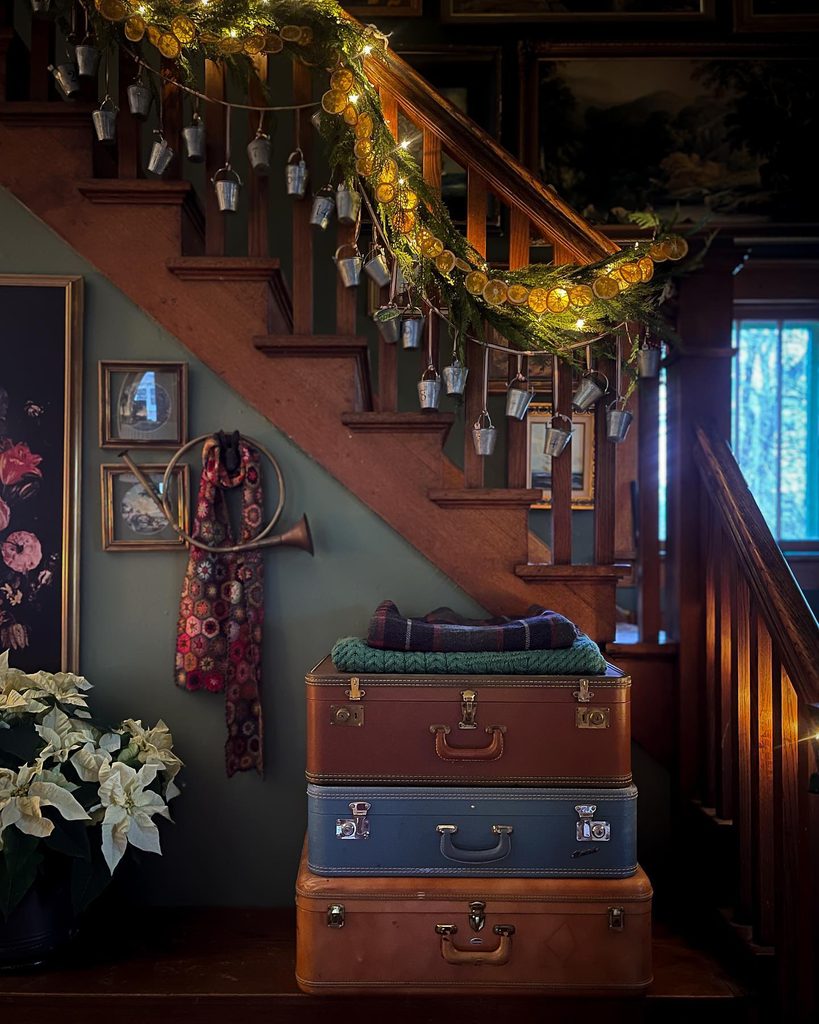
Dried orange slices threaded along a pine garland work well on a banister, because a string of small warm bulbs shines through the fruit and turns each slice amber. Run the oranges on their own cord, then wrap that cord and the lights loosely around the greenery so the slices stay on top and don’t sink out of sight. The tiny tin pails are an extra step.
They hang from the rail on thin wire at staggered lengths and fill the open space between the balusters. Leave them empty, or drop in candy canes or small notes. Slice the oranges thin and dry them low in the oven for several hours, turning them now and then.
Thick slices stay sticky. Hang the pails on the open side of the rail, away from hands.
Garland With Hanging Bells
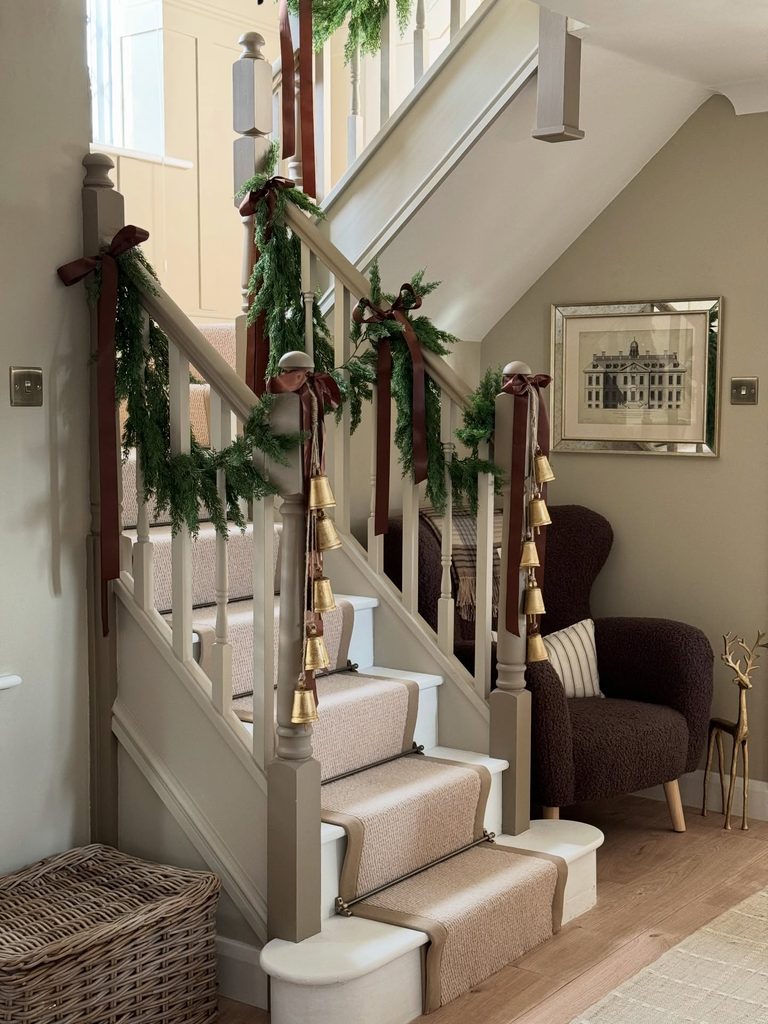
Run a thick green garland along the rail, then hang bell clusters from the newel posts with long ribbon tails. The bells matter. They catch daylight and lamp light, so the staircase reads festive without needing a full run of string lights.
In the image, the brass bells sit low on the posts, which keeps the weight near the base instead of crowding the handrail. Deep red ribbon gives the greens a clear holiday color without adding more ornaments. Keep the garland tied to the outside of the rail so hands can still use the stairs.
For a lighter look, swap the dark ribbon for linen or thin brown velvet. Faux cedar works well here because it bends around spindles and will not drop needles on every step. This is best for a front hall where the stairs are seen from the door.
Wrapped Gifts on the Bottom Step
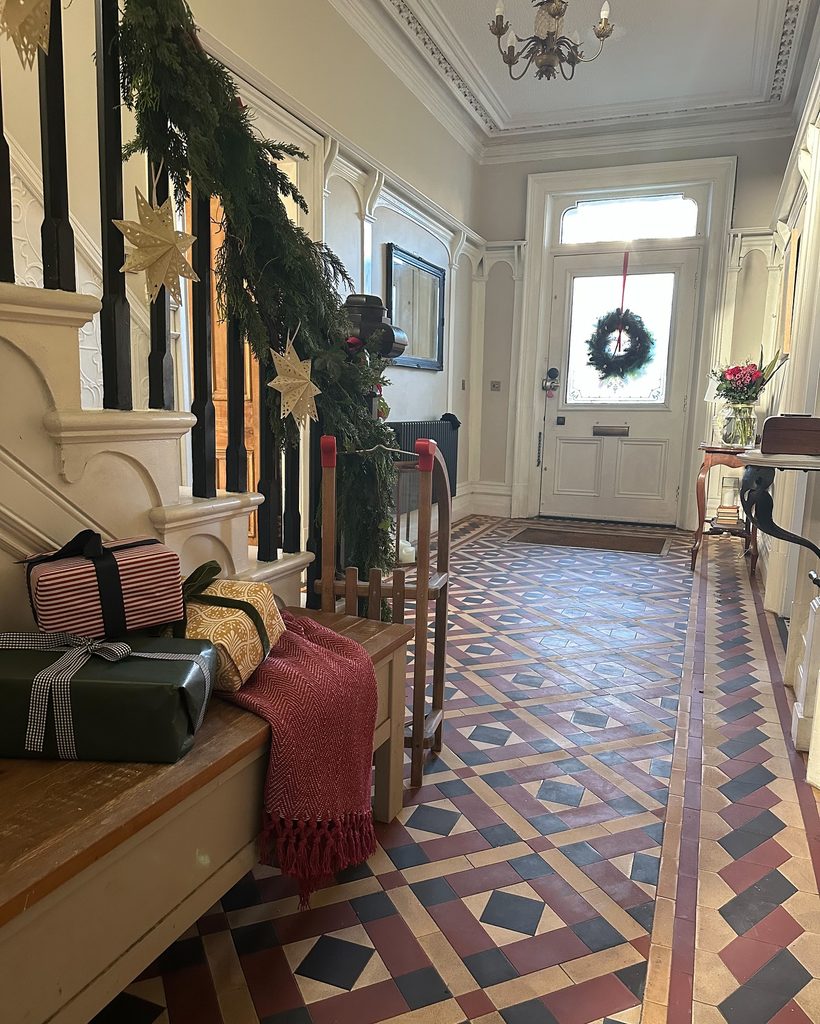
Gifts stacked on the bench at the foot of the stairs give the staircase a base. Here the wrapping paper is striped, patterned and plain green, so the boxes don’t match, and they don’t need to. A red throw hangs over the edge, and a wooden sled leans against the rail.
Keep the walkway clear. Nobody wants to trip on a parcel.
Garland with red bows
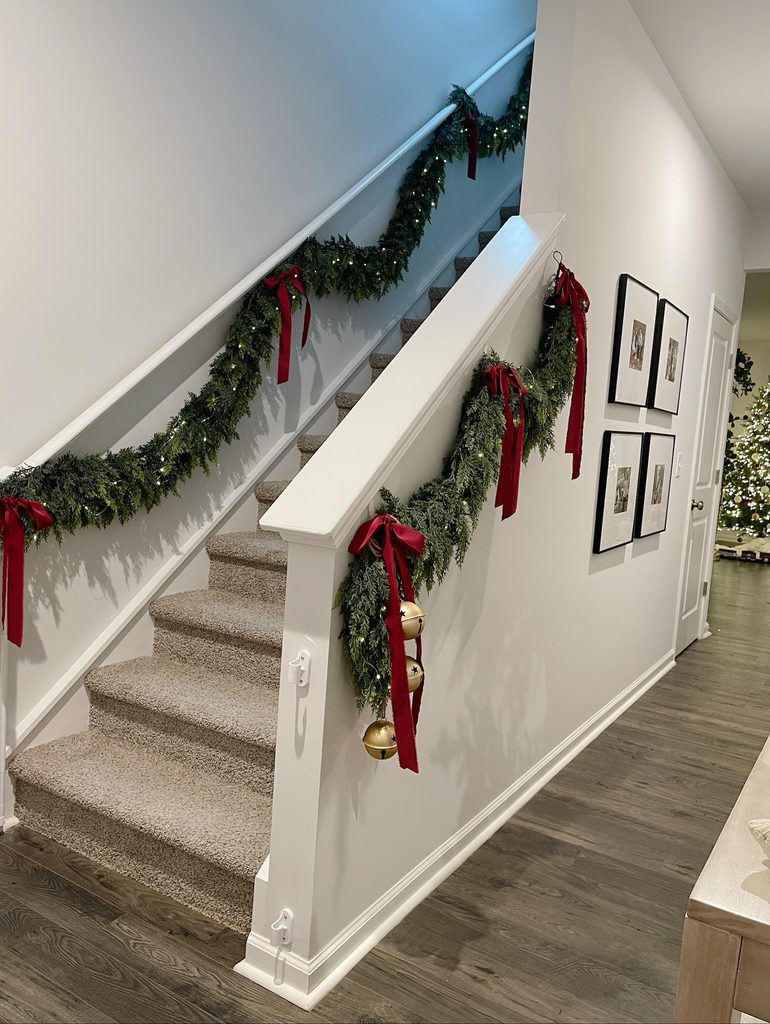
Wrap the staircase in thick green garland and finish it with long red bows. This works well for a stair hall because the color reads clearly from both ends, and the shape of the garland follows the rail in one clean line. Small lights tucked into the greenery help it earn the “light up” part without adding extra clutter.
Keep it simple. Run one strand along the wall rail and another along the half wall so the two levels echo each other. Wide ribbon makes more sense than small loops here, since the staircase is long and the bows need to hold their own.
A few hanging bells at the newel post are enough.
Garland Low, Bows High
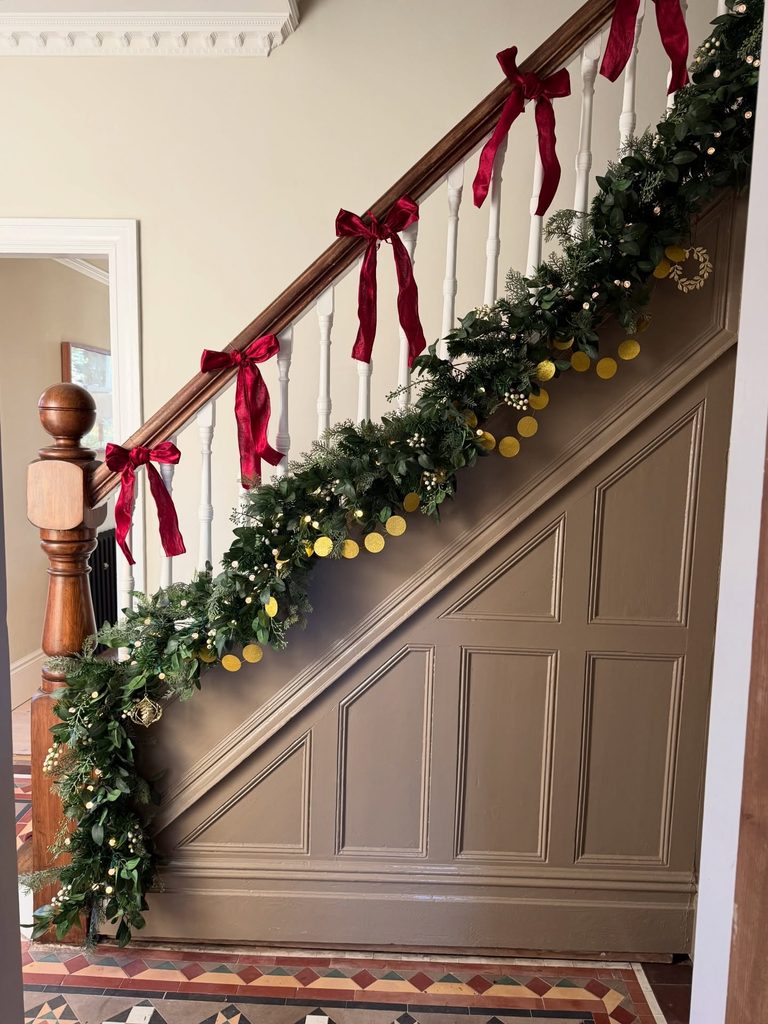
Run the garland along the bottom of the spindles instead of wrapping it around the handrail, and the rail stays free to hold. That matters on stairs people use every day. Here the greenery sits along the edge of the stair string, with warm white fairy lights and small white berry sprigs worked through it, so the light comes from low down and falls across the painted panels below. Bows go up top. Red velvet ribbon tied at even gaps along the wooden rail, each with long tails, leads the eye from the newel post to the landing without getting in anyone’s way.
A second, thinner strand looped under the greenery adds some movement. The gold paper circles in this one hang in loose swags, though felt or dried orange slices would do the same job. Battery lights are easier than plug-in ones here, since there’s rarely an outlet near the bottom step. Tie the garland at each spindle so it doesn’t sag.

