15 Kitchen Organization Ideas From Japan That Save So Much Space
This site contains affiliate links. We may earn a small commission, at no extra cost to you. Article may contain some images for illustrative purposes only .
My kitchen once had three spatulas, two broken whisks, a panini press I used exactly once in 2019, and a drawer that required a specific wiggle-and-lift technique to open, and I genuinely thought that was just what kitchens were like, and I was killing it.
In Japan, home kitchens are often extremely compact, which forces a very intentional approach to space, tools, and daily routines.
The difference isn’t a better Ikea trip. It’s an entirely different philosophy about what a kitchen is for and what deserves to live inside one.
What follows isn’t generic organization advice with a Japanese aesthetic slapped on top of it; these are ideas rooted in actual named concepts and cultural rituals that change how the space feels to cook in, not just how it looks in a photo.
While not every Japanese home follows these ideas strictly, many of them are rooted in widely practiced principles of space efficiency, cleanliness, and intentional living.
1. Practice Danshari Before Any Other Step

Before you organize a single shelf, you must reduce what enters and what stays. Danshari, the philosophy of refusal, disposal, and separation developed by Hideko Yamashita, is the essential first act.
- Dan (Refuse): Stop bringing unnecessary items into the kitchen. Refuse the impulse-buy avocado slicer, and the extra set of measuring cups you grabbed on sale. The threshold of your kitchen becomes a gate.
- Sha (Dispose): Open every drawer and cabinet. Remove chipped bowls, mismatched lids, expired pantry goods, and gadgets you have not touched in a year. Fill one bag, then another. Be ruthless about broken things you promised to fix.
- Ri (Separate): Now the hard part. Detach from the guilt of the expensive bread maker used twice. The pasta machine seemed romantic. Thank these objects for the lesson they taught you and release them.
Only after a thorough Danshari does your kitchen reveal its true capacity. You will likely land on the realisation that you need far less storage than you thought.
2. Apply the 5S Philosophy for a Self-Sustaining Kitchen
This one’s origin is Toyota’s factory floors; 5S is the backbone of Japanese efficiency. Applied to a home kitchen, it transforms a chaotic space into a quiet, self-sustaining system, which is what we want.
- Seiri (Sort): Walk through the kitchen and remove everything that is not essential. This is the action step of Danshari.
- Seiton (Set in Order): Assign a precise, fixed home to every remaining item, based on the flow of cooking. Spatulas next to the stove, knives beside the prep area, tea above the kettle.
- Seiso (Shine): With everything cleared away, deep clean. Scrub the backsplash, wipe down cabinet doors, and degrease the extraction fan. A clean kitchen invites maintenance; a grimy one invites neglect.
- Seiketsu (Standardize): Create a simple, visible system. Perhaps a small checklist on the fridge: “Empty sink, wiped counters, floor swept.” Anyone in the household can follow it.
- Shitsuke (Sustain): Build the discipline of the daily reset until it becomes as automatic as brushing your teeth.
The 5S cycle ensures that the organization is not a one-time event but a way of living with your kitchen.
3. Adopt the “Empty Sink” Habit

In many Japanese homes, the sink is kept clean, empty, and dry after use because of a deeply ingrained cleanliness mindset.
A sink cluttered with soaking pots and scattered cutlery is unusable dead space. In a tiny kitchen, the sink is also a prep area, a draining board, and what draws attention. When you adopt this principle, you wash, dry, and put away every dish and tool immediately after use or at the very least, before you close the kitchen for the night.
Now that you’ve adopted this, you’re far less likely to deal with piles of dirty dishes.
4. Leave Ma on the Counter: Emptiness as a Work Surface

Ma is the Japanese aesthetic of meaningful negative space. It’s the pause between objects that gives each one its power. In a compact kitchen, Ma is your counter.
The goal is to keep 60 to 70 percent of your counter space deliberately clear. This feels radical, but it is the single most effective way to make a tiny kitchen feel expansive. Small appliances like the toaster, the rice cooker, and the blender all of them live inside cabinets, not on display. Pull them out only when they are actively in use, then return them.
A clear counter provides room to chop vegetables, roll dough, or plate a meal without having to fight a war with the clutter.
5. Organize by Workflow with Seiton (Point-of-Use Storage)

Seiton, the “Set in Order” step of 5S, means placing every item exactly where the hand naturally reaches for it during the sequence of cooking.
Try mapping your own workflow. The sink is the wash zone: scrub brushes, dish soap, and drying towels live immediately beside it, perhaps in a small hanging basket or a narrow under-sink drawer?
The counter beside the sink is the prep zone: knives on a magnetic rail, cutting boards in a vertical slot, mixing bowls in a low drawer.
The stove is the cooking zone: spatulas, wooden spoons, cooking oils, salt, and pepper within arm’s reach and perhaps in a slim tansu drawer or a wall-mounted rail directly beside the hob.
When tools are placed where they’re actually used, the process becomes noticeably smoother.
6. Use Tansu Chests for Vertical, Compact Storage

The traditional Tansu was not originally designed for kitchens, but its compact, modular design translates beautifully into modern small-space storage.
A small tansu or a modern interpretation in pale wood can replace a bulky, ugly pantry cabinet. Its mix of shallow and deep drawers is perfectly suited to kitchen storage.
Teas, spices, and small condiment bottles fit in the slim top drawers. Dry goods, linens, and heavier pots occupy the deeper lower ones. The chest uses vertical height with a tiny footprint, and all that functionality, while looking like your best vintage find, which fetches you compliments? Yes, please.
Because the drawers are varied in size, they naturally enforce curated categories rather than dumping in a single deep shelf.


7. Embrace the Kaidan Tansu (Step Chest) for High Cabinetry

A specific type of tansu, the Kaidan Tansu, is shaped like a staircase. While traditionally architectural or storage-focused, smaller modern versions can double as both storage and a step solution in compact homes.
In a kitchen with high cabinets or shelves, a small step chest is both storage and access. It replaces a flimsy plastic step stool with something beautiful and sturdy. Lesser-used items like a spare set of guest dishes, seasonal preserving equipment, all live in the steps.
The chest makes the full height of the kitchen usable without wasting floor space on a stool that serves no other purpose.

8. Store Dishes Vertically in Drawers (KonMari Filing Method)

Marie Kondo’s vertical filing principle extends beyond clothing. In Japanese kitchens, plates and lids are often stored upright, rather than stacked into precarious towers.
In a deep drawer, simple wooden dowels or dividers create slots. Plates, cutting boards, and baking trays stand on their edges. You can see and grasp any single plate instantly without unstacking a heavy pile.
Lids stand in their own section alongside. No chipped rims from plates grinding against each other, and no avalanche from a teetering stack of three different plate sizes.

9. Wrap and Store with Furoshiki

The furoshiki is a square of fabric used for centuries to carry, wrap, and present gifts. In the kitchen, it becomes a flexible, beautiful storage tool.
Wrap bento boxes, cloth napkins, or baking trays in furoshiki to protect them from dust. Bundle a collection of small utensils inside a basket as a single wrapped parcel. Now watch me wrap my beautiful sourdough loaf in this one, hehe.

10. Hide Open Shelving Behind a Noren Curtain

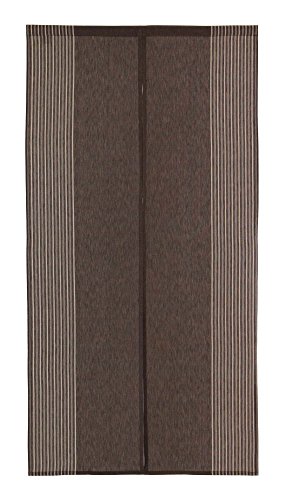
The noren is a traditional split fabric curtain hung in doorways to separate spaces while still allowing easy passage. In a small kitchen where cabinets are limited, and open shelving is the only option, a noren is a gentle veil.
Hang it from a tension rod across the front of your shelving unit. When you are cooking, you can slide it open to access ingredients and tools. When you are finished, the curtain falls closed. No fighting for life, organising every other second.
11. Practice Clean-As-You-Go with the Japanese Artisan Mindset
While the term mise-en-place is French, Japanese professional kitchens embody a similar discipline through the Shokunin mindset: attention to detail, efficiency, and respect for process. In home kitchens, this shows up in simpler habits like cleaning and resetting as you go.
Every ingredient is prepared and placed before cooking begins. As the pans heat and the onions soften, the prep bowls are washed, the cutting board is wiped, and the stray herb leaves are swept away. Oh, such a dream!
At home, this means that even in the middle of a complex meal, your kitchen is far less likely to descend into chaos. The counter remains available. The sink remains clear. The mess never accumulates because it is dealt with in the small, quiet gaps between tasks.
This practice keeps space perpetually available and turns cooking into a calm, meditative flow rather than a frantic scramble.
12. Rotate Kitchen Tools Seasonally (Koromogae)

Koromogae is the biannual Japanese ritual of seasonal rotation. While it is most commonly associated with clothing and bedding, the principle applies beautifully to the kitchen.
In early June, the heavy nabe hot pot, the cast iron stew pot, and the winter thermoses are cleaned and stored on high shelves or in deep cabinets. Summer tools emerge: the cold noodle sieve, the ice trays, the sudare mats. In October, the swap reverses.
This rotation means that the most-used cabinets contain only what you need right now. Half of your kitchen equipment is not permanently occupying prime real estate for nine months of the year.
The twice-yearly touchpoint also forces a mini Danshari; you handle every tool and notice what is chipped, broken, or unused.
13. Use a Vertical Tea and Spice Drawer (The Chadō Influence)

The Japanese tea ceremony offers a strong example of intentional placement and respect for tools. While not directly tied to kitchen storage, it highlights the value of giving every item a clear, visible home.
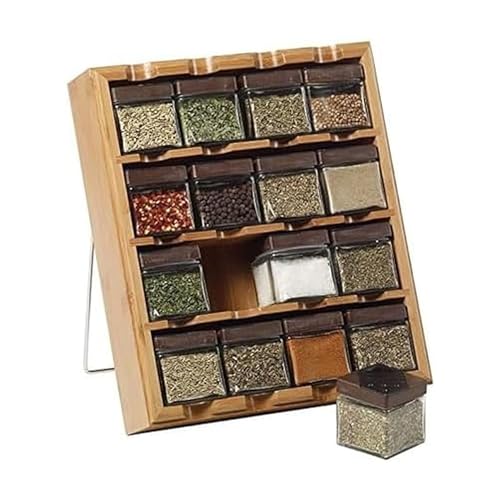
Dedicate a single shallow drawer in your kitchen to teas and spices. Use small kiri wood or ceramic containers, arranged upright in rows. Each holds one ingredient. The labels face upward or are written on the lid in a simple hand.
This drawer becomes a moment of ceremony in itself. You see everything at a single glance. The vertical arrangement saves valuable counter and cabinet space, and the ritual of selecting a tea or spice becomes a small, grounding pause in the day.
14. Hang Tawashi Brushes and Zaru Baskets on the Wall

The tawashi is a traditional Japanese scrub brush made from natural palm fibres. The zaru is a shallow bamboo basket used for draining, washing, and serving. Both are humble, beautiful, and designed to be seen.
In a small kitchen, these tools earn their wall space. Hang tawashi brushes on a simple wooden hook beside the sink. Nest several zaru baskets of different sizes and hang them from a rail or on the wall.
Using the vertical wall space frees up cabinet room and keeps the most-used cleaning and draining tools instantly at hand.


15. The Osoji Evening Reset: Close the Kitchen with Ritual
Osoji is the Japanese practice of deep cleaning, performed most famously at the New Year to purify the home. But in daily miniature, it is the five-minute ritual that closes the kitchen each night.
After the last meal, the sink is emptied, washed, and dried to a gleam, and then returned to a clean, empty, and dry state. The counters are wiped down completely. Stray items like a tea towel, a spice jar, and a stray cup are returned to their precise seiton homes. A final glance is taken, and as your final act for the night, the noren curtain is drawn across the shelving.
You leave the kitchen in a state of quiet readiness. This tiny ritual, repeated nightly, is the heartbeat of Japanese kitchen organization.
The Kitchen That Breathes With You
A calm kitchen isn’t about having a beautiful kitchen; it’s about having one that works with you instead of against you every single time you walk into it.
You don’t have to implement all fifteen of these at once because that’s how you end up sitting on the floor surrounded by everything you own, having a crisis at 10 pm on a Tuesday. Start with the one that made you think “okay, that’s the thing that would actually fix my specific problem” and build from there.
This approach to the kitchen isn’t about perfection; it’s about a kitchen that’s always ready, always clear, and genuinely pleasant to be in, and once you experience that, even once, you will never want to go back to the drawer that requires the special wiggle to open.