
21 Window Christmas Decor Ideas
This site contains affiliate links. We may earn a small commission, at no extra cost to you. Article may contain some images for illustrative purposes only .
A window is a hard place to decorate because there is nothing to work with but glass and a frame. You can’t set things on it the way you would a shelf or a mantel, and the whole thing is seen from two sides, inside and out. That leaves many people with a bare window in December and no clear plan. This list gives you 21 ideas for Christmas windows, so you can pick one that fits the window you have. Each idea comes with a photo and a short note below it. Start scrolling. Choose the one you like best and get started on your own window today.
Garland with Hanging Stars
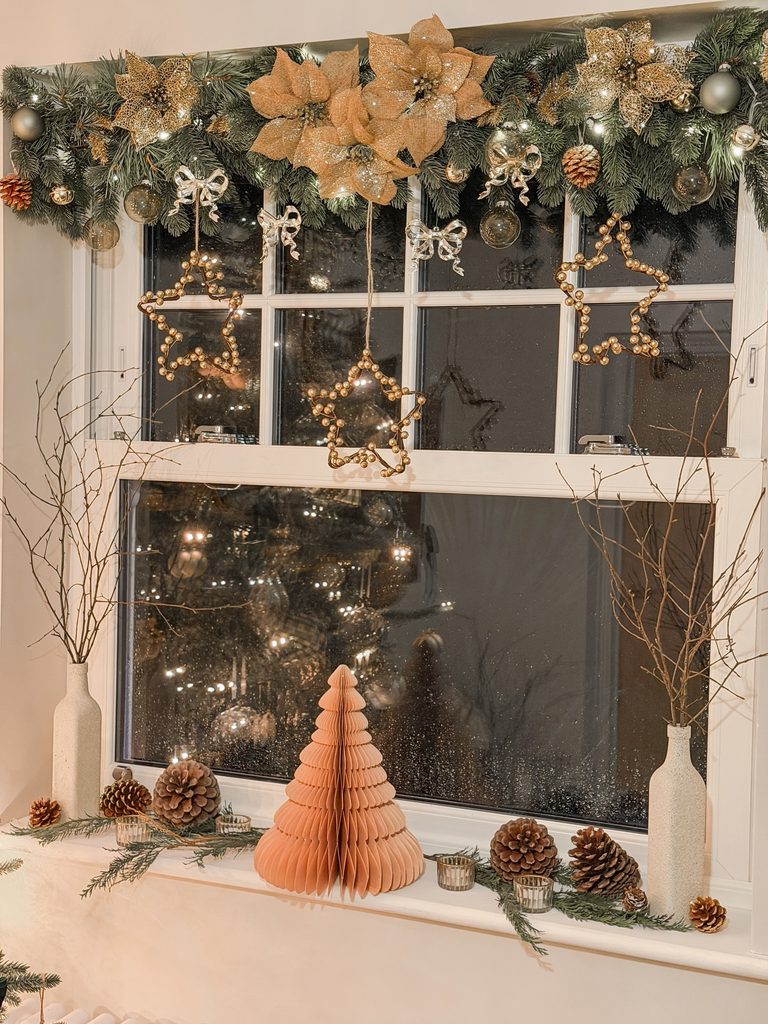
A garland feels more connected to the window when a few ornaments hang below its edge. Drape a dense evergreen strand across the top of the frame, then suspend gold beaded stars on narrow ribbons at varied heights. The stars break up the long horizontal line and draw the eye down into the panes; without them, the greenery can look like a separate strip placed above the glass. Leave enough space between each ornament for the window muntins to show through, and let the center star hang a little lower than the others.
Large gold flowers tucked into the branches add weight along the top, while a few pinecones and a small tree on the sill repeat the natural materials below.
White Painted Window Village
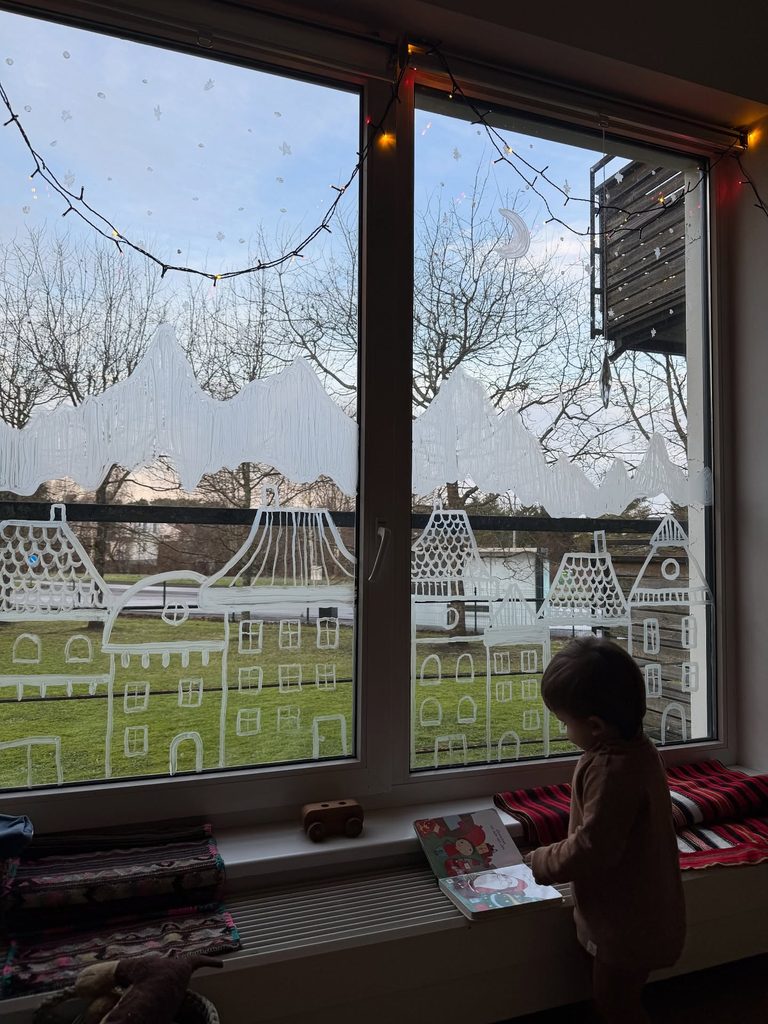
Draw a row of houses across the lower panes with white paint made for temporary use on glass. Leave gaps between the roofs and vary their heights so the village doesn’t become one solid band.
Thick paint can block more daylight than you expect, so use outlines for the walls and save filled areas for a few snowy peaks above. Test a small mark first to check that it wipes off, and keep paint away from seals and frames, where cleanup is harder.
White Marker Window Drawings
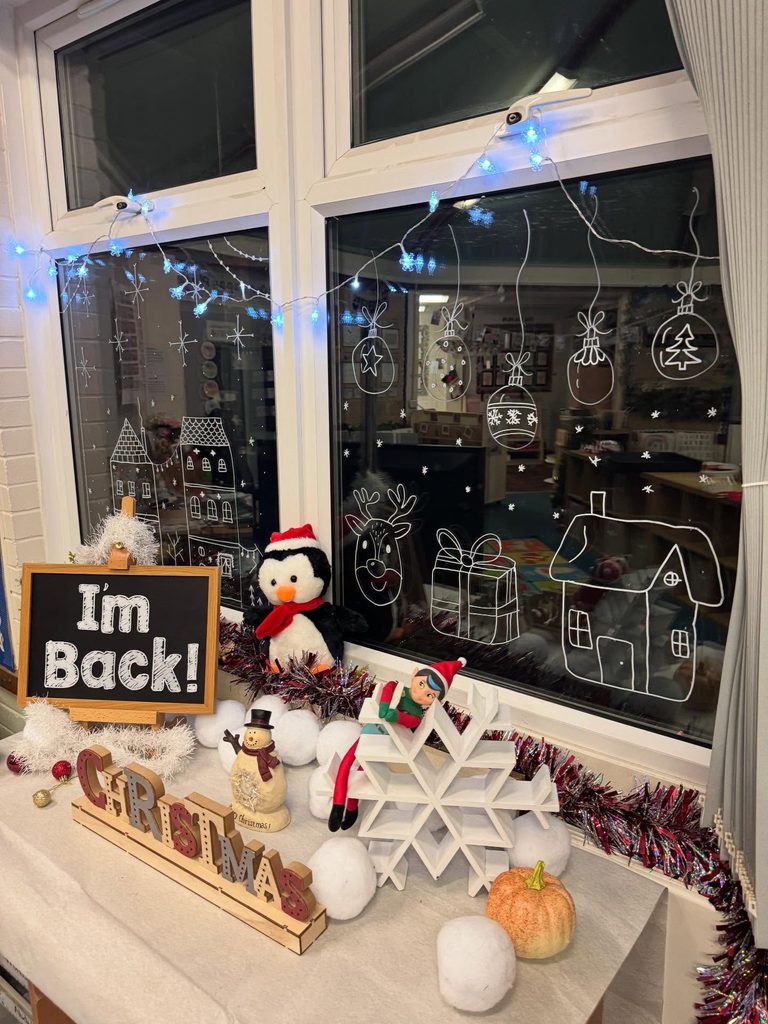
Glass takes a white chalk-style marker well, and a row of hanging baubles, a small house, a wrapped present and a reindeer face is enough to fill a window. Begin with the pieces that hang, because they set the height for everything else. Draw a thin line down from the top of the frame, then put a bauble on the end of each line, and vary the lengths so they don’t sit in a straight row.
Draw the larger shapes along the bottom next, such as the house and the present, then fill the gaps with small snowflakes and dots. Those last marks hide any spots where the layout looks uneven.
The step that matters most is sketching on paper first and taping it behind the glass to trace. Freehand lines wobble, and traced ones stay even. Fix mistakes with a damp cloth before the marker dries.
Layered Paper Stars
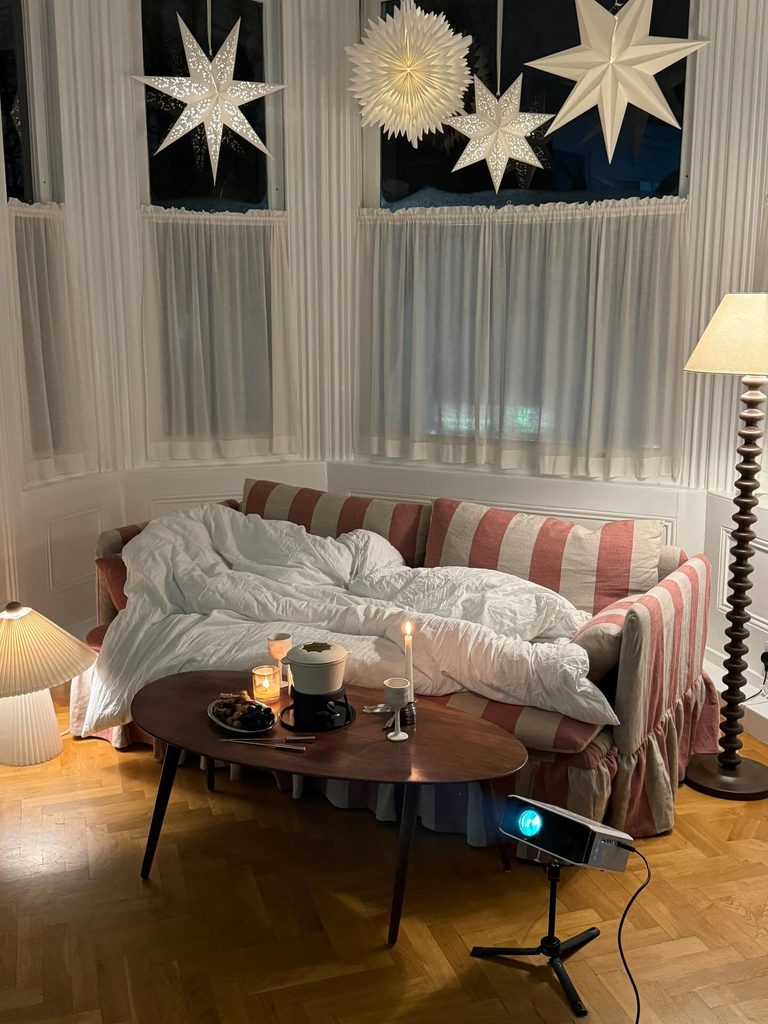
Paper star lanterns gain depth when their sizes and folds vary. Hang one large, sharply pointed star near the top of the window, then add smaller pierced stars beside it; a round, pleated lantern can fill a gap without repeating the same outline. White paper keeps the group connected, while the different shapes cast varied patterns against the dark glass.
Leave space between each piece so the curtains and window frames remain visible.
White Marker Window Village
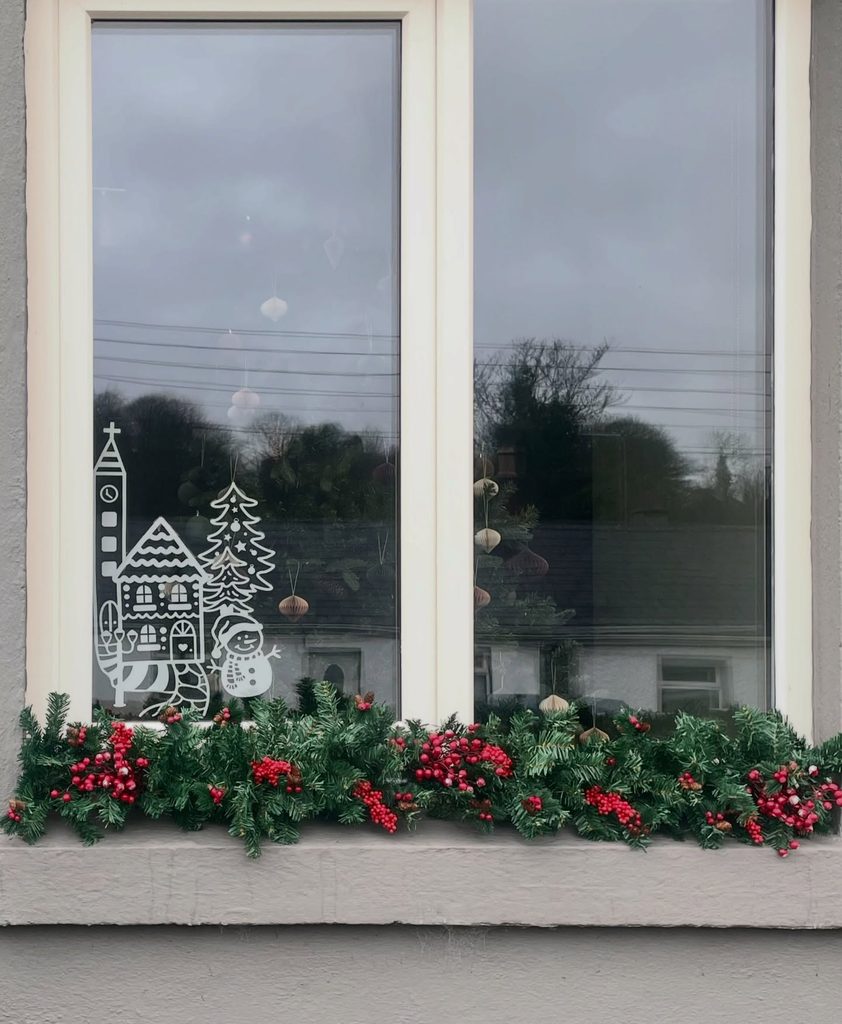
Draw a Christmas village along the bottom of the glass with a white chalk marker made for windows. Use broad lines for snowy roofs, then a finer tip for doors, windowpanes, and branches. A house, a tall fir tree, and a snowman give you enough shapes to build a scene without covering the view.
For a guide, tape a printed outline to the other side of the glass and trace over it. If drawing isn’t your thing, use white window clings or cut houses from white paper and attach them with small pieces of clear tape. Lay an evergreen garland along the sill below, with red berry stems tucked between the branches to add color beneath the white outlines.
Painted Window Village Scene
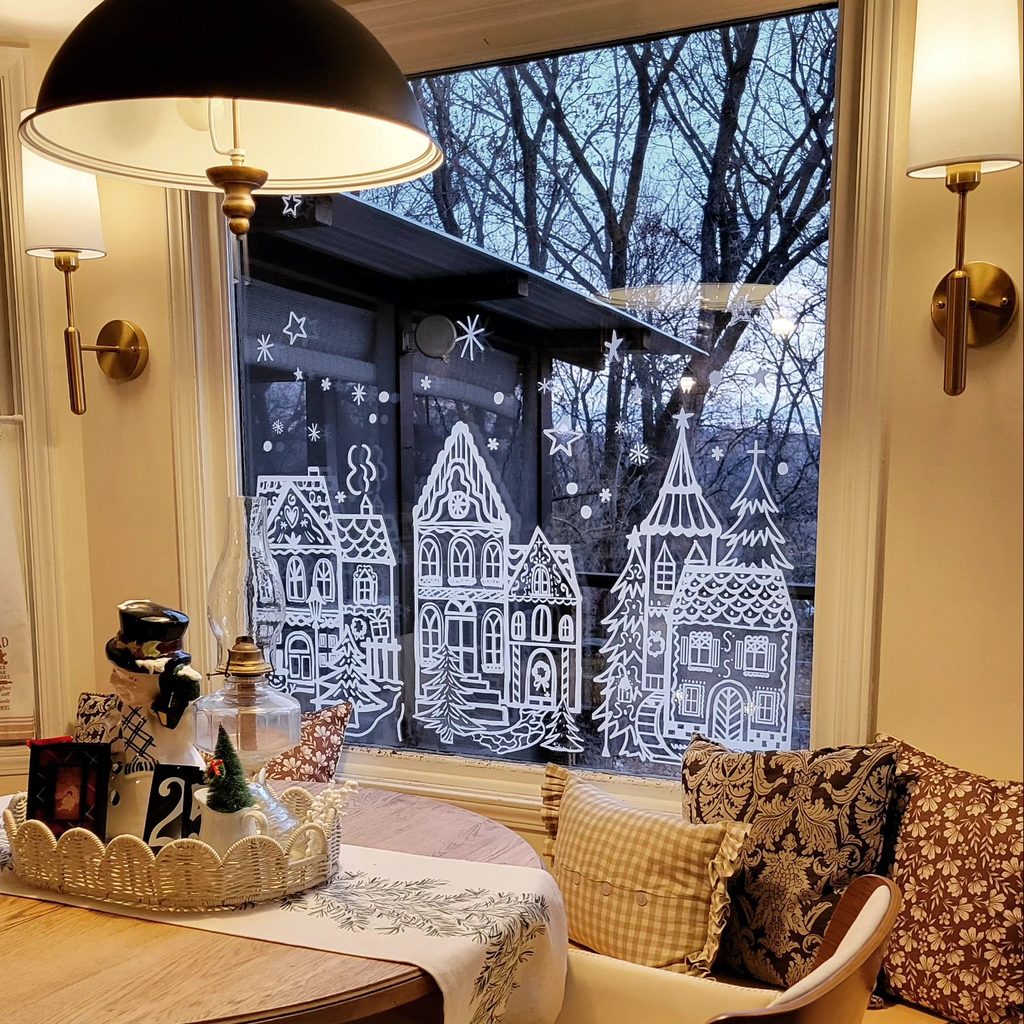
A row of gingerbread-style houses and tall pines drawn in white paint across the glass makes a good fit for a breakfast nook or kitchen table window, where you sit and look at it every day. Pick a window with a plain view behind it. Bare trees work well because the white lines stay readable against them, and the scene lasts the whole season.
Ribbon-Hung Window Wreaths
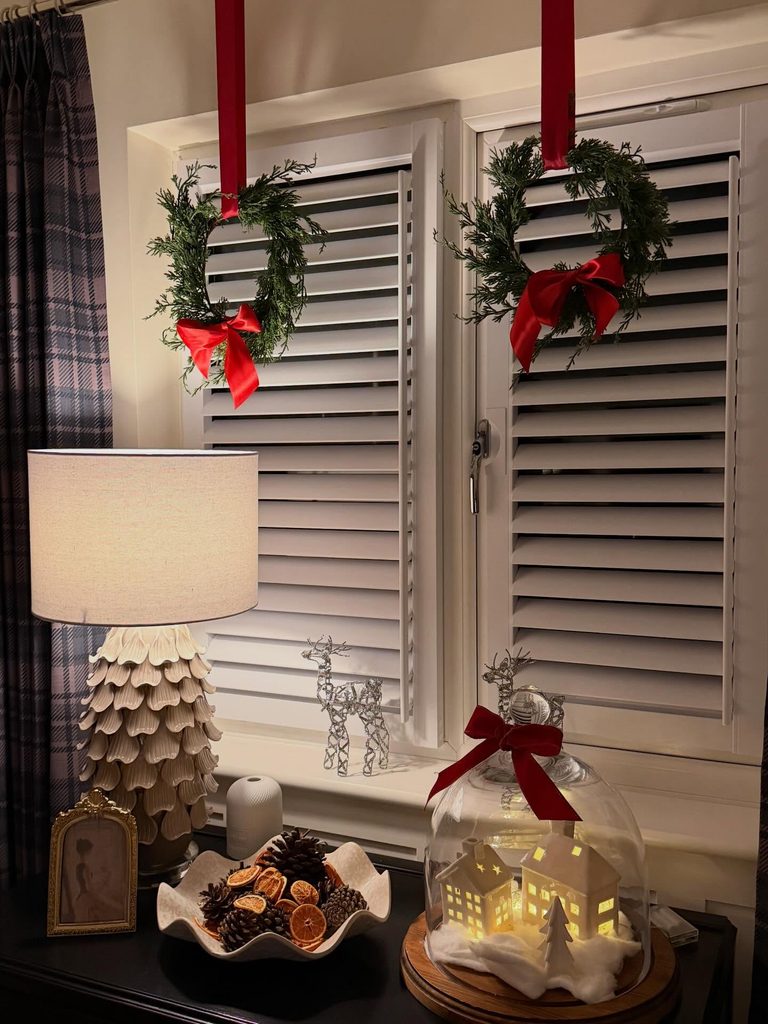
Small evergreen wreaths hung from red ribbons suit windows with shutters or wide trim, where the greenery has a clear place to sit without covering much glass. This is a good choice for someone who wants a traditional holiday detail but has little sill space for decorations. Matching wreaths can frame a pair of panes, while one wreath is enough for a single window. If you open the shutters often or prefer an unobstructed view, choose a sill display instead; dangling greenery can get in the way and may shift when the window is handled.
Curtain Lights Behind Sheers
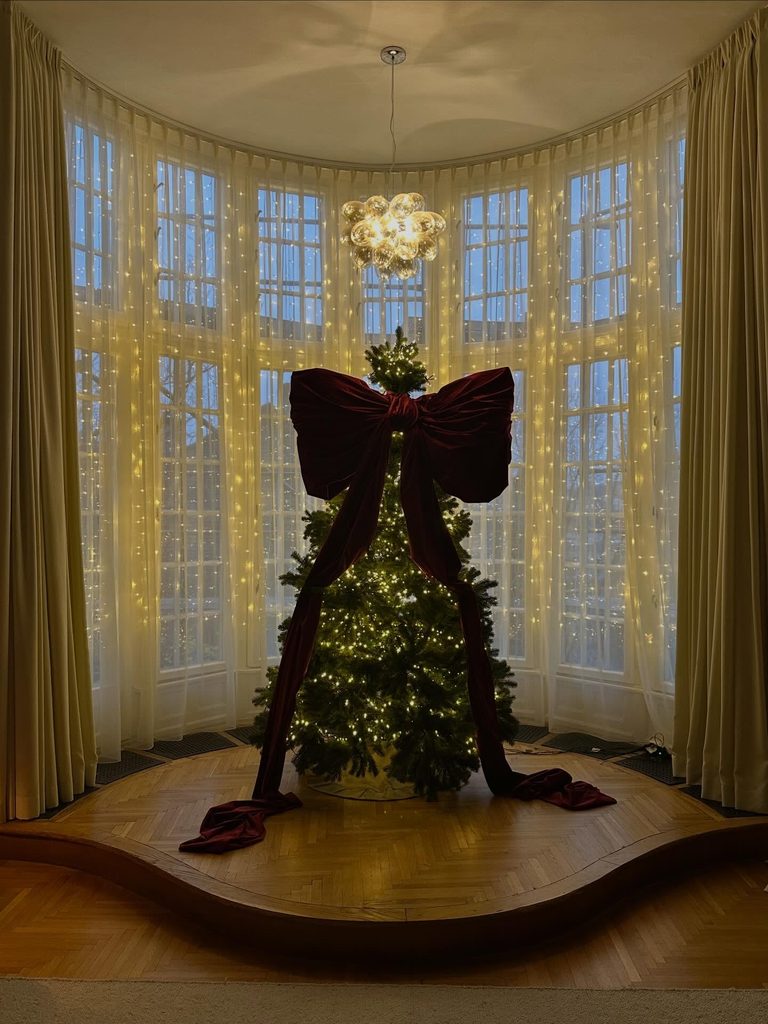
Hang strands of warm white lights behind sheer curtains, following the curve of a bay window from one side to the other. Test the lights first, then place hooks along the top of the window and hang each strand before drawing the fabric across.
The step worth taking time over is spacing the drops evenly, so you get light across every pane rather than bright patches with gaps between them. Leave the sheers loose enough for the lights to show through. Pull heavier curtains to the sides to frame the lit fabric.
Hanging Branch With Stars
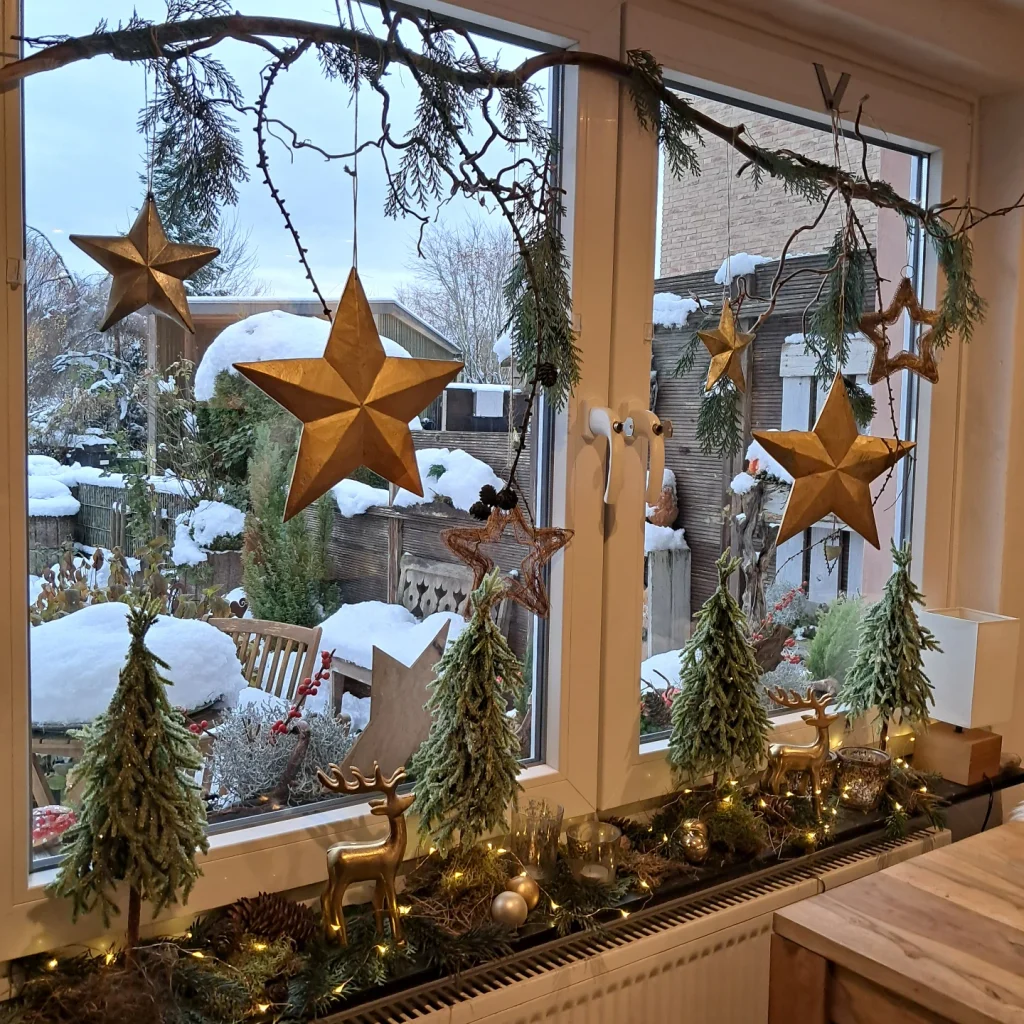
A bare branch hung across the top of the window frame gives you something to tie stars to at different heights. Most of these fall flat because everything hangs at the same level and the same length. Vary the drops so the largest star sits lowest and the smaller ones ride higher, with a couple of wire or twig stars in between to break up the solid gold.
Weight is the other problem. Metal stars pull a thin branch into a sag, and a sagging branch looks like it’s about to fall. Pick a branch thick enough that it stays level on its own, and anchor both ends to hooks screwed into the frame or ceiling rather than tape. Thread the evergreen sprigs along it before you hang anything, since they add weight too.
I’d also leave a gap between the stars and the glass. Stars that touch the window swing into it every time someone opens the sash.
Dried Citrus Garland
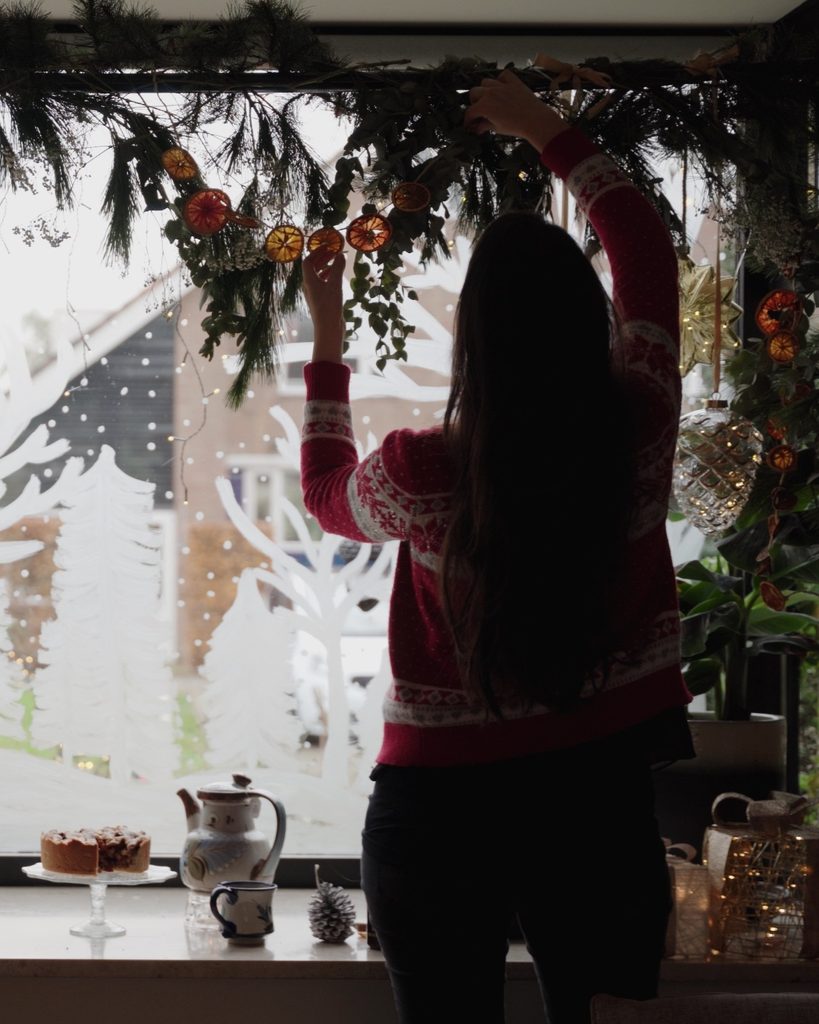
Dried orange slices bring a deep amber color to an evergreen garland above the window. Their thin, translucent rounds catch daylight differently from solid ornaments, while the dark needles make each slice easy to see. Keep the fruit slices in a loose cluster, then leave some greenery bare; that spacing lets the natural texture show without crowding the window trim.
Lighted Garland Window Frame
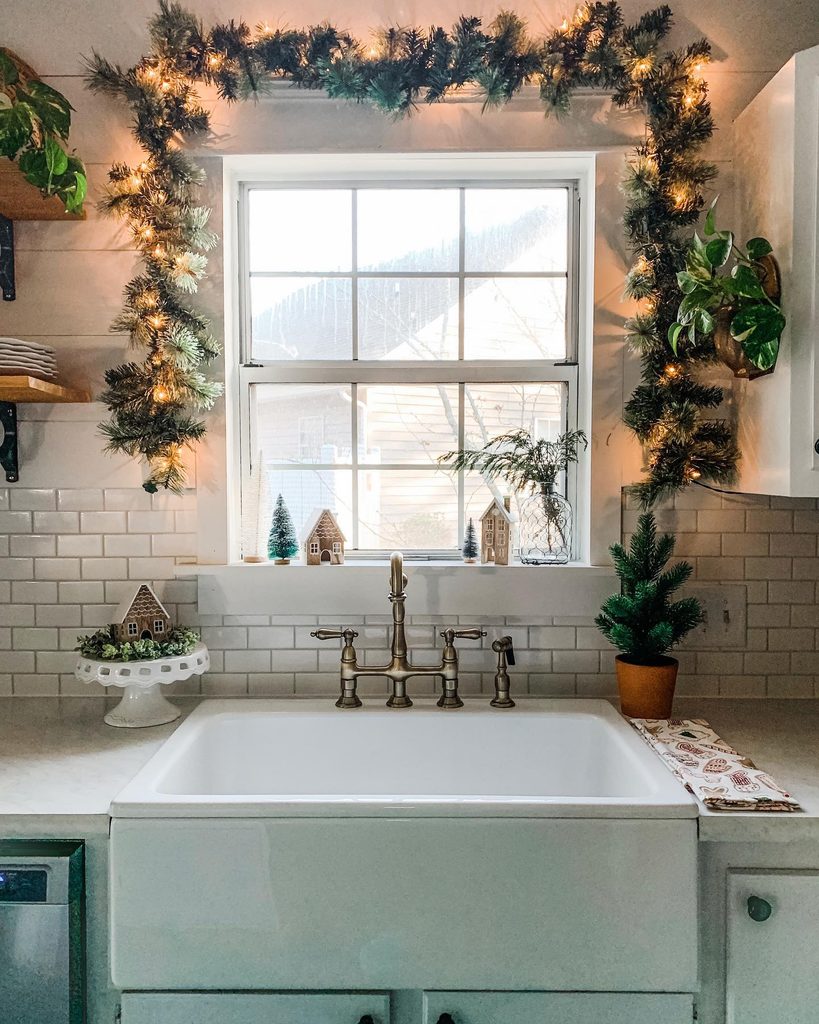
Run evergreen garland across the top of the window and let both ends hang down outside the trim. Use a wired faux garland as the base, then tuck in extra pine sprigs wherever the center cord shows. The branches should reach past the trim rather than form a narrow outline. If you already have a thin garland, twist two lengths together for more bulk.
Wind a string of warm white lights through the branches, leaving some bulbs near the tips and others deeper inside. Small removable hooks can support the garland at the top corners, with another hook in the middle to stop it sagging. Check that the hooks are rated for its weight. Fresh evergreen cuttings tied along sturdy twine are another option, though they will shed as they dry, especially above a sink or near heat.
Paper Star in the Window
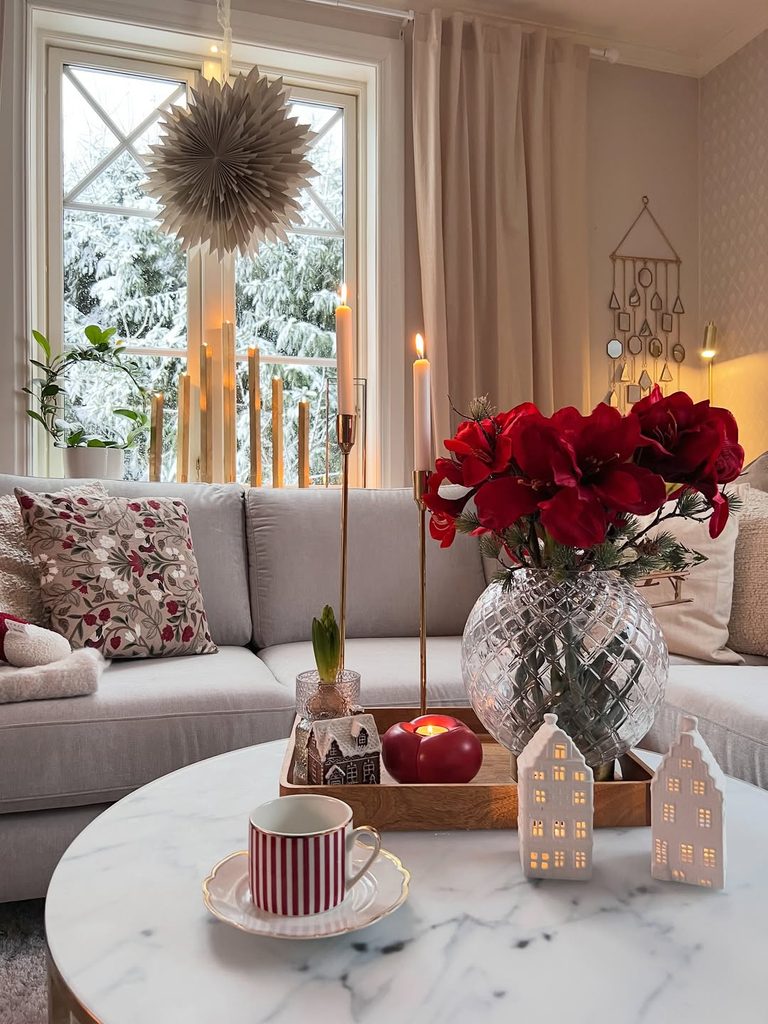
A large folded paper star hung from the top of the window frame gives the glass a focal point without covering the view. The star is pale and matte, so it shows up against the snowy trees instead of fighting them.
Without it, the row of candles on the sill would sit under a bare, empty window. I’d hang it a little higher than you think you need.
Garland Around the Window
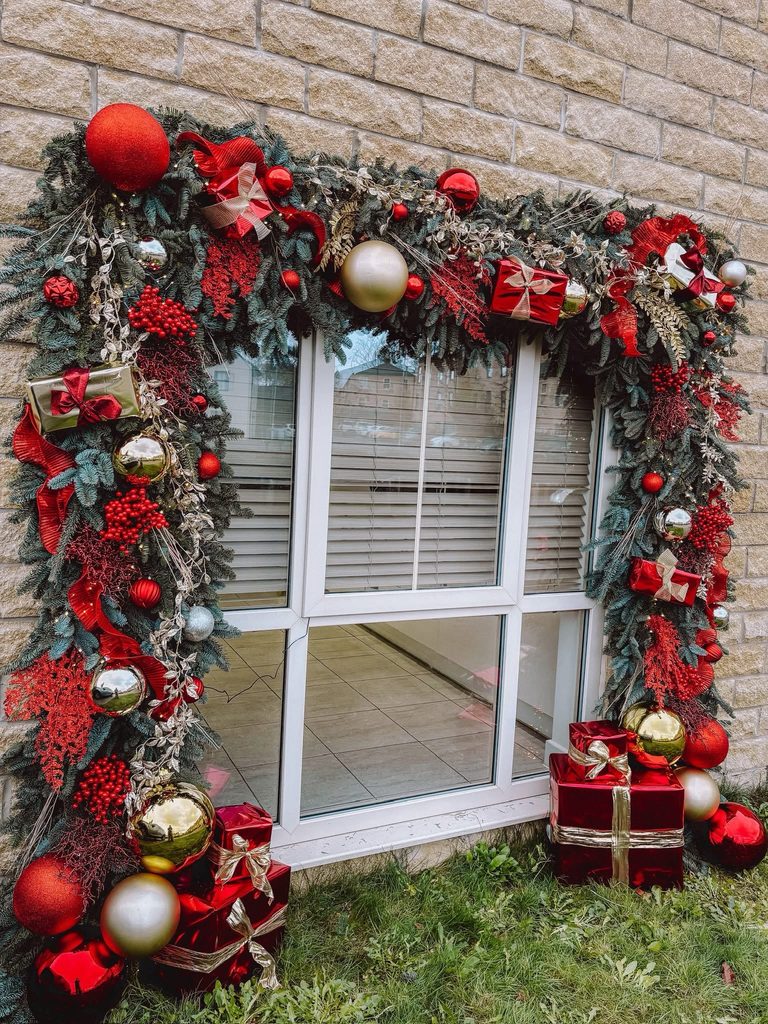
A full evergreen garland can frame a large ground-floor window, with the thickest section running across the top and the ends dropping beside the panes. Use it on a front room or entry window that faces the street, where the greenery and red ornaments show from outside. Large baubles and ribbon carry the color down the sides; place wrapped boxes at the base if there is room.
Lit Garland Window Frame
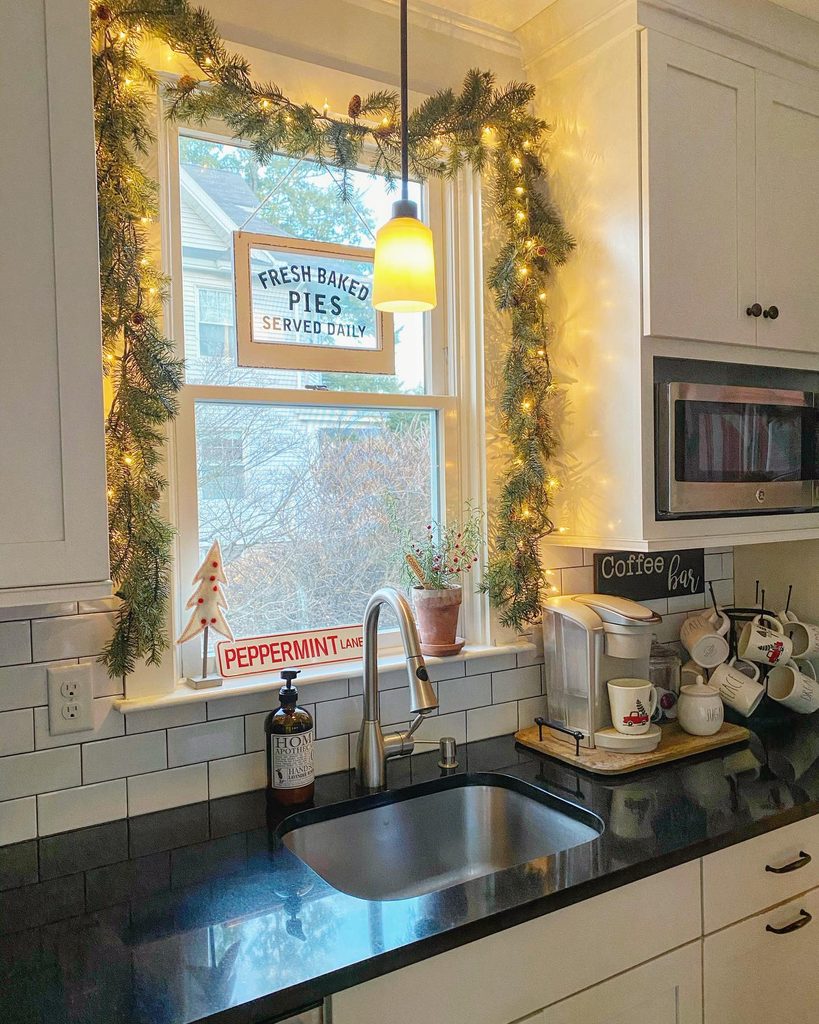
Run evergreen garland across the top of the window and down both sides, with small lights threaded through the branches. This is a good choice if your kitchen counter is already busy and you want to leave the sill mostly clear. The full frame gives you room for Christmas greenery without putting pots or ornaments beside the sink.
For a window bordered by cabinets, check the side gaps before choosing a thick garland. A slimmer strand makes more sense where branches would press against cabinet doors. If you open the window often, attach the garland to the fixed trim so it stays clear of the moving sash.
Hanging Wreaths in Windows
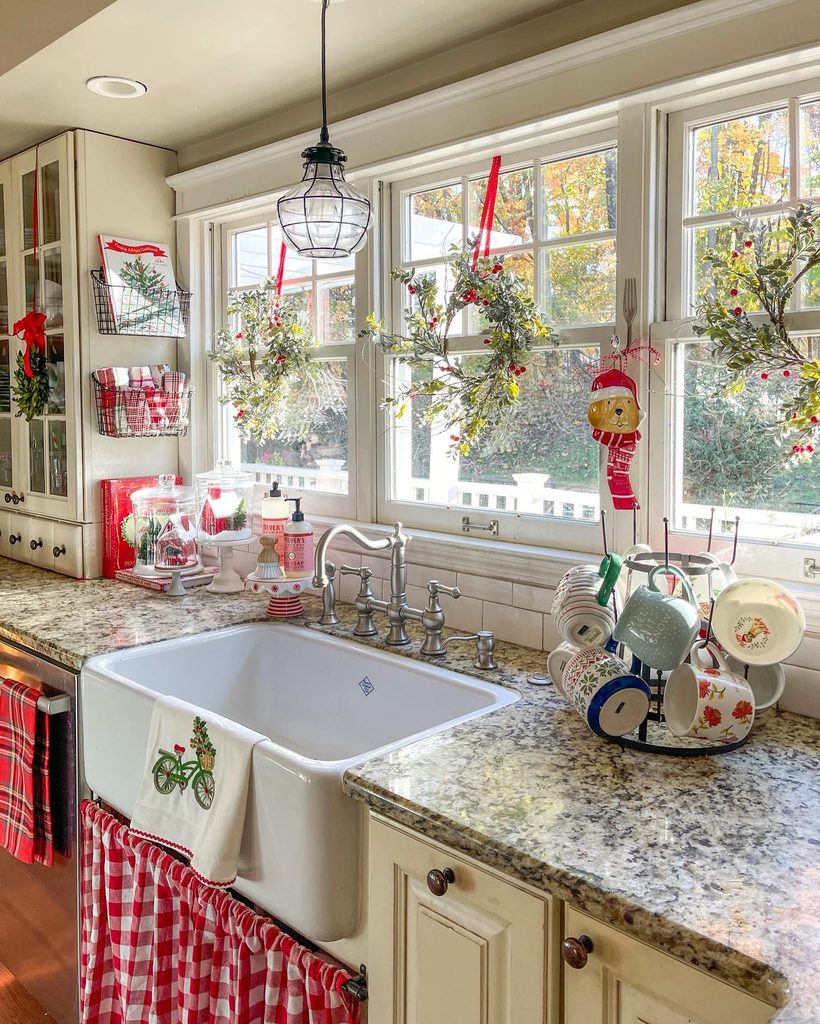
Small wreaths hung from the top of each window sash with red ribbon are easy to get wrong in one way: the ribbon length. If the wreaths hang at different heights, they look like they were put up by accident. Measure from the top of the sash to where you want the wreath to sit, and cut every ribbon to that length.
Size matters too. A wreath that fills a quarter of the pane lets the view through, and a bigger one blocks it. The ones here are loose and sparse, with berries and thin leaves, so the autumn trees outside still show behind them. I’d keep to that and avoid thick, full wreaths on a window that faces a good view.
Tie the ribbon to the sash itself, not the glass, so nothing needs tape.
Evergreen Window Garland
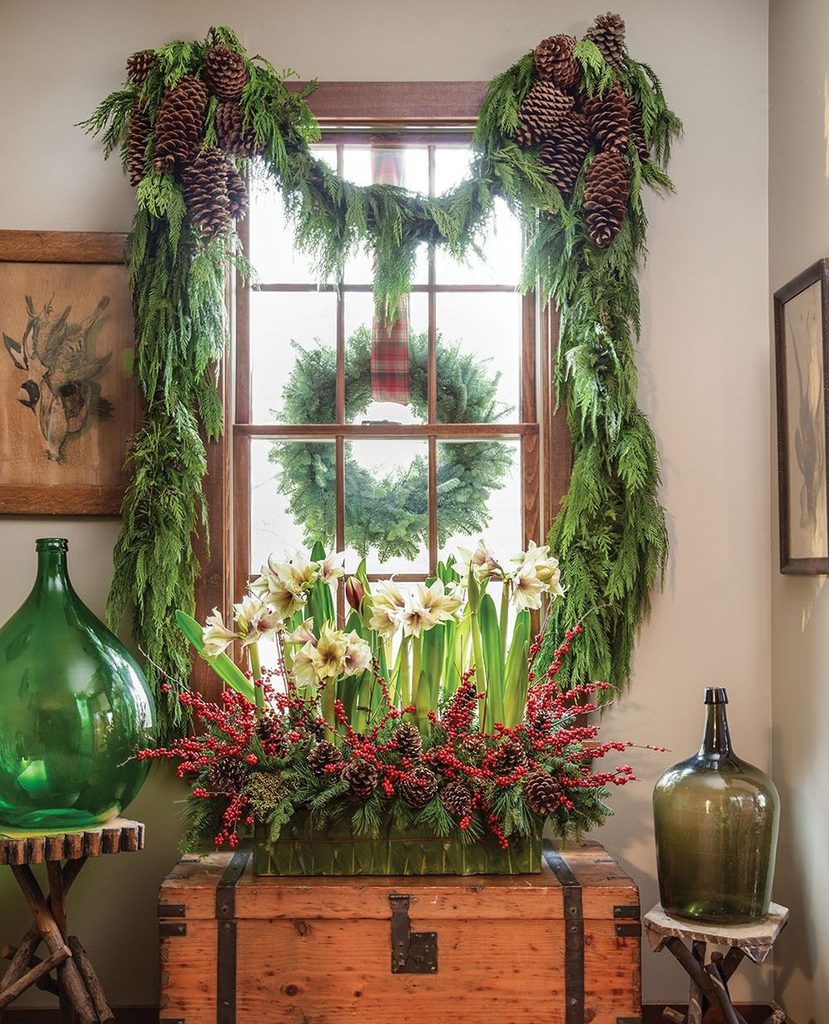
Measure the window frame before gathering the greenery, allowing enough length for the two side drops and a low curve across the top. Start by fastening the garland at both upper corners, then shape the center into a shallow swag. The key is to support the weight at several points rather than relying on the ends; use small hooks or discreet wire along the top trim so the branches stay in place and the curve does not sag unevenly.
Build up sparse areas with shorter cedar or fir sprigs, tucking their stems into the main strand and turning the leafy sides outward. Add a few pinecones near the top corners, where they balance the thicker greenery without crowding the center of the glass. Step back and check the shape from across the room, then adjust the two hanging sides until they fall to a similar height. Leave enough open glass for daylight, and keep foliage clear of any window hardware you need to reach.
Hanging Star Lights
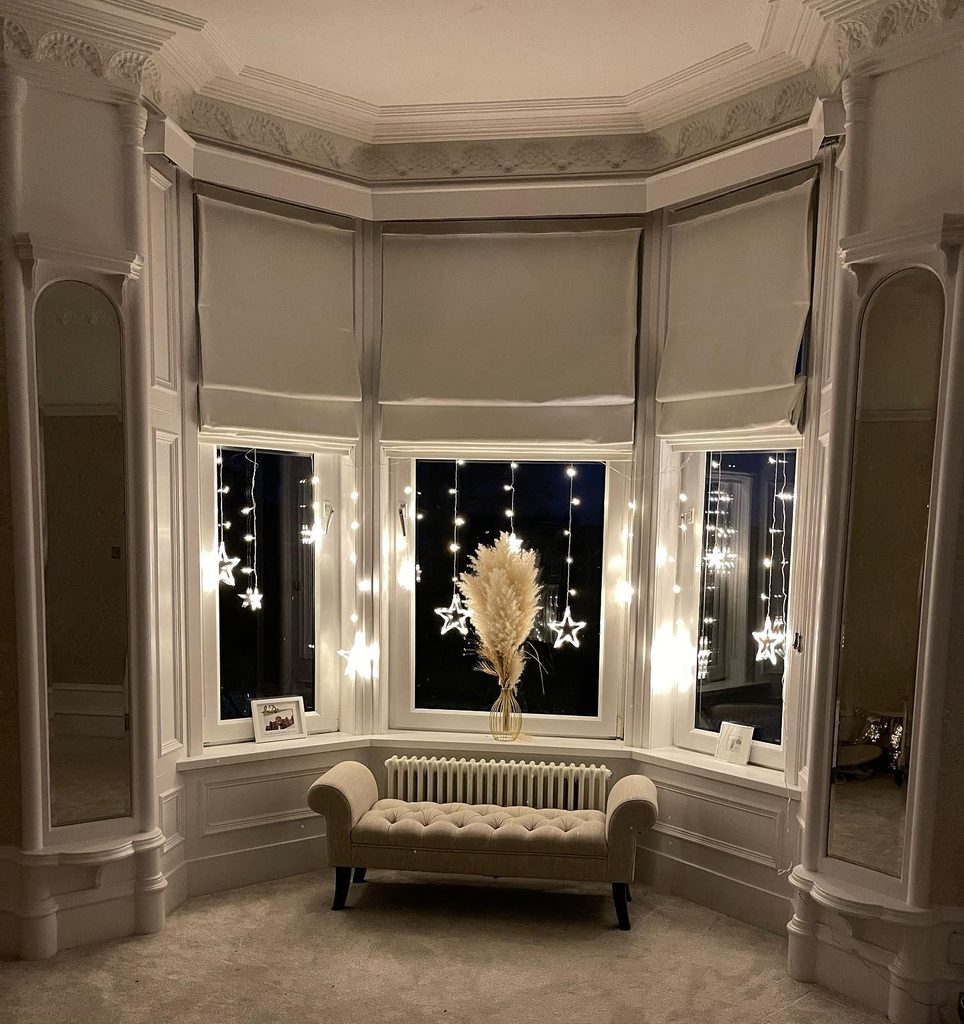
Hang strands of white lights across the window, with lit stars dropping to different heights. For a bolder version, choose larger stars on fewer strands, leaving more dark glass between them so each outline stays clear. Small stars can get lost among lots of tiny bulbs, while larger ones give the display a shape you can see from across the room.
Run the top wire just beneath the blind, and let the stars hang above the sill rather than bunching them along its edge.
Painted Trees Across Window Panes

Three painted fir trees, one in each pane, turn a plain wooden window frame into a small forest. The detail that matters most is the strip of white snow along the bottom edge of each pane. It gives the trees a ground to stand on, and the pale blue trunks sit right in it. Without the snow, the trees would seem to hover in the glass, and the gold dots and star on the middle tree would have nothing to anchor to.
I’d paint the snow first and let it dry before the trunks.
Evergreen Wreath with Bells
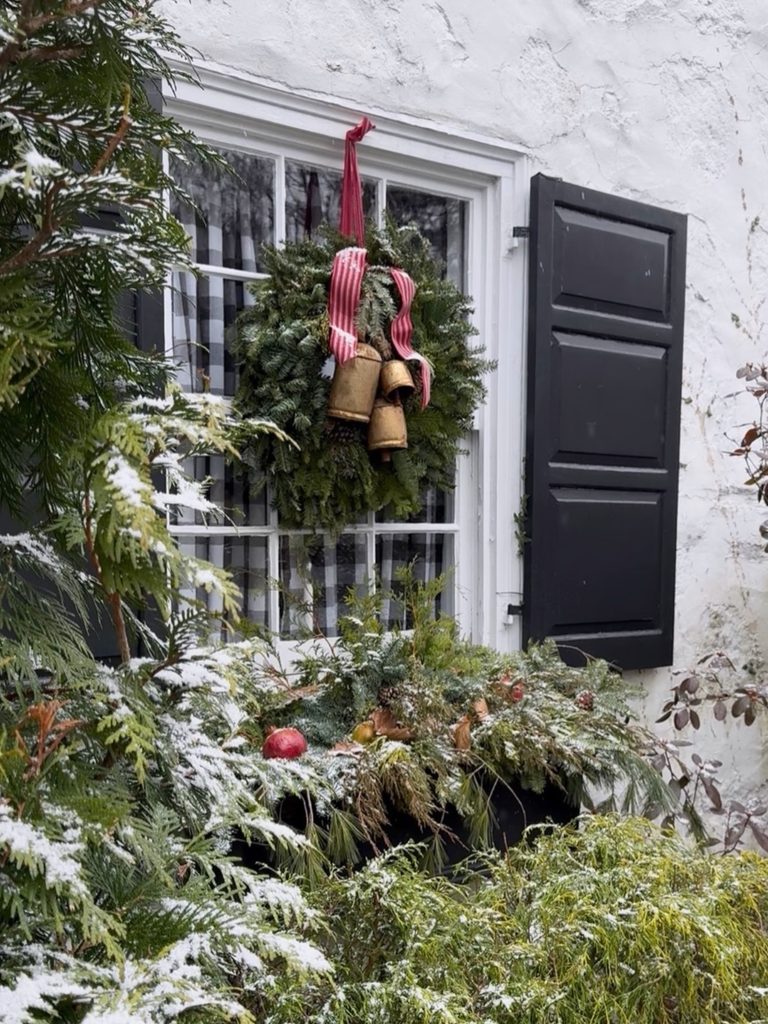
A small evergreen wreath can mark a front-facing window without covering much of the glass. Hang it from the top sash or a hook above the frame, centered where it can be seen from the walk and from inside. A red ribbon gives the greenery a clear outline against pale trim, while a few bells add weight at the bottom.
This arrangement works well on a ground-floor window near the entry, especially when garland or winter branches already line the sill. Use it through December, then take it down before the greenery dries and sheds. For a narrow window, choose a compact wreath so the ribbon and bells do not reach across the muntins.
Paint a Christmas Candy Window
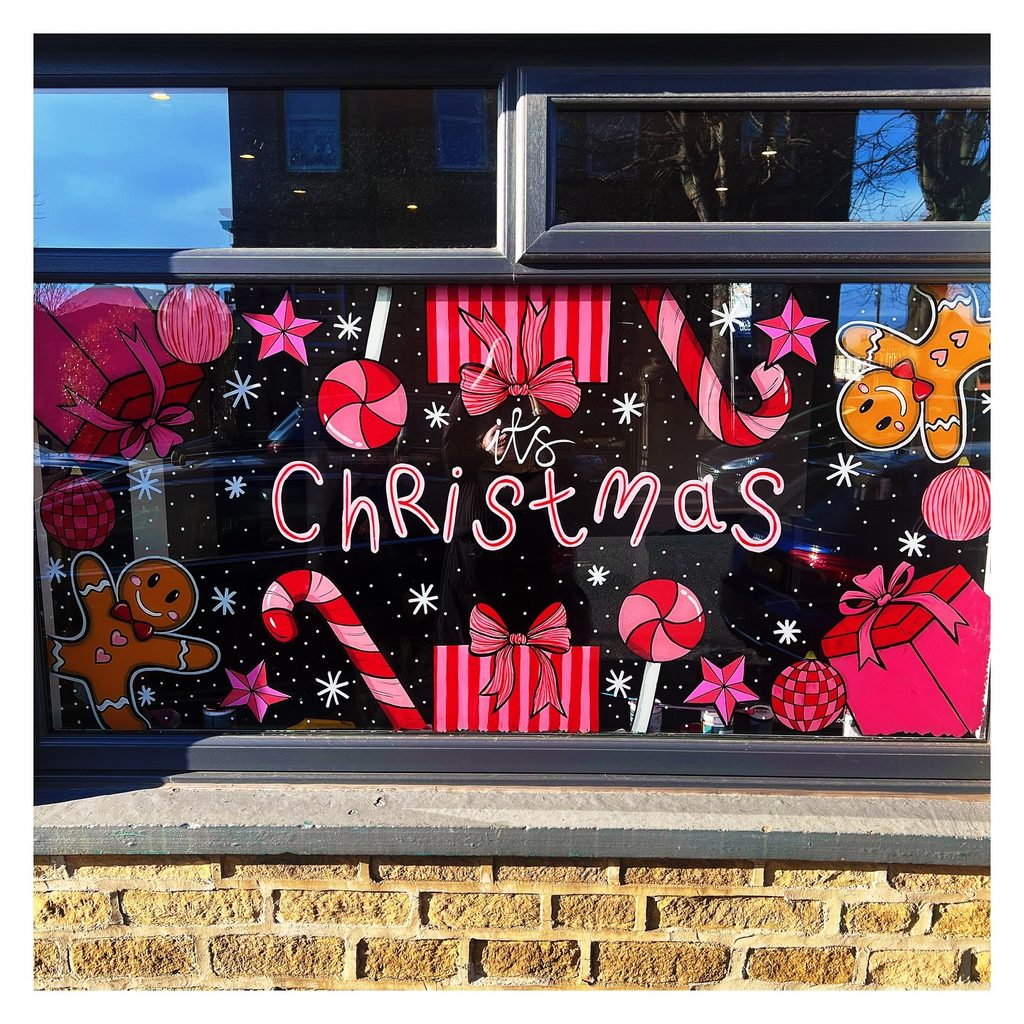
Use washable window paint to draw candy canes, wrapped gifts, and gingerbread figures around a Christmas greeting. Red and pink stripes give the larger shapes their pattern, while white outlines help the letters stand out against the glass. A fine paint marker is useful for bows, faces, and the small snowflakes between them.
For the broad shapes, use a brush with paint labeled for temporary use on glass. If you don’t have window paint, cut the sweets and presents from colored paper and attach them inside with small pieces of clear tape. White window markers can supply the lettering and dots around the paper shapes. Leave a clear band around the greeting so the words don’t get lost among the candy canes and ribbons.
White Ornament Garlands Drawn on Glass

Drawing hanging baubles, bead strings and small stars straight onto the glass in white paint pen gives you a Christmas window without putting anything on a shelf or a sill. The lines are thin, so the decoration frames what’s behind it instead of blocking it.
This is right for shops, salons and offices where people need to see in, or where there’s no deep sill to hold objects. It also works for anyone with a steady hand and a free afternoon, because the drawing is mostly repeated curves and small shapes.
I’d pick something else if you rent and aren’t sure the marker will wipe off your glass. A test patch in a corner settles that. Anyone who wants color or bulk should look at the wreath or tree ideas earlier in the list.


