
27 Teen Girl Bedroom Ideas For Small Rooms
This site contains affiliate links. We may earn a small commission, at no extra cost to you. Article may contain some images for illustrative purposes only .
The twin bed is shoved against the wall, the closet door won’t close all the way, and there’s a pile of clothes doubling as a nightstand. Sound familiar? For teen girls working with a shoebox-sized bedroom, the struggle isn’t just about square footage—it’s about carving out a space that actually feels like theirs. Fairy lights taped to peeling paint won’t cut it forever. The good news: a small room can still hold big personality, smart storage, and a study nook that doesn’t double as a laundry pile. Ahead, 27 bedroom ideas that lean into vertical space, multi-use furniture, clever layouts, and the kind of styling tricks that make 80 square feet feel like a whole vibe.
Loft Bed With a Desk Underneath
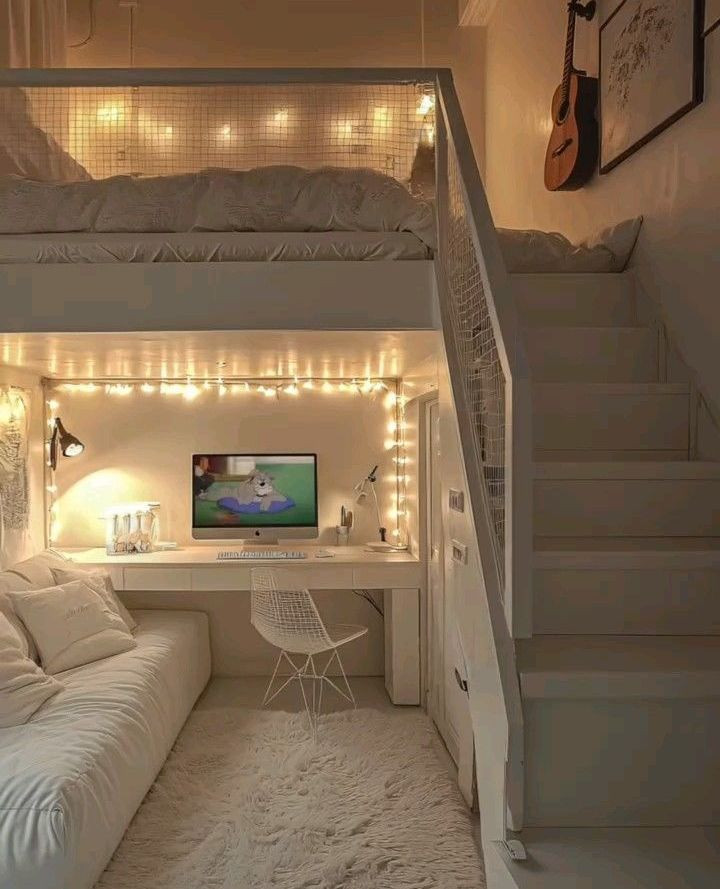
Lifting the bed off the floor is probably the single biggest square-footage move you can make in a small room. Everything below the loft becomes usable — in this case a full desk setup with an iMac, a small wall-mounted lamp, and fairy lights strung across the top edge of the nook, which do more to define the space than any overhead light would. The wire chair is a good call too, because a bulky desk chair would eat into the sofa clearance.
If your ceiling is under 8 feet, though, run the numbers before building anything — you need real headroom on the sleeping level. I’d skip the fluffy rug in a study nook. It collects every eraser shaving and snack crumb.
Tuck The Bed In
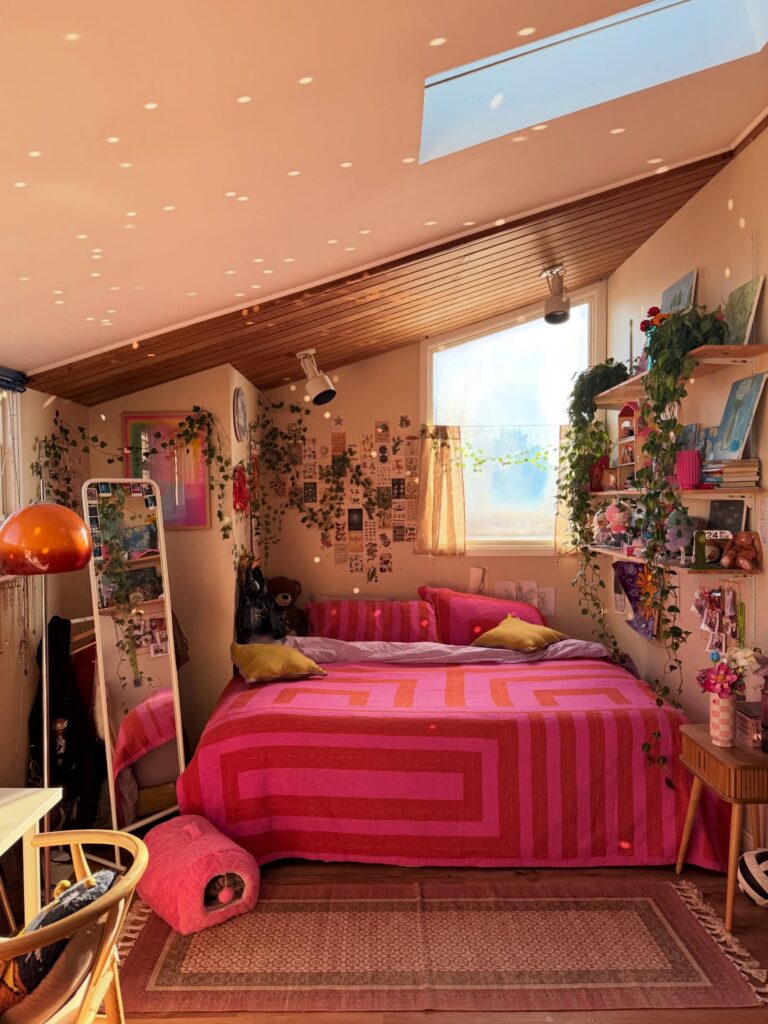
With the bed tucked under the window, the room gets one clear walking lane instead of little awkward strips on every side. It saves floor space. Choose a cover with a strong pattern, like the pink block blanket here, because it makes the bed feel planned even when it takes up most of the room.
The shelf wall should work harder too: keep books, small boxes, and trailing plants up there so the desk and floor do not become storage. I’d skip heavy curtains in this setup and use a thin panel or blind, since anything bulky around the window will crowd the pillows fast. Good for plant lovers.
Or anyone who owns too many little things.
Plaid Bedding and Warm Wood
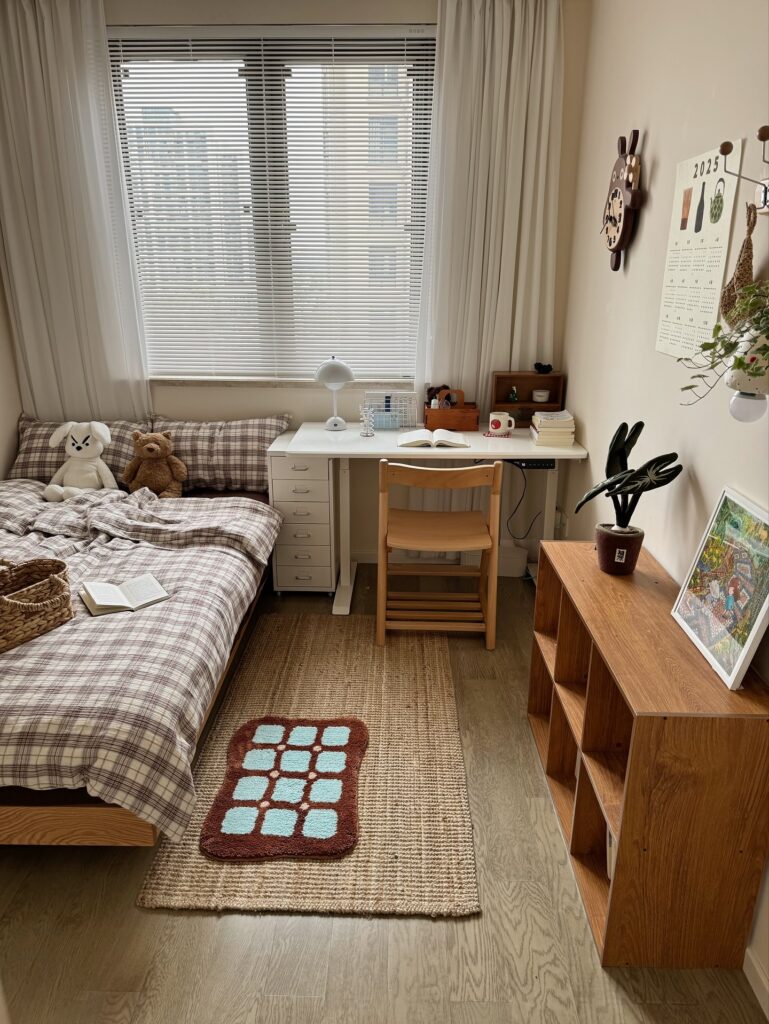
The plaid duvet in muted burgundy and cream is doing most of the heavy lifting here. Small rooms often feel flat when everything is white or pastel, and a pattern like this gives the bed weight without shrinking the space. Pair it with warm wood — the bed frame, chair, and that tall cube shelf on the right all match in tone, which keeps things from looking busy.
The little tufted rug with the grid pattern layered over jute is a smart trick. Two rugs make a narrow room feel wider than one big rug would.
One thing I’d swap: the stuffed animals piled against the pillows. Cute, but they eat sleeping space. Keep one, move the rest to the shelf.
Use light around the bed
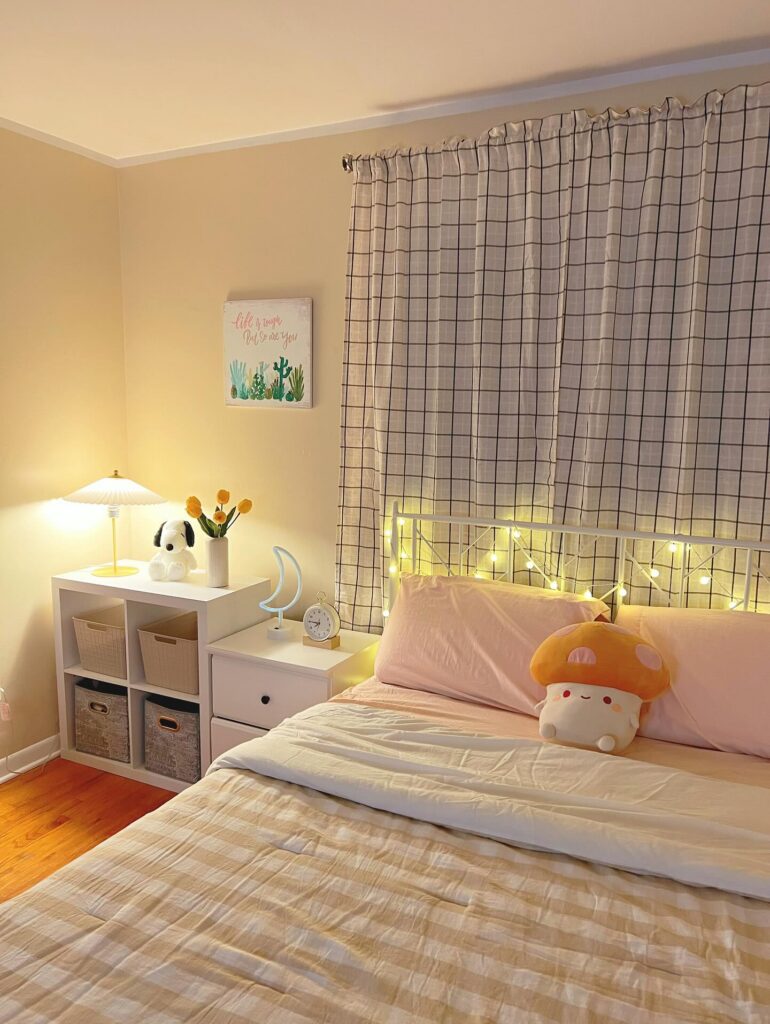
Fairy lights on the headboard do a lot here. In a small room, that soft line of light keeps the bed from feeling like one big block shoved against the wall, and you get a bedside glow without needing a bulky second lamp.
Keep the frame simple. A white metal headboard works well because the string lights can weave through it instead of looking taped on as an afterthought, and that matters more than people think.
The cube shelf is useful too. It gives you a spot for baskets, books, skincare, or chargers without adding another deep dresser that eats floor space.
I’d skip too many tiny decor pieces. The plush pillow is enough, and once the shelf top gets crowded with signs, figurines, and lamps, a small bedroom starts looking busy fast.
One Shelf Instead of a Headboard
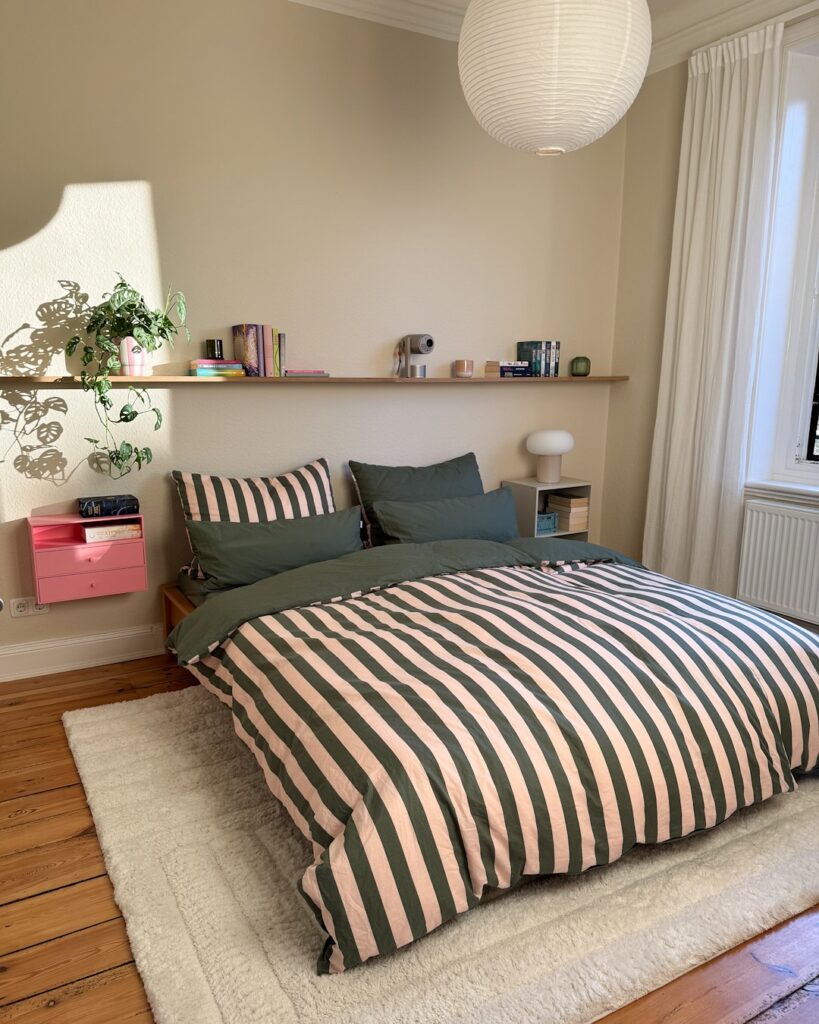
A single wooden ledge mounted just above mattress height does the job of a headboard and a nightstand at the same time, which matters a lot when floor space is tight. Books, a small candle, a camera — things that would otherwise pile up on the floor. The bed here sits low, almost platform-style, which keeps the wall visible above the shelf and makes the whole wall feel taller than it is.
That striped duvet is doing a lot of color work, so the shelf stays pretty calm by comparison. If your room runs small, skip the floating drawers on the side and just use the shelf for everything. One thing worth knowing — a ledge this long needs solid wall anchors, not just drywall screws.
Plants Above The Bed
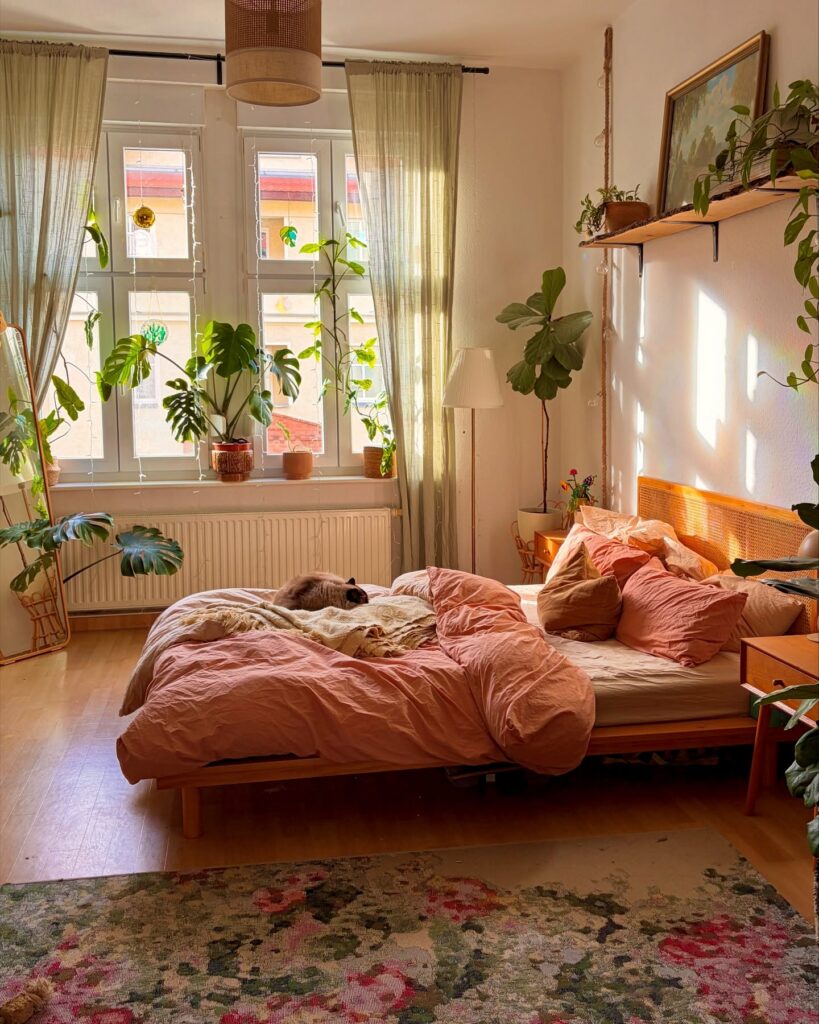
With the bed pushed under the shelf, plants can sit above eye level instead of eating the floor. That matters here. Use the window ledge for smaller pots, then keep one taller plant near the corner so the room gets that leafy look without turning the desk or bedside table into a plant stand.
Sheer curtains help because they let light reach the leaves during the day. I would skip any heavy ceramic pots on a high shelf, though, because watering gets annoying and one bad bump can be a mess. Terracotta or nursery pots are enough.
Layer Warm Lighting At Different Heights
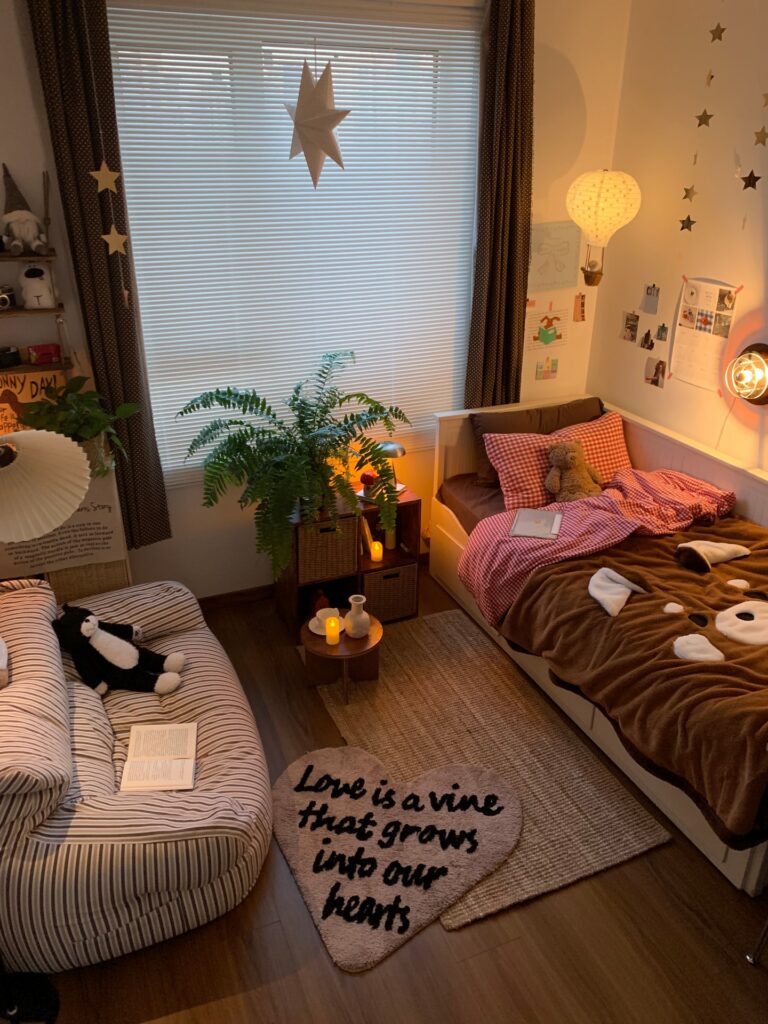
The trick in this room is that no single light is doing all the work. There’s a paper star hanging in the window, a balloon lantern floating near the ceiling, a small warm lamp on the wall by the bed, and candles on the little side table. All of them low-wattage. All of them warm-toned.
For a small room, this matters more than picking one big statement fixture. Overhead lights make a tight space feel like a waiting room. Skip them at night.
What I’d do differently: swap the real candles for flameless ones if the bed is that close. The brown throw blanket and the fabric side table are not things you want a flame near. Everything else here I’d copy.
Corner shelves over a daybed
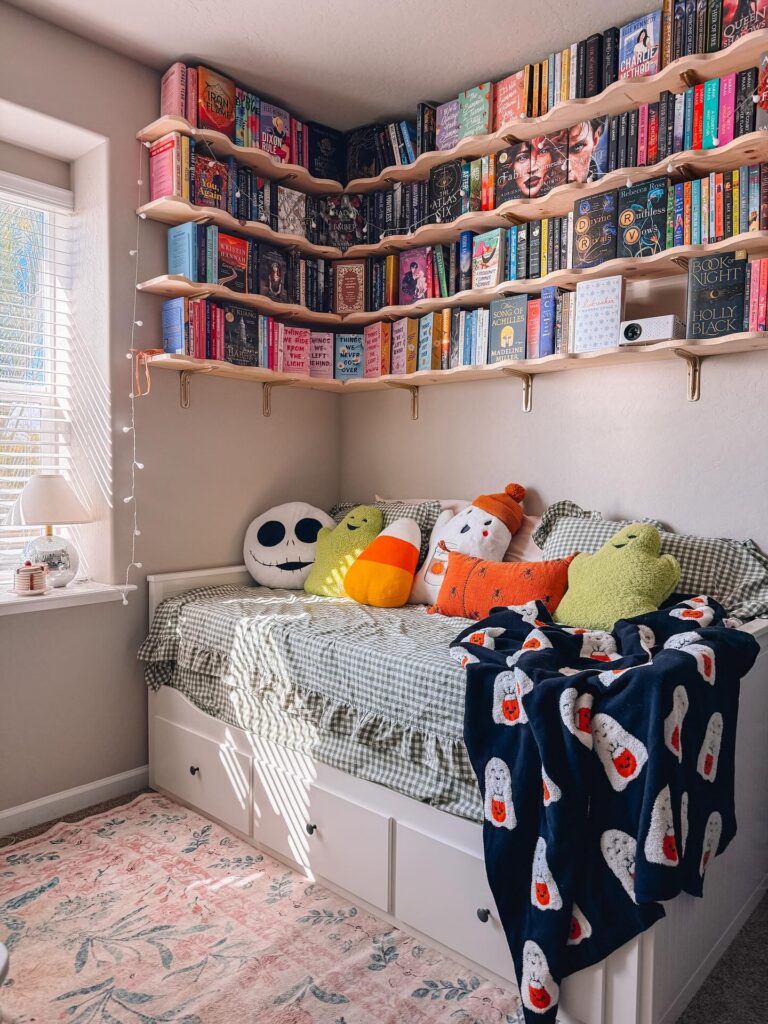
Tucking a daybed into the corner works hard in a small room because it clears the middle of the floor and gives you a spot to read, sleep, or just throw clothes for an hour. Go upward. The wraparound book ledges are the part worth stealing here, especially if your teen actually keeps paperbacks and trinkets around instead of hiding everything in drawers.
Use shallow shelves so the bed still feels usable, and stop them high enough above the mattress that nobody bumps their head when sitting up with pillows stacked behind them. Storage underneath matters too. Drawers beat baskets here since they don’t leave dust traps under the bed. I’d skip very heavy decor on the top shelf, though, because anything over a pillow should stay fairly secure.
Rattan Headboard With Fairy Lights
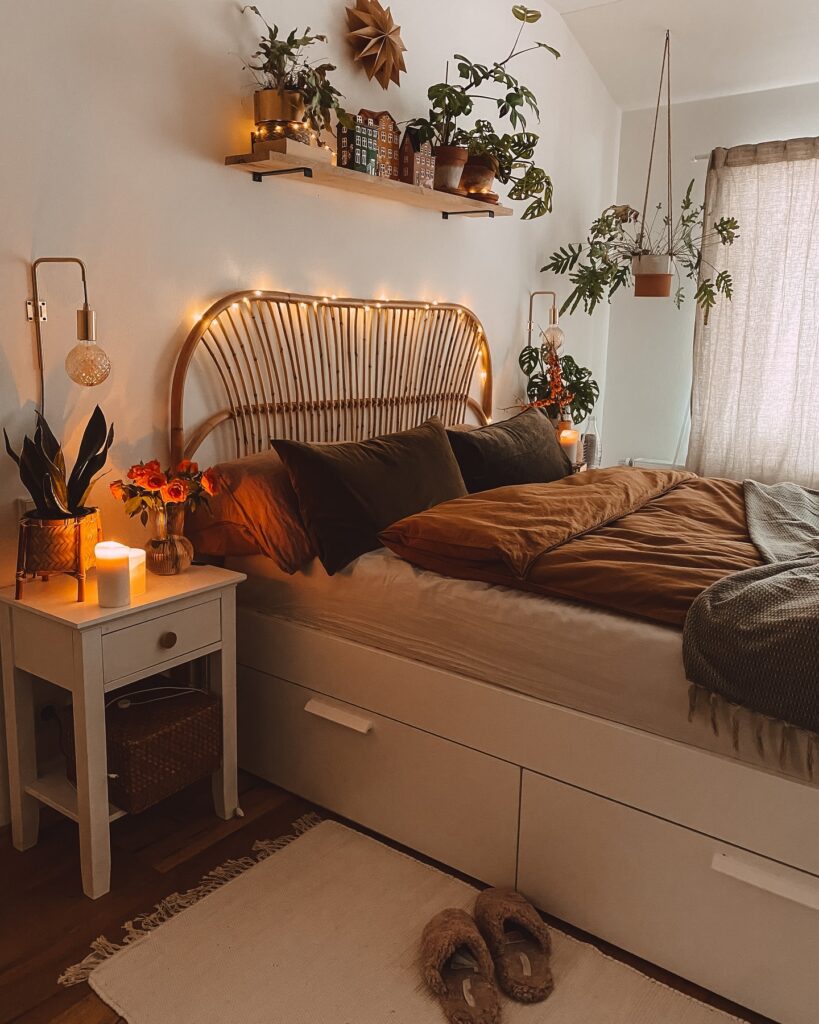
Wrapping fairy lights around a rattan headboard is one of those things that looks like it took effort but really didn’t. The woven frame gives the lights somewhere to sit rather than just drooping against a wall. Pair it with rust or burnt orange bedding and the whole thing reads warmer than it actually is — good for a small room that needs a bit of depth without adding furniture.
The shelf above the bed with a few plants and small objects keeps vertical space working without touching the floor. If your room runs small, the under-bed drawers in this setup are worth prioritizing over a separate dresser entirely. I’d probably skip the candles on the nightstand if you’re a teenager sharing a house — wax on wood is a conversation nobody wants to have.
Let Plants Climb Up
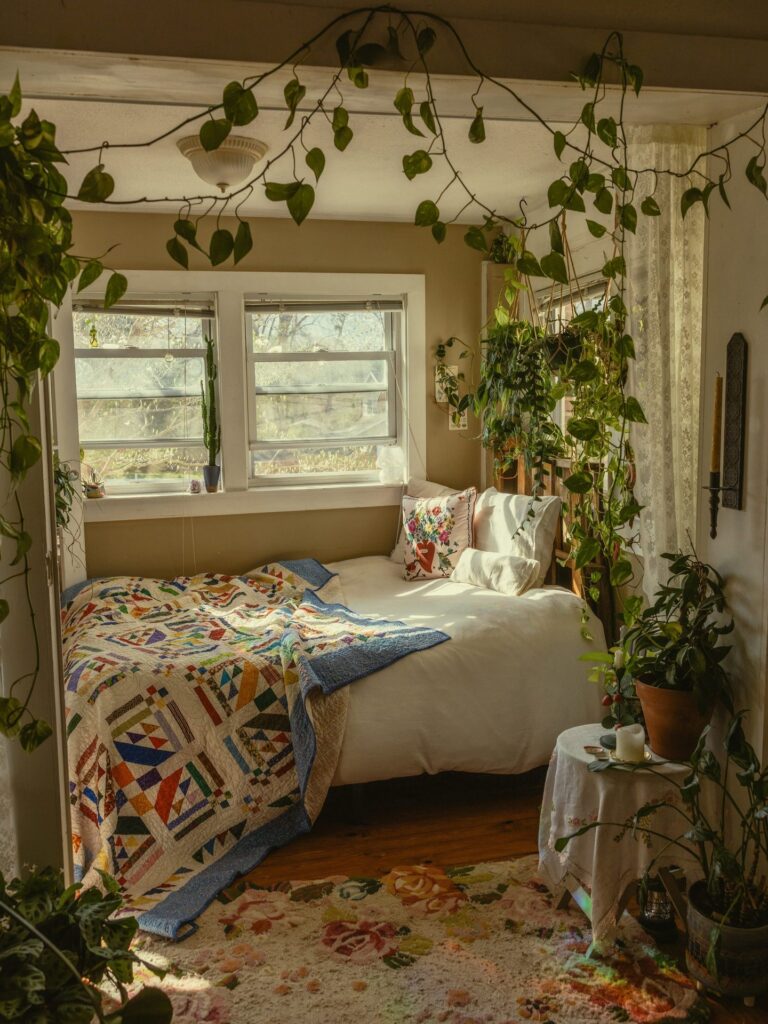
Running pothos along the ceiling line gives a small bedroom height without asking for another shelf or cabinet, which helps when the bed already takes up most of the floor. Use tiny hooks. Keep the vines above the headboard or around the window trim, not loose across the pillow area, because leaves dropping in the bed gets annoying very fast.
The bed can stay plain underneath, like the white duvet here, so the plants and quilt do the talking. I would skip any plant that needs misting every day; pothos, philodendron, or a fake trailing vine is much easier for a teen room. The rule is simple.
Up the walls, not across the floor.
Mustard Walls With Layered Textiles
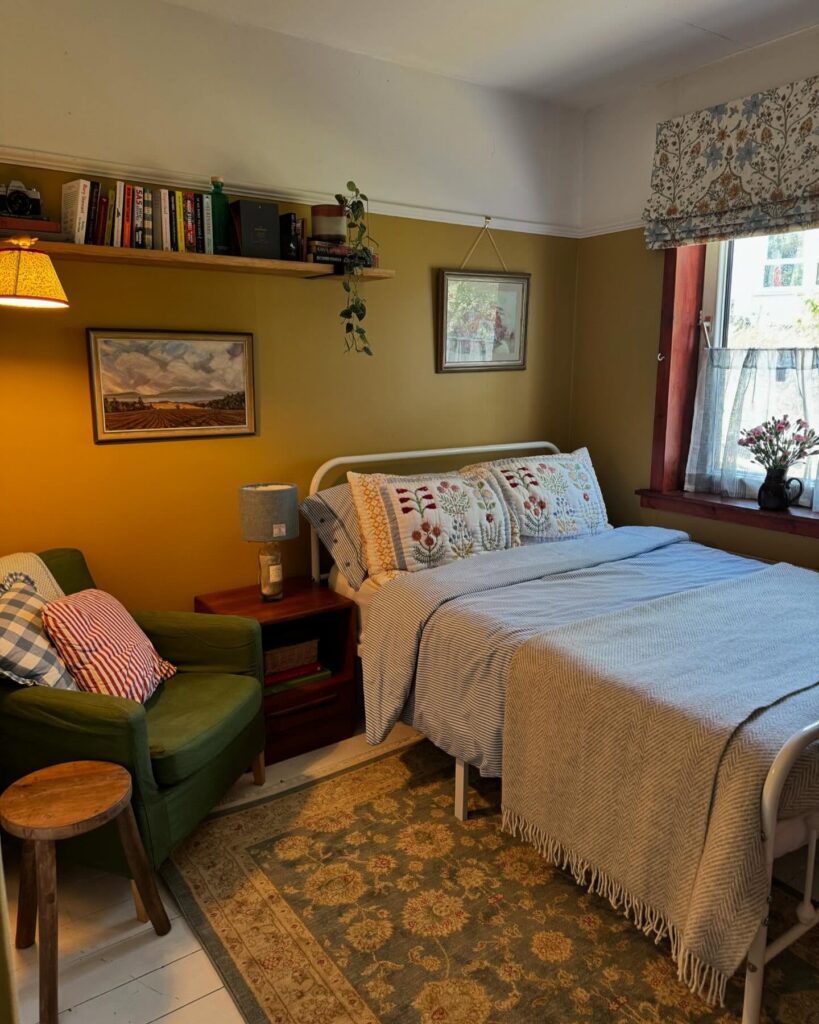
The mustard-yellow paint is doing most of the work here. It’s a bold choice for a small room, but paired with the striped bedspread, floral pillows and that faded oriental rug, it reads warm instead of loud. The trick is committing to the layering — one busy element on a strong wall colour looks like a mistake, three looks intentional.
If your teen wants a colour like this, put the shelf above the bed on the coloured wall so books and plants break it up. The green armchair pushed into the corner earns its keep as a reading spot without eating floor space. One thing I’d change: the roman blind print competes with the pillows. I’d pick a plainer linen shade and let the embroidered cushions be the pattern moment.
Built-in bed nook
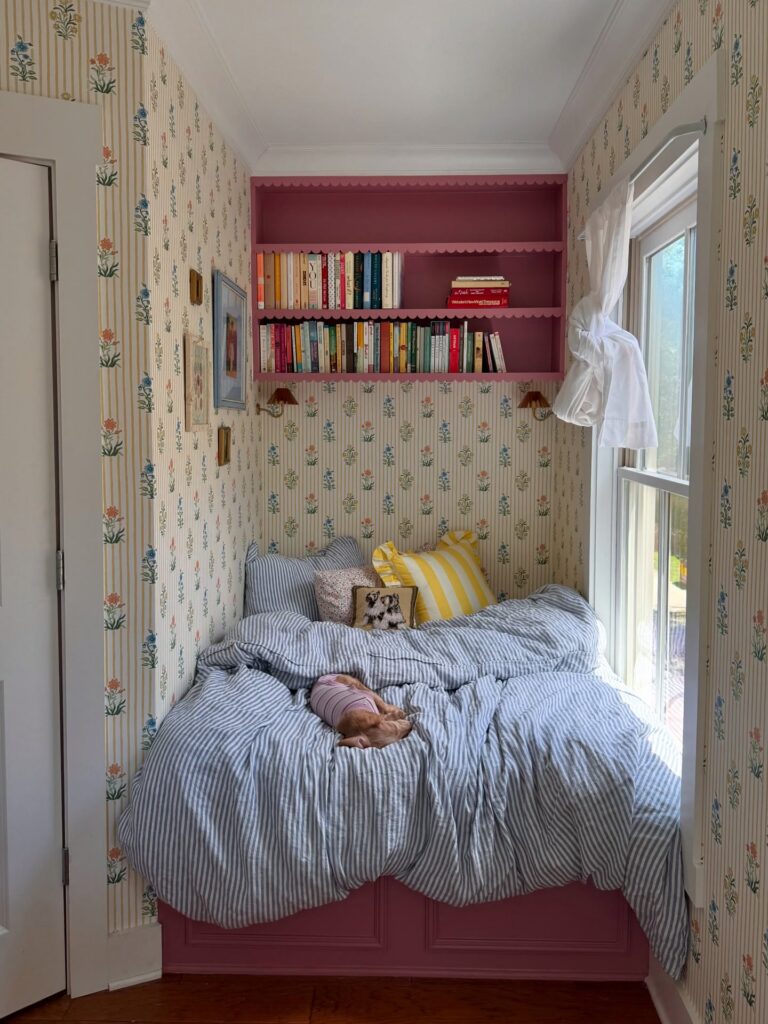
Tuck the bed right into the end wall. That move saves floor space straight away, and in a narrow room it makes the whole layout easier because you stop fighting for walking room on both sides. The shelf above is doing a lot here too, especially since it’s shallow and mounted high enough that the pillows still fit underneath without looking squeezed.
Keep the bedding loose. A striped duvet like this hides everyday mess better than a flat color, which matters in a teen room that gets used for homework, scrolling, naps, all of it. The little sconces help free up shelf space. I’d skip a bedside table entirely and use a wall pocket or one small ledge instead, because in a room this tight, extra furniture starts feeling like a bad trade.
Mix Checks in the Same Tonal Family
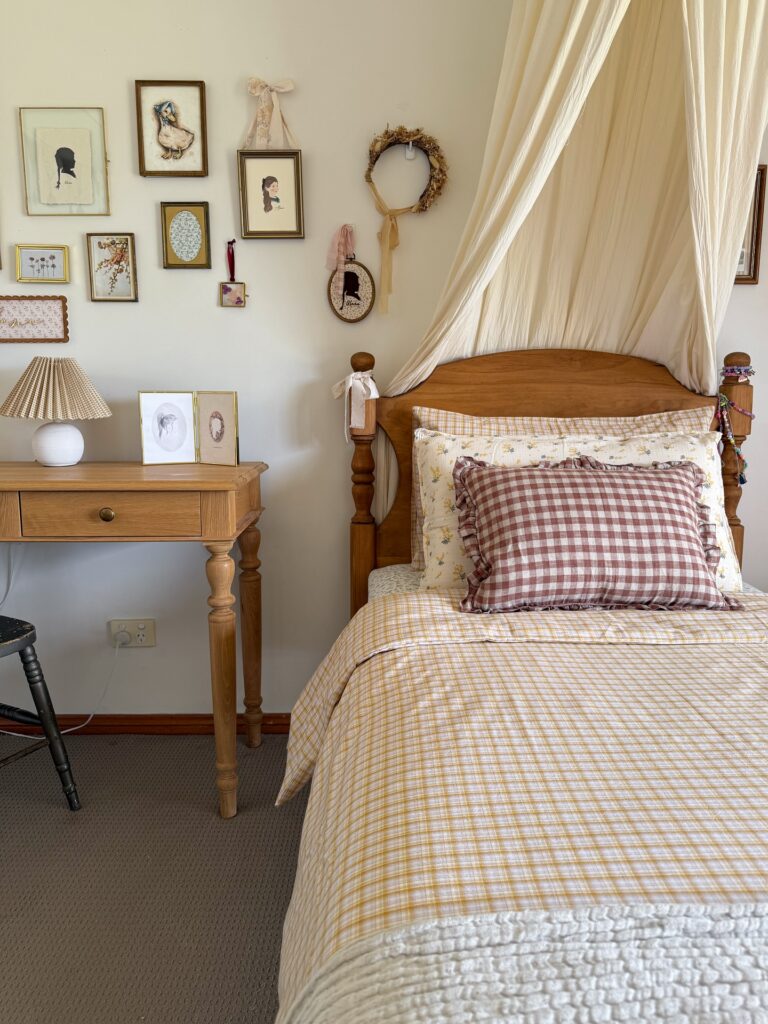
The yellow plaid duvet and the dusty rose gingham cushion shouldn’t work together on paper, but they do here because neither one is fighting for attention — both patterns are muted, worn-looking, the kind of checks that have been washed many times. That’s the actual rule. If you’re layering two different plaids in a small room, keep them in the same washed-out, earthy range rather than mixing a bright check with a faded one.
The ruffled edge on the smaller cushion does a lot of work too — it’s the thing that stops the bed from reading as too flat. I’d probably swap the textured white blanket folded at the foot for something in a similar muted tone, since the white pulls the eye down. Small rooms don’t need that.
Use the Bed Surface
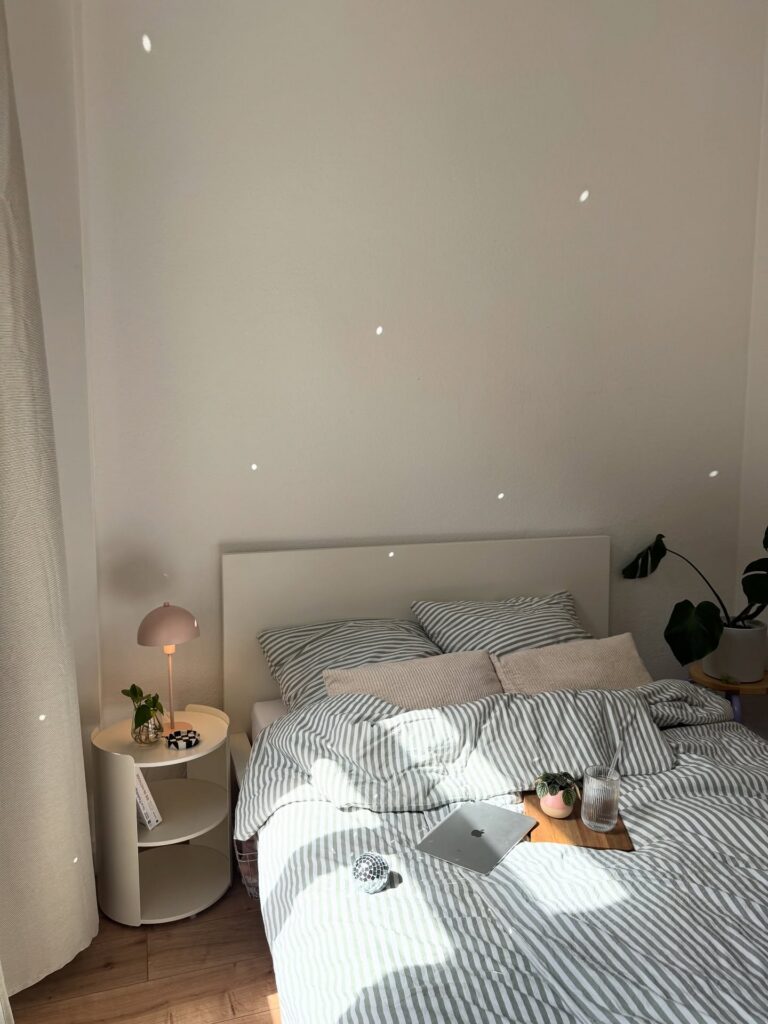
When there isn’t much floor left, the bed has to do more than hold pillows. A flat wooden tray like this gives a teen a spot for a laptop, drink, small plant, or snacks without making the whole blanket messy. Keep it narrow enough to move with one hand, because a huge tray becomes one more thing to dump on the floor.
The striped bedding also helps here, since little creases and school-night clutter don’t show as much. Very practical. I’d skip too many cushions, though; two sleeping pillows and one long pillow are enough for a small room.
Wallpaper the ceiling too
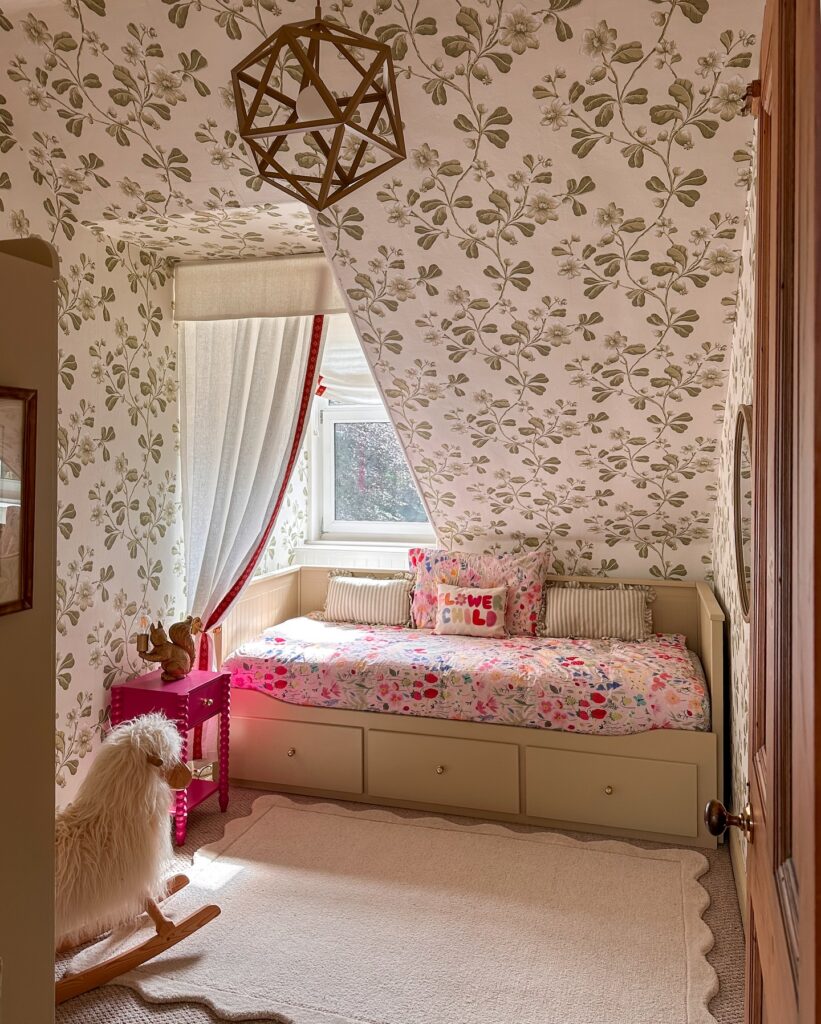
Running the floral up the wall and straight across the ceiling is the move here. In a small room with a sloped or angled ceiling, stopping the pattern at the wall line just draws attention to how tight the space is. Carrying it over erases that seam.
The green-and-cream botanical works because the background is pale, so the ceiling still reads as light overhead. If you tried this in a saturated navy or burgundy, the room would close in fast. Pick a print with plenty of negative space.
One thing I’d change: the geometric wood pendant fights the softness of the wallpaper. A fabric shade or something rounded would settle into the pattern instead of poking out of it.
Floral walls, simple bed
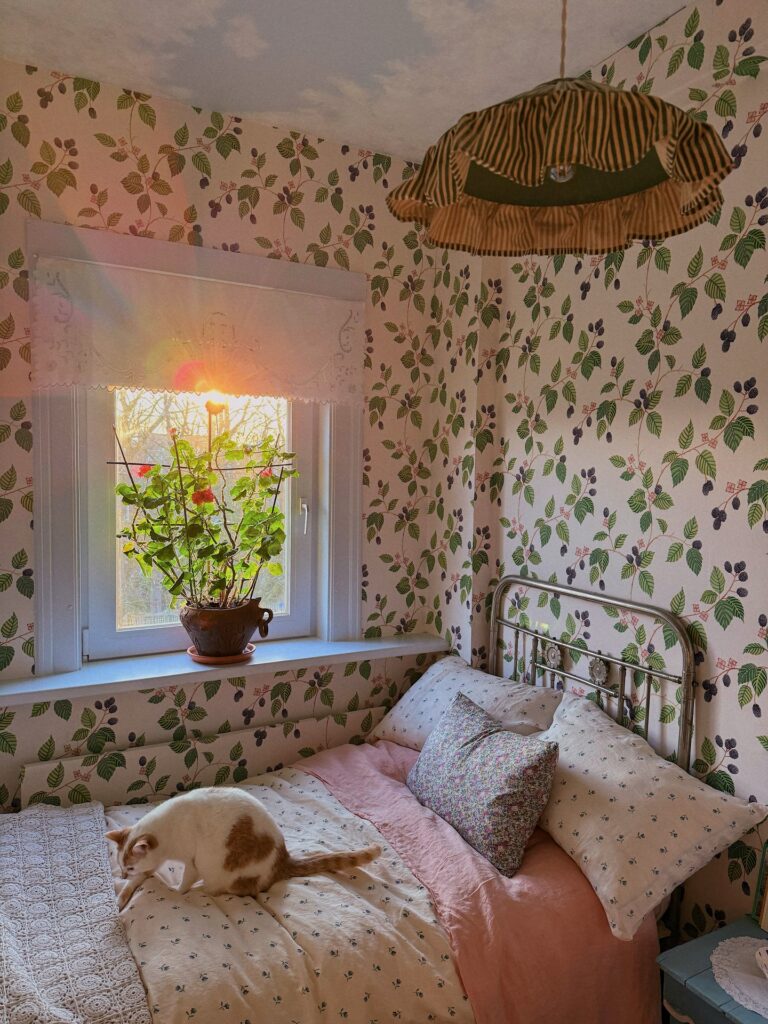
Start with the wallpaper. A small room can handle an all-over print if the repeat is light and spaced out like this leafy pattern, because it fills the walls without making them feel boxed in. Then keep the bed frame narrow and open — a metal one works well here since it takes up less visual room than a chunky upholstered headboard and still gives the bed some shape.
The pink bedding matters too. Just one solid quilt or coverlet under smaller printed pillows is enough to pull color from the walls without turning the whole room into pattern overload.
For a teen room, this suits someone who likes vintage bits but still wants it usable every day. I’d probably skip the ruffled ceiling shade if the ceiling is low, though, and use a plain pendant with a softer bulb instead.
Boucle Bed Frame as the Starting Point
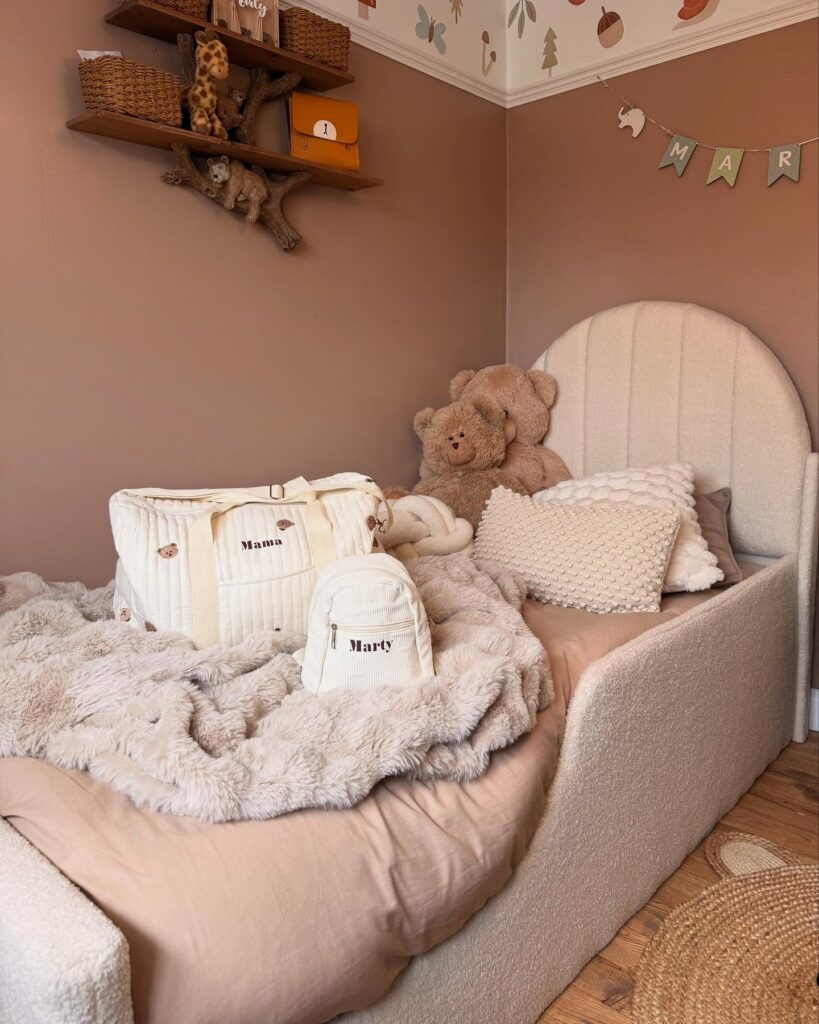
The arched boucle frame here is doing a lot of the work — once you have something like that anchored to the wall, you don’t need much else to make the room feel finished. For a small space, that matters. A tobed-style frame with low side rails keeps the footprint contained while the arch gives the eye somewhere to go vertically.
Pile in a chunky faux fur throw and a couple of textured cushions in the same cream-to-taupe range, and the bed becomes the whole room. The personalized bag sitting on top is genuinely a smart detail — labeled bags on the bed or a low shelf pull double duty as decor and actual storage for a kid who uses the room daily. I’d skip the oversized teddy if floor space is tight, though.
It eats more room than it earns.
Window Corner Bed
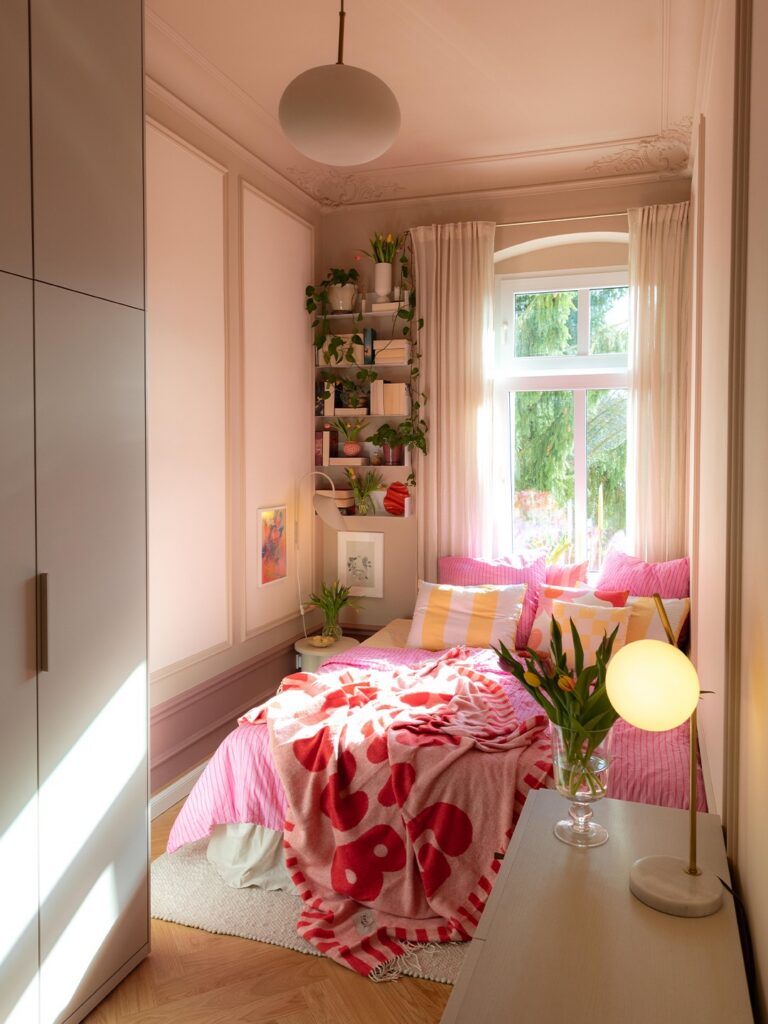
With the bed pushed into the window corner, the room gets one clear walking path instead of little awkward gaps on every side. Keep the color on the bedding, like the pink cover and red patterned throw, then leave the wardrobe and desk plain so the room does not feel packed. The long curtains help too, because they make the window look taller and hide the edges of the bed a bit.
Add shelves above the bedside area if floor space is gone, but keep them for plants, books, and one or two display pieces only. Not everything needs a spot. I’d skip one of the extra cushions if this is a room that has to be made up before school.
Layer the Bed With Character
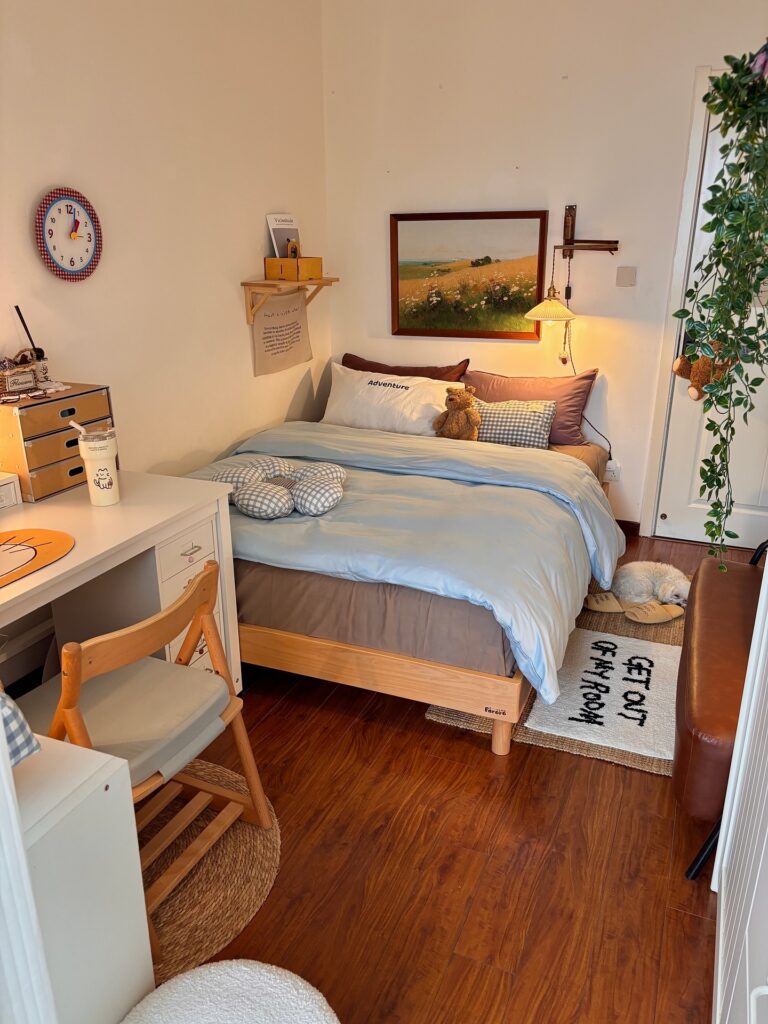
The bed is doing most of the work here. Pale blue duvet, brown base sheet, then a stack of pillows in totally different patterns — a gingham check, a solid dusty rose, a brown one, and that white “Adventure” pillow with the little bear propped against it. Nothing matches. That’s the point.
If you’re working with a small room, the bed takes up most of your visual space anyway, so it may as well carry the personality. Pick one calm base color for the duvet and go wild with three or four pillows in different textures and prints.
The two heart-shaped gingham cushions at the foot are a nice touch. I’d skip the teddy bear if you’re past a certain age, but that’s a personal call.
Projector wall corner
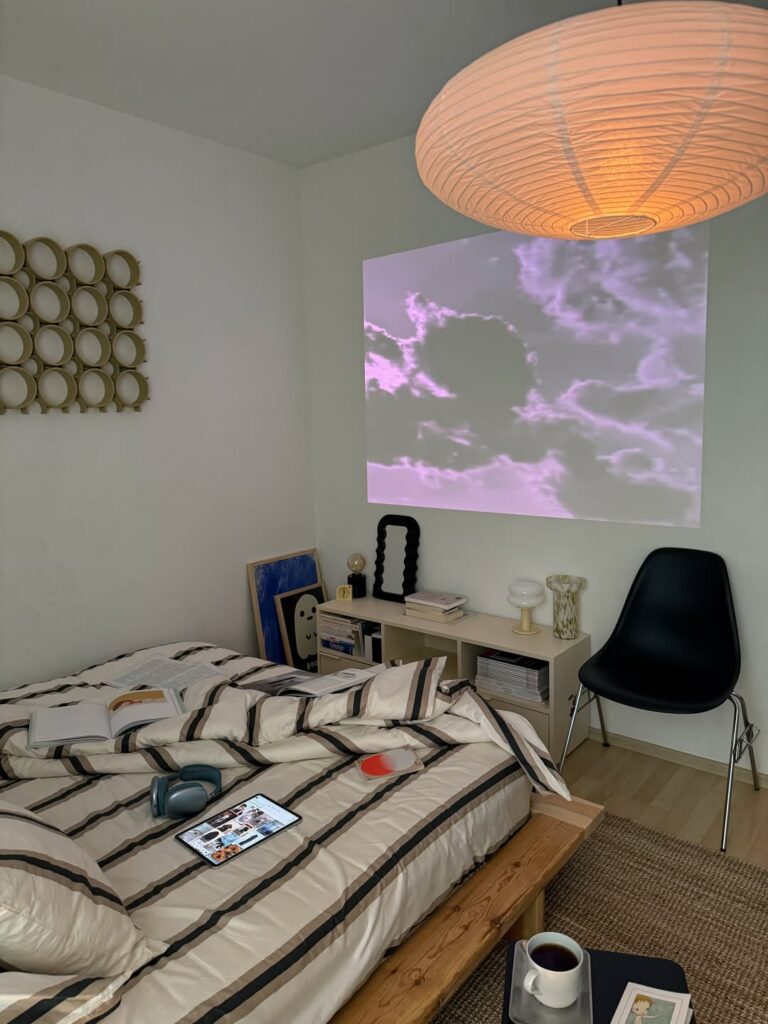
Leave one wall mostly clear and let that become the whole point of the room. A small projector above a low shelf works well in a tiny bedroom because it gives you something big to look at without adding another piece of furniture, and the shelf underneath can hold books, chargers, and the bits that usually end up on the bed.
The paper lantern helps more than you’d think. It keeps the ceiling light soft, so the room still works at night when the projector is off.
I like this with a low wooden bed and plain bedding with stripes, since the room already has movement on the wall. Too many prints would make it feel busy fast. If I changed one thing, I’d move the black chair out unless it gets used every day, because floor space matters more in a small room.
Project Your Favorite Movie On The Wall
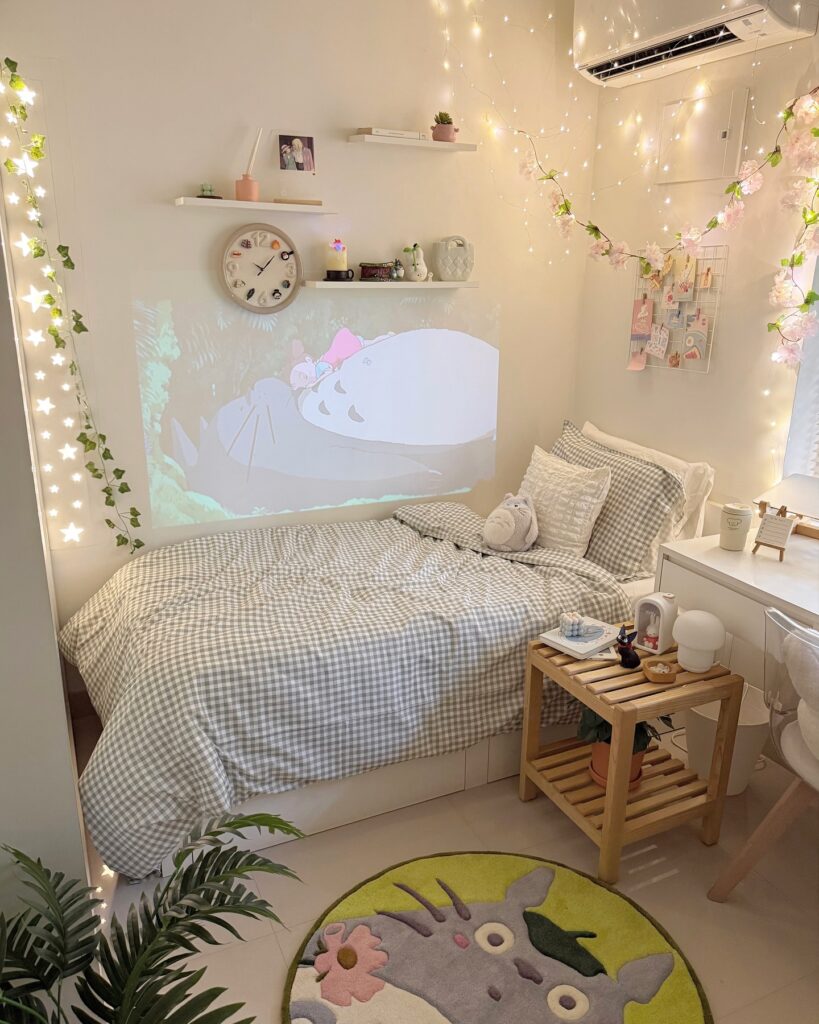
A mini projector pointed at a blank white wall above the bed does what a TV mount never quite manages in a small room — it disappears when you’re not using it. The gingham duvet here is doing a lot of work too, because a low-pattern, muted bedding choice keeps the wall free to double as a screen without the whole setup looking chaotic. You’d want to keep at least one wall mostly bare for this to work.
The Totoro rug on the floor ties the projected film to the rest of the room, which is a nice detail — theming doesn’t have to be loud to register. Honestly, skip the fake vine garlands if your room gets warm. They collect dust faster than you’d expect.
Built In Bed Nook
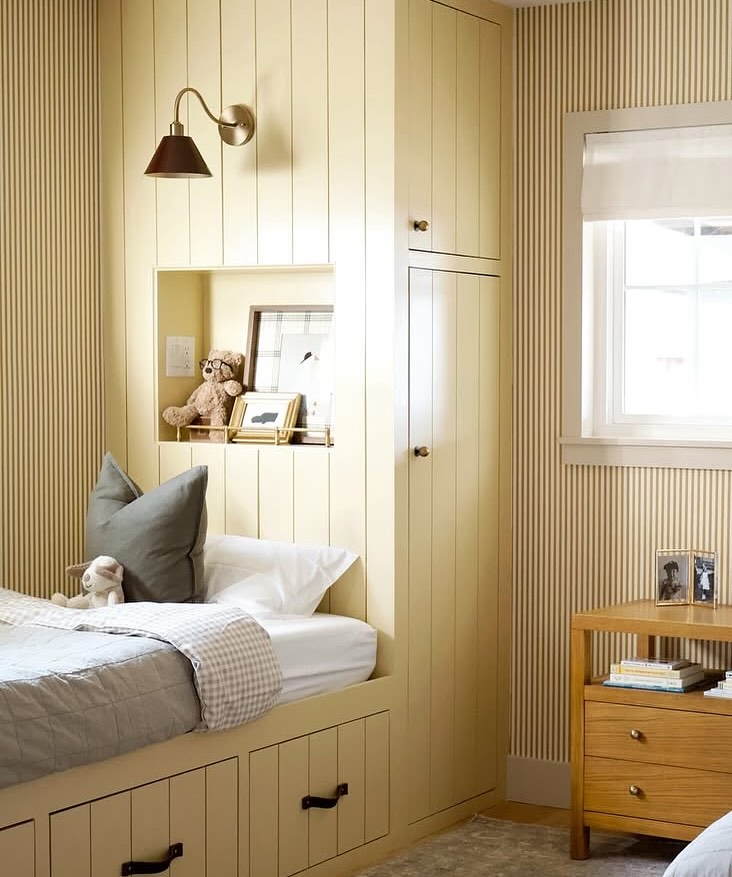
Tucked into one wall, this kind of bed setup saves the floor from doing too many jobs at once. The drawers under the mattress can take off-season clothes, extra sheets, or school stuff that usually ends up in plastic bins. Very useful.
Keep the shelf above the pillow shallow, like the one here, so it holds a few frames or a stuffed toy without becoming another messy spot. The wall sconce is also worth copying, because a lamp on a tiny nightstand eats space fast. I’d skip the heavy drawer pulls if the room is very narrow, since they can catch on blankets or knees.
Vertical paneling helps the whole built-in feel planned, not like a bed pushed into a corner.
Wash Everything in Warm Light
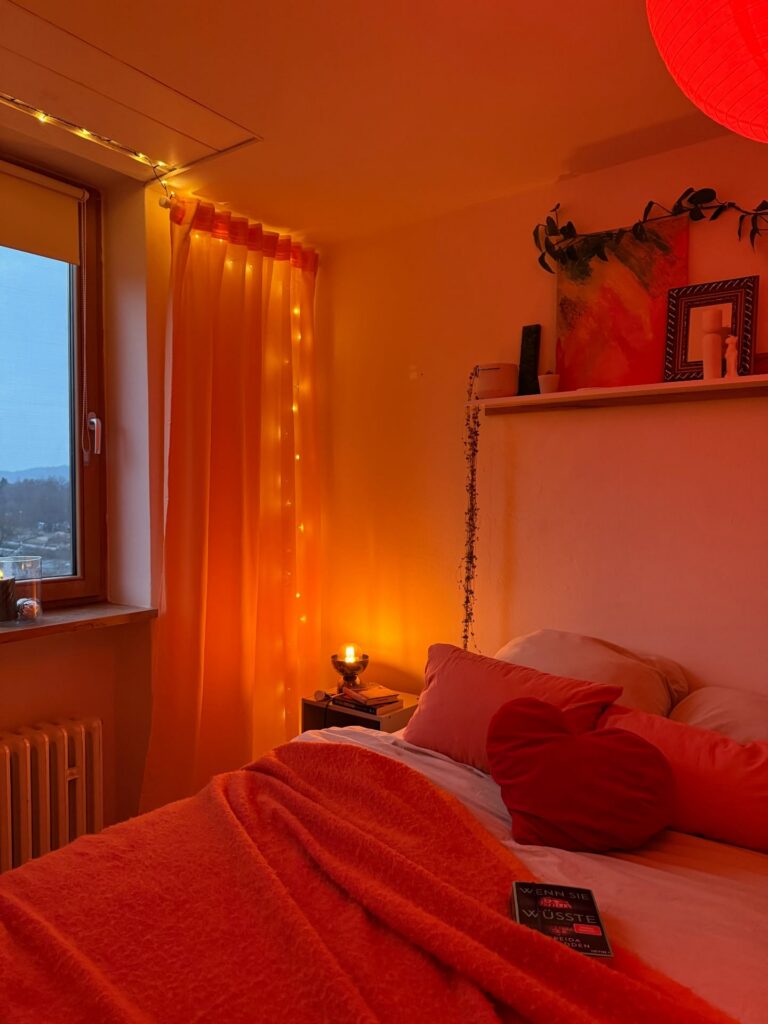
The trick here is committing to one colour temperature. Orange paper lantern overhead, fairy lights tucked behind a sheer curtain, a single candle on the nightstand — nothing in this room is fighting the warmth. That’s what makes it work. If you mix in a cool white desk lamp or a blue-tinted phone charger light, the whole thing falls apart.
Swap your bulbs for 2200K or lower. Amber fairy lights, not the bright white ones. A rice paper lantern costs almost nothing and does most of the heavy lifting.
One thing I’d change: the fairy lights behind a full-length sheer curtain look great but tangle badly when you wash the curtain. Clip them to the rod separately so you can take the curtain down without a fight.
Bed canopy corner
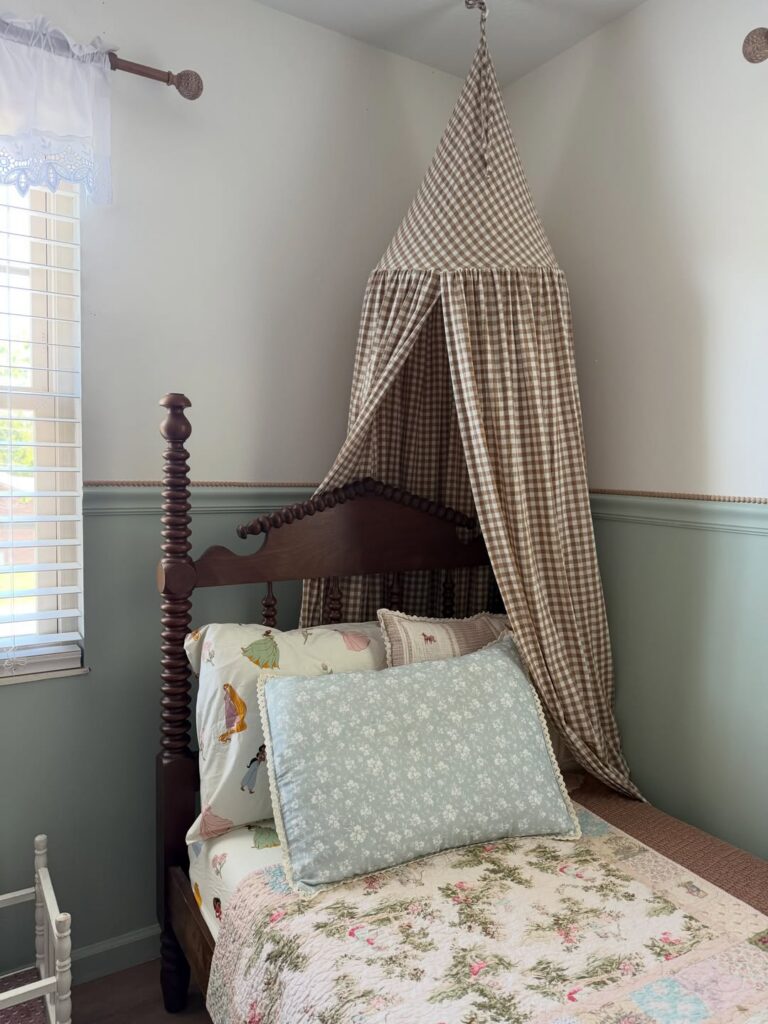
If the bed has to sit tight in a corner, lean into it and hang a single canopy from the ceiling instead of trying to make the whole room feel bigger with extra furniture. This works especially well over a narrow twin bed, because the fabric drops straight down and gives that spot its own boundary without asking for floor space at all.
Keep the rest light. Use one soft pillow in front, let the bedding carry a small floral print, and stop there before the corner starts looking busy.
The tall wood headboard helps. If your bed is lower or plainer, mount the canopy a bit higher so it still has some shape.
I’d probably skip heavy fabric here. Gingham is nice, but in a small room I’d use a lighter cotton so it doesn’t feel like a curtain landed on the bed.
The Canopy Curtain Trick
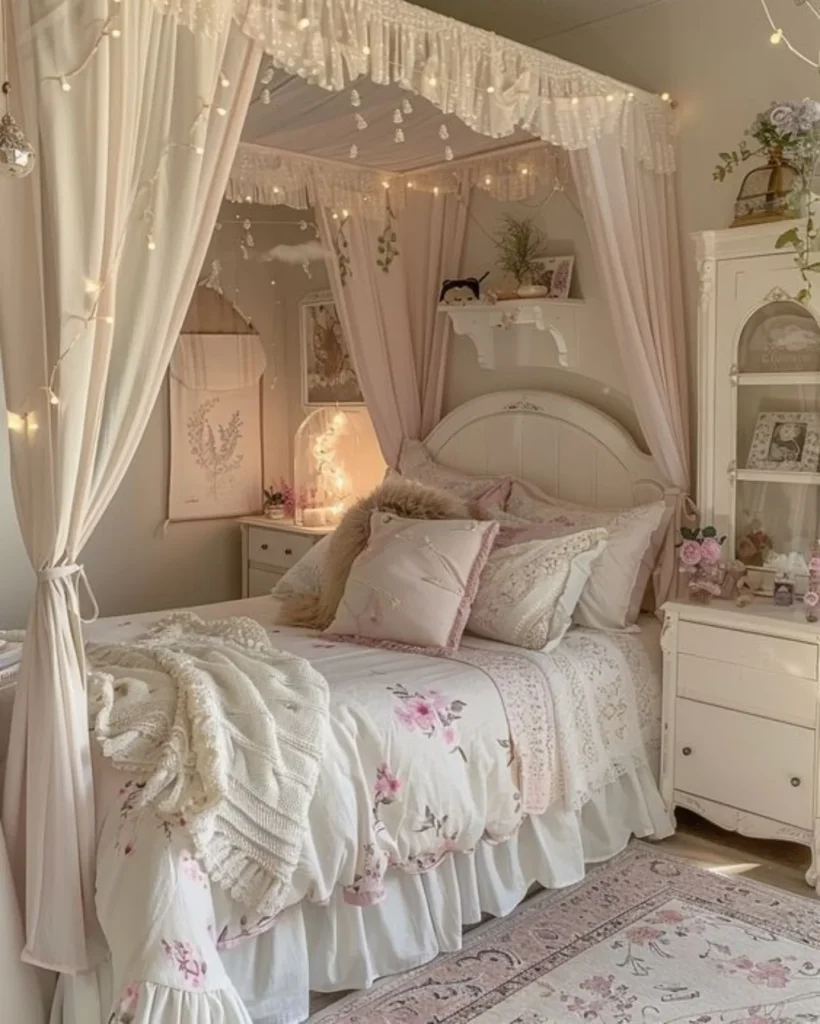
Curtain panels tied to a ceiling-mounted frame do most of the work here — the fringe along the top edge and the fairy lights threaded through it are what make it feel finished rather than just draped fabric over a bed. For a small room, this works because it draws the eye up and gives the bed a defined zone without adding any floor furniture. The layered bedding — ruffled skirt, floral duvet, chunky knit throw all piled together — is very much a commitment to wash, though.
If that’s not you, just do the canopy and keep the bedding simpler. One nightstand with a warm lamp tucked inside the curtain frame is enough. The white dresser and shelf unit against the wall keep storage nearby without crowding the bed itself.
Curtain Bed Nook
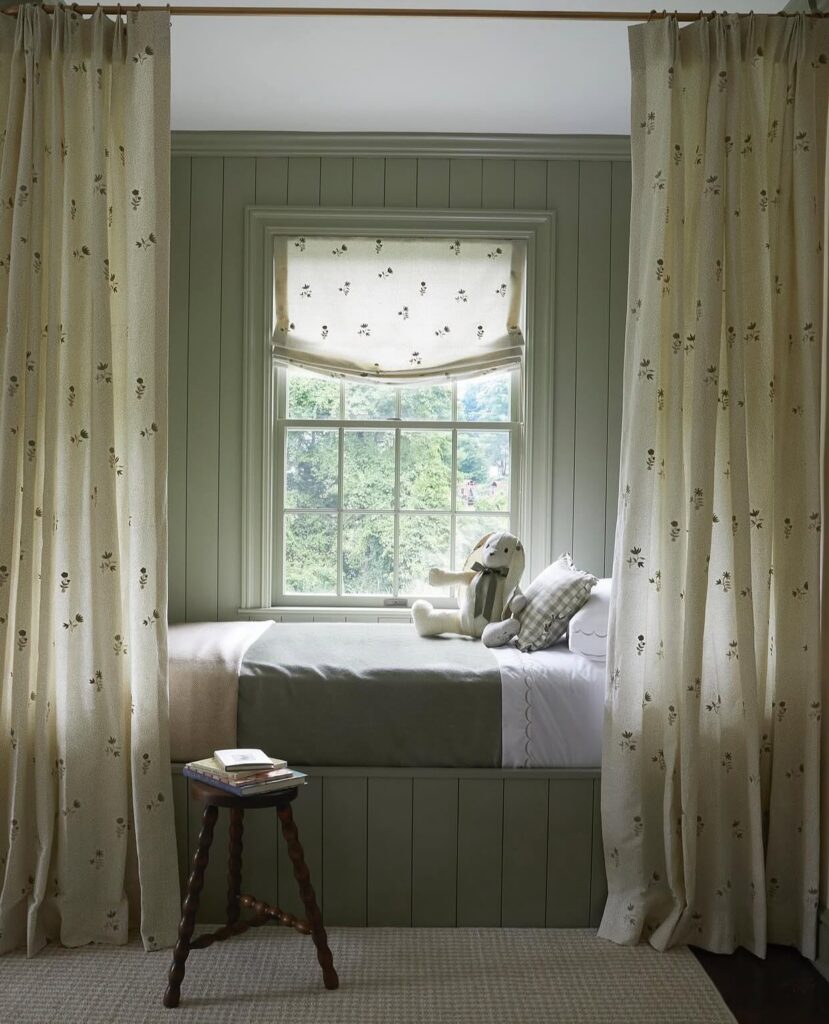
If there is a window recess, push the bed into it instead of fighting the odd wall shape. The long curtain panels on a single rod make the bed feel like its own corner, which helps a small teen room when there is no space for a separate reading chair. Keep the palette quiet.
A sage green paneled wall, a pale throw, and one patterned shade are enough without adding ten more prints. The little stool with books is a good swap for a nightstand, especially if drawers would block the curtain. I’d skip very thick drapes here, though, because they can swallow too much daylight in a small room.
Brown and Blue Corner
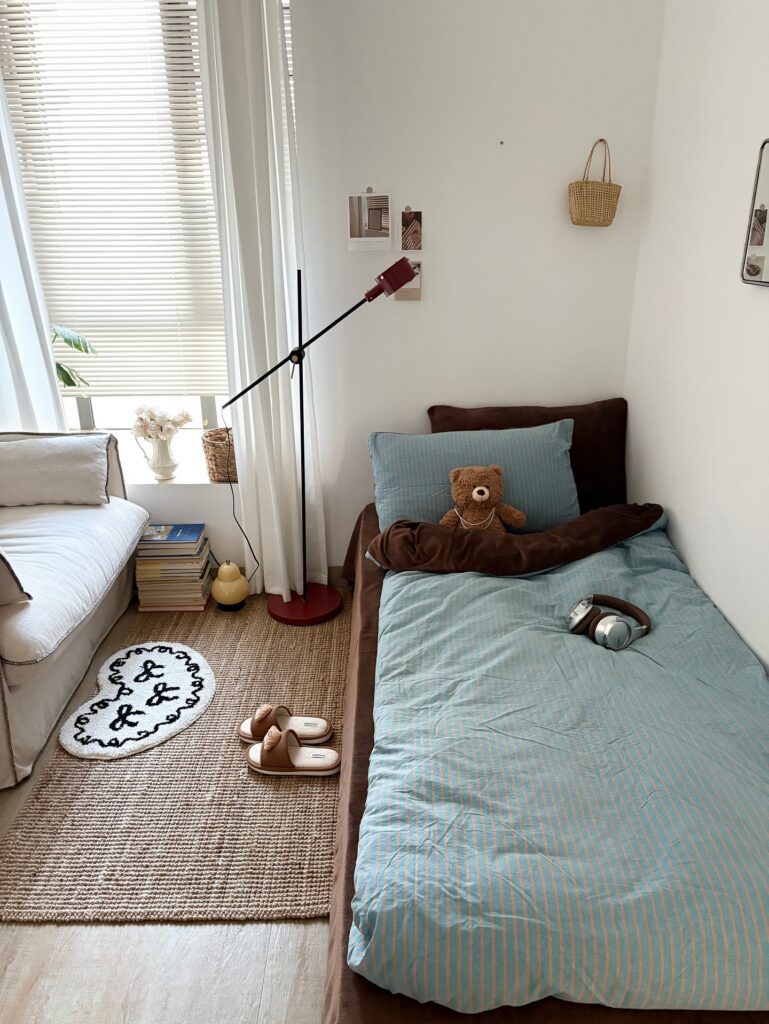
The mattress sits right on a low platform, no frame, no headboard. That alone saves a small room. Pair a chocolate brown fitted sheet with a striped blue duvet and you get the contrast without buying anything patterned or loud. The teddy stays. So do the headphones left on the bed, honestly that’s the whole point of a room like this.
What I’d actually skip is the floor lamp arching over the pillow — it looks nice but you’ll knock it every time you sit up. A small clip light on the wall does the same job. The woven basket hung by the door and the stacked books under the window are the moves worth copying. Cheap, and they use the vertical space a small room usually wastes.
