
21 Man Cave Office Ideas
This site contains affiliate links. We may earn a small commission, at no extra cost to you. Article may contain some images for illustrative purposes only .
The dartboard is mounted three feet from your monitor. That’s the dream. A workspace that doubles as a retreat, where a leather Chesterfield sits across from your standing desk and a mini fridge hums quietly under a shelf of bourbon. Forget sterile cubicles and beige everything. A man cave office bends the rules of productivity, blending deep focus with the stuff you actually like—neon signs, vintage posters, a putting green tucked between filing cabinets. Ahead: 21 ideas that show you how to build one, from bold wall treatments and gear-worthy desks to lighting, storage, and the small indulgences that make Monday mornings tolerable.
Built-In Shelving as the Anchor
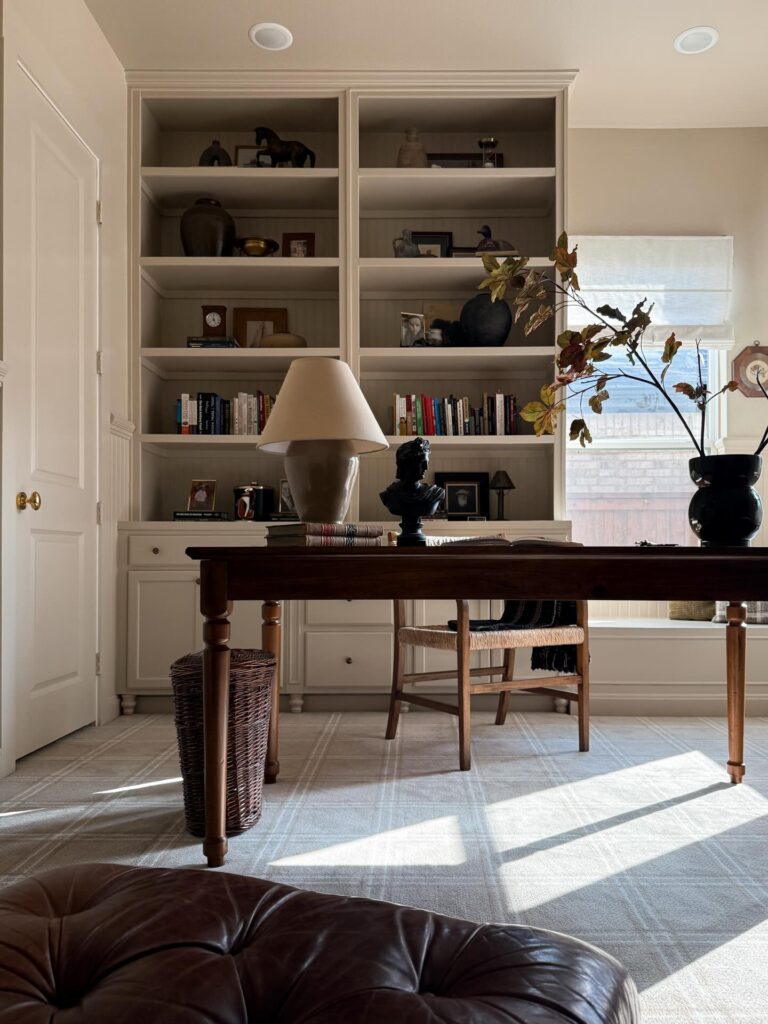
The shelving here is doing most of the heavy lifting — not because it’s full, but because it’s not. A few objects per shelf, some books pushed to one side, a small bust and a ceramic horse tucked in at different heights. That spacing is what makes it read as deliberate rather than just accumulated.
If you’re planning built-ins for a home office, the cabinet base underneath matters more than people think — it gives you somewhere to put things that don’t need to be on display. The desk sitting in front of, rather than pushed against, the shelves is worth copying. It gives the wall room to be a backdrop.
A dark wood desk with turned legs against that greige paint is a combination that suits someone who wants the room to feel finished without being fussy.
Ribbed Wall Desk
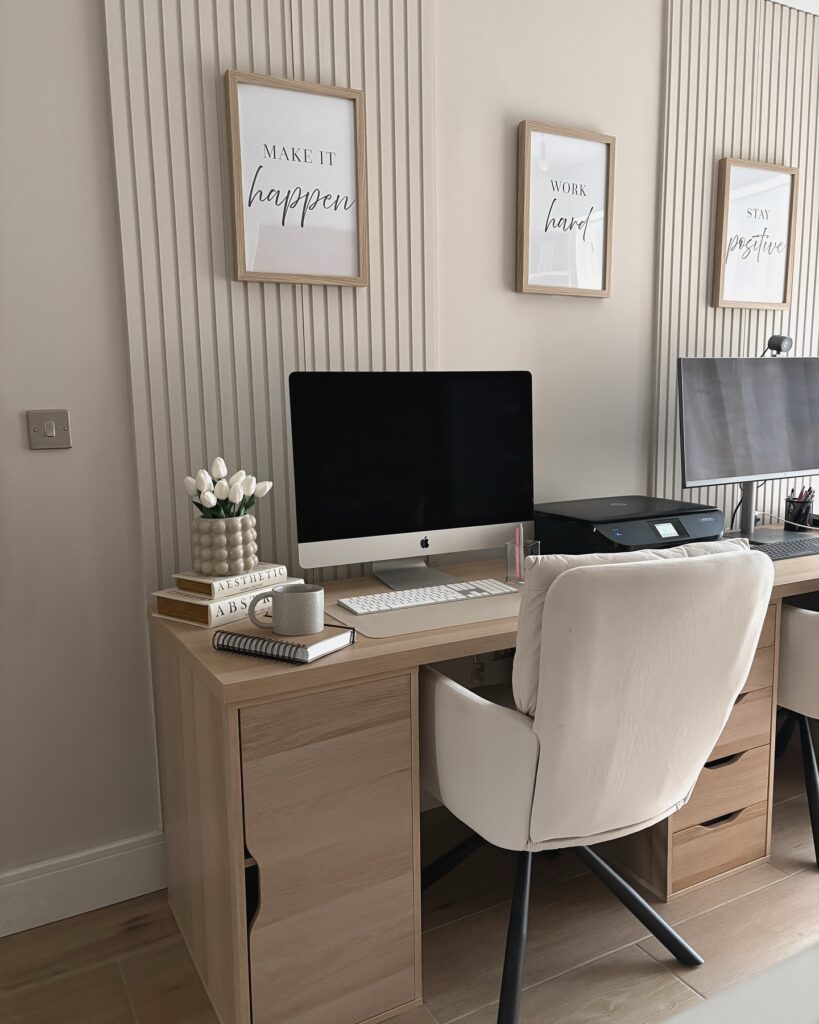
Behind the desk, ribbed wall panels give the office corner some structure without needing dark paint or heavy shelves. Keep the desk in a pale wood finish if you want the room to still feel usable during the day, especially if it shares space with a bedroom or spare room. The framed prints work best when they line up with the desk zones, one above the computer and one above the side monitor or printer area. Simple enough.
I’d keep the accessories low, like the stacked books, mug, and small flowers here, because too much stuff will fight with the wall texture. If this is meant to lean more man cave, swap the quote prints for black framed car photos, sports prints, or old gig posters.
Built-In Desk With Shelving
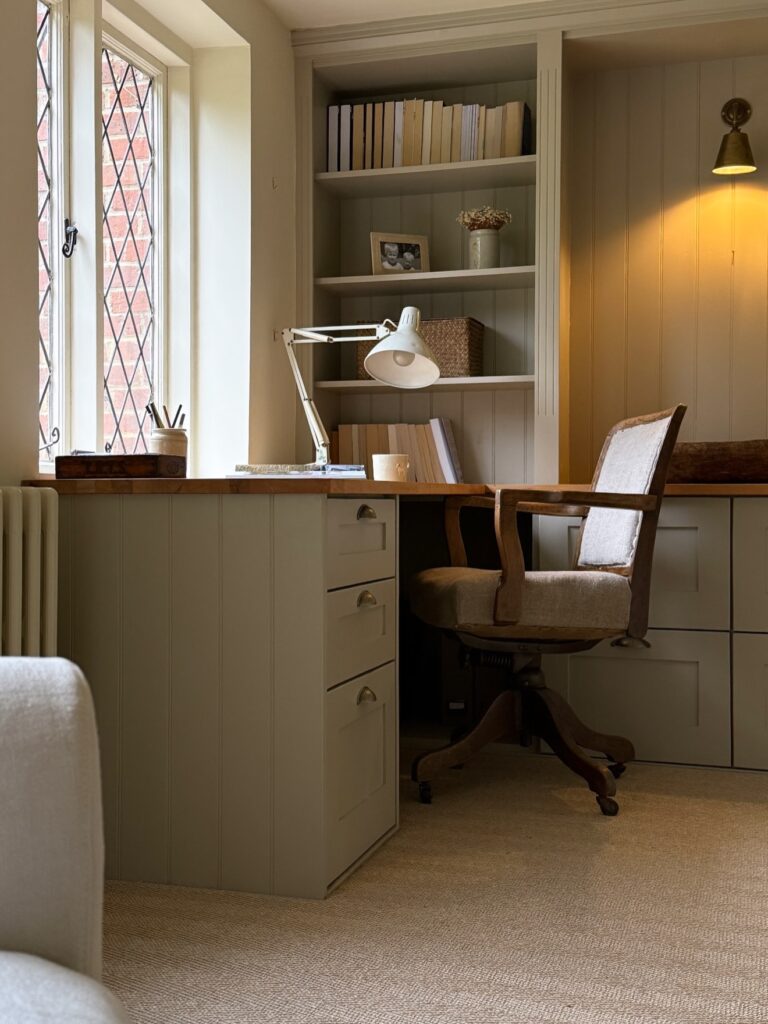
The whole run is one piece here — desk, drawers, cabinets, shelves above — all painted the same muted green. That’s what makes it work. A freestanding desk pushed against a wall would look like furniture. This looks like the room was built around the work.
If you’re going this route, match the cabinet colour to the wall panelling so the bulk disappears. The wooden desktop breaks it up. So does the old swivel chair, which I’d argue is doing more for the room than anything else in it. Skip a matching office chair. Find something with a bit of age.
One thing I’d change: the anglepoise lamp in white feels too clinical against everything else. Brass or black would sit better.
Dark wood study look
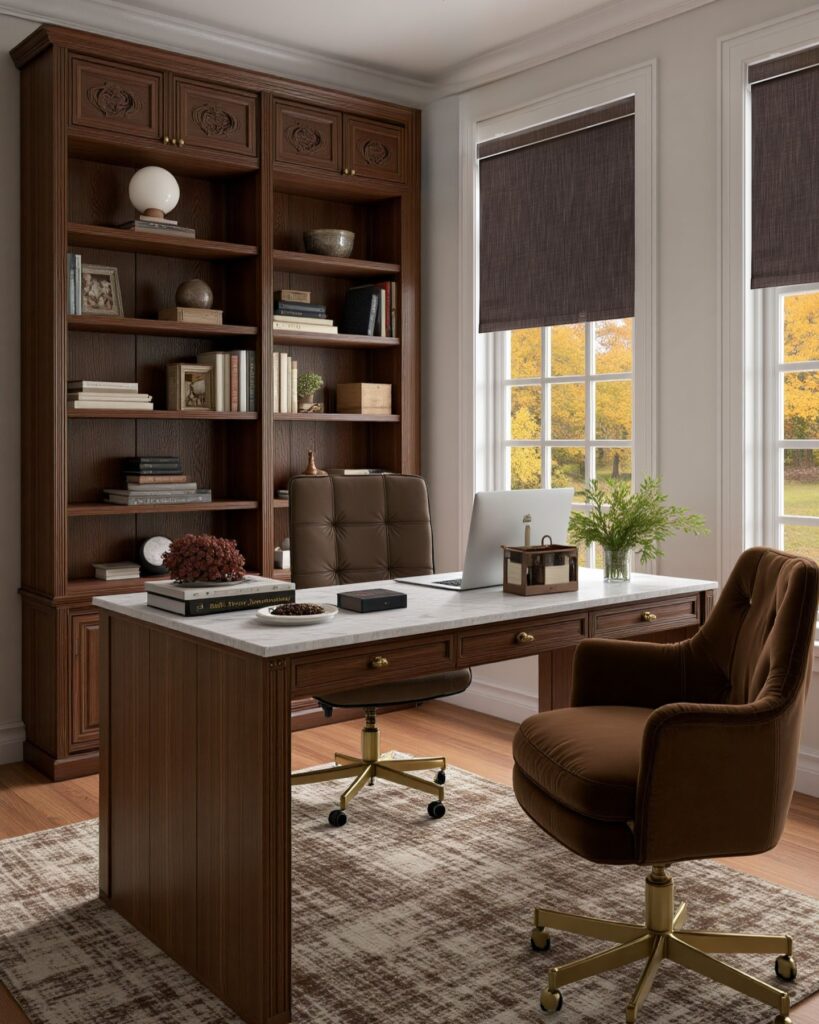
Start with the built-in wall, not the desk. A tall dark wood bookcase with closed cabinets at the top does a lot of the work here because it gives the office that old-study weight without making the whole room feel packed. Leave some shelves partly open, though. If every inch is filled with books and objects, it gets fussy fast.
The white-top desk matters more than it seems, since it breaks up all that brown and keeps the room from turning heavy, especially once you add a leather chair and brass hardware. That contrast is doing the job.
This suits someone who wants an office that reads a bit more grown-up than gamer setup. I’d skip very dark window shades unless the room gets strong light most of the day, because between the wood, leather, and rug, that’s a lot of visual weight already.
Wood Slat Panel as Anchor Point
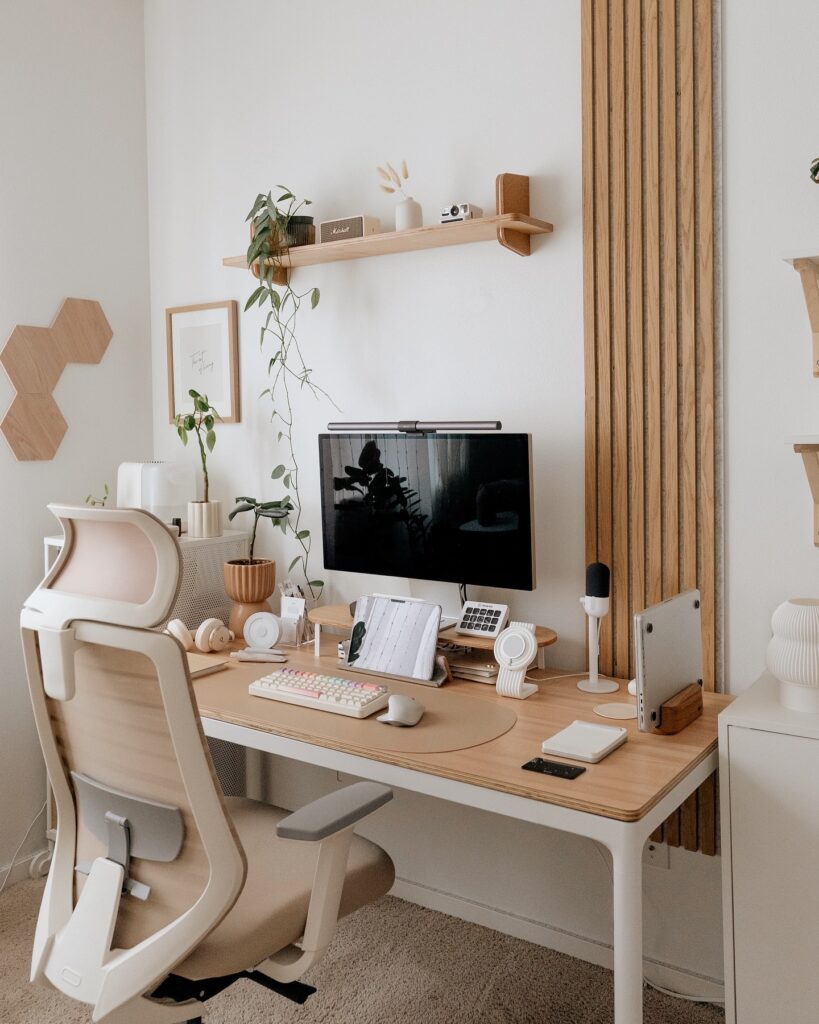
Running a vertical slat panel up one wall gives the whole desk area something to orient around — the shelf in the image sits right at the top of it, and the two together read as one deliberate unit rather than random additions. You don’t need to cover a full wall. A single column, maybe 30–40cm wide, does the same job for a fraction of the cost and effort.
Stick to the same wood tone across the panel, shelf, and desk surface so everything pulls in the same direction. This suits a corner or alcove especially well, where one feature wall is already implied by the architecture. The hexagon panels on the opposite wall are a bit much alongside it — personally, I’d drop those and let the slats carry the room.
Raised Desk Setup
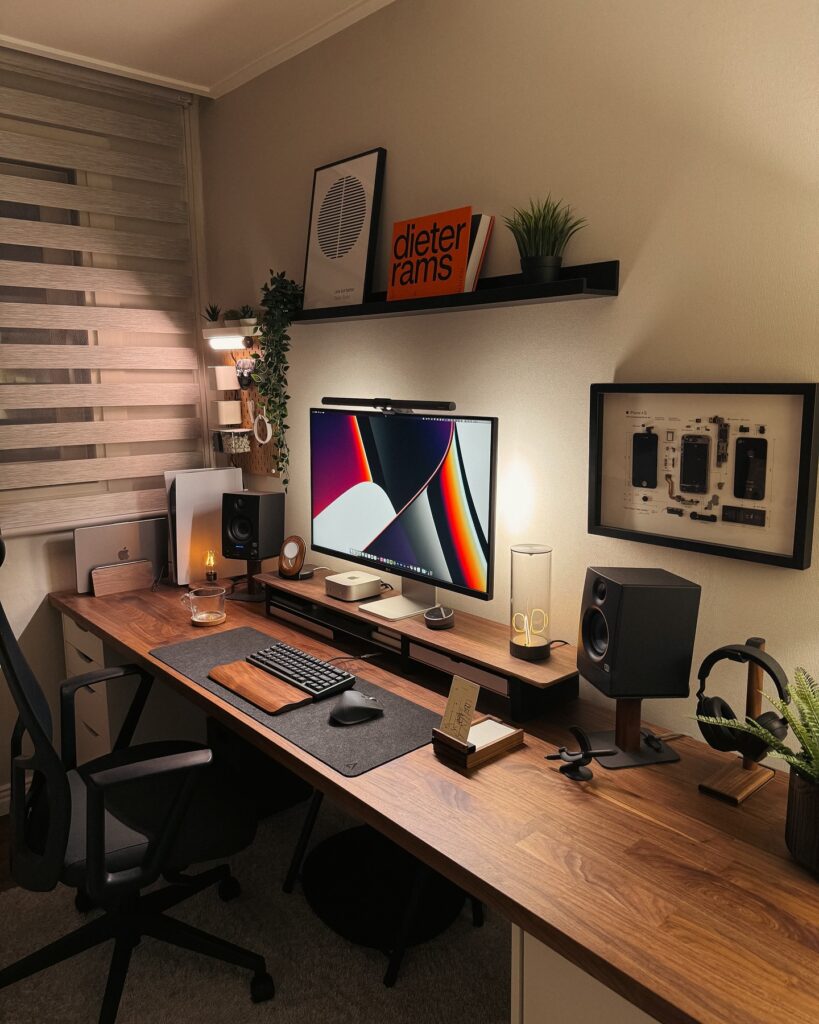
Under the screen, a raised shelf gives you a second layer for the Mac mini, notebook, and little stands without eating into the typing area. Keep the keyboard and mouse on a desk mat so the wood still shows around it. Small thing.
Mount one shelf above the monitor for books, a plant, and one framed print, then stop before it starts looking like storage. The black speakers on stands are worth copying if you care about sound while working or gaming, since they clear the desk and sit closer to ear level. I’d skip extra decor near the mouse side; that space gets annoying fast when you actually work there.
The Sit-Stand Wood Desk
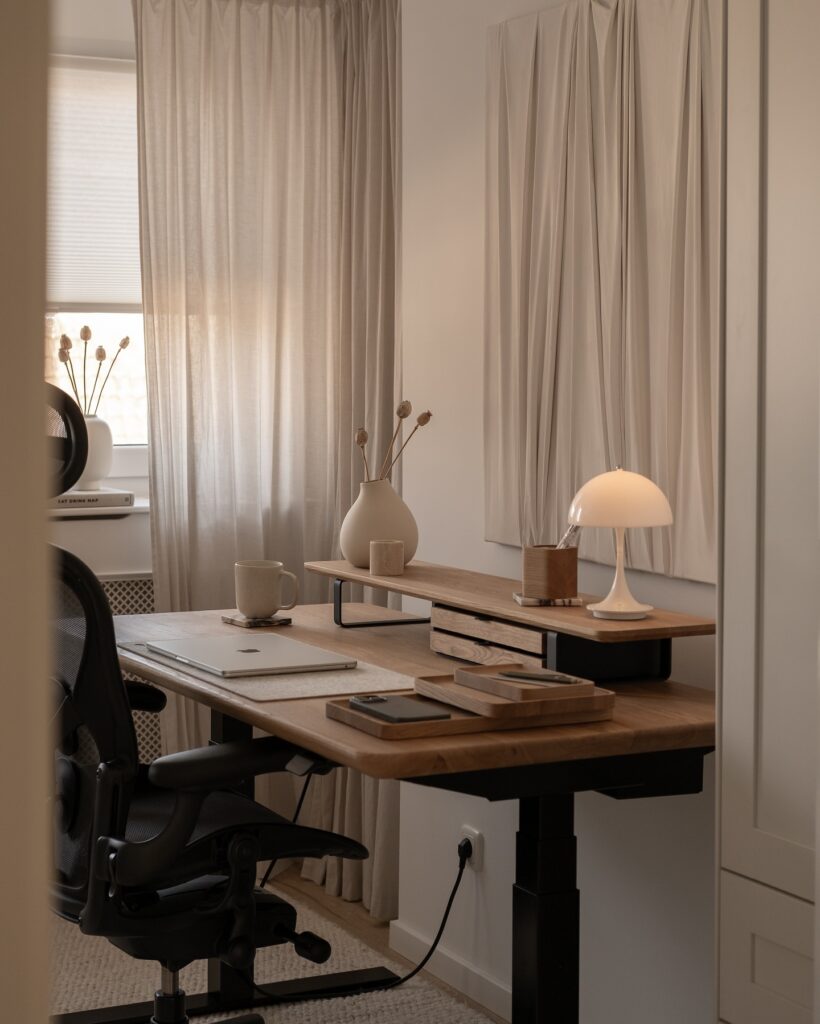
A wood top on a black motorized frame does something a plain black desk can’t. It softens the tech without making the setup look precious. The oak grain here plays against the Aeronn chair and the matte lamp base, so the room still reads like a workspace instead of a showroom.
If you’re going this route, spend on the frame, not the top. A solid wood slab from a local timber yard costs less than the branded ones and looks better as it ages. The shelf riser is worth copying too — it lifts the monitor and gives you a ledge for a mug, a small vase, whatever.
One thing I’d change. Route that power cable through a channel. Seeing it dangle across the wall bothers me every time.
Wallpapered work corner
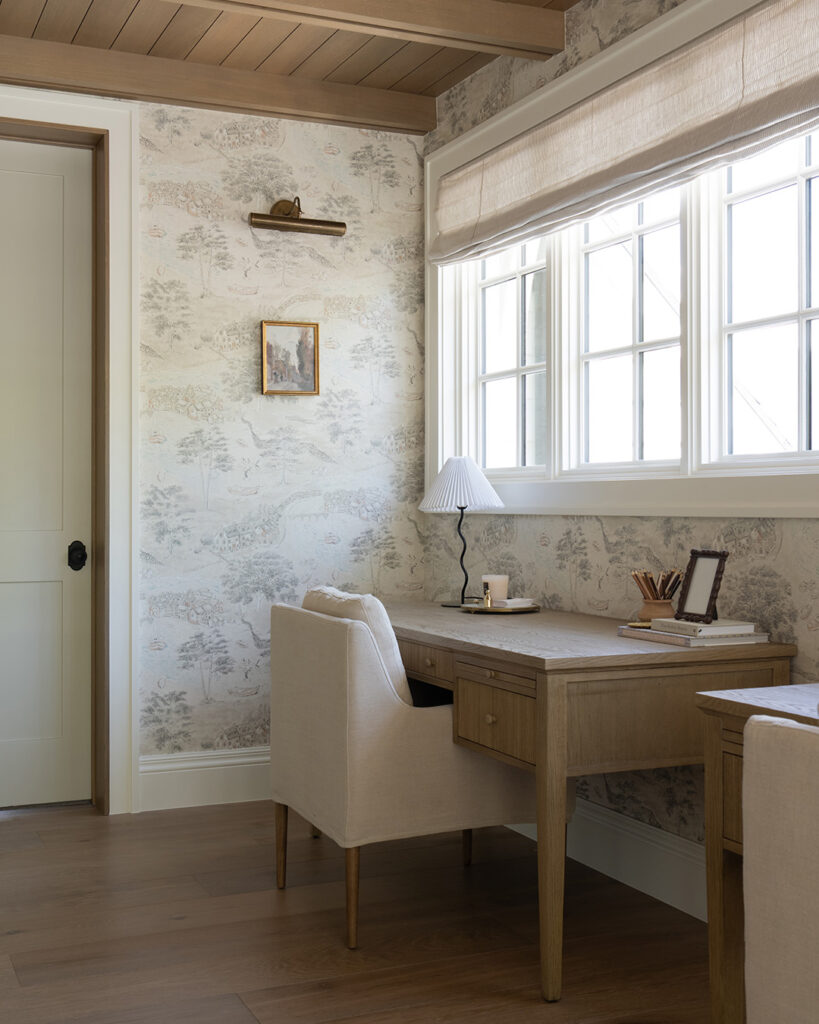
Start with the wall treatment here. A small office gets a lot more character from one quiet scenic wallpaper than from piling on signs, shelves, and dark “man cave” stuff that usually ends up looking forced. Keep the desk plain wood with straight legs and shallow drawers, so the pattern stays in the background instead of fighting for attention.
The long window matters too. Natural light across the full work surface makes this setup good for writing, laptop work, bills, anything that keeps you sitting for a while without feeling boxed in. Add a Roman shade instead of heavy curtains if the room gets glare.
I’d skip the tiny art above the desk unless it means something to you. In a compact corner like this, one picture light, one lamp, and a clean desktop already do enough.
Keep the Color Range Tight
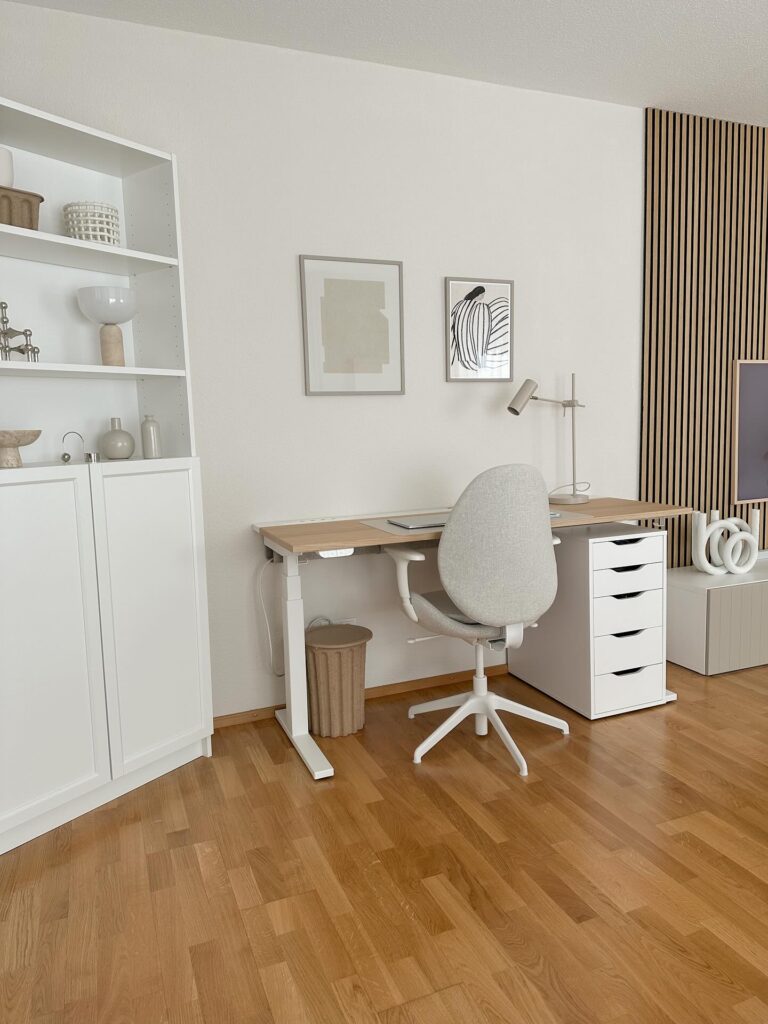
The whole desk setup here runs on maybe three colors — white, light oak, and a warm grey — and nothing fights for attention because of it. That’s actually the harder thing to pull off than it looks. Most people add one brown too many or throw in a black monitor arm and suddenly the whole thing reads as messy rather than considered.
The oak desk surface paired with white legs and a matching drawer unit keeps the furniture from looking like it came from three different rooms. If your chair isn’t in a neutral fabric, that’s usually where the palette breaks down first. The vertical wood slat panel on the right wall is doing a lot of work too — worth considering if you want some texture without introducing a new color.
Dark Built In Wall
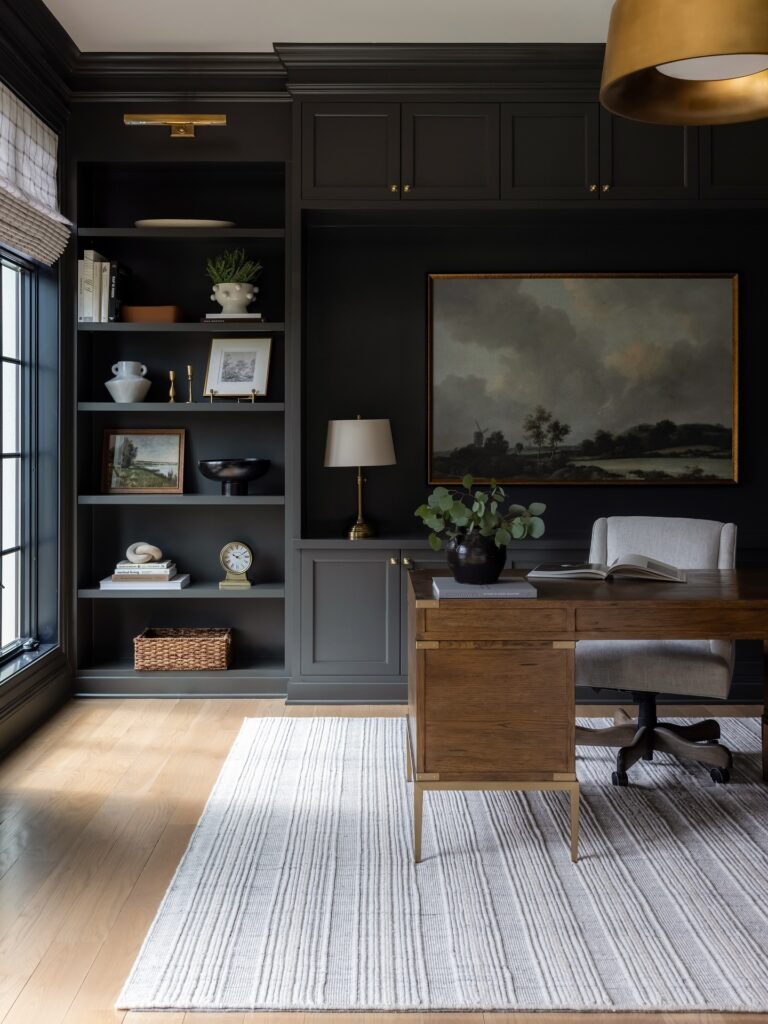
Start with the wall, not the desk. A full run of dark cabinetry gives a man cave office that tucked-away feeling without needing sports signs or oversized chairs. Keep the shelves partly open, like this setup, so books, a small plant, a framed print, and one bowl have room to breathe instead of turning into storage overflow.
The brass pulls matter. They stop the cabinets from looking flat, especially if the paint is close to black or charcoal. A wood desk works better here than another painted piece, because it breaks up all that depth and gives your hands something natural to land on.
I’d skip too many small shelf objects; they read messy fast against a dark back panel. One large landscape does more.
The Bourbon Shelf Above The Desk
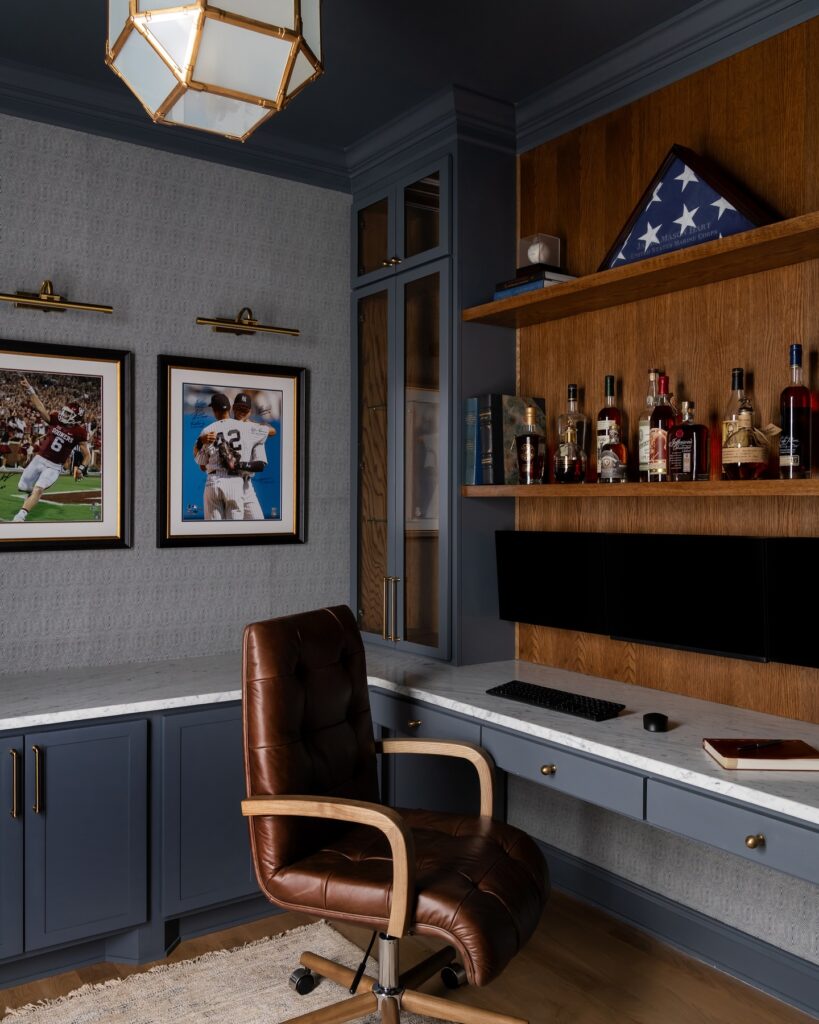
The wood-backed shelves running above the desk pull double duty here — bourbon collection on display, sports memorabilia (that folded flag, the shadow box) sitting alongside it. This is the move if you actually want your office to feel like yours. Pick one collection you’re proud of and give it real estate at eye level, above the work surface.
A few things I’d flag. Open shelves over a desk mean dust on every bottle, so plan on wiping them down every couple of weeks. And keep the bourbon out of direct sun if your window is nearby — it fades labels fast. The framed prints with picture lights on the adjacent wall are doing a lot of work too. Without those, the dark walls would swallow everything.
Dark built-in wall
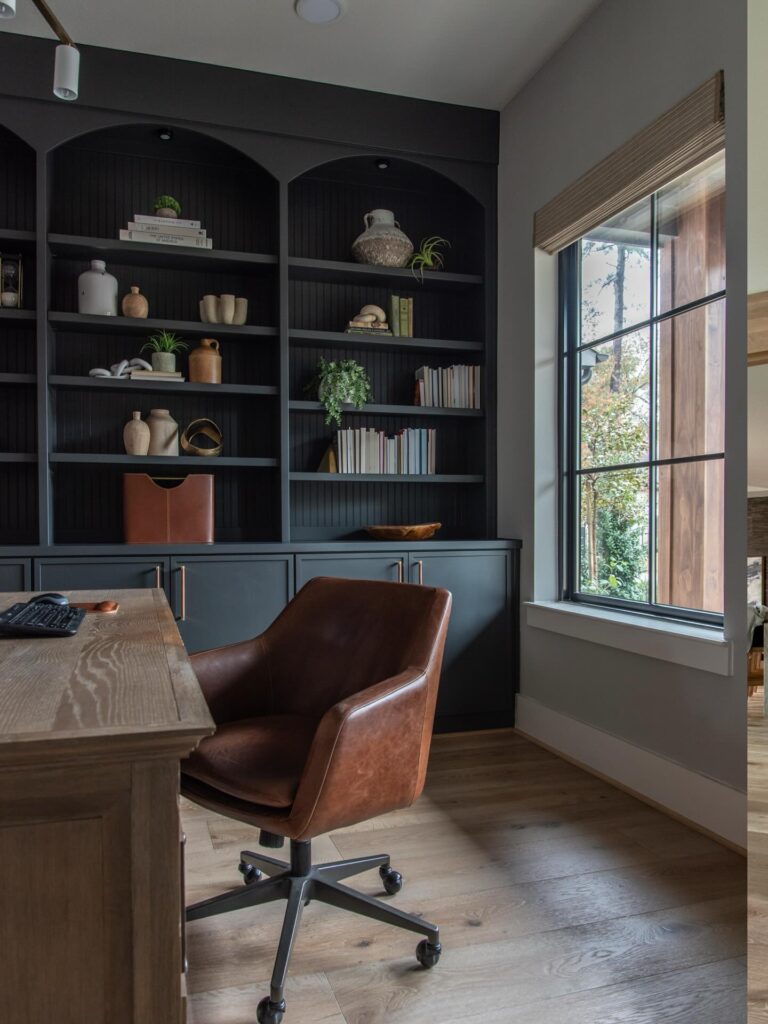
Start with the shelving wall. Painting the bookcase and lower cabinets a near-black tone gives the office that closed-in, tucked-away feel a man cave usually needs, and the vertical panel backing stops it from looking flat once the shelves are filled. Keep the styling tight. A few books, pottery, one trailing plant, done.
The leather desk chair matters too.
That brown tone breaks up all the charcoal and keeps the room from turning into one dark block, while still feeling heavier and less fussy than fabric seating. If you want this look in a smaller office, copy the same formula but shrink the shelf depth and use closed storage below for chargers, papers, and the ugly stuff. I’d skip over-decorating the shelves because this setup works best when there’s still plenty of shadow showing through.
Paint the Built-Ins the Same Dark Color
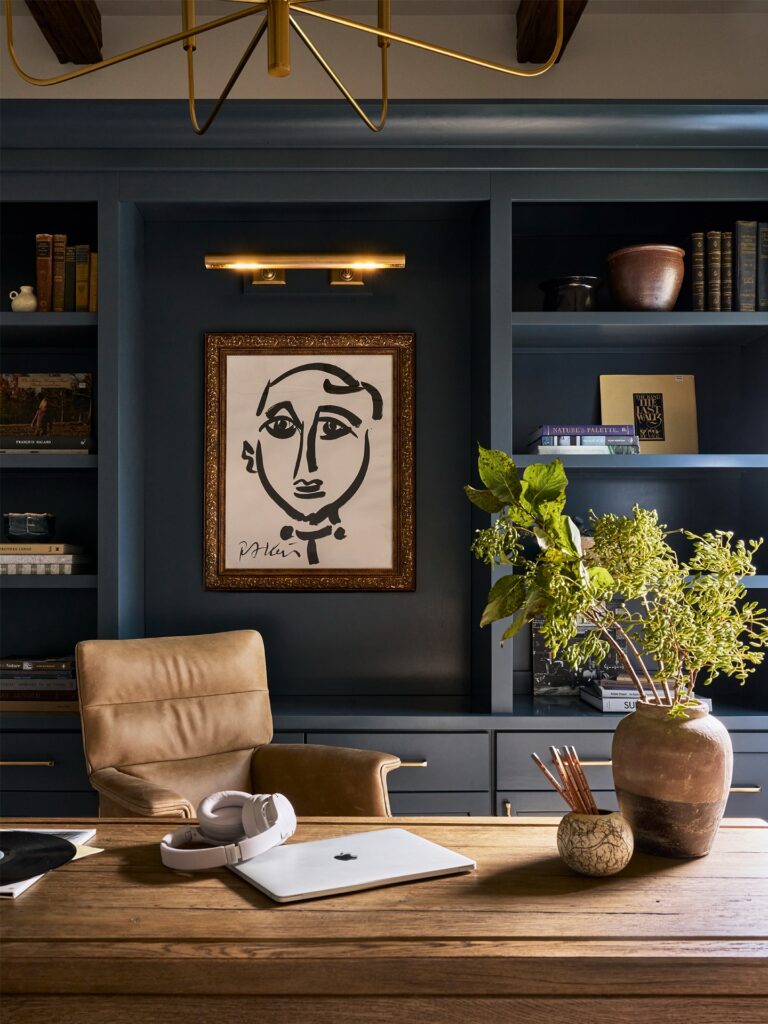
Matching the shelving paint to the wall color is what makes the whole unit read as one solid backdrop rather than furniture sitting against a wall. That face drawing in the ornate gold frame pops so hard because everything behind it is the same flat dark blue-grey — no interruption. Pick one deep tone, paint everything including the inside of the shelf recesses, and let your objects do the work.
The brass sconce above the art and the chandelier overhead both read warmer against that dark paint than they would against white. If you go this route, keep the desk light wood or leather, something that pulls away from the wall rather than blending into it.
Wood Desk Wall
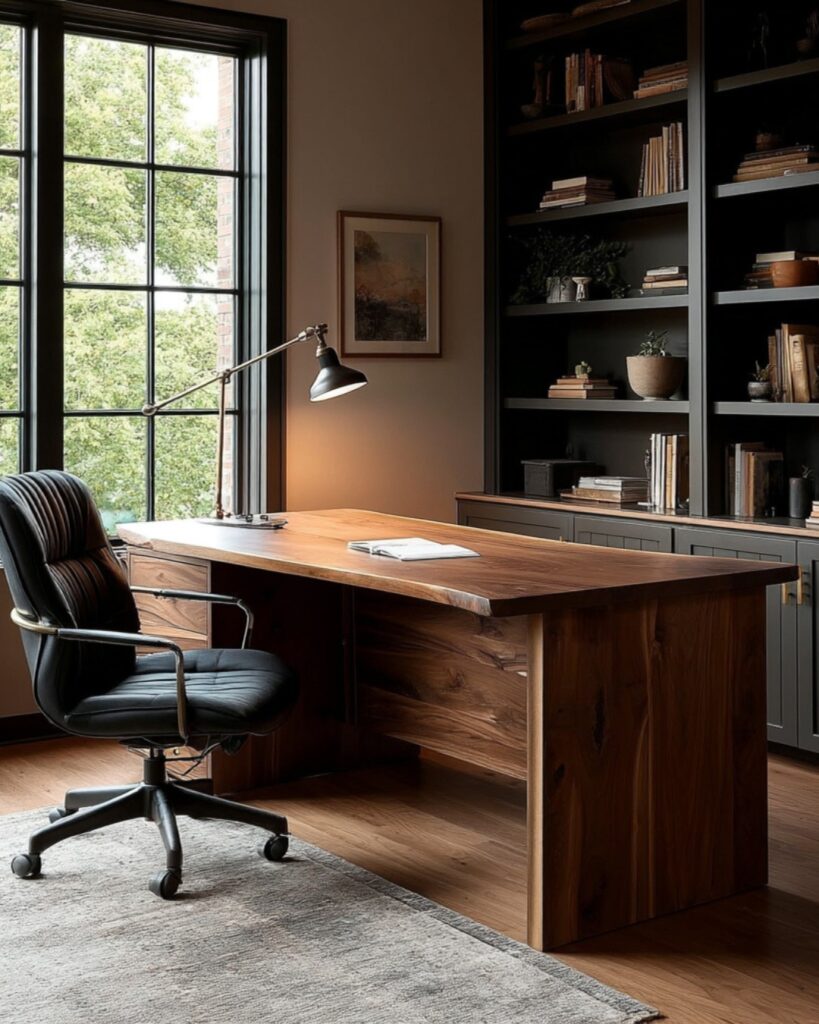
Start with the desk first, because that thick wood slab is doing most of the work here. A man cave office like this suits someone who wants the room to feel more like a study than a spare bedroom with a laptop in it. Keep the shelves dark if you can, then let books, boxes, and a few plants break up all that black.
Not too many things. The swing arm lamp is worth copying, since it gives proper task light without taking over the desktop. I’d skip a glass desk in this setup, honestly, because it would fight the heavy shelves and make the room feel less grounded.
A leather rolling chair keeps it practical for long hours.
Dark Walls, Warm Wood Desk
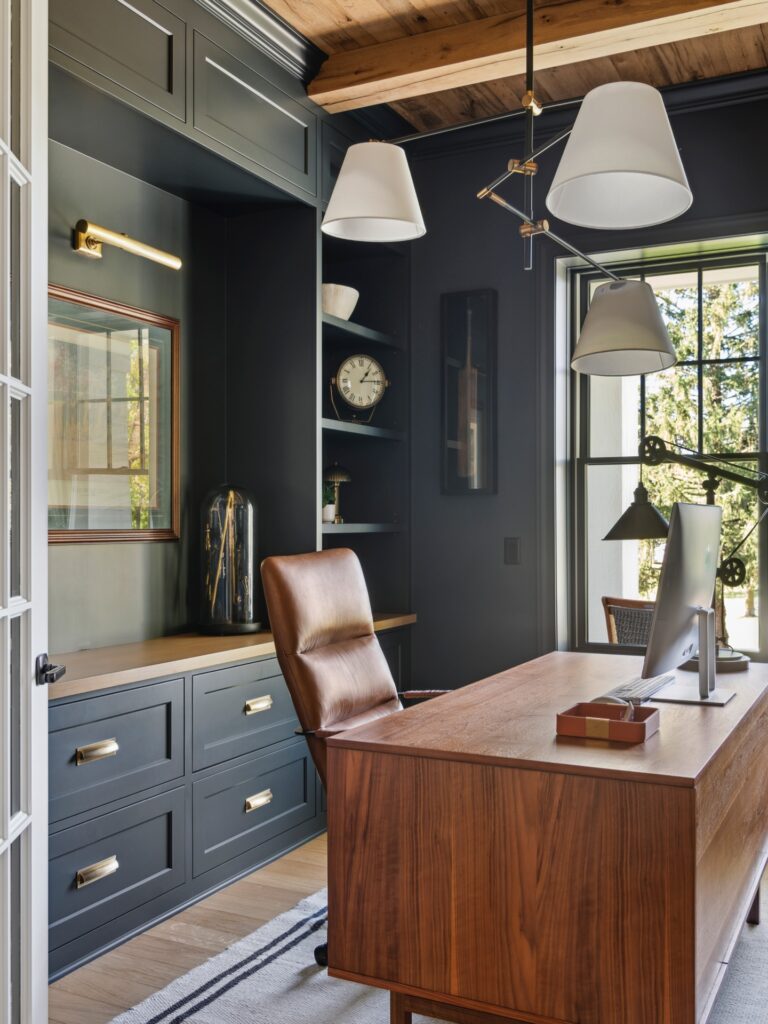
The trick here is the walnut desk against near-black cabinetry. Without that warm wood tone sitting in the middle of the room, the whole thing would feel like a cave in the bad sense. Pick a desk with visible grain. Oak works, walnut works better.
The built-ins behind are painted the same color as the walls, which is what keeps the dark from closing in — no contrast trim breaking it into pieces. If you’re doing this at home, paint the shelves, the cabinets, and the wall in one color and be done with it.
One thing I’d skip: the three-shade pendant cluster. It’s fighting the picture light and the desk lamp for attention. A single pendant over the desk would do the job.
Add a monitor riser
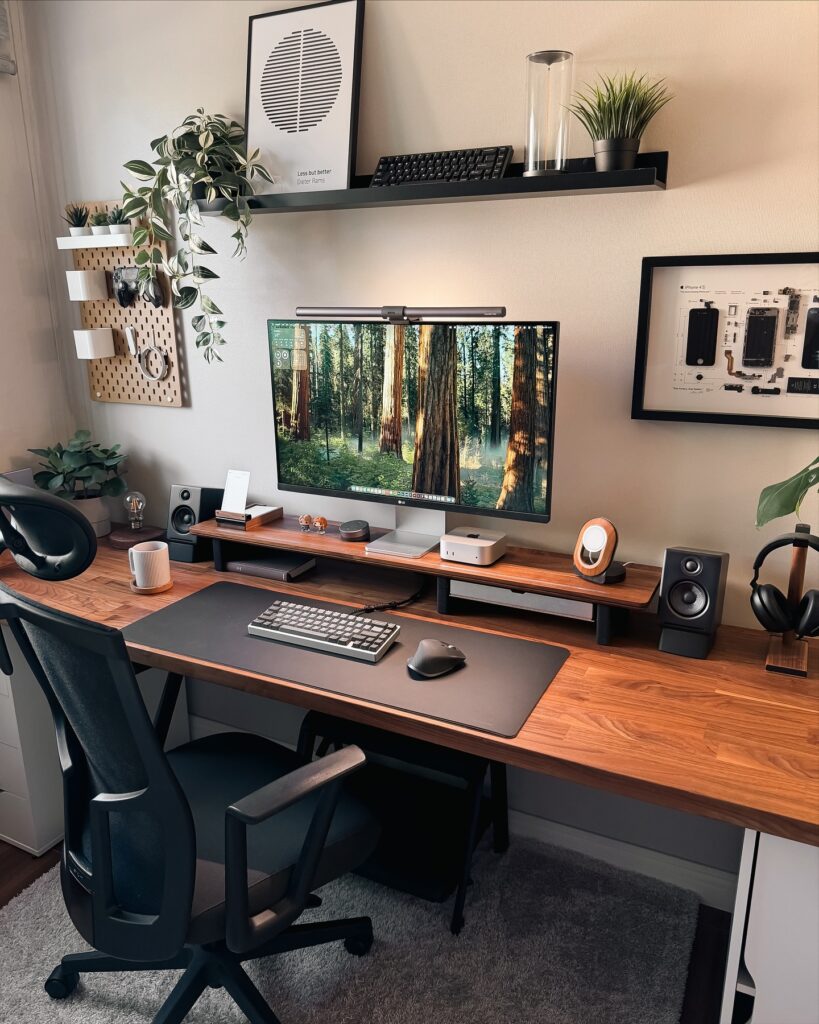
Start with the long wood monitor riser. It does more than lift the screen to a better height. It also gives you a place to hide the ugly bits underneath, like a dock, hard drive, or the cable slack that usually ends up spread across the desk.
That’s why this setup works. The desktop still has open space in front for a large mat, keyboard, and mouse, so it feels less cramped even with speakers, a lamp bar, and a few gadgets sitting out.
Keep the shelf above fairly spare. One trailing plant and a couple of black accessories are enough, otherwise the wall starts feeling busy around the pegboard and framed prints. I’d skip tiny decor on the riser if you actually work here all day. Dust catches on every little thing.
Dark Walls With a Light Desk
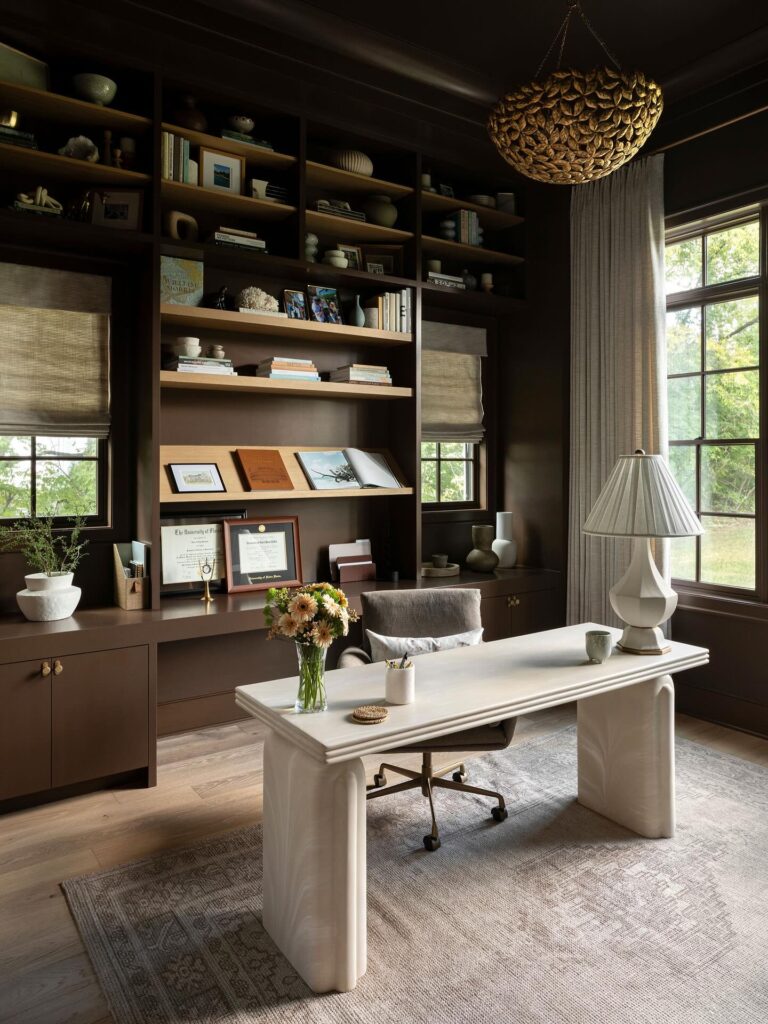
Painting the walls and built-ins the same deep brown is what makes that desk pop without any extra effort. The desk here is almost sculptural — thick cream legs, molded edges — and it reads loudly against the dark because nothing else is competing with it. If you can’t find something that specific, a solid light stone-look desk or even a painted white one does the same job.
The chandelier is worth noting too. Organic, textured, brass-toned — it adds something the room would visibly miss without it. For a man cave office this balance works well because the dark absorbs the mess of a working space, certificates on a ledger shelf, stacked books, random objects, and none of it looks cluttered.
Wood Slat Work Nook
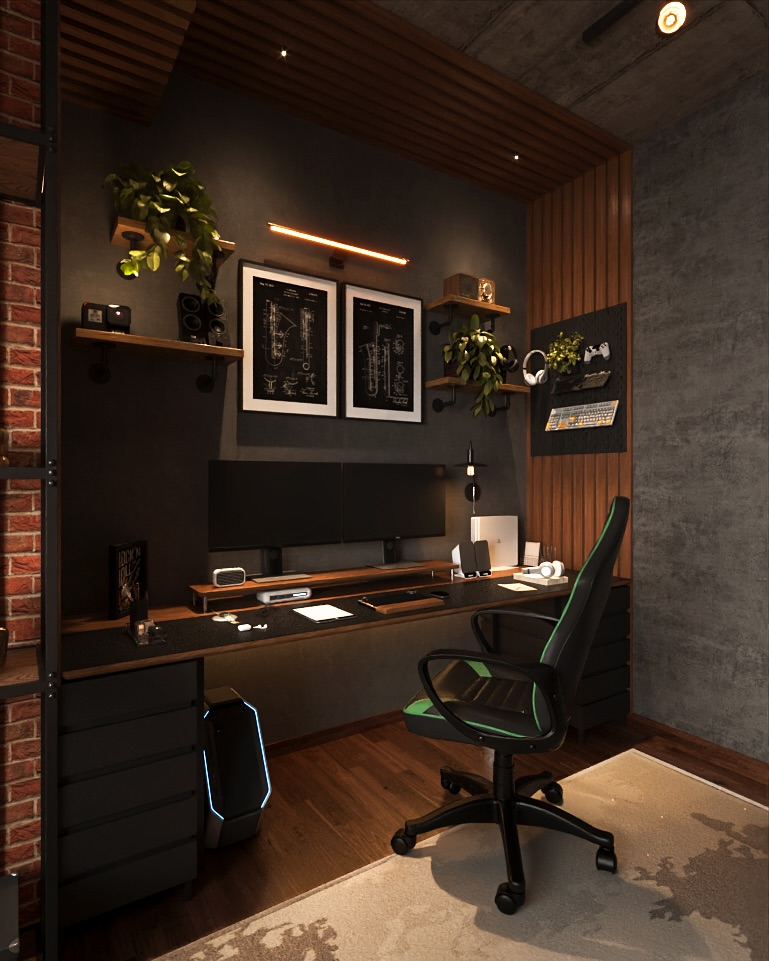
Start with the frame. If you are copying this setup, let the timber run over the ceiling too, because that boxed edge makes the desk look planned instead of pushed against a blank wall. A thin LED bar above the prints gives you light without stealing desk space, and the pegboard on the side can hold controllers, cables, or the things that usually sit near the keyboard.
Keep the plants small. Big trailing pots will fight the monitors and make dusting more annoying than it needs to be. I would skip the strong ceiling spotlight if your screen catches glare, or put it on a separate switch for late work.
Desk Beside The Woodburner
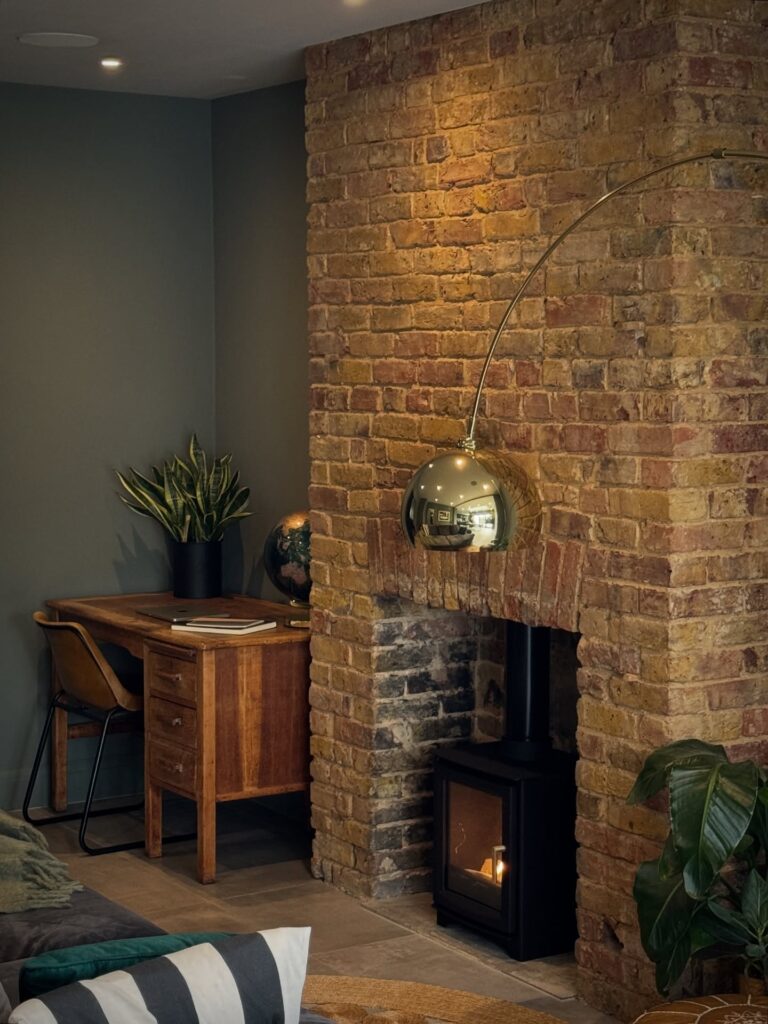
The desk sits tucked into the corner next to the brick chimney breast, which means you’re working an arm’s length from the woodburner. Warm in winter. That’s the whole appeal.
A small wooden desk like this one works because it doesn’t fight the brick for attention — three drawers, a leather sling chair, room for a snake plant and a globe and not much else. If you’re setting this up, keep the desk narrow. A big executive slab would swallow the nook and block the heat from reaching you.
The arc lamp reaching over from the fireplace side is doing real work here too, since a desk lamp would compete with the fire glow. One thing I’d change: swap the sling chair for something with back support if you actually work full days here.
Brick and dark walls
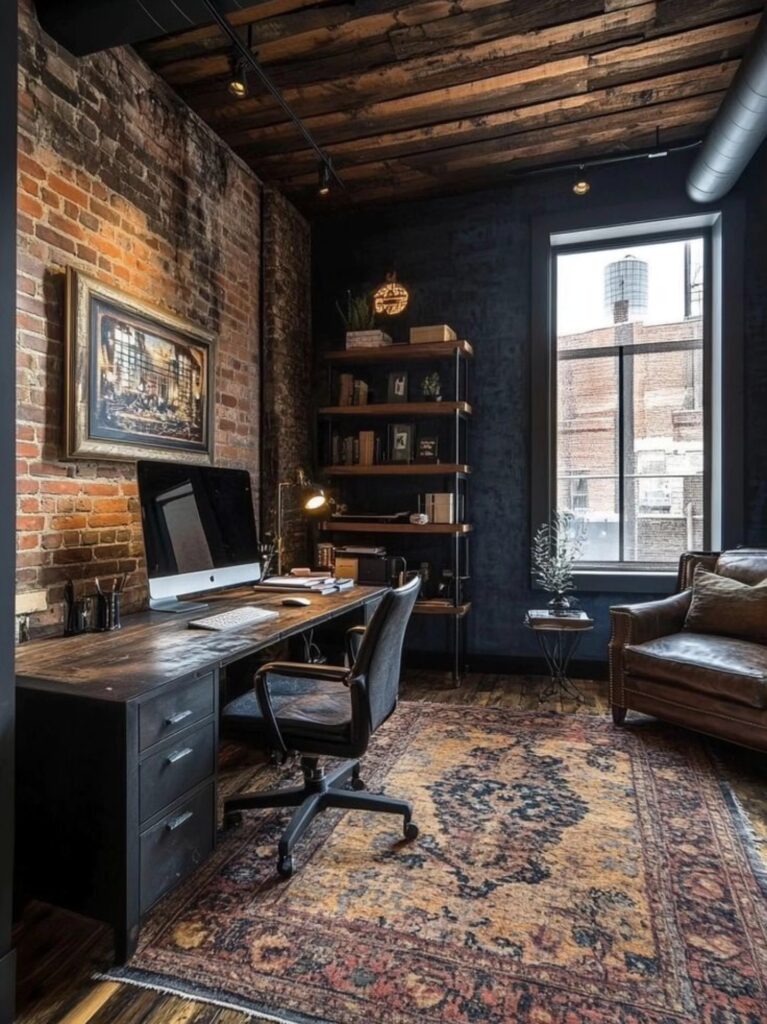
Start with the shell. This idea works because the room leans into what’s already there: exposed brick on one side, nearly black walls on the other, and a wood ceiling that keeps the whole thing from feeling flat or office-park bland.
Keep the desk long and plain, preferably stained wood with a black drawer base, so it reads more workshop than corporate setup. The tall open shelving matters too, especially if you mix books with a few heavier pieces instead of filling every level with gadgets and decor. Less fuss.
A worn rug is doing real work here by softening all the hard surfaces and stopping the room from turning cold or echoey, which happens fast with brick, leather, metal, and exposed ducting. I’d skip a bright task chair though; the darker chair disappears better and keeps the mood intact.
L-Shaped Desk With Built-In Shelving
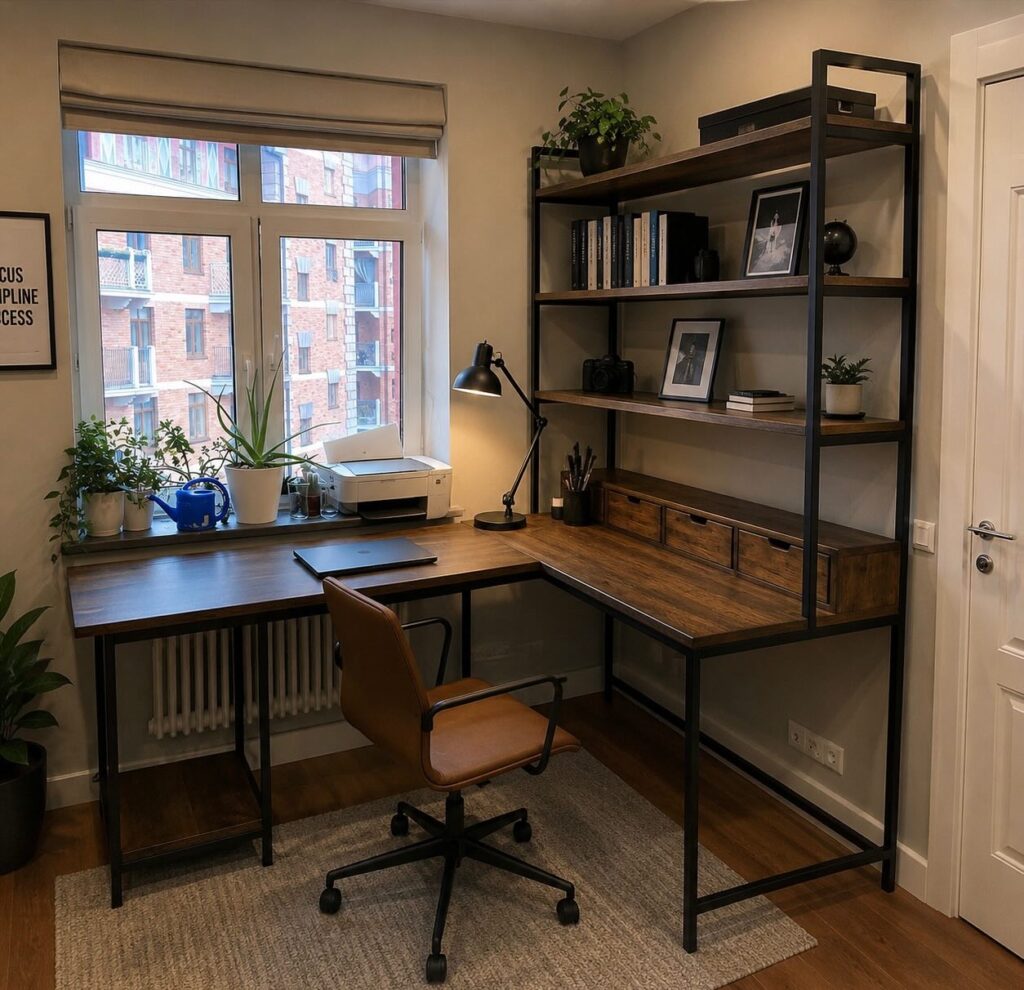
The shelving unit here does the heavy lifting — it sits right on the desk’s corner section, so you’re not losing floor space to a separate bookcase. That’s the setup worth copying. A few small drawers are built into the middle tier, which keeps the surface clear without hiding everything in a cabinet you’ll never open.
The tan leather chair on castors is a good call for a tighter room; it rolls, it tucks, it doesn’t eat up visual space the way a high-back does. If you’re putting this together from separate pieces rather than buying it as a unit, make sure the shelving frame sits flush with the desk depth — a shelf that overhangs awkwardly at the back is harder to fix than it sounds.
